3524 resultados
ref. 24743‘18bre sic 1855’ Wimbledon London. An interesting letter indicating the networks of sympathisers who assisted those fleeing to England in the years following the revolutions of 1848. In the July 1895 edition of the Atlantic the subject of this letter the Christian Socialist J. M. Ludlow in reviewing Nadaud’s memoirs described him as ‘a friend of my own of many years’ standing’. The present item was written in the seventh of the eighteen years of Nadaud’s English exile part of which was spent as a teacher in Wimbledon under the name ‘Henri Geo. Nadaud’. The identity of the recipient is not known. 4pp 16mo. Bifolium on grey paper. Worn and with a small part of one corner torn away but in fair overall condition. Folded once for postage. Sixty-six lines of text addressed to ‘Cher Mons Delabussière’ and signed ‘Martin’. He begins by explaining why he has not been able to return in person the ‘numéro’ of a periodical that Delabussière has sent him and that he has read with great pleasure. He had previously made arrangements about altered worktimes with a colleague. He goes on to ask whether Delabussière would like to dine with him the following Wednesday and whether he would like him to invite ‘Boura’ and another man as well. He states that he does not recall talking to Boura on the subject of a letter ‘écrite par le monsieur ou je suis à celui que je venais de quitter. / Le fait de votre réussite parle assez haut en lui même pour que aucun on dit ne puisse atteindre votre amore propre. Si on n’avait pas eu confiance en vous je n’y pourais pas été appele’ He hopes that Delabussière's ‘association’ brings him money as friends are rare and a man is placed in the scales of wealth rather than of honour. He has distributed Delabussière's prospectuses along with his own calling card and bids him visit ‘un de mes bons amis Mr Ludlow avocat anglais 3 Old Square Lincom-inn sic’ and tell him that he is ‘le professeur de Mechanics institution’ and ‘il aura peut être un collège à vous offrir’. It will be worth his while ‘car ces messieurs font des sacrifices énormes pour l’education du peuple anglais’. He gives a few further instructions regarding how to approach Ludlow ending ‘Il sait toute mon affaire je ne lui cache rien!’ ‘18bre [sic] 1855’ [Wimbledon, London]. unknown
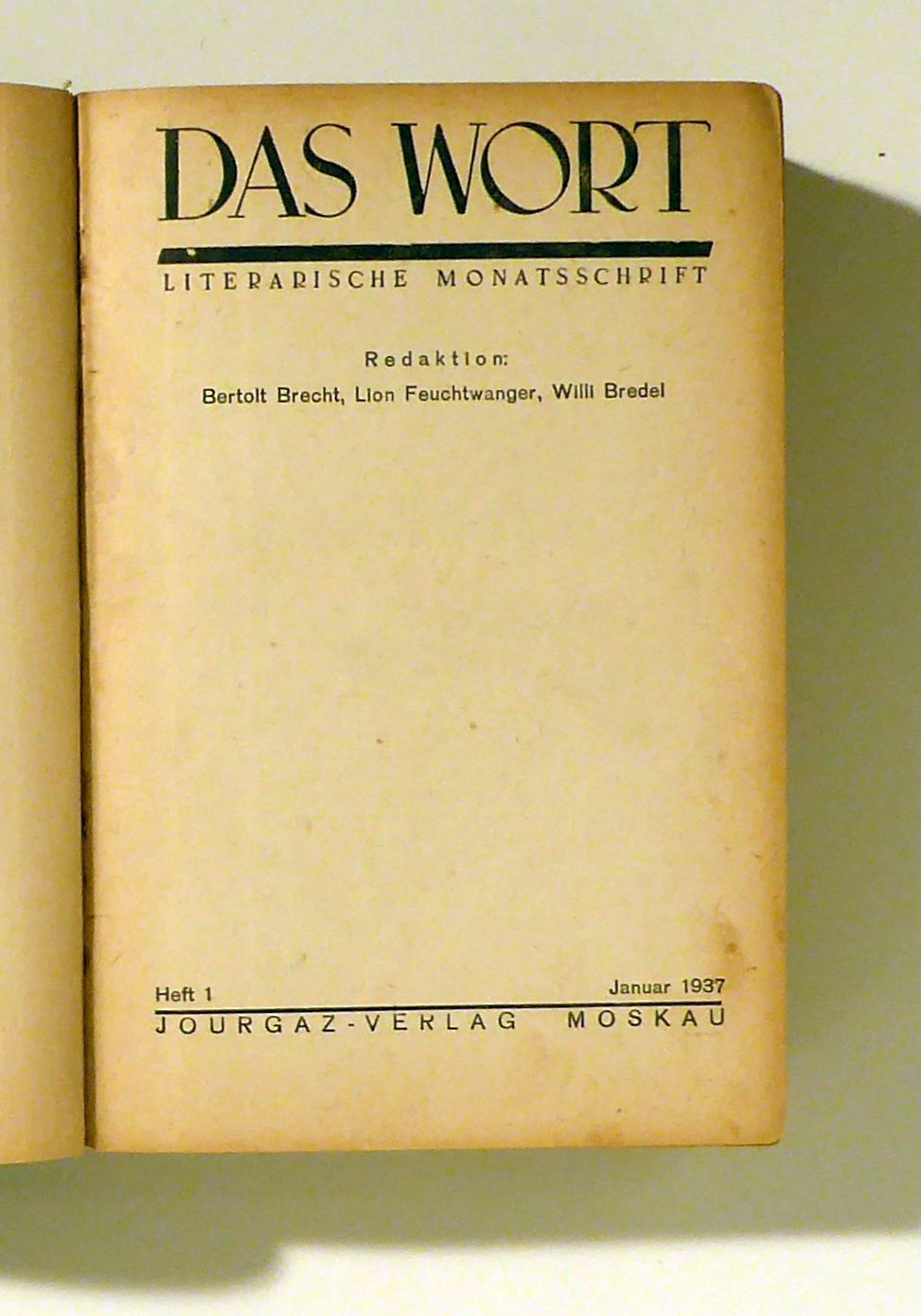
1937ref. 166991Moskau, Jourgaz, 1937. 2 Bände, je 6 Hefte, jedes Heft ca. 112 S., Halbleinwand, 8°. Maas 2, 614; 4, 197. - Seidel. 1936. Der zweite Jahrgang dieser wichiutgen Literaturzeitschrift des Exils. Sie erschien zwischen 1936 und 1939 in Moskau und stand sowohl kommunistischen als auch nichtkommunistischen Autoren offen. Mit Beiträgen von Georg Lukacs, Thomas Mann, Klaus Mann, Oskar Maria Graf, F. C. Weiskopf, Bodo Uhse, Lion Feuchtwanger, Egon Erwin Kisch, Arnold Zweig, Ernst Weiss und zahlreichen anderen. [2 Warenabbildungen] Hardcover Privater Einband mit Pappdeckeln und grünem Leinwandrücken. Die Umschläge wurden nicht mitgebunden. Einbände berieben, Kanten und Ecken bestossen. Leinwandrücken abgewetzt. Seiten vereinzelt etwas fleckig, Schnitt angestaubt. Das Wort, 2. Jahr 1937, Heft 1-12
1940ref. 148612Zch., Rascher, 1940. 64 S., it zahlreichen teils farbigen Abbildungen nach Zeichnungen sowie mit einigen Liedern mit zweistimmig gesetzten Noten. Original-Halbleinwand, 4°. Hatri 241. - Deutsches Exilarchiv 3709. Hardcover Einband minim angestaubt, davon abgesehen schönes Exemplar.
1934ref. 39051BBKopenhagen, Prag, Zürich, Verlag für Sexualpolitik, 1934. 8°. 300 S., 1 w. Bl., Rote bedruckte Originalbroschur.
1943ref. 147547Los Angeles, Pazifische Presse, 1943. 53 S. 22*17 cm. OHalblederband
1941ref. 38972New York, Modern Age Books, 1941. 376 S., OLwd.
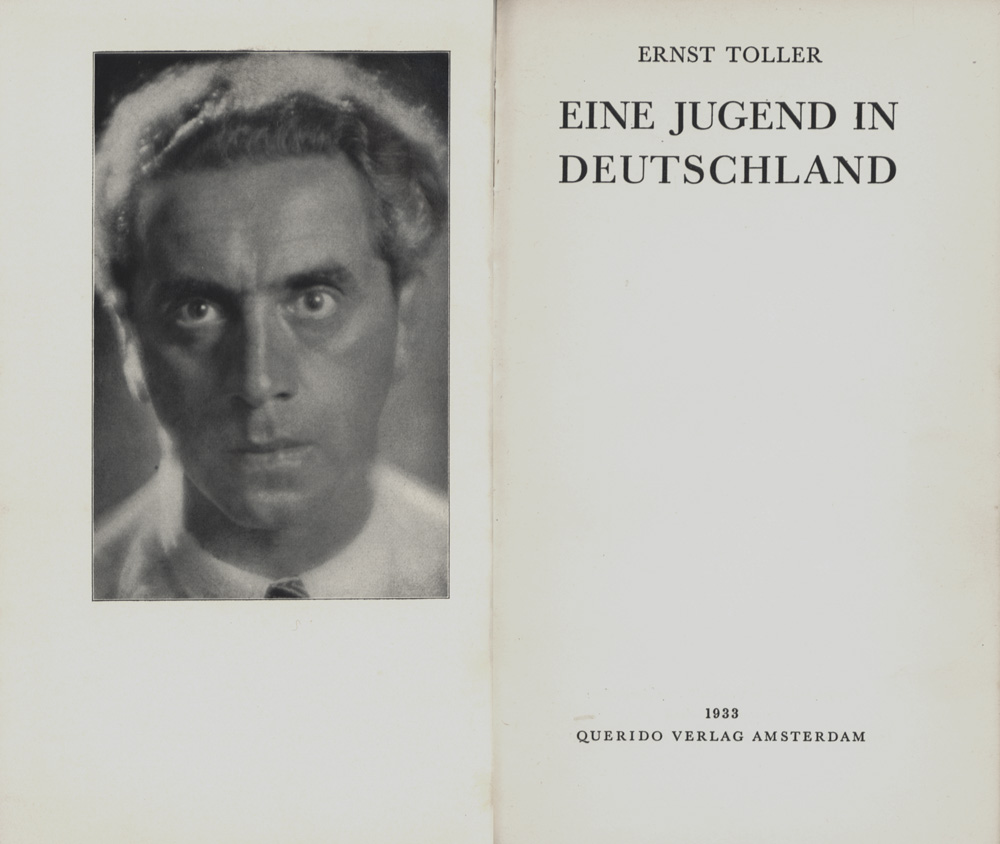
1933ref. 14821ABAmsterdam, Querido, 1933. 8°. Titelportrait, XV, 287 (1) S. OLn. Kopffarbschnitt., 1
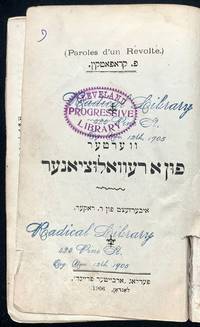
1906ref. 43217London: "Arbayter fraynd 1906. First Yiddish edition. Period boards 8vo xiii 426 pages 19 cm. In Yiddish. Title translates as “Words from a Revolutionary.” Translation of “Paroles d'un re´volte´.” Includes translation of the forewords by the author and Elise´e Reclus. Includes bibliographical references. “During his long exile Kropotkin wrote a series of influential works the most important being ‘Paroles d’un révolté’ 1885; “Words of a Rebel”.Kropotkin’s aim as he often remarked was to provide anarchism with a scientific basis. In Mutual Aid which is widely regarded as his masterpiece he argued that despite the Darwinian concept of the survival of the fittest cooperation rather than conflict is the chief factor in the evolution of species. Providing abundant examples he showed that sociability is a dominant feature at every level of the animal world. Among humans too he found that mutual aid has been the rule rather than the exception. He traced the evolution of voluntary cooperation from the primitive tribe peasant village and medieval commune to a variety of modern associations—trade unions learned societies the Red Cross—that have continued to practice mutual support despite the rise of the coercive bureaucratic state. The trend of modern history he believed was pointing back toward decentralized nonpolitical cooperative societies in which people could develop their creative faculties without interference from rulers clerics or soldiers.” SUBJECTS: Anarchism. OCLC: 19303211. Ex-library with early 19th Century left-wing library markings see photos. Good- Condition YID-48-41-LXCCGG-’e. London: "Arbayter fraynd unknown
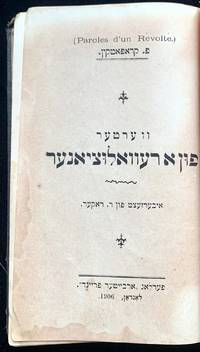
1906ref. 43219London: "Arbayter fraynd 1906. First Yiddish edition. Period boards 8vo xiii 426 pages 19 cm. In Yiddish. Title translates as “Words from a Revolutionary.” Translation of “Paroles d'un re´volte´.” Includes translation of the forewords by the author and Elise´e Reclus. Includes bibliographical references. “During his long exile Kropotkin wrote a series of influential works the most important being ‘Paroles d’un révolté’ 1885; “Words of a Rebel”.Kropotkin’s aim as he often remarked was to provide anarchism with a scientific basis. In Mutual Aid which is widely regarded as his masterpiece he argued that despite the Darwinian concept of the survival of the fittest cooperation rather than conflict is the chief factor in the evolution of species. Providing abundant examples he showed that sociability is a dominant feature at every level of the animal world. Among humans too he found that mutual aid has been the rule rather than the exception. He traced the evolution of voluntary cooperation from the primitive tribe peasant village and medieval commune to a variety of modern associations—trade unions learned societies the Red Cross—that have continued to practice mutual support despite the rise of the coercive bureaucratic state. The trend of modern history he believed was pointing back toward decentralized nonpolitical cooperative societies in which people could develop their creative faculties without interference from rulers clerics or soldiers.” SUBJECTS: Anarchism. OCLC: 19303211. Spine is taped.Tight binding but text block is clean and intact. Good Condition YID-48-40-LXCCGG-’e. London: "Arbayter fraynd unknown
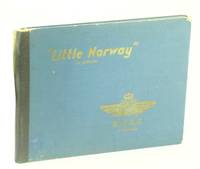
1943ref. 811h1965Toronto: S. J. Reginald Saunders Publishers. Poor. 1943. First Edition. Hardcover. The first 32 pages serve as an introduction to the Norway of today and yesterday accompanied by many black and white photos. The remaining 92 pages describe the history of "Little Norway" established in Canada around the Toronto Island Airport shortly after Germany occupied Norway in WWII. Profusely illustrated with black and white photos we see and read how Norwegian military forces were trained and lived in Canada. Includes names and photos of the Norwegian leaders of this project four photos of the Muskoka aerodrome opened by Crown Prince Olav on May 4th 1942 photos of V.I.P. visitors headshot photos of dozens of unidentified headquarters staff members and an aerial photo of "Little Norway" a completely modern military camp. Undated but appears to be circa 1943. Text in English. Very heavily worn with many military library markings and binding issues. Spine taped. Oblong 12" x 9.25". Not pretty but a worthy reference copy of this important facet of Norwegian and Canadian WWII history. Cooke 3rd Edn p.343. ; 8vo . S. J. Reginald Saunders Publishers hardcover
1940ref. ZEIT1297[Paris], s.l. 1940. 14x9,7 cm. 64 S., OBrosch., Umschlagtitel. Papierbedingt gebräunt, Titelbl. mit kl. Einriss, ansonsten gut erhalten, ohne Stempel od. Anstreichungen Klandestine französische Propagandaausgabe mit Teilen des Aufsehen erregenden Buches von Rauschning. Gespräche zwischen Rauschning und H. hatten in dieser Form niemals stattgefunden, doch war das Werk lange Zeit Bestandteil der antifaschistischen Propaganda. Die vorliegende Broschüre, bisweilen irrig als Tarnbroschüre kategorisiert, enthält u.a. Teile des Kapitels "Hitler privat" (= Kapitel 18 d. engl. u. Kapitel 43 d. franz. Übers.), die in der deutschsprachigen Ausgabe nicht enthalten waren. - Exilarchiv 4705. Kirchner III, Seite 143 ff.
1946ref. FSKB0300London, Faber and Faber [1946]. 19 x 25 cm. 16 nn. Bll. (einschl. Tit.). Durchgehend ill., 16 S. in Farbe, Einband angestaubt, abgegriffen, Hinterdeckel m. Kritzeleien; innen stellenweise fingerfleckig. Lang 62.
1938ref. 25323AB(Den Haag, Mouton & Co. u. Selbstverlag, 1938 ff). Einblattdrucke, Prospekte, Neujahrswünsche u.ä. in unterschiedlichen Formaten, einige Papiere etw. stockfl., ger. Gebrauchssp.; insges. schöne Expl.
1934ref. 3000LParis, Europäischer Merkur 1934. Farbig illustr. OBrosch (W. Mehring). 125 S., 1 Bl. und mit eingeb. Korrekturzettel (Druckfehler). Mit neun Textillustr. vom Verfasser. Unbeschnittenes Exemplar. 8°. Einband mit Randbeschädigungen u. stellenweise etwas stockfl. Widmung von 1939 auf Vortitel. Papierbedingt gebräunt.
1933ref. 13726Berlin : Stössinger 1933. 102 S. ; gr. 8 Original-Halbpergamentband, Einband oben ausgeblichen, Rückenvergoldung, sonst Exemplar in guten Erhaltungszustand
1936ref. 58093ABAntwerpen, Leon de Lee, (1936). 101 S., 1 Bl. Orig.-Broschur mit Deckeltitel.
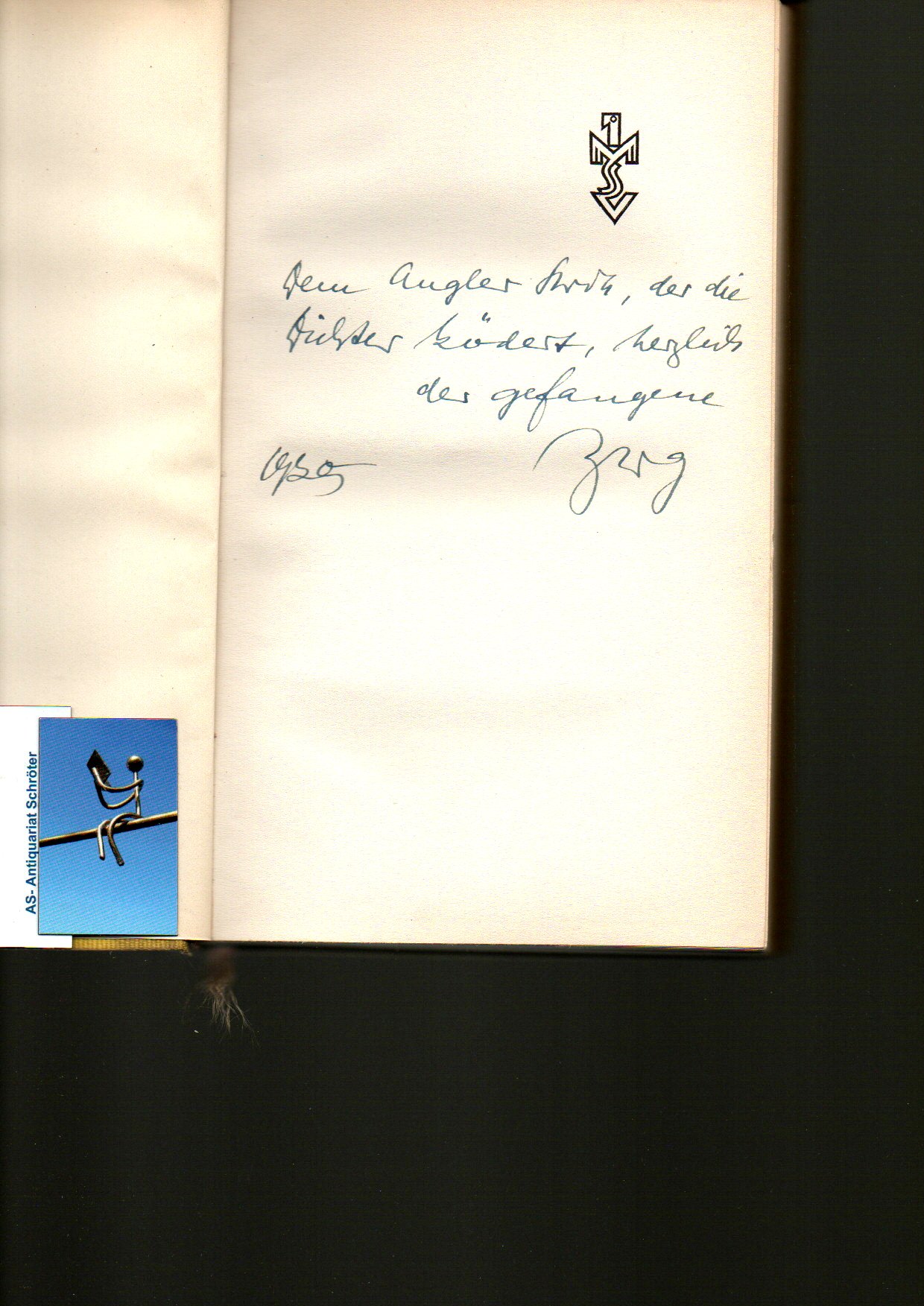
1925ref. 14549J.M. Spaeth Verlag, Berlin, 1925. 195 Seiten, OLeinen. Lesebändchen. Auf dem Titelblatt gewidmet und signiert ["Dem Angler Stroh, der die Dichter ködert, herzlich der gefangene Zweig 1929]. Gutes Exemplar. Fine copy. Signed by the author. Das Buch stammt aus der Bibliothek eines Authographensammlers. Wikipedia: "Heinz Stroh war zwischen 1924 und 1933 Literatur- und Theaterkritiker bei der Berliner Börsenzeitung, und Thomas Mann revanchierte sich 1926 für freundliche Rezensionen bei ihm mit einer signierten Porträtphotographie. Stroh floh nach der Machtergreifung 1933 zunächst nach Prag, wo er in der Zeitschrift Selbstwehr, in der Jüdischen Revue und im Jüdischen Almanach (1937)[1] veröffentlichte. Thomas Mann setzte sich für ihn als einen fähigen, sorgsamen und vielseitigen Schriftsteller ein und gab ihm 1934 bei seinem Prag-Aufenthalt ein Interview, war allerdings mit dessen Wiedergabe nicht einverstanden, weil das Interview bei Manns Ausbürgerungsverfahren gegen ihn verwendet wurde. Im Jahr 1939 musste Stroh nach London fliehen, wo er bei einem deutschen Luftangriff ausgebombt[2] und 1940 als feindstaatlicher Ausländer für einige Zeit interniert wurde. Im Jahr 1945 kehrte er als Angehöriger der alliierten Streitkräfte nach Deutschland zurück. Er blieb in Deutschland, wurde Zeitungsredakteur in Nürnberg und gab erneut das Büchlein mit den Kindheitsnovellen heraus. In Nürnberg versuchte er, dem Kulturleben mit der Gründung einer Thomas Mann-Gesellschaft einen neuen Akzent zu geben. Thomas Mann hat ihn dort am 4. August 1949 besucht."
2002ref. Khe01501Oldenburg (Igel Verlag) 1993 - 2002 (= Erste Ausgabe). 8°, 8 grüne Originalleinenbände mit Originalklarsichtumschlägen (Hardcover), 2746 S., 1
2001ref. 1253940München, edition text + kritik, 1983-2001. Zus. über 5000 S. OKart. (5 Bde m. vereinzelten Kugelschr.-Anstreichungen, 4 Bde m. einigen Anstreichungen u. Notizen a. Hinterumschlag).
1943ref. 28015London, Eigenverlag, Februar 1943. 4to. 50, II S. verfielfältigtes Typoskript, geheftet mit Deckeltitel.
1943ref. 30100Buenos Aires, Eigenverlag, (1943). 4to. Mit zahlreichen Tabellen und Abbildungen untersch. Art (Photographien, Karten, Dokumenten-Reproduktionen, usw.). 493 S. OBrosch. m. Deckelillustration u. Rückentitel.
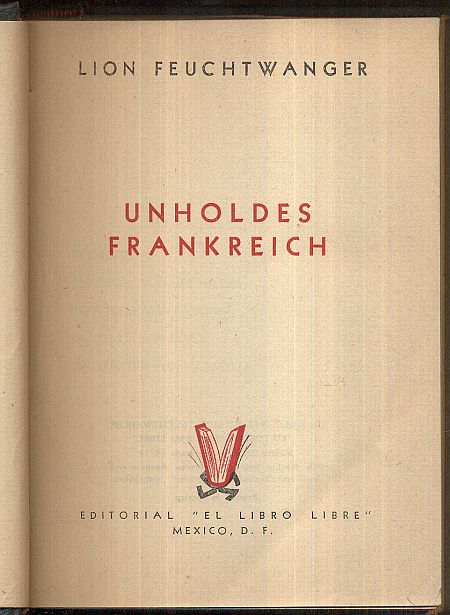
1942ref. 14216Mexico, El Libro Libre, (1942). 8vo. 330 S. Späterer Kunstlerderbd. m. Rückentitel.
1847ref. 465071847 RENNES, Vannier, Editeur - 1847 - complet en 2 tomes In-4, sur vergé - 1/2 Reliure basane racinée postérieure - Dos à nerfs, Titre doré - 492 pages & 658 pages + Notice 10 pages & Epitre dédicatoire & Table des matières XLIII pages - Ex-libris et cachets "Bibliothèque de la compagnie des chemins de l'Ouest" - Très bel exemplaire - Envoi rapide et soigné
1943ref. 2439The Limited Editions Club, New York, 1943. 336(1) S.,goldgeprägter schwarzer OLn in Schuber (dieser unfrisch). Über 40, teils ganzseitige Illustrationen von Steiner-Prag. Erste Ausgabe. Im Impressum eine Blindprägung des Limited Clubs. Entgegen den Angaben ist diese Ausgabe, obwohl von Steiner-Prag mit Bleistift signiert, nicht nummeriert. Stattdessen steht an dieser Stelle das Kürzel "H.S.P." Anscheinend handelt es sich um das Exemplar für Steiner-Prag selbst. Einmalig. Schremmer. S.32. Gutes Exemplar. Beigelegt: gefaltete, vierseitige DIN A4 - Ausgabe `Monthly letter of The Limited Editions Club, April 1943, Number 156`. Good copy of this book. Handsigned by Steiner-Prag. Limited, but not numbered. Instead of a number, there are the marks of Steiner-Prag himself. It seems to be his own book.
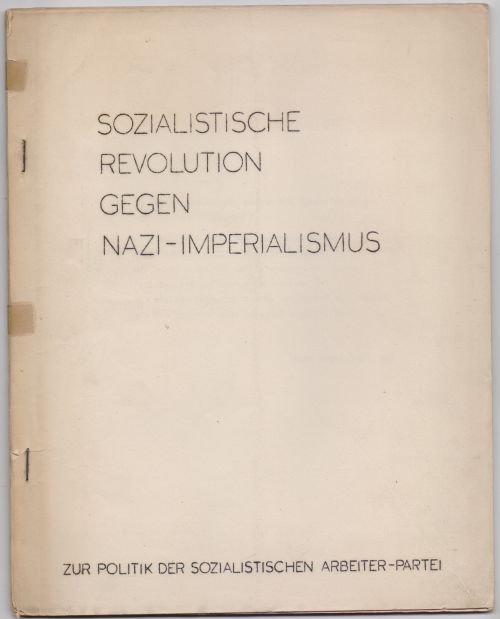
1939ref. SOKO0225Paris, Herausgeber "Weg und Ziel" o. J. [1939]. 23 S., OBrosch. Steiner II,629. Exilarchiv 4391 kennt lediglich die Ausführung als Tarnbroschüre.