4 221 résultats
1942réf. 1086Los Angeles CA: Haynes Corporation 1942. fair to good. 370 illus. glossary discoloration inside boards small stains in margins of a few pages boards stained and worn along edges. Haynes Corporation hardcover
1986réf. 28970New York: Simon and Schuster 1986. Sixth Printing. very good good. 480 illus. index small stain to rear DJ stamp on fore-edge. Inscribed by the author to journalist Chris Matthews. Simon and Schuster unknown
1962réf. 13471Garden City NY: Doubleday & Company Inc 1962. First Edition. fair to good. 460 appendix index author & title written in marker on fore-edge boards faded: small stains some soiling. Autopen signature. Nixons's six crises were the Hiss case the fund speech of the 1952 campaign President Eisenhower's heart attack the anti-American demonstration in Caracas the kitchen debate with Khrushchev and the Presidential campaign of 1960. Doubleday & Company, Inc hardcover
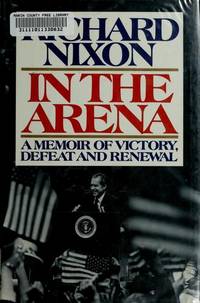
1978réf. 52472New York: Grosset & Dunlap 1978. Presumed First Printing. Hardcover. Very good/Very good. xii 11204 pages. Illus. index DJ in plastic sleeve. Signed by the author. Richard Milhous Nixon January 9 1913 - April 22 1994 was the 37th president of the United States serving from 1969 until 1974. A member of the Republican Party Nixon previously served as the 36th vice president from 1953 to 1961 having risen to national prominence as a representative and senator from California. After five years in the White House that saw the conclusion to the U.S. involvement in the Vietnam War détente with the Soviet Union and China and the establishment of the Environmental Protection Agency he became the only president to resign from the office following the Watergate scandal. He graduated from Duke University School of Law in 1937 and returned to California to practice law. He and his wife Pat moved to Washington in 1942 to work for the federal government. He served on active duty in the Navy Reserve during World War II. He was elected to the House of Representatives in 1946. His pursuit of the Hiss Case established his reputation as a leading anti-Communist which elevated him to national prominence. In 1950 he was elected to the Senate. He was the running mate of Dwight D. Eisenhower subsequently serving for eight years as the vice president. In 1968 he ran for the presidency and was elected defeating Hubert Humphrey and George Wallace in a close election. Nixon ended American involvement in Vietnam in 1973 ending the military draft that same year. Nixon's visit to China in 1972 eventually led to diplomatic relations and he gained the Anti-Ballistic Missile Treaty with the Soviet Union. Derived from a Kirkus review: "I intended to play the role of the President right to the hilt and right to the end." Thus RN whose words read less like memos here than they did in the newspaper excerpts and more like the last will and testament of a fighter who never willingly gave ground. Had he been urged to resign he avers he would have rebelled; and his review of the two occasions - the "secret fund" crisis the second v.p. nomination - when he felt himself crowded and didn't cave in back up his claim. "And tell them I know something about politics too!" he quotes himself as shouting over the phone in the first instance to a wheedling dissembling Tom Dewey. He was a mere freshman senator then built up by the Hiss case but always had ideas of his own. Not public affairs: He had nothing against communism he says until Churchill's Iron Curtain speech. So it's when he's talking politics that his celebrated caginess becomes an asset and his acumen is in evidence; and only then too is he interesting about people. Poor Rose Mary Woods for instance turns up unheralded whereas Bob Haldeman scores for spotting the potential of campaigning-by-TV not whistle-stop train. By the same token while the extensive travels are dull the final days are distinctly not: Intent on being a leader from the time when four years out of law school he was president of every organization in sight he is fully aware of what's slipping away. He records the silence - instead of the usual applause - that greeted his entrance to the last Cabinet meeting the "sober noncommittal" faces as he thanks his aides for their support; and like a prospective suicide he imagines the effect his farewell cables will have on Chou and Chairman Mao "in Cairo and Tel Aviv in Damascus and Amman" - where "eight weeks ago I had been accorded unprecedented acclaim." How the mightiest fell: the pages carry weight. Grosset & Dunlap hardcover
1971réf. 56653Washington DC: GPO 1971. good ex-lib. 26 cm 1183 1969 vol. only footnotes appendices index usual library markings slight wear to boards small white mark on spine. GPO hardcover
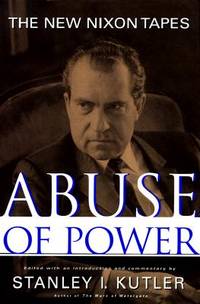
1997réf. 56808New York: The Free Press c1997. First Printing. very good very good. 25 cm 675 index. Edited with an introduction and commentary by Stanley Kutler. Inscribed by the editor Kutler. The Free Press unknown
1974réf. 7098Washington DC: U. S. Government Printing Office 1974. Presumed First Edition First printing. Wraps. Good. 2 1308 2 pages. Wraps. The covers and some pages creased small stains on front cover and spine. Small tears at spine and spine creased. When the existence of tape recorded White House conversations became known in July of that year both Cox and the Senate Watergate Committee asked Judge Sirica to issue a subpoena for several "relevant and important" recordings and documents. The president refused to comply with the subpoenas citing executive privilege and national security concerns. On April 11 1974 by a 33–3 vote the Judiciary Committee subpoenaed 42 White House tapes of pertinent conversations. A week later Jaworski obtained a subpoena from Judge Sirica ordering Nixon to release 64 additional recordings in connection with his case. Nixon initially wanted to refuse both requests completely but James St. Clair and others advised him that such a stance would be untenable politically. Consequently Nixon agreed that transcripts of the tapes requested by the Judiciary Committee with certain passages edited or removed would be released but that Jaworski's request for tapes and other documents would be denied. Nixon announced this decision on April 29. Upon inspecting the transcripts Nixon shocked by several profanity-laced discussions among his inner circle ordered that every use of profanity be replaced by "EXPLETIVE DELETED." The next day April 30 some 1250 pages of transcripts edited by the president and his aides to remove portions deemed "not relevant" to the Watergate investigation were made public. The impeachment process against Richard Nixon was initiated by the United States House of Representatives on October 30 1973 during the course of the Watergate scandal when multiple resolutions calling for the impeachment of President Richard Nixon were introduced immediately following the series of high-level resignations and firings widely called the "Saturday Night Massacre". The House Committee on the Judiciary soon began an official investigation of the president's role in Watergate and in May 1974 commenced formal hearings on whether sufficient grounds existed to impeach Nixon of high crimes and misdemeanors under Article II Section 4 of the United States Constitution. This investigation was undertaken one year after the United States Senate established the Select Committee on Presidential Campaign Activities to investigate the break-in at the Democratic National Committee headquarters at the Watergate office complex during the 1972 presidential election and the Republican Nixon administration's attempted cover-up of its involvement; during those hearings the scope of the scandal became apparent and the existence of the Nixon White House tapes was revealed. Following an April 1974 subpoena from the Judiciary Committee edited transcripts of 42 taped White House conversations relevant to the Watergate cover-up were finally made public by Nixon. However the committee pressed for the audio tapes themselves and subsequently issued subpoenas for additional tapes all of which Nixon had refused. That same month Nixon also refused to comply with a subpoena from special prosecutor Leon Jaworski for 64 Watergate-related tapes. Ultimately on July 24 1974 the United States Supreme Court issued a unanimous decision against Nixon which ordered him to comply. On May 9 1974 formal hearings in the impeachment inquiry of Nixon began culminating on July 27–30 1974 when members of the Democratic-led Judiciary Committee eventually approved three articles of impeachment. These articles charged Nixon with: 1 obstruction of justice in attempting to impede the investigation of the Watergate break-in protect those responsible and conceal the existence of other illegal activities; 2 abuse of power by using the office of the presidency on multiple occasions dating back to the first year of his administration 1969 to unlawfully use federal agencies such as the Internal Revenue Service and the Federal Bureau of Investigation as well as establishing a covert White House special investigative unit to violate the constitutional rights of citizens and interfere with lawful investigations; and 3 contempt of Congress by refusing to comply with congressional subpoenas.3 These articles were reported to the House of Representatives for final action with 7 of the committee's 17 Republicans joining all 21 of its Democrats in voting in favor of one or more of the articles. Two other articles were debated in committee but were rejected. Based on the strength of the evidence presented and the bipartisan support for the articles in committee House leaders of both political parties concluded that Nixon's impeachment by the full House was a certainty if it reached the House floor for a final vote and that his conviction in a Senate trial was a distinct possibility. On August 5 1974 Nixon released a transcript of one of the additional conversations to the public known as the "smoking gun" tape which made clear his complicity in the Watergate cover-up. This disclosure destroyed Nixon politically. His most loyal defenders in Congress announced they would vote to impeach and convict Nixon for obstructing justice. Republican congressional leaders met with Nixon and told him that his impeachment and removal were all but certain. Thereupon Nixon gave up the struggle to remain in office and resigned on August 9 1974. U. S. Government Printing Office paperback
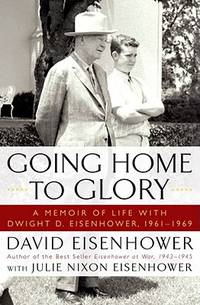
2010réf. 56329New York: Simon & Schuster 2010. First Edition. First Printing. Hardcover. As new/as new. 323 pages. Illus. notes bibliography index. Signed by both co-authors and dated. An intimate account of the final years of David Eisenhower's grandfather ex-President Dwight Eisenhower. Simon & Schuster hardcover
1990réf. 46191New York: Simon and Schuster 1990. First Printing. Hardcover. Very good/good. 384 pages. Illus. index some wear and soiling to DJ. Signed by the author on a Nixon Library bookplate. Simon and Schuster hardcover
1986réf. 55950New York: Simon and Schuster 1986. First Printing. Hardcover. good. 480 pages. Illus. index some wear to board corners a few small pin pricks in front board. Signed by the author on a Richard Nixon Library & Birthplace bookplate pasted inside half-title page. Simon and Schuster hardcover
1971réf. 38400Washington DC: GPO 1971. good. 26 cm 1183 1969 vol. only footnotes appendices index small dings to top edge front board some scratches to rear board. GPO unknown
2010réf. 52418Place_Pub: New York: Simon & Schuster 2010. First Edition. First Printing. Hardcover. Fine/fine. 323 pages. Illus. notes bibliography index. Signed by both co-authors. An intimate account of the final years of the author's grandfather ex- President Dwight Eisenhower. Program from a National Archives lecture and book signing laid in. Derived from a Kirkus review: Dwight Eisenhower's grandson David and Richard Nixon's daughter Julie present an insightful memoir of the ex-president's retirement years. On leaving office the former president and his wife moved to his Gettysburg Pa. farm to live near his son and grandchildren including the then 12 year-old author David. The bruising 1960 presidential campaign left him bitterly resentful of President Kennedy and no fan of the press especially when polls gave his presidency low marks. The author adds that Eisenhower remained a national hero and the most influential Republican. Former Vice President Nixon was in temporary eclipse having lost the presidency in 1960 and lost again in California's 1962 governor's race. The author intermixes politics with an affectionate account of Eisenhower's domestic routine which included a great deal of TV watching golf bridge painting and socializing with friends but also writing intense devotion to running a working farm and delivering sage advice to young people including the adolescent author. Few readers will be surprised at the former president's lack of sympathy with '60s morals music and civil disorder but the author stresses that he disliked discrimination against blacks and supported Kennedy's and Johnson's civil-rights legislation. The author's mixture of personal memories and research produces a fine addition to the history of both Eisenhower and the '60s. Simon & Schuster hardcover
1972réf. 56744Washington DC: GPO 1972. very good. 26 cm 1362 v.3 only color frontis illus. footnotes appendices index boards slightly scuffed. GPO hardcover
réf. 1601452314.Ghardcover. Good. Access codes and supplements are not guaranteed with used items. May be an ex-library book. hardcover
réf. 1591138345.Ghardcover. Good. Access codes and supplements are not guaranteed with used items. May be an ex-library book. hardcover
réf. 1436838002.Gpaperback. Good. Access codes and supplements are not guaranteed with used items. May be an ex-library book. paperback
réf. 1437103510.Gpaperback. Good. Access codes and supplements are not guaranteed with used items. May be an ex-library book. paperback
réf. 1432555073.Gpaperback. Good. Access codes and supplements are not guaranteed with used items. May be an ex-library book. paperback
réf. 1437186793.Ghardcover. Good. Access codes and supplements are not guaranteed with used items. May be an ex-library book. hardcover
réf. 1403340706.Ghardcover. Good. Access codes and supplements are not guaranteed with used items. May be an ex-library book. hardcover
2015réf. 115168Fairchild Books. New. 2015. Paperback. 1628924705 . FREE UPGRADE to Courier/Priority Shipping Upon Request - IN STOCK AND IMMEDIATELY AVAILABLE FOR SHIPMENT - IN STOCK AND IMMEDIATELY AVAILABLE FOR SHIPMENT - Flawless copy brand new pristine never opened - -- with a bonus offer-- . Fairchild Books paperback
réf. 1104368846.Gpaperback. Good. Access codes and supplements are not guaranteed with used items. May be an ex-library book. paperback
réf. 1104485842.Gpaperback. Good. Access codes and supplements are not guaranteed with used items. May be an ex-library book. paperback
réf. 0548400245.Gpaperback. Good. Access codes and supplements are not guaranteed with used items. May be an ex-library book. paperback
réf. 0548879737.Gpaperback. Good. Access codes and supplements are not guaranteed with used items. May be an ex-library book. paperback