46 648 résultats
réf. 29868Image size ca. 212 x 142 mm. sheet size 321 x 190 mm. The design depicts a man dressed in an exotic Egyptian costume deocrated with numerous armlets anklets necklace earrings headdress etc. Executed in watercolour and gold paint on heavy wove paper. Slightly worn; browning to outer edges from old mat; remnants of mounting paper to verso. unknown books
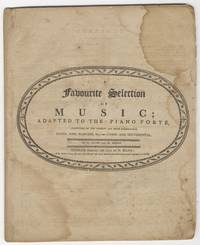
1806réf. 41672Dedham: Printed and Sold by H. Mann; who executes music printing of all kinds on reasonable terms 1806. Quarto. Sewn. i title within oval ornamental border 2-32 pp. Typeset throughout. With contents to head of page 2. Contains 27 pieces most with text some instrumental as follows: - Address to a Tuft of Violets. A New Song. Written by H. Mann. Music by O. Shaw - Bonaparte's Grand March - Gen. Abercrombie's March - Tink a Tink - Tears that Exhale. A Favourite Song Sung by Master Walsh in the Prisoner composed by T. Andrews - O Listen to the Voice of Love - Drink to Me only. A Favorite Glee. Composed by Dr. Jackson - Felton's Gavot. With Variations - Poor Emma. A Favorite New Song - Air by O. Shaw - Unmoved I'll Brave the Stormy Sea. Sung by Miss Brett - The Persian Maid. Composed by W.E. Heather. Words by G. Walker - Poor Richard - Adieu My Liberty - 'Tis Only No Harm To Know It You Know. A New Song. The Poetry by J.O. Keefe Music by William Shield - Bonny Doon. A Favorite Scotch Song - Storace - New Century Hornpipe - The Miller's Daughter. A Favorite Song. Composed by Mr. Hook - London. Composed by T. Swan - A Favorite Rondeau - She Lives in the Valley Below. A New Song Composed by Mr. Hook - Resignation. A New Song Composed by O. Shaw - I owe You One. A Favorite Song Sung by Mrs. Seymour in the Sixty Third Letter - A Favorite March in the Demolution of the Bastille - The Cottage in the Grove. A Favorite New Song - Hymn. Composed by O. Shaw Slightly worn and browned; upper outer and lower inner corners stained; some corners slightly frayed and creased. Wolfe 7884. OCLC 36038853 2 copies only. Shaw was a noted American composer compiler teacher singer organist and publisher. "After accidental eye damage leading to blindness he undertook musical studies with John L. Berkenhead Gottlieb Graupner and Thomas Granger about 1800. In 1805 he established himself as a teacher of the piano and organ in Dedham Massachusetts where he began to issue his music in collaboration with Herman Mann. Moving to Providence in 1807 Shaw became a central figure in the city's musical life as organist organizer of bands and composer of songs odes anthems and marches for patriotic and civic occasions. . Shaw sought to improve the quality of local sacred music co-founding the Psallonian Society and provided inspiration to the founding of the Boston Handel and Haydn Society in 1815 frequently participating in its early performance. His tenor voice was described as sweet simple and natural; his performances of his own compositions were said to be remarkably affective. Mary's Tears There's nothing true but heav'n and All things fair and bright are thine were particularly popular establishing him as a leader in the development of American song. Shaw taught the piano and singing throughout his career and conducted singing schools in the early decades of the 19th century Lowell Mason was among his pupils. He also instructed his own children who later served him as amanuenses. His pedagogical compositions include many easy keyboard pieces two instructional books for the piano 1811 1831 and a compilation of ensemble music For the Gentlemen 1807 which was one of the earliest American printed instrumental tutors by a native composer." Bruce Degen in Grove Music Online Mann was an important early 19th century American publisher especially of hymns and secular songs based in Dedham Massachusetts. Printed and Sold by H. Mann; who executes music printing of all kinds, on reasonable terms unknown books
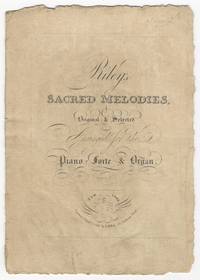
1820réf. 41670New York: Engraved Printed & Sold by E. Riley 23 Chatham Street 1820. Octavo. Disbound. 1f. recto title verso blank 16 pp. Engraved. Uncut. Worn browned and foxed; sewing holes and small tears to blank inner margins; small tear to blank lower margin of pp. 5/6; signatures separated. OCLC 35105397 one copy only lacking title. Not in Wolfe. Riley was a musician music teacher musical instrument maker and music engraver publisher seller and composer. He emigrated to New York in 1805 or 1806 and was one of the most active of the early New York music publishers. Wolfe p. 735. Engraved, Printed & Sold by E. Riley, 23 Chatham Street unknown books
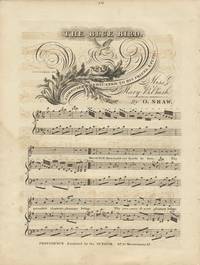
1827réf. 41675Providence: Published by the Author No. 70 Westminster St 1827. Folio. Disbound. i blank 2-3 i blank pp. With fine engraving to head of title by J.R. Penniman depicting nesting birds. Slightly browned; small binder's holes and tears to inner margins; lower outer corners slightly dampstained. Wolfe 7927 variant without Boston imprint at foot of page 2. Shaw was a noted American composer compiler teacher singer organist and publisher. "After accidental eye damage leading to blindness he undertook musical studies with John L. Berkenhead Gottlieb Graupner and Thomas Granger about 1800. In 1805 he established himself as a teacher of the piano and organ in Dedham Massachusetts where he began to issue his music in collaboration with Herman Mann. Moving to Providence in 1807 Shaw became a central figure in the city's musical life as organist organizer of bands and composer of songs odes anthems and marches for patriotic and civic occasions. . Shaw sought to improve the quality of local sacred music co-founding the Psallonian Society and provided inspiration to the founding of the Boston Handel and Haydn Society in 1815 frequently participating in its early performance. His tenor voice was described as sweet simple and natural; his performances of his own compositions were said to be remarkably affective. Mary's Tears There's nothing true but heav'n and All things fair and bright are thine were particularly popular establishing him as a leader in the development of American song. Shaw taught the piano and singing throughout his career and conducted singing schools in the early decades of the 19th century Lowell Mason was among his pupils. He also instructed his own children who later served him as amanuenses. His pedagogical compositions include many easy keyboard pieces two instructional books for the piano 1811 1831 and a compilation of ensemble music For the Gentlemen 1807 which was one of the earliest American printed instrumental tutors by a native composer." Bruce Degen in Grove Music Online John Ritto Penniman 1782-1841 was a noted Boston-based artist; in addition to his work as a painter he engraved the official seal of the city of Boston in 1822. A fine example of early American illustrated sheet music. Published by the Author, No. 70 Westminster St unknown books
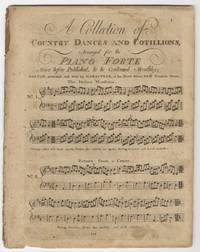
1808réf. 41669Boston: Published and sold by G. Graupner at his Music Store No. 6 Franklin Street PNs 213-216; 259-262; 465-468; 469-472 1808. Folio. Disbound. 16 pp. Contains 33 dances with performance instructions to foot of each as follows: The Italien Monfrina; Return from a Cruise; Caro Dolce; Mother Goose; Calabria; Ap Shenkin; Michael Weggins; Hit or Miss; The Lane of Sweet Erin; No. 2: The Constitution Frigate!; The Sailors Hornpipe; Caller Herring; The Rout; Smash the Windows; Morgiana; the Successfull! Candidate; No. 3: Prime or Six in a Coach; The Lads of Ayr; Verona; Circassian Dance; The Cottage Dance; The North Tower; Hibernian Dance; The Minstrel's Waltz; The Villagers Dance; No. 4: Voulez vous Danser Mademoiselle; Lady Burdett; The Comet; The Favourite Guarache Dance; Morgiana in Spain; Miss Tilney Longs Waltz; The Tank; and Julias Cottage. Worn browned and foxed; small chips and tears to margins; signatures loose. Wolfe 1993; 1994A; 1995; 1996. Published and sold by G. Graupner at his Music Store, No. 6 Franklin Street [PNs 213-216; 259-262; 465-468; 469-472] unknown books
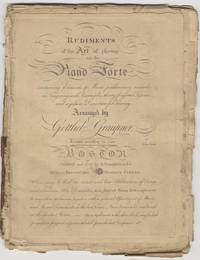
1806réf. 41673Boston: Printed and Sold by G. Graupner at his Musical Repository No. 6 Franklin Street 1806. Folio. Disbound. 1f. recto title verso blank 40 pp. Engraved throughout. With "Where may be had the latest and best Publications of Europe and America Also Clementi's new patent Piano Forte's superiour! to any others yet known together with a general Assortment of Music and Musical Instruments on the best Terms. Piano Fortes to let and tuned at the shortest Notice. As a Suplement! to the above Work may be had progressive fingered Lessons selected from the best Composers" to foot of title. Worn; some foxing; uniform light browning heavier to some leaves; most leaves/signatures detached; chips and tears to many blank margins; tears to numerous leaves; small embossed decorative circular stamp of the Essex Institute to upper outer corner of title. First Edition. Rare. Wolfe 3202 one complete copy only. OCLC 20911441. Graupner was an important early American musician teacher publisher and music seller of German origin. He began his career as oboist in a military regiment in Hanover travelling to London in ca. 1788 where he was first oboist in the orchestra for Haydn's 1791-1792 concerts. His first known musical activity in America was as a member of the City Theatre Orchestra in Charleston South Carolina where he performed an oboe concerto on 9 November 1795; he then moved to Boston where he was associated with the Federal Street Theatre as of January 1797. "During the early decades of the 19th century he became Boston's leading music publisher and dealer selling music and instruments on consignment from other dealers and engraving and printing much music and instructional material himself. He was leader of the Philharmonic Society throughout its existence 1809-24 and was a charter member of the Handel and Haydn Society in 1815. Graupner's influence on the musical life of Boston was considerable because of the variety and scope of his activities through a long career." Douglas A. Lee in Grove Music Online. Printed and Sold by G. Graupner, at his Musical Repository, No. 6 Franklin Street unknown books
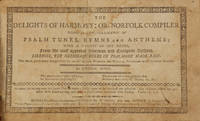
1805réf. 36825Dedham MA: H. Mann for the Author 1805. Oblong octavo. Contemporary leather-backed blue/gray paper-covered wooden boards. 1f. recto title printed within decorative border verso copyright iii Preface dated "New-Canaan Con. October 1805" iv "To the Teachers of Music and Choristers in the United States: v-xi "Concise Rules of Psalmody" xii "Musical Dictionary" xiii-xv "List of Subscribers" xvi 17-95 printed music i index pp. The list of subscribers includes persons resident in New Canaan Norwalk Wilton Winchester Weathersfield Ridgbury and Colebrook Connecticut; Dedham Massachusetts; and New York. Signature of "J.I. Miller Ghent N.Y. Jan. 24 1883" and "Property of Emma M. Sherman Ghent N.Y." in pencil to front pastedown. Contains 67 compositions 65 American including one anthem four set-pieces and one canon by Austin Capt. S. Belknap S. Capen A. Ellis S. Hanford G. Holbrook O. Holden S. Holyoke Ingalls W. Janes S. Jenks O. King A. Knapp Rev. C. Lee Madan A. Munson Newcomb S. Raymond T. Swan S. Way Dr. Wetmore and R. Wilcox with 34 identified first printings. Binding worn with paper lacking to both boards wood lacking to upper portion of lower board; hinges cracked; endpapers lacking. Somewhat worn browned and foxed; some dampstaining; vertical crease to title; portion of final leaf lacking with loss of several measures to recto "Resolution" and text to verso "Index to the Music". Third edition. ASMI 289. Jenks a composer and tunebook compiler taught singing-schools in New England and New York state and developed a network of both pupils and fellow teachers whose compositions he went on to publish. The Delights of Harmony contains his Sorrow's Tear 1804 perhaps the earliest American setting of a poem by Thomas Moore as well as his Evening Shade and North Salem both of which are still frequently performed by southern shape-note singers who preserve the singing-school tradition. "Stephen Jenks' music is representative of the type of music being written at that time in rural New England America a cappella and an interest in melodic writing. However his music contains striking harmonic progressions unusual dissonances and cross relations. In "Weeping Nature" The Delights of Harmony 1804 for example Jenks seems to revel in the clash of the E major / minor chord or in the song "Sorrow's Tear" filled with cross relations between C sharp / C natural. Although many of these result from his use of modal harmony and as previously mentioned strong melodic writing for the individual parts his use of these relations is not simply random they are used to express the text being set." Wikipedia. H. Mann for the Author unknown books
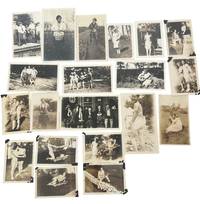
1925réf. 239021925. Women's same sex intimacy vernacular photo archive circa 1925 to 1935 documenting social scenes in which women kiss embrace pose as couples and move between conventionally feminine dress and masculine coded work and leisure clothing. The most direct photographs show women kissing while seated together outdoors holding one another closely and staging a playful courtship tableau with one woman kneeling before another. These photographs date from an interwar period in which relationships between women could be intensely present in private life while remaining difficult to name publicly. Laws and public attitudes toward nonconforming sexuality grew harsher in the early twentieth century and fear of arrest family rejection loss of employment or housing and violence led many people to conceal aspects of their identities; during the same period municipal ordinances in numerous American cities criminalized appearing in public in clothing deemed inappropriate to one's sex. Photo archive of 20 silver gelatin vernacular photographs ranging from approximately 2.5 x 3.5 to 2.5 x 4.5 inches United States c.1925 to 1935. The photographs repeatedly depict women in pairs and small groups across rural domestic and recreational settings. One pair sits closely together in the grass and kisses; another woman wraps both arms around a seated companion and kisses her; two women stand pressed together in bathing attire; and another pair clasp hands and lean backward from one another in a playful outdoor pose. A particularly theatrical image shows a woman dressed in trousers or knickerbockers kneeling before a standing woman and gesturing upward in a scene resembling a marriage proposal or courtship performance. Several women wear neckties loose trousers knickerbockers overalls boots collared shirts and cropped hairstyles clothing that carried masculine associations during the period while other images show the same social world in dresses cloche style hats tailored coats skirts and bathing suits. Three women in work clothes pose together outdoors; another stands in a cultivated field wearing trousers and high boots; a woman carrying a basket of produce appears in similar clothing; and a mixed group gathers beside railroad tracks. Leisure scenes show women swimming reclining on blankets or grass embracing in gardens and yards and posing with arms around one another. One photograph captioned "Hank" on the verso depicts male to female cross dressing extending the archive's record of gender play beyond the women's masculine coded presentation. Several prints retain black paper album corners or mounting remnants from earlier album placement while other versos carry numerical stamps and later pencil notations. The archive belongs to a period when older forms of socially tolerated female companionship increasingly collided with emerging medical legal and popular definitions of homosexuality as a distinct and stigmatized identity. By the late 1920s and 1930s women whose relationships clothing or public behavior departed from heterosexual and feminine conventions faced growing scrutiny even as queer social worlds became more visible in cities such as New York. Performers including Gladys Bentley made female masculinity and desire for women conspicuous within Harlem nightlife appearing in men's formalwear and openly directing flirtation toward women while outside those exceptional public settings same sex relationships were more often preserved through private domestic life friendship networks and personal photographs. This group records that private register: not a single ambiguous embrace but repeated scenes of kissing coupled posing physical affection mock courtship masculine coded dress and cross dressing across a twenty photograph social record. Light to moderate surface wear occasional creasing and silvering remnants of album mounting at several corners. Overall in good condition. A concentrated visual record of women photographing same sex intimacy gender nonconforming presentation and private social bonds during the interwar years. unknown books
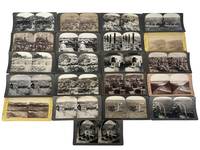
1900réf. 206431900. Unidentified photographers Palestine stereoview archive ca. 1900-1930 documents religious geography pilgrimage activity and daily life in Palestine during the late Ottoman and British Mandatory periods supporting research into colonial visual culture Western educational media and representations of the Holy Land. The archive reflects the widespread use of stereoscopic imagery in classrooms and lecture circuits where photographic views of biblical sites and contemporary inhabitants were circulated to shape Western understanding of the region. The images foreground Christian pilgrimage locations while also incorporating local populations and landscapes offering a layered record of how Palestine was visually interpreted for foreign audiences in the early twentieth century. Twenty-one albumen stereoview photographs primarily produced by Keystone View Company and Underwood & Underwood depicting locations across Palestine including Jerusalem Bethlehem Nazareth and surrounding regions. Views include the Mount of Olives pilgrims walking along the Via Dolorosa the Garden of Gethsemane and the village of Siloam Silwan. Landscape images show the plains of Jericho the Sharon plain and the hills of Samaria with visible architectural ruins including freestanding stone columns. Several images depict daily activity including a Samaritan woman drawing water from Jacob's Well a cattle drive moving through the Valley of Hinnom and individuals traveling mountainous terrain with pack animals. Interiors and urban edges are suggested through narrow streets and clustered buildings. Many mounts include printed captions on the verso in multiple languages. One Keystone stereoview dated 1909 describes the view from the Mount of Olives overlooking Jerusalem referencing the Valley of Jehoshaphat the Golden Gate and the city's religious divisions. Another caption provides a descriptive overview of Jerusalem's population industries and urban conditions framing the city for an արտաքին educational audience. Produced during a period of transition from Ottoman to British control the archive reflects how Palestine was mediated through commercial photography for Western consumption particularly emphasizing biblical associations and pilgrimage routes while presenting local populations within ethnographic and orientalist frameworks. The stereoview format itself functioned as both entertainment and instruction reinforcing spatial and cultural narratives through three-dimensional illusion. Light edge wear and minor surface handling consistent with use; images remain clear with well-preserved contrast. Overall in very good condition. unknown books
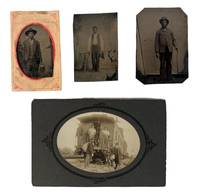
1870réf. 202721870. Early photographs of African Americans produced during the decades following emancipation provide important visual documentation of Black life during the Reconstruction and early Jim Crow eras. Portrait photographs and vernacular images from the late nineteenth century capture African Americans navigating newly won freedoms while confronting the economic and social constraints that defined the post slavery United States. Such photographs often record moments of labor travel and self presentation reflecting both the aspirations and realities of African American life during a period of profound social transformation. This small photographic archive dating from the 1870s through the 1890s preserves rare images of African American men during the generation immediately following the end of slavery. Archive of four original photographs including two tintypes and one albumen print measuring approximately 2.25 x 3.25 inches to 4.5 x 6.5 inches. The most visually complex image an albumen photograph dating from the late 1890s depicts a Black man and a young boy standing on railroad tracks behind a caboose where four white men are also present. The African American man wears a hat and carries a large sack across his back while the boy holds a basket filled with produce suggesting a scene connected to travel commerce or railroad labor in the expanding transportation networks of the late nineteenth century. The presence of the caboose and railroad workers situates the photograph within the rapidly developing rail infrastructure that reshaped the American economy during the post Civil War period. The remaining photographs consist of tintype portraits of African American men dressed in the formal attire of the late nineteenth century including bowler hats vests and tailored suits. One sitter is photographed wearing a three piece suit and holding a cane while another poses beside a table while holding his hat in hand. Portrait photography played an important role in African American communities during the decades after emancipation as newly freed individuals asserted dignity respectability and personal identity through formal portraiture. At the same time vernacular photographs such as the railroad scene record the economic realities and labor environments in which many African Americans worked during the late nineteenth century. Together these photographs document African American presence within both public labor landscapes and private studio portraiture during a formative period in the history of Black life in the United States. Four original photographs including tintypes and an albumen print measuring approximately 2.25 x 3.25 inches to 4.5 x 6.5 inches. One photograph with clipped corners; otherwise images clear and well preserved. Overall condition very good. unknown books
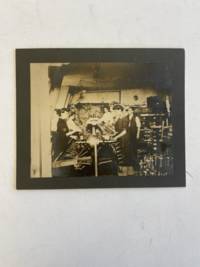
réf. 18258Albumen photo of women doing factory work. C. 1890s. Measures 9 x 7 inches. Photo shows 4 women working over a large industrial machine two on either side so they face one another. 2 wear dark smocks over their dresses sleeves rolled to the elbows as their hands work the machine. Their hair is tied back and eyes turned downward focused on the work. A man in vest and shirtsleeves stands behind them presumably supervising their progress. The 1800s saw new job opportunities for women on factory floors providing independence previously unavailable. The working conditions were often harsh with women receiving one half to two-third of male wages and working up to sixteen hours a day six days a week. The women in this image appear to be in a basement room a small gas light hanging from the ceiling and stone walls visible behind them lined with a jumble of boxes. The Female Protective Union was established in 1850s in order to improve workplace conditions for women. Sunning to image but details and expressions still clear. Small 1-inch surface tear to side of image does not affect subjects or important details. Overall very good condition. unknown books
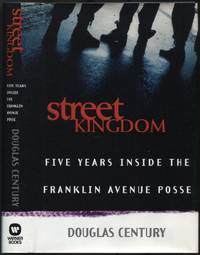
1999réf. 509287New York: Warner Books 1999. Hardcover. Fine/Fine. First edition. 415pp. Fine in a fine dust jacket. Advance review copy with publisher's material laid in. Warner Books hardcover books
1823réf. 160841823. Preston John Howard. Autograph letter to his daughter Sarah November 29 1823 records a father's detailed expectations for his daughter's education including independent composition disciplined study reading comprehension and instruction under a female tutor. Addressing Sarah as "My dear child" Preston praises a letter she had sent to her brother after learning that "you had not only written it but composed it." His distinction between copying or assisted writing and original composition shows his attention to Sarah's intellectual development while his references to her "Cousin and Tutoress" identify a woman responsible for her instruction. Preston John Howard. November 29 1823. Autograph letter signed three pages folded from a large sheet with the fourth page retaining the original stampless address panel. Preston urges Sarah to "profit every Day by the kind and good instruction of your Cousin and Tutoress" adding "you must never esteem anything too difficult which you are set to do." He places disciplined education above social rank: "If you were the King's Daughter you would have to learn in patient submission; and how much more ready should you be to do so in your situation in Life!" Preston then addresses reading noting that he and Sarah's mother had "always been glad to see your fondness for reading" but instructing her to "understand and remember what you read-as it is not the quantity of reading but duly improving it which is the thing to be desired-and that makes it of real worth." He closes by assuring his absent daughter "we do not forget you but love you much tho' you are at a distance from us." Written while Sarah was living away from her parents and receiving instruction from a female relative identified specifically as her tutor the letter supplies direct evidence of one family's expectations for a girl's education in 1823. Preston's comments identify composition perseverance comprehension memory and purposeful reading as measures of Sarah's progress and show both parents taking an active interest in her studies. The surviving address panel preserves the letter's original postal format. Usual losses where the original wax seal was opened; otherwise well preserved. An unusually detailed family letter documenting the substance of a young woman's education through a father's contemporary instructions to his daughter. unknown books
réf. 13293Two small ceramic objects dating from the ancient Mediterranean and Near Eastern worlds including a Byzantine-period "slipper" lamp and a reddish terracotta vessel with a stylized animal handle. The pair documents two distinct approaches to utilitarian ceramic production: a compact lamp made for illumination and a covered vessel incorporating figural decoration into its handle. The second object is of uncertain Near Eastern origin and has been broadly attributed to the period between the 3rd century B.C. and the 3rd century A.D.; that dating remains provisional. The Byzantine "slipper" lamp is formed in coarse pink-tan ware and retains heavy earthen patination. Its elongated body follows the compact slipper-shaped profile associated with portable ceramic lamps of the period. The second object in reddish terracotta has an incised-decorated lid surmounted by an unusual figural handle in the form of a stylized boar. The animal straddles the upper portion of the lid and is modeled with small prominent eyes giving the handle a distinctly sculptural character. Lengths approximately 3 to 3¾ inches. The objects preserve evidence of small-scale ceramic manufacture in which practical forms were combined with regional decorative conventions and animal imagery. Surface accretions and earthen patinas remain visible particularly on the lamp. Condition otherwise not stated in the supplied description. A compact grouping of ancient ceramic forms distinguished by the contrast between a Byzantine lighting vessel and a figural terracotta object with a modeled boar handle. unknown books
1885réf. 139371885. American Colony Photo Department. Two views of Jerusalem and the Mount of Olives circa 1898 to the early twentieth century document the city and surrounding cultivated landscape during the late Ottoman era. Photographed before extensive twentieth-century urban expansion transformed the slopes east of the Old City the images preserve olive groves roads scattered buildings and broad topographical relationships between Jerusalem and the Mount of Olives. They support research into the historical geography of Jerusalem Ottoman Palestine pilgrimage photography landscape change and the role of resident photographic studios in shaping international visual knowledge of the Holy Land. The American Colony Photo Department was established in Jerusalem in 1898 and became one of the region's important commercial photographic services producing views of sacred sites settlements people and contemporary events for tourists and a wider international audience. Albumen photographs circa 1898 to the early twentieth century each measuring approximately 10½ × 14 inches and mounted recto and verso on the same 14 × 20 inch card. The recto presents Jerusalem from the Mount of Olives with mature olive trees occupying the foreground and the densely built city extending across the distant horizon. Printed along the lower center is the bilingual caption "Jerusalem. from Mt. of Olives. Jerusalem du Mont de Oliviers." while the American Colony Jerusalem emblem appears within the trunk of an olive tree at lower right. The verso captioned "Mount Olivet" shifts attention away from the distant city to the Mount itself: a hill rises in the background above olive trees dispersed buildings and a network of intersecting unpaved roads. The American Colony Jerusalem emblem appears at lower left. Together the paired compositions record both the celebrated panoramic viewpoint and the agricultural architectural and transportation landscape surrounding it. The views belong to a commercial photographic tradition that served travelers and pilgrims while also creating a sustained visual record of Jerusalem and Palestine. Unlike photographers who visited the region briefly members of the American Colony lived and worked in Jerusalem and the department developed an extensive stock of images depicting the city and its environs; a 1914 catalogue documents the circulation of such views as part of the firm's early commercial inventory. The mount has slight warping while both albumen prints retain strong visual clarity with no substantial defects noted; photographs near fine mount very good. The unusually large two-sided presentation offers complementary evidence of Jerusalem's urban profile and the comparatively open Mount of Olives landscape before later development. unknown books
1885réf. 138911885. An original 19th-century albumen photograph circa 1885 showing San Francisco houses railroad tracks the industrial waterfront and San Francisco Bay from an elevated hillside vantage point. Wording in the negative at bottom reads "B 865 San Francisco Bay. Tabers Photo. San Francisco." Mounted on card. 5 x 8 inches. The view appears to have been taken from the Potrero Hill area looking toward Mission Bay and the southeastern San Francisco waterfront. Rows of modest wooden residences descend the hillside toward a dense working landscape of warehouses factories rail infrastructure wharves and maritime facilities. Numerous ship masts rise above the waterfront in the distance while smoke from industrial activity hangs over portions of the city and harbor. The photograph is particularly effective in documenting the close relationship between residential growth railroad transportation maritime commerce and industry in late-19th-century San Francisco. Rather than presenting the city through its better-known civic or commercial landmarks the image records a working district in transition where domestic neighborhoods existed immediately alongside transportation corridors and the developing industrial waterfront. During the 1880s the areas surrounding Mission Bay and the southern waterfront were becoming increasingly important to San Francisco's expanding economy with rail lines and industrial facilities reshaping districts that had previously been more sparsely developed. The visible concentration of wooden housing active rail lines factories smoke and sailing vessels gives the photograph considerable value as a visual record of this period of rapid urban expansion. The combination of the largely low-rise wooden cityscape active sailing vessels heavy waterfront industry and Taber's photographic imprint is consistent with a date in the mid-1880s. An unusually detailed early view of San Francisco's southeastern waterfront showing the physical proximity of housing industry rail transportation and the Bay during a formative period in the city's development. unknown books
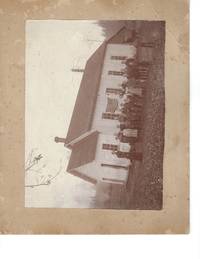
1890réf. 153931890. Rural school class photograph circa 1890 records a female teacher with approximately twenty students of varying ages outside their schoolhouse. The broad age range of the children and rural setting provide direct visual evidence of late nineteenth-century American schooling when rural teachers commonly instructed children of several ages within a single school. The school's name and location are unidentified preventing more specific claims about its district curriculum or organization. Albumen photograph on heavy backing circa 1890. Approximately twenty students pose outdoors with a young female teacher dressed in late nineteenth-century clothing. An American flag hangs prominently on the exterior wall of the schoolhouse. Behind the building is a substantial stack or load of firewood while trees surround the clearing and the distant wooded area appears hazy. The combination of schoolhouse pupils teacher flag and firewood records both the class and elements of the physical environment in which the school operated. The image preserves a rural educational setting before the widespread consolidation of small country schools into larger graded institutions during the twentieth century. Its mixed-age student body isolated wooded surroundings and visible supply of firewood provide concrete details of schooling and the maintenance of a rural school building in the late nineteenth century. Some age staining to the mount; photograph itself in very good condition. unknown books
réf. 11773Late 19th century view of the Avenue de l'Opéra records pedestrian and carriage traffic along one of central Paris's major thoroughfares. The street scene shows people in period dress sharing the avenue with horse drawn carriages preserving visible evidence of transportation dress and daily activity in nineteenth century Paris. Sepia toned albumen photograph 11 x 8.25 inches showing the Avenue de l'Opéra in Paris France. The composition looks along the broad avenue with pedestrians visible at street level and horse drawn vehicles occupying the roadway. The image documents the avenue during the era before motor traffic transformed movement through the city and provides a contemporary visual record of the built environment and street life of Paris. The Avenue de l'Opéra was created during the extensive nineteenth century reconstruction of Paris and provided a direct approach to the Paris Opera. This contemporary view records how the completed avenue was occupied in daily use with its architecture pedestrians and horse drawn transportation visible within a single urban scene. In excellent condition. unknown books
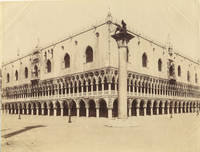
réf. 11774Three nineteenth century photographs of Venice record St. Mark's Cathedral a sculptural detail outside the cathedral and the Ducal Palace concentrating on monuments associated with the civic religious and political center of the city. The views preserve contemporary visual evidence of Venetian architecture and public space during the nineteenth century with particular emphasis on buildings and sculpture surrounding St. Mark's. Three sepia toned photographs of Venice Italy. The first measuring 10 x 7.5 inches presents a frontal view of St. Mark's Cathedral one of Venice's principal churches. The second measuring 9.5 x 7.25 inches gives a close view of a horse statue outside St. Mark's Cathedral. The third also 9.5 x 7.25 inches depicts the Ducal Palace the historic seat of the Venetian government and residence of the doges. The grouping therefore records both the ecclesiastical architecture of St. Mark's and the adjoining palace associated with the political administration of the Venetian Republic. The photographs preserve nineteenth century views of monuments central to Venice's religious and governmental history including the cathedral overlooking Piazza San Marco and the Ducal Palace long associated with the city's political judicial and ceremonial life. The second photograph has a small tear at the upper right corner; otherwise the photographs are in excellent condition. unknown books
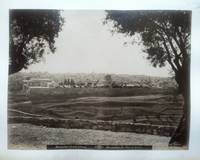
1885réf. 142171885. Kramer Oscar Vienna city view circa 1880 records the Austrian capital from an elevated vantage with Stephansdom and Karlskirche rising above the dense nineteenth century cityscape. Kramer a Vienna photographer and publisher active from the mid nineteenth century until his death in 1892 produced architectural and panoramic views of the city; the Wien Museum holds a closely related Kramer view from the south toward Karlskirche and Stephansdom dated around 1880. Sepia toned albumen photograph measuring 9.75" x 8.75". Trees fill the foreground while the built fabric of Vienna extends across the middle distance toward low hills on the horizon. Stephansdom is visible at right and Karlskirche nearer the center their domes and towers providing fixed architectural reference points within the surrounding roofs and streets. The upper corners of the photograph have been cut round. Kramer repeatedly photographed Vienna's principal churches streets gardens and panoramic approaches and surviving institutional holdings include his views of both Stephansdom and Karlskirche as well as broader city prospects. The present image preserves the relationship between central Vienna's monumental architecture surrounding urban development and the wooded terrain beyond the city. Upper corners rounded; otherwise no additional condition defects supplied. A nineteenth century Kramer city view centered on the architectural profile of Vienna before the large scale transformations of the twentieth century. unknown books
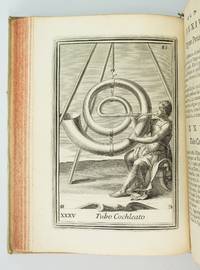
1722réf. ST21075Rome: Giorgio Plancho and Gettatore de' Caratteri 1722. FIRST EDITION. 250 x 180 mm. 9 7/8 x 7 1/4". 8 p.l. 170 pp. Contemporary stiff vellum raised bands burgundy morocco label lettered in gilt all edges sprinkled. Engraved title page frontispiece and 151 PLATES DEPICTING MUSICAL INSTRUMENTS. Front pastedown with bookplates of John Smith Esquire Arthur & Charlotte Vershbow Cia Fornaroli and David R. Godine. Cicognara 1596 citing 148 plates; Brunet I 1086 citing 136 plates; Graesse I 480. A long thin red ruled line to upper cover a few small cuts at edge of front board O1 with insignificant hole trivial loss of text a few light stains isolated faint browning to plates but quite AN EXCELLENT COPY--the leaves extremely fresh and clean and the binding entirely sound and perfectly inoffensive. This is an excellent copy of a sumptuously illustrated Baroque compendium of musical instruments which has been owned by three eminent collectors. A student of Athanasias Kircher the Jesuit scholar Filippo Bonanni also Buonanni 1638-1723 produced works on wide-ranging subjects including anatomy shell-collecting and porcelain lacquer. "Gabinetto Armonico" attempts to catalogue all known musical instruments including a broad range of horns as well as other wind percussion stringed and keyboard instruments not infrequently exotic in appearance and operation from all regions including Florida and the world of Islam. Many of the instruments included here were held in the collection of the Jesuit Collegio Romano where Bonanni was teaching at the time he composed the book; other information was gleaned from various authors and ethnographical reports. The book is organized based on the use for which the music is intended e.g. for festivals funerals battle worship hunting and even navigation. The very attractive illustrations by Flemish-born painter and publisher Arnold van Westerhout 1651-1725 depict the instruments in the hands of their players in their native costumes and environs. While some of the depictions of the ancient and foreign musicians are fanciful the majority of these engravings provide genuine invaluable information on music and musical instruments up to the early 18th century. The musicians are as interesting as the instruments dressed in keeping with the original homeland of the instrument ranging from King David with his harp to fashionable rococo ladies at the keyboards of spinet and cimbalo. Our copy is from the library of Italian ballerina Cia Fornaroli 1888-1954 and her husband Walter Toscanini 1898-1971 a bookseller and choreographer. The couple whose distinguished careers were split between New York and Italy assembled a large collection of works documenting the history of dance in Italy from the Renaissance until the 20th century. The bulk of their library now resides in the Jerome Robbins Dance Division of the New York Public Library for the Performing Arts. Our next notable owners were Arthur 1922-2012 and Charlotte Vershbow 1924-2000 who together built a large collection of prints illuminated manuscripts and printed books. Their collection sold at Christie's New York in a series of four auctions in 2013 the present volume was lot 771. Most recently our copy belonged to American publisher David R. Godine who trained as a printer at Leonard Baskin's Gehenna Press before founding his own publishing firm in 1970. His interest in the art of the book led him to build an extensive library of early printed books with a particular focus on antiquarian illustrated works. Two portions of his collection sold for more than $950000 at Bonham's New York in May 2026. The book is not particularly rare at auction but copies in desirable condition even without the distinguished provenance seen here command substantial prices. Giorgio Plancho and Gettatore de' Caratteri unknown books
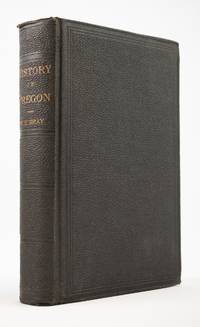
1870réf. ST20532Portland Oregon: Harris & Holman 1870. FIRST EDITION in Book Form. 235 x 150 mm. 9 1/4 x 6". 624 pp. Publisher's black cloth flat spine with gilt lettering. With a frontispiece etching depicting Astoria in 1811. Errata slip tipped onto final page. A 1980 newspaper article from The Springfield News about William H. Gray's descendants. Graff 1630; Howes G-342; Sabin 28416. Head of spine with minute fraying slight soiling to back cover isolated minor foxing chosen paper stock not as bright as it could be but still a really excellent copy the text clean and fresh and the binding with few signs of use. Originally published as a series of articles in the "Astoria Marine Gazette" between 1865-66 the contents of this volume include chapters on religious proselytizing encounters often of a violent nature with indigenous peoples mountain men the formation of an early government and commercial interests in the area. Originally a carpenter from Utica William Henry Gray 1810-89 joined the party of fellow missionaries Marcus Whitman 1802-1847 and Henry Spalding 1803-1874 and their respective wives Narcissa 1808-1847 and Eliza 1807-1851 on a seven-month 3000-mile journey overland from their homes in upstate New York to Fort Vancouver. Narcissa and Eliza were the first white women to cross the Rocky Mountains. Gray gives a long absorbing account of that trip in the text here. He was later involved with efforts to create a provisional government among settlers of the area. As an historian Gray was widely censured even as he was acknowledged as an important source: Howes says the present work is "undependable and biased but as the product of a pioneer of 1838 it cannot be ignored." This book is easy enough to find but it is normally encountered in rough shape. Harris & Holman unknown books
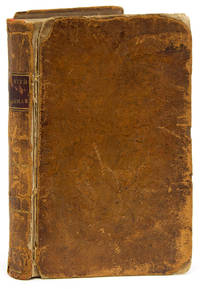
1795réf. 312011Philadelphia: by and for Colerick & Hunter 1795. First American Edition. a2 B-Z6 Aa-Kk6 Ll4. 399pp. 12mo 6 1/2 x 3 3/4 inches. Original sheep both boards detached ex libris George Vaux with his signature on pastedown and first leaf of preface. First American Edition. a2 B-Z6 Aa-Kk6 Ll4. 399pp. 12mo 6 1/2 x 3 3/4 inches. by and for Colerick & Hunter unknown books
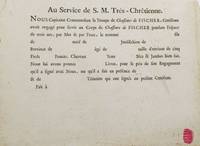
1760réf. 28380France 1760. 1 vols. ca. 10 1/2 x 16 inches unfolded. Broadside. Folded some discoloration and marginal spotting else very good. 1 vols. ca. 10 1/2 x 16 inches unfolded. An unaccomplished form giving pertinent information including name son of native of jurisdiction of province of age that size is in the area of 5 feet hair eyes and that not and legs are well-made and the salary promised. unknown books
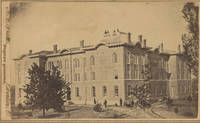
1868réf. List1022Oberlin 1868. Albumen photographs 2 ½ x 3 ½ inches on larger mounts. Some fading to one of the photographs other image with excellent contrast near fine condition overall. Near Fine. An uncommon early pair of views of the Second Ladies’ Boarding House at Oberlin College in the 1860s taken at a time when Oberlin was one of few coeducational colleges having first admitted women in 1837. Oberlin’s Second Ladies Hall was built in 1861-1863 and featured Itlianate architecture and a rooftop balcony. The building was opened for student accommodations in 1865. The first floor held an assembly room a reading room a dining room parlors and stewards’ quarters. The second and third floors housed 100 women. The building was destroyed by a fire in 1889. unknown books