48 653 résultats
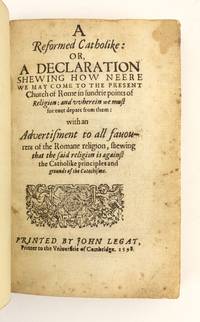
1598réf. ST16441Cambridge: John Legat 1598. Second Printing. 153 x 98 mm. 6 x 3 7/8". 4 p.l. 375 1 pp. Modern sprinkled calf blind-ruled covers raised bands flanked by double gilt rules brown morocco label remnants of paper library shelf label at tail of spine. Printer's device on title page. Front pastedown with bookplate of the Fox Pointe Collection; rear pastedown with deaccession stamp of Bradford City Libraries. STC 19736; ESTC 19736. ◆Spine just faintly sunned leaves lightly browned due to paper quality and trimmed a bit close at head grazing headline on a couple of leaves isolated marginal stains or tiny rust spots but an excellent copy fresh and clean in a sympathetic binding with few signs of wear. This was an important work in establishing distinctions in liturgy and doctrine between the Catholic Church and the Church of England written by a moderate puritan whom DNB considers "perhaps the most significant English theologian of his age." Perkins 1558-1602 was one of the most popular voices of his time speaking from a Calvinist puritan point of view; while he could be virulently anti-Catholic he did not believe in repudiating the English church only in reforming it. According to DNB "The genius of Perkins's work did not lie in its originality—his theology represents a conventional recital of Calvinist scholasticism in virtually every respect. His gift lay rather in bringing to a broad audience a variety of theological and moral issues popularizing essentially technical discussions and therefore as Fuller observed humbling 'the towering speculations of philosophers into practice and morality.'" The present work spread his polemical influence beyond England to the Continent; even the Catholic bishop William Bishop admitted he had "not seene any book of like quality published by a Protestant to contain either more matter or delivered in better method." Both the 1597 first edition and our 1598 second printing are rare: no other copies of either edition are recorded at auction by RBH or ABPC in the past 50 years. John Legat unknown books
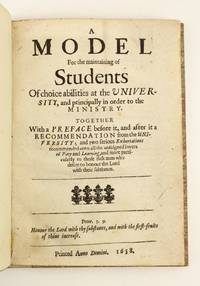
1658réf. ST16442s.l.: s.n. Printed Anno Domini 1658. FIRST EDITION. 190 x 135 mm. 7 1/2 x 5 3/8". 3 p.l. 14 pp. complete. 20th century vellum-backed marbled boards flat spine with vertical titling. Front pastedown with bookplate of the Fox Pointe Collection. Wing P-2842B; ESTC R207754. ◆Text lightly washed and pressed but still crisp faint foxing to lower edge of title page otherwise a fine fresh copy in an unworn binding. Written by an opinionated English cleric this is an extraordinarily rare pamphlet proposing an unusual fund to support young 17th century scholars. According to DNB the scheme outlined in the present work was meant "to support the university studies of young men of promise seeking entry into the ministry." The plan "was approved by John Worthington and Anthony Tuckney and had the support also of John Arrowsmith DD Ralph Cudworth William Dillingham DD and Benjamin Whichcote. The fund raised about £900 and it appears that William Sherlock afterwards dean of St Paul's received assistance from this fund during his studies at Peterhouse Cambridge until 1660 when he graduated BA. Those entrusted with administering the fund sent Poole regular reports on students interviewed and the ratings they had received in philosophy logic and languages. The scheme was abandoned at the Restoration." Poole 1624 - 79 was the author of a number of controversialist pamphlets on subjects ranging from Unitarianism to preaching by lay persons before undertaking his major work: a synthesis of critical biblical commentaries "Synopsis criticorum aliorumque sacrae scripturae interpretum." This is one of his scarcest writings: ESTC lists seven copies two in North America while ABPC and RBH record just two copies at auction. s.n. Printed Anno Domini unknown books
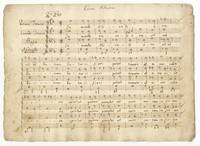
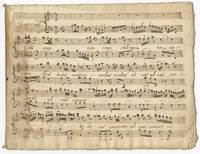
réf. 41574Oblong quarto 220 x 305 mm. 38 pp. Notated in dark brown ink on 12-stave rastrum-ruled paper with watermark of a large crest and the letters EDPM. Most probably of Italian provenance. Settings in Latin for two tenors bass and figured bass possiblky related to those composed by Padre Giovanni Battista Martini 1706-1784. Appears to be lacking one or more leaves. Occasional minor corrections to text and music. Some wear soiling staining foxing and minor edge tears primarily to outer margins; first leaf reinforced with narrow strip of early paper to inner margin. A manuscript copy apparently derived from the rare edition of the three sonatas of opus 33 published in Vienna in 1794 by Artaria plate number 500. RISM C2995. unknown books
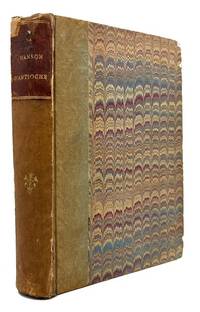
1886réf. 2344522New York: The Century Co 1886. Half-Leather. Good/No Jacket. 0x0x0. Kemble E.W.; Brennan Alfred; Fenn Harry; Lathrop Francis; Edwards George W.; Andrews R.D.; Emerson W.R.; Gilbert Cass; Hastings Thomas; Brunner A.W.; Babb George F.; Alexander J.W.; Burroughs John; Doughty John G.; Pennell Joseph; Runge J. Leather spine and corners drying boards rubbed front and end matter lightly foxed hinges weakening. 1886 Half-Leather. viii 964 pp. Collected works of prose and poetry by numerous authors including John Burroughs Theodore Roosevelt Henry Cabot Lodge Thomas Nelson Page William Dean Howells Robert Louis Stevenson etc. with beautiful engravings by numerous artists. Topics range from the American Civil War to Mormon marriages to the Western art movement. Original half-leather binding: brown cloth boards black leather spine and corners with gilt titles and rules. Numerous engravings portraits and facsimiles of important documents throughout text. The Century Co hardcover books
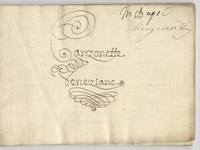
1790réf. 40900Italy 1790. Oblong octavo 158 x 227 mm. Disbound. Notated in black ink on 10-stave rastrum-ruled paper. i title 102 i blank pp. Two ownership inscriptions in early black ink in different hands to upper outer corner of title "M Bagot" and later "Margaret Hay." Musical fragment in pencil to free front endpaper. Corrections to bass line of "Nina mia" no. 46 in smaller notes. Contains the following songs: 1 Bell'insalata fresca. 2 pp. 2 Belle Putte Veneziane. 2 pp. 3 Se miro quel volto. 2 pp. 4 Mi esser Tedesca. 2 pp. In a humorous pidgin-Italian. 5 Mia garbata Pastorella. 2 pp. 6 Speranze del mio cuore. 2 pp. 7 Senti cara Ninetta. 2 pp 8 Adesso si son desperada. 2 pp. 9 Or ti conosco Filide ingrata. 2 pp. 10 Lasciatemi un momento. 2 pp. With melodic accompanimental material in treble clef. 11 Cara bell'Idol mio. 2 pp. 12 Mala cosa esser donna. 2 pp. 13 Duettino . O bella Nice. 2 pp. Duet; one verse. 14 Amanti sbandite. 2 pp. 15 Per pieta se in sen. 2 pp. 16 La mia cara passarina. 2 pp. 17 Se volè che vè la diga. 2 pp. 18 Or vien dalla Lorena. 2 pp. 19 Nina se vu provessi. 2 pp. 20 Solo m'importa. 2 pp. 21 Da quel primier momento. 2 pp. 22 Parlami pur sincera. 2 pp. 23 Cara mia fillida. 2 pp. 24 Cara Nina mio Tesor. 2 pp. The melody is identical to Ah! vous dirai-je mama Twinkle Twinkle in the English-speaking world. 25 Non sò come la sia. 2 pp. 26 Alfin de contenti. 2 pp. 27 Son innamorà. 2 pp. 28 Si Tirsi a Ciglio asciutto. 2 pp. 29 Nel primo istante. 2 pp. 30 Giancora nò sè stuffa. 2 pp. 31 Cara Nina son pentio. 2 pp. 32 Un certo Spiritello. 2 pp. 33 Clori vezzosa amabile. 2 pp. 34 Son Pastorella amante. 2 pp. 35 Lusinghiera m'ingannasti. 2 pp. 36 Donne cortesi. 2 pp. 37 Quanto è mai semplice. 2 pp. 38 Esce dal Gange fora. 2 pp. Duet one verse. 39 L'amor che sento. 2 pp. 40 Gran destin. 2 pp. 41 Giovinotti con le Donne. 2 pp. 42 Cara Nina vò portà. 2 pp. 43 Poi chè con te non vale. 2 pp. 44 Clori se più non torno. 2 pp. 45 Quell'aria brillante. 2 pp. 46 Nina mia. 2 pp. 47 Una cara Tombolina. 2 pp. 48 Se mai volta un occhiada. 2 pp. 49 L'è un gran intrigo. 2 pp. Small tears to lower edge of front free endpaper; very occasional minor stains and soiling mainly to edges and blank lower margins; one leaf detached. "In the first half of the 18th century the expression 'da battello' - associated with the term 'canzone' 'aria' 'arietta' or 'canzonetta veneziana' - referred to strophic songs for solo voice and basso continuo songs in Venetian dialect in AABB musical form. Initially this repertoire was used for 'freschi' nocturnal gondola rides which explains the origin of the term. Lyrical texts written by amateurs often belonging to the aristocracy and Venetian nobility were mostly lover's serenades but also humorous or satirical songs related to Carnevale. Musical borrowings were quite common and heterogeneous since they came from oral tradition or opera arias as Benedetto Marcello satirized in Il Teatro alla moda 1720 and as has been recently confirmed. From the 1710s to the 1760s hundreds of anonymous songs 'da battello' were collected in manuscript anthologies with most of them later published by John Walsh in his three volumes of Venetian Ballads London 1742 1746 and 1748 attributed to Johann Adolf Hasse and 'All the Celebrated Italian Masters.' In the second half of the 18th century the European circulation of the sources of the manuscripts the success of Walsh's editions and the prestige of this vocal repertoire attest that the 'canzoni da battello' were enjoying international success in salon performances too as musical product sought by 'good taste collectors.' Such wide appeal was witnessed by Rousseau Dictionnaire de Musique 1768 Quantz Essai d'un méthode pour apprendre à jouer de la flûte traversière 1752 and Burney The Present State of Music in France and Italy 1772. The term 'barcarola' - often associated with the 'canzone da battello' named after Rousseau's definition in his Dictionnaire . had never been used in the Italian sources of the first half of the century. Instead it indicated different repertoires belonging to the Romantic era which shared the same origin as the early 18th-century songs." Sergio Barcellona in Grove Music Online An attractive collection of light-hearted Italian strophic songs marking a moment in time in the development of the 'canzona da battello' genre between its baroque and romantic incarnations. unknown books
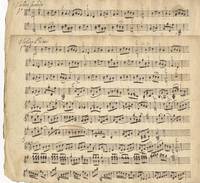
1780réf. 40865Italy 1780. Oblong folio 240 x 304 mm. Notated in black ink on 10-stave rastrum-ruled paper. Watermark of a bunch of grapes. Violino primo: i blank 2 i blank pp. Violino secondo: i blank 2 i blank pp. With three measures cancelled. Slightly worn; some small losses tears and soiling to edges and blank margins; a few minor stains; occasional showthrough. Possibly unrecorded. Not located in the RISM manuscripts database. The composition is in four numbered parts. The first in 2/4 presents a theme; the second is a variation on that theme; the third is in 6/8 in the style of an English jig with some scalar ornamentation and two tiratas; the fourth and fifth parts return to 2/4 and are further variations on the original theme this time with sixteenth-note variations incorporating trills scales leaps and bariolage. A charming and vigorous late-18th century variation set and Giga for two violins cleverly composed to exploit the varied registers timbres and figurations possible with the given instrumentation. unknown books
1750réf. 40847Naples 1750. Quarto 214 x 277 mm. Notated in black ink on 10-stave rastrum-ruled paper. 7 i blank pp. Watermark of a fleur-de-lis within a circle with indecipherable letters below. A sacred work for alto voice and figured basso continuo in three movements with text drawn from the Salve Regina: 1 Eia ergo Advocata . Un poco and.ante. In B flat major 3/8 pp. 1-3 2 Et Jesum benedictum . Comodo. In D minor 2/4 !4/4 pp. 3-5 3 ò clemens ò pia . Largo. In F minor 3/8 !6/8 pp. 6-7 Dampstaining to inner margins extending into clefs and approximately one quarter to one half measures of some music with all music remaining legible. Not located in the RISM manuscripts database. An attractive sacred vocal work by a professional composer of a high artistic quality. unknown books
1969réf. 95677T'ai-pei: I wen yin shu kuan 1969. Reprint of the Weng copy of 1262 containing 32 volumes plus two Tables Contents. Incomplete but otherwise near fine. Volumes 1-24 only of 32 volumes plus 2 Table of Contents volumes. String-bound volumes 36 cm. in three han a pegged Chinese book box or chemise. Press run was limited to 150 copies. OCLC locates one copy Nelson- Atkins Museum of Art. Laid in is a 1985 letter from the President ot the China Institute in America to R. Gordon Wasson about the vqalue of this set in 1985. Wasson was a former owner but not the individual from whom we bought these volumes. The missing fourth han which had gone astray before this set reached us from a subsequent owner presumably contained volumes 25-32 and the two Tables of Contents volumes. Su Shi was an important and at least twice banished Song Dynasty scholar and poet. The 1262 printing contained 42 volumes plus the two Tables of Contents vols. The Weng copy lacking 10 volumes seems to be or have been in 1969 regarded as the most complete surviving set. I wen yin shu kuan unknown books
1928réf. 95491Paris: Paul Geuthner 1928. Hardcover. Very Good. folded facsimiles 2 prelimanary pages 7 folding facsimiles printed on both side iv 231p. Contemporary 1/2 leather. 25 cm. Includes Tibetan text transliteration and French translation. Annales du Musee Guimet; 37. Paul Geuthner hardcover books
réf. 91598Holograph. Written in a clear hand. 20 x 13 cm. Three holes one of which caused partial loss of a couple of letters where red wax seals were carelessly removed from the back. Dated December 10th 1796 at Dumfries in Prince William County Virginia. We suspect that Carr was or aspired to be a slave trader. unknown books
1862réf. 83231Paris: Didier 1862. Hardcover. Good. xvii 452p. Old but probably later quartercloth binding. 19 cm. Cover scuffed and moderately worn. Corner chipped at head of backstrip. A few corners creased. French text. Didier hardcover books
1973réf. 83986Moskva: Izd-vo "Nauka" Glavnaia. red. vostochnoi lit-ry 1973. Hardcover. Very Good. 623p. Original black cloth. 22 cm. Russian text; English summary at pages 621-623. Translated into Russian by L. A. Khanlarian. Izd-vo "Nauka," Glavnaia. red. vostochnoi lit-ry hardcover books
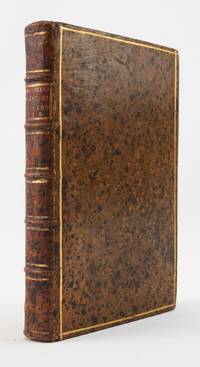
1744réf. ST21147Oxonii Oxford: E Typographeo Clarendoniano 1744. First separately published edition. A PRESENTATION COPY from the editor. 237 x 153 mm. 9 1/4 x 6". 2 p.l. xv 1 231 1 errata pp.Edited by Philip Barton. Contemporary mottled calf covers bordered by gilt rules raised bands flanked by gilt rules red morocco label. With two engravings by J. Pine after H. Gravelot one showing a statue of Demosthenes the other a bust of Cicero. Greek and Latin text on facing pages. Front pastedown with engraved armorial bookplate of Lord Sandys; front free endpaper with ink ownership inscription: "Edwin Sandys 1744 / given me by the Editor." Spine uniformly darkened front joint and lower corners lightly rubbed rear board a little scratched but the binding solid lustrous and with surprisingly little wear. Endpapers and adjacent text leaves a bit foxed intermittent light foxing to margins a couple of trivial stains but generally quite fine internally--very clean and especially fresh. Issued on paper much heavier and more deluxe than expected for a scholarly book this first separately published edition of Plutarch's parallel lives of the two great orators Cicero and Demosthenes was presented in the year of publication by the editor to a student at New College Oxford whose later life had a very prominent literary and cultural trajectory. Issued by the University Press with the imprimatur of the vice-chancellor and appearing the year before the editor Philip Barton 1717-97 received his M. A. at New College this work was likely translated from the Greek and annotated by Barton as part of his master's program. Its scarcity in the marketplace and the presence of only a few dozen copies in libraries suggest it was issued in a limited run for academic purposes and for personal presentations. It was not an inexpensive production: engravings by the leading illustrator Hubert Gravelot and engraver John Pine of the day as well as high-quality paper stock did not come cheap. The text here contrasts the life of the Greek statesman and orator Demosthenes 384-322 B.C. with that of the Roman Cicero 106-43 B.C. whose rhetorical style and writings had enormous influence on Medieval and Renaissance writers and educators. Plutarch before 50 - after 120 A.D. outlined the careers and achievements of both men then compared their styles and influence noting that Demosthenes' oratory had "power and earnestness" but no "prettiness or pleasantry" while that of Cicero was full of erudition and wit but sometimes descended "into scurrility" treating serious matters too lightly. It had to be admitted that while both were gifted with eloquence only Cicero enjoyed true power and though both died in exile Demosthenes ignobly tried in vain to escape execution while Cicero accepted his fate with grace offering his neck to be severed by his assassin. The interest and value of this volume reside mainly in the person to whom Barton gave the book. Even though he was nearly a decade younger Edwin Sandys 1726-97 was a student at New College at the same time as Barton and it is not at all inconceivable that Barton became a mentor to young Sandys still in his teens. Such a connection would explain the inscription at the front which suggests considerable familiarity and even friendship. After leaving Oxford Sandys spent 23 years in the House of Commons though without special distinction he reportedly never made a speech before succeeding his father as 2nd Baron Sandys of Ombersley. He preferred the life of the mind to politics and was elected a trustee of the British Museum in 1769. The Worcestershire Archive describes him as "a leading scholar and avid collector of books" and a close friend of Worcestershire historian Treadway Russell Nash. Most important he became a member of the so-called "Streatham Worthies" a very prominent literary and cultural circle that met at Streatham Park the handsome country home of Henry and Hester Thrale. Among the glowing luminaries in the group were Johnson Goldsmith Burke Charles Burney David Garrick and Joshua Reynolds who painted Sandys' portrait. E Typographeo Clarendoniano unknown books
2016réf. 52318Leiden: Brill 2016. First edition. xviii 177 2 179-528pp. Indices and 21 page bibliography. Text in English Hebrew and Arabic. Green buckram lettered in white with red band near top of spine. A fine as new copy. This volume contains a critical edition and an introduction to the Arabic translation and commentary on the book of Proverbs by one of the most acclaimed innovative and prolific exegetes of the Karaite "Golden Age" 10th-11th centuries Yefet ben 'Eli ha-Levi. Yefet's commentary on Proverbs attests to his rationalistic and revisionist ideology and to his egalitarian approach. His work is an invaluable link in the history of interpretation of the book of Proverbs. This edition is accompanied by an introduction including a thorough study of Yefet's style of writing compared with the Arabic model of his time his hermeneutic devices contrasted with those of Saadiah Gaon and midrash his theology in light of the doctrines of Islamic Mu'tazila and his polemics against various groups. Publisher Volume 67 in the Brill series "Etudes sur la Judaisme Medieval." EJM. Also Volume 8 in the "Karaite Texts and Studies" series. Brill unknown books
2015réf. 52310Leiden: Brill 2015. First edition. xii 70 204pp. Index and bibliography. Text in Hebrew and Arabic introduction in English. Green boards lettered in white with red spine band. A fine as new copy. Yefet ben 'Eli fl. 960-1005 was the most prolific and influential biblical exegete in the Karaite tradition. He was possibly the earliest Jew to write a commentary on the entire Hebrew Bible and his writings were cited and borrowed from by Karaites and Rabbanites alike from his own time to the early modern period. Despite his importance however only a small percentage of his works have been published. The present volume makes available for the first time his commentary on Joshua which includes an Arabic translation of this difficult book with full Arabic commentary. The story of Rachab the "second circumcision" the covenant with the Gibonites and the Sun standing still are among the things that captured Yefet's interest who surveyed different views on these crux passages before presenting his own very original exposition. Publisher Contents: Yefet ben 'Eli on the Book of Joshua: preliminary observations -- Yefet b. 'Eli and his commentary on Joshua -- 1. The Translation of Hebrew place names -- 2. The use of Islamic terminology in the translation -- 3. Alternative translations -- 4. Pious interpolations with names for God -- 5. The working out of interpretations within the translation Itself -- 6. The possible influence of Saadia -- 7. Apologetic and polemical readings -- Introduction to the edition -- The manuscripts -- The Hebraized tradition -- The Arabized tradition -- Short fragments -- Format and method of editing -- The apparatuses -- Examples of variants in the First Apparatus -- Examples of variants in the Second Apparatus -- Sigla -- Appendix. The eleventh-century Arabic-character fragments British Library Or. 2547. OCLC Volume 64 in the Brill series "Etudes sur la Judaisme Medieval." EJM. Also Volume 7 in the "Karaite Texts and Studies" series. Brill unknown books
2012réf. 52304Leiden: Brill 2012. First edition. Hardcover. Fine. Octavo. English text xviii 283pp. Index and 26 page bibliography. Hebrew text xiii 1 279pp. Green buckram lettered in white with red band near top of spine. A fine as new copy. This is a serious academic work which will find its place in research collections supporting biblical and Judaica scholarship." Randall C. Belinfante American Sephardi Federation This volume contains a critical edition of the Arabic translation and commentary on the Abraham narratives in the Book of Genesis chs. 11-25 by the most prominent and prolific commentator of the Karaite "Golden Age" Yefet ben ʻEli ha-Levi 10-11 C.E. Yefet's interpretation of the Abraham cycle establishes him as a highly original commentator and provides new insights into the history of exegesis of the book of Genesis. The edition is preceded by a comprehensive study of Yefet's hermeneutic approach in comparison to that of other medieval commentators. Among the subjects discussed are Yefet's view on the authorship of the Torah his translation technique literary aspects of his exegesis and polemical overtones discernible in his commentary on Genesis. The study also includes a comprehensive survey of earlier commentaries on this book by other Karaite writers both prior to and contemporary with Yefet. Publisher Contents: Yefet and his times -- Who wrote the Torah Yefet's view on the authorship of the Pentateuch -- In quest of truth: Yefet's hermeneutic concepts -- Between the holy text and Its unholy context: polemical overtones in Yefet's commentary on Genesis -- Scripture as the supreme composition: literary aspects of Yefet's exegesis of Genesis -- The limits of literalism: Yefet's approach to Bible translation -- Description of manuscripts employed for the present edition -- Editing of the manuscripts -- Signs and abbreviations employed in the critical edition -- Edition. OCLC Volume 46 in the Brill series "Etudes sur la Judaisme Medieval." EJM and also Volume 4 of "Karaite Texts and Studies. Brill hardcover books
2021réf. 52360Leiden: Brill 2021. First edition. Hardcover. Fine. Octavo. xiii 1 199 1pp. Indices. Part 1 Introduction text in English; Part 2 the commentary of yefet. text in Hebrew. Green buckram lettered in white with red band near top of spine. Three very minor oil spots on front cover but still a fine as new copy. A critical scholarly edition of the Karaite Yefet ben ʿEli ha-Levi's 10th-century Judaeo-Arabic translation of and commentary on the prophetic books Amos Haggai and Malachi including a comparison of 19 manuscripts and an extensive introduction. The introduction discusses Yefet's exegesis of the three books his approaches to the biblical narratives his polemic with the Rabbanites and the exegetical principles he uses in his translation of the verses. Yefet ben ʿEli was one of the most important biblical commentators of the early Middle Ages. He translated all the books of the Bible into Judaeo-Arabic and composed a long commentary on them. His commentaries on the books of Amos Haggai and Malachi reflect his method of biblical exegesis and present unique interpretive ideas. Publisher Contents: Intro -- Contents -- Acknowledgements -- Transliteration Tables -- Part 1. Introduction -- Chapter 1. Yefet's Exegesis of Amos Haggai and Malachi -- 1. The Literal Approach -- 2. Historical Interpretation -- 3. Reconstructing Society at the Time of the Prophets -- 4. The Non-literal Approach -- 5. Malachi as a Polemical Book -- Chapter 2. Translation Techniques and Exegetical Principles -- 1. Alternate Translations -- 2. The Principle of MÅshēkh ʿAṣmÅ ū-MÅshēkh Ăḥērīm -- 3. The Principle of Qarīna -- Chapter 3. The Manuscripts -- 1. Description of the Manuscripts; Modern Authors and Editors -- General Indexrashic References -- Medieval Authors Volume 89 in the Brill series "Etudes sur la Judaisme Medieval." EJM and also Volume 13 of the Brill series "Karaite Texts and Studies. Brill hardcover books
1952réf. 51062London: Privately Printed for Chas. J. Sawyer Ltd 1952. First edition thus. Hardcover. Very good/very good. Large octavo 8 319 1pp. Index. Black dust jacket spine lettered in red over red cloth with gilt lettered spine. Title printed in red & black. Dust jacket has minor rubbing plus two small closed tears and is price clipped. Verso of title page has a cancel mark with slight bleed-through to the title. Note: This work is "Based on appendixes originally published in the edition of C.H. Tawney's KathÄ-sarit-sÄgara called The Ocean of Story" edited by the author. OCLC ".Originally published in my edition of. The Ocean of Story which. ran to ten volumes -- and in view of the fact that much important new information has gradually accumulated. in the past thirty years. I believe these studies might merit publication in their new form. The work of revision and addition has proved so great. there is little of the original left." author's foreword. Privately Printed for Chas. J. Sawyer, Ltd hardcover books
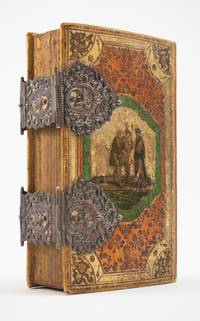
1781réf. ST21118Altona: Gedruckt mit Eckhardtischen Schriften; Hamburg: Georg Paul Zimmer 1781. 167 x 102 mm. 6 5/8 x 4". 8 p.l. 1008 28 pp.; 100 pp. CONTEMPORARY PAINTED AND ELABORATELY BLIND-TOOLED VELLUM ACCENTED WITH PASTED-ON ENGRAVED IMAGES COLORED BY HAND covers with outer white frame enclosing a salmon-pink central panel blind-stamped with floral sprays this panel in turn surrounding a lobed centerpiece bordered in green the centerpiece on the front cover with onlaid colored engraving of an angel hovering over a fiery landscape the landscape a modern inserted replication that on the rear cover showing three figures in a landscape a nobleman on the right and two peasants on the left; flat spine blind-tooled in compartments with central floral sprig more floral sprigs at corners TWO VERY LARGE ELABORATELY FILIGREED CLASPS Dutch gilt endpapers all edges gauffered with a floral design. Woodcut devices on title pages woodcut opening headpieces. Binding a little soiled but entirely solid and quite attractive text faintly yellowed due to paper quality occasional small stains other trivial imperfections but an excellent copy--clean and fresh internally in a well-preserved binding. Containing Lutheran hymns as well as Scripture readings for Sundays and Feast days this is a so-called "Peasant Binding" and one that is more inventive and elaborate than most other examples of the style. The use of the word "peasant" in this context is a reference to the obvious influence of folk art on the decoration rather than to a clientele for which it was solely intended. Especially in central and northern Europe in the 18th century Bibles prayer books and hymnals in brightly painted vellum bindings as here were popular presents among an audience literate and sufficiently affluent to afford such gifts. They are now increasingly uncommon. In the present case the detailed depictions of the angelic and human figures and especially the very large and elaborately configured clasps stand out as especially conspicuous and atypical design features. Gedruckt mit Eckhardtischen Schriften; Hamburg: Georg Paul Zimmer unknown books
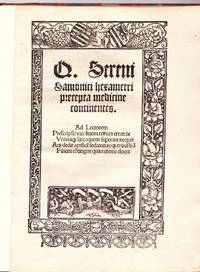
1515réf. 6404Leipzig: Valentin Schumann "in officina Valentini Dammandri" 1515. Fine. Octavo 21 cm; 32 leaves. Title and postscript set in large gothic type; text in roman. Woodcut title page within four-sided border includes human figures with stylized plants a putto birds etc. About 66 woodcut initials. In recent quarter leather over marbled boards. References: Durling 4189; BM/STC German 815; This edition not in Adams Wellcome Osler etc. Title page reproduced in J. Luther "Die Titeleinfassungen der Reformationszeit" pl. 89. From what modern scholarship can discern Serenus was a poet who had a keen interest in medical science and pharmaceuticals. He is famous for using the formula "abracadabra" in the treatment of illness and for amassing a personal library of 60000 scrolls. The 1107 hexameter lines that make up this essay were inspired by the "Medicina Plinii" a book of pharmacy by a pseudo-Pliny of the mid-4th-century as well as the real Pliny's Natural History and the Greek guide to materia medica by Dioscorides. The text consists of prescriptions and remedies for about 65 different diseases. The poem was extremely influential in the practice of Late-Antique and Medieval medicine. It was reprinted 21 times between the first edition of 1484 and 1731 apart from inclusion in many compilations of medical texts. As late as 1866 it was translated into German Prescriptions cover a range of ailments from headache itching elephantiasis bad breath gall stones pimples treatment of wounds and even money bites. The text is followed by Remmius Flavianus "Carmen de ponderibus et mensuris" a versified explanation of weights and measurees specifically for use by physicians. Valentin Schumann ("in officina Valentini Dammandri") hardcover books
1546réf. 5968Venice: Cornelio Adelkind for Daniel Bomberg 1546. First edition. Very Good. Folio 32 cm; 93 leaves. Text in Hebrew. Title within architectural border reproduced in Amram "Makers of Hebrew Books in Italy" p. 215 also in the Jewish Museum's 1989 exhibition catalogue "Gardens and Ghettos: the Art of Jewish Life in Italy" page 50. Some section headings within ornamental borders. Bound in c19 or c20 dark red crushed morocco ruled in gilt and decorated with arabesques on both boards; spine with raised bands and compartments tooled and titled in gilt; green polished leather doublures with red crushed morocco dentelles bordered in pointillé accented with arabesques; green moiré free endleaves. Edges gilt. Binding not signed. Joints and crown adroitly reinforced with Japanese paper; corners somewhat worn down. Occasional contemporary notes in manuscript in text; brief stain on leaf mem-tet and lightly along the bottom edge of leaves nun-bet and nun-gimmel. Text otherwise pristine. Title page light possibly washed. Old library ink stamps from an institution in Warsaw on title page. Red morocco ex-libris of mining magnate and philanthropist Adolph Lewisohn 1849-1938. References: Adams T-766; BM Italian 674; Steinschneider 7304 #1; Amram 215 illustration and 222. First printed edition editio princeps of the 11th century commentary on portions of the pentateuch by the Bulgarian poet and Talmudist Tobiah ben Eliezer. Published by the house of the seminal printer of Hebrew books Daniel Bomberg under the supervision of his scholar-in-residence extraordinaire Cornelio Adelkind. Venetian law at this time limited Hebrew publishing to Gentile printers. Bomberg a protestant from Antwerp entered this lucrative market and with Adelkind's help became its prime exponent until his death in 1549. Cornelio Adelkind for Daniel Bomberg hardcover books
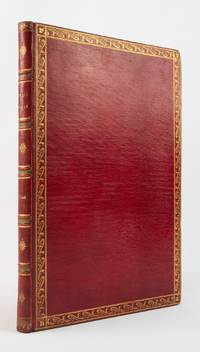
1544réf. ST21070Rome: Valerio & Luigi Dorico 1544. First Illustrated Edition First Issue per Mortimer. 308 x 208 mm. 12 1/8 x 8 1/4". 6 p.l. 122 pp. 1 leaf. Excellent 19th century russet morocco elaborately tooled in blind covers with decorative frame enclosing supralibros of William Stirling Maxwell raised bands spine compartments with blind-stamped cruciform ornament gilt lettering blind-ruled turn-ins marbled endpapers all edges gilt. With woodcut Pegasus device in colophon and 22 LARGE WOODCUTS one oversized double-page engraving with fore edges of sheets folded in six full-page two of these oversized with folded fore edges. Front pastedown with armorial bookplate of Archibald Philip Earl of Roseberry ex-libris of David Godine and an old bookseller description. Mortimer 284; EDIT16 CNCE 73807; USTC 841009. Culot Jean-Claude Bozerian roulette 42. Color of covers faintly variable the title and likely the rest of the book carefully washed and resized occasional minor marginal foxing but clean and fresh internally in a lustrous binding with almost no signs of wear. This is an excellent copy of the first illustrated edition of an important mid-16th century work on the ancient city of Rome featuring a suite of attractive woodcuts and offered here in a pleasing Bozerian binding. Our author antiquarian and Augustinian friar Giovanni Bartolomeo Marliani 1488-1566 drew on a mixture of Classical authors and recent excavations to assemble a thorough description of ancient Roman topography architecture and sculpture. The result was the present work which remained the prevailing authority on the topic through the 18th century distinguished by its accuracy and level of detail. For example Marliani's speculative location of the Roman Forum though highly contested in his own time was proved by later excavations to be correct. Urbis Romae Topographia was originally published in 1534 as an octavo without illustrations; the present handsome folio edition the third overall is the first to include the suite of desirable woodcuts. These include a mixture of maps architectural cross-sections and depictions of artworks. The large map of the city by calligrapher Giovanni Battista Palatino for whom the typeface is named represents the first attempt at a truly accurate and scientific plan of the ancient city. On the artistic side of things this work contains the first depiction in print of the famous marble Laocoön Group which the young Marliani had witnessed being excavated in 1506. The elegant early 19th century binding was executed by "P. Bozerian" of the famous Bozerian family of binders whose name has become synonymous with fine Parisian bookbinding of the First Empire. The quality and refined taste with which the present binding was produced is consistent with what is expected of a Bozerian. Our copy is from the library of Archibald Philip Primrose 1847-1929 the fifth Earl of Rosebery and first Earl of Midlothian. Best remembered for his lengthy career as a politician which included a stint as Prime Minister from 1894-95 he was also a passionate bibliophile and student of history. He wrote several historical biographies and essays and filled the library of his country estate with an extensive collection of rare books and manuscripts ranging from unique Scottish historical manuscripts much of which now resides in the National Library of Scotland to literary first editions incunabula and a copy of Shakespeare's First Folio which fetched a record-breaking price exceeding £14000 at Sotheby's in 1933. More recently our copy belonged to American publisher David R. Godine who trained as a printer at Leonard Baskin's Gehenna Press before founding his own publishing firm in 1970. His interest in the art of the book led him to build an extensive library of early printed books with a particular focus on French illustrated works. Two portions of his collection sold for more than $950000 at Bonham's New York in May 2026. Valerio & Luigi Dorico unknown books
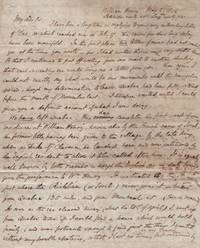
1847réf. List2609Quebec City and Brockton Canada 1847. Four letters approximately sixteen total pages: four 8 x 12.5 inches twelve 8 x 10 inches and smaller. Two letters dated 1846 one 1847 missing final pages and one without date missing initial and final pages. Very good. Edmund John Senkler 1802-1872 was born in Norfolk England educated at Cambridge and in 1827 ordained as an Anglican minister. Senkler his wife Eleanor and their children immigrated to Canada in 1843 to live in Quebec City Canada East now the province of Quebec. They then moved to Sorel also known as William Henry and finally to Brockville near Kingston Canada West now Ontario. Offered here is a set of four letters from Senkler to his friend G. W. Chad back in Norfolk describing the activities of Senkler and his family as they settle into life in Canada. The Senklers had first moved to Quebec City but did not enjoy their time "in that pestiferous cloaca . over which the destroying angel seems evermore to hover with his drawn sword in his hand" May 8 1846. On planning to leave the Bishop of Montreal offers Senkler an unpaid position in "Coteau du Lac a lonely place 40 or 50 miles above Montreal" whose previous missionary had "been enjoying for many years a handsome salary" and was now "on his return to England." Senkler turns down this meager offer and takes his family to Sorel. The move is providential as "Not fewer than 27 persons with whom we had some acquaintance have died there Quebec City since we left" September 10 1846. The family's acquaintances apparently died in a theater fire in Quebec City-probably the St. Louise Theater-which seemed to have turned into a crowd crush: "I knew some of the sufferers: some were very pious people . What shocked the feelings of all who witnessed the scene with some of whom I have conversed was that the misery was so easily approachable and yet so utterly beyond relief. . In the case of poor Mr. Scott mentioned in all the papers particularly the Illustrated London News of July 18 where there is a view of the place his brother could not only see him but talk with him - caress him petting his face weeping over him while the poor suffering man commended his wife family to his care; and yet no force could drag out his limbs from the entangled mass of human beings. They did pull at him until they pulled the ball of his shoulder out of the socket and he begged to be allowed to die." By 1847 the family had sold their property in Sorel and moved west to Brockville in what is now Ontario. The family are noticing the effects of England's Panic of 1847: "The great scarcity of money now felt in England will very shortly be felt here. The produce sent from hence home has not been paid for. Consequently our merchants must pay for the manufactures c. sent out by bills of exchange which must be in so much greater demand therefore fetch a higher premium." December 8 1847 And around the same time an epidemic of typhus breaks out in Canada from Irish immigrants fleeing the famine: "Probably you have learned from the papers what misery the unfortunate Irish emigrants have brought and are likely yet to bring to this country. They have spread a pestilence through the city of Montreal. Grosse Isle the quarantine station below Quebec has been crowded with fever patients to an alarming extent. . The emigrants as they recover are forwarded by the steam-boats from Grosse Isle to Montreal without touching at Quebec where they are received in miserable wooden sheds. Many suffer a relapse; others first shew symptoms of fever when there; and spread the infection though the town by begging. You can imagine what hotbeds of infection those steam-boats must be. Last week 3 passed Sorel without touching at the port one had 1000 emigrants on board the other two about 800 500 respectively. . These unhappy people are forwarded to their destination in the Western Country. For many of them doubtless that destination will be an untimely grave in a strange place." No Date. Nonetheless the Senkler family happily settles in the town of Brockville with "an orchard garden with plenty of pasture for a couple of cows and horses with ground for growing all the vegetables required for the family" December 8 1847. The land is rapidly developing with land prices increasing and a telegraph line from Toronto to Quebec running through it - which to Senkler is "surprising in a country in which 60 years ago there was only an Indian's hunting track for hundreds of miles." Overall the letters provide an intimate look at life for settlers in Canada in the middle period of its rule by the British. unknown books
1851réf. List2032Boston 1851. Autograph letter signed by Whipple and addressed to Oakes at her Brooklyn address. Fine condition. 9 ¾ x 7 ¾ inches bifolium. Fine. An interesting letter written by critic Edwin Percy Whipple to Elizabeth Oakes Smith encouraging her to publish in Graham Magazine. He then offers sympathies on a play performed in Philadelphia and excoriates the American theatre and its inability to do justice to Shakespeare's work. The letter was written during the period when Oakes published her "Woman and Her Needs" series in the New York Tribune though it would appear from subsequent events that Whipple's opinion had been formed by her earlier work. Whipple's views on Smith would change later and be marked by Whipple's negative critiques of Smith's writing. In 1855 Whipple published a review of Smith's book "The Sinless Child" which criticized her unconventional views on marriage and motherhood. Smith responded with a scathing letter accusing Whipple of being a "literary bully" and a "spiritual coward" in a letter she sent to the editor of the Boston Evening Transcript on September 25 1855. Full text follows: Boston March 1 1851 Dear Madam I have but just time to acknowledge the receipt of your letter of Feby 26th being about to start for Buffalo. On my return I will write to Graham and I can assure you that your powers as a writer will lose nothing in my statement. I cannot conceive of any reason why Mr. Graham should not be proud to have you among his contributors and think that there must be some misapprehension on his or your part in regard to the matter. I know that he is desirous of having articles from the best and most eminent native writers and deductively from that proposition he must desire to have articles from yourself. There is a logical compliment for you! I am sorry that the tragedy was not better acted in Philadelphia but the truth is that there are no stock companies in the Country whose acting could save a new play of Shakespeare himself. Go into a theatre and hear their tame and flat delivery of the text of Hamlet or Macbeth - see how they loosen all his silver cords and break all his golden bowls - and then you are not surprised that they fail in recommending our American plays. Mrs. Whipple often alludes to you and would be delighted to see you in Boston. She sends her best regards and remembrances. As soon as I can hear from Graham I will write to you. Very Sincerely Yours E. P. Whipple. unknown books
1881réf. List1934BCarson 1881. Single sided receipt measuring 7 ¾ x 4 ½ inches. Near fine with a small tear to bottom of page. Near Fine. A receipt issued for passage from Carson to Badie Nevada in 1881 aboard the Virginia and Truckee Railroad issued with a note that reads "Chinamen" in the remarks section. The Virginia and Truckee was originally built to service the Comstock Lode area in Nevada. Chinese who represented ten percent of Virginia City during the period referred to Nevada as "Yin Shan" which translates to "Silver Mountain." Chinese people in Nevada held varied jobs in the state perhaps more so than in other parts of the United States with an 1870 census listing Chinese merchants miners laborers laundrymen cooks gamblers and harlots. Despite the heavy involvement of Chinese in Nevada during the period few ephemeral records surface in the trade likely due to the drops in population caused by the Chinese Exclusion Act and perhaps also due to the overall population drop when miners left the region. unknown books