48 653 résultats
1889réf. List1436St. Paul 1889. Cabinet card portrait measuring 5 ½ x 4 inches on larger mount. Fine condition with great contrast. Fine. A striking portrait of a family taken by F. Jay Haynes in his St. Paul studio taken after 1889 when he opened it his last studio of his career. A family sits together one man holding a violin another with a revolver visible at his side. unknown books
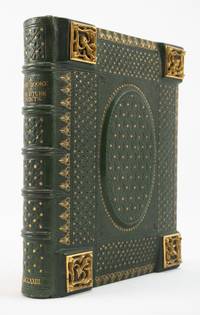
1850réf. ST20997Edinburgh: Inlaid and bound for Mr. Ebenezer Murray by Alexr. Stewart 1850. 225 x 175 mm. 9 x 7". Manuscript title page 61 leaves. OPULENT VICTORIAN GOTHIC REVIVAL GREEN MOROCCO GILT by Alexander Stewart stamp-signed in gilt on front pastedown dated Edinburgh 1850 covers with a wide frame diapered in blind and studded with gilt stars surrounded with a lacy gilt border cornered with impressive raised brass bosses this all surrounding a central raised oval similarly decorated raised bands spine decorated in compartments turn-ins gilt scarlet silk moiré endleaves the pastedowns with sculptural morocco inlays all edges gilt and gauffered. WITH 61 17th CENTURY ENGRAVINGS depicting Old Testament scenes mounted on heavy stock all protected by tissue guards three partially colored by a later amateurish hand. Plates trimmed a bit close at edges the plate number at lower right often cut into otherwise only the most trivial defects. The plates entirely fresh and containing bold impressions and the binding gleaming and unworn. This most unusual album of Old Testament illustrations was put together in Edinburgh in 1850 using engravings apparently taken from a 17th century English work and bound--with considerable imagination and vigor--in an appropriately gothic revival style. The elusive Alexander Stewart who bound the volume is not listed in Ramsden or in the Scottish Book Trade Index but he was perhaps associated with or successor to one of the half-dozen binders named Stewart active in Edinburgh in the first half of the 19th century. The design and execution of this binding took considerable creativity talent and access to high quality materials so it seems odd that we can find no record of the artisan in the usual reference materials or in auction records. It seems possible the Ebenezer Murray for whom it was created was the furniture dealer lister in the 1851 Edinburgh census. This intriguing object stands as a testament to the Victorian enthusiasms both for the Gothic style and for making decorative use as John Ruskin did of images cut from old books and manuscripts. Inlaid and bound for Mr. Ebenezer Murray by Alexr. Stewart unknown books
1916réf. BOOKS0059952 volumes. 867 pages; 826 pages. Octavo 8 3/4" x 6 1/2" bound in quarter blue cloth with gilt lettering to spine over marbled boards. Edited by Jeranimo Becker. Second edition. Pedro de Aguado was a Spanish Franciscan friar who spent around 15 years in the New Kingdom of Granada preaching to the Indians. During this time he collected source material for a history of the region and began a manuscript Recopilacion historial which he completed in Spain between 1576 and 1583 but was unable to publish. The manuscript was used by other historians but was not published until the twentieth century. De Aguado's date of birth is uncertain. He is believed by Juan Friede to have been baptized in Valdemoro on 26 January 1513 whilst Guillermo Morón argues for 16 February 1538. Arriving in the New World in 1560 or 1561 in Cartagena his movements are uncertain until his arrival in Bogota in 1571 although it is likely he soon left Cartagena to minister to the Muisca people. By around 1564 he was a pastor to the Muisca at Cogua and he was able to build two churches there. Cogua was considered the first Indian town in New Granada where all the Indians were converted to Christianity an achievement of Aguado's recognized by King Philip II. In 1571 de Aguado moved to Bogota and became a "minister provincial" of the local Franciscan Province. In 1575 de Aguado was sent by the Province on a mission to Spain to answer charges that the local monks were greedy and abusive. He was not able to leave Spain to return to Bogota¡ until 1583. During this time he developed a manuscript on the history of the region Recopilacion historial begun during his "idle hours" in Bogota¡ It is likely that Part I on Santa Marta and the New Kingdom of Granada was written in Bogota and Part II on Venezuela and Cartagena in Spain. De Aguado tried unsuccessfully to secure publication over a number of years. A series of bureaucratic hurdles around censorship were complicated by a change in the rules invalidating the royal license to print which de Aguado obtained in 1581 while a second license in 1582 was complicated by a new requirement to have the printed copy checked against the original manuscript signed off by the king's secretary. Financial difficulties also played a role but a definitive reason for publication failing to materialize is not known. A planned Part III appears to have been abandoned possibly in frustration at the difficulties with publication with the witness statements that would have been the source material left in Spain on his return to Bogota in 1583. Dates for de Aguado's death are even less certain than those for his birth; dates vary from 1589 1595 to 1608. After his death his work was used directly and indirectly by other authors notably by Fray Pedro de Simon who appears to have had access to a copy of Part II of the manuscript which de Aguado took with him on his return to Bogota The manuscript de Aguado left in Spain was obtained in the late eighteenth century by the historian Juan Bautista Munoz; his collection became part of the University of Valencia on his death and was transferred to the Real Academia de la Historia after the university was partly destroyed in 1812 during a French siege of Valencia. There the manuscript was discovered in 1845 by Joaquin Acosta and it was consulted by some historians in the latter part of the nineteenth century. However it was not published until 1906 Part I Historia de Santa Marta y Nuevo Reino de Granada and 1913 Part II Historia de Venezuela. Condition: Shelf wear with some rubbing to extremities spine gilt dulled else a very good copy. Real Academia de la Historia 1916-17 Madrid hardcover books
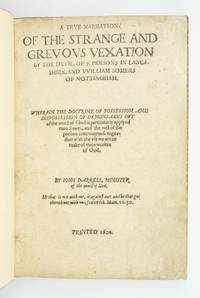
1600réf. ST21089England: Printed by the English secret press 1600. FIRST EDITION. 187 x 128 mm. 7 3/8 x 5". 4 p.l. 24 106 2 pp. Very pleasing early 20th century grained calf gilt covers with French fillet border and rosette cornerpieces raised bands spine panels with small daisy centerpiece gilt lettering densely gilt turn-ins marbled endpapers all edges gilt. STC 6288; ESTC S109297. See also Freeman "Demons Deviance and Defiance: John Darrell and the Politics of Exorcism in Late Elizabethan England" in Conformity and Orthodoxy in the English Church c. 1560-1660 ed. P. Lake and M. Questier Boydell Press 2000 pp. 34-63. Short faint scratch to front board extremities lightly rubbed text washed and pressed title and final two leaves somewhat grayed and grubby margins trimmed a bit close occasionally grazing headlines or shoulder notes but a perfectly readable copy in an attractive binding. This scarce clandestine imprint is a central publication in of one of the strangest religio-political controversies of the turn of the 17th century involving demonic possession witchcraft accusations and an anti-Puritan crusade by a Church of England bishop. Our author Puritan exorcist John Darrell ca. 1562 - ca. 1607 was educated at Cambridge and briefly dabbled in law and farming before establishing himself as a preacher and spiritual healer. In 1586 he began conducting exorcisms resulting in a level of local fame partly because some of them resulted in the convictions of witches. In the following decade he achieved national notoriety. First in March of 1597 he exorcised a group of seven demoniacs in the household of Lancashire landowner Nicholas Starkey. Then in November of the same year he conducted a dramatic public exorcism of Nottingham apprentice musician William Somers whose claim of having been magically possessed led to the arrest of 13 people on witchcraft charges. One of these individuals was the sister of a city alderman who immediately took action to protect his kinswoman. The resulting legal tangle--which included the arrest of Somers on charges of witchcraft later changed to fraud and an investigative commission led by the Archbishop of York--attracted widespread attention to Darrell's activities by both supporters and detractors. The Church of England was highly concerned about Puritan exorcisms: in the words of historian Thomas S. Freeman "exorcism magnified those aspects of Puritan worship which the ecclesiastical authorities most feared--its anti-hierarchical tendencies its strong sense of communal solidarity and its potential as a vehicle for protest." No doubt with an understanding of this threat Bishop of London Richard Bancroft and his chaplain Samuel Harsnett led a vicious campaign against Darrell publishing multiple works smearing his character and theology stripping Durrell of his license to preach and imprisoning him for more than a year. Darrell did not go quietly. Over the next four years he and his supporters penned multiple defenses of his actions and of Puritan exorcism more generally published either abroad or illegally by secret English presses. The present work is significant not only for its detailed retelling of Darrell's final two exorcisms in his own words but also because it includes Darrell's detailed "doctrine of possession" which discusses the difference between his exorcisms and those of the apostolic age an important theological clarification in the debate. STC indicates that our book was one of the works published clandestinely in England; this is backed up by the October 29 1600 Stationers' Company order to burn all copies of "mr Darrell's book lately printed concerning the casting out of Devilles" which Freeman asserts refers to the present publication. This order to be burned on top of the clandestine publication could explain the present scarcity of the work which appears on the market very infrequently. We have been able to trace just a single copy at auction this century and only five since 1964 several lacking the final errata leaf which does appear here. Printed [by the English secret press?] unknown books
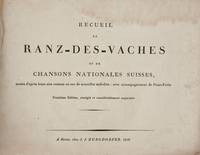
1818réf. 41243Berne: J. J. Burgdorfer 1818. Oblong quarto. Original publisher's mid-green printed wrappers. 1f. recto title verso blank 1f. "Inhalt" v-x "Préface de la seconde édition" xi-xxiv "Avant-propos de la troisième édition" 126 music 127-131 "Worterklärungen" 132-133 "Traduction Interlinèaire du Ranz des Vaches d'Appenzell p. 24" 134-135 "Verbesserungen in der Musik." 136 "Verbesserungen." pp. 55 songs in German/Swiss dialects with the exception of those to pp. 107-122 in French. Preface by Johann Rudolf Wyss noted Swiss editor writer and scholar. Typeset throughout. With illustration of Alphorn player to upper and Swiss female figure to lower wrapper. "Articles de Fonds en livres et objects d'arts concernant la Suisse qu'on trouve aussi chez les principaux libraires de la Suisse" to verso of upper and recto of lower wrapper. Scored mainly for voice and piano with instrumental selections for piano and unspecified treble instrument. Wrappers worn with several small stains and tears to edges; upper nearly detached with lower margin of verso repaired with ivory tape. Light uniform browning; occasional minor foxing and small stains; signatures loose. Third edition. OCLC 20912723. A compilation of traditional Swiss folk songs and occasional instrumental selections including music for the Alphorn and solo piano compositions many arranged by Ferdinand Fürchtegott Huber. The alphorn was a "wooden trumpet of pastoral communities in the Alps. . The commonest length of the alphorn is about 185 cm in which case its range extends to the 5th or 6th harmonic as quoted by Beethoven at the end of the Pastoral Symphony. . Alphorns were known best as herdsmen's calling instruments serving also in some areas to summon to church and formerly to war. They may also be numinous: among the Mari of Russia the long wooden trumpet is made for the spring festival and afterwards sacrificially burnt or hidden in a sacred place. Overall likeness in making and using alphorns and their distribution suggest that they possibly may have originated among post-Celtic peoples of the Migration Era. There is no firm evidence of prior existence; 'cornu alpinus' in Tacitus is less than proof of a wooden trumpet of which the earliest specimen from the 9th-century Oseberg ship Oslo Vikingskiphuset supports iconographic suggestions that wooden trumpets of moderate size were used as summoning and military instruments in early medieval northern Europe in addition to their pastoral functions." Anthony C. Baines revised by Max Peter Baumann in Grove Music Online. Rossini evoked the Alphorn in his iconic 1829 William Tell Overture. Of great importance to the preservation of the oral heritage of Swiss alpine herders. J. J. Burgdorfer unknown books
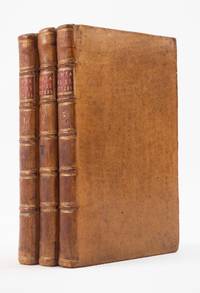
1771réf. ST21068London: T. Cadell 1771 1772. First Edition in English. 160 x 98 mm. 6 1/4 x 3 3/4". Two works in three volumes. Plain but excellent contemporary sprinkled calf raised bands flanked by gilt rules red morocco title labels gilt volume numbers with re-numbering added in the panel beneath by a previous early owner. ESTC T146522 T147368. Spines slightly darkened a touch of wear to extremities perimeter offsetting to flyleaves and adjacent pages from binder's glue but AN ESPECIALLY PLEASING SET--the contents clean fresh and bright the bindings virtually unworn. Little changed from the day they left the bindery these volumes contain an intriguing hoax from an improbable source: the French diplomat François Marquis de Barbé-Marbois who negotiated the 1803 treaty by which the United States purchased the Louisiana Territory from France for $15000000. In these letters Barbé-Marbois 1745-1837 pretends to be the remarkable Madame de Pompadour 1721-64 a commoner born Jeanne Antoinette Poisson who became not just the official mistress of Louis XV but the king's closest and most trusted advisor on matters of state. Through the letters Barbé-Marbois attempts to get inside the mind of arguably the most important French perhaps even European woman of her time to untangle the origins and degree of her influence over political and military affairs. It may seem odd to a modern sensibility that Barbé-Marbois--a man whose talent for diplomacy enabled him to serve two kings a republic and an emperor of France--would produce this fabricated correspondence. Still in his mid-20s he could have done so to establish a reputation for himself at a time many years before he would earn it as a diplomat; or he could have been responding to some personal or unrecorded public interest in Pompadour; or he may have done it at least in part for monetary gain; or he could have done it simply as an entertaining diversion to fill up idle hours. All we know is that although the "Letters" proved to be sensational and widely popular nobody read the present set which seem to have spent most of their existence safely on the shelf. T. Cadell unknown books
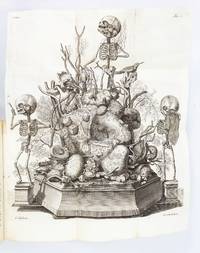
1417réf. ST20185Amsterdam: Joannes Wolters then Jansson-Waesberg 1701-14; 1715-16. FIRST EDITIONS. 224 x 168 mm. 8 3/4 x 6 1/2". 4 p.l. 62 pp. 1 leaf errata; 2 p.l. 98 pp.; 2 p.l. 70 pp.; 1 p.l. 55 pp.; 1 p.l. 54 pp. 2 p.l. 30 pp. 1 leaf 92 pp. 2 leaves 44 pp. 4 leaves 68 pp. 8 leaves 72 pp. 1 leaf errata 12 leaves 78 pp. 10 parts in one volume. Contemporary stiff vellum smooth spine with ink titling yapp edges. WITH 42 ENGRAVED PLATES as called for by Norman six of these folding. Text in Latin and Dutch. Blake 395; Garrison-Morton 389; Heirs of Hippocrates 627; Jeremy Norman's HistoryofMedicine.com 623; Norman 1875. Vellum lightly soiled front pastedown slightly defective but the original unsophisticated binding in perfect order. Final plate with small hole due to adhesion to facing page minor damage done to image a few other trivial imperfections a couple of negligible marginal tears a faint ink stain across the top inch of text a tiny burn hole but AN UNUSUALLY BRIGHT CLEAN COPY INTERNALLY with all the important plates in exceptionally fine condition. Scarce when seen bound from its original 10 parts as here this work describes the memorable "Anatomical Treasure" of Dutch physician and anatomist Frederick Ruysch being illustrated by surrealistic charmingly macabre engravings depicting "fantastic dream-like concoctions constructed of human anatomical parts." History of Medicine Described by Norman as "probably the most original artist in the history of anatomical preparations" Ruysch 1638-1731 "enjoyed making up elaborate three-dimensional emblems of mortality from his specimens" which included fetal skeletons and preserved organs. Heirs to Hippocrates says that "the engraved illustrations deserve special mention for their whimsical almost surrealistic quality: quaintly posed skeletons surrounded by stuffed monsters strange reptiles dried plants and sea creatures." According to Norman "Ruysch's methods allowed him to prepare organs such as the liver and kidneys and keep entire corpses for years. He used a mixture of talc white wax and cinnabar for injecting vessels and an embalming fluid of alcohol made from wine or corn with black pepper added. Using his injection methods Ruysch was the first to demonstrate the occurrence of blood vessels in almost all tissues of the human body thereby destroying the Galenic belief that certain areas of the body had no vascular supply. He was also the first to show that blood vessels display diverse organ-specific patterns." Ruysch's dioramas were displayed in his home museum in Amsterdam which was open to the public; visitors included Tsar Peter the Great of Russia who purchased the collection in 1717 for the foundation of Russia's first public museum the St. Petersburg Kunstkammer. Unfortunately the Russian climate was not kind to the fragile constructions and all deteriorated over time; the dramatic plates here are the best record we have of this unique collection. Joannes Wolters, then Jansson-Waesberg unknown books
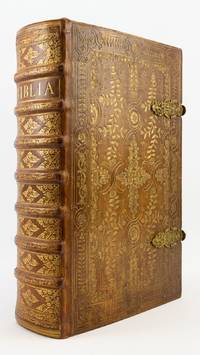
1752réf. ST19424Stockholm: Tryckt af Henrick Christoph Merckell 1724-28; Peter Jöranson Nyström 1752. 422 x 275 mm. 16 5/8 x 11". 30 p.l. 1 leaf section title 234 2 section title 235-604 2 section title 605-908 2 section title 909-1387 1 pp.; 4 p.l. 300 4 301-666 pp. STATELY CONTEMPORARY CALF INTRICATELY GILT IN THE FANFARE STYLE over bevelled wooden boards covers with strapwork frame containing lilies and floral garlands central panel with strapwork rows of floral crosses the spaces between with floral sprays emerging from urns very expertly rebacked preserving original backstrip raised bands spine compartments with flowers-and-pomegranate centerpieces floral cornerpieces gilt lettering two decorative brass clasps catch plates and original straps turn-ins with lattices and floral ornaments marbled endpapers edges gilt and delicately gauffered. Five section titles with engraved vignettes. With ink presentation inscription celebrating the baptism of Claës Georg Listromer on 20th November 1604 and expressing the hope the Book will bring him wisdom as he grows signed by Claës Lindman dated 17th September 1605. A 20th century Swedish inscription below tracing the book's descent through generations of the Listromer family into the 1920s. Darlow and Moule 8821 8826. Slight variations in color of the leather Ffff8 with lower corner torn away not affecting engraving occasional faint offsetting but AN EXTREMELY CLEAN FRESH COPY in a binding bright with gilt. This impressively bound Swedish Bible was a baptism gift that clearly would have outweighed its recipient as Swedish law at the time required an infant be baptized within the first eight days of life. Although hardly practical for personal devotion and study the majestic tome was a treasured heirloom passed down in the same family for 200 years. The beautiful fanfare style seen here emerged in France in the 16th century but remained very popular in Northern Europe into the 18th century particularly for large "lectern" Bibles like the present item. The text here is an extensively annotated edition of the 1618 Gustave II Adolf Bible prepared by a father and son both named Johannes Gezelius who served successively as Bishop of Åbo. The New Testament was first printed in that city in 1711-13 the Old Testament in Stockholm in 1724-28. In our copy the New Testament is a 1752 reprinting. Tryckt af Henrick Christoph Merckell, 1724-28; Peter Jöranson Nyström unknown books
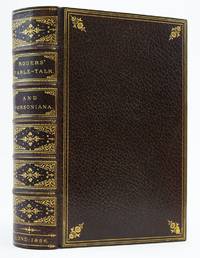
1856réf. ST17640sLondon: Edward Moxon 1856. Apparently the FIRST EDITION. 200 x 130 mm. 7 7/8 x 5 1/8". viii 355 pp. bound with the half title and with an inserted plate as frontispiece.Edited by Alexander Dyce. VERY PLEASING SLIGHTLY LATER DARK BROWN CRUSHED MOROCCO ATTRACTIVELY GILT covers with French fillet border and elegant botanical cornerpieces raised bands heavily gilt spine in compartments featuring elaborate scrolling cornerpieces an intricate fleuron centerpiece and tiny circlets turn-ins with plain and stippled rules and filigree gilt decoration at corners and midpoints of two sides textured silk brown and cream millefleur-patterned endpapers all edges gilt. EXTRA-ILLUSTRATED WITH 55 PORTRAIT PLATES five in color all with tissue guards. Verso of the front free endpaper with the engraved bookplate of Robert B. Lawrence. A hint of browning to some of the inserted plates but A FINE AND HANDSOMELY BOUND COPY the text especially fresh clean and smooth and the binding bright and virtually unworn. This is a tastefully bound collection of anecdotes and witty banter recorded by poet Samuel Rogers whose private means made his gracious home in Westminster a gathering place for the poets and artists of the age. Scion of a wealthy banking family Rogers 1763-1855 achieved fame with the publication of "The Pleasures of Memory" in 1792. His friend Alexander Dyce who compiled the present work tells us in the preface that Rogers "was in the habit of writing down in all their minutiae the anecdotes &c. with which his conversation abounded." These records provide us with an intriguing glimpse of literary society in London in the first half of the 19th century. Our second work "Porsoniana" contains anecdotes about the "very eminent Greek scholar" Richard Porson 1759-1808 related to Dyce by that individual's close friend William Morby. This edition is one of at least three printings that were issued by Moxon in the initial publication year and it would seem to be the first appearance of the text. In any case our volume has the added feature of 55 inserted engravings of the persons discussed in the book. Although the binding is apparently unsigned the owner's bookplate on the front flyleaf is placed near enough to the top edge that it may be obscuring a stamped binder's signature. The work displayed here is certainly of high enough caliber to have been produced by Riviere or Zaehnsdorf. Edward Moxon unknown books
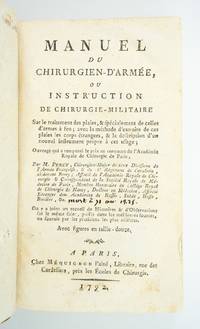
1786réf. ST21018Paris: A. J. Dugour et Durand; Nicolas-Toussaint Méquignon; Poilly 1798; 1792; 1786. FIRST EDITIONS of Tazewell and Percy. 168 x 100 mm. 6 1/2 x 4". 2 p.l. iv 210 pp.; xvi 272 pp.; 46 2 pp. Three separately published works bound as one. Contemporary patterned vellum boards backed with mottled sheep flat spine gilt in compartments with alternating urn and fleuron tools red morocco label lettered in gilt all edges sprinkled with expert repairs to joints and ends of spine. In a custom-made box. Manuel du Chirurgien-d'Armée with a folding plate illustrating tools developed by the author for removing a bullet from a wound. Front pastedown with "Questions faites par le Juri Medical" dated "3 Septembre 1808" laying out five sets of questions from that examination; title page of Manuel with date of Percy's death added in ink. Vade-Mecum Medicum: Blake 446; Cowen America's Pre-Pharmacopoeial Literature 1961 pp. 21-22; Thomas Jefferson letter to William Tazewell 23 January 1803 Founders Online https://founders.archives.gov/documents/Jefferson/01-39-02-0331. Manuel du Chirurgien-d'Armée: Blake 343; Garrison-Morton 2158.1. Boards with a mild tendency to splay corners and boards a bit worn but the restored binding solid and not unappealing. Trivial imperfections internally but the book excellent throughout extremely clean and bright. Bound with two other 18th century works of medicine this is a landmark American medical work by a Virginian that was commended by Jefferson while in his first term as President of the United States. According to Cowen the "Vade-Mecum Medicum" is "the first general as distinguished from hospital 'pharmacopoeia' compiled by an American." Virginia physician William Tazewell ca. 1770 - 1840 studied medicine in Edinburgh and he notes in his preface here that the classification of diseases that comprises the first part of this work is based on the 1769 nosology by the Scottish physician William Cullen. The materia medica and formulary that follow draw on Tazewell's own notes from his studies at the University of Edinburgh as well as the London pharmacopoeia and Joseph Townsend's "The Physicians' Vade Mecum" 1794. When his "Vade-Mecum" was published Tazewell was in Paris serving as secretary to American diplomat Elbridge Gerry a post he held from 1797 to 1800. Upon returning to the United States Tazewell set up practice in Williamsburg Virginia and sent copies of the present work to George Washington and Thomas Jefferson. The latter acknowledged the value of the gift especially in terms of its concision in a letter to our author dated 23 January 1803. He said in part that the book "has really brought the whole science of diseases & remedies within the shortest compass possible and not meddling with the details of the science himself it presents exactly such a general view of every part of it as he i.e. one often wishes to take." Tazewell's work is bound here between an influential guide to treating gunshot wounds by the chief surgeon of Napoléon's Grande Armée and an 18th century French edition of the "Regimen Sanitatis Salernitanum" a Medieval poem setting forth rules for health advised by the great medical school at Salerno. Baron Pierre-François Percy 1754-1825 pioneered a number of important innovations in battlefield medicine including the "surgical quiver" a kit containing tourniquets and 11 instruments that a medic could wear over his shoulder. Garrison-Morton notes that "He was responsible with Larrey for the invention of special ambulances and squads of litter-bearers including a 'super-ambulance' capable of carrying 8 surgeons 8 attendants and dressings for 1200." The present work focuses on treatment of gunshot wounds and presents the tool Percy invented to remove bullets the "Tribulcon" depicted in the folding plate here. Percy's tombstone in Père Lachaise cemetery declares him "the father of military surgeons." Originally written in Latin in the 12th or 13th century the final work here sets forth hygienic and dietary practices for good health in a format that would be easy for the layperson to understand and remember. Its origins are attributed to the medical school of Salerno the first and most influential early modern medical school. The text remained popular for centuries. Our volume may have been the property of L. M. Petit a surgeon from Chateaudun who is referenced in the "Questions du Juri Medical" attached to the front pastedown. A. J. Dugour et Durand; Nicolas-Toussaint Méquignon; Poilly unknown books
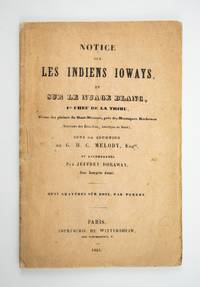
1845réf. ST21010Paris: Imprimerie de Wittersheim 1845. 182 x 120 mm. 7 1/8 x 4 3/4". 24 pp. Original tan printed wrappers with several small expert repairs to back stitched as issued. Housed in a tan paper-covered chemise with black morocco label and gilt lettering and matching slipcase. With eight wood-engraved plates by Porret after George Catlin. Sabin 47467; Howes 500. Some harmless fraying along bottom edge of wrapper covers just a little soiled text a bit toned and lightly foxed two small open tears to last two leaves but the important illustrations printed on a better quality of paper bright and pleasing. With some inevitable defects given what it is but still an excellent copy of a fragile pamphlet. This is a well-preserved copy of the fragile and uncommonly seen brochure recording the famous mid-19th century Paris performances of Ioway Indians and George Catlin's celebrated Native American portraits a visit that caused a sensation among Parisians. Catlin 1796-1872 walked away from a Pennsylvania law practice at age 25 in order to pursue his dream of becoming an artist. He achieved some success as a portrait painter but found the work dull. After seeing a delegation of Native American leaders from the Western states in Philadelphia and perhaps being influenced by the fact that his mother had been captured for a time by the Indians in 1778 he decided to dedicate himself to memorializing those tribes whose traditional way of life was being destroyed. He travelled throughout the American interior where he met and painted people from many indigenous groups making an effort to depict realistically their traditional ways of life. ANB says that his paintings "show people not romantic stereotypes and the ethnographic value of his work has only appreciated with the passage of time." He staged exhibitions of his work in the United States then worked with promoter George H. C. Melody to take his exhibition across the Atlantic to tour Europe. They were accompanied by Chief Francis White Cloud d. 1859 and 11 other members of the Iowa or Ioway tribe along with translator Jeffrey Deroine also Doraway 1806-59 a formerly enslaved African American who had been raised near the Iowa and leveraged his language skills into a successful career as a diplomat and interpreter. Arriving in Paris in 1845 the exotic entourage which featured Catlin's paintings alongside performances by the Iowa contingent was an enormous success impressing a great many visitors including among the famous Charles Baudelaire Benjamin Disraeli Victor Hugo and George Sand. The present pamphlet produced as a record of the visit includes eight reproductions of Catlin's paintings along with a description of the Native American visitors an account of their meeting with King Louis-Phillipe and ethnographic excerpts from the Office of Indian Affairs. This work infrequently appears on the market: we could trace only two copies at auction since 1966. Our copy with the delicate wrappers largely intact and retaining its original stitching is especially desirable. Imprimerie de Wittersheim unknown books
1897réf. S14042England Switzerland:: Created by Eric de Henseler 1897-1900. 1897. Size: 9x12 inches. 30 leaves of stiff card paper. Condition: a few of the cards have separated in two pieces but in general this group is a lively collection with lots of color printing many remarkable designs and poetic quips humor. Album is bound in contemporary quarter black calf gilt tooled bands black pebbled cloth calf corners; extremities worn front joint cracked mended with kozo. Very good. OVER 160 GREETING CARDS & XMAS WISHES 1897-99 many being Xmas cards. One "Souvenir Amitie" is a pop-up variety of expensive card with a 3-dimension image of a young woman on a golden chariot with two swans toting the carriage/chariot floating on a river with rows of flowers and trees the back-drop with a landscape setting. One is a Sprungli Chocolat Zurich card. / Names found in the archive: Uncle Ranny Auntie Kate Eric. Mrs. Walker Donald Evelyn Anderson Mr. & Mrs. Watson Kaye of Ings Grove Mirfield; Ethel Kaye A. Freda F. Pilling The Hagg Mirfield; Mr. & Mrs. A E Pilling; Winnie A.W. Dodds Muriel Frank Mary Hutchinson Kathleen Jessie Eveline Helen Gertrude Whitaker Violette Frank Dona Sankey Lilly Auntie Blanche Daisy Johnson Mr. & Mrs. G. Leopold Caird etc. All should be family relatives or friends of the de Henseler family who later relocated to Switzerland. / "Feathers and Fashions" by Rev. Frederick Langbridge is printed in Germany. / Eugene Eric de Henseler "Eric" born in Fribourg 1889 and died in Geneva 1960. Of a Swiss family originating from Bremgarten Aarau/Argovie he was partly educated in Great Britain and also in Fribourg and Lausanne. He was awarded a Ph.D. by the University of Fribourg in 1928 and his doctoral thesis was 'L'ame et le dogme de la transmigration dans les livres sacres de l'Inde ancienne.' He was an active member of the 'Societe theosophique' in Geneva and frequently contributed to articles on theosophy. [Created by Eric de Henseler], 1897-1900. hardcover books
1833réf. AH1038Paris:: C. L. F. Panckoucke 1833 1829. 1833. 2 volumes. 8vo. XXX 2 388; VI 352 2 pp. Latin text with facing translation. Early quarter red gilt-stamped calf marbled boards with original brown printed wrappers bound in; corners showing wear. Very good. Pierrot was professor of rhetoric at the Royal College of Louis-le-Grand. C. L. F. Panckoucke, 1833, 1829. hardcover books
1910réf. 1273c. 1910. Cards. Color illustrated postcard. Very good. 13.5 x 9 cm. Festive color illustrated and embossed vintage postcard Harvest theme with grapes and wheat. Postmarked Boston MA date obscured one cent stamp. Ink Stamp: "A Remembrance Sincerely yours Harold D. Perry 299 Washington St. Boston Mass." books
1943réf. WALTER-FILM007827Twentieth Century Fox. No binding. Near Fine. Los Angeles: Twentieth Century Fox 1943. Set of 7 vintage original 8 x 10" 20 x 25 cm black-and-white glossy silver gelatin photos. Various style production information printed on bottom margins three are date stamped May 7 1943 on verso. Overall near fine. The classic all-Black cast musical Stormy Weather is represented by the film's major stars in musical sequences. A retrospective of African American entertainers of the early-20th century cast members present in this collection include Lena Horne Bill Robinson. Cab Calloway Fats Waller Ada Brown and Dooley Wilson. Twentieth Century Fox books
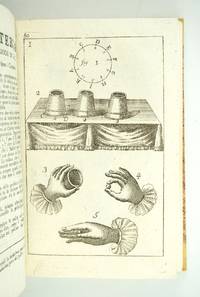
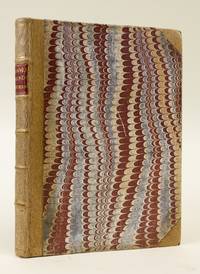
1795réf. ST20614Venice: Giuseppe Orlandelli 1795. Fourth Edition. 180 x 114 mm. 7 x 4 5/8". 154 pp 1 leaf. Pedestrian 19th century half vellum over pink marbled paper boards smooth spine with old ink lettering. WITH 16 ENGRAVED PLATES SHOWING MAGIC TRICKS and numerous diagrams in the text. Tomash & Williams A56; Riccardi I 15. Marbled paper a little chafed title washed first and last leaf a bit soiled and with repairs at inner and outer margins but no text affected half a dozen other leaves with minor repairs or mounted isolated small smudges or corner creases but still an acceptable copy of a book expected to be found in poor shape--the text clean the impression of the engravings crisp and the binding solid. This is a pleasing copy of a rather scarce collection of mathematical puzzles magic tricks and illusions abounding with illustrations and diagrams. Our author Bolognese architect and engineer Giuseppe Antonio Alberti 1712-68 had a varied career which is reflected in his literary output: his publications discuss civil engineering pyrotechnics mathematics and factories among other topics. Described by Tomash and Williams as "the type of book that mischievous uncles like to own" the present work begins with a study of amusing and unusual arithmetic equations and puzzles before discussing magic tricks and illusions including card tricks dice games and even complex stage illusions involving specialized equipment. These are illustrated with a series of delightful copper engravings with labelled mechanisms sometimes operated by lively little figures or disembodied hands with ruffled sleeves. "Giuochi" was first published in Bologna in 1747 and remained in print for a further 20 years after the present edition. Because this is the kind of book that would have been subjected to uncareful use early editions are difficult to find in the attractive condition seen here. Giuseppe Orlandelli unknown books
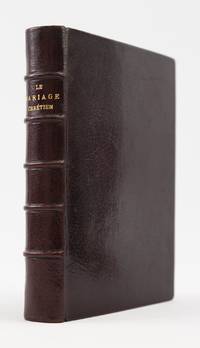
1882réf. ST19567-178Paris: Jules Gervais 1882. Sixth Edition. 160 x 115 mm. 6 1/4 x 4 1/2". 400 pp. Pleasing deep brown morocco by Fonteney stamp-signed on the verso of the front flyleaf raised bands spine lettered in gilt wide turn-ins gilt tooled patterned endleaves all edges gilt. Engraved frontispiece depicting St. Elizabeth by Friedrich Ludy after Friedrich Overbeck; each page with a decorative figural border. Minor foxing to preliminary leaves very slightly foxed elsewhere otherwise a fine copy the text quite clean bright and fresh and the binding unworn and exceptionally lustrous. Decoratively printed and attractively bound this volume on Christian marriage and family life is a delightful example of late 19th century French book production. Its author Félix-Antoine-Philibert Dupanloup 1802-78 was the bishop of Orléans and a proponent of liberal Catholicism in France throughout the 19th century. Alongside teaching and pastoral duties he authored several works on religious matters throughout his career. Initially published in 1869 the present work on "Christian Marriage" went on to become a very popular work remaining in print into the second decade of the 20th century. One wonders if its popularity was as much due to the beauty of the work as its contents: each page is graced with detailed engraved borders laden with scrolling foliage and rich Christian imagery executed with delicacy and panache. This copy is pleasing in its highly polished morocco exterior its lacy inner dentelles and its attractive patterned endleaves. Jules Gervais unknown books
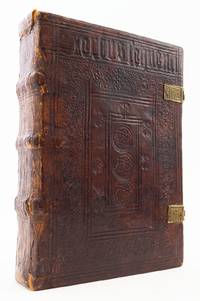
1504réf. ST18751Basel: Michael Furter 1504. 220 x 138 mm. 8 x 5 1/2". CXXII 10 LXX 1 leaves. EXCELLENT CONTEMPORARY BLIND-TOOLED CALF covers panelled in blind title stamped in gothic letters at head of upper cover central panel with vertical row of three large rosettes EBDB tool s013635 this enclosed by a frame with eight carnation stamps EBDB tool s013643 then by a roll-tooled frame filled with circles containing flowers fruit and stars EBDB tool r000675; Kyriss 84 Roll 6 lower cover similarly framed but with central panel divided by diagonal blind rules into four compartments each containing a large rosette raised bands spine panels with one or two floral medallion stamps upper cover with original brass catches stamped "IVIII" newer clasps and leather straps probably newer pastedowns fore edge with the number "75" in ink subtle repairs to head and tail of spine as well as lower corner on back cover. Title and opening page with decorative woodcut initials main title and sectional title each with woodcut vignette and full-page woodcut on verso. VD16 T-653; VD16 H-6510; Adams L-1124 L-1123. For the binding: Kyriss 84 Tafel 171 Rolle 6; EinbandDatenbank EBDB tools s013635 and r000675 workshop w002075. An ink stain touching text on one leaf and slightly affecting four adjacent leaves but the vast majority of the contents clean fresh and in fine condition. Quarter-inch crack at top of each joint with leather across the spine consequently becoming a small flap light signs of wear to leather hinges mostly open--but the binding entirely sound with almost no wear at all to the joints. An extremely attractive volume THE REMARKABLY WELL-PRESERVED BINDING FEATURING FINE DEEP IMPRESSIONS OF ITS STAMPS. This is a rare early compilation of Medieval liturgical chants in an appealing binding by an Augsburg workshop. Kyriss dubbed this bindery Hirsch-Rolle I for its distinctive deer i.e. "hirsch" roll tool and noted it was active 1483-1532. EBDB the bindings database of the Berlin State Library has identified 26 bindings in German libraries from this workshop. The wide attractive floral roll here is most unusual among the binding's wide array of design elements from flowers and plants to stars all contained in tightly packed circles that bring bubbles to mind. Our two texts contain "sequences"--words sung between the Gradual and the Gospel on festival occasions--written by among others Gregory the Great the fourth century bishops Hilarius of Poitiers and Ambrose of Milan and fifth century Latin Christian poet Coelius Sedulius. They were printed by Michael Furter d. ca. 1516-17 who operated a press in Basel from 1489 into the second decade of the 16th century. He was especially known for the decorative nature of his volumes. Haebler's "Typenrepertorium" counted 12 sets of embellished woodcut initials Furter employed; examples from two of these sets may be seen here on the title page of the first work and at the opening of the text in both. The woodcut illustrations here are also notable. The title woodcut Schramm XXII 1263 on the first work is a depiction of the Magi presenting gifts to the Christ Child and his mother done early in the career of Albrecht Dürer 1471-1528. It was one of the "Basel Prayer Book Woodcuts" 25 illustrations likely meant for a "Hortulus Animae" Johann Bergmann von Olpe intended to print in 1494 but never issued. A large striking woodcut depicting the Christ Child at the center of a sunburst surrounded by medallions with the devices of the four Evangelists appears on the verso of the title in the first work and on the title page of the second. On the verso of the second title page is a woodcut of the Crucifixion from the "Postilla" by Guillelmus Parisiensis Basel 1491 Schramm XXII 336. This is an especially affecting and detailed scene: Mary Magdalene clings to the foot of the cross while Jesus looks serenely down at the Virgin Mary who is collapsing in the arms of another woman as several soldiers jeer. On either side of Christ the souls of the thieves crucified with him are being taken one--who had asked to be remembered when Jesus came into his Kingdom--by angels the other by demons. A banner marked with the SPQR of the Roman Empire flutters in the background. All in all this is a very pleasing exemplar of post-incunabular book-making. Michael Furter unknown books
1578réf. ST15632London: Printed by John Kingston for Andrew Maunsell 1578. First Edition in English. 189 x 134 mm. 7 3/8 x 5 1/4". 4 87 1 leaves with foliation errors but complete.Translated from the Latin by Thomas Twyne. Retrospective half pigskin over marbled boards raised bands red morocco label. Title with woodcut ornament head- and tailpieces many decorative initials. Printed in black letter. Front pastedown with Macclesfield bookplate for the South library; title with inscription in ink "Dulcius ex ipso fonte bibuntur aquae" "Sweetly the waters have been drunk from the fountain itself" and with the initials "D. Fl." see below; a couple of contemporary annotations in ink one slightly shaved; numerous marginal readers' marks in ink and pencil. STC 6231; ESTC S105155. Paper a shade or two less than bright title somewhat soiled a dark stain affecting the upper corner of ff. 24-28 touching text but all is legible; still an overall very good clean copy in a pleasing new binding. This is the first appearance in English of Daneau's 1576 "Physica Christiana" the foundational work of "Mosaic physics" which attempted to reconcile the account of creation in Genesis with scientific knowledge of the natural world in order to create a "Christian natural philosophy." Though obviously theological in origin "Christian Physics" is nevertheless substantially a work of natural history generally adopting the Aristotelian worldview then prevalent. The first of two parts is a disquisition on creation a long Socratic dialogue on the meaning of the opening chapters of Genesis. The second part which occupies a good deal more than two-thirds of the volume is a broader treatise on nature including discussion of such things as light and shadow meteors the rainbow thunder precious stones glass gold various trees stars and planets fish birds elephants foxes and many more topics. A Calvinist theologian forced into itinerancy because of his incautiously expressed opinions Daneau 1530-95 produced a considerable number of books mostly commentaries on the Bible and controversial works written against Lutherans and Catholics alike. Our copy has a couple of curious contemporary marginal annotations. On the verso of fo. 2 at the beginning of the second chapter someone noted "Five / speciall / copies of na- / turall phi- / losophye." And at the head of fo. 39 mis-numbered 40 recto is the inscription "Sr. Walter Rawley Laureatus poeta May 4 anno reg. Eliz. 39 anno dom. 1598." There is nothing in Raleigh's biography that can account for his being mentioned as poet laureate in 1598; in that period he was occupied in naval pursuits against the Spanish armada. It has been suggested that our copy was once owned by scholar and translator Andrew Hartwell 1553-1606 a bibliophile who sometimes used the Latin motto which appears on the title page here and who marked passages in his books with the floret-like squiggle seen here on ff. 3-12. At the same time the "D. Fl." inscription on the title page resembles the ownership mark used by the celebrated 17th century bibliophile antiquary politician and magistrate Sir Daniel Fleming 1633-1701. Later the book was securely located in the great library of the earls of Macclesfield which was sold in 12 sales at Sotheby's from 16 March 2004 to 2 October 2008 for some £22 million at the time approximately $40 million. The library was dispersed when the 9th Earl Macclesfield Richard Timothy George Mansfield Parker b. 1943 who was described by the "Independent" as leading an "unconventional lifestyle" was forced to leave his 14th century Shirburn Castle after a protracted family dispute. Called by the paper "a sleeping beauty" his crenellated home had a moat a drawbridge and at the time of the Earl's departure a repair bill of approximately £2.6 million. Despite the building's dilapidation the books in the very large library were distinguished for being uniformly well preserved were almost always in their original bindings and were a sensation at auction for more than four years. The present work is rare: ABPC and RBH locate just one other copy at auction in the past 40 years. [Printed by John Kingston] for Andrew Maunsell unknown books
1850réf. 412931850. Folio 246 x 293 mm. Contemporary plain brown wrappers with octagonal paper label to upper titled "Music Miscellaneous Piece." Notated on 12-stave rastrum-ruled paper. 26 pp. 2ff. blank. Contains operatic and dance numbers by composers including Auber Bellini Cimarosa Donizetti Handel Mozart Verdi et al. scored for solo violin and duo violins in score: Polka Militaire Canthel La Fugitive Valsa Jullien Air in Don Giovanni Mozart Round about the Maypole Arne The Patriots Welcome Russell Dead March in Saul Handel Grand March in Alfred the Great Cimarosa Fragments de Lutzow Weber On yonder rock reclining Auber Waltz Strauss Der Scottisch Pupeski The Nuptial Serenade Mancinelli and selections from operas by Bellini Donizetti and Verdi. Wrappers worn. Minor wear soiling and staining. unknown books
1984réf. 1165NY: Knopf 1984. First US edition first prnt. Signed by Fraser on the title page. Author's Note. Chronology. Prologue. Epilogue. References. Index. Black and white illustrations. Slight bow to rear board faint beginning foxing on topedge; dustjacket with faintly toned edges and small wrinkles. Very Good condition in a Very Good dustjacket with an archival cover. Hardcovers. Very Good/Very Good. 8vo - over 7¾" - 9¾" tall. Knopf hardcover books
réf. WALTER-FILM007768Twentieth Century Fox. No binding. Fine. Los Angeles: 20th Century Fox 1966. Set of 11 vintage original 8 x 10" 20 x 25 cm black-and-white photos fine. A nice group of original photos from the theatrical film all in excellent condition. Five photos show Adam West costumed as Batman and an additional photo of him as Bruce Wayne. In addition there are photos showing Lee Meriwether as Catwoman Cesar Romero as the Joker Burgess Meredith as the Penguin and Frank Gorshin as the Riddler. Twentieth Century Fox unknown books
1954réf. WALTER-FILM006683Twentieth Century Fox. No binding. About Fine. Los Angeles: Twentieth Century Fox 1954. Vintage original 8 x 10" 20 x 25 cm black-and-white glossy silver gelatin print photo. Creases at bottom left corner film credits on bottom blank white margin overall about fine. Once her star had risen Twentieth Century Fox gave Marilyn Monroe some of the best directors in the business to work with. They also gave her some fine scripts in several genres and her portfolio of work is outstanding. Her movies made money too! River of No Return is a Western saga with songs and in Technicolor directed by Otto Preminger and filmed on location. As saloon singer Kay Weston Monroe donned several period-ish showgirl costumes posing for publicity in this costume designed for her by Charles LeMaire. It could be seen briefly in the film during a scene in her dressing room. Twentieth Century Fox books
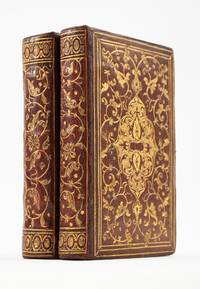
1568réf. ST20921Lutetia Paris: Robert Estienne II 1568. 128 x 87 mm. 5 x 3 1/2". Two volumes. LOVELY CONTEMPORARY RED MOROCCO GILT covers with large central azured arabesque surrounded by curling vines with azured leaves smooth spines with similar vines head and foot of spines with egg-and-dart roll similar to one used by Claude de Picques second volume with faint blind lettering to spine all edges gilt perhaps with some minor early restorations but if so then done with such care as to preclude certainty. Housed in modern suede-lined calf-backed clamshell boxes with magnetic closures. Printer's device on titles and final page decorative initials and headpieces. Front pastedown of volume I with ex-libris of Georgios Arvanitidis. Renouard 171:1; Schreiber 239; Darlow & Moule 4633; Adams B-1670. See: Verron "Les Reliures de l'Entrée de Charles IX à Paris 1572 . . . réalisées par Claude Picques" in Bulletin du Bibliophile 2014 no. 2 pp. 282-98. Just a touch of rubbing to extremities front hinge of second volume open but everything quite tight text with occasional mild browning small spots trivial smudges or tiny worm trails but A BEAUTIFUL COPY clean and fresh internally and the bindings tight and lustrous with very bright gilt With exceptional visual appeal these two precious volumes shining with gilt and containing the Greek New Testament from the renowned Estienne family of printers are of special interest because of their typography their bindings and their provenance. With the expressed goal of printing Greek texts from manuscripts in the royal library at Fontainebleau François I established the post of royal printer in Greek in 1539 appointed Robert Estienne I 1503-59 to the position in 1542 and commissioned the renowned Claude Garamond to cut a new Greek font for this project. To design the type the King called on his own celebrated calligrapher Angelo Vergecio who produced in collaboration with Garamond three different sizes of what came to be called the Royal Types or "grecs du roi." According to Schreiber "These cursive Greek types are universally acknowledged as the finest ever cut." In 1548 and 1549 Robert Estienne issued the press' first Greek Testament known as the "O mirificam" edition for the opening of the dedication to the king in 16mo or "pocket" format using the smaller font of Garamond's "grecs du roi." In 1550 Robert a Protestant moved to Geneva while his son Robert II 1533-70 a Catholic remained in Paris and took over as the royal printer in Greek. Our 1568 Testament--the only one issued by the son--is a reprinting of the "O mirificam" edition but expanded with the critical apparatus from the 1550 folio edition issued by the father. Schreiber notes that our edition is interesting from a typographical point of view as it contains an even more minute version of the already small grecs du roi type for the Table of Chapters. The exceptionally pretty volumes are done in the style of royal binder Claude Picques fl. 1539-78 and employ a decorative roll very similar to one that appears on the spine of the vellum bindings Picques did for "L'Entrée de Charles IX à Paris" 1572. Our volumes once graced the library of Constantinople collector Georgios Arvanitidis 1876-1953 whose library included a number of Estienne Greek editions. They were later in the distinguished library of Frederick B. Adams 1910-2001 director of the Pierpont Morgan Library from 1948-69 and then president of the prestigious Association Internationale de Bibliophilie from 1974-83. And they were featured in the celebrated 1929 Gumuchian catalogue of 398 historically exceptional bindings as item #71. Robert Estienne II unknown books
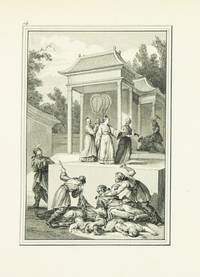
1788réf. ST20889Paris: Chez l'Auteur 1788 1788. FIRST EDITION. 565 x 400 mm. 22 1/4 x 15 3/4". 50 leaves. Two separately published works bound in one. Modern retrospective calf-backed tan paste paper boards smooth spine profusely gilt with a repeating pattern of grape vines red morocco label lettered in gilt vellum tips. ENGRAVED THROUGHOUT WITH A TOTAL OF 48 FULL-PAGE ILLUSTRATED PLATES each accompanied by either one or two plates of engraved text. SHEETS UNCUT AND UNFOLDED the first work printed only on the recto; the second with three sheets printed on both sides. Reed and Dematté China on Paper 20 21; Cohen-de Ricci 479. Edges and lower corners slightly worn but the binding with only just minor signs of use; free endpaper in front and back with vertical crease one sheet with an early marginal repair isolated inconsequential faint spotting but still AN EXTREMELY FINE COPY the wide-margined sheets exceptionally fresh and bright and with strong impressions of the engravings. This pair of lavishly illustrated fully engraved works produced by a talented French engraver after earlier Chinese artworks are here presented in an enormous volume made up of uncut and unfolded sheets. According to Benzit Parisian engraver and print seller Isidore Stanislas Henri Helman 1743 - ca. 1809 "stands out among the engravers of the end of the 18th century" and his skill is evident in the two works bound together here. The first is a pictorial history of the Chinese emperors from the earliest mythical rulers to the Northern Song dynasty 960-1126. It is based on the Dijian Tushuo composed in 1573 to educate the Ming-dynasty Wanli Emperor 1563-1620 who had ascended to the throne at the age of nine. In accordance with its didactic aims it presents the very best and worst of imperial behavior and the original handwritten album was published as a block-printed book to great popularity. Two centuries later the Qing-dynasty Qianlong Emperor 1711-99 commissioned a Western-style edition of the famous work which was executed by two French artists the Jesuit painter Jean-Denis Attiret and the engraver Charles-Nicolas Cochin II. The enterprising Helman was able to see the Attiret-Cochin book in the collection of French statesman Henri Léonard Jean Baptiste Bertin 1720-92 and having had great success with a previous reproduction of a Chinese work Conquêtes de l'Empereur de la Chine ca. 1783 he created the present reproduction. The second work the life of Confucius was also reproduced from plates in Bertin's collection. The source material in this case was the biography of Confucius assembled by the Jesuit Joseph-Marie Amiot 1718-93 as part of his informational series on China meant to educate missionaries. Amiot was a correspondent of Bertin and had sent him the biography and accompanying album of drawings which were based on the Shenji tu Illustrated Traces of the Sage a popular Confucian work throughout the Ming and Qing dynasties. Helman selected 24 scenes from each creating books that balance serene scenes of mountainous landscapes and temples with dramatic fight scenes and dragons. The quality of the engravings is excellent with delicate linework creating faint wisps of smoke and subtle shadows. These two works apparently both published in 1788 were released in several formats. The format here with the engravings laid out on the recto of large uncut sheets appears at auction very infrequently: we have been able to trace only two copies of both works in this format since 2004 and neither in such fine condition as the present example. Chez l'Auteur unknown books