ABAA

46 662 résultats
1920réf. 2741c. early 1920's. Gray cardboard mount with black and white photo. Very good. 25 x 12 cm. photo 18 x 13 cm. Black and white mounted photo of women attending a National Grange festival. Beginning in the late 1800's the Grange formally known as the Patrons of Husbandry was organized to assist farmers with the multitude of difficulties they experienced primarily in rural environments. The Grange unlike many organizations allowed women to become members. This photo depicts nine women in similar dress displaying the national symbol - a sheaf of wheat. unknown books
1910réf. 2046Germany c. 1910. Cards. Color illustrated postcard. Very good. 14 x 9 cm. Festive color illustrated and embossed vintage postcard. Family greeting a young boy holding an ax and a turkey. Signed From Elizabeth To Grandma not postmarked. unknown books
1913réf. 12721913. Cards. Color illustrated postcard. Very good. 14 x 9 cm. Festive color illustrated and embossed vintage postcard. Pilgrim couple with pie turkey and gun. Postmarked Auburn ME Nov. 26 1913 one cent stamp "With love From A-" to Corinna Maine. unknown books
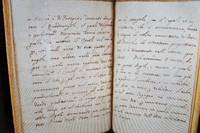
réf. 1441Italy 17th Century. 127 x 98 mm. 5 x 3 ¾ inches. 16 p. including final blank. Italy 17th century. A handwritten guide to the drawing of the human head the most important element of any figure drawing and frequently the starting point for early modern drawing manuals. The manuscript appears to be unpublished and we have been unable to trace the text anywhere in the vast digitized corpus. The content is divided into five brief sections the first explaining how to draw a head in profile. Our scribe focuses on the triangle method in which the profile is anchored by three primary points: the top of the forehead cima della fronte beneath the nostrils sotto le narici and the well of the chin and the beard pozzetta del mento ò barbuccio. The author then explains how to connect these points how to form the nose place the mouth and lips draw the eye etc. Our scribe closes this section with the kind of aspirational promise endemic to manuals of this time namely that if you simple follow my instructions you’ll be able to do this easily. “without much confusion and effort” senza tante confusion et fatiche. The second section explains how to draw the head “in majesty” Della testa in scurcio by which the author appears to mean ‘head-on’ in such a way to convey power and authority he elsewhere refer to this position as prospetto e.g. on p. 9. Here the author likewise focuses on a simple method of drawing lines between different features of the face. The third section covers drawing the head in shadow Della testa in scurcio which the author admits is alquanto più difficle than the first two exercise and so he won’t be sticking to such geometrical rules. But then he goes on to provide a single very simple rule una regola facile assai namely to start with drawing rounded oval l’ovato cirolare and continues with guidelines that sound awfully geometric to us. The fourth section is on drawing a child’s head in profile la testa del fanciullo in profilo where he again starts with the triangle method adding other geometric principles and referencing the point of a compass. The fifth and final section is on drawing a child’s head in maestà wherein the author cites earlier discussion and further expounds on geometric advice. The author then closes with a general comment on the excellence and nobility of the art of drawing. The focus throughout is on lines and contours and proportions always guided by geometric rules for producing an accurate but relatively basic sketch. There is only brief passing reference to elements like “hair or other ornament according to the need and what is most pleasing” pelli or altro ornamento secondo che porfarà il bisogno e che più in piacerà. Despite the brief section on drawing the head in shadow there is nothing on rendering value or otherwise on capturing the subtleties that give a drawing depth and feeling. Like its spine title the Fairfax Murry catalogue calls this 17th-century and we tend to agree based on the script. While we haven’t traced our particular “bird” watermark Heathwood records a few similar marks used in the 17th century and Briquet finds many in the 16th especially in Italy. No less absorbing than the manuscript is a pair of 16th century Italian binding covers here preserved as doublures both heavily decorate in blind. The front doublure carries an arabesque motif and center Alexander the Great in profile. The rear appears to have been impressed with a single panel stamp also arabesque both doublures betraying the Islamic influence that characterized many Italian bindings of the period. Provenance: Lot 237 in the second Fairfax Murray sale his label on the inside rear board and perhaps then to Robert Tunstill his bookplate on the front fly-leaf. To us from a fellow ABAA bookseller who purchased it from a UK dealer in the 1990’s. Condition: Written in a cursive hand in dark brown ink on laid paper watermarked with a bird within a circle. Rebound in the late 19th century or early 20th century in cream pigskin tooled in black preserving as doublures the decorated covers of a 16h-century Italian binding described above title in gilt on spine Del disegno. Ms. Saec XVII. Following the manuscript are four additional blank leaves saved for scanning old pen trials early but the paper is different than the manuscript proper. Additionally six more modern fly leaves have been added at both front and back presumably at the time of rebind. A little loss since filled to the upper outer corner of the manuscript leaves and the four earlier blank leaves affecting just a word or two on each page; a few old pen trials over the text though it remains legible. Binding extremities lightly worn. References: Catalogue of the Second Portion of the Library of C. Fairfax Murray 1918 p. 42 no. 237 “Manuscript on paper Italian hand 16 pp. repaired white morocco extra the cover of an old stamped vellum binding used as a double. 12mo. Saec. xvii”. Alexandra Arvilla Greist Learning to Draw Drawing to Learn: Theory and Practice in Italian Printed Drawing Books 1600-1700 PhD Dissertation UPenn 2011 p. vii “Italian printed drawing books libri da disegnare comprise an important body of evidence for our knowledge of artistic training in Italy during the early modern period. . . Intended for both professional and amateur audiences these printed sources were soon copied throughout Europe where they influenced drawing education for the next 400 years”. C. M. Briquet. Les Filigranes v. 3 # 12202- 12232 similar watermarks mostly 16th century. Edward Heawood Watermarks Mainly of the 17th and 18th Centuries 1950 # 179 183 similar watermarks 17th century. Anthony Hobson Humanists and Bookbinders 1989 p. 220-21 recording a few 16th century Italian bindings with Alexander the Great plaquettes. Thanks to Patrick Olson for help with this description. unknown books
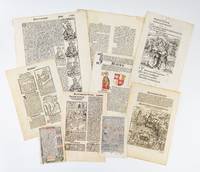
1480réf. ST12778-08481480-1537. Largest leaf measures 428 x 307 mm. 16 3/4 x 12 1/8". 13 OF THE 15 LEAVES WITH WOODCUT OR METALCUT ILLUSTRATIONS several being a half-page or larger and one with contemporary coloring most leaves also with woodcut or metalcut initials. A couple leaves with some light dampstaining a few others with light toning thumbing and/or the occasional stain repair or other minor issue but in general excellent specimens in pleasing condition. These early printing packets present an excellent opportunity for libraries teachers and students as well as private collectors to develop or expand their teaching or personal collections and at a modest cost. Each packet includes four incunabular leaves six post-incunable leaves and five 16th century leaves printed after 1520--all hand-picked to demonstrate a variety of genres formats and countries of origin. Most of the leaves here feature woodcut or metalcut illustrations two of which can be attributed to the prominent engravers Urs Graf and Albrecht Dürer. The illustrations depict a wide variety of scenes including battles biblical episodes saints royalty and natural history. The packets are comprised of leaves from the following works listed in chronological order. 1 BIBLE IN LATIN. Ulm: Johann Zainer 1480. From the press of the first printer in Ulm the first Bible to have notices by Menardus Monachus at the beginning of each chapter briefly summarizing the contents. 2 CHRONICLE. Chronecken der Sassen. Mainz: Peter Schoeffer 6 March 1492. 3 SCHEDEL HARTMANN. Liber Chronicarum. Nuremberg: Anton Koberger 1493. 4 HORTUS SANITATIS. Strassburg: Johann Prüss OR Cologne: Heinrich Quentell 1499 or possibly 1507. 5 A BOOK OF HOURS IN LATIN PRINTED ON VELLUM. Paris: Thielman Kerver 1507. With initials finished by hand. 6 GUILELMUS PARISIENSIS. Postilla Guillermi Super Epistolas et Evangelia. Basel: Michael Furter 1513. With woodcuts attributed to Urs Graf. 7 CHRONICLES: FRANCE. Le Premier -Quatrième Vollume de la Mer des Hystoires & Croniques de France. Paris: Gaillot Du Pré; Michel le Noir 1517-18. 8 MAXIMILIAN I. Die Geuerlicheiten und Eins Teils der Geschichten des . . . Helds und Ritters Tewrdannckhs. Augsburg: Johann Schönsperger 1519. 9 SHIP OF FOOLS - COMMENTARY. Des Hochwirdigen Doctor Keiserspergs Narenschiff. Strassburg: Johanne Grieninger 1520. Using the original woodcut blocks from the First Edition of Sebastian Brant's "Das Narrenschiff'" 1494 many of which are attributed to Dürer. 10 BIBLE IN LATIN. Biblia cum Concordantijs. Lyon : Jacob Sacon for Anton Koberger ca. 1520. From one of many similar editions printed from 1512 to the early 1520s. 11 JACOBUS DE VORAGINE. Golden Legend. Westminster: Wynkyn de Worde 1527. 12 A BOOK OF HOURS IN LATIN PRINTED ON PAPER. Venice: Luca-Antonia Giunta 1532. 13 LIVIUS TITUS. Römische Historien. Mainz Juonem Johann Schoeffer 1533. 14 CHRONICLE. FORESTI GIACOMO FILIPPO. Supplementum Supplementi Delle Chroniche del Venerando Padre Frate Jacobo Philippo. Venice : Bernardino Bindoni 1535. 15 BIBLE IN CZECH. Biblij Czeska. Prague: Pawel Severýn z Kapí Hory 1537. Provenance note: These specimens were acquired by us as part of a very large group of leaves assembled by a collector who purchased widely and frequently over the course of 25 years; he did not take apart books to harvest individual leaves. unknown books
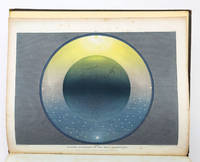
1846réf. ST19286London: Printed by Catchpool & Trent for Simpkin Marshall & Co 1846. FIRST EDITION. 320 x 255 mm. 12 1/2 x 10". xiii 3 96 pp. Publisher's original blind-decorated dun-colored cloth gilt titling to upper cover smooth spine newer endpapers. WITH 11 COLOR ENGRAVINGS after Frost by W. P. Chubb & Son printed in oil colors by George Baxter all with original tissue guards. Front free endpaper with small ink signature of John Hill. See: Francis Reid "Isaac Frost's 'Two Systems of Astronomy' 1846: Plebeian Resistance and Scriptural Astronomy" in "The British Journal for the History of Science" Vol. 38 No. 2 Jun. 2005 pp. 161-177. Cloth rather spotted corners bumped but the binding solid with no wear to joints or hinges. A few spots of foxing to title page half of the tissue guards with overall very faint foxing/browning the illustrations with minor foxing at edges and in margins but the images themselves clean and bright and all in all a really excellent copy the text wide-margined and quite clean and fresh and the plates with rich coloring. Illustrated with beautiful color plates this anti-Newtonian work promotes a view of the universe based on the backward-looking beliefs professed by a Protestant sect known as the Muggletonians. Named after co-founder Lodowicke Muggleton the Muggletonians emerged in London in 1651 based on the claims of two tailors who professed to be the "Last Witnesses" described in the Book of Revelation. Rejecting the new directions in philosophical reason Muggletonians believed in a purely scriptural interpretation of the universe. According to E. P. Thompson's 1994 "Witness Against the Beast" the Muggletonians had curious notions quite contrary to other Protestant denominations: they believed that the soul is mortal that Jesus and God are one and the same that Heaven was left without divine supervision from Jesus' death until the day of judgment that Heaven resides six miles above the Earth that God stands between five and six feet tall and other unconventional things. Although the sect initially avoided both worship and evangelizing during the 19th century some followers became more outspoken about their beliefs and even published books appealing to the general public. Our author Isaac Frost 1793-1858 was a prominent Muggletonian and successful owner of a brass foundry who along with his brother Joseph invested large sums to promote their belief system--the present work being an especially notable example. Divided into two main sections the text first describes the Newtonian system of heliocentric astronomy and then turns to Frost's scriptural interpretation and geocentric views. As Reid tells us "According to Frost Scripture clearly states that the Sun the Moon and the Stars are embedded in a firmament made of congealed water and revolve around the Earth that Heaven has a physical reality above and beyond the stars and that the planets and the Moon do not reflect the Sun's rays but are themselves independent sources of light. Our book was apparently written as a reaction against the lecturers who expressed Newtonian astronomy--which was often for them and their audiences simply shorthand for heliocentrism." The 11 plates that illustrate these extraordinary ideas are the work of George Baxter a pioneering printer who revolutionized color printing techniques by combining metal engravings with woodblock printing using oil-based inks to produce high-quality affordable prints. The plates here are appropriately ethereal and otherworldly utilizing a beautiful palette with subtle gradations and esoteric figures to create memorable pseudo-scientific imagery. Although this work appears at auction with some regularity it is almost always incomplete no doubt because the attractiveness of its plates encourages harvesting. Useful price comparisons include a complete copy said to be in fine condition selling for £7500 in 2016 and six loose prints from the book fetching £6875 in 2015. [Printed by Catchpool & Trent for] Simpkin, Marshall, & Co unknown books
réf. 53484Mainz. Hardcover. Good. Three works bound in one volume 48mo: an amulet and two devotional manuals printed in the late 17th/early 18th century. Contemporary calf. Well-thumbed with two clean horizontal tears at leaves B6 and B7 in the third work affecting one of the woodcuts. A good complete set of scarce ephemeral works: 1 A-B12 = 24 leaves. 48pp. Geistlicher Schild gegen geist- und leibliche Gefährlichkeiten allzeit bey sich zu tragen darin sehr kräftige Segen und Gebethe so theils von Gott geoffenbaret von der Kirchen und h. h. Vätern gemacht und von Urbano VIII. Röm. Papst approbiret worden: zum Trost aller Christglaubigen sonderlich deren so zu Wasser oder Land reisen damit sie durch die Kraft dieses bey sich tragenden Schilds vor vielen Gefahren erhalten werden. Cum licentia Ord. Cens. Trevir ibidem An. 1647. impressum. Gedruckt zu Maynz. A note on the final page suggests this was printed in 1674 or later: "Ex libello de effectu Numismat. S. Bened. Fuldae impress. A. 1674." This work is plainly advertised to offer protection by means of "powerful blessings and prayers" against mental and physical dangers especially for travelers. 2 A-B12 = 24 leaves. 48pp. Andächtige Weis dem Amt der H. Mess nützlich beyzuwohnen. In Betrachtung des bittern Leidens und Sterbens unsers Herrn und Seeligmachers Jesu Christi. Samt beygefügten Morgen- und Abend-Gebetlein. Das thut zu meiner Gebächtnus Luc. 22. no place or name of publisher; undated. Contemplation of the Passion of Christ with morning and evening prayers. 3 A-C12 = 36 leaves. 72pp; 24 woodcut vignettes including the first title-page Main title: Geistliche Schild-Wacht darinnen der Mensch ihm für eine jegliche Stund sowohl des Tags als bey der Nacht einen besonderen besondern Patron aus den Heiligen Gottes auserwehlet. Welchen er mit einem Gebetlein anruffet daß er in der Stund seines Absterbens gleich aufstehen und wachen wolle damit er nicht von den arglistigen Anfechtungen des bösen Feindes überwunden werde. Gedruckt im Jahr Christi 1705 no place or name of publisher. A briefer title precedes with a large woodcut vignette in a format similar to the illustrations appearing throughout the rest of the work. The 24 woodcut illustrations of saints provide the chance for prayer at each hour of the day. The first work has been attributed to Martin of Cochem 1630-1712 who was a professor of theology and priest in the Archdiocese of Trier who worked with plague victirms and wrote many popular religious books in German on church history the lives of saints and contemplation during the mass. A discussion appears on A11v and A12r of the first part in which the Blessing of Saint Zacharias in the form of symbols cross and letters which represent the lines of the blessing is said to prevent the plague when worn on the body. hardcover books
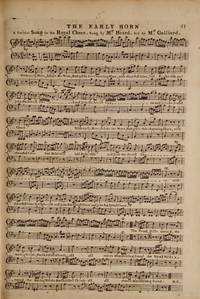
réf. 41155Folio. 19th half black leather with marbled boards spine in compartments gilt with titling gilt. Engraved throughout with the exception of the ninth songsheet which is typeset. Provenance Evan Charles Sutherland-Walker 1835-1914 with his armorial bookplate to front pastedown. Contains 25 songs including works by Arne Bride Dibdin Clarke Galliard Handel Harington Hook Jackson Leveridge Selby Smith and others. With occasional ornamentation filling out of chords and corrections in contemporary manuscript. 1. Clark. "The Broom on Cowdenknows" "When Summer comes the Swains on Tweed". London ca. 1780. 1f. recto music verso blank pp. BUC p. 1075. Jeremiah Clarke ca. 1743-1809 English composer violinist and organist; his published works all printed in London consist of songs and keyboard sonatas with instrumental accompaniment. 2. Dibdin. "While the Lads of the Village . Sung by Mr. Bannister." "J.W." printed to foot of music. London: John Welcker ca. 1775. 1f. recto music verso blank pp. BUC p. 1078. Charles Dibdin 1745-1814 English composer dramatist poet actor singer and entertainer wrote many songs. 3. Arne. "Water Parted from the Sea . Sung by Mr. Tenducci in Artaxerxes." London ca. 1765. 1f. recto music verso blank pp. BUC p. 57. Alfred Thomas Augustine Arne 1710-1778 an English composer violinist and keyboard player was "the most significant figure in 18th-century English theatre music." Peter Holman and Todd Gilman in Grove Music Online 4. Jackson. "Delia . Sung by Mr. Squibb at Marybone! Gardens. Set to Music by Mr. Wm. Jackson of Exeter." London ca. 1770. 1f. recto music verso blank pp. BUC p. 552. William Jackson 1730-1803 an English composer and organist wrote a number of songs canzonets etc. "His best music is to be found in his secular vocal works where he demonstrates an ability to blend a natural melodic style with a sensitivity to text." Richard McGrady in Grove Music Online 5. Galliard. "The Early Horn . A Fav'rite Song in the Royal Chace. Sung by Mr. Beard. Set by Mr. Galliard." London ca. 1737. 1f. recto music verso blank pp. Paginated 31 at upper outer corner. BUC p. 358. John Ernest Galliard ca. 1687-1749 German composer and oboist "certainly played a significant role in London's musical life in the first half of the 18th century." Roger Fiske revised by Richard G. King in Grove Music Online 6. Smith. "Zoreb and Zaida . Sung by Mr. Morgan." London ca. 1770. 1f. recto music verso blank pp. JISC one copy only at Oxford University. 7. Handel. "Let me Wander . L'Allegro Il Penseroso." London: Printed for J. Bland No. 45 Holborn ca. 1790. 1f. recto blank verso music pp. HWV 55. BUC p. 433. George Frideric Handel 1685-1759 English composer of German birth was "one of the greatest composers of his age." Anthony Hicks in Grove Music Online 8. Handel. "L'Allegro il Penseroso ed il Moderato Or Let the Merry Bells." London: Bland ca. 1790. 1f. recto music verso blank pp. HWV 55. BUC p. 433. 9. Bride. "The Joy-Inspiring Horn . A Favorite Hunting-Song. Set by Mr. Bride." London: R. Falkener ca. 1775. i blank 2 i blank pp. BUC p. 135. Typeset with an arrangement for two German flutes in score on the second page. Tear extending from lower margin into three systems of music; small loss to lower outer corner of first page of music; imprint trimmed but possibly the Falkener edition where the imprint appears at the foot of the second page of music. OCLC 43123680. 10. Handel. "Sung by Mr. Beard in Alexander's Feast" "Happy happy pair". London ca. 1740. i blank 2 i blank pp. HWV 75. Not in BUC. 11. Leveridge. "The Roast Beef Cantata." London ca. 1770. 4 pp. BUC p. 1026. Richard Leveridge 1670-1758 English bass and composer was "a leading singer on the London stage and a popular composer of songs." Olive Baldwin revised by Thelma Wilson in Grove Music Online 12. "The Camp Medley" "The Lark was up the Morn was grey". London: Longman & Broderip ca. 1780. BUC p. 595. 4 pp. With trill markings in contemporary manuscript. 13. "The Banks of the Dee A favorite Song" "It was summer". London: Bland ca. 1780. 1f. recto music verso blank pp. BUC p. 549 other editions. 14. "He Stole my Tender Heart Away . A Favorite Song" "The Fields were green". London ca. 1780. 1f. recto music verso blank pp. BUC p. 334. 15. Hook. "The Favorite Song Sung by Miss Brown in the Scheming Lieutenant" "Beneath a green shade". London: CST handstamp Charles and Samuel Thompson ca. 1775. 1f. recto music verso blank pp. JISC two copies at the British Library and the National Library of Scotland. James Hook 1746-1827 was a noted English composer whose songs were "regularly performed at the main London pleasure gardens." Pamela Gairl in Grove Music Online 16. "Social Pow'rs . A Favourite Song" "Come now all ye Social Pow'rs". London: Printed for J. Bland No. 45 Holborn ca. 1785. 1f. recto music verso blank pp. BUC p. 208. 17. "The Invitation Sung at Marybone Gardens by Mrs. Vincent. Mr Lowe. Miss Davis. Mr Raworth. and Mr Taylor" "Come ye party Jangling Swains". London ca. 1766. 1f. recto music verso blank pp. BUC p. 209. 18. Selby. "The Chace of the Hare . A New Hunting Song." 1f. recto music verso blank pp. BUC p. 940. Minor loss to flute line. 19. "Fair Hebe. Sung by Mr. Beard at Ranelagh Gardens" "Hebe I left with a cautious Design". London ca. 1750. 1f. recto music verso blank pp. BUC p. 324. With "Fair Hebe" in contemporary manuscript to blank verso. 20. Harington. "Air. by Mr. Harington of Bath" Gentle Airs sweet Joys impart". London ca. 1780. 1f. recto music verso blank pp. BUC p. 446. Henry Harington 1727-1816 English composer physician and author was a leading contemporary composer of glees catches and duets. 21. Arne. "The favourite Hymn of Eve. In the Oratorio of Abel" "How Chearful along the gay Mead". London ca. 1755. 1f. recto music verso blank pp. JISC one copy only at Oxford University. 22. "The Cotillon" "Hail Politeness pow'r divine". London: Rd. B__e ca. 1770. 1f. recto music verso blank pp. BUC p. 416. 23. Arne. "The Echoing Horn in Thomas & Sally." London: Printed and sold by S. Phillips in St. Martins Court ca. 1765. 1f. recto music verso blank pp. BUC p. 45. 24. Arne. "Hebe . Set by Dr. Arne" "When forc'd from dear Hebe". London: Walsh 1752. 1f. recto music verso blank pp. BUC p. 47 25. "Anna A Particular Favourite Irish Song. Sung by Miss Catley - and - Mr. Leoni." "Shepherds I have lost my Love". London: I. F.entum ca. 1775. 1f. recto music verso blank pp. BUC p. 943. Bound with: Clark. Eight Songs with Instrumental Parts in Score Composed by Jeremiah Clark Organist in Birmingham Opera Seconda. London: Printed for the Author and Sold by Messrs. Straight & Skillern Music Engravers and Printers in St. Martins Lane near Charing Cross ca. 1775. 1f. recto title verso blank 34 pp. Engraved throughout. BUC p. 94. RISM C2618 and CC2618 two copies in the U.S. at Cornell University and the Library of Congress. Index in pencil to front free endpaper. Binding worn rubbed and bumped. Slightly worn; occasional minor imperfections including small tears soiling and stains. unknown books
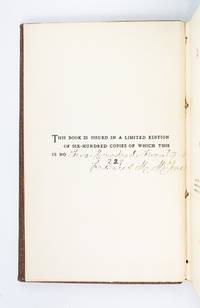
1895réf. ST19567-179Buffalo: Charles Wells Moulton 1895. FIRST EDITION. No. 229 OF 600. 155 x 195 mm. 6 1/8 x 4 3/4". 79 1 pp. Publisher’s illustrated brown cloth binding edges beveled front board stamped in gilt flat spine top edge gilt. Photograph of the author mounted on page 6 facing the half title. SIGNED BY THE AUTHOR on the limitation page; title page printed in red and black. Cloth with just the slightest hint of wear and soiling; internally fresh and clean. This is an excellent copy of a very personal collection of poetry by a female writer of the late 19th century offered in a signed limited edition. Born in Northern Ireland Frances Margaret Milne 1846-1910 spent most of her life in San Luis Obispo California where she worked as a librarian and volunteered tirelessly for social causes. Much of her writing was political in nature: the 1893 publication "A Woman of the Century" a collection of biographies of "leading American women in all walks of life" said she had "made a profound study of economic and political questions and with pen and voice . . . and had aided in extending the discussion of the relations of progress and poverty and of individuals and society." She also published a number of fictional and poetic works; this was her second collection of poems. They primarily deal with themes of love and loss and while the poems have some of the formulaic gentility one would expect from a writer of this period and background the genuine emotions behind them are clear. By turns ebullient and poignant the text has works—such as the poem "To My Beloved at rest May 11th 1804"—that reflect the grief and joy of Milne's intense personal experiences. Copies of the book are not so readily available especially in the condition seen here. Charles Wells Moulton unknown books
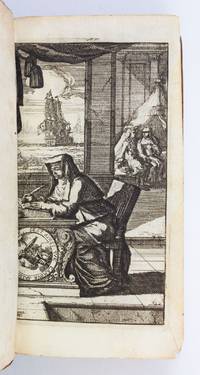
1693réf. ST19567-153La Haye: Abraham de Hondt & Jacob van Ellinkhuysen 1693. Translated by Guilleragues. 140 x 75 mm. 5 1/2 x 3". 346 pp. Attractive contemporary speckled calf raised bands spine gilt in compartments with central gilt tool surrounded by gilt rules and tendrils gilt lettering all edges speckled red expert repairs to spine ends and perhaps to corners. With woodcut initials tailpieces and frontispiece of a nun at a writing desk. Front pastedown with ink signature of Martin Bowes. Brunet III 1031; see also: Barbier II 1286. Joints and corners a little worn but the binding otherwise in excellent condition; just a hint of browning along a couple edges but A REMARKABLY BRIGHT FRESH AND CLEAN COPY INTERNALLY. This is a collection of passionate love letters purportedly written by a Portuguese nun Mariana Alcoforado to her French lover Noël Bouton de Chamilly. First published in 1669 the letters express profound longing heartbreak and emotional intensity. Although the work originally included just five letters the racy content raised quite a sensation and the book proved so popular that it went through several expanded editions that included newly "discovered" missives. The present edition includes a total of 12 epistles by our nun and 11 responses from her lover as well as another series of "tender and passionate" love letters between a couple referred to only as "la présidente F. à M. Le baron de B." Though the original work is now widely believed to be a piece of fiction written by the supposed translator French diplomat Gabriel Joseph de Lavergne viscomte de Guilleragues 1628-84 it is still considered to be a very important epistolary novel providing insight into the emotional landscape of the time and influencing numerous adaptations and imitations in literature. Some importance of the work can be seen in the fact that copies of the first edition consistently bring substantial prices at auction more than $25000 three times since 2010. The early ownership inscription on the pastedown belongs to Martin Bowes 1670-1726 a barrister and fellow of the Royal Society. Abraham de Hondt & Jacob van Ellinkhuysen unknown books
1922réf. 206370New York: Dutton 1922. Second. hardcover. near fine. Fronitspiece many b/w plates. 140pp. 4to blue cloth spine ends very slightly frayed. New York: E.P. Dutton 1922. A near fine copy. Printed by D. B. Updike at the Merrymount Press. Dutton unknown books
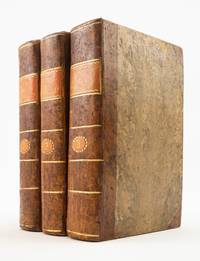
1717réf. ST20754Lyon: Chez Anisson et Posuel 1717. Second Edition. 197 x 125 mm. 7 3/4 x 5". Three volumes. Pleasing contemporary half calf over paper boards painted to resemble tree calf smooth spines with gilt rules and two citron morocco labels. Attractive woodcut head- and tailpieces throughout WITH 153 ENGRAVED PLATES depicting the scenery flora fauna dress and architecture of locations described. Contemporary ink ownership inscription of De St. George on title page. Brunet V 903; Graesse VII 180. Corners slightly bumped and rubbed joints with just a hint of flaking but the period bindings solid and still extremely attractive survivals. Internally with a handful of quires faintly browned other trivial defects BUT AN UNUSUALLY WELL-PRESERVED SET inside and out. This lively narrative of travel at the turn of the 18th century includes a wealth of illustrations and a pleasing period bindings. A professor at the Jardin des Plantes in Paris Joseph Pitton de Tournefort 1656-1708 developed a system of botanical classification that became the standard method until it was superseded by Linnaeus in 1753. He made numerous collecting trips throughout his career; the present work is the record of his most significant voyage through Greece Turkey and along the Black Sea to Armenia and Georgia. The expedition which took place between 1700-02 had been proposed by the Comte du Pontchartrain then Secretary of State in 1699 as both a botanical and commercial endeavor. Tournefort's observations include a wealth of botanical detail but are also a rich source of information about the landscapes and peoples he encountered. He was accompanied on this voyage by German botanist Andreas Gundelsheimer and by the painter Claude Aubriet ca. 1665-1742 who had collaborated with Tournefort on his previous work "Eléments de Botanique." The work of Aubriet a botanical illustrator at the Jardin des Plantes was long appreciated by botanists and laypeople alike for its beauty and accuracy. The detailed depictions of plants here are accompanied by illustrated maps and engravings depicting zoological specimens archaeological sites and the costumes and cultures of the areas visited. The account was published posthumously in 1717 first in Paris and then shortly afterward in the present Lyon edition. The bindings here were never meant to be showy but they have come down to us in a remarkable state of preservation given their pedestrian construction and expected use. Chez Anisson et Posuel unknown books
1975réf. 56605Buffalo NY: Patricia Budd Kepler 1975. Broadside 17x22 inches printed in blue and red folded twice. Two small rust stains o/w a VG clean copy. Patricia Budd Kepler unknown books
1875réf. 603772"Anna E. Dickinson" in black ink on small sheet. 5 1/2" x 2 3/4"; very good; 1875. Signed and inscribed: "Above all things - Liberty Anna E. Dickinson 5.20 1875." unknown books
1740réf. 41145Paris: De l'Imprimerie de Jean-Baptiste Coignard Imprimeur du Roi 1740. Octavo. Full contemporary dark brown mottled calf spine in decorative compartments gilt with titling gilt marbled endpapers. 1f. recto title with woodcut armorial device verso blank 3-18 2ff. contemporary manuscript chant in black ink on 10-four-line-stave rastrum-ruled paper 21-112 pp. Typeset throughout with music in neumatic notation on 4-line staves to most pages scored for solo voice. Annotation in contemporary manuscript to blank verso of title "On vous prie de remettre ce livre a la Sacristie and in another hand "Mr. Millet." Manuscript text to head of p. 3 canceled. Binding quite worn rubbed and bumped; lower portion of spine lacking; hinges cracked; endpapers worn and faded. Occasional wear and minor staining; several tears and holes particularly to lower inner margins with more substantial loss to lower portion of pp. 63-64. Lacking pp. 19-20 supplied in contemporary manuscript. OCLC 919167683 467696334 918609709. [De l'Imprimerie de Jean-Baptiste Coignard, Imprimeur du Roi] unknown books
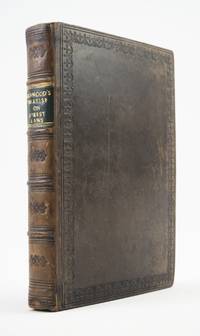
1598réf. ST20689London: Printed by Thomas Wight and Bonham Norton 1598. FIRST PUBLISHED EDITION and First Edition under this Title. 192 x 139 mm. 7 5/8 x 5 1/2". 8 p.l. 154 162-65 159-67 1 blank 6 leaves. Errors in pagination but text complete. Late 19th century dark brown calf covers tooled in blind with plain rules and fleur-de-lys roll raised bands spine panels with small blind-stamped ornament black morocco label marbled endpapers neat repairs to ends of both joints. Front pastedown with engraved armorial bookplate of Godfrey Wentworth Woolley Park. Beale T-413; Mellon/Podeschi 15; Schwerdt II 7; STC 17291; ESTC S111993. Extremities slightly rubbed boards a little chafed in spots text lightly pressed but not washed a bit of browning to edges and occasional minor marginal foxing or traces of corner creases but quite an excellent copy the text clean and still fresh throughout and the perfectly suitable binding with no significant wear. This is a pleasing country gentleman's copy of the first published treatise on the laws governing English forests. Our author the fittingly named woodsman John Manwood d. 1610 served as gamekeeper of Waltham Forest as well as a justice of the New Forest. DNB tells us that he was possibly a barrister at Lincoln's Inn which would explain his interest in and knowledge of the law. Manwood tells us in the dedicatory epistle that he composed the present work in response to the precarious state of forest preservation stating that "so many do daily so contemptuously commit such heynous spoiles and trespasses" against the country's woodlands but "verie little or nothing as yet is extant concerning the Lawes of the Forrest" to help manage such behaviors. Our copy comes from the first published edition following only the 1592 pamphlet entitled "A Brefe Collection of the Lawes of the Forest" issued for private circulation and now extraordinarily rare. According to DNB the present treatise is "the only substantial work on the subject ever to reach the press" making it an enduringly useful source for those interested in the topics contained which include laws about hunting and perambulation in forests. It remained the standard work on the subject until the 19th century and Schwerdt writes that it has been "invaluable to students and lovers of ancient sport." Our copy is from the library of Yorkshire landowner Godfrey Wentworth 1773-1834 who served as High Sheriff of Yorkshire from 1796-97 and in the House of Commons from 1806-08. He probably had no need for a later printing of the work. Printed by Thomas Wight and Bonham Norton unknown books
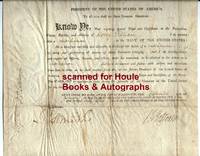
1809réf. 2221587RARE MIDSHIPMAN APPOINTMENT "Th: Jefferson" Partly-printed vellum DS as president 1 page 10" x 10 1/2" January 16 1809. President Jefferson issues a naval appointment for Henry Pilliam. In part: "That reposing special Trust and Confidence in the Patriotism Valour Fidelity and Abilities of Henry Pilliam I do appoint him a midshipman in the Navy of the United States." Neatly signed at the conclusion by President Jefferson and countersigned by Secretary pf the Navy Robert Smith. The document bears an embossed Navy Department seal to the upper left. Intersecting folds overall wrinkling and light staining otherwise fine condition. Such appointments by Thomas Jefferson are quite scarce as he and the Republican party opposed a strong navy. However as Jefferson's term neared its conclusion the naval forces were beginning to grow out of necessity in order to protect the maritime interests of the United States as merchant vessels were frequently being interfered with during their voyages on the high seas. Ultimately these disputes would culminate in the War of 1812 during President Madison's administration. A desirable and well-preserved example of a Jefferson appointment. Very good. unknown books
1855réf. 28465Susquehanna Depot 1855. Pencil pen and ink. Signed in ink: "Theodore Krausch. Susquehana sic Depot. N.Y. and Erie Railroad. October 13 1855." A very handsome drawing of a locomotive by a prominent inventor and engineer. Theodore Krausch dates unknown was employed by what was then known as the New York and Erie Railroad at Susquehanna Depot where railway cars and locomotives were designed built and repaired. The town in northeastern Pennsylvania just below the New York border and Binghamton came into existence with the coming of the railroad. Krausch who obtained several patents during his life one for innovations in railway chair design also received a Silver Medal from the American Institute of the City of New York for a drawing of a locomotive no doubt similar to this one. During the 1850s when railway lines and companies were spreading out across the country each railroad customized its engines and cars to its specific needs. There was a large degree of standardization and this Krausch drawing is a perfect rendition of the 4-4-0 wheel arrangement and overall design that was used almost universally in 19th century America. unknown books
1839réf. ST20302-03London: Published for the Proprietor by Charles Tilt 1839-40. FIRST EDITION. 198 x 122 mm. 7 1/2 x 4 7/8". Two volumes. Extremely pleasing contemporary crimson pebble-grain morocco covers with a double gilt rule surrounding a large scrolling central frame raised bands spine gilt in compartments with elaborate small tools radiating from floral centerpieces turn-ins gilt patterned endpapers all edges gilt. WITH A TOTAL OF 36 ENGRAVED PLATES 18 in each volume by William and Edward Finden and others as called for after sketches by Bacon and Captain Meadows Taylor. Joints just a bit rubbed at head and tail two small scratches to one cover corners with just a whisper of wear occasional faint offsetting from plates the faintest foxing or stains to a very few plates a bit of thumbing otherwise beautiful copies with only the most trivial of imperfections. These are handsomely bound and extraordinarily well-preserved copies of the final two volumes of a series inspired by the author's time on the Indian subcontinent. The son of a noted sculptor Thomas Bacon 1813-92 was a talented artist whose service in the Bengal Horse Artillery furnished him with endless fascinating and "exotic" subjects for his sketches and drawings. In 1837 he published "First Impressions and studies from nature in Hindostan" which found an appreciative audience at a time when illustrated travelogues were much in vogue. He produced illustrations for Wilson's "Oriental Portfolio" and for the present "Oriental Annual" which had brought stories and views of the Far East to the British public beginning in 1834. In the 1839 edition Bacon and his very able engravers the Finden brothers present dramatic scenes of the seas around Tenerife and of the peaks of the Himalayas along with wonderfully detailed depictions of "monumental architecture" including temples tombs and military installations. For the 1840 volume Bacon collaborated with his friend Captain Philip Meadows Taylor 1808-76 a longtime British administrator with extensive knowledge of the region. There is more focus on cities in this volume and the authors recount both legends and historical facts to set the scene. The plates include a portrait of the emperor of Delhi but focus on city views and fine architecture. Produced when William 1787-1852 and Edward 1791-1857 Finden were in an extended period at the top of their craft the plates here are characterized by the great delicacy of detail sophisticated gradation of light and rich texture of surface for which they were known. While volumes from this periodical series appear on the market regularly they are rarely so finely bound and in such remarkable condition as the present pair. Published for the Proprietor, by Charles Tilt unknown books
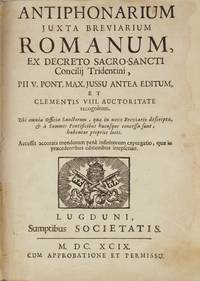
1699réf. 41146Lugduni Sumptibus Societatis: Ex Typographia Petri Valfray in vico Mercatorio sub signo Coronæ Aureæ . Cum Approbation et Permissu 1699. Small quarto. Full contemporary dark brown mottled calf with raised bands on spine in decorative compartments gilt dark red leather label gilt marbled edges. 1f. recto title with woodcut armorial device incorporating crown and keys verso blank 1f. Index "Approbatio" "Permissio" 304 lxxxviii 19 i blank pp. Typeset with neumatic notation on 4-line staves scored for solo voice. With engraved armorial bookplate by T. Dupont of French writer and book collector A. Kuhnholtz-Lordat 1820-1893 to front pastedown. Binding slightly worn and bumped. Browned; occasional very minor staining foxing dampstaining and soiling. OCLC 805034285 956360819. A collection of antiphons and other sung parts of the Divine Office. [Ex Typographia Petri Valfray, in vico Mercatorio, sub signo Coronæ Aureæ] ... Cum Approbation et Permissu unknown books
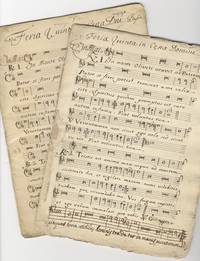
1780réf. 40349Italy 1780. Folio 226 x 312 mm. Sewn. Notated on 10-stave rastrum-ruled paper with lowermost stave of first page of the Tenore part hand-drawn with music and text added in another hand. Watermark letters within a circle above a star. Music for Holy Thursday Good Friday and Holy Saturday of Holy Week in the Christian calendar: - "Feria Quinta in Cena Domini." Tenore. 4 pp. Bound with "Feria Sexta in Parasceve" Basso 6 pp. and an additional bass part headed "Sabbato Sancto" 6 pp. - "Feria Quinta in Cena Domini." Basso 6 pp. Bound with "Feria Sexta in Parasceve" 6 pp. "Sabbato Sancto" 6 pp. 1f. blank. With short semi-chanted homophonic liturgical pieces: "In Monte Oliveti" "Tristis est anima mea" "Ecce appropinquat" "Ecce vidimus" "Vere languores" "Amicus meus" "Flius quidem hominis" "Unus ex vobis" "Eram quasi agnus innocens" "Seniores populi" "Revelabunt celi iniquitatem" "Omnes amici" "Velum Templi" "Vinca mea" "Tamquam ad latronem" "Tenebre facte sunt" "Barabbas latro dimittitur" "Tradiderunt me" "Jesum tradidit" "Sicut ovis" "Sepultro Domino" "Jerusalem Iuge" "Plange quasi virgo" "Recessit Pastor" "O Vos omnes" "Caligaverunt oculi mei" "Ecce quomodo" "Æstimatus sum" "Agnus Dei" and "Lustris sex qui." Occasional moderate soiling and small stains; first leaf of Tenore part partially detached. unknown books
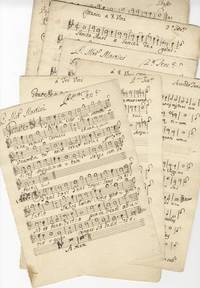
1750réf. 40348Italy 1750. 5 parts. Quarto and two bifolia. Notated on 10-stave rastrum-ruled paper. Watermark letters within a circle. Contains: 1 P.rimo Ten.ore: 1 p. Text commencing "Tantum ergo sacramentum" and Genitori Genitoque" "P Mro Martini" to head. 2 P.rimo Ten.ore music different from above: 1 p. Text commencing "Tantum ergo sacramentum" and Genitori Genitoque." 3 Basso: 1 p. Text commenting "Tantum ergo sacramentum" and "Genitori Genitoque" with "Tantum &c. a 3 Voci Ripieno" to head. 4 Secondo Tenore: 2 pp. Text commencing "Pange lingua" "Nobis datus" "Verbum caro" and "Genitori Genitoque." With "à 3. Voci TT. e B." to head of first page. 5 2o. Ten.ore: 1 p. Text commencing "Tantum ergo" and "Genitori Genitoque." With "P Mro Martini" to head. 6 2o. Ten.ore: 3 i blank pp. Text commencing "Sancta Maria" "Sedes sapienti" "Regina Martyrum" and "Agnus Dei." With "Littanie a 3. Voci" to head. 7 Basso: 3 i blank pp. Text commencing "Kyrie" "Virgo potens" "Regina Angelorum" and "Agnus Dei." With "Littanie a 3. Voci" to head. A few small stains. unknown books
2016réf. 1407216Köln: Taschen Bibliotheca Universalis 2016. Hardcover. Octavo 757 pages. In Very Good condition. Spine is blue with gold print raised bands. Boards in blue leather illustrated pastedown on front panel. Text block has gilt edges moire endpapers gold ribbon marker. Illustrated: color plates. NOTE: Shelved in Locked Annex Area ND-HV Section. 1407216. FP New Rockville Stock. Taschen, Bibliotheca Universalis hardcover books
réf. 39572Vidit suum dulcem natum" 11ff. of various sizes the solo part being 237 x 185 mm. Notated in brown ink on 5-7 stave rastrum-ruled paper including one "Solo" part; four "Dessus" parts; three "2e. Dessu ou hatue contre pour l'Enfant" parts; two "Haute contre pour l'Enfant" parts; and one bass part with text "In tribulatione mea" in the same meter and key as the other parts. "Quid tibi feci" 4ff. of various sizes. Notated in black ink on 8-9 stave rastrum-ruled paper being several copies of the bass part of a choral piece for larger forces. Some small stains and soiling to a few leaves but otherwise in very good condition. Unlocated in RISM. Two unrecorded early 19th century choral pieces. The carol-like composition "Vidit suum dulcem natum" contains a full solo part and enough of its inner parts to lend itself to a satisfactory reconstruction and performance. unknown books
1850réf. 42495Italy 1850. Gouache over faint etched line black gouache border. Period gilt and faux bois frame. A splendid panoramic view of Lake Como. Catering to the foreigners flocking to the region on The Grand Tour this hand-painted print beautifully depicts the famed picturesque lake with rich bands of blue highlighting the water and sky with the surrounding hills and mountains dotted with luxurious villas. The view looks north up the lake towards Switzerland from above Bellagio which occupies the point at which the lake divides in two. unknown books