46 662 résultats
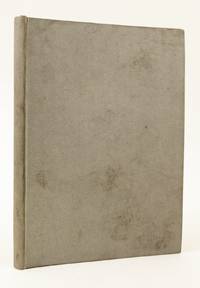
1597réf. ST15850London: Printed by the Widow Orwin for Thomas Man 1597. FIRST EDITION. PRESENTATION COPY. 187 x 130 mm. 7 3/8 x 5 1/8". 5 p.l. 93 pp. 20th century gray paper boards. Printer's device on title page. Title page inscribed "Gyven to name inked through but perhaps "Thomas Langham" by the aucthor Jo. Norden"; tail margin of title inscribed "Constantin Adyn his booke"; 19th century ink signature of Benjamin Hynam on recto and verso of title. Front pastedown with early 20th century bookseller's description pasted on. STC 18614; ESTC S113322. ◆Boards a bit soiled but otherwise unworn minor dust-soiling or browning to head margins one quire a little browned occasional trivial smudges or tiny rust spots but an excellent copy generally clean and fresh. Written during a fallow period in the author's regular career as a cartographer this work emphasizing the importance of service to God for all leaders and common soldiers in the sovereign's army was inscribed by the author to a friend or patron. One of several works Norden dedicated to the earl of Essex it got our author into professional difficulties when Essex's enemy Robert Cecil rose to power and was in a position to impede Norden's career as a mapmaker. Norden quickly tried to push responsibility onto a "false Norden" from Kent he was from Somerset but biographer Frank Kitchen has established that the shared "interests backgrounds written expression everyday circumstances and style" indicate there was but one author. Though best known for his surveys and maps--including the first county maps of England to include roads--the pious Norden ca. 1547-1625 also produced numerous works of devotion and prayer among them the enormously popular "A Pensive Mans Practice" which went to 40 editions in his lifetime. While his sincere religious sentiments are not to be doubted it must be acknowledged that Norden was most moved to write these manuals when he was between surveying jobs and short of money. Aimed at soldiers of every rank the present work urges the "necessity of the fear and service of God" and "the use of all divine virtues both in commanding and obeying practicing and proceeding in the most honorable affairs of war." Norden also encourages civilians to support and respect the military and to pray for men-at-arms. This is an especially rare work: OCLC and ESTC find five copies in U.S. libraries and except for the two copies in the Cottesloe Library there seems to have been only one other--defective--copy at auction listed by RBH and ABPC. The present item is even more desirable as an extremely uncommon presentation copy signed by a 16th century English author. The Constantin Adyn who owned our copy is likely the early seventeenth-century schoolmaster otherwise known as Constantine or Constantinus Adyn fl. 1605-25 whose school was situated in Brighton according to Church of England records. The latest owner is likely the Anglo-Russian writer bibliophile and watchmaker Benjamin Hynam 1769-1859 a prominent figure in the distinguished Hynam family imperial watchmakers to Russian royalty. In the late eighteenth century the Hynams maintained a presence in both St Petersburg and London. Printed by the Widow Orwin for Thomas Man unknown books
réf. 40330Oblong folio 227 x 293 mm. Disbound. i manuscript index tipped-in 233 pp. including three blanks. Notated on 10-stave rastrum-ruled paper with watermark of a shield with "GR" below. Contains the following works: 1. Clari Giovanni Carlo Maria 1677-1754 adapted by Charles Avison 1709-1770. "Unto the Lord." Duet. 16 pp. 2. Clari/Avison. "O all ye Nations." Duet. 10 pp. 3. Carissimi Giacomo 1605-1674. "Hodie Simon Petrus." Duet. 5 pp. 4. Carissimi. "O nomen Jesu." Duet. 4 pp. Attributed to Giovanni Battista Bassani in RISM ID: 800226688. 5. Steffani Agostino 1654-1728. "Saldi marmi." Duet. 19 pp. 6. Steffani. "Dolce è per voi." Duet. 9 pp. 7. Clari. "L'Amante disperato" "O femina mendace". Duet. 16 pp. 8. Steffani. "M'hai da piangere." Duet. 11 pp. 9. Steffani. "Dolce labbro." Duet. 9 pp. 10. Purcell Henry 1659-1695. "In guilty Night." Trio. 9 pp. 11. Anon. "O sanctissima." Duet. 1 p. Not in index. 12. Handel George Frederic 1685-1659. "T'amo sì." Duet. Full score. 12 pp. 13. Kent James. 1700-1776. "Hear my prayer." Anthem for two solo voices and four-part choir. 10 pp. 14. Marcello Benedetto 1686-1739. "My God my God." Solo. Full score. 16 pp. 15. Marcello. "Da voi parto." Solo cantata. 10 pp. 16. Astorga Emanuele. "Ruscelletto che vai." Solo cantata. 10 pp. 17. Clari. "Ecco Amor ecco Amore." Trio. 21 pp. 18. Astorga. "Oh che voi direste bene." Duet. 14 pp. 19. Caldara Antonio 1671-1736. "Voi vene pentirete." Duet. 4 pp 20. Kent. "When the son of Man shall come." Anthem for three voices. 15 pp. Incomplete. All pieces in a single hand with the exception of items 11 and 20 in two different hands. With "Lady Cornewall" in contemporary manuscript to upper margin of index; "1792" to upper outer corner and "554" to upper inner corner of first page. Occasional pencil annotations including figured bass; half a measure canceled on p. 185. Disbound; first signature detached. Occasional small tears to edges; several minor inkstains to pp. 56-57; pp. 124-125 excised likely due to a scribal error with no loss of music; contemporary repairs to upper outer margin of p. 7; final leaf detached; remnants of red sealing wax to corners of index. It is notable that the all of the music in the present manuscript is drawn from repertoire significantly older than the manuscript's date of 1792 in some cases over 100 years earlier performance of music of the past being a relatively novel concept at the time. The Academy of Ancient Music was "founded as the Academy of Vocal Music in 1726 to revive the glories of 16th- and 17th-century sacred music and madrigals. Again though it was the music itself rather than profit that provided the inspiration the founders a mix of leading professionals and aristocratic enthusiasts; and again the society was formalized and admitted larger audiences as the century progressed - although these changes brought their own problems with an increasing partiality for later Baroque music including Handel's oratorios and a gradual decline in missionary zeal for the older repertory." Simon McVeigh in Oxford Music Online "Lady Cornewall" was most likely Catherine Cornewall 1752-1835 wife of Sir George Amyand Cornewall 1748-1819 a portrait of whom by Sir Joshua Reynolds 1723-1792 is held at the National Gallery of Art in Washington D.C. The manuscript index is possibly in her hand. "Rather different in character was the collection made by the Cornewall family of Moccas Court Herefordshire which has almost entirely vanished. Fortunately a detailed and most interesting manuscript catalogue dated 1796 and now owned by Albi Rosenthal has survived. This was predominantly a vocal collection amounting to about 2000 items with some Italian bias but besides Alessandro Scarlatti and Jomelli it extended to Gluck. A special section of the catalogue dated 1795 contained music belonging to a Miss Cornewall who also owned R.C.M. MSS. 2061-4." A. Hyatt King: Some British Collectors of Music p. 17. unknown books
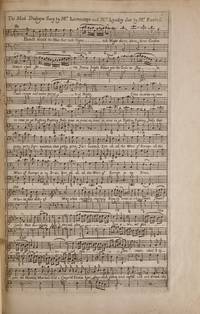
réf. 41185Folio. Contemporary dark brown leather-backed blue/gray boards. Titled "A collection of Songs by several eminent Masters" in contemporary manuscript on recto of first page of music. Engraved throughout. Provenance With "Lucy Gregory July the 6th 1756" and "Prince Gregory" in contemporary manuscript to front pastedown. Manuscript titling and annotation "Ex dono Revd. Dr. Dawson For use of Musical Society Windsor Castle to be returned to Dr. Dawson When ye club ceases viz when it is reduced to three persons" to blank recto of first song along with title and index to blank verso of final song. Contains 33 songs including works by Barrett Blow Eccles Galliard Handel 8 Leveridge Orlandini Pepusch Daniel Purcell Henry Purcell 2 Weldon and others. Scored mainly for voice most for one voice and few for two and figured basso continuo with single-line flute arrangements for some songs. 1. Handel. "A Favorite song in the Opera of Theseus" "See see your faithfull lover pineing". London ca. 1720. i blank 2 i blank pp. BUC p. 1001. 2. Purcell H. "Sing all ye muses. A song set by Mr. Henr. Purcell The Words by Mr Durfey." London ca. 1700. From Part I of The Comical History of Don Quixote. 4 pp. BUC p. 861 another edition. Scored for two voices and figured basso continuo. 3. Handel. "Mi brilla in English and Italian" "Be Kind and Love" / "Mi brilla nel seno". London ca. 1720. i blank 2 i blank pp. HWV 10 Silla.BUC p. 93. 4. Purcell H. "The Mad Dialogue Sung by Mr. Leveridge and Mrs. Lynsey" "Behold the man with gigantick might". From The Richmond Heiress. London ca. 1700. 3 i blank pp. BUC p. 862. 5. Handel. "Vieni torna in English & Italian" "Turn o turn thee dearest Creature / Vieni torna Idolo mio". London ca. 1715. i blank 2 i blank pp. HWV 9 Teseo. BUC p. 1041. 6. Handel. "A Favourite Song by an Eminent Master Within the Compass of the Flute" Recitativo: "Lo here my Love" / Aria: "Love in her eyes sits playing". London ca. 1725. i blank 2 i blank pp. BUC p. 624. 7. Handel. "A Song with a Symphony for an Octave Flute & Violins" Recitativo: "Ye verdant Plains" / Aria: "Hush ye pretty warbling Quire". London ca. 1722. i 3 paginated 4-6 i blank pp. HWV 49 Acis and Galatea. BUC p. 432 date incorrect; JISC two copies at Oxford and the British Library. In score for piccolo violin voice and unfigured basso continuo. 8. Handel. "A song by an Eminent Master" "Would you gain the tender Creature". London ca. 1750. HWV 49 Acis and Galatea. BUC pp. 432 1091. 9. Eccles. "Air in the Opera Semele. The words by Mr Congreve" "Come Zephrys". London ca. 1730. i blank 2 i blank pp. BUC p. 309. 10. Orlandini. "A favourite Song in the Opera of Arsaces Sung by Sigr. Senesino" "Se sol la mia morte" / "Cœlestial Corinna". London ca. 1721. i blank 2 i blank pp. BUC p. 56. "Lucy Gregory" in contemporary manuscript to upper outer corner of final blank page. 11. Anon. "The Ladys Repulse or Favourite Minuet in Hercules" a pasticcio. London ca. 1715. 2 pp. BUC p. 478. 12. Barrett. "A Song sett by Mr. Iohn Barrett Sung by Mrs. Lindsey" "Mistake not Nymph". London ca. 1705. 1f. recto music verso blank pp. BUC p. 86. 13. Barrett. "Liberia A Song Set to Musick" "Liberia's all my Thought". London ca. 1715. 1f. recto music verso blank pp. BUC p. 86. 14. Purcell D. "Lovely Charmer. A song in the Island Princess." London ca. 1700. 1f. recto music verso blank pp. BUC p. 856. 15. Leveridge. "A Favorite Song in the new Opera The words by Mr. Leveridge." London ca. 1720. 1f. recto music verso blank pp. BUC p. 339. 16. Anon. "Tom a Bedlam" "Forth from my dark and Dismall cell". London ca. 1720. 1f. recto music verso blank pp. BUC p. 345. 17. Leveridge. "A Scotch Song Sung by Mr. Leveridge the words by Mr Durfey" "Farewell my Bonny". London ca. 1710. 1f. recto music paginated "10" verso blank pp. BUC p. 325. 18. Blow. "Go Perjur'd Man. A Song for two Voices." London ca. 1710. 1f. recto music verso blank pp. BUC p. 115. 19. Anon. "A song by a Gentleman" "How charming". London ca. 1730. 1f. recto music verso blank pp. BUC p. 370. 20. Weldon. "Orpheus Song to the Waves Sett by Mr. Iohn Weldon Sung by Mrs. Linsey." "Stop O ye Waves". London ca. 1710. 1f. recto song verso version for flute pp. BUC p. 1065. 21. Anon. "A Song by a Great Master" "Beauteous Idol charming Creature". London ca. 1720. 1f. recto music verso blank pp. BUC p. 93. 22. Turner. "A Song On Mira's Singing and Beauty" "Singing charms The Bless'd above". London ca. 1710. 1f. recto music verso blank pp. BUC p. 1024. 23. M. F. "A song in the Italian style by F M" "Ah Crudel prenesto". London ca. 1720. 1f. recto music verso blank pp. BUC p. 638. A humorous song satirizing Italian opera with text in nonsense-Italian. 24. Galliard. "Sung by Mr. Pack in The Opera of Circe" "Fairest if thou can'st be King". London ca. 1720. 1f. recto music verso blank pp. BUC p. 358. 25. Vanbrughe. "Apollo to Daphne by Mr. Vanbrughe" "My Dearest Daphne". London ca. 1735. Not in BUC but may be from Vanbrughe's collection Mirth & Harmony; see BUC p. 1034. 26. Anon. "The Address with The Lady's Answer" "Ah lovely Nymph". London ca. 1725. 1f. recto music paginated "7" verso blank pp. BUC p. 11. 27. Handel. "A Song the words by Mr. Kirkland set to a Trumpet Minuet of Mr. Hendell's" "Phillis the Lovely". London ca. 1725. 1f. recto music verso blank pp. HWV 349 Watermusic. BUC p. 781. 28. Young and Leveridge. "The Reproach" "Send back my long stray'd Eyes" and "Mr. Leveridge's Tune." London ca. 1720. 1f. recto music verso blank. BUC p. 1098. The instrumental tune appears to be unrelated to the song; here may however be some association as the song incorporates imagery related to the eyes and the tune's name not given here is "Black-eyed Susan." 29. Anon. "A Song after the Italian Manner by an Eminent Master" "Lovely cruel charming fair". London ca. 1715. 1f. recto music verso blank pp. BUC p. 632 another edition. 30. Handel. "Di godere in English & Italian by Mr. Hendell" "Di godere" / "Oh my dearest". London ca. 1720. 1f. recto music verso blank. HWV 228. Not in BUC; possibly related to an edition in Foundling Museum. JISC "This song appeared in two editions in 1719: the first was in The Yearly Subscriptions a volume of twenty songs advertised on 5 December the second in the Monthly Mask of Vocal Music issued on 24 December". 31. Pepusch. "A Song in the Mask of Martillo" "Tender Hearts to ev'ry Passion". London ca. 1716. 1f. recto music verso blank pp. BUC p. 722. 32. Carey. "The Midsummer Wish Taken from the Journal" "Waft me some soft and cooling Breeze". London ca. 1725. 1f. recto music verso blank pp. BUC p. 165. 33. Leveridge. "A Song in the Beau Demolish'd Sung by Mr. Leveridge" "Whilst I'm carrouzing". London ca. 1730. 1f. recto music verso index in contemporary manuscript pp. BUC p. 615. Binding worn rubbed and bumped; spine partially lacking; lower board nearly detached. Minor dampstaining and worming; occasional small stains. John Barrett ca. 1674-ca. 1745 was an English composer and organist pupil of John Blow. "Like many of his contemporaries such as Jeremiah Clarke John Eccles and Daniel Purcell Barrett composed mainly for the theatre and his many songs mostly of the double-barrelled art song variety are both tuneful and attractive." Christopher Powell revised by H. Diack Johnstone in Grove Music Online John Blow 1649-1708 was an English composer organist and teacher. "By his mid-20s he had become the foremost musician in England and in later years he was the elder statesman of the Restoration school whose chief luminary was Henry Purcell." Bruce Wood in Grove Music Online John Eccles ca. 1668-1735 was an English composer. "Eccles's greatest talent is revealed in his many songs. Remarkable for their beautifully contoured melodies and impeccable prosody they quickly capture the mood and subtleties of the poetry and are eminently singable. His large works are notable for their dramatic pacing and their carefully planned tonal architecture. In the latter respect he surpassed even Purcell and was far in advance of his day. Eccles brought the Restoration tradition to its close. After Purcell's death in 1695 he was undoubtedly the greatest of the Restoration theatre composers." Stoddard Lincoln in Grove Music Online John Ernest Galliard ca. 1687-1749 German composer and oboist "certainly played a significant role in London's musical life in the first half of the 18th century." Roger Fiske revised by Richard G. King in Grove Music Online George Frideric Handel 1685-1759 English composer of German birth was "one of the greatest composers of his age." Anthony Hicks in Grove Music Online Richard Leveridge 1670-1758 English bass and composer was "a leading singer on the London stage and a popular composer of songs." Olive Baldwin revised by Thelma Wilson in Grove Music Online. Giuseppe Maria Orlandini 1676-1760 was an Italian composer. "The large number and wide spread of performances of his operas confirm the opinions of Burney La Borde Martini and Quadrio that Orlandini was highly celebrated as a composer of dramatic music. He was best known for his comic intermezzos in which genre his importance almost certainly outweighs that of Pergolesi. Indeed Orlandini's Bacocco e Serpilla under various titles and with added music by various composers appears to have been the most frequently performed piece of musical drama in the entire 18th century." John Walter Hill and Francesco Giuntini in Grove Music Online Johann Christoph Pepusch 1667-1752 a German-born composer and theorist active in England is best known for his arrangement of music for The Beggar's Opera to John Gay's libretto; he composed works in all genres including vocal music. Daniel Purcell ca. 1664-1717 brother or cousin of Henry Purcell was an English composer and organist. "Although he was a victim of invidious comparison with Henry Daniel was a talented composer whose style while perhaps too ornate is never dull or incompetent." Mark Humphreys revised by Robert Thompson in Grove Music Online Henry Purcell 1659-1695 composer and organist "was one of the most important 17th century composers and one of the greatest of all English composers." Peter Holman and Robert Thompson in Grove Music Online John Weldon 1676-1736 an English organist and composer "of considerable talent" was a pupil of Henry Purcell. Margaret Laurie revised by Stephen Bullamore in Grove Music Online. unknown books
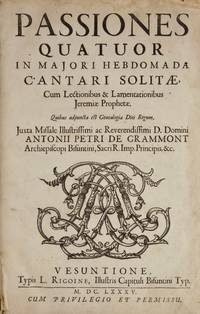
1685réf. 41147Vesuntione Besançon: Typis L. Rigoine Illustris Capituli Bisuntini Typ 1685. Folio. Full contemporary dark tan speckled calf. 1f. recto title with striking woodcut geometric-floral device verso blank 3-131 i blank pp. With neumatic notation typeset on 4-line staves throughout scored for solo voice. Binding worn rubbed bumped; upper board quite warped; upper approximately 1/2" of head of spine lacking. Occasional minor staining worming and dampstaining; minor loss to upper outer corners and gutter of first several leaves. OCLC 1119128101. "The story of the Crucifixion as recorded in the Gospels of Matthew xxvi-xxvii Mark xiv-xv Luke xxii-xxiii and John xviii-xix. In the Roman liturgy the Passion texts are recited as Gospel lessons during Mass on Palm Sunday Matthew Tuesday of Holy Week Mark Wednesday of Holy Week Luke and Good Friday John. At a very early date special lesson tones were developed for reciting the Passion and polyphonic settings of its texts have been made since the 15th century." Kurt von Fischer and Werner Braun in Grove Music Online "Along with the great responsories the Lamentations are musically the most important texts of Tenebrae ." Günther Massenkeil in Grove Music Online. Typis L. Rigoine, Illustris Capituli Bisuntini Typ unknown books
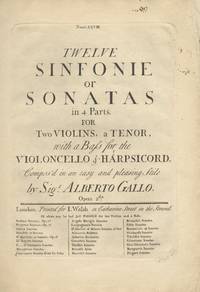
1754réf. 40749London: Printed for I. Walsh in Catharine Street in the Strand 1754. Folio. Contemporary light blue wrappers. Engraved throughout. Uncut. Violino primo: 1f. recto title verso blank 12 pp. Violino secondo: 1f. recto title i blank 2-11 i blank pp. Alto viola: 1f. recto title i blank 2-9 i blank pp. Cembalo e violoncello: 1f. recto title verso blank i blank 2-10 pp. "Numb. XXVIII." printed at head of titles. With brief publisher's catalogue to foot of titles listing works "Just Publish'd for two Violins and a Bass" by Nussen Porpora Solniz Handel St. Martini Boyce St. Germain Humphries Geminiani Morigi Lampugnani Albinoni Alberti Ceruetto Torelli Purcell Mascitti Brioschi Fritz Bononcini Schickard Tibaldi Valentine Valentini Bomporti and Finger. Wrappers somewhat worn and creased with small stains spines and edges frayed and chipped with minor loss. Occasional minor soiling and small stains mainly to blank lower margins; some creasing to blank margins; lower wrapper of cembalo part detached. First Edition. Smith & Humphries 666 p. 149. BUC p. 359. RISM G260 no copies in the U.S. Little seems to be known about Alberto Gallo other than that he was a Venetian composer active in the mid-18th century. Printed for I. Walsh in Catharine Street in the Strand unknown books
réf. 20786Pen and grey and brown ink grey wash on laid paper on an archival mount. Fine condition. Sheet size: 18 x 23 7/8 inches. Provenance: Dr. C.A. Pompe; G. Meijer; L. Houthakker with his collector's mark at lower right corner not in Lugt. A beautiful and very rare drawing of one of the most beautiful "Wunderkammern" of the day which later became the property of the Empress of Russia. This drawing shows the interior of the cabinet of curiosities of Catharina van Grovestins-von Schutz in the family house in The Hague. There is another earlier drawing of the same cabinet by the artist Daniel Marot the Younger 1695-1769 dated 1756 and currently in the collection of the Gemeentearchief in The Hague. This earlier drawing shows the interior just after it was completed but before the expanding collection necessitated certain improvements that are shown in the present drawing: additions include a shaped central cabinet bearing what may be a portrait bust of Catharina van Grovestins-von Schutz. Other improvements include the display shelves for taxidermy specimens that have been added between the built-in display cases and the architrave above; and the central bracketed display of coral and shells that was added above the fireplace. Catharina lady-in-waiting to Princess Anna of Orange employed the talents of the well-known naturalist and collector Arnout Vosmaer to help assemble the Cabinet. Vosmaer later commented in his memoirs that the cabinet was 'one of the most beautiful collections . covering every domain of nature" and noted that it was eventually sold to the Empress of Russia. The present drawing may perhaps have been intended as part of the successful attempt to sell the collection to the Empress The earliest cabinets were gathered together in the 16th century. They initially represented a genuine attempt to begin to understand the natural world but also came to be seen as an expression of the power and influence of the owner: the larger the 'wunderkammer' the more important the owner. They were the precursor to today's museums the most famous in England being the collection of Elias Ashmole 1617-1692. His private collection founded by the naturalist John Tradescant circa 1570-1638 was presented to Oxford University and opened to the public on 24 May 1683 as the Ashmolean Museum. One of the best known American examples was the Peale Museum founded in Philadelphia in 1784 for Charles Wilson Peale a painter and a scientist. His son Rembrandt Peale more famous today as a portrait painter subsequently established a 'branch' of the Peale Museum in Baltimore Maryland and this is now the oldest museum building in the Western hemisphere. The museum differed from the earlier more private collections in that it was always the Peales' intention to open the museum to the public. In its heyday the show included 90 specimens of mammals more than 700 bird specimens mounted in 'naturalistic' mini-dioramas a whole room of marine specimens about 4000 insects numerous minerals as well as their famous mammoth skeleton the first such display as well as scores of Peale's portraits. Cf. H. Engel Alphabetical list of Dutch Zoological Cabinets and Menageries Amsterdam: 1986; P. Fuhring Design into Art: drawings for architecture and ornament the Lodewijk Houthakker Collection London 1989 vol. II p. 761 #1102. unknown books
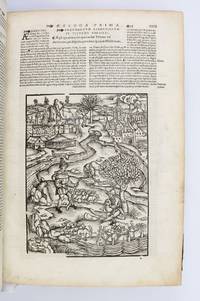
1529réf. ST20181Lugduni Lyon: Jean Crespin 1529. 326 x 215 mm. 13 x 8 1/2". 6 leaves 12-268 pp.; 1-95 1 pp.; 1-600 pp. 8 leaves. Three sections in one. Edited by Josse Badius Ascensius. Restrained 17th century mottled calf covers triple ruled in blind with oblique gilt fleurons in each corner raised bands neatly rebacked and recornered with modern deep brown morocco marbled endpapers edges sprinkled. WITH 203 TOTAL ILLUSTRATIONS comprised of 190 different woodcuts 11 of which repeat once and one repeating twice. The first title printed in black and red with an elaborate woodcut border; the second title with a fleur-de-lys device. With criblé initials throughout in three sizes many historiated. Handwritten book label of Tobias Gutberleth on title see below title additionally with ink ownership inscription of G. van Olden Junior dated 1860. Front flyleaf with pasted-in manuscript inscriptions of "Francis" and "R. E. Hattiule". Line numbers in ink in a contemporary hand through much of the volume. Mortimer 538; Renouard "Badius Ascensius" III 377; Adams V 474; Brunet V 1282; Graesse VI 336. Binding yawning a bit edges somewhat rubbed but a solidly restored and perfectly acceptable binding. Light smudges of no consequence here and there other trivial defects but internally very clean fresh and bright. This is a well-preserved copy of a 16th century printing of Virgil's "Opera" profusely illustrated with wonderfully detailed woodcuts replete with charm and drama. Initially produced in Strassburg for Johann Grüninger’s 1502 Vergil our striking set of illustrations was reused in the 1515 German translation of the Aeneid and then in Sacon’s 1517 Lyon printing which bears many similarities to the present edition. While the plates do show some of the wear expected with this level of reuse—Mortimer notes that several had split by the time of the 1517 printing—the impressions here are nevertheless quite good and the illustrations are no less compelling than befoe. The anonymous artist whom Mortimer describes as having "a skilled hand and lively imagination" has provided animated scenes that perfectly match the content of the text. They range from the charming pastoral images that accompany the Eclogues and Georgics full of cheerful farmers and leaping stags to the dramatic battle scenes of the Aeneid with their fierce heroes in full 15th century armor grotesque monsters and elaborately rendered cities engulfed by leaping flames all overlooked by the pantheon of unconcerned gods. The text here is framed by the commentary of French scholar and printer Josse Badius Ascensius as well as by the commentaries of Filippo Beroaldo Giovanni Pierio Valeriano Bolzani and others. The present copy was owned early in its history by Tobias Guberleth 1609-62 poet and head of the Leeuwarden Latin school. Jean Crespin unknown books
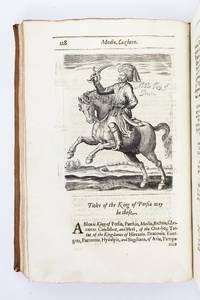
1634réf. ST20186London: printed by William Stansby and Jacob Bloome 1634. FIRST EDITION. 290 x 195 mm. 11 1/2 x 7 3/4". 6 p.l. 225 15 pp. Contemporary sprinkled calf raised bands traces of old paper label to spine pastedowns lifted to reveal leather bands and manuscript document fragments used as sewing guards all edges sprinkled red expert repair to rear joint. With additional engraved title page featuring two figures of Persian dignitaries and three small travel vignettes signed at foot by William Marshall and 36 engravings in the text the majority vignettes but one full-page and nine more than half a page tall. Front endpaper with ink armorial stamp of Sir Walter John Trevelyan 8th Baronet of Nettlecombe and High Sheriff of Cornwall. Price inked in a contemporary hand to the front endpaper. Sabin 31471; STC 13190.3; ESTC S92948. Front board a bit splayed covers with three old dampstains and a few scars and tiny wormholes but a very pleasing original binding with almost no wear to the joints. A very few marginal smudges made during printing other quite trivial imperfections but AN ESPECIALLY FRESH BRIGHT AND CLEAN COPY INTERNALLY with rich impressions of the engravings. This is a contemporary copy in remarkably fresh internal condition of an important and entertaining account of the travels of a 17th century Englishman in exotic Asian and African territories particularly Persia. It is significant both for the ways it is accurate and for the ways it is fictitious. Sir Thomas Herbert 1606-82 left for Persia on a diplomatic mission to Shah Abbas in 1626 as part of the entourage of Sir Dodmore Cotton. The mission was not successful: Cotton and the mission's other leader Sir Robert Shirley both died in 1628 leaving their retinue at loose ends with the increasingly unimpressed Shah. Herbert made a slow return to England traveling through a large portion of Asia and Africa and even sailing up the coast of North America. He finally returned to England in 1630; four years later he published this account of his adventures. The text describes meetings with people of many cultures as well as encounters with exotic animals including the dodo flamingoes and flying fish. Herbert's accounts are of great importance for their details of early Asian travel by Westerners. At the same time the author was unable to resist the urge to embellish a good story and according to DNB gave implicitly first-person accounts of places he had not in fact visited. One such detour into the fanciful comes in the chapter involving the author's apparent visit to America. In it Herbert discusses the belief that the mythical Welsh king Madoc ap Owen-Gwyned had settled in North America in the 9th century for which he provides linguistic evidence that Sabin calls "entirely fanciful." DNB tells us that "this segment was apparently included to please the earl of Pembroke's own Welsh nationalist fancies. It also continued to help fuel various theories about Madoc's colonies and Welsh Indians in North America until the early years of the nineteenth century." Herbert's tale is profusely illustrated by William Marshall fl. 1617-49 with engravings that are sometimes more imaginative than accurate see for example the depiction of the shark on page 6 or the penguin on page 13. Despite these rather amusing inaccuracies the illustrations are lively and detailed providing a sense of the awe the early readers must have felt when imagining foreign places. Our copy in a period binding with part of a manuscript ledger used in the binding process visible is from the library of Walter John 1866-1933 8th baronet Trevelyan who as his inkstamp suggests served as High Sheriff of Cornwall from 1906-07. printed by William Stansby, and Jacob Bloome unknown books
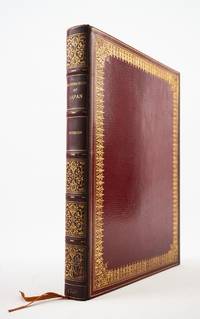
1822réf. ST20877London: Printed for R. Ackermann 1822. First English Edition. 300 x 235 mm. 11 3/4 x 9 1/2". xvi 325 1 pp.Translated by Frederic Shoberl. Imposing contemporary crimson straight-grain morocco gilt covers with filigree frame with densely massed scrolling fleurons raised bands spine gilt in compartments with radiating viny scrolls surrounded by leaves and annular dots marbled endleaves all edges gilt. WITH 13 HAND-COLORED PLATES in etching and aquatint many after Japanese artworks one folding. Bookplate removed from front flyleaf. Bookseller's ticket of J. L. Thompson & Co Kobe Japan on front pastedown. Abbey Travel 557; Tooley 489; Martin Hardie "English Coloured Books" pp. 113-14. See also E. F. Strange "Japanese Illustration" pp. xxiii-xxiv. Spine and fore-edge of upper board slightly darkened a few minute flakes to lowest spine compartment but the binding extremely well preserved with very lustrous boards. Final 10 leaves slightly creased one repaired marginal tear but still A FINE COPY INTERNALLY exceptionally bright smooth and entirely fresh and clean. This generously proportioned production illustrated with 13 vibrant colored plates is a rare European account of Japan during the period in which the country was "closed" to the west offered here in its first English edition. Originally published in French in 1820 "Illustrations of Japan" is comprised of a history and description of the Tokugawa shogunate which Titsingh had translated from the Japanese plus Titsingh's own observations on the language customs and ceremonies of the Japanese people. The present English edition is accompanied by plates in etching and aquatint enhanced with hand coloring. Our author Dutch diplomat Isaac Titsingh 1745-1812 spent 14 years in Nagasaki for the Dutch East India company and between 1779-84 he served as trade director-cum-ambassador travelling to Edo now Tokyo for audiences with the shogun and other high officials in the shogunate. Unlike most of his Western contemporaries Titsingh was open-minded and curious about the people he encountered engaging with their art and culture; in fact art historian and Victoria & Albert Museum keeper Edward F. Strange tells us that Titsingh is the earliest known European collector of Japanese prints of which a number appear in the present volume. Our publisher Rudolph Ackermann 1764-1834 made his living issuing sumptuously illustrated books such as the present volume and was an early adopter of color aquatint and lithography technologies; Hardie writes that he was "the great presiding genius before whose magic wand so many pictorial books sprang into existence." In very attractive period morocco this is a particularly appealing copy of the work free of the foxing and offsetting that often plague copies of this and other large-format color illustrated books. Printed for R. Ackermann unknown books
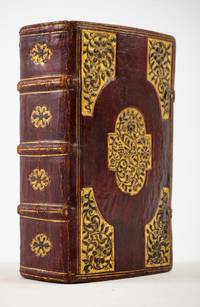
1622réf. ST20888Munich: N. Henricus 1622. First Edition in German. 160 x 100 mm. 6 1/4 x 4". 16 p.l. 699 3 pp. Translated from the Latin by Sebastian Äntzenhover. UNUSUAL AND QUITE BEAUTIFUL CONTEMPORARY GERMAN DARK RED MOROCCO GILT covers with gilt fillet border central panel with onlaid corner pieces and centerpiece of black morocco stamped in relief to an Ottoman-inspired design of flowering vines raised bands spine panels with gilt centerpiece two leather straps with silver clasps and catches all edges gilt. Title page with engraving of the Tower of Babel. Top half inch of title page cut away to remove owner inscription. VD17 12:103845E; USTC 2019170. A touch of bowing to boards spine a little crackled joints and extremities a bit rubbed occasional small round marginal marks apparently made with wax! and presumably meant to indicate textual importance other trivial imperfections but an excellent copy clean and fresh in an unrestored binding with lustrous boards glistening with gilt. This rare work on sinning through the use of wicked words is offered here in a lovely binding that is quite out of the ordinary for its time and place and that may well have a very noble provenance. "Spiritual Tongues: That is a Salutary Treatise Concerning the Poisonous Tongue of Man--How to Guard Against and Remedy It" is an examination of the sins committed through speaking written by Munich Jesuit Johannes Pelecyus 1545–1623 and first printed in Latin in 1620. Pelecyus addresses the evils of gossip slander indiscretion cursing mocking and other injurious speech. The first part of the work is a general overview of the topic from a theological standpoint while the second part is a more practical guide to types of harmful speech and specific remedies for avoiding and correcting these offenses. Pelecyus concludes with a poem "The Devil's Disease and its Remedy." The binding here is remarkable in terms of its material makeup and the conjectural origin of its design. In the first part of the 17th century morocco was not commonly used by German binders who preferred sturdier pigskin particularly for treatises like this which could be expected to see much use poisonous tongues have long been a fact of life and in need of being frequently read about. Morocco was generally reserved for presentation copies or ceremonial liturgical works. In addition to the material the decoration here is unusually lavish for a text of this sort with onlays gilt adornment and silver clasps that required time and skill from the artisan and considerable expense for the patron. Significantly the lovely relief centerpiece design on the boards here also appears on the covers of a Book of Hours originally created for Holy Roman Emperor Maximilian I 1459-1519. That volume was later acquired by another similarly named owner Duke Maximilian I of Bavaria and is now to be found in the Bavarian State Library: shelfmark BSB 2 L.impr.membr. 64. It is certainly well within the realm of possibility that our later Maximilian 1573-1651 could have owned the present poisoned tongue volume and had it dressed in its elaborate morocco attire in imitation of the original binding design on the emperor’s prayer book. Whoever was responsible for the binding they surely did extremely fine work and no doubt for an elite clientele. One other curious feature of this volume is the series of round wax dollops made in the margins which an owner the fastidious second Maximilian has used to mark passages of interest in the text. While they don't materially affect the value of the volume they are intriguing in that they inevitably call up images for us of a careful early reader systematically marking with some kind of unknown implement the parts of the text that seemed important. "Spiritual Tongues" is a rare work: USTC and OCLC find just four copies outside Germany none of them in North America and we could trace just one copy sold at auction. N. Henricus unknown books
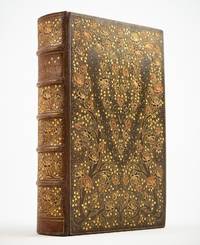
1885réf. ST20626-1London: Printed at the Chiswick Press for Elliot Stock 1885. FIRST EDITION. 181 x 111 mm. 7 1/8 x 4 3/8". xxvi ii 274 i.e. 276 including text leaf marked as pp. 223-224 2 pp. ANIMATED CONTEMPORARY OLIVE BROWN MOROCCO ELABORATELY GILT AND INLAID covers with two climbing roses with 70 gilt and inlaid blossoms of wine red or salmon pink morocco and dozens of tiny heart-shaped leaves rising from the lower corners and winding up the sides before curving toward the center of the board in a heart shape the branches on a pointillé ground accented with tiny droplets upper cover with monogram of Eleanor Vere Boyle raised bands spine panels with rose branch featuring three inlaid blooms on a pointillé ground gilt lettering wide turn-ins with gilt rose sprays at corners yellow watered silk endleaves top edge gilt. With original front wrapper bound in at rear. Front joint replaced with great skill. With floral vignettes on title and half title decorative headpieces and initials and 11 full-page wood engravings by Boyle EXTRA-ILLUSTRATED with 28 engravings by Eisen Mariller Gravelot and many others. Spine lightly sunned to a hazel brown some extra-illustrations a little foxed occasional light to moderate offsetting from plates but the contents in excellent condition clean and bright throughout and the binding with only the most negligible signs of wear. The subject here is roses--on the extremely charming and exuberant binding in the text and in the illustrations. They were the favorite flower of author and illustrator Eleanor Vere Boyle 1825-1916 who planted them on a large scale in her garden at Huntercombe Manor. The popular illustrator of 14 children's books Boyle used most of her income to support charitable works in the parish where her husband was vicar. In her 50s she turned from illustrating to writing focusing primarily on nature and gardens as her subjects. Here she has collected English poems as well as translations in English of excerpts from poems in Greek Latin Persian Italian and French all of them celebrating the rose. Her illustrations show either close-ups of a flower or an adorable cupid accompanied by the flower of Venus. The press work in the present volume is first rate as one expects from the Chiswick Press and the binding is a riot of floral glimmering. Although the binding is unsigned the animated unconventional design is reminiscent of the work of the Guild of Women Binders while the execution is of exceptional quality equal to the productions by leading London workshops like Riviere and Zaehnsdorf. [Printed at the Chiswick Press for] Elliot Stock unknown books
1844réf. 41372Milsom Street Bath and 26 Haymarket London: Edmund Francis English Jr. and Thomas McLean. Lithographed and printed at 79 St. Martin's Lane and by Moyes and Barclay Castle Street Leicester Square London 1844. Folio. 24 1/4 x 16 1/2 inches. First Edition. 8 1-10. 18 pp. 12 leaves of plates. Title with hand-colored vignette mounted on card lithographed dedication to Princess Emilia of Baden and the Marchionesses Douglas and Clydesdale List of Subjects and List of Vignettes on Letterpress List of Subscribers "To the Reader" by English Lithograph letter from Beckford to English that is not mentioned in Abbey 6 tinted lithograph "Illustrations of Lansdown Tower Bath" with text on each room of the tower and Beckford's obituary and woodcut epitaph errata note 13 tinted and hand-colored lithograph plates mounted on 12 card leaves with pencilled titles underneath plates. Dark red straight-grained half morocco over publisher's brown moiré cloth title stamped and lettered in gilt on front and on spine with bookplate on pastedown Grand first edition folio volume of a fantastical folly with 13 hand-colored lithographs of Beckford's unimpeachable decor. Shortly after the eccentric novelist collector bibliophile and plantation-owner William Beckford died in May of 1844 the book Views of Lansdown Tower was published revealing Beckford's extraordinary retreat its luxurious interiors and the exquisite art collection he had assembled inside this fantastical architectural folly just outside Bath in Somerset England. Views was initiated by Willes Maddox under the patronage of Beckford who is found in the book's subscribers list. Beckford had moved to Bath from his estate Fonthill Abbey in Wiltshire in 1822 and remained there until his death. In 1826 Beckford employed a young architect named Henry Goodridge 1797-1864 to build the tower and its adjoining library about a mile away from Beckford's residence in Crescent. Beckford's Tower known initially as Lansdown Tower was built in Italianate neo-classical style on Lansdown Hill. The Tower and its attached railings are now designated as a Grade I listed historic building by the UK. It is the only standing example of Beckford's architecture. Though he did not live there Beckford used the tower as a showcase for his collection of art and fine books and its crowning cupola as a belvedere for taking in picturesque vistas of the surrounding landscape. The book reproduces drawings by Maddox in lithographs by C. J. Richardson. Maddox later gained a reputation for painting the portraits of eminent Turks and took up an invitation from the Sultan to work in Istanbul. Four of the book's 13 plates illustrate some of Beckford's objets d'art including ceramics ivories and metalware alongside his immaculate parlor furniture. The colored plates in order: I. Ornamental Title with View of Tower. II. Exterior of LansdownTower. III. The Vestibule. IV. The Scarlet Drawing Room. V. The Staircase. VI. View of the Belvedere. VII. Objects of Vertu No.1 in Mr. Beckford's Collection. VIII. The Sanctuary. IX. The Crimson Drawing Room. X. Black Cabinet in Crimson Drawing Room. XI. Objects of Vertu No.2 in Mr. Beckford's Collection. XII. The Library. XIII. Objects of Vertu No.3 in Mr. Beckford's Collection. XIV. Ornamental Furniture in Mr. Beckford's Collection. And the Vignettes in Letterpress: XV. Embattled Gateway in Garden. XVI. Italian Cottage. XVII. The Grotto. XVIII. View in Garden where the Sarcophagus stood before removed. XIX. The Tomb of Mr. Beckford. XX. The Tomb of Mr. Beckford's favourite Dog. Abbey Scenery 420. Bobins II 682. SP Lohia 626. Edmund Francis English Jr. and Thomas McLean. Lithographed and printed at 79 St. Martin's Lane, and by Moyes and Barclay, Castle unknown books
1810réf. 40869Philadelphia: C. and A. Conrad and Co. of Philadelphia; Somervell and Conrad of Petersborough; Bonsal Conrad and Co. of Norfolk; and Fielding Lucas Jr. of Baltimore. Printed by John Binns 1810. Text: 8vo 8 1/2 x 4 3/4 inches. Atlas: 4to 10 1/2 x 11 inches. Text: 2 1-277 5 1-65 1 1-53 1 1-87 1. 492 pp. Engraved frontispiece portrait of Pike Letterpress Title Deposit Statement To the Public To the President Pike's Expeditions Part I-III Appendices to Parts I-III. Atlas: 6 engraved maps 5 of which are folding. 3 folding tables. Text volume in contemporary tree calf expertly re-backed to style spine in six gilt-ruled compartments with gilt calf lettering-piece in second gilt date in sixth and blind center tool in rest. Atlas volume in contemporary quarter calf with tips over original blue paper boards with printed paper label spine in seven gilt-ruled compartments with gilt red morocco lettering-piece in second gilt date in sixth and blind center tool One of the most important of all American travel narratives; Pike's account contains the first maps to incorporate geographical knowledge of the Southwest based on first-hand exploration. It is a milestone in the mapping of the American West. Wheat Here in the rarest and most desirable form with the plates and maps in a quarto atlas. Pike's narrative along with that of Long and Lewis and Clark is one of the most significant early books on the exploration of the American West. As such it is a cornerstone of Western Americana. In particular Streeter felt its "description of Texas is excellent." Hill gives the following summary of its contents: "In 1805 Pike was given the difficult assignment of conducting a reconnaissance of the upper Mississippi region. He was ordered to explore the headwaters of that river to purchase sites from the Indians for further military posts and to bring a few influential chiefs back to St. Louis for talks. The trip was only moderately successful as a mission to the tribes but Pike was able to convey important geographical information to President Jefferson and other Washington officials. On Pike's second expedition 1806-1807 he was assigned to explore the headwaters of the Arkansas River then proceed south and descend the Red River from its source. Pike and his men were taken into custody by a Spanish patrol and Pike was able to observe many areas in New Mexico Chihuahua and Texas. His book created interest in the Southwest and stimulated the expansionist movement in Texas." The atlas volume consists of the following maps plus three tables: 1. "Falls of St. Anthony." 2. "Map of the Mississippi River from its Source to the Mouth of the Missouri laid down from the notes of Lieutn Z. M. Pike by Anthony Nau. Reduced and Corrected by Astronomical observations of Mr. Thompson at its source; and of Captn. M. Lewis where it receives the waters of the Missouri." 3. "The First Part of Captn. Pike's Chart of the Internal Parts of Louisiana. 40 miles to the inch by Anthony Nau." 4. "Map of the Internal Provinces of New Spain. The outlines are from the Sketches of but corrected and improved by Captain Zebulon M. Pike who was conducted through that Country in the year 1807 by Order of the Commandant General of those Provinces." 5. "A Chart of the Internal Part of Louisiana. Including all hitherto unexplored Countries lying between the River La Platte of the Missouri on the N: and the Red River on the S: the Mississippi East and the Mountains of Mexico West; with a part of New Mexico and the Province of Texas. By Z. M. Pike Captn U. S." 6. "A Sketch of the Vice Royalty Exhibiting the several Provinces and its Approximation to the Internal Provinces of New Spain." Tables: 1. "Recapitulation of Furs and Peltries Fond du Lac department Marks and Numbers as per margin. North West Company 1804-5." 2. "Abstract of the number &c. of the Nations of Indians residing on the Mississippi and its confluent streams from St. Louis Louisiana to its source including Red lake and Lower Red river." 3. "A Statistical Abstract of the nations of Indians who inhabit that part of Louisiana visited by captain Z. M. Pike in his tour of discovery in that country in the years 1806 and 1807." Bradford 4415. Braislin 1474. Field 1217. Graff 3290. Hill 1357 2004. Howes P373 "Best Issue." Jones 743. Rittenhouse 467. Sabin 62836. Schwartz and Ehrenberg p.225. Streeter sale 3125. Streeter Texas 1047C. Wagner-Camp 9:1. Wheat Transmississippi 297 298 299. C. and A. Conrad, and Co. of Philadelphia; Somervell and Conrad of Petersborough; Bonsal, Conrad, and Co. of Norfolk; and Fieldi unknown books
1683réf. ST20461-2Paris: Pierre le Petit 1683. 203 x 127 mm. 8 x 5". 4 p.l. first blank xxxii 629 3 pp. REGAL CONTEMPORARY RED MOROCCO GILT covers with French fillet border central field semé with alternating fleur-de-lys and Louis XIV's stylized "L" topped with a crown raised bands spine compartments with crowned "L" at center oblique fleur-de-lys at corners marbled endpapers olive green morocco label all edges gilt. Printer's device on title page and four engraved plates depicting the Entry into Jerusalem the Crucifixion the Descent into Hell and the Resurrection. Front pastedown with morocco bookplate of Hans Fürstenberg; verso of front free endpaper with book label of the Fondation Fürstenberg. USTC 6098649. For the binding: Olivier Pl. 2493 Fer no. 8. Top inner corner of covers a shade darker but apparently not from moisture boards tending to splay slightly corners a bit bumped endpapers with offsetting from binder's glue but the binding lustrous with very little wear to the joints and generally pleasing. About a quarter of the leaves with small faint dampstain at upper gutter intermittent minor browning and foxing more pronounced on a couple of quires other unserious signs of devout use but the text with nothing approaching a fatal defect. Bound for a distinguished library--and perhaps for a member of the French royal household--and with an illustrious modern provenance this is a pleasing copy of a 17th century Parisian edition of the Office of Holy Week. The attractive engravings that accompany these paschal hours demonstrate the lush graceful style that distinguished the fine late baroque printmakers. The scenes of the Crucifixion and Resurrection were engraved by Jean Morin ca. 1605-50 whose innovation of combining engraving and etching on the same plate ushered in a new popular style of printmaking and the depiction of the Entry into Jerusalem by Flemish artist Peter Paul Bouche fl. ca. 1685-1702 is especially pleasing. But the story of this volume is its period binding. The owner who commissioned the binding may well have been a member of the noted Lamoignon family whose celebrated library was built over several generations but particularly by Chrétien-François de Lamoignon I 1644-1709 a cultivated man of letters and friend to writers such as Boileau and Racine. The "L" surmounted by a crown appears typically on the family bindings though normally accompanied by the same cypher stamped in the margin of the third leaf of text a stamp that is not present here. The impressive library was sold to bookseller Thomas Payne and auctioned off in 1791-92. Equally or really unequally the repeating motif of Louis XIV's crowned "L" monogram could well indicate that this was the property of royalty. We have not been able to identify its specific owner but this style of semis was not uncommon for royal bindings; the Russian National Library has two late 17th century examples with Louis XIV's own arms over an identical ground. According to Olivier the semis repetition alternating the monarch's initial with a fleur-de-lys or with a specific royal's cipher became popular during the reign of Louis XIII and continued under his successors; "the result for royal bindings is a sort of uniformity in the ornamentation which seems to reflect in the field of art the unification and centralization of France." Our binding's crisp precise tooling has survived beautifully despite apparent dedicated devotional use by its early owner. Our copy is further distinguished by coming from the collection of Hans or Jean Fürstenberg 1890-1982 a bibliophile of refined discrimination who assembled one of the great collections of the 20th century and whose books were noted for their outstanding condition. He put together one of the finest collections of 18th century French books ever assembled and his library contained a discriminating selection of bindings from other periods such as the present example. Pierre le Petit unknown books
1981réf. 148093New York New York: Turn of the Century Editions 1981. Softcover. G Light sunning at spine. Some underlining in the text. Tan illus. stapled wraps. 79 pp. Profusely illustrated in bw. A reprint of the original catalogue "Quaint Furniture in Arts and Crafts: Genuine Russian and Spanish Morocco Leather: Russian Hand Beaten Copper: Electric Fixtures Library Sets Smoking Sets and a Large Line of Odd Pieces Both Useful and Ornamental" which was published circa 1908. Turn of the Century Editions paperback books
1893réf. 114556New York: The Century Company 1893. Hardbound. Internally VG but front cover present separated from binding; general wear to folio case. Printed boards in portfolio format. 64 full-page sheets of prints and images. Includes a listing of the contents of the 64 plates and where they first appeared. Also includes a list of the engravers sometime with biographical information. The Century Company hardcover books
réf. 2240452 x 40 mm. With Beham's initials in the plate to upper left. A fine impression on laid paper with thread margins. A rare contemporary version in reverse of the print first published in ca. 1537. Pauli: Hans Sebald Beham Ein Kritisches Verzeichnis 191a. Bartsch 190. Kinsky: Music in Pictures p. 80 no. 2 the original version. unknown books
1856réf. List3639Boston / New York / Philadelphia / New Orleans 1856. Lacks stitches at spine likely removed from a larger volume lithograph in fine condition one small tear to margin at final leaf. Very good plus overall. An uncommon American sheet music printing of the popular comic song unknown books
1875réf. List3681Cincinnati: F.W. Helmick 1875. Quarto 14 x 10 ½ inches 5 pp. Binding split some marginal chips good condition. Sentimental minstrel-era ballad associated with the touring repertory of J.H. Haverly’s Mastodon Minstrels one of the largest and most commercially successful minstrel organizations of the 1870s with an illustrated cover using the trope of an elderly African American man which was popular in Uncle Tom’s Cabin-era touring shows. The song is attributed to John Rutledge a performer and songwriter active within late nineteenth-century minstrel circuits whose compositions circulated primarily through stage performance and regional sheet music publication. The title was originally sung by Milton G. “Milt” Barlow 1843–1882 a prominent minstrel comedian and vocalist frequently billed as a “Dutch” or character performer and long associated with Haverly’s troupe. Published in Cincinnati by F.W. Helmick a regional music publisher active in issuing popular songs minstrel pieces and theatrical repertory during the 1870s. The sheet has four holdings in OCLC as well as Vassar’s Harriet Beecher Stowe collection. F.W. Helmick unknown books
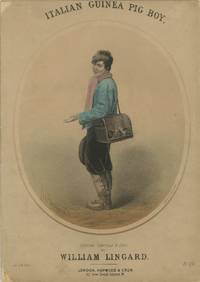
réf. List3684Folio 9 ½ x 13 inches 5 pp. Margins trimmed quite tight to title with some loss to publisher information on rear cover small chips else near fine with the hand colored lithographic cover by H.C. Maguire in fine condition. Near Fine. An interesting piece of sheet music perhaps shedding light on the term “guinea” as it applies to Italians which though it originated in Europe migrated to the United States. Lingard’s song begins “I’m poor Italian guinea pig boy Straight from Florence I come with my stock.” The song was anthologized later in Lingard songsters. The song is proof that the term was being used in performance and theater circles before the mass arrival of Italians in the United States. “Guinea” was also widely used to describe people of dark complexion during the period stemming from the Guinea region of West Africa. With an attractive lithographic cover of a cheerful enough looking boy extending his hand. We find two copies of this sheet at Oxford and the British Library with none held in the United States. unknown books
1829réf. List3693Philadelphia 1829. Folio 2 pp. Tear to title page some chips to margins with loss good condition overall. An early Philadelphia theatrical music imprint by I. T. Norton credited on the sheet as “I. T. Norton R.A.M. Composer & Director of the Music to the Chestnut St. Theatre.” Norton served as musical director at the Second Chestnut Street Theatre during the late 1820s a period when the house mounted a mixture of melodrama burletta opera excerpts and popular entertainments requiring resident musical supervision and arrangement. Theatre directors of music routinely composed incidental numbers glees and topical songs for stage performance and subsequent publication bridging the repertory of live performance and domestic music-making. Mister Punchinello! draws upon the well-known Punch and Judy puppet tradition. The text is lyrically straightforward built around the repeated refrain “Oh mamma I must be married to Mister Punchinello” suggesting a number intended for accessible vocal delivery rather than elaborate dramatic structure. The R.A.M. designation appended to Norton’s name—presented without elaboration on the imprint—appears as a professional credential typical of early nineteenth-century music publishing though he very well may have never attended the Royal Academy of Music. A representative survival from the intersection of Philadelphia theatre culture and early American sheet music production. OCLC locates about a dozen copies across multiple entries. unknown books
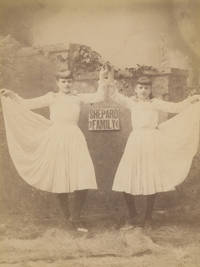
1890réf. List1620Mostly New England: Various Photographers 1890. Cabinet cards measuring 6 ½ x 4 ¼ inches. Various settings showing the band members posed with their instruments including banjos violins trumpets drum and tubas. Varying wear but generally very good with some normal age-related fading. Very Good. Originally from Lawrenceville New York the Shepard Family Band toured throughout the Northeast in the 1880s and 1890s eventually settling in South Royalton Vermont. All members of the family were apparently musically inclined: “In addition to Minnie mother and matriarch Mary “Minnie” Shepard and her husband patriarch James Monroe Shepard all of the children were pressed into service. Daughter Laura Belle the ‘violiniste’ was getting better all the time under the instruction of a ‘competent master.’ Her fans “will be astonished at the improvement in style tone and expression.” It was said of little Lessie that ‘Among lady cornetists she has no equal.’ The darling little son of the family Master Burtie could not help but please for he was well-known to be ‘The youngest Tuba soloist in the world; only nine years of age; scarcely larger than the instrument he plays.’ He was also a ‘clever comedian singer and character artist.” The baby little Flossie “a sweet little miss of four summers’ was said to be a “wonderful mimic and impersonator…a veritable little fairy.’ Daughters Kittie and Georgia were also part of the troupe.” - Henry Sheldon Museum. A very nice collection. Various Photographers unknown books
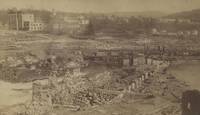
1887réf. List1424Lebanon: C.E. Lewis 1887. Albumen photographs measuring 7 ¾ x 4 ½ on larger mounts. Some marks and scuffs to mounts some writing to versos images with excellent contrast and some light foxing very good overall. Very Good. One of the most destructive fires in New Hampshire in the 19th century broke out in the Mead Mason and Co. factory the morning of May 10 1887 and destroyed eighty buildings in a space of ten acres fully destroying the manufacturing industry in Lebanon. According to a contemporary article in the New York Times six hundred people were left unemployed and sixty-five were left homeless. These five images by the Lebanon photographer C.E. Lewis capture the aftermath of the fire and show the extent of the destruction. We find little record of the photographer C.E. Lewis but according to the records of the National Stereoscopic Association he lost his studio in the fire as well. We only find records of three of these images at the New Hampshire Historical Society. C.E. Lewis unknown books
2008réf. 1410001New York: Berkeley Caliber 2008. First edition. Hardcover. Octavo xii 292 pages. In Good condition with a Very Good dust jacket. Spine is blue and black with gold and white print. Price unclipped: “$25.95”. Boards in white paper. Text block has spine crack at page at title page. Illustrated: b&w plates photographs. Inscribed in ink by the author on the title page. NOTE: Shelved in Netdesk Column Z. 1410001. FP New Rockville Stock. Berkeley Caliber hardcover books
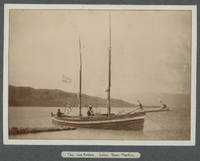
1890réf. List01108Mostly Patagonia 1890. Printing-out paper prints the images measuring 3 1/4x4 1/2 to 4 1/4x6 inches and the reverse each with a caption written on a label affixed to the mount below the prints. 4to blue pictorial cloth. 1890s. In this bound photo album forty-six photographs document a group traveling from pastoral locations in northern Argentina to breathtaking views at the southern tip of the continent. The photographs were taken by an accomplished photographer and handwritten captions in English provide brief descriptions of the locations and people documented. Apparently a member of an exploration commission the photographer and his team travel first from Bahia Brazil to Buenos Aires and La Pláta then on to the southern tip of the continent and back up the continent through remote lakes and mountains on both sides of the Chilean/Argentinian border. While the photographer’s name and nationality are not clear from the album there are two photographs with a Sr. Moreno who is likely the Argentinian explorer Francisco ‘Perito’ Moreno. The photographs of “Sr. Moreno” bear a clear resemblance to photographs of Francisco Moreno and they are taken in La Plata which is where Moreno was the first director of the natural history museum Museo de La Plata. On the album page following the one with photographs of Sr. Moreno there are photographs of the Museo de La Plata building and grounds. Museo de La Plata was established in 1884 and Moreno’s personal collection of 15000 pieces formed the core of the original collections Farro. In order to fill the exhibit rooms he sought more materials and carried out collecting campaigns in Patagonia. At times he hired naturalists to travel into remote parts of Patagonia to gather samples of flora fauna geology and artifacts of indigenous people’s culture Farro. Museo de la Plata was exhibiting anthropological remains and indigenous material culture at the same time that Argentina was expanding into indigenous territory Farro. In this way Museo de la Plata was not just a natural history museum it was also a force of colonialism. Not only was Argentina in the process of colonizing Patagonia but also it sought to claim and maintain territory in relation to Chile. A sixty year boundary controversy between Argentina and Chile resulted in the Treaty of 1881 in which the two countries agreed for the first time on the boundaries in Patagonia Perry. Even after 1881 vague language in the treaty that the boundary be “the most lofty peaks that divide the waters” extended the dispute until 1902 Perry. Because Patagonia had not been colonized extensively scientific exploration of the region was tied with nation-building and establishing these borders. In 1896 the Argentinean government appointed Moreno as the Expert Representative in the border dispute with Chile. He led commissions of naturalists and surveying engineers through the disputed border regions along the Andes Mountains Museo de La Plata n.d. Moreno’s work had parallels in Chile’s attempts to establish borders too: “Through the work of these explorers the state was able to.draw up laws and decrees regarding environmental destruction and more effectively defend its position in the limits conflict with Argentina” Etchegaray 2018. We do not know whether the exploration commission in this photo album was affiliated with Moreno the collections of Museo de la Plata or the boundary controversy. However given the route to the tip of the continent and the back up along the newly established border it seems possible that this commission could have played some role – whether directly or indirectly – in the process of exploration and nation building occurring at that time. References Etchegaray J. L. 2018. Cataloging the nation: Explorations and the incorporation of North Patagonia into the Chilean National Ordering 1856-1902 Thesis San Francisco State University. In AS36 2018 HIST .E83. http://dspace.calstate.edu/handle/10211.3/213510 Farro Máximo E. n.d. The Business of Museums: Towards a History of Collections in La Plata’s Museum 1888-1906 – World Archaeological Congress. Retrieved June 15 2021 from https://worldarch.org/world-archaeological-bulletin/the-business-of-museums-towards-a-history-of-collections-in-la-platas-museum-1888-1906/ Ryan C. 2011. Indigenous possessions: Anthropology museums and nation-making in Argentina 1862–1943 Ph.D. The University of Wisconsin - Madison. Retrieved June 15 2021 from http://www.proquest.com/pqdtglobal/docview/885379045/abstract/E55A419FE8D54C0DPQ/1 Museo de La Plata. n.d. Retrieved July 2 2021 from https://www.museo.fcnym.unlp.edu.ar/museo. unknown books