14.731 resultados
ref. 15632A Paris, Chez Belin, Volland, Gueffier, Prault, Rondonneau & compagnie, L'An II de la République (1794). 3 volumes. 8vo. Contemporary marbled calf, spines gilt with red and green labels with gilt lettering, lightly rubbed and some small imperfections. Not in Kress; Goldsmiths 16029; Martin & Walter, Anonymes, 17454. Complete set. The Law of the Maximum, legislation that established a partially controlled economy during the year II. It was the second of three primary maximum degrees. It aimed at fixing the prices of wheat and flour (maximum of 4 May 1793), the maximum of 29 September 1794 fixed both prices and wages over a wide spectrum of primary commodities and production, the third, the maximum of 24 February 1794, replaced the local prices of the second maximum with a schedule of national prices. On 24 December 1794 the Thermidorians disestablished this system of price and wage controls. These were the basic laws of a complex of degrees and a torrent of administrative reporting that included not just fixed prices but administratively controlled distribution as well, all of it directed theoretically from Paris by the Commission of Subsistence and Provisions and backed by the authority of the Committee of Public Safety.Volume I: Alimens, boissons, épiceries, et drogueries. (2), 12 pp. No 1: viande fraîche et salée, poisson sec et salé, avec les prix en 1790, augmentés du tiers. 119 pp. - No 2: légumes sec, etc. 83 pp. - No 3: productions d'animaux vivans. 85 pp. - No 4: boissons, etc. 74 pp. - No 5: épiceries et drogueries. 107 pp. and folding table. Volume II: No 6: laines et draperies. 115 pp. - No 7: chanvres et corderies. 36 pp. - No 8: fils et rubans de fil. 21 pp. - No 9: toiles. 55 pp. - No 10: cotons, fils de coton et cotonades. 19 pp. - No 11: bonneterie. 46 pp. - No 12: soies et soieries. 19 pp. - No 13: cuirs et peaux. 79 pp. Volume III: No 14: peaux, poils, chapellerie fine et commune. 23 pp. - No 15: papiers. 42 pp. - No 16: fers et fontes. 4 pp. Folio (folded). - No 17: quincaillerie. 114 pp. - No 18: bois de travail, merrains et boisellerie. 99 pp. - No 19: bois à brûler. 67 pp. - No 20: charbons de bois. 56 pp. Provides a wealth of information.
ref. 17247No place, 1769. With 1 folding table. 147, (1, Avis au relieur) pp. 8vo. Modern red half morocco, marbled boards, gilt lettering. Einaudi 2247; Higgs 4642; Leblanc, De Thomas More à Chaptal, contribution bibliographique à l'histoire économique, 290; not in Kress; not in Goldsmiths; not in INED. First edition.There are some copies of the first edition (and this is one of those copies), where the pages 122-124 contain a long note, not present in all copies of the first edition, which note refers to the session of the Parlement de Paris. In this note the author defends the Abbé Baudeau and his work Avis aux honnêtes gens qui veulent bien faire, a work which had become the subject of a request for its prohibition. Most copies of the first edition are without this printed note and in these copies the pagination jumps from page 123 to 126. Why this note was apparently withdrawn and no longer printed in later produced copies is unknown. During the discussion on free trade of grains several 'Parlements' gave their opinions. 'Celui de Dauphiné donnait solennellement, le 26 avril 1769, un Avis qui était une exposition magistrale de la doctrine physiocratique, d'une orthodoxie impeccable. 'Ouvrage excellent à tous égards, s'écrie Dupont en l'annonçant aux 'lecteurs patriotes' aux 'bons citoyens'; ouvrage que nos derniers neveux baigneront encore des larmes de leur reconnaissance, comme nous l'avons fait nous-même en le lisant.' ..... l'Avis fut rendu public. L'impression produite pouvait être si forte que le Parlement de Paris s'arrangea pour faire disparaître la brochure: 'Cet ouvrage est devenu bientôt excessivement rare, écrit Bachaumont, parce que le système qu'on propose à Sa Majesté est totalement opposé à ce que les Parlements de Paris et de Rouen ont écrit sur cette matière, et que cette première Compagnie n'a pas trouvé bon qu'on répandit sous ses yeux un écrit si contraire à sa façon de penser.' Le manifeste du Parlement de Dauphiné n'en émut pas moins l'opinion , et son succès rejaillit sur le parti tout entier' (Weulersse, i, p. 200). 'Le Parlement du Dauphiné se fait défenseur de l'Edit de 1764, donc de la liberté du commerce des grains et de la concurrence. Il s'élève contre les entraves et les limitations qui lui sont apportées' (Leblanc, op.cit.) - Extremely rare.
ref. 230773Paris, Frères Vaillant, & Nicolas Prévost, 1738 2 vol. in-12, XXI-444 et [2]-XII-456 pp., avec 10 tableaux dépliants hors-texte, veau fauve marbré, dos à nerfs cloisonnés et fleuronnés, encadrement de simple filet à froid sur les plats, coupes guillochées, tranches rouges (reliure de l'époque).
ref. 10833Collection complète, du n° 1 (été 1924) au n° 29 (printemps 1932). Nous joignons l'Index des années 1924-1928, paru sous forme de tiré-à-part joint au n° 22 (Hiver 1929). TOUS LES NUMEROS FONT PARTIE DU TIRAGE SUR VELIN PUR FIL LAFUMA (2e papier dont le nombre d'exemplaires est compris entre 150 et 300) et sont tous en bon ou très bon état. // Le n° 1 porte la mention manuscrite " Exemplaire sur Lafuma ", apposée par Auguste Morel qui a également signé cet exemplaire de ses initiales ; ce détail fait de cet exemplaire une belle pièce joycienne puisque dans ce premier numéro de " Commerce " paraît la première traduction en français d'un extrait d'ULYSSE de Joyce - traduction justement due au même Auguste Morel et à Valery Larbaud. // Rare et belle collection sur grand papier.
1768ref. 3525Edition : Leyde, J.F. Bassompierre, 1768. Seconde édition. 3 volumes in-8 (20 x 13 cm), XII pp., 608 pp.- 635 pp. - 15 pp., 800pp., reliure de l'époque veau havane moucheté, dos à cinq nerfs orné, dentelle sur les plats, armoiries au centre. Exemplaire aux armes de Anne-Léon II de Montmorency, marquis de Fosseux;. Ouvrage traduit de l'allemand. (Olivier planche 810, 2), tranches rouges. Seconde édition, illustrée d'un portrait de l'auteu, ,r, et de cinq tableaux dépliants. Intéressant ouvrage, dédié par l'auteur à son Altesse Royale le Prince Auguste Ferdinand. Voici quelques exemples de chapitres : De la Politique en général, De l'Entretien de la Société et du bon Ordre, Des Loix & de la Législation, de la Police, des Finances, des Manufactures, du Commerce, de la Navigation, des forces de l'Etat, du Conseil des Ministres, du Département des affaires étrangères, des Alliances et des Traités, de la Guerre et de la Paix, de la conduite politique des Ministères publics, de la Décadence des Etats, Le troisième volume contient les Institutions Politiques de M. de Bielfeld.
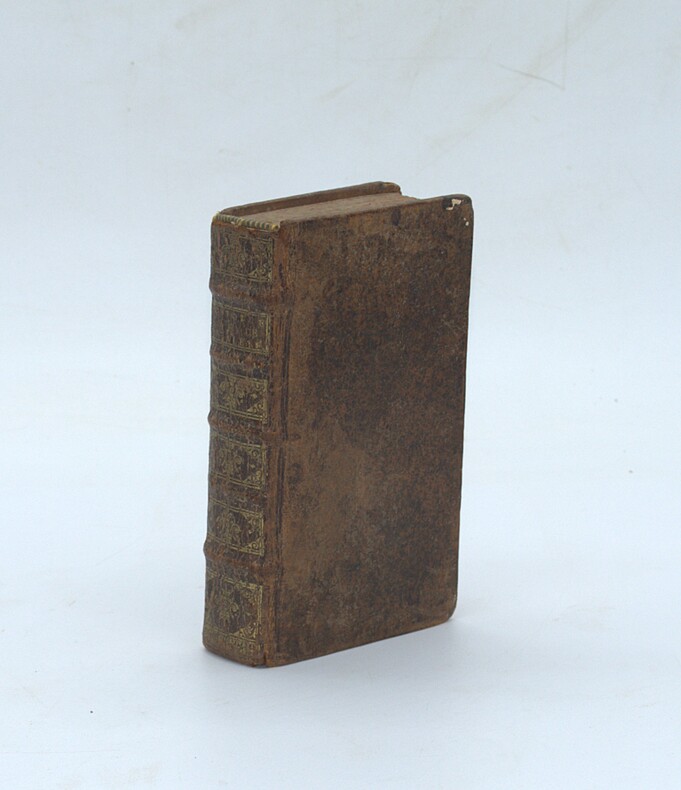
1670ref. PHO-2476Paris, Gervais Clouzier, 1670. In-12 (16x9cm), frontispice- Titre- 72pp.-5ff.-286pp.-1f.-212pp., veau époque, dos à nerfs orné avec titre, tanches jaspées. Frottements, 1 coin abimé, coiffe sup. arasée, manque de papier en marge sur quelques feuillets dont atteinte à 1 lettre (page 3, dernière partie)
1801ref. PHO-1139Paris, Dentu, 1801. 2 vol. in-8, (2) ff., 226 pp. ; (2) ff., 320 pp., 2 cartes, un plan et 8 pl. dépl., mouillures claires, relié demi-veau à coins de l'époque , dos lisse avec pièce d’auteur et titre , mouillure au 1er tome sur les 10 premiers feuillets , déchirures aux plis de 2 gravures.
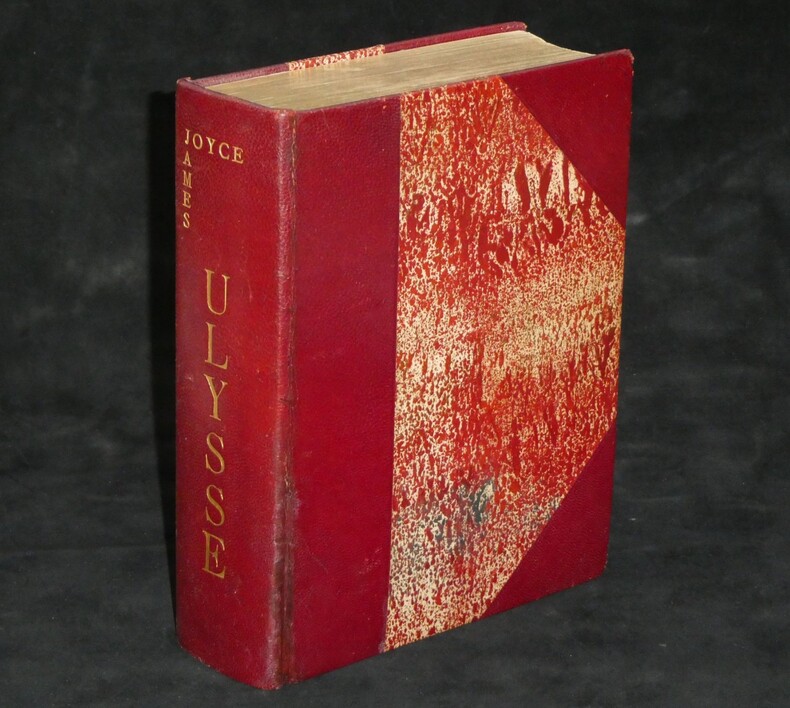
1929ref. boz_006501Auteur : James Joyce Titre : Ulysse. Traduit de l'anglais par M. Auguste Morel assisté par M. Stuart Gilbert. Traduction entièrement revue par M. Valery Larbaud avec la collaboration de l'auteur. Édition : La Maison des Amis des Livres, Adrienne Monnier, Paris, 1929 Tirage : Édition originale de la traduction française. L'un des 170 exemplaires d'auteur hors-commerce sur alfa vergé (ici le numéro 90). Un portrait de l'auteur est collé sur un feuillet avant la couverture d'origine. Reliure : Demi chagrin rouge à coins, dos lisse avec auteur et titre dorés, plats recouverts de papier à motifs, gardes marbrées, tête dorée, marges non coupées. Couvertures et dos conservés. Dimensions : 18,6 x 23,7 cm État : Bel exemplaire, Restauration grossière à un mors. Infimes piqures sur le bord des marges. Voir les photos pour plus de détails. Nombre de pages : 870 pages
1779ref. 5654Paris, Imprimerie Royale, 1779 - 1781 ; deux tomes in-4 ; plein veau havane marbré, dos à nerfs ornés et dorés, tranches rouges (reliure de l'époque) ; XVI, 707, (1), XIII (table), (3) pp. ; XVI, 844, XVI (table), (4) pp. et en tout 27 planches et cartes gravées hors-texte, dépliantes.
ref. 015736Gallimard NFR 0 In-12 Broché
ref. 224045Paris, Imprimerie de Didot l'aîné, 1789-1790 5 vol. in-8, XLIV-459, VIII-499, XLII-[2]-431, VIII-456 et VIII-569 pp., demi-basane rouge, dos lisse, filets dorés (reliure du XIXe siècle).
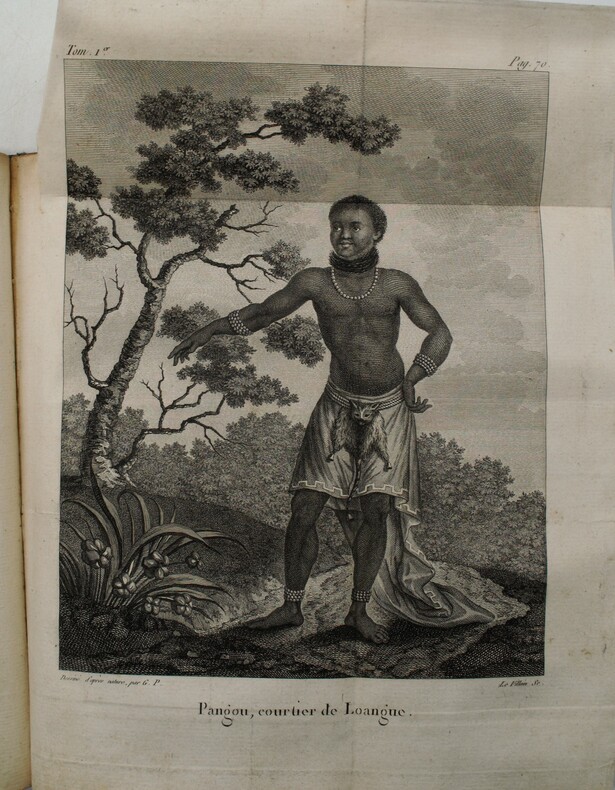
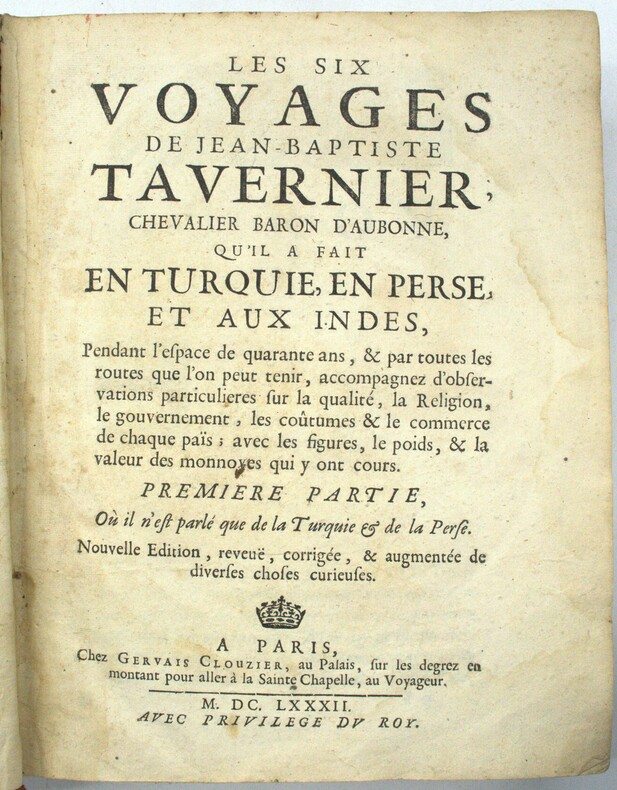
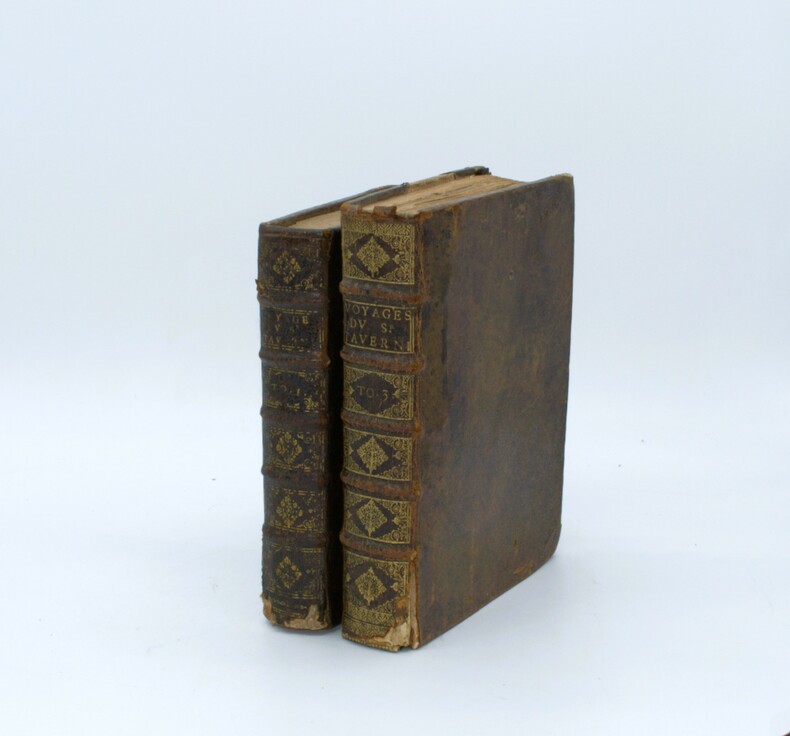
1680ref. PHO-1964Paris, chez Gervais Clouzier, 1682-1680, 3 volumes in-4 (246x195mm), 14ff.-636pp., 4ff.-481pp., 8ff.-72pp.-1f.-156pp.-1f.-96pp.-4ff.-1f.-178pp., Illustration : Tome 1 ; 7 planches (6 dépliantes) sur 8, Tome 2 ; 26 planches dont 15 de monnaies, 5 de pierres et 4 gravures dans le texte, Tome 3 ; 2 grandes cartes (Japon, 79x56cm et Tunquin, 56x41cm) et 8 planches dépliantes. Basane époque, dos à nerfs avec titre et tomaison, frottements, griffures et épidermures, Tome 1 ; accroc au plat, coiffe sup. absente, 2 coins usés, rousseurs, mouillure en coin puis en marge, planches avec déchirures sans manque, page 431 déchirée avec manque. Tome 2 ; fente au dos et charnière, coins usés, rousseurs et brunissures, 1 planche déchirée sans manque. Tome 3 ; coins usés, coiffes arasées, carte du Japon volante, déchirure carte du Tunquin, carte du Japon légèrement oxydée, petites rousseurs.
1676ref. PHO-1352A Paris, Chez Gervais Clouzier, 1676-79, 2 volume in-4 (sur 3),30pp.- 698pp.-8pp.-2ff.,8 ff., 72 pp., 1 f., 156 pp.,2 ff., 96 pp. , 1 f., 178 pp., tome 1 ,illustré de 6 planches (7) et tome 3 ; 12 cartes et planches (complet), relié plein veau époque , dos à nerfs ornés avec titre et tomaison , tranches mouchetées , coins , coiffes et coupes usés , début de fente, manque de matière , tome 1 plus petit avec quelques rousseurs , plan d’Erevan coupé court , déchirures aux plis ,réparation carte du Tunquin , manque le tome 2.
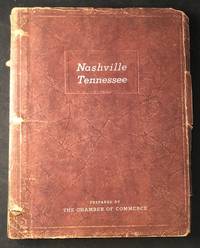
1937ref. 2527Nashville TN: The Chamber of Commerce Nashville TN 1937. First Edition First Printing. Original wraps. Good . 9 X 11 1/4 Inches. 62 PP Folding Map. Original February 5 1937 Portfolio created by the Nashville Chamber of Commerce. A fairly incredible "time-capsule" glance and 20th Century Nashville in the making. This unique book was created specifically for the purpose of garnering the business of the Norvell & Wallace Lumber factory. We assume that other similar copies were created on an individual basis when the city saw fit to "scout" major companies for the area. We have located "0" copies on OCLC and "0" auction records. The summary states "The principal advantages Nashville offers to industry and other lines of business is summarized from this survey." The index includes: agricultural resources altitude area assessed valuation building and construction city government civic and social data building permits churches civic-fraternal and welfare organizations education golf courses hospitals and medical facilities hotels newspapers office buildings parks and playgrounds Parthenon postal receipts public buildings radio stations streets theatres Tennessee State Fair climate financial instituions living conditions location manufacturing attitude toward new industries industrial development in Nashville Labor costs Labor relations Labor Laws and Regulations Labor Supply Workmen's Compensation Law markets mineral resources population public utilities state and local taxes transportation facilities airlines express freight local passenger service interurban service motor truck railroads river transportation vital statistics wholesale and retail establishments. A few of the stats that immediately jumped out at me - 1 The report predates any television station in Nashville 2 When polling races in the city the report denotes 111025 white citizens 42836 negro citizens and 5 of "other" races 3 only two airlines American and Eastern service the city and the municipal airport was dedicated only a few months before this report. 21 tables and graphs including rail distance and hours by train to other US cities flying hours from Nashville power rates gainful workers condition of the banks of Nashville and more. The folding map mounted at rear measures roughly 25 X 30 inches. Origianl stab binding intact. Pages and text clean. Covers are separated from the text. The map does exhibit a few closed tears and a bit of wear at folds. The Chamber of Commerce (Nashville, TN) unknown
1939223, 16 (ads) pp. Index. "The problem of the Jews in Britain, and the power they wield in public affairs, is a matter of the most absorbing interest in these days when propaganda has clouded the issue and made it almost impossible for the ordinary man to see the subject in its true perspective. This book is a critical but strictly impartial analysis written by a well-known Fleet Street journalist who has studied the whole problem for a number of years in the light of events since the Great War." - from dust jacket. Unmarked with moderate wear to publisher's orange cloth. Binding intact. Small contemporary Buenos Aires bookseller's sticker inside front board. Above-average wear to dust jacket, now preserved in archival-grade Brodart. A sound copy. Singerman 494. Book
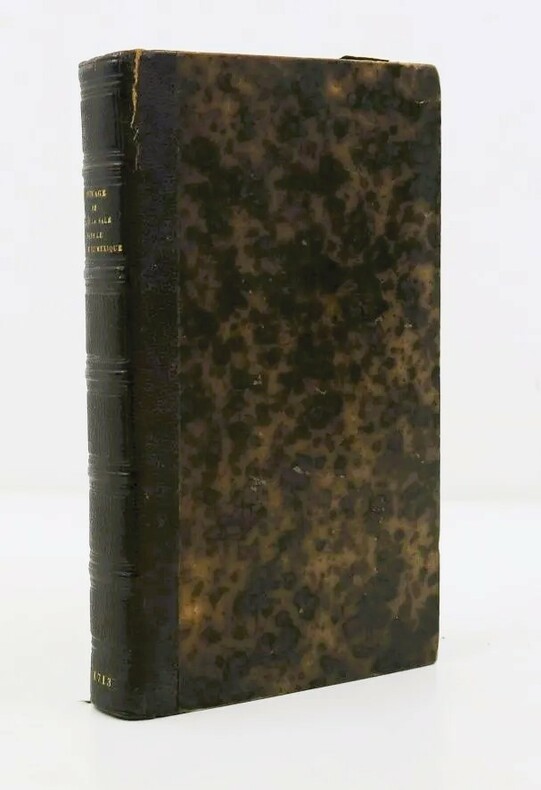
1713ref. PHO-1659Paris, Robinot, 1713. In-12 de xxxiv-386 pp. Demi-chagrin brun foncé, dos à nerfs, titre doré, date en queue (reliure XIXe s.). Début de fente à un mors. La rare grande carte dépliante représentant la Louisiane, le cours du Mississipi et le golfe du Mexique est ici en fac-similé.
1970ref. ZB642979Commerce Clearing House 1970. Volumes 20-31 lacks vol. 22 partly bound minor library markings else text clean & bindings tight. - If you are reading this this item is actually physically in our stock and ready for shipment once ordered. We are not bookjackers. Buyer is responsible for any additional duties taxes or fees required by recipient's country. Photos available upon request. Commerce Clearing House unknown
1616Nine volumes in one. Folio. 350 mm. Collation: Engraved title, 10 leaves (the last blank), 62 p. ; 4 leaves (the first blank), pp. 63-94; 9 leaves (the first blank), pp. 95-200; 19 leaves (the first blank), pp. 201-406; 7 leaves , pp. 407-443; 22 leaves, pp. 444-728; 4 leaves, pp. 729-774; 3 leaves (the first blank), pp. 775-793; 4 leaves, pp. 794-827, 6 leaves. Scattered damp stain, heaviest on last leaf (colophon). Early thumb indexes mostly present. German black letter gothic fraktur type; large woodcut initials; and decorative head and tail pieces throughout. Each sectional title bears Maximilian's large (150 x 185 mm) coat of arms. Most impressive too are the six pages with large woodcuts of 10 fish and one lobster. Generally clean and tight. Original full alum tawed pigskin over beveled oak boards binding; nicely tooled in blind; with Maximillian's simple arms, in a circle, within a 2" diamond. Five raised bands. Original brass clasps present. Early manuscript ownerships; Printed paper ownerships of the Kgl. Bezirksgericht Nurnberg in various places. Several stamped Nazi Eagle ownerships of the Oberlandesgerichts Nurnberg. First Edition of the Codex Maximilianus. Bavaria, under Maximilian I (1598-1651), was a country of around 1 million inhabitants, with agriculture and salt production (a ducal monopoly) being the dominant sectors of the economy. It became a key player in the events leading up to the Thirty Years War. In 1608, Bavaria occupied and annexed the hitherto free Imperial and Lutheran city of Donauworth. The action caused the Protestant princes and cities to found the Protestant Union. Bavaria then concluded an alliance with the Austrian and Hungarian Estates. In 1609 Bavaria became the leading force in the newly founded (Catholic) Holy League, an alliance formed against the Protestant Union. Consolidating his governance, Duke Maximilian, in 1616 introduced a new Bavarian Landrecht (Law Code), which was a compilation, reworking, and summation of all the laws and codes. Includes the codes of: Judicial Procedure; Court Laws; State Laws; Police Law; Forestry, hunting, and fishing regulations; Etc. It became a widespread the model for law and legislation for over 150 years. Stobbe II, 366. Very Scarce. Only a handful of copies are recorded in U.S. libraries. **PRICE JUST REDUCED! CHEST 2/1
1850ref. c2206270149xbvkLondon, William Pickering (Chiswick, C. Wittingham), 1850. 1 blank sheet; xii pages (incl. foretitle-sheet, title-sheet, printed dedication-sheet, 'Contents' and 'Introduction to Eidolon'), 240 pages; 1 blank sheet. - Richly gilt handbound green chagrin-leather binding over 5 raised bands with gilt title at spine (stamp-signed ''Bound by Hayday'' at inner frontpanel), all edges gilt, silken marker-ribbon; 8vo.(ca. 18 x 11,5 cm).
Folio (325 x 250 mm), [8]pp., followed 30 numbered chromolithographed plates and one further "extra sheet" with 10 mounted albumen photographs, a couple of sheets with slight fraying to blank fore-edge, loose in publisher's printed boards, worn, re-backed with tape. Minton's Ltd, was a major ceramics manufacturing company, originated with Thomas Minton (1765-1836) the founder of "Thomas Minton and Sons", who established his pottery factory in Stoke-upon-Trent, Staffordshire, England, in 1793, producing earthenware. Herbert Minton began experimenting making encaustic tiles in 1828 in addition to the established Mintons pottery and china business, and produced their first catalogue of 62 designs in 1835. "The Tiles in this book are, with the exception of those shown on Sheet 16, which are printed patterns, and on the extra Sheet of Photographs, all Enamelled by a Patent process, know as "Reynold's process," which was adapted in 1848 by the late Mr. Herbert Minton, and has ever since been carried on at Mintons (Limited) China Works... The process for the decoration of Tiles was early favoured by the late Mr. A. Welby Pugin, "the great restorer of Gothic Arts," in the Houses of Parliament and in many other places, and the patterns in that style of ornament in this book are all from his hand. Since the days of Pugin the use of these enamelled Tiles for decorative purposes has greatly increased, and there are now few houses without some examples...".
ref. 7747Avignon, 1764. Volume in 4, veau, dos orné, reliure de l’époque. Illustré d’un frontispice gravé et de cartes et planches. Tome premier seul, concernant principalement le commerce du café, du cacao, de l’indigo, du sucre et de ses dérivés, de la tortue, du gingembre et du tabac.
1821ref. 28571Nantes 1821-1824 2 cahier brochés (débrochés) manuscrits à l'encre brune sur papier vergé crème , ligné et filigrané : " au cornet (cor de postillon) avec courroie simple en pendentif surmonté d'une couronne Royale" pour le cahier : Année 1821 et filigrané "GIRARD FRERES A TIFFAUGES" pour le cahier 1824, de 66 pages (pour 1824) et 48 pages pour (1821), format : 37 x 25 cm, l'année est notée a la main à l'encre brune, en haut de la page de couverture avec la mention "1821 Echeances Nantes", il n'y a pas de couverture pour l'Année 1824, l'année est juste notée en haut de 1ère page à droite , le mois est noté sur chaque en haut de page, DE GAUCHE A DROITE : une colonne avec le jour ou la lettre a été acceptée, une colonne avec la somme notée en livres, une colonne avec le genre de l'effet de commerce, une colonne avec le nom pour le compte de qui elles ont été tirées, une colonne pour le jour du mois ou échouent les traites et une colonne pour le nom du porteur qui la fait accepter ( l'année 1921 s'achève fin octobre le reste des pages de l'année est manquant - l'année 1824 est complète), quelques trace d'acidité du papier en marge, mais l'ensemble est bien lisible,
1596pp. 78, (6), in-8, piena pergamena
1770In -8°, pp. (4), 314 + foglio di errata; pelle con titolo al dorso e fregi. È la prima edizione del trattato scritto da Galiani durante il soggiorno a Parigi, il lavoro affronta in forma apparentemente leggera alcuni temi nevralgici dell’economia tardo settecentesca, sul libero mercato e sul monopolio. I Dialogues suscitarono l’attenzione (e il consenso) dello stesso Voltaire, che li descrive come allo stesso tempo divertenti “come un romanzo” ma anche istruttivi “come i nostri migliori libri seri”. Ferdinando Galiani, detto l'abate Galiani (Chieti 1728 – Napoli 1787), importante economista italiano: “Ordinato abate, pubblicò il trattato Della moneta (1751). Nell’opera, che gli diede una immediata fama internazionale, G. respinse le teorie contrattualiste sull’origine della moneta. Considerato un precursore della teoria marginalista, formulò la teoria del valore di un bene in termini di utilità, rarità e lavoro necessario per produrlo (‘fatica’). Segretario all’ambasciata del Regno di Napoli a Parigi, frequentò i maggiori intellettuali dell’epoca. Rientrato a Napoli, ricoprì vari incarichi pubblici”. (Dbi, s.v.) Cossa 139 (47); Einaudi 2334; Gosdsmiths' 10640; Higgs 4941; INED 1948; Kress 6730 First edition of the Galiani’s treaty, written during his Paris stay, in which in an outwardly light form the most nevralgic economic subject of the time are discussed, particularly on freedom of commerce and monopoly. The “Dialogues” pulled the attention of Voltaire, that describes the book as pleasant “like a novel” but at the same time useful as like “our best serious books”. The “Abate” Galiani (Chieti 1728-Naples 1787) was an important Italian economist: his treaty on money (“Della moneta”, 1751) gave him international celebrity since his youth. Secretary of the Naples embassy in Paris, he was in touch with the most important thinkers of his time.
1951ref. 014789Paris Editions Jeanne Bucher 1951 En feuilles, couverture rempliée illustrée Dédicacé par l'illustrateur