World Trade OrganizationBiblio.com

5 770 résultats
2003réf. CBS-9780521829786Cambridge University Press 2003. New. Cambridge University Press unknown
2002réf. CBS-9780521803250Cambridge University Press 2002. New. Cambridge University Press unknown
2003réf. CBS-9780521828536Cambridge University Press 2003. New. Cambridge University Press unknown
1993réf. 837110616036Inter Trade Corporation 1993-08. Hardcover. Very Good. Nice looking book has minor edge wear. Inter Trade Corporation hardcover
réf. R1210*Siam Nature and Industry PRINT Bangkok 1930 WL CODE R1210 SIZE 390 pp. 65 pp. illus. 3 folded maps 165 x 250 mm BOOK WEIGHT 1.120 Kg PACKING WEIGHT 0.200 Kg paperback
1935réf. 2090202120101393Not Available 1935. Soft Cover. Fine. Volume: 1 Not Available paperback
1935réf. 2090202120301392Not Available 1935. Soft Cover. Fine. Volume: 1 Not Available paperback
1980réf. mon0000580276Stationery Office Books 01/10/1980 00:00:01. paperback. Acceptable. in x in x in. NOT an ex-library book. Clean copy in good condition. Some fading and staining of cover. Some marking due to age on pages but overall book remains in good condition considering age. Stationery Office Books paperback
1927réf. 250121New York: William Edwin Rudge 1927. First Edition. One of 50 copies specially bound with a double-page frontispiece color reproduction of a trade card for a Mitchell & Crosdale Philadelphia dealer in Sperm Whale Lard & Tanners Oils Candes Rice & c. of Whale killing. XLIV plates uncut. 25 pages of text. 1 vols. 4to. Bound in quarter vellum and patterned boards. Very Fine in remains of original glassine. First Edition. One of 50 copies specially bound with a double-page frontispiece color reproduction of a trade card for a Mitchell & Crosdale Philadelphia dealer in Sperm Whale Lard & Tanners Oils Candes Rice & c. of Whale killing. XLIV plates uncut. 25 pages of text. 1 vols. 4to. William Edwin Rudge unknown
réf. 35911TRADE CATALOGUE Portuguese Door Hardware. Braga: circa 1920's. Oblong folio 15 x 18 1.2 inches. Wrappers. 127 plates. Scarce Portuguese trade catalogue illustrating hundreds of door and furniture hardware samples drawn to scale. Included are escutcheons pulls strap hinges knobs keys etc. Represented are various styles from simple modern styles to elaborate baroque designs. Plates are sepia prints. Many plates signed F. Costa. Plain wrappers worn and chipped and partially missing. Plates have rectangular stamps. unknown
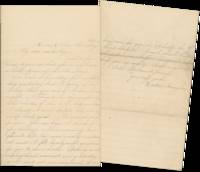
1909réf. List3421Ohio Illinois Michigan and Ontario 1909. Seventy-four letters in thirty-seven envelopes mainly dating between 1885 and 1895. With two undated and one empty envelope. Conditions vary with a few letters having damage intersecting with significant amounts of text and others Near Fine. Overall excellent. A collection of letters mainly sent between Captain William Faragher 1842–1921 and his second wife Harriet Chamberlin 1853–1920 with several from Faragher’s children from his first marriage Burton 1872–1961 and Maude 1875–1952. Most letters are from Chamberlin to Faragher with fourteen from Faragher to Chamberlin. Faragher owned and captained several merchant ships in Lake Erie and Lake St. Clair—presumably sailboats as he frequently complains of having been stuck without wind. He also describes more severe weather out on the lake writing from St. Clair Michigan: “I am anxious to get down from here but as the day advanced the wind began to frisken and it began to snow hard and as it was freezing hard it had rained then snowed and then froze hard saturday night so the poor Venture was in a sad plight but she was in a worse one when we got to where we lay run as it breezed up fresh and the wind dead ahead the water was flying over her in all directions and froze wherever it fell and besides it had turned into a blinding snow storm but we had a certain point to make . she seemed as anxious to get to a place of safety as I did and as the boys say she got there and none too soon as it has been blowing a gale ever since and snowing and freezing but we are in the lee and at a good dock and are comfortable but oh the wind is whistling through the rigging .” November 20 1887 In the 1880s steamships were increasing in popularity on the Great Lakes primarily because of sailboats’ susceptibility to both calm and weather; steamboats were bulky for their capacity and slow but more reliable whereas sailboats could carry overall more cargo.1 Generally steamers took packaged goods and passengers and sailboats mainly schooners took bulk cargo. The Great Lakes were the site of much shipping innovation; Faragher’s fleet was not yet behind the times but steam would overtake sail in the 1880s and 90s. Faragher’s cargo was mainly produce—apples and grapes—though he does mention picking up salt and other materials. His letters indicate that his business involved both shipping and mercantile aspects: he chose and bought the products shipped them to their destination and then also had to find and sell to customers. The grapes in particular seem to cause a lot of trouble: “We left Lorain Sunday morning early and had a nice trip to the Island got there at 4 PM bustled around monday morning and bought 400 baskets of grapes and had them all aboard by dark . it commenced to snow just as we got to Marine City bad bad omen for grapes but imagine my chagrin when I went up town and not a store or commission house wanted a grape folks were full of grapes and there was no sale for them and they said that I had got left and if the truth were known they were glad of it but its a cold day when I get left if trying will lit me out but one thing certain the weather and the lateness of the season were against me but you know I never cross a bridge before I get to it well we hauled up to our old Island Saturday morning and I sold out to my old friend . we had sold since 11 am 190 baskets of grapes . only half our cargo and at a good margin too. People would ask are you the man that was arrested here for selling grapes when told yes they seldom failed to buy but the strangest part was the number of ladies that came to buy”. October 28 1887 Though he does not narrate the incident in which he was arrested for grape peddling—nor does it appear to have made the paper—he later mentions yet another grape-related debacle this time at Port Huron: “Sander and I went to town to sell the grapes today . when down came a city official and wanted to know if I had a license to sell . well I couldent sell another grape without paying 5.00 a day license that was a stormer you see the whole sale men were going to drive me out of the market . but they were not as sharp as they thought they were I went and gave a bill of sale of my whole cargo to a citizen here and he appointed one of his agents to sell the grapes” September 20 1888 Faragher’s letters here do not discuss the financial state of his business but given Chamberlin’s statements it cannot have been all too positive. Chamberlin’s letters depict a woman struggling with her financial circumstances and with how the era’s expectations of her gender intersected with them. In one illustrative letter she writes: “A man drove by here Sat. asking for you. Ms. Lawler has given him her note to collect. He says the interest brings it to nearly fifty dollars. I told him I thought you could not meet it just at present but he said he must have the money and would give you just one week and if it was not paid then he would let the law settle it. Marvin and Laird are his lawyers. Mr. Laird is the one who helped get my money from father’s estate. I would not have them connected in this way about you for – O a great deal!! I have thought and planned till it seems as though my brain would burst. I have inquired about that law regarding taking any more married women as teachers. If Mr. Day would work for me it might perhaps be broken. There will be a vacancy in the Detroit building this fall. Will if I possibly can I want to commence teaching in Sept. The children would have to learn to do more about the house and with both of us earning it seems as though some of these harassing debts must be settled after a time. The frequent calls of men with bills against you have taken away all my pride and I believe I am humble enough to do most anything now.” July 11 1887 In 1887 Ohio passed the Married Women’s Property Act which allowed married women to keep their own property separate from their husbands’—in fact Chamberlin occasionally mentions “her” money in her correspondence. At the same time the state’s Board of Education was debating passing an act that would not only ban school districts from hiring married women as teachers but also fire all the married women it then employed. Newspaper reporting at the time indicates that this measure was not particularly popular not the least because married women tended to be older and more experienced with the job. Chamberlin clearly perceives her role as a wife in a rather more progressive way at one point writing to Faragher that “a true wife” is “not a doll-baby to be kept in finery” N.d. after he had taken out a loan to send her money for a new hat. Throughout their correspondence Chamberlin is perhaps surprisingly open with Faragher about her opinions particularly on his work and their financial affairs; for instance: “I should like to examine your pocket-book after that $25 tax money left it. What are you going to live on up there while you are hunting for freight Sawdust won’t put any fat on your bones. Sailing up and down past Saginaw bay won’t prolong your life or lessen your grey hairs. What are you sailing for anyway For the sake of wearing yourself out and giving employment to two or three men and keeping the Root from rusting out I guess I am naughty!” May 25 1894 She also frequently provides her opinion on whether and at what rate Faragher should sell his two other ships besides the Root the Venture and the Sassacus. She continues in the same letter: “I know I almost had a regular fight yesterday morning right there on the lounge. I wanted to do my housework and I couldn’t. I wanted to sew and I couldn’t sit up long for that. I wanted to help you and I couldn’t. I wanted to earn money and whereas I used to earn fifty-five cents for every hour I worked now I can not earn anything. Then if I could not do for self and family I wanted to make church and S.S. calls but I couldn’t walk for that.” Of course she was at that time prevented from these activities by her health not by gendered standards but she clearly had financial ambitions for herself. After her time as a regular school teacher Chamberlin taught at a Sunday school where she earned a few cents per student and in one letter reported having eighty-one students in a single session. Chamberlin also struggles with the expectations of her as step-mother to Faragher’s two children from his first marriage to Emma Humphrey 1848–1880. She writes: “I get so discouraged sometimes and it seems as though I am in the wrong place as mother. I think of Emma as my sister. I want to do as she would have me. I look upon my work as sacred. And yet sometimes I feel as though life was not worth living.” November 5 1886 She frequently describes conflict with Burt who was then in his late teens to early twenties writing that she could not “have quite the very own mother-love for him” though she is “sure that Emma was not more conscientious in her desires to do right by him than I am” May 20 1891. As it still is today the role of step-mother was a difficult and frequently demonized one with the trauma of losing a mother and wife often in conflict with the feminine duty of maintaining perfect domestic harmony. In general Chamberlin seems to have been somewhat out of step with the feminine ideal of the time even telling Faragher in a letter describing the death of an acquaintance’s baby how glad she was to not have any children of her own. Overall a look at the private lives and difficulties of a middle-class Ohio household as despite the relative prestige of its head being a captain-owner it struggled with debt. Of interest to both historians of Great Lakes trade and those of women’s roles in the late nineteenth century. 1 Dina M. Bazzill “The Missing Link Between Sail and Steam: Steambarges and the Joys of Door County Wisconsin” East Carolina University Program in Maritime Studies Research Report no. 19 2007. unknown
1950réf. 5503N.p.: Ministerstvo Pishevoy Promishlennocti 1950. Octavo-sized accordion fold 25 x 18 cm. 24 pages. Illustrated with seventeen color plates by C.B. Popov. FIRST EDITION. A trade catalogue of Russian liquors issued by the Russian Ministry of Food. The spirits are of all types with a wide range of vodkas but also a rich variety of cordials brandies and dessert liqueurs. The handsome color plates all stand out for their single color backgrounds and the printing process would appear to have been a hybrid combining photolithography and lithography and then colored. Whatever one makes of the Soviet cultural landscape in general it did attain high standards in some fields and in a modest way this trade catalogue is a proud reflection of its aesthetic achievement. Clean and bright within. Textured wrappers with debossed copper lettering and gilt ruling; lightly soiled and with wear and some separation at spine. Good. OCLC locates no copies. Ministerstvo Pishevoy Promishlennocti unknown
réf. 0211Q8AIZZ1Fair. Worn 3/4 leather lacking title and copyright pages also lacking pages 155 -175. Original leather and marbled boards some rubbing chip at spine tips lacking spine title. xix blank 21-154. pp. Endpapers foxed . Only Good with ex-library marks. Please see our pics. "One of the rarest of Kentucky anti- slavery tracts" Coleman. Clarkson's Essay is a "classic in the crowded field of slavery literature. It aroused a storm of indignation against the African traders which was capitalized by Mr. Wilberforce to introduce the first anti-slave trade motion in Parliament on May 12 1789" Ragatz. Phyllis Wheatley poems featured. Scarce 1816 Kentucky printing. hardcover
1886réf. 82608Scranton: The Company 1886. First Edition. Hardcover. Very Good. Scranton The Company 1886. Quarto 272 pages extensively illustrated with engravings including 54 full-page plates of locomotives plus 2 frontispieces bird's-eye views of the two manufacturing plants. Original blind-decorated black cloth lettered in gilt on the spine and attractively so on the front panel; cloth a little bumped and rubbed at the extremities; minor professional restoration to the head and foot of the spine with new endpapers; minor worming and tidemarks to some top corner tips; trifling signs of use and age; an excellent copy with a cancelled Art Gallery of South Australia bequest stamp on the verso of the title page. The Company hardcover
2000réf. Manohar-9780521801010Cambridge University Press 2000. Hardcover. New. Cambridge University Press hardcover
2000réf. Manohar-9780521780957Cambridge University Press 2000. Hardcover. New. Cambridge University Press hardcover
2000réf. Manohar-9780521801010Cambridge University Press 2000. Hardcover. New. Cambridge University Press hardcover
2000réf. Manohar-9780521780957Cambridge University Press 2000. Hardcover. New. Cambridge University Press hardcover
1813réf. 1010941813. Strasbourg J. Jph. Heiligenthal 1813. 86 full-page engraved plates printed on the recto only engraved title plates 2 -86. Folio. Original dark green paper boards rubbed. Edges stained yellow. Trade catalogue of Jacques Joseph Heiligenthal 1785 - 1870 successor of M. Beunat in Strassbourg showing hundreds of ornaments for interior decoration. c.f. Metropolitan Museum of Art 59.501. hardcover
2009réf. Adhya-9780521514163CAMBRIDGE UNIVERSITY PRESS 2009. HB. New. CAMBRIDGE UNIVERSITY PRESS hardcover
2009réf. Adhya-9780521514163CAMBRIDGE UNIVERSITY PRESS 2009. HB. New. CAMBRIDGE UNIVERSITY PRESS hardcover
1983réf. 2080402107100702Iwasaki bijutsusha 1983. Soft Cover. Fine. The book is in fine condition. Iwasaki bijutsusha paperback
1883réf. 236859Kansas City Missouri: Press of Ramsey Millett & Hudson 1883. Illustrated with 2 full-page Engravings. 76 pp. 1 vols. 8vo. Original wrappers printed in red and black. Vertical crease to front wrap and a few corners previously turned down a few prices realized in pencil. Very good. Illustrated with 2 full-page Engravings. 76 pp. 1 vols. 8vo. Over sixty-five Galloway bulls and heifers on the block giving detailed pedigree. With an introduction by Matthews explaining the his interest in the breed. Not in OCLC Press of Ramsey, Millett & Hudson unknown
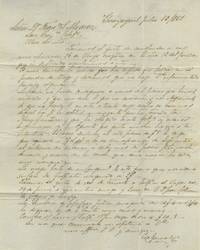
1851réf. BK0071Guayaquil Ecuador 1851. Folded manuscript letter in Spanish with an earlier communication dated June 13 copied and headed "Duplicado" followed by a second communication dated July 18 on the same folded sheet. Integral address panel to "Sr. Dn. Fran.co S. Alvarez / San Francisco / Alta California" with oval "FORWARDED BY / ZACHRISSON NELSON & CO. / PANAMA" handstamp and large "20" due marking. 2 pp. 8 ¼ x 10 ¼ inches. Old folds with several small losses and separations along folds and margins only minimally affecting the text. A detailed commercial letter from the Guayaquil mercantile house V. Gómez & Ca. to Francisco Salvador Ãlvarez Pérez the prominent Valparaíso merchant then engaged in business in San Francisco during the opening years of the California Gold Rush. Ãlvarez belonged to one of Valparaíso's established commercial families and maintained extensive Pacific trading interests. He would shortly afterward serve as Chilean consul in San Francisco. In the letters Gómez & Co. supply Ãlvarez with current market information from Ecuador. They also apparently executed purchases on behalf of his Valparaíso interests. The first communication dated June 13 and recopied here as a duplicate reports extensively on the Guayaquil commodity market. Gómez & Co. describe the year's cacao crop as exceptionally poor discuss newly arrived cacao from Machala and the prices being asked for it and report purchases and quantities associated with Ãlvarez's business. They also give information on barley Jipijapa Panama hats exchange rates and other current prices. The July 18 continuation connects those commodity markets directly to the political crisis then unfolding between Ecuador and New Granada. Explaining why barley cannot be purchased below a previously quoted price Gómez & Ca. cite the fact that threats from New Granada had compelled the Ecuadorian government to form an army thereby taking many workers away from industry "la actitud amenazante que ha tomado la Nueva Granada y que ha obligado a este Gobierno a ordenar la formación de un Ejército que quite muchos brazos a la industria". The letter is dated July 18 1851 amid the military and political crisis of that summer and just one day after the Guayaquil garrison proclaimed José María Urbina Supreme Chief. The integral address leaf preserves the letter's route northward through Panama in the hands of Zachrisson Nelson & Co. one of the forwarding firms handling correspondence in the early California traffic. An interesting document of the commercial infrastructure connecting South America with California in 1851 with identifiable firms and recipients content regarding Gold Rush-era Pacific trade contemporary commentary on Ecuadorian mobilization and Panama forwarding marks. . unknown
1851réf. 53844London Harrison and Son 1851. Folio. In contemporary half cloth with the original blue printed front wrapper pasted on to front board. Wear to extremities and front hindge a bit weak. One small stamp to front board and two small paper labels pasted on to pasted down front end-paper. Internally very fine and clean. xxiii 1 886 pp. 1 folded map. The Rare British parliamentary papers and correspondence with local agents on the slave trade in Africa Austria Belgium Brazil France Persia Peru Portugal Spain Tripoli Turkey United States and Venezuela containing amongst several other issues a lengthy report from James Hudson Brazil to Palmerston on the bourgeoning sentiments in Brazil towards abandoning the slave trade. An act which Palmerston instructs James Hudson to fight against.Eusébio de Queiróz Act Law 581 of 4 September 1850 ended up criminalizing the maritime slave trade as piracy and imposed other criminal sanctions on the importation of slaves in Brazil. hardcover