5 770 résultats
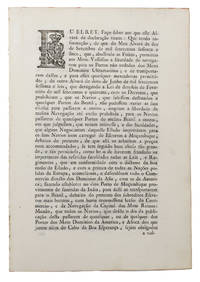
1772réf. ABC_48853Lisbon 1772. Folio ca. 29 x 20 cm. Na Regia Officina Typografica Disbound and subsequently mounted in a modern black stiff paper folder with a printed label mounted on the front wrapper. With a large decorated woodcut initial E incorporating the Portuguese royal coat of arms. 3 1 blank pp. Very rare first issue of two of a late 18th-century decree by the Portuguese King José I 1714-1777 dealing with difficulties in the transportation of enslaved people from Mozambique to Brazil. This text dated 12 December 1772 and signed Rey King at the end is also signed by the notorious Portuguese nobleman and diplomat Marquez de Pombal. Sebastião José de Carvalho e Melo 1st Marquis of Pombal 1699-1782 who was the Secretary of State of the Kingdom during the reign of Dom José I in the period of 1750-1777. It is concluded with a formal text dated 18 December 1772 and signed by João Baptista de Araújo a senior officer of the Secretariat of State.In 1761 Marquez de Pombal prohibited the importation of enslaved people in Portugal and Portuguese India not for humanitarian reasons but because they were needed for labour in Brazil. He stimulated the trade of mostly African enslaved people for that colony and with his support two companies for slave trade were founded the Companhia Geral de Comércio do Grão-Pará e Maranhão and the Companhia Geral de Comércio de Pernambuco e Paraíba. Both companies were privileged and had a monopolistic character. Their lists of shareholders included many Portuguese noblemen and clergy. Between 1757 and 1777 more than 25000 enslaved people were imported to Pará and Maranhão from West African ports.The two issues can be identified by their catchwords on p. 1: issue one shows the catchword as a vol- that catchword was changed in the second issue to a.The inner margin shows some signs of the previous binding. Otherwise in very good condition.l Gauz Portuguese and Brazilian books in the JCB 772/1; WorldCat 1045359449 3 copies; cf. Porbase 2301650 and no copies. AFRICA AMERICAS EUROPE HISTORY Brazil Broadsides Ephemera & Pamphlets East Africa Portugal Slavery South America Southern Africa unknown
réf. 78996New York NY National Blank Books 1911. 8vo 23.5 x 14.8 cm.liv 192 pp.; numerous full-colour illustrations. Publisher's full cloth. Spine with gilt title; front board with gilt and black printed panel gilt armorial company's devise and gilt number 22; rear board with gilt armorial company's device. Printed endpaper; book block with rounded corners and marbled edges. = A rare excellently preserved catalogue containing endless variety in pass books memorandum books buyers books manuscript books miniature blanks open end memorandum books scrap books counter order books invoice books printed cash books letter copying books trial balance books etc. as well as luxurious half bound and full bound blank books all manufactured by a company in the town of Holyoke Massachusetts known for its paper mills and a sales office in Duane Street Lower Manhattan. "The National Blank Book Company originally began as a small New York City outfit in 1843 known as the J.G Shaw Company named for its founder. The company manufactured quality blank book products on a small scale. As a consequence of the 1873 Wall Street panic Shaw became indebted to Massachusetts papermakers William Whiting of Holyoke and Levi L. Brown of Adams. In 1875 Shaws company reorganized in New York with Whiting and Brown as partners. Shaw withdrew from the firm by 1877 but remained a part of the industry for many years. In 1880 Whiting and Brown officially changed the companys name to National Blank Book. A year later the factory moved to Cabot Street in Holyoke MA. It was not until 1892 that the main offices also moved to Holyoke." Holyoke Library online. 1967 National Blank Book merged with Dennison a similar company to become Dennison-National. In turn in 1990 Dennison-National merged with Avery. Today Avery Dennison is a global materials science and digital identification solutions company. Catalogue unmarked clean the binding excellent with after 115 years just a few very minor signs of handling. hardcover
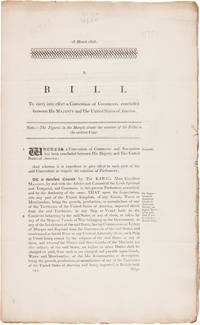
1816réf. 39129London: Ordered by the House of Commons to be Printed March 18 1816. Trade Restored After the War of 1812 Official Parliamentary draft printing of a commercial agreement between the United Kingdom and the United States passed just over a year after the signing of the Treaty of Ghent. The convention of commerce establishes that the same import and export duties be applied to goods carried by American and British ships in direct British-American commerce. Duties on and bounties for prize ships and goods are also put on the same terms. This version of the bill would have been printed while the question was being considered by Parliament. Not in Kress or TPL and not listed on OCLC. 2pp. plus docket title printed on verso of second leaf. Folio. Early horizontal folds. Near fine. Untrimmed. unknown
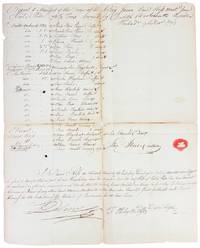
1792réf. 31794Philadelphia: s.i. 1792. Very Good. Philadelphia: 1792-93. Single folded sheet 41.5 x 33.5cm; report in manuscript verso filled nearly to completion recto a quarter filled. Signed by Captain David Ross and two other parties; docket dated 1793 signed by Inspector Jeremiah Simmons. Stock exceedingly brittle with shallow chipping long closed tears along folds with old archival mending age-toning and light soiling as well as contemporary wax seal remnants. Overall a Very Good and legible survival. Cargo report executed in manuscript and dated November 9th 1792 listing materials shipped from Port-de-Paix Saint-Domingue modern day Haiti to Philadelphia for the firm Dutilh & Wachsmuth. The date places this report in the early days of the Haitian Revolution following the August 1791 enslaved peoples' revolt. The island was a vital source of commercial interests to Philadelphia and the burgeoning revolution was at the forefront of everyone's mind making this voyage and the survival of associated documents all the more significant. Dun cites one contemporary account "'No business is going on here' one letter told 'as every one is taken up with meetings committees and arming themselves.'" Dun p. 484. Goods delivered include wine sugar and coffee and were delivered to Dutilh and a handful of others including Captain Ross himself who received a hogshead of molasses. Ross eventually rose to the rank of Continental Navy Lieutenant during the Quasi-War with France and is remembered for commanding the privateer Belvedere guiding her back to Dover after an engagement with a French brig "leaving Belvedere with 50 round shot in her hull and her sails and rigging further shredded." References: James Alexander Dun "What Avenues of Commerce Will You Americans Not Explore! Commercial Philadelphia's Vantage onto the Early Haitian Revolution." The William and Mary Quarterly July 2005 Third Series Vol. 62 No. 3 pp. 473-504 See also the Destroyer History Foundation website. [s.i.] unknown
1850réf. 61392Philadelphia PA: The company 1850. Engraved broadside 14 x 12 inches text executed in several sizes and styles of lettering. Krider was a long-time Philadelphia sporting goods dealer and sportsman and the author of Krider's Sporting Anecdotes 1853. Henderson p. 158 dating the broadside "ca. 1850". Augustus Kollner has been identified as the engraver. OCLC locates four copies Clements American Antiquarian Society Hagley Museum Library of Congress. Margins a little browned several short tears into margins but a very good example of a handsome sporting exhibition broadside. #8465. The company unknown
1880réf. 237851880. Ceylon colonial photo archive depicting tea cultivation estate labor transportation and urban life circa 1880s to 1910s documenting the plantation economy that made the island one of Britain's principal sources of tea as British merchants shifted the enormous domestic tea market away from China and toward production within the Empire. Coffee leaf rust appeared in Ceylon in 1869 and spread rapidly through the island's coffee districts precipitating the collapse of the crop that had dominated the colonial export economy and accelerating planters' conversion of the central highlands to tea. James Taylor had established commercial tea cultivation at Loolecondera Estate near Kandy in 1867 and the new industry expanded rapidly as coffee failed; by 1900 some 380000 acres in Ceylon were planted in tea. By 1879 the results showed that in more than 70 percent of tea sold in London still came from China while by 1900 China supplied only about 10 percent and black teas from British controlled India and Ceylon constituted the bulk of the market. Photo archive of albumen and silver gelatin photographs and photographic postcards ranging from approximately 3½ x 5 to 4 x 6 inches Ceylon circa 1880s to 1910s. Tea production forms the strongest body of imagery. Women and men stand among densely planted tea bushes or work through rows of plants with women carrying the large woven baskets used to collect leaves; individual and group views are captioned "Tea plucker" "Tea picking Ceylon" "Pruning tea Kandy" and in French "Cueillette du thé à Ceylan." One Skeen & Co. Colombo card numbered 84 and captioned "Tea plucker" isolates a woman at work with a large basket strapped behind her while another shows a large group of workers seated with baskets and gathered tea in a plantation clearing. A card captioned "Estate coolies Ceylon" depicts an estate employee in European dress standing with women and a child outside a thatched dwelling preserving in its printed terminology the racial and labor classifications through which plantation workers were presented to contemporary consumers of colonial imagery. Other photographs move from plantation production into the roads vehicles and cities of colonial Ceylon: rickshaw pullers pose with European passengers and beside their vehicles; a street scene records "Native town Kandy Ceylon"; Colombo appears in views of the "Colpetty Road near Galle Face Colombo" a crowded procession captioned in French "Colombo départ des troupes Anglaises" and a civic monument among palms. Another postcard depicts "Royal visitors leaving Ceylon" while a country road scene shows pedestrians carts and roadside activity. Skeen & Co. one of the principal commercial photographic firms operating from Colombo in the late nineteenth and early twentieth centuries is identified on several cards but no single photographer can be assigned to the archive as a whole. The tea scenes record the labor at the center of one of the fastest agricultural conversions in the nineteenth century British Empire. Coffee rust Hemileia vastatrix was first observed in Ceylon in 1869 and within little more than a decade had destroyed the commercial basis of the coffee plantation system; tea already demonstrated commercially by Taylor replaced it across much of the highlands. Ceylon tea exports to Britain rose from only 282 pounds in 1875 to more than 4.3 million pounds in 1885 while the plantation landscape expanded until almost all former coffee districts had been replanted with tea during the 1890s. That expansion depended on a large year round plantation workforce much of it composed of Tamil laborers brought from southern India and on the colonial infrastructure that connected the highlands with Colombo and overseas markets. Roads and the railway between Kandy and Colombo had initially served the coffee economy and could be redirected toward tea after the blight while Colombo developed as the commercial and shipping center through which the crop entered imperial markets. The archive therefore records several stages and social spaces of the same colonial economy from plucking and pruning in the highlands to estate communities road transport Kandy and the metropolitan port city of Colombo while the postcards themselves show how plantation labor and colonial development were converted into commercial images for circulation beyond the island. Light to moderate surface wear toning occasional fading and creasing with some photographs showing age related discoloration and edge wear. Overall in good condition. A visual record of the plantation labor and colonial infrastructure behind Ceylon's transformation from a failed coffee economy into a major tea producer that helped Britain replace Chinese tea with supplies produced under imperial control. unknown
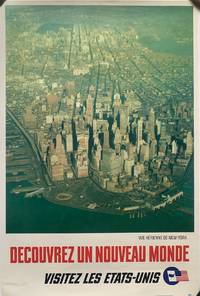
réf. 339716Print. Color offset lithograph. Sheet measures 30" x 20". The "Decouvrez un Nouveau Monde - Visitez les Etats-Unis" poster series was produced from 1960-1963 by the United States Department of Commerce to promote American culture and travel to French-speaking audiences. This poster features an aerial view of lower Manhattan showing the Battery and many docks and piers. unknown
réf. 45579D. Mason & Sons. Ltd. Birmingham. N.d. c.1900. Large 4to. 135 very attractive plates mainly coloured of examples of products including harnesses for carriage horses stable and carriage lanterns saddles leather dressings portmanteaus bits riding habits rosettes and everything that could possibly be needed in relationship to a horse. Text includes index and price lists. Original green cloth printed in black. Apart from light stain to bottom corner of outer edge of pages a small patch of fading to rear board near head of spine tiny mark to spine and some slight wear to head and tail and lower joint of spine an almost immaculate copy of a very scarce and desirable item. Fine. hardcover
2003réf. CBS-9780521788915Cambridge University Press 2003. New. Cambridge University Press unknown
2003réf. CBS-9780521788908Cambridge University Press 2003. New. Cambridge University Press unknown
2003réf. CBS-9780521788915Cambridge University Press 2003. New. Cambridge University Press unknown
2003réf. CBS-9780521788908Cambridge University Press 2003. New. Cambridge University Press unknown
1901réf. 106049Ludwigshafen am Rhein: Badische Anilin- & Soda-Fabrik 1901. First Edition. Hardcover. Very Good. Ludwigshafen am Rhein Badische Anilin- & Soda-Fabrik 1901. Quarto x last blank 534 xi index pages plus 2 plates showing the company's German French and Russian factories and 20 'Pattern Sheets' with over 620 captioned mounted samples of dyed fabrics and threads. Original half morocco-grain cloth with green cloth sides embossed with a crocodile-skin pattern; spine lettered and decorated in gilt; joints cracked but sound; covers slightly marked with light wear to the corners and minor loss to the head and foot of the spine; paper lightly toned with occasional light foxing; a few trifling signs of use; overall a very good copy with the wonderful fabric samples uniformly bright and in fine condition. A comprehensive manual to the aniline dyes produced by the Badische Anilin- & Soda-Fabrik including detailed instructions for dying yarns and printing fabrics. The mounted samples comprise wool 135 fabric swatches; cotton 180 swatches and tassels of thread; silk 138 tassels; blended fabrics 96 swatches; and printed fabrics 72 swatches and tassels. The verso of the front flyleaf contains a printed generic 'with compliments' message ending with 'For Own Use Only'; this copy was presented to the John Young & Company cotton mill in Radcliffe Manchester in January 1907. Founded in 1865 the Badische Anilin- & Soda-Fabrik was a pioneer manufacturer of synthetic dyes. Still based in Ludwigshafen and now trading as BASF it is currently the largest chemical producer in the world. Badische Anilin- & Soda-Fabrik] hardcover
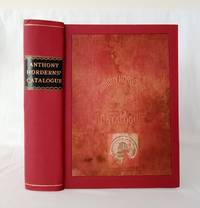
1914réf. B6358Sydney: Anthony Hordern and Sons. 1914. Hardcover. Very Good. Some light water marks confined to prelims. Some corners lightly worn.; Rebound in burgundy buckram title label in gilt. Original cloth cover laid down.; Small 4to 9" - 11" tall; 1530 pages; Overall an excellent specimen of a rare WW1 issue . Anthony Hordern and Sons hardcover
1870réf. 315110New York: George Blackie & Co 1870. Woodcut illustrations throughout. 12mo. Publishers pink pictorial wrappers. Woodcut illustrations throughout. 12mo. Includes marked playing cards gambling and magic books magic tricks novelties and all sorts of curiosities and miscellany such as "False Moustaches that cannot be detected when worn" offered by New York wholesale agents George Blackie & Co. George Blackie & Co unknown
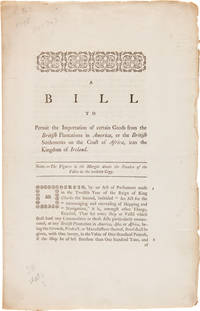
1778réf. 39128London. 1778. The rare Parliamentary printing of a bill relating to American trade under consideration by the House of Commons. In 1660 during the reign of Charles II Parliament passed a bill "for the encouraging and encreasing of Shipping and Navigation" which granted bonding for ships and vessels transporting goods from British plantations in Africa Asia and America directly to another British plantation or to a port in England Ireland or Wales. Three years later Ireland was struck from the list. The present law passed during the American Revolution restores Ireland's bonds privileges allowing her ports to accept goods directly from the colonies in the Americas now mostly limited to Canada and the West Indies Asia and Africa. Not in Kress Goldsmiths' or TPL. OCLC locates three copies at the University of Arizona the University of Texas at Dallas and the University of Regina Saskatchewan. A rare example of a law reflecting the changes of British mercantilism at the close of the First Empire. 3pp. plus printed docket title on verso of second leaf. Bifolium. Three early horizontal folds. Very minor foxing and soiling. Near fine untrimmed. unknown
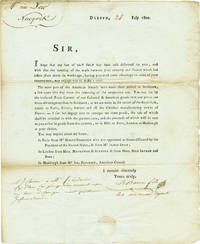
1801réf. 44263Dieppe France. July 1801. Rebuilding Trade After the Quasi War An interesting and rare artifact of the attempt to rebuild French-American trading relations in the wake of the so-called "Quasi-War" between the two nations. The Quasi-War was an undeclared conflict between the United States and France during John Adams' administration in the late 1790s manifested mostly in naval engagements between the two nations. The war wreaked havoc on American commerce with France which only began to be rebuilt with the Convention of 1800. The present printed circular was created by "Le Baron fils" the former American consular agent in Dieppe and was apparently sent to a variety of American merchants encouraging them to once again send shipments of American goods to that French port. Not much is known of Le Baron fils though he did correspond with Benjamin Franklin and he served as the American consular agent at Dieppe for several years. This copy of Le Baron fils' circular was sent to prominent New York merchant and politician Nicholas Low and is dated in manuscript July "24." It is addressed to Low in manuscript on the fourth page and his name is also written in the upper left corner of the circular. In the printed text Le Baron fils states: "you may see by the inclosed Price Current of our Colonial & American goods not present here that our prices are more advantageous than in Bordeaux as we are more in the center of the Republick nearer to Paris Rouen Amiens and all the Chiefest manufacturing towns of France." Low is encouraged to "consign me some goods the sale of which shall be attended to with the greatest care and the proceeds of which will be sent to you either in goods from this country or in Bills on Paris London or Hamburgh at your choice." The printed text concludes by giving the names of the American consuls at Paris and Hamburg as well as two English trading houses as references to Le Baron fils' character. Le Baron fils adds in manuscript: "Mr. J. Clason & Mr. C. Codwise of yr place can give you an account upon my house in case you want quick information." Old folds some edge wear small tears at edges of fold fourth page torn from wax seal. Very good overall. unknown
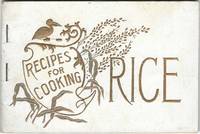
1910réf. 6626New Orleans; New York: The Board of Trade; Printed by H. R. Elliot & Co. Printers and Embossers 1910. Stapled booklet 10.25 x 15.25 cm. 14 unnumbered leaves; printed text decorated with red borders on rectos only. Cover title: Recipes for Cooking Rice. Author information inferred from external evidence. Printer from rear panel of wrappers. ~ Evident FIRST EDITION. A promotional publication designed “to create a greater interest” in a foodstuff that had yet to become a staple in many parts of the United States. With a dozen recipes including Gumbo Soup Jambalaya Belle Calas fritters Rice Pudding Riz au Lait. ~ The phrase “Louisiana Rice Exhibit” can be found in reference to displays in the agricultural halls of world’s fairs – the World’s Columbian Exposition Chicago 1893 for instance as well as the Louisiana Purchase Exposition St. Louis 1904 – but in the event the phrase is better understood not as an installation but as a program. The New Orleans Board of Trade had indeed exploited opportunities to educate the public by such means cf A. C. Cantley “Rice Display by Louisiana at World's Fair of 1904” The Planter and Sugar Manufacturer 32 no. 7 February 13 1904 page 121 but it would have been highly unlikely for booklets such as How to Cook Rice to have been produced specifically for them without bearing any mark of the association. Moreover Louisiana Rice Exhibits so-named were also staged at parish fairs livestock shows even horse races. Their visual aspect was meant to entrance and amuse. “The New Orleans Board of Trade made a very splendid exhibit” a trade paper reported “at the National Farm and Livestock Show with a display of all the products it handles with the centerpiece a working model of a rice mill” “Current Rice News Notes” The Rice Journal and Southern Farmer 19 no. 12 December 1916 page 33. ~ Founded in 1880 the Board itself coordinated among many other activities rice shipments from mills in Louisiana and to a smaller extent from eastern Texas and Arkansas too. In this case their printing contract with H. R. Elliot & Co. places the publication later than the Chicago Exposition as this form of name was not in use until after 1900 “The Manufacturing Stationer” Walden’s Stationer and Printer 31 Spring 1909 page 16. The date of issue proposed here rests on reports that the Board of Trade distributed booklets in or perhaps slightly before 1910 a note for example from the American Poultry World recorded that recipes from the Louisiana Rice Exhibit of New Orleans had been received 1 no. 5 March 1910 pages 354-355. ~ Interior clean and bright. Stapled in ivory wrappers with gilt illustration of rice plants overseen by a pelican in honor of the Pelican State. Near fine. OCLC locates four copies; Uhler 252; New Orleans Culinary History Group page 152; not in Bitting Brown or Cagle. [The Board of Trade; Printed by] H. R. Elliot & Co., Printers and Embossers paperback
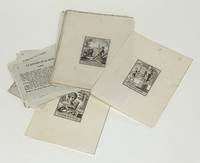
1825réf. 6446A Paris: chez E. Jourdan quai des Augustins n. 17 1825. Sixteen numbered poems printed on trimmed laid paper the largest measuring 8 x 8.5 cm. accompanied by sixteen corresponding engraved plates sheet sizes circa 12.75 x 9.75 cm. and images 5 x 3.75 cm. The imprint is provided at the bottom edge of plates no. 6 and 14. Bonbon box trade cards to be collected by children the texts including fables and poems four apiece by La Fontaine Abbé Aubert Pierre- Louis Ginguené and Antoine Le Bailly. Near fine. Bibliographie de la France 1825 no. 825 records the following publication page 871: Dont la publication et la vente sont autorisées conformément à la loi du 25 mars 1822 art. XII et à l’ordonnance du roi du 1o mai 1822. 865. Douze Planches divers petits sujets pour bonbons. A Paris chez Jourdan quai des Augustins n. 17. chez E. Jourdan, quai des Augustins, n. 17 unknown
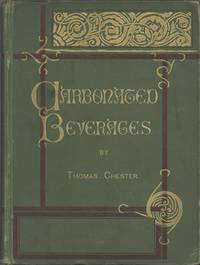
1882réf. 6662New York: P.H. Reilly Wood-Cut and Color Printer 25 Rose Street 1882. Quarto 27 x 20.5 cm. 108 4 166 2 pages. Profusely illustrated. Text in two columns. Table of contents at rear. FIRST EDITION. An early – perhaps the first – history of carbonated beverages. Issued together with a trade catalogue for the soda water supply firm of John Matthews of New York an important manufacturer of bottling equipment soda fountains and carbonation apparatus. The fountains get progressively larger and more elaborate and with wonderful names: “The Citadel” “The Horicon” “The Adriatic” “The Fire-Eater” “The Nepenthe” and “The Snow Queen”. There I also an outdoor soda fountain “The Street Spa”. Also included are the auxiliary equipment of the carbonated water industry like siphon boxes for home delivery of soda water. The historical work and the trade catalogue were issued in celebration of the firm’s 50th Anniversary. Some pencil scribbles to a few pages. Text block shaken; free front endpaper lacking. In publisher’s brown and gilt-decorated green cloth corners rubbed and extremities a bit worn. Better than good. With the ownership signature of “Leopold F. Schmidt Deer Lodge Montana” and a more recent “Olympia Brewing Company”. Very scarce. OCLC records two copies with this pagination Loma Linda Univ. & Hagley Museum and four copies with just 108 pages presumably just the history; Noling Beverage Literature page 104 for the 108 page version. P.H. Reilly, Wood-Cut and Color Printer, 25 Rose Street hardcover
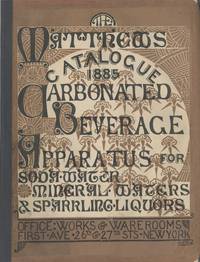
1885réf. 4833New York: John Matthews Apparatus Co 1885. Quarto 104 pages. Fully illustrated. FIRST EDITION. A lovely trade catalogue for this important manufacturer of bottling equipment soda fountains and carbonation apparatus. The fountains get progressively larger and more elaborate. Also includes siphon boxes for home delivery of soda water. Edges of wrappers and one or two pages with repair corners bumped. Some soiling throughout. In elaborately decorated printed wrappers. Good. Rare. OCLC locates just one copy in this series; Noling page 283. John Matthews Apparatus Co unknown
1943réf. 2080502106912069Not Available 1943. Soft Cover. Fine. The book is in fine condition. Not Available paperback
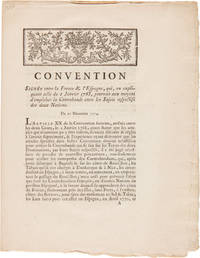
1775réf. 14145Versailles. 1775. Further Regulation of Colonial Trade An important treaty between France and Spain with significant ramifications for their colonial holdings in America. Herein Vergennes and the Conde d'Aranda further define commercial arrangements between the two countries in an attempt to control contraband. This had special impact for the Caribbean basin where the colonies of both powers were required to ship goods through European ports. Dissatisfaction over this prohibition was a key factor in the Louisiana Rebellion of 1768. This convention was agreed to at Versailles on Dec. 27 1774. Not in Wroth. 8pp. Quarto. Printed self-wrappers. Fine. DAVENPORT 155. unknown
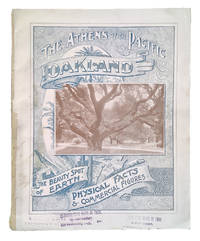
1896réf. 002571Oakland CA: Calderwood G. W. and Loofbourow G. T. 1897 Copyrighted 1896. First Edition. Very good. First edition; 11 3/4 x 9 1/4; pp. iii-v 3 9-99 1; pink wraps printed in blue with a sepia-tone photograph; illustrated with numerous maps and b & w photographs; two stamps of the Calfironia State Board of Trade to lower margin of front wrap; small antiques shop label to front wrap verso; a thin strip of clear tape to spine cover; a few spots to margins; overall bright and well-preserved; in about very good- condition. Intented to be "mailed free to prospective home seekers on application to Secretary of Merchants' Exchange or Board of Trade Oakland Cal." the book was pronounced by then former Mayor William R. Davis to be: ".the best and most accurate presentation of our resources and local attractive features and as an advertising medium yet published in the interest of Alameda County." It began with an aptly-titled chapter - "Deadly Parallel" - listing specific statistics and numbers from August 1896 of people dying of heat-stroke in cities around the country while in Oakland the temperature is balmy 65 degrees. It proceeds to describe Alameda County and the City of Oakland their climate resources modern ammenities notable businesses often with flowery and/or bombastic statements e.g. "One does not need to sniff the odor of the Chicago River or of its immense piggeries as a New Yorker contemptuously styled its huge pork-packing establishments to realize that he is in the Garden City." Several copies at institutions most e-publications; none other in the trade as of December 2019. Calderwood, G. W. and Loofbourow, G. T. paperback
réf. Z1-B-004-00689Springer. Used - Good. Ships from UK in 48 hours or less usually same day. Your purchase helps support Sri Lankan Children's Charity 'The Rainbow Centre'. Ex-library so some stamps and wear but in good overall condition. 100% money back guarantee. We are a world class secondhand bookstore based in Hertfordshire United Kingdom and specialize in high quality textbooks across an enormous variety of subjects. We aim to provide a vast range of textbooks rare and collectible books at a great price. Our donations to The Rainbow Centre have helped provide an education and a safe haven to hundreds of children who live in appalling conditions. We provide a 100% money back guarantee and are dedicated to providing our customers with the highest standards of service in the bookselling industry. Springer unknown