Clarkson (Thumas, M. A.).MareMagnum

1 889 résultats
1822Une brochure de format petit in 8° de 2 ff. (faux-titre et titre); IV pp. (préface de l'auteur); 56 pp.; 1 f. bl.. Un grand plan gravé représentant un navire en différentes coupes et précisant la manière de répartir les esclaves dans les différents ponts. Les deux premières et la dernière pages sont salies et nécessitent un lavage; l'intérieur est frais; le grand plan dépliant est en parfait état. Voir les photos
1888Paris au Siège de la Société 1888 et suivant, en un seul lot 23 numéros de ce bullein de toute rareté, du N° 1 du 25 octobre 1888 au N° 27 de juin 1893. Il manque les N° 5 - 14 - 16 et 19. Nous joignons les N° 1 - 2 - 3 et 4 de 1895, la revue devenue à cette date trimestrielle. Les couvertures de 4 numéros sont abimées dont une avec manque de papier. L'ensemble est en état très correct. Très rare.
1888réf. 156821Siège de la Société Paris au Siège de la Société 1888 et suivant, en un seul lot 23 numéros de ce bulletin de toute rareté, du N° 1 du 25 octobre 1888 au N° 27 de juin 1893. Il manque les N° 5 - 14 - 16 et 19. Nous joignons les N° 1 - 2 - 3 et 4 de 1895, la revue devenue à cette date trimestrielle. Les couvertures de 4 numéros sont abimées dont une avec manque de papier. L'ensemble est en état très correct. Très rare.
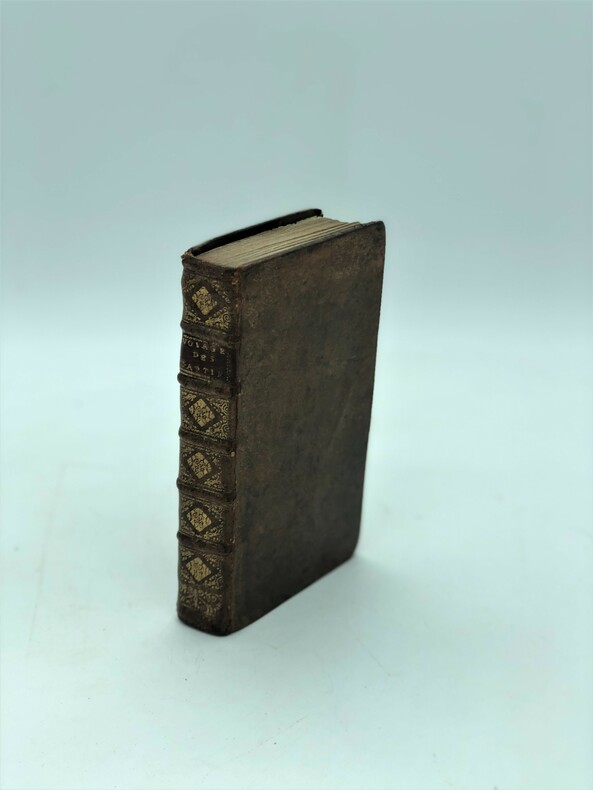
1726réf. PHO-646Paris, Louis Sevestre, Pierre-François Giffart. 1726. In-12, X-364pp-XII pp(liste des esclaves)- 2ffnch , relié plein veau brun, dos orné, pièce de titre (Reliure de l'époque), défaut d’usage , travail de vers en début d’ouvrage . Chadenat, n°680. - Gay, n°465.
réf. 13946Londres J. Marshall s.d. [Prem. partie du XIXe s.] in-12 étroit broché, couv. papier vergé crème muette, moderne, 2 ff. plus courts
réf. 7147Paris, Demonville, 1791. In 8, [217 x 140 mm] de (2)-48-(2) pp. broché, en feuilles, tel que paru.
1703réf. 147A ROUEN. CHEZ GUILLAUME BEHOURT. 1703. IN-12 (10 X 17 X 3,5 CENTIMETRES ENVIRON) DE (8) + 413 PAGES, RELIURE D'EPOQUE PLEIN VEAU, DOS A CINQ NERFS ORNE DE CAISSONS A FLEURONS DORES, TITRE DORE, TRANCHES MOUCHETEES ROUGES. ILLUSTRE D'UN FRONTISPICE ALLEGORIQUE ET D'UNE CURIEUSE PLANCHE HORS TEXTE DE BOTANIQUE : FLEUR DU PALMIER ET BAZILIC. EDITION ORIGINALE. (BARBIER.II. 297). DEFAUTS EXTERIEURS, DONT MANQUES DE CUIR, UN RESSAUT DE CAHIER, SINON BON ETAT INTERIEUR.
réf. 71481789. In 8, [211 x 136 mm] de 36 pp., 1 tableau dépliant hors-texte. broché, en feuilles, tel que paru.
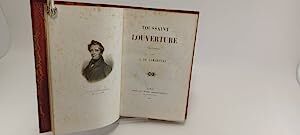
réf. 1449Editions Michel Lévy frères, 1850. Relié (16 x 23,5 cm) de XXIII-302 pages. Reliure demi-maroquin rouge à coins, dos à nerfs, titre et tête dorés. Couvertures conservées (Reliure de L. Claessens). Quelques rousseurs sinon bel exemplaire. Édition originale de la première oeuvre dramatique de Lamartine. On lit au verso du faux-titre: "Représenté pour la première fois à Paris sur le théâtre de la Porte-Saint-Martin, le 6 avril 1850. Les vers marqués d'un astérisque ont été supprimés à la représentation." A la suite de la pièce "De l'émancipation des esclaves, discours prononcés à diverses époques par M. A. de Lamartine" (23 avril 1835, 25 mai 1836, 10 février 1840 et 10 mars 1842). Au lendemain de la révolution de 1848 à laquelle il avait participé et qui scellait l'abolition définitive de l'esclavage, Lamartine, qui avait pleinement compris la force symbolique du personnage de Toussaint-Louverture, attendait beaucoup de cette pièce tout comme le Théâtre de la Porte Saint-Martin en perte de vitesse. Le rôle titre et la mise en scène avaient été confiés à Frédérick Lemaître (1800-1876), consacrant ainsi le retour sur le devant de la scène de l'acteur vedette du Boulevard du crime.Ex-lbris monogrammé non identifié portant la devise Labor omnia vincit improbus.
réf. 1449Editions Michel Lévy frères, 1850. Relié (16 x 23,5 cm) de XXIII-302 pages. Reliure demi-maroquin rouge à coins, dos à nerfs, titre et tête dorés. Couvertures conservées (Reliure de L. Claessens). Quelques rousseurs sinon bel exemplaire. Édition originale de la première oeuvre dramatique de Lamartine. On lit au verso du faux-titre: "Représenté pour la première fois à Paris sur le théâtre de la Porte-Saint-Martin, le 6 avril 1850. Les vers marqués d'un astérisque ont été supprimés à la représentation." A la suite de la pièce "De l'émancipation des esclaves, discours prononcés à diverses époques par M. A. de Lamartine" (23 avril 1835, 25 mai 1836, 10 février 1840 et 10 mars 1842). Au lendemain de la révolution de 1848 à laquelle il avait participé et qui scellait l'abolition définitive de l'esclavage, Lamartine, qui avait pleinement compris la force symbolique du personnage de Toussaint-Louverture, attendait beaucoup de cette pièce tout comme le Théâtre de la Porte Saint-Martin en perte de vitesse. Le rôle titre et la mise en scène avaient été confiés à Frédérick Lemaître (1800-1876), consacrant ainsi le retour sur le devant de la scène de l'acteur vedette du Boulevard du crime.Ex-lbris monogrammé non identifié portant la devise Labor omnia vincit improbus.
1758réf. PHO-1151Paris, Tilliard, 1758. 2 tomes in-12 ; plein veau raciné , dos lisse orné avec pièce de titre et tomaison ,tranches mouchetées . Illustré de 3 plans dépliants, souvent manquants. Cette histoire est précédée d'une introduction sur le commencement, les progrès et les divisions des Mahométans, et sur les croisades qui ont été faites avant Saladin.
1803réf. 20501Nantes Paris Malassis,Onfroy, Bossange, Masson et Besson 1803 -in-4 plein-veau un volume, reliure de l'époque plein veau brun raciné (binding full calfskin) in-quarto (27,5 x 21,3 cm), reliure d'époque, dos long (spine without raised bands) décoré or (gilt decoration) filets et roulette grecque or, titre frappé or (gilt title), pièce de titre sur fond rouge avec roulette or (pièce de titre en trés grande partie manquante), roulette grecque or en place des nerfs et en tête et en pied, coiffes manquantes et dos épidermé, plats trés légèrement frottés (cover lightly rubbed ), coins écornés, toutes trancheslisses, texte + Calendrier d'Observations Météorologiques mois par mois (12 pages) + 69 tables statistiques in-fine, (XVI + 511 + (1) page + 1 grand tableau dépliant + (12) pages de calendrier + 69 tableaux en 88 pages) Pages, [le grand tableau dépliant : "Tableau Analytique des prairies du département" Manque), AN XI (1803) Nantes : M. Malassis, Paris : Onfroy, Bossange, Masson et Besson Editeurs,
réf. 23092Without date or place. 3pp. 12mo. Bifolium on ruled laid paper. Fair: aged with a 12.5 x 5 cm section cut away from the top of the first leaf before the writing out of the poem. 63 lines divided into six nine-line stanzas. The stanzas are numbered and the poem is complete. The stanzas are numbered and the poem is complete. Written from the slave's point of view with the first stanza reading: 'I'm weary yet I cannot sleep Dark thoughts of morning make me weep For at the rising Sun I'm told I'll be converted into gold There's no escape I must be sold Because my master wants the gold And I'm his Slave yes I'm his Slave Because my master wants the gold And I'm his slave'. Last stanza describing the slave's flight to Canada: 'At last my dreadful journeys o'er I'm safe upon the farther shore St Georges cross floats over me I've found the land of Liberty. My youths renewed no more I'm old That fear is gone of being sold For now I'm Free Yes now I'm Free The fear is gone of being sold For now I'm Free.' No indication has been found that the poem was ever published. Without date or place. unknown
réf. SONG052184066XUsed: Good unknown
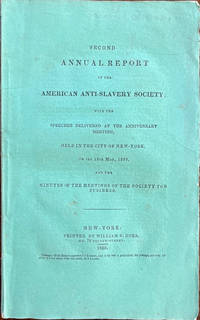
1835réf. 60564New York: Printed by William S. Dorr No. 70 Fulton Street 1835. 8vo. 87 1 pp. Printed blue-green publisher’s softcovers contents on back cover punch-sewn at gutter margin as issued minor edgewear slight chipping to spine 1 closed tear w/ minor archival repair on inner back cover still VG- copy. First edition of this surprisingly uncommon report of the second meeting of this pioneering American abolitionist society founded by William Lloyd Garrison editor of The Liberator magazine and Arthur Tappan while also featuring contributions by Frederick Douglass and William Wells Brown an African-American freedman. The society was very controversial as by the mid-1830’s slavery was ensconced into the American economy feeding wealth not only to Southern planters but also Northern merchants textile factory owners and shipowners. The first meeting and later misrepresentation had set off violent the violent Farren riots in New York where abolitionists homes and properties were attacked. The 1835 meeting not only agreed on the Society Constitution but also used fundraising to sponsor a great postal campaign to flood the South with Abolitionist literature. White supremacists responded by seizing and destroying the mail and on July 29 1835 3000 people gathered to burn Abolitionist writings and burn three in effigy. The speeches detail the progress of the result of Great Britain freeing 800000 slaves encouraging continued efforts to enroll African-American children and freed slaves into schools and declared that “prejudice which excludes our colored brethren from the rights and privileges of Men the Society lays the axe at the root of slavery. It removes the final bugbear that ‘the Slaves will be worse off when emancipated.’” This also features the extended interview and discussion with Abolitionist former slaveholder James Gillespie Briney 1792-1857 who freed his slaves joined the American Anti-Slavery Society and founded The Philanthropist in Cincinnati OH in 1835 after selling his plantation. Worldcat locates 5 physical copies Cornell DLC NYPL Howard AAS Lib. Printed by William S. Dorr, No. 70 Fulton Street, paperback
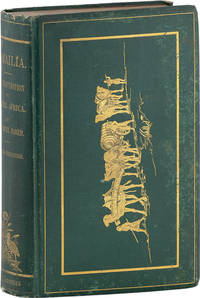
1875réf. 61084New York: Harper and Brothers 1875. First American Edition. Octavo 24cm. Green cloth stamped in gilt; brown coated endpapers; 542pp; steel-engraved frontispiece 2 wood-enraved frontispieces 2 color maps 1 folding and 48 wood-engraved plates all with tissue guards. Inscribed "Charles V. Payne from his friend M. R. E. Christmas 1874" on front free endpaper; the same inscription is repeated with the date 1875 on a front flyleaf. A sound copy externally rubbed with superficial silverfishing to both boards internally clean with two central gatherings pulled but not fully detached short tear to folding map at gutter: just Very Good. Samuel Baker 1821-1893 was a noted British explorer of Africa. In 1860 he was appointed "governor-general of the equatorial Nile basin" by the Khedive Ismail of Egypt with duties including "annexing the equatorial Nile basin establishing Egyptian authority over the region south of Gondokoro suppressing the slave trade" and more ODNB. His success was mixed: he successfully annexed Gondokoro and did suppress the slave trade but failed to establish secure control of the region ODNB. This account published after his return to England details how he "raised and trained a fighting force.to crush" the slave trade Czech. CZECH p.11. Harper and Brothers unknown
1875réf. 61084New York: Harper and Brothers 1875. First American Edition. Octavo 24cm. Green cloth stamped in gilt; brown coated endpapers; 542pp; steel-engraved frontispiece 2 wood-enraved frontispieces 2 color maps 1 folding and 48 wood-engraved plates all with tissue guards. Inscribed "Charles V. Payne from his friend M. R. E. Christmas 1874" on front free endpaper; the same inscription is repeated with the date 1875 on a front flyleaf. A sound copy externally rubbed with superficial silverfishing to both boards internally clean with two central gatherings pulled but not fully detached short tear to folding map at gutter: just Very Good. Samuel Baker 1821-1893 was a noted British explorer of Africa. In 1860 he was appointed "governor-general of the equatorial Nile basin" by the Khedive Ismail of Egypt with duties including "annexing the equatorial Nile basin establishing Egyptian authority over the region south of Gondokoro suppressing the slave trade" and more ODNB. His success was mixed: he successfully annexed Gondokoro and did suppress the slave trade but failed to establish secure control of the region ODNB. This account published after his return to England details how he "raised and trained a fighting force.to crush" the slave trade Czech. CZECH p.11. Harper and Brothers unknown books
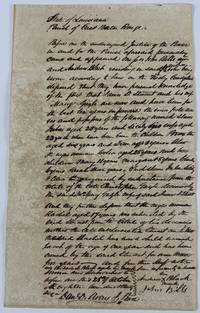
1836réf. 13107East Baton Rouge Parish LA: October 25 1836. 1p. on a single folded sheet integral blank docketed on verso. Old folds moderate toning and foxing short closed tear along one fold line a few small instances of ink burn. Overall good condition. An interesting document of legal testimony involving numerous named slaves in Louisiana in 1836 ranging in age from one year to almost thirty years of age and including seven children. According to the docketing the document is effectively a "Title to Slaves." The deponents were two local citizens John Bills and Andrew Black who had "personal knowledge of the fact that James D. Stuart and his wife Mary Gayle are now and have been for the last ten years & upwards the bona fide owners and possessors of the following named slaves: Juba Aged 25 and Sicily his wife aged 22 to whom have been born the children Braxton aged six years and Dan aged 3 years. Also the negro woman Celia aged 28 years and her children Mary 11 years Margaret 8 years Charley 6 years Sarah three years which slaves Juba Sicily & Celia were acquired by inheritance from the estate of Christopher Gayle. And they further depose that the negro woman Rachel aged 17 years was inherited by the said Stuart from the estate of his deceased mother.and that the said Rachel has now a child named Jacob of the age of one year." The document is signed by Black Bills and the Justice of the Peace Daniel D. Avery. Documents involving slave inheritance of and subsequent ownership by not one but both members of a marriage are exceedingly rare. October 25 unknown
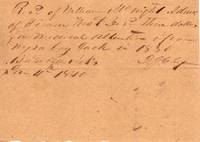
1840réf. 12966Batesville AR: January 11 1840. 1p. 4 x 5.5 inches docketed on verso. Old horizontal fold toning. Very good. An interesting manuscript record of slave care in Arkansas in the 1830s. The short but impactful document reads in full: "Recd of William McNight Admin. Of Hiram West Decd three dollars for medical attention upon negro boy Jack in 1836. Batesville Ark. Jan 11 1840 DJ Chipman." Such documents are increasingly rare in the market and more uncommon than slave sale documents from the same period. Arkansas has just achieved statehood four years before the presetn document was written. January 11 unknown
1840réf. 12966Batesville AR: January 11 1840. 1p. 4 x 5.5 inches docketed on verso. Old horizontal fold toning. Very good. An interesting manuscript record of slave care in Arkansas in the 1830s. The short but impactful document reads in full: "Recd of William McNight Admin. Of Hiram West Decd three dollars for medical attention upon negro boy Jack in 1836. Batesville Ark. Jan 11 1840 DJ Chipman." Such documents are increasingly rare in the market and more uncommon than slave sale documents from the same period. Arkansas has just achieved statehood four years before the presetn document was written. January 11 unknown books
1836réf. 13107East Baton Rouge Parish LA: October 25 1836. 1p. on a single folded sheet integral blank docketed on verso. Old folds moderate toning and foxing short closed tear along one fold line a few small instances of ink burn. Overall good condition. An interesting document of legal testimony involving numerous named slaves in Louisiana in 1836 ranging in age from one year to almost thirty years of age and including seven children. According to the docketing the document is effectively a "Title to Slaves." The deponents were two local citizens John Bills and Andrew Black who had "personal knowledge of the fact that James D. Stuart and his wife Mary Gayle are now and have been for the last ten years & upwards the bona fide owners and possessors of the following named slaves: Juba Aged 25 and Sicily his wife aged 22 to whom have been born the children Braxton aged six years and Dan aged 3 years. Also the negro woman Celia aged 28 years and her children Mary 11 years Margaret 8 years Charley 6 years Sarah three years which slaves Juba Sicily & Celia were acquired by inheritance from the estate of Christopher Gayle. And they further depose that the negro woman Rachel aged 17 years was inherited by the said Stuart from the estate of his deceased mother.and that the said Rachel has now a child named Jacob of the age of one year." The document is signed by Black Bills and the Justice of the Peace Daniel D. Avery. Documents involving slave inheritance of and subsequent ownership by not one but both members of a marriage are exceedingly rare. October 25 unknown books
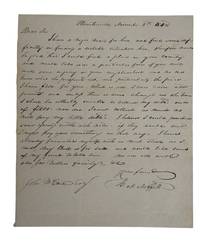
1842réf. 209651842. Slavery North Carolina Letter signed offering a "negro man" to settle debts. Letter signed by "H.M. Moffett" of Huntersville Virginia now West Virginia. Dated November 8th 1842. Measures 9.5" by 7.75". The letter reads in full: "Dear Sir I have a negro man for hire and find some difficulty in finding a suitable situation here therefore would be glad that I could find a place in your country and would take in as a particular favor if you will make some inquiring in your neighborhood and let me know what the prospects are and particularly the price- I have $200 for you which is all I can raise at present and unless their is some change in the times I shall be utterly unable to collect my debts of $1600 now due. I can't collect as much as will pay my little debts. I believe I could purchase some young cattle with notes if they would . I might pay you something in that negro sic. I have already furnished myself with as much stock as I need my Bull is for sale and would like some of my friends to take him. We are all well also Jan sic Millers family - . -- your friend H.M. Moffett." The letter was likely penned by Henry Hiller Moffett second Clerk of Pocahontas county Virginia present day West Virginia. Moffett is listed in the 1850 census with eight enslaved persons. Original folds some minor foxing. Overall very good condition. unknown
1842réf. 209651842. Slavery North Carolina Letter signed offering a "negro man" to settle debts. Letter signed by "H.M. Moffett" of Huntersville Virginia now West Virginia. Dated November 8th 1842. Measures 9.5" by 7.75". The letter reads in full: "Dear Sir I have a negro man for hire and find some difficulty in finding a suitable situation here therefore would be glad that I could find a place in your country and would take in as a particular favor if you will make some inquiring in your neighborhood and let me know what the prospects are and particularly the price- I have $200 for you which is all I can raise at present and unless their is some change in the times I shall be utterly unable to collect my debts of $1600 now due. I can't collect as much as will pay my little debts. I believe I could purchase some young cattle with notes if they would . I might pay you something in that negro sic. I have already furnished myself with as much stock as I need my Bull is for sale and would like some of my friends to take him. We are all well also Jan sic Millers family - . -- your friend H.M. Moffett." The letter was likely penned by Henry Hiller Moffett second Clerk of Pocahontas county Virginia present day West Virginia. Moffett is listed in the 1850 census with eight enslaved persons. Original folds some minor foxing. Overall very good condition. unknown books
réf. 238357Paris, J. G. Dentu, décembre 1819 in-8, [2] ff. n. ch., ij pp., 134 pp., un f. n. ch. (Article particulier, retiré du texte, à la fin de la page 107 [relatif à la traite]), dérelié.
1802réf. PHO-2583Paris, Zurich, Genève et s.l., chez Dufour, Mathiot, Orell & Fussli, s.e., 1802-1816, in-12 (17 x 10,5 cm), XII-209 pp., une carte dépliante, X-204 pp., avec portrait gravé de Fouché de Nantes, XL-359 pp., 83 pp. Petit frottement, dernière relation coupée court en marge.