1 955 résultats
1935réf. 25253Nantes aux Bureaux de la Société Archéologique de Nantes et de la Loire-Inférieure 1935-36 -in-8 demi-basane 2 années reliées en un volume, reliure demi-basane marron foncé in-octavo à coins (half binding sheepskin in-8 with corners) (24,2 x 16 cm), RELIURE D'ÉPOQUE, dos à 4 nerfs (spine with raised bands) décoré "or" et à froid (gilt and blind stamping decoration),Titre et Année frappées "or" (gilt title) avec un filet "or" de part et d'autre, double filets à froid de part et d'autre des nerfs et en tête et en pied, papier marbré violet et crème aux plats, toutes tranches lisses, couvertures marron Editeur imprimées en noir conservées, orné de 9 gravures hors-texte en noir (dont une carte double page) + 5 gravure in-texte en noir(pour l'année 1934) + 7 gravures hors-texte en noir + 12 gravure in-texte en noir (pour l'année 1935), (CV + 280) + ( XCII + 270) pages, 1935-36 Nantes aux Bureaux de la Société Archéologique et Historique de Nantes et de la Loire-Inférieure Editeur,
réf. 5806Londres. Catalogue de vente publique chez Sotheby's & Co. Février 1958. Grand in-8° broché. 55 pages. 141 numéros.
1950réf. LFA-126724525Une revue de 24 pages, format 150 x 230 mm, illustrée, brochée, publiée en 1950, bon état
1931réf. 742181931 Paris, Alcan, 1931, in 8° broché, 452 pages ; infime défaut au dos.
1830réf. List2931Mahébourg Mauritius 1830. Single unsigned fourteen-page letter measuring 8 x 12 ¾ inches. Folded with some stains and pencil marks. Overall near fine. In 1830 Mauritius was a British colony captured from the French in 1810 during the Napoleonic Wars. It was originally a Dutch colony and the Dutch had introduced enslaved labor to the islands. Enslaved people were imported from Madagascar India and Southeast Asia to harvest the valuable ebony trees and later to farm sugarcane. It became a French colony in 1715 and among other provisions the French government awarded upper-class colonists large land grants each with twenty enslaved people to work them. Slavery was abolished in 1835 under British rule after which the planters still farming sugarcane turned to indentured servant labor from India and China alongside illegal slavery.1 Offered here is a lengthy single letter written by an unknown author to an unknown recipient from Mahébourg in 1830 shortly before this radical change. The letter describes the lives and economic circumstances of the planters and merchants and of the non-white population particularly Malabar people and free and enslaved Black people. Noting that “every inch of ground that will produce sugar cane is planted with it” including “the former fine gardens to some of the Habitations” the author reports on the situation for sugar planters: “The price of sugar here is not more than 20/per Cwt. for the best quality which does not now remunerate the Planter as his expenses are becoming every day more heavy in consequence of their slaves diminishing . The want of Slaves induced many of the Planters to send for Chinese Labourers and several hundreds were imported at a great expense but unfortunately they did not answer and were obliged to be reshipped for their native Country again at the charge of those who sent for them.” The author later notes that “nearly everyone of the Planters have heavy mortgages on their Estates and are obliged to pay this immense Interest which keeps them poor and will I fear ultimately ruin them”. In fact the planters in British Mauritius had extra duties on their sugar exports compared with their Caribbean counterparts. The shopkeepers on the other hand “calculate on retiring with a fortune in five years– therefore you will fancy what must be their prices also their profits.” Though writing from Mahébourg the author describes the capital city of Port Louis at length especially its Malabar Indian and free Black residents—the lives of the latter particularly the free Black women seem especially grim. They write: “The Centre of Port Louis is inhabited by all the respectable people and many most excellent houses buildings– the Catholic Chapel the English Church amongst the number. The Suburbs to the West is the part occupied by about 3000 Malabars called ‘Malabar Town.’ – They are dressed mostly in white with Turbans ear rings c c and the females with ornaments in their noses and on their Toes as they generally go bare foot. – Once a year they have what is called a ‘Yamsee’ or a festival in honor of Mehomet which lasts for about a fortnight during which time they seem to get no sleep a continual beating of tom toms – jingling of bells – carrying pagodas which are made of various coloured paper and most richly ornamented followed by all the population of their Caste with their faces daubed with red white c and which has a most ludicrous appearance. The Suburbs to the South is called ‘black Camp’ – the Houses being very small and poor and inhabited by all the free blacks as well as many Mulattoes. – Also a certain class of females of the population of colour – who are visited immediately on the Arrival of a Ship the Crews soon enquiring the way to the ‘Camp.’” As regards relations between the races the author recounts an incident that followed the 1828 abolition of the color bar which would ostensibly give the free non-white population the same rights as the whites: “The Theatre is a very good one but has been closed for several months past the Actors Actresses gone to Bourbon in consequence of the promulgation of the act ‘causing all free people of the population of Colour’ to have the same laws – the same privileges as the Whites’ fearing they ought come to the Theatre which they had hitherto been forbidden thereby cause disturbances as the French Whites detest them wd. not sit in the same box it was considered best to shut the Theatre which is a great loss to the Place it being the chief public amusement and indeed the only one we have here.” Overall a detailed letter giving insight into life in a slave colony at a time when significant changes were on the horizon. Of interest to scholars of the colonial history of Mauritius and the second wave of British colonialism. 1 Truth and Justice Commission Report of the Truth and Justice Commission Vol. 1 Mauritius: Government Printing 2011. unknown
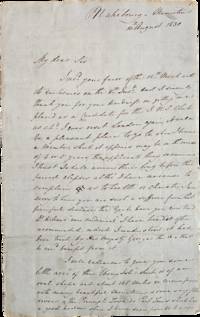
1830réf. List2931Mahébourg Mauritius 1830. Single unsigned fourteen-page letter measuring 8 x 12 ¾ inches. Folded with some stains and pencil marks. Overall near fine. In 1830 Mauritius was a British colony captured from the French in 1810 during the Napoleonic Wars. It was originally a Dutch colony and the Dutch had introduced enslaved labor to the islands. Enslaved people were imported from Madagascar India and Southeast Asia to harvest the valuable ebony trees and later to farm sugarcane. It became a French colony in 1715 and among other provisions the French government awarded upper-class colonists large land grants each with twenty enslaved people to work them. Slavery was abolished in 1835 under British rule after which the planters still farming sugarcane turned to indentured servant labor from India and China alongside illegal slavery.1 Offered here is a lengthy single letter written by an unknown author to an unknown recipient from Mahébourg in 1830 shortly before this radical change. The letter describes the lives and economic circumstances of the planters and merchants and of the non-white population particularly Malabar people and free and enslaved Black people. Noting that “every inch of ground that will produce sugar cane is planted with it” including “the former fine gardens to some of the Habitations” the author reports on the situation for sugar planters: “The price of sugar here is not more than 20/per Cwt. for the best quality which does not now remunerate the Planter as his expenses are becoming every day more heavy in consequence of their slaves diminishing . The want of Slaves induced many of the Planters to send for Chinese Labourers and several hundreds were imported at a great expense but unfortunately they did not answer and were obliged to be reshipped for their native Country again at the charge of those who sent for them.” The author later notes that “nearly everyone of the Planters have heavy mortgages on their Estates and are obliged to pay this immense Interest which keeps them poor and will I fear ultimately ruin them”. In fact the planters in British Mauritius had extra duties on their sugar exports compared with their Caribbean counterparts. The shopkeepers on the other hand “calculate on retiring with a fortune in five years– therefore you will fancy what must be their prices also their profits.” Though writing from Mahébourg the author describes the capital city of Port Louis at length especially its Malabar Indian and free Black residents—the lives of the latter particularly the free Black women seem especially grim. They write: “The Centre of Port Louis is inhabited by all the respectable people and many most excellent houses buildings– the Catholic Chapel the English Church amongst the number. The Suburbs to the West is the part occupied by about 3000 Malabars called ‘Malabar Town.’ – They are dressed mostly in white with Turbans ear rings c c and the females with ornaments in their noses and on their Toes as they generally go bare foot. – Once a year they have what is called a ‘Yamsee’ or a festival in honor of Mehomet which lasts for about a fortnight during which time they seem to get no sleep a continual beating of tom toms – jingling of bells – carrying pagodas which are made of various coloured paper and most richly ornamented followed by all the population of their Caste with their faces daubed with red white c and which has a most ludicrous appearance. The Suburbs to the South is called ‘black Camp’ – the Houses being very small and poor and inhabited by all the free blacks as well as many Mulattoes. – Also a certain class of females of the population of colour – who are visited immediately on the Arrival of a Ship the Crews soon enquiring the way to the ‘Camp.’” As regards relations between the races the author recounts an incident that followed the 1828 abolition of the color bar which would ostensibly give the free non-white population the same rights as the whites: “The Theatre is a very good one but has been closed for several months past the Actors Actresses gone to Bourbon in consequence of the promulgation of the act ‘causing all free people of the population of Colour’ to have the same laws – the same privileges as the Whites’ fearing they ought come to the Theatre which they had hitherto been forbidden thereby cause disturbances as the French Whites detest them wd. not sit in the same box it was considered best to shut the Theatre which is a great loss to the Place it being the chief public amusement and indeed the only one we have here.” Overall a detailed letter giving insight into life in a slave colony at a time when significant changes were on the horizon. Of interest to scholars of the colonial history of Mauritius and the second wave of British colonialism. 1 Truth and Justice Commission Report of the Truth and Justice Commission Vol. 1 Mauritius: Government Printing 2011. unknown books
réf. 244418Philadelphie, 1969 in-8, v pp., 83 pp., 238 numéros décrits, avec 12 planches hors texte, broché sous couverture illustrée.
réf. ORD-19740Cinquième publication. Suite des rapports recueillis par le Département de la Marine et des enquêtes du Parlement anglais. Paris. Imprimerie Royale. 1843. Tome V et dernier de cette publication. Fort in-8 (155 x 230mm) dos lisse veau brun, frises or, pièce de titre veau rouge, plats mouchetés (reliure de l'époque), 2ff., 576 pages. Coiffes grignotées, 1er plat presue complètement détaché, traces de mouillures essentiellement sur les tranches sinon bon exemplaire, sans rousseurs. Provient de la Bibliothèque de Saint-Pierre-et-Miquelon (cachet). Rare. Sabin 12222 pour les 2 premiers volumes.
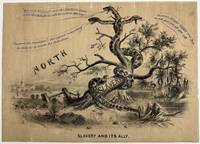
1864réf. 12816N.p. 1864. Lithograph 14.5 x 20.5 inches. Noticeable toning small areas of light discoloration along top margin short closed tear to left edge minor dust-soiling numerous creases and wrinkles. About very good. A dramatic political cartoon issued during the Civil War and satirizing the dangerous influence of those who argue a compromise on slavery or an easy solution to the war. The work was likely issued in the midst of the 1860 but more likely the 1864 presidential election campaign. The central image of the lithograph involves a three-headed snake -- labeled "The People's Party" and emerging from the American "South" personified by a moss-covered swamp -- which is wrapped around the length of a large tree labeled "Slavery." Each snake vocalizes a different misleading message about the issue of slavery and compromise seemingly aligned with political entities such as the Peace Party and the Copperheads. The messages from each snake head read respectively "Extend Slavery over the Northern States and the Rebellion will be over in 60 days;" "Persevere till after election and then we will give you all you ask;" and "'Support the President' - but oppose everything he may do to crush the Rebellion." This latter message indicates the author of the work supported President Lincoln. The North is personified in the background at left by a depiction of the U.S. Capitol Building. The central image of the lithograph carries echoes of the story of the Book of Genesis with the involvement of a deceptive serpent amid the tree of life. The lithograph is signed in the stone at bottom right reading simply "Brooks." Though the work came to us proposing the identify of the artist as Reuben Brooks 1794-1870 we were ultimately unable to confirm this authorship. The lack of an imprint in the lithograph also precludes easy research and identification. In fact the rarity of the lithograph makes it difficult to expound much more about it at all. OCLC reports just a single copy at the Peabody Essex Museum and it is not listed in Weitenkampf or Reilly. Given its rarity and content the present lithograph offers an outstanding opportunity for further research and contextualization. unknown
1864réf. 12816N.p. 1864. Lithograph 14.5 x 20.5 inches. Noticeable toning small areas of light discoloration along top margin short closed tear to left edge minor dust-soiling numerous creases and wrinkles. About very good. A dramatic political cartoon issued during the Civil War and satirizing the dangerous influence of those who argue a compromise on slavery or an easy solution to the war. The work was likely issued in the midst of the 1860 but more likely the 1864 presidential election campaign. The central image of the lithograph involves a three-headed snake -- labeled "The People's Party" and emerging from the American "South" personified by a moss-covered swamp -- which is wrapped around the length of a large tree labeled "Slavery." Each snake vocalizes a different misleading message about the issue of slavery and compromise seemingly aligned with political entities such as the Peace Party and the Copperheads. The messages from each snake head read respectively "Extend Slavery over the Northern States and the Rebellion will be over in 60 days;" "Persevere till after election and then we will give you all you ask;" and "'Support the President' - but oppose everything he may do to crush the Rebellion." This latter message indicates the author of the work supported President Lincoln. The North is personified in the background at left by a depiction of the U.S. Capitol Building. The central image of the lithograph carries echoes of the story of the Book of Genesis with the involvement of a deceptive serpent amid the tree of life. The lithograph is signed in the stone at bottom right reading simply "Brooks." Though the work came to us proposing the identify of the artist as Reuben Brooks 1794-1870 we were ultimately unable to confirm this authorship. The lack of an imprint in the lithograph also precludes easy research and identification. In fact the rarity of the lithograph makes it difficult to expound much more about it at all. OCLC reports just a single copy at the Peabody Essex Museum and it is not listed in Weitenkampf or Reilly. Given its rarity and content the present lithograph offers an outstanding opportunity for further research and contextualization. unknown books
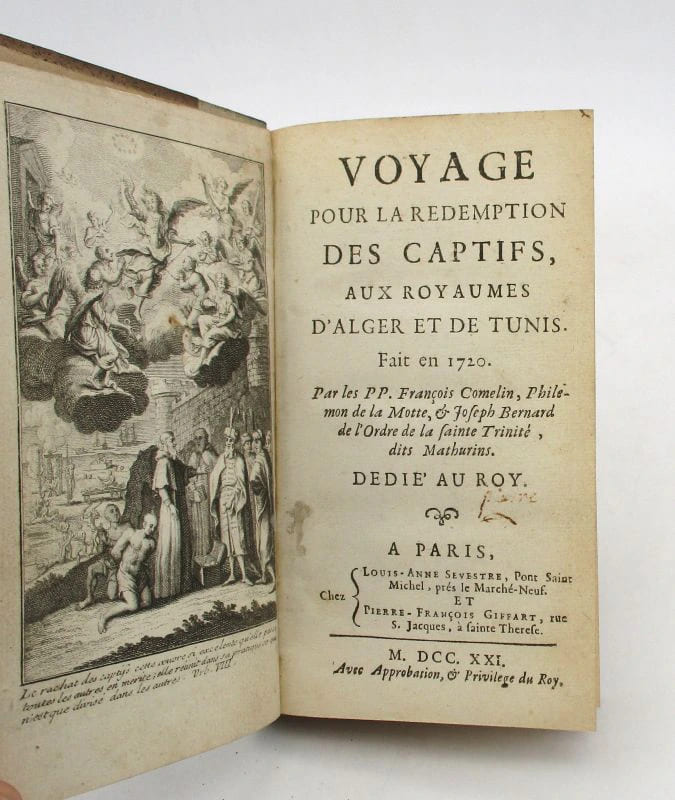
réf. 23856Paris, Louis-Anne Sevestre, 1721. In-12, [16]-169-[1]-LX pp. 2 pl., demi-parchemin, dos long, pièce de titre rouge, tranches mouchetées (petits manques, frottements et taches, portrait du roi manquant).
1972N°1 de la nouvelle série, janvier 1972, de la revue fondée par Emmanuel Mounier et dirigée par Jean-Marie Domenach; au sommaire, articles sur le Bengale ("Le Crime des riches" par Jean BASTIAIRE et "L'aveuglement" par Paul THIBAUD), sur le Japon, "Pensée et idéologie" de Jean-Pierre SIMEON, "Portrait psychologique du toxicomane" par Claude OLIEVENSTEIN, article sur la fondation de la revue, extrait d'un ouvrage de Jean-Marie DOMENACH sur Emmanuel Mounier, articles sur l'apartheid d'Anne-Marie GOGUEL, sur l'esclavage de Jean-Pierre CHRETIEN; etc. Avec la bande annonce: "Bengale: le crime d'indifférence - La foondation d'Esprit - Qu'est-ce que l'idéologie ? - Le Japon en bouleversements" et le supplément au n°: table des articles publiés en 1971. Français
1972réf. 13722Paris, Esprit, 1972 1 volume 14 x 22,7cm Broché. 158p., 1 feuillet, 8p. bleutées. Rousseurs au dos; très bon état intérieur.
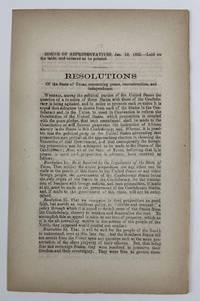
1865réf. 4902Richmond Va.: January 19 1865. Very good. 3pp. printed on a single folded sheet. Minor toning and wear. A defiant screed issued by the Confederate House of Representative in January 1865 printing eight resolutions by the Texas Legislature passed in November 1864 to be presented to the President of the Confederate States should a "re-union" between the Confederacy and the Union occur at the end of the Civil War. Paramount among the Texas House's concerns is their insistence that an amendment be made to the U.S. Constitution that "will forever guarantee the institution of African slavery in the States in this Confederacy." The third resolution prints a familiar refrain in which the Texas House argues that their secession from the Union was not motivated "upon any questions such as the mere preservation of the slave property of their citizens" but rather in order to "preserve their freedom and their sovereignty" i.e. state's rights. Further in this same resolution the Texas legislature warns that they "are still unwavering in their resolution to preserve their freedom and their sovereignty without which all else is valueless." Other resolutions cover trade with foreign powers the South's unfavorable opinion of Abraham Lincoln "a Chief Magistrate with the purpose that he should destroy our liberties in disregard to the Constitution" the South's inability to accept reconciliation with the North and proposes that any end to the Civil War must begin with the U.S. government "making their proposition to the Government of the Confederate States which alone can entertain it." Resolution five contains fiery language cataloguing the "inhumanities of this war" which concludes with an unsurprising but nonetheless eye-opening accusation: "Lying to themselves and pretending to the rest of the world that they are fighting the battle of freedom for four millions of happy and contented negroes they are attempting the enslavement of eight millions of freedmen. With devilish mockery of philanthropy. they have deluded and dragged these negroes from their comfortable homes to use them as screens from our weapons in the day of battle and they have sent them by thousands to painful death by neglect exposure and starvation. January 19 unknown
1862réf. 13270Moulton AL: June 7 1862. 4pp. on a single folded sheet. Old folds moderate staining rubbing and toning edges worn and a bit chipped a few small holes in the body of the text. A well-worn newspaper in good condition. A notable issue of a very rare newspaper from Confederate Alabama with many interesting historical aspects. Most noteworthy is the runaway slave advertisement printed on the last page relating the story of "a black boy who calls himself John" currently held at the jail in Lawrence County Alabama. John claims that his owner Jack Mason of Limestone County "was killed at Corinth on the day of the battle there and that he was endeavoring to return home when arrested." A physical description of John follows and concludes with a notice that "The owner will please come forward pay charges and take him away or he will be disposed of according to law." Other advertisements document various sheriff sales and the dissolution of a local law partnership. The paper also includes informative content on the Civil War including a substantial proclamation by Alabama Governor John Gill Shorter encouraging Alabama men to take the war seriously gather arms to the front and participate as part of the "State Guard." The paper also prints part of a notice from the Charleston Courier arguing that if Confederate currency is not worth real value "then the whole cotton crop of the South will be seized by the invader then Lincoln's recommendation to his Congress will be adopted and enforced and all the lands of the Southern people will be parcelled out among Northern soldiers." There is also a dispatch from Corinth encouraging southerners to identify and send back soldiers absent from duty and other wartime content. The only physical issue we could locate dated April 17 1863 is held at Samford; the remainder of the OCLC records we consulted reported microfilm or digital forms. June 7 unknown
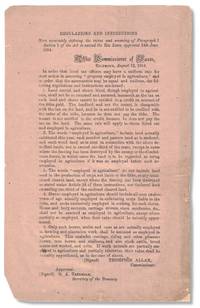
1864réf. 73225Richmond: Treasury Department 1864. Single 8.5" X 5.25" leaf printed on one side. Loss at bottom left corner with a repair to the bottom edge. Darkened overall else an about very good example. Part 4 of the Regulations and instructions states; "Slaves employed in agriculture should include all over twelve years of age actually employed in cultivating crops liable to the tithe and cooks exclusively employed in cooking for such slaves. House and body servants carriage drivers slave mechanics &c. shall not be assessed as employed in agriculture except where partially employed when their value should be rateably apportioned." Signed Thompson Allan Commissioner; Approved G. A. Trenholm Secretary of the Treasury. Parrish & Willingham 2175. Treasury Department unknown
1862réf. 13270Moulton AL: June 7 1862. 4pp. on a single folded sheet. Old folds moderate staining rubbing and toning edges worn and a bit chipped a few small holes in the body of the text. A well-worn newspaper in good condition. A notable issue of a very rare newspaper from Confederate Alabama with many interesting historical aspects. Most noteworthy is the runaway slave advertisement printed on the last page relating the story of "a black boy who calls himself John" currently held at the jail in Lawrence County Alabama. John claims that his owner Jack Mason of Limestone County "was killed at Corinth on the day of the battle there and that he was endeavoring to return home when arrested." A physical description of John follows and concludes with a notice that "The owner will please come forward pay charges and take him away or he will be disposed of according to law." Other advertisements document various sheriff sales and the dissolution of a local law partnership. The paper also includes informative content on the Civil War including a substantial proclamation by Alabama Governor John Gill Shorter encouraging Alabama men to take the war seriously gather arms to the front and participate as part of the "State Guard." The paper also prints part of a notice from the Charleston Courier arguing that if Confederate currency is not worth real value "then the whole cotton crop of the South will be seized by the invader then Lincoln's recommendation to his Congress will be adopted and enforced and all the lands of the Southern people will be parcelled out among Northern soldiers." There is also a dispatch from Corinth encouraging southerners to identify and send back soldiers absent from duty and other wartime content. The only physical issue we could locate dated April 17 1863 is held at Samford; the remainder of the OCLC records we consulted reported microfilm or digital forms. June 7 unknown books
1864réf. 73225Richmond: Treasury Department 1864. Single 8.5" X 5.25" leaf printed on one side. Loss at bottom left corner with a repair to the bottom edge. Darkened overall else an about very good example. Part 4 of the Regulations and instructions states; "Slaves employed in agriculture should include all over twelve years of age actually employed in cultivating crops liable to the tithe and cooks exclusively employed in cooking for such slaves. House and body servants carriage drivers slave mechanics &c. shall not be assessed as employed in agriculture except where partially employed when their value should be rateably apportioned." Signed Thompson Allan Commissioner; Approved G. A. Trenholm Secretary of the Treasury. Parrish & Willingham 2175. Treasury Department unknown books
1865réf. 4902Richmond Va.: January 19 1865. Very good. 3pp. printed on a single folded sheet. Minor toning and wear. A defiant screed issued by the Confederate House of Representative in January 1865 printing eight resolutions by the Texas Legislature passed in November 1864 to be presented to the President of the Confederate States should a "re-union" between the Confederacy and the Union occur at the end of the Civil War. Paramount among the Texas House's concerns is their insistence that an amendment be made to the U.S. Constitution that "will forever guarantee the institution of African slavery in the States in this Confederacy." The third resolution prints a familiar refrain in which the Texas House argues that their secession from the Union was not motivated "upon any questions such as the mere preservation of the slave property of their citizens" but rather in order to "preserve their freedom and their sovereignty" i.e. state's rights. Further in this same resolution the Texas legislature warns that they "are still unwavering in their resolution to preserve their freedom and their sovereignty without which all else is valueless." Other resolutions cover trade with foreign powers the South's unfavorable opinion of Abraham Lincoln "a Chief Magistrate with the purpose that he should destroy our liberties in disregard to the Constitution" the South's inability to accept reconciliation with the North and proposes that any end to the Civil War must begin with the U.S. government "making their proposition to the Government of the Confederate States which alone can entertain it." Resolution five contains fiery language cataloguing the "inhumanities of this war" which concludes with an unsurprising but nonetheless eye-opening accusation: "Lying to themselves and pretending to the rest of the world that they are fighting the battle of freedom for four millions of happy and contented negroes they are attempting the enslavement of eight millions of freedmen. With devilish mockery of philanthropy. they have deluded and dragged these negroes from their comfortable homes to use them as screens from our weapons in the day of battle and they have sent them by thousands to painful death by neglect exposure and starvation. January 19 unknown books
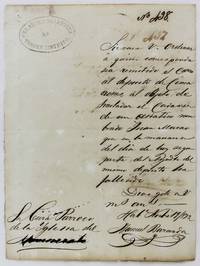
1872réf. 3066Havana 1872. Very good. Manuscript form approximately 8.5 x 6.25 inches. Minor wear at edges; a few small worm holes. Contemporary ink stamp. Light tanning and offsetting. This 1872 manuscript form from a Havana jail the Celaduria de la Punta notes the death there of an "Asiatico" a Chinese indentured servant with the given name of Juan Macao and orders the transfer of the body to the mortuary for cremation. Indentured servants found themselves jailed for several reasons including suspicion of theft and other crimes recapture following runaway or mere suspicion of abandoning a contract. unknown
1872réf. 3066Havana 1872. Very good. Manuscript form approximately 8.5 x 6.25 inches. Minor wear at edges; a few small worm holes. Contemporary ink stamp. Light tanning and offsetting. This 1872 manuscript form from a Havana jail the Celaduria de la Punta notes the death there of an "Asiatico" a Chinese indentured servant with the given name of Juan Macao and orders the transfer of the body to the mortuary for cremation. Indentured servants found themselves jailed for several reasons including suspicion of theft and other crimes recapture following runaway or mere suspicion of abandoning a contract. unknown books
1786réf. 43537Bergerac, J. B. Puynesge, 1786. 2 vol. in-4 de XXV-(1)-553-(1) pp. et XVIII-401-(1)-40 pp., demi-basane brune, dos lisse orné (relié vers 1820).
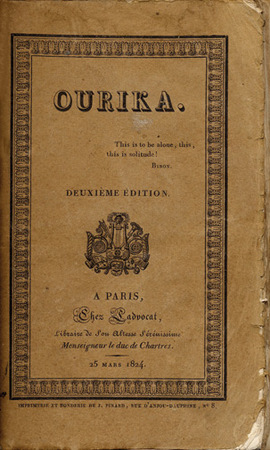
1824réf. 9443Paris, Ladvocat, 25 mars 1824 (Imprimerie de J. Pinard) ; in-12 ; demi-chagrin bleu-marine, dos à nerfs orné de roulettes décoratives de style romantique, fleurons à froid, filet doré sur les plats, plats de couverture marron illustrés conservés, non rogné (reliure fin XIXe-début XXe) ; 172 pp. y compris le faux-titre et le titre ; au verso du faux-titre on lit "Publié au profit d'un établissement de charité".
réf. 19911Paris, chez Ladvocat, 1824. In-12, 172 pp., demi-basane havane, dos long orné de frises dorées, tranches jaunes mouchetées de rouge (épidermures et petits manques, petites rousseurs).
réf. 9248Philadelphia, William Brown, 1824. In 8 de 69 pp. (sous couverture), (rousseurs).