1 889 résultats
2002DJ in mylar; Slavery was widespread throughout the Mediterranean lands where Christianity was born and developed. Though Christians were both slaves and slaveholders, there has been surprisingly little study of what early Christians thought about the realities of slavery. How did they reconcile slavery with the Gospel teachings of brotherhood and charity? Slaves were considered the sexual property of their owners: what was the status within the Church of enslaved women and young male slaves who were their owners' sexual playthings? Is there any reason to believe that Christians shied away from the use of corporal punishments so common among ancient slave owners? Jennifer A. Glancy brings a multilayered approach to these and many other issues, offering a comprehensive re-examination of the evidence pertaining to slavery in early Christianity. Drawing on a wide variety of sources, Glancy situates early Christian slavery in its broader cultural setting. She argues that scholars have consistently underestimated the pervasive impact of slavery on the institutional structures, ideologies, and practices of the early churches and of individual Christians. The churches, she shows, grew to maturity with the assumption that slaveholding was the norm, and welcomed both slaves and slaveholders as members. Glancy draws attention to the importance of the body in the thought and practice of ancient slavery. To be a slave was to be a body subject to coercion and violation, with no rights to corporeal integrity or privacy. Even early Christians who held that true slavery was spiritual in nature relied, ultimately, on bodily metaphors to express this. Slavery, Glancy demonstrates, was an essential feature of both the physical and metaphysical worlds of early Christianity. ; 203 pages
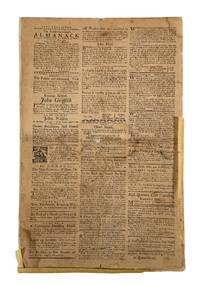
1771réf. 143781771. The Almanack 1771 contains an advertisement offering a fourteen-year-old enslaved Black boy for sale in Boston documenting the commercial trafficking of enslaved children in colonial Massachusetts only five years before the Declaration of Independence. The notice states: "To be sold for want of employment a likely Negro Boy that won't drink rum he is about 14 years old." Its language reduces the unnamed child to age perceived suitability and drinking habits before offering him for sale preserving direct evidence of how slavery entered the ordinary commercial language and newspaper economy of eighteenth-century Boston. A second advertisement relating to slavery appears in the same issue. The Almanack. Boston 1771. Folio newspaper approximately 15 x 10 inches. The sale notice was printed among the newspaper's advertisements rather than as a report or editorial discussion of slavery placing the transaction within the periodical's routine marketplace of property labor and services. Particularly revealing is the seller's stated reason "for want of employment" which explicitly connects the proposed sale of the fourteen-year-old boy to the enslaver's assessment of his economic utility. Slavery remained legal in Massachusetts in 1771 even as the political disputes that would culminate in the American Revolution intensified in Boston. The advertisement predates the 1780 Massachusetts Constitution and the early 1780s freedom suits associated with the effective end of slavery in the Commonwealth. As a Boston notice offering an enslaved child for sale it provides specific evidence that human bondage and its newspaper marketplace formed part of New England life during the generation that articulated revolutionary claims concerning liberty. Overall foxing scattered soiling and several small edge tears; otherwise very good condition. unknown books
1989réf. 119496Moka, Mauritius, Mahatma Gandhi Institute Press 1989 In-8 22,5 x 17 cm. Broché, couverture caramel, auteurs & titre en blanc sur le dos et le premier plat, 406 pp. sommaire, bibliographies. Exemplaire en très bon état.
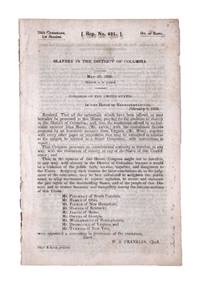
1836réf. 346520Washington D.C. 1836. 24th Congress 1st Session House Rep. No. 691. 24pp. 8vo. Disbound. 24th Congress 1st Session House Rep. No. 691. 24pp. 8vo. Many of the early anti-slavery efforts focussed on the abolition of slavery in the District of Columbia as Congress had full control over the laws within the District thus obviating any argument over state's rights. Until "retroceded" back to Virginia in 1846 the city of Alexandria and its notorious slave market was considered part of the District of Columbia making slavery in the District of particular importance. Inundated with petitions calling for the abolition of slavery in the District in 1836 Congress passed the so-called Pinckney Resolution which asserted that Congress "ought not" to consider slavery in the District and created a gag rule whereby all petitions memorials or other resolutions on the subject would be automatically tabled. unknown books
1851réf. 106835Pamphlet 8vo wrappers 36 pp. Archival tape repair to back of front cover slight edgeware normal aging and browning; otherwise very good. Follows the general tone of a good deal of the abolitionist literature of the period. However while the author acknowledges the critical importance of slavery to America he suggests the issue needs to be debated with "calmness and candor" interestingly he indicates that the climate for these discussions appears to be improving. Charles C. Little and James Brown, books
réf. 1020195134.Ghardcover. Good. Access codes and supplements are not guaranteed with used items. May be an ex-library book. hardcover
1998504p., illus. Hardcover Very good condition good
1880réf. 37129Circa 1880. 1880. Good. - A slip of paper 2-3/8 inches high by 4-3/8 inches wide is inscribed & signed in black ink: "Let us thank God for the Saxon Grit / Robert Collyer". The paper is mounted on a piece of cream-colored card of approximately the same size. The card is unevenly cut & both paper & card are slightly rippled from the mounting. Good. "Saxon Grit" is the title of an 1880 poem by Collyer about the Norman conquest of England in which the phrase recurs in each verse. Robert Collyer 1823-1912 was an English-born American Unitarian clergyman. He became a Methodist minister in England in 1849. Emigrating to The United States in the following year he found employment as a hammer maker in Pennsylvania and soon began preaching on Sundays while still employed at the factory. His earnest rugged simple style of oratory won him great popularity but his advocacy for the antislavery cause then frowned upon by the Methodist authorities aroused opposition. He was tried for heresy and his license was revoked. Continuing as an independent preacher he joined the Unitarian Church in 1859. In 1860 he organized and became pastor of the Unity Church the second Unitarian Church in Chicago. The church grew to become one of the strongest Unitarian churches in the West and Collyer was regarded as one of the foremost pulpit orators in the country. He left Chicago in 1879 and became pastor of the Church of the Messiah now renamed the Community Church in New York City. In 1883 he was a featured speaker at the convention of the American Woman Suffrage Association where he spoke movingly about his deceased wife and their struggles over "the woman question". Circa [1880]. unknown
Société Antiesclavagiste de France. 1897. In-8 Carré. Broché. Bon état. Couv. légèrement passée. Dos satisfaisant. Intérieur acceptable. Plaquette paginée de 594 à 624. Tampons et annotations de bibliothèque sur le 1er plat et en 1re page. Allocations distribuées par la Société Antiesclavagiste en 1897. Lettre de Mgr Jourdan de la Passadière aux évêques de France. Projet de colonisation en Abyssinie. Pénétration anglaise du Cap à Alexandrie. Lettres d'Afrique...
1897réf. RO40188451Société Antiesclavagiste de France. 1897. In-8. Broché. Bon état, Couv. légèrement passée, Dos satisfaisant, Intérieur acceptable. Plaquette paginée de 594 à 624. Tampons et annotations de bibliothèque sur le 1er plat et en 1re page.. . . . Classification Dewey : 326-Esclavage
1994réf. MAROC7410115Maroc, Casablanca, Editions EDDIF, 1994, 13,5 x 21, 224 pages sous couverture illustrée. Préface de Ernest Gellner.
iv, [5]-186, [2]pp. 3 Works bound in one, 12mo (170 x 100 mm), cont. calf, gilt, a nice copy.
1728réf. 100536Pamphlet 8vo modern full calf in the style of an 18th century Cambridge binding 32 pp.Very slight aging; in excellent condition. This is a rare first edition of a work that presents a complaint by British planters in the West Indies concerning the Assiento or agreement with Spain that gave Britain a virtual monopoly on the African slave trade. This agreement came out of the Treaty of Utrecht which ended the War of the Spanish Succession. This pamphlet indicates that the planters feared as a result of this agreement British slavers might be required to provide African slaves to the Spanish colonies which could result in insufficient numbers available for the West India plantations. The Assiento with Spain would mark the beginning of the Atlantic slave trade as a very powerful economic growth engine. Unfortunately this would translate into millions of Africans being taken from their homes. H. Whitridge
1728réf. 100536Pamphlet 8vo modern full calf in the style of an 18th century Cambridge binding 32 pp.Very slight aging; in excellent condition. This is a rare first edition of a work that presents a complaint by British planters in the West Indies concerning the Assiento or agreement with Spain that gave Britain a virtual monopoly on the African slave trade. This agreement came out of the Treaty of Utrecht which ended the War of the Spanish Succession. This pamphlet indicates that the planters feared as a result of this agreement British slavers might be required to provide African slaves to the Spanish colonies which could result in insufficient numbers available for the West India plantations. The Assiento with Spain would mark the beginning of the Atlantic slave trade as a very powerful economic growth engine. Unfortunately this would translate into millions of Africans being taken from their homes. H. Whitridge books
1974réf. qq1937La Guilde du livre Toile d'éditeur 1974 In-8 (15.3 x 22 cm), toile d'éditeur rouge, 278 pages, exemplaire n°1672 ; des taches d'usage aux plats, intérieur frais, bon état général. Livraison a domicile (La Poste) ou en Mondial Relay sur simple demande.
1945réf. A1-086Paris 30.10.1947 (DL 1945), Aimery Somogy éditeur in-8° 384 pp. rel. demi-bas. Dos 5 nerfs. Roman historique. Traduit de l’anglais par Albert Lehman. Introduction de l'éditeur pages 7 à 13.
1959Reliure toile club. 279 pages.
1961Broch?. 439 pages. Format de poche.
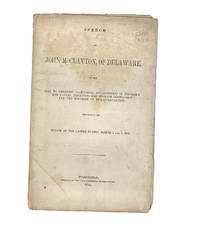
1854réf. 26154Washington: Printed at the Congressional Glove Office 1854. First edition. pp. 22. 1 vols. 8vo. Self wrappers unsewn as issued. Some browning and spotting wear along spine and edges but a very good copy. First edition. pp. 22. 1 vols. 8vo. Primarily concerning the issue of slavery in the territories this speech was part of the debates for the Kansas-Nebraska Act. The act initiated by Douglas ultimately repealed the Missouri Compromise allowed the local residents to determine whether the area was free or slave territory allowed for "the doctrine of popular sovereignty of the two territories" and laid the way for a transcontental railroad. The Kansas-Nebraska Act was passed in the Senate on the 3rd of March. Clayton was a lawyer noted agriculturist and long-time member of Congress who was Secretary of State under President Taylor. As Secretary of State he is best remembered for having negotiated the Clayton-Bulwer treaty with Great Britain which provided for a neutral international canal across Central America and "contained pledges which ultimately forced Great Britain to withdraw from large tracts of territory which.it had been occupying on the Isthmus." DAB. Sabin 13576n Printed at the Congressional Glove Office unknown
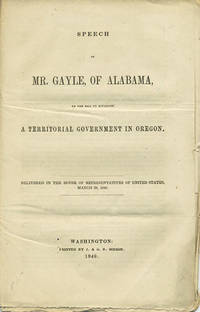
1848réf. 37646Washington D.C.: J. & G.S. Gideon printers 1848. First edition. Removed. A very good unopened uncut and intrimmed copy with a mail fold. 14 pp. 8vo. Against Oregon admittance over the slavery issue: "The position I shall assume and attempt to maintain is that Congress has no power to organize what is called a territorial government by ordinance or otherwise; nor has Congress the power to pass laws for the people of the territories of the United States.The speech of the honorable member from Ohio Mr. Root delivered on the 15th of the present month. That speech breathes nothing but hostility to Southern institutions. It was uttered in a tone of defiance and in such language of menace as left the impression that the honorable speaker thought that empty threats were quite sufficient to intimidate what he was pleased to call “Southern chivalry.What does the gentleman from Ohio mean by this haughty and vainglorious boasting Does he think that the South are to be frightened from their duty to their country and themselves by these empty menaces The proposition to exclude slave labor from the territories of the United States is a proposition to degrade the slave States—to render them inferior to the free States." John Gayle 1792-1859 "was Alabama's seventh governor and also served as a U.S. congressman state legislator and jurist. Gayle was a fervent champion of states' rights and his advocacy laid the foundation for that movement in Alabama in the 1850s and for the realignment of state political parties." Sarah Woolfolk Wiggins: John Gayle Encyl. of Alabama. Sabin 26798. J. & G.S. Gideon, printers unknown
1854réf. 26154Washington: Printed at the Congressional Glove Office 1854. First edition. pp. 22. 1 vols. 8vo. Self wrappers unsewn as issued. Some browning and spotting wear along spine and edges but a very good copy. First edition. pp. 22. 1 vols. 8vo. Primarily concerning the issue of slavery in the territories this speech was part of the debates for the Kansas-Nebraska Act. The act initiated by Douglas ultimately repealed the Missouri Compromise allowed the local residents to determine whether the area was free or slave territory allowed for "the doctrine of popular sovereignty of the two territories" and laid the way for a transcontental railroad. The Kansas-Nebraska Act was passed in the Senate on the 3rd of March. Clayton was a lawyer noted agriculturist and long-time member of Congress who was Secretary of State under President Taylor. As Secretary of State he is best remembered for having negotiated the Clayton-Bulwer treaty with Great Britain which provided for a neutral international canal across Central America and "contained pledges which ultimately forced Great Britain to withdraw from large tracts of territory which.it had been occupying on the Isthmus." DAB. Sabin 13576n Printed at the Congressional Glove Office unknown books
1848réf. 37646Washington D.C.: J. & G.S. Gideon printers 1848. First edition. Removed. A very good unopened uncut and intrimmed copy with a mail fold. 14 pp. 8vo. Against Oregon admittance over the slavery issue: "The position I shall assume and attempt to maintain is that Congress has no power to organize what is called a territorial government by ordinance or otherwise; nor has Congress the power to pass laws for the people of the territories of the United States.The speech of the honorable member from Ohio Mr. Root delivered on the 15th of the present month. That speech breathes nothing but hostility to Southern institutions. It was uttered in a tone of defiance and in such language of menace as left the impression that the honorable speaker thought that empty threats were quite sufficient to intimidate what he was pleased to call “Southern chivalry.What does the gentleman from Ohio mean by this haughty and vainglorious boasting Does he think that the South are to be frightened from their duty to their country and themselves by these empty menaces The proposition to exclude slave labor from the territories of the United States is a proposition to degrade the slave States—to render them inferior to the free States." John Gayle 1792-1859 "was Alabama's seventh governor and also served as a U.S. congressman state legislator and jurist. Gayle was a fervent champion of states' rights and his advocacy laid the foundation for that movement in Alabama in the 1850s and for the realignment of state political parties." Sarah Woolfolk Wiggins: John Gayle Encyl. of Alabama. Sabin 26798. J. & G.S. Gideon, printers unknown books
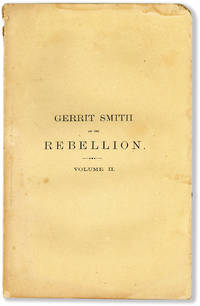
1865réf. 81012New York: American News Company 1865. First Edition. First printing. Octavo. Sewn printed wrappers; 76pp. Brief closed tear to title page margin; bit of wear at upper fore-corner of text block well away from text else a clean fresh copy in the original printed wraps; Very Good or better. Includes text of letters written to various colleagues in the antislavery ranks including Elizabeth Cady Stanton Charles Sumner and others. The first volume taking in the year 1863 was printed a year earlier. SABIN 82664. American News Company unknown
1865réf. 81012New York: American News Company 1865. First Edition. First printing. Octavo. Sewn printed wrappers; 76pp. Brief closed tear to title page margin; bit of wear at upper fore-corner of text block well away from text else a clean fresh copy in the original printed wraps; Very Good or better. Includes text of letters written to various colleagues in the antislavery ranks including Elizabeth Cady Stanton Charles Sumner and others. The first volume taking in the year 1863 was printed a year earlier. SABIN 82664. American News Company unknown books
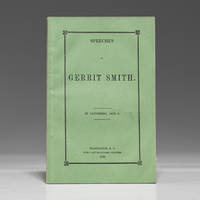
1854réf. 1266881854. First Edition. SMITH Gerrit. Speeches of Gerrit Smith. In Congress 1853-'4. Washington D.C.: Buell and Blanchard 1854. Octavo original printed green self-wrappers original stitching. $1850.First edition of nine major 1854 speeches by radical abolitionist Smith together in print for the first time featuring elemental works such as ""No Slavery in Nebraska"" defying Stephen Douglas' Kansas-Nebraska bill and denouncing ""the federal government as a 'bastard democracy'"" very elusive in fragile original wrappers.In the early 1850s Gerrit Smith ""a man of enormous emotional complexity religious fervor antislavery commitment and wealthÉ embraced political abolitionism."" By then Frederick Douglass had become ""an outspoken supporterÉ and rejoiced in Smith's election to Congress as a radical abolitionist in 1852"" Blight Frederick Douglass 207 252. Once linked to Garrison's view of the Constitution as a ""covenant with death"" Smith split from him to become a founder of both the Liberty Party and the Radical Abolitionist Party. As documented in this collection of nine key speeches Smith in his ""congressional career of 1853 and 1854É evolved into one of America's renowned militant antislavery activists"" Gordon-Omelka Militant Abolitionist 2. Key works here such as his June 14 1854 speech ""Abolition of the Postal System"" reflected his conviction that ""the right to free discussion"" was fundamental and that ""Southerners were threatening the very openness and integrity of American democracyÉ Smith would not stand for itÉ he presaged a new generation of American abolitionists: those whose membership was inspired not by evangelical Christianity like the earlier Garrisons and Tappans but by secular liberal political ideals."" His attention to issues such asÑ""freedom of speech civil liberties social order the proper role of federal and state governments with respect to slaveryÑmotivated a new kind of political abolitionism which attracted new groups into the movement and gave them new tools for action"" Lonky Revolutionizing the Public Sentiment 56.Also notably featured here is Smith's ""No Slavery in Nebraska."" It stands as his defining response to Senator Stephen Douglas' December 1853 version of the Kansas-Nebraska bill which ""ultimately repealed the Missouri Compromise of 1820 and allowed the territories' citizens to decide the slavery questionÉ Smith signed Chase's abolitionist appeal against the bill"" and in his April 6 1854 ""No Slavery"" speech ""asserted a fresh reason to oppose the bill based on the Constitution's limits on state sovereignty.'"" Denouncing ""the federal government as a 'bastard democracy'"" he predicted ""a violent end to slaveryÉ a reckoning for deep and damning wrongs"" Gordon-Omelka 12. Soon afterward following his resignation from Congress Smith helped establish a Black settlement at North Elba N.Y. which was ""John Brown's permanent residence from 1854 until his death"" Stauffer Black Hearts 3. In June 1855 Smith Frederick Douglass and John Brown were together at the first convention in Syracuse of the Radical Abolition party. Four years later Brown was executed following the Harpers Ferry Raid that Smith helped fund causing Smith to suffer a mental breakdown. The decade after the Civil War he died in 1874. First edition:containing nine separately paginated speeches: Speech of Gerrit Smith On War. In Congress January 18 1854. Washington D.C.: Buell & Blanchard 1854; Homes for All. Speech of Gerrit Smith On the Homestead Bill. In Congress February 21 1854. Washington D.C.: Buell & Blanchard 1854; No Slavery in Nebraska: No Slavery in the Nation: Slavery an Outlaw. Speech of Gerrit Smith on the Nebraska Bill. In Congress April 6 1854. Washington D.C.: Buell & Blanchard 1854; Keep Government within its Limits. Speech of Gerrit Smith on the Pacific Railroad In the House of Representatives May 30 1854. Washington D.C.: Buell and Blanchard 1854; Abolition of the Postal System. Speech of Gerrit Smith In the House of Representatives June 14 1854. Washington D.C.: Buell & Blanchard 1854; Speech of Gerrit Smith On Mexican Treaty and ""Monroe Doctrine."" In Congress June 27 1854. Buell and Blanchard: Washington D.C. 1854; Letter of Gerrit Smith On the Reciprocity Treaty. No place: no publisher: 1854; Government Bound to Protect from the Dramshop. Speech of Gerrit Smith On Sale of Intoxicating Drinks in the City of Washington. In Congress July 22 1854. Washington D.C.: Buell & Blanchard 1843; Gerrit Smith to his Constituents. Washington D.C.: Buell & Blanchard 1854. With Nebraska Bill partially unopened. Sabin 92595; 82634; 82635; 82639; 82642; 82649; 82658; 82659; 82660. See LCP. Afro-Americana 9513 1855 ed. Fine condition. unknown