1 890 résultats
réf. DADAX0367419645New unknown
réf. DADAX0521115256New unknown
réf. DADAX022610169XNew unknown
réf. DADAX0199541906New unknown
réf. DADAX0520245075New unknown
réf. DADAX0199873577New unknown
réf. DADAX0199344396New unknown
1994réf. RO20182838OFFICE MUNICIPAL LOISIRS CULTURE DE VILLENAVE D'ORNON. 1994. In-8. Broché. Bon état, Couv. convenable, Dos satisfaisant, Intérieur frais. 16 pages - quelques photos en noir et blanc dans et hors texte.. . . . Classification Dewey : 326-Esclavage
réf. R240149473Office Municipal Loisirs Culture de Villenave d'Ornon. Non daté. In-8. Broché. Bon état, Couv. convenable, Dos satisfaisant, Intérieur frais. 16 pages agrafées augmentées de quelques photos en noir et blanc dans le texte. Non daté.. . . . Classification Dewey : 326-Esclavage
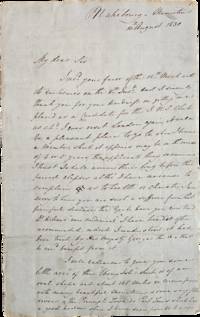
1830réf. List2931Mahébourg Mauritius 1830. Single unsigned fourteen-page letter measuring 8 x 12 ¾ inches. Folded with some stains and pencil marks. Overall near fine. In 1830 Mauritius was a British colony captured from the French in 1810 during the Napoleonic Wars. It was originally a Dutch colony and the Dutch had introduced enslaved labor to the islands. Enslaved people were imported from Madagascar India and Southeast Asia to harvest the valuable ebony trees and later to farm sugarcane. It became a French colony in 1715 and among other provisions the French government awarded upper-class colonists large land grants each with twenty enslaved people to work them. Slavery was abolished in 1835 under British rule after which the planters still farming sugarcane turned to indentured servant labor from India and China alongside illegal slavery.1 Offered here is a lengthy single letter written by an unknown author to an unknown recipient from Mahébourg in 1830 shortly before this radical change. The letter describes the lives and economic circumstances of the planters and merchants and of the non-white population particularly Malabar people and free and enslaved Black people. Noting that “every inch of ground that will produce sugar cane is planted with it” including “the former fine gardens to some of the Habitations” the author reports on the situation for sugar planters: “The price of sugar here is not more than 20/per Cwt. for the best quality which does not now remunerate the Planter as his expenses are becoming every day more heavy in consequence of their slaves diminishing . The want of Slaves induced many of the Planters to send for Chinese Labourers and several hundreds were imported at a great expense but unfortunately they did not answer and were obliged to be reshipped for their native Country again at the charge of those who sent for them.” The author later notes that “nearly everyone of the Planters have heavy mortgages on their Estates and are obliged to pay this immense Interest which keeps them poor and will I fear ultimately ruin them”. In fact the planters in British Mauritius had extra duties on their sugar exports compared with their Caribbean counterparts. The shopkeepers on the other hand “calculate on retiring with a fortune in five years– therefore you will fancy what must be their prices also their profits.” Though writing from Mahébourg the author describes the capital city of Port Louis at length especially its Malabar Indian and free Black residents—the lives of the latter particularly the free Black women seem especially grim. They write: “The Centre of Port Louis is inhabited by all the respectable people and many most excellent houses buildings– the Catholic Chapel the English Church amongst the number. The Suburbs to the West is the part occupied by about 3000 Malabars called ‘Malabar Town.’ – They are dressed mostly in white with Turbans ear rings c c and the females with ornaments in their noses and on their Toes as they generally go bare foot. – Once a year they have what is called a ‘Yamsee’ or a festival in honor of Mehomet which lasts for about a fortnight during which time they seem to get no sleep a continual beating of tom toms – jingling of bells – carrying pagodas which are made of various coloured paper and most richly ornamented followed by all the population of their Caste with their faces daubed with red white c and which has a most ludicrous appearance. The Suburbs to the South is called ‘black Camp’ – the Houses being very small and poor and inhabited by all the free blacks as well as many Mulattoes. – Also a certain class of females of the population of colour – who are visited immediately on the Arrival of a Ship the Crews soon enquiring the way to the ‘Camp.’” As regards relations between the races the author recounts an incident that followed the 1828 abolition of the color bar which would ostensibly give the free non-white population the same rights as the whites: “The Theatre is a very good one but has been closed for several months past the Actors Actresses gone to Bourbon in consequence of the promulgation of the act ‘causing all free people of the population of Colour’ to have the same laws – the same privileges as the Whites’ fearing they ought come to the Theatre which they had hitherto been forbidden thereby cause disturbances as the French Whites detest them wd. not sit in the same box it was considered best to shut the Theatre which is a great loss to the Place it being the chief public amusement and indeed the only one we have here.” Overall a detailed letter giving insight into life in a slave colony at a time when significant changes were on the horizon. Of interest to scholars of the colonial history of Mauritius and the second wave of British colonialism. 1 Truth and Justice Commission Report of the Truth and Justice Commission Vol. 1 Mauritius: Government Printing 2011. unknown
1830réf. List2931Mahébourg Mauritius 1830. Single unsigned fourteen-page letter measuring 8 x 12 ¾ inches. Folded with some stains and pencil marks. Overall near fine. In 1830 Mauritius was a British colony captured from the French in 1810 during the Napoleonic Wars. It was originally a Dutch colony and the Dutch had introduced enslaved labor to the islands. Enslaved people were imported from Madagascar India and Southeast Asia to harvest the valuable ebony trees and later to farm sugarcane. It became a French colony in 1715 and among other provisions the French government awarded upper-class colonists large land grants each with twenty enslaved people to work them. Slavery was abolished in 1835 under British rule after which the planters still farming sugarcane turned to indentured servant labor from India and China alongside illegal slavery.1 Offered here is a lengthy single letter written by an unknown author to an unknown recipient from Mahébourg in 1830 shortly before this radical change. The letter describes the lives and economic circumstances of the planters and merchants and of the non-white population particularly Malabar people and free and enslaved Black people. Noting that “every inch of ground that will produce sugar cane is planted with it” including “the former fine gardens to some of the Habitations” the author reports on the situation for sugar planters: “The price of sugar here is not more than 20/per Cwt. for the best quality which does not now remunerate the Planter as his expenses are becoming every day more heavy in consequence of their slaves diminishing . The want of Slaves induced many of the Planters to send for Chinese Labourers and several hundreds were imported at a great expense but unfortunately they did not answer and were obliged to be reshipped for their native Country again at the charge of those who sent for them.” The author later notes that “nearly everyone of the Planters have heavy mortgages on their Estates and are obliged to pay this immense Interest which keeps them poor and will I fear ultimately ruin them”. In fact the planters in British Mauritius had extra duties on their sugar exports compared with their Caribbean counterparts. The shopkeepers on the other hand “calculate on retiring with a fortune in five years– therefore you will fancy what must be their prices also their profits.” Though writing from Mahébourg the author describes the capital city of Port Louis at length especially its Malabar Indian and free Black residents—the lives of the latter particularly the free Black women seem especially grim. They write: “The Centre of Port Louis is inhabited by all the respectable people and many most excellent houses buildings– the Catholic Chapel the English Church amongst the number. The Suburbs to the West is the part occupied by about 3000 Malabars called ‘Malabar Town.’ – They are dressed mostly in white with Turbans ear rings c c and the females with ornaments in their noses and on their Toes as they generally go bare foot. – Once a year they have what is called a ‘Yamsee’ or a festival in honor of Mehomet which lasts for about a fortnight during which time they seem to get no sleep a continual beating of tom toms – jingling of bells – carrying pagodas which are made of various coloured paper and most richly ornamented followed by all the population of their Caste with their faces daubed with red white c and which has a most ludicrous appearance. The Suburbs to the South is called ‘black Camp’ – the Houses being very small and poor and inhabited by all the free blacks as well as many Mulattoes. – Also a certain class of females of the population of colour – who are visited immediately on the Arrival of a Ship the Crews soon enquiring the way to the ‘Camp.’” As regards relations between the races the author recounts an incident that followed the 1828 abolition of the color bar which would ostensibly give the free non-white population the same rights as the whites: “The Theatre is a very good one but has been closed for several months past the Actors Actresses gone to Bourbon in consequence of the promulgation of the act ‘causing all free people of the population of Colour’ to have the same laws – the same privileges as the Whites’ fearing they ought come to the Theatre which they had hitherto been forbidden thereby cause disturbances as the French Whites detest them wd. not sit in the same box it was considered best to shut the Theatre which is a great loss to the Place it being the chief public amusement and indeed the only one we have here.” Overall a detailed letter giving insight into life in a slave colony at a time when significant changes were on the horizon. Of interest to scholars of the colonial history of Mauritius and the second wave of British colonialism. 1 Truth and Justice Commission Report of the Truth and Justice Commission Vol. 1 Mauritius: Government Printing 2011. unknown books
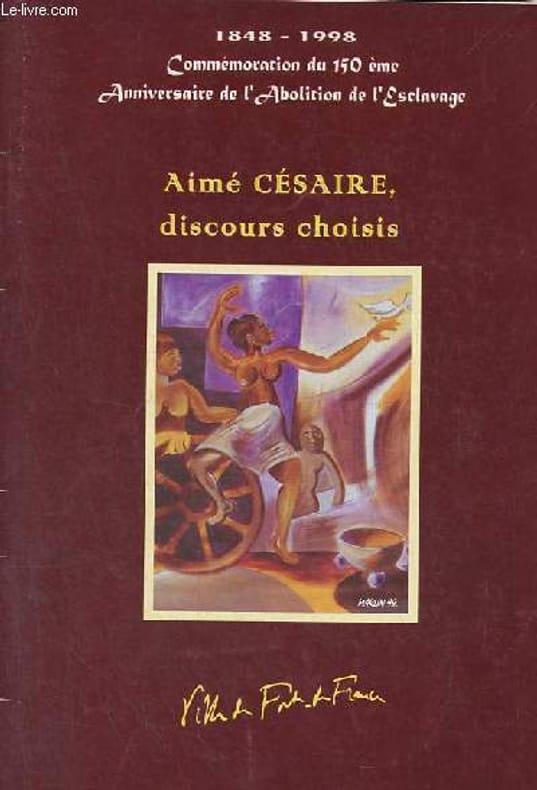
réf. R100071930Ville de Fort de France. 19998. In-4. Broché. Bon état, Couv. convenable, Dos satisfaisant, Intérieur frais. 37 ages agrafées - nombreuses illustrations en monochrome dans et hors texte.. . . . Classification Dewey : 326-Esclavage
réf. DADAX0190655267New unknown
réf. 96405-JB09134274
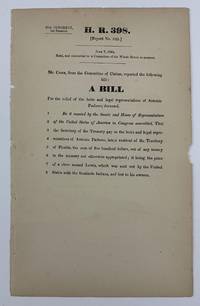
1844réf. 5887Washington DC: June 7 1844. Very good. Broadside 12.25 x 7.75 inches. Light tanning shallow marginal chips and some fraying to left and right edges. An unrecorded slip-bill printing of a House Resolution with a phenomenal back story involving an erudite elusive and resourceful Florida slave. The slip bill authored by Howell Cobb U.S. Representative from Georgia stipulates that the Secretary of the Treasury pay the sum of five hundred dollars to the heirs and representatives of Antonio Pacheco a former resident of Florida the sum "being the price of a slave named Lewis which was sent out by the United States with the Seminole Indians and lost to his owners." That's where the plot thickens. The slave is now known to history as Luis Fatio Pacheco born in 1800 to enslaved parents on the "New Switzerland" plantation in Florida which was surrounded by a mix of Europeans Africans and Native Americans. As such Luis became fluent in several languages including Seminole which later made him a valuable asset. After a conflict with his owner Luis attempted to escape slavery in 1824 by fleeing to Spanish fisheries on Florida's Gulf Coast but he was captured by U.S. military authorities the following year. Skilled as he was in languages and literacy by the military Luis was sold in 1832 to Antonio Pacheco a Cuban merchant. After Antonio's death Luis became the property of Pacheco's widow. When tensions began to ratchet up again between American military forces and the Seminole tribe a U.S. Army officer made a deal to rent Luis from the Pacheco estate at the rate of $25 a month to take advantage of his services as an interpreter. In December 1835 Luis was accompanying a troop detachment led by Major Frances L. Dade in a march to reinforce Fort King near the present-day city of Ocala Florida. Evidently that day Luis was assigned as a scout; he has said to have attempted to warn Dade of a possible ambush by the Seminoles which went unheeded by the commander. The result is today known as the Dade Massacre in which Dade and most of his men were killed. According to the narrative provided by Luis who spoke Seminole he explained to the warriors that he was a slave and successfully pleaded for his life. Luis lived with the Seminoles as a captive for nearly two years before again managing to escape. In September 1837 Luis surrendered to the U.S. Army at Fort Peyton near St. Augustine. Soon after he was accused of collaborating with the Seminoles in the Dade Massacre. In 1841 negotiations between the US government and Seminole leader Coacoochee the Native American leader claimed Luis as his property captured in war. Coacoochee was permitted to take Luis together with other Black Seminoles to Oklahoma for resettlement. This event led to the claim by Anthony Pacheco‘s heirs for restitution of a lost slave. The Joint Committee on Claims approved the claim. Luis's story eventually became a focal point in the abolitionist argument against slavery and in 1858 Ohio representative Joshua R. Giddings published a book portraying Luis as a hero against the system. In any case the question of whether or not Luis betrayed Dade has never been completely resolved. June 7 unknown
1844réf. 5887Washington DC: June 7 1844. Very good. Broadside 12.25 x 7.75 inches. Light tanning shallow marginal chips and some fraying to left and right edges. An unrecorded slip-bill printing of a House Resolution with a phenomenal back story involving an erudite elusive and resourceful Florida slave. The slip bill authored by Howell Cobb U.S. Representative from Georgia stipulates that the Secretary of the Treasury pay the sum of five hundred dollars to the heirs and representatives of Antonio Pacheco a former resident of Florida the sum "being the price of a slave named Lewis which was sent out by the United States with the Seminole Indians and lost to his owners." That's where the plot thickens. The slave is now known to history as Luis Fatio Pacheco born in 1800 to enslaved parents on the "New Switzerland" plantation in Florida which was surrounded by a mix of Europeans Africans and Native Americans. As such Luis became fluent in several languages including Seminole which later made him a valuable asset. After a conflict with his owner Luis attempted to escape slavery in 1824 by fleeing to Spanish fisheries on Florida's Gulf Coast but he was captured by U.S. military authorities the following year. Skilled as he was in languages and literacy by the military Luis was sold in 1832 to Antonio Pacheco a Cuban merchant. After Antonio's death Luis became the property of Pacheco's widow. When tensions began to ratchet up again between American military forces and the Seminole tribe a U.S. Army officer made a deal to rent Luis from the Pacheco estate at the rate of $25 a month to take advantage of his services as an interpreter. In December 1835 Luis was accompanying a troop detachment led by Major Frances L. Dade in a march to reinforce Fort King near the present-day city of Ocala Florida. Evidently that day Luis was assigned as a scout; he has said to have attempted to warn Dade of a possible ambush by the Seminoles which went unheeded by the commander. The result is today known as the Dade Massacre in which Dade and most of his men were killed. According to the narrative provided by Luis who spoke Seminole he explained to the warriors that he was a slave and successfully pleaded for his life. Luis lived with the Seminoles as a captive for nearly two years before again managing to escape. In September 1837 Luis surrendered to the U.S. Army at Fort Peyton near St. Augustine. Soon after he was accused of collaborating with the Seminoles in the Dade Massacre. In 1841 negotiations between the US government and Seminole leader Coacoochee the Native American leader claimed Luis as his property captured in war. Coacoochee was permitted to take Luis together with other Black Seminoles to Oklahoma for resettlement. This event led to the claim by Anthony Pacheco‘s heirs for restitution of a lost slave. The Joint Committee on Claims approved the claim. Luis's story eventually became a focal point in the abolitionist argument against slavery and in 1858 Ohio representative Joshua R. Giddings published a book portraying Luis as a hero against the system. In any case the question of whether or not Luis betrayed Dade has never been completely resolved. June 7 unknown books
réf. DADAX0198841205New unknown
1858réf. PHO-1208Paris , chez Pagnerre , 1858 , un volume in-12 , 389pp-2ff , demi cuir époque , dos à nerfs avec auteur et titre , coiffe usée , petites rousseurs
in-8°, 182 pp., broche, couverture illustree à rabats. Bon etat. [NV-5]
réf. DADAX0190908386New unknown
1992réf. ROD0023672Plon. 1992. In-8. Broché. Bon état, Couv. convenable, Dos satisfaisant, Intérieur frais. 199 pages. hotos noir et blanc hors-texte au centre de l'ouvrage.. . . . Classification Dewey : 326-Esclavage
réf. DADAX0548915172New unknown
réf. DADAX0674011694New unknown
réf. DADAX0801437989New unknown
réf. DADAX0548436096New unknown