Korean Council for Women Drafted for Military Sexual Slavery by Japan; Howard, Keith [Editor]Biblio.com

1 566 résultats
1996réf. 210311010Cassell 1996-03-01. Paperback. Very Good. Softcover. Clean text. Tight binding. Free of any markings and no writings inside. For any additional information or pictures please inquire. Cassell paperback
1996réf. Q-030433264xCassell 1996-03-01. Paperback. New. In shrink wrap. Looks like an interesting title! Cassell paperback
réf. DADAX030433264XUNKNO 0000-00-00. paperback. New. 5.50x0.75x8.75. Buy with confidence. Excellent Customer Service & Return policy. UNKNO paperback
1710réf. 1200341710. First Edition. SLAVERY ANONYMOUS. A True State of the Present Difference Between the Royal African Company and the Separate Traders. London: No publisher 1710. Slim octavo period-style full tan sheep gilt red morocco spine label raised bands; pp. 40. $1650.First edition of this argument against providing a monopoly over the British slave trade to the Royal African Company with tipped-in diagram of one of the Royal African Company's forts.This work attempts to highlight the irregularities of the business practices of the Royal African Company and to argue for the superiority of open trade in Africa particularly as a means of supplying slaves to the American plantations. Founded in 1660 by the royal Stuart family and the City of London the Royal African Company was founded to exploit natural resources like gold along the west coast of Africa. While the Royal African Company did participate heavily in the gold trade the majority of their income came from slave-trading. The Royal African Company was part of a concerted effortÑfully elaboration in the Navigation ActsÑto establish dominance in the slave trade since the Dutch had been the leading slave-traders prior to the Restoration. To that end the Royal African Company established a brutal and highly efficient slave-trading system eventually providing more slaves to the West Indies than any other company or state. The slaves were branded with the initials of the company or its longtime governor the Duke of York. Children were included in the transports. Between 1662 and 1731 the Company transported approximately 212000 slaves a fifth of whom died enroute. While the Company formally gave up slave-trading in 1731 they remained involved in the trade of ivory and gold dust industries dependent on labor exploitation and slavery. Goldsmiths 4605. Kress 2677. Early ink underlining and marginal notations.Small paper repair to diagram text and diagram trimmed close affecting portion of imprint and scattered catchwords not affecting readability. A very good copy. hardcover books
1710réf. 1200341710. First Edition. SLAVERY ANONYMOUS. A True State of the Present Difference Between the Royal African Company and the Separate Traders. London: No publisher 1710. Slim octavo period-style full tan sheep gilt red morocco spine label raised bands; pp. 40. $1650.First edition of this argument against providing a monopoly over the British slave trade to the Royal African Company with tipped-in diagram of one of the Royal African Company's forts.This work attempts to highlight the irregularities of the business practices of the Royal African Company and to argue for the superiority of open trade in Africa particularly as a means of supplying slaves to the American plantations. Founded in 1660 by the royal Stuart family and the City of London the Royal African Company was founded to exploit natural resources like gold along the west coast of Africa. While the Royal African Company did participate heavily in the gold trade the majority of their income came from slave-trading. The Royal African Company was part of a concerted effortÑfully elaboration in the Navigation ActsÑto establish dominance in the slave trade since the Dutch had been the leading slave-traders prior to the Restoration. To that end the Royal African Company established a brutal and highly efficient slave-trading system eventually providing more slaves to the West Indies than any other company or state. The slaves were branded with the initials of the company or its longtime governor the Duke of York. Children were included in the transports. Between 1662 and 1731 the Company transported approximately 212000 slaves a fifth of whom died enroute. While the Company formally gave up slave-trading in 1731 they remained involved in the trade of ivory and gold dust industries dependent on labor exploitation and slavery. Goldsmiths 4605. Kress 2677. Early ink underlining and marginal notations.Small paper repair to diagram text and diagram trimmed close affecting portion of imprint and scattered catchwords not affecting readability. A very good copy. hardcover
in-4° 142 pages, nombreuses illustrations n&b et couleurs, broche, cartonnage souple illustre plastifie de l'editeur. Tres bel exemplaire. [PLG-5/6] Exposition du Musee National des Arts et Traditions Populaires.
1897réf. M151171897 London , Fisher Unwin , 1897 , in8 percaline verte éditeur , 264 - 24 ( catalogue ) pp , 1 gravure frontispice Edition originale. La gravure représentant une pendaison d' africain n' apparait plus dans les éditions suivantes. L' auteur est née dans la Colonie du Cap .
réf. R240049527LIBRAIRIE NATIONALE D'EDUCATION ET DE RECREATION. NON DATE. In-8. Relié. Etat d'usage, Couv. convenable, Dos satisfaisant, Papier jauni. 191 pages - 10 gravures - 2 étiquettes collées sur le 1er contre plat.. . . . Classification Dewey : 326-Esclavage
1858réf. GITb744Paris Pagnerre 1858. In-18 broché 389pp 1f 32pp catalogue. Légères mouillures en bordure de certains feuillets.
1998Le Temps des Cerises 1998, In-8 broché 210 p. Bon état.
1998réf. 99947723Le Temps des Cerises Le Temps des Cerises 1998, In-8 broché 210 p. Bon état.
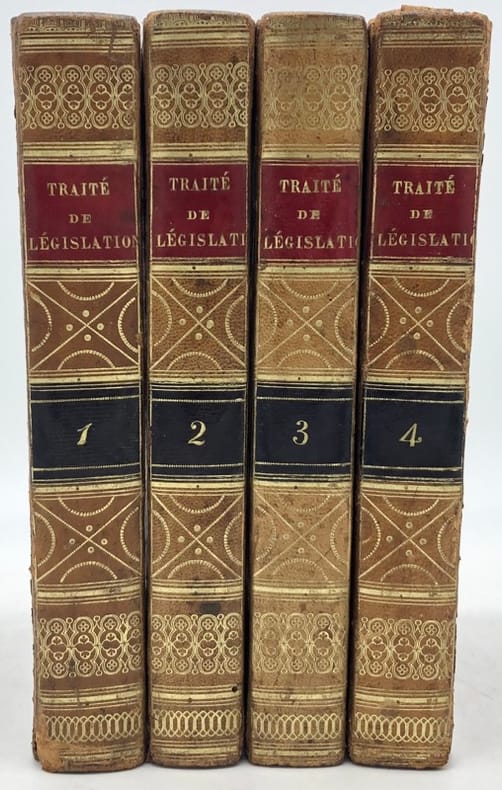
réf. 170358Paris, A. Sautelet, 1826-1827 4 vol. in-8, XIV-527, [4]-478, [4]-492 et [4]-538 pp., basane fauve marbrée, dos lisses ornés alternativement de motifs à la cathédrale et de croisillons de pointillés dorés, pièces de titre et de tomaison cerise et noires, encadrement de simple filet à froid sur les plats, simple filet doré sur les coupes, tranches marbrées (reliure de l'époque). Accroc à un mors inférieur, rousseurs parfois abondantes, mais bel exemplaire.
1984réf. 000808In-4 emboitage toilé bleu, Avec jaquette éditeur illustrée, Ouvrage comprenant un Livre "Traite et navire negrier" de Jean BOUDRIOT et de 47 planches dépliantes détachées (échelle 1/36), Editions ANCRE, Coll: Archéologie Navale Française, Le livre comprend 144 pages et il est illustré de nombreux documents et photos en noir et blanc, Bon état
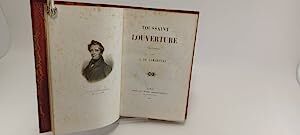
réf. 1449Editions Michel Lévy frères, 1850. Relié (16 x 23,5 cm) de XXIII-302 pages. Reliure demi-maroquin rouge à coins, dos à nerfs, titre et tête dorés. Couvertures conservées (Reliure de L. Claessens). Quelques rousseurs sinon bel exemplaire. Édition originale de la première oeuvre dramatique de Lamartine. On lit au verso du faux-titre: "Représenté pour la première fois à Paris sur le théâtre de la Porte-Saint-Martin, le 6 avril 1850. Les vers marqués d'un astérisque ont été supprimés à la représentation." A la suite de la pièce "De l'émancipation des esclaves, discours prononcés à diverses époques par M. A. de Lamartine" (23 avril 1835, 25 mai 1836, 10 février 1840 et 10 mars 1842). Au lendemain de la révolution de 1848 à laquelle il avait participé et qui scellait l'abolition définitive de l'esclavage, Lamartine, qui avait pleinement compris la force symbolique du personnage de Toussaint-Louverture, attendait beaucoup de cette pièce tout comme le Théâtre de la Porte Saint-Martin en perte de vitesse. Le rôle titre et la mise en scène avaient été confiés à Frédérick Lemaître (1800-1876), consacrant ainsi le retour sur le devant de la scène de l'acteur vedette du Boulevard du crime.Ex-lbris monogrammé non identifié portant la devise Labor omnia vincit improbus.
réf. 1449Editions Michel Lévy frères, 1850. Relié (16 x 23,5 cm) de XXIII-302 pages. Reliure demi-maroquin rouge à coins, dos à nerfs, titre et tête dorés. Couvertures conservées (Reliure de L. Claessens). Quelques rousseurs sinon bel exemplaire. Édition originale de la première oeuvre dramatique de Lamartine. On lit au verso du faux-titre: "Représenté pour la première fois à Paris sur le théâtre de la Porte-Saint-Martin, le 6 avril 1850. Les vers marqués d'un astérisque ont été supprimés à la représentation." A la suite de la pièce "De l'émancipation des esclaves, discours prononcés à diverses époques par M. A. de Lamartine" (23 avril 1835, 25 mai 1836, 10 février 1840 et 10 mars 1842). Au lendemain de la révolution de 1848 à laquelle il avait participé et qui scellait l'abolition définitive de l'esclavage, Lamartine, qui avait pleinement compris la force symbolique du personnage de Toussaint-Louverture, attendait beaucoup de cette pièce tout comme le Théâtre de la Porte Saint-Martin en perte de vitesse. Le rôle titre et la mise en scène avaient été confiés à Frédérick Lemaître (1800-1876), consacrant ainsi le retour sur le devant de la scène de l'acteur vedette du Boulevard du crime.Ex-lbris monogrammé non identifié portant la devise Labor omnia vincit improbus.
1930réf. RO20015079Firmin Didot. 1930. In-8. Cartonné. Etat d'usage, Couv. convenable, Dos fané, Quelques rousseurs. 200p, illustré d'un frontispice, dos toilé bordeaux et papier marbré sur les plats, quelques rousseurs sur le dos.. . . . Classification Dewey : 326-Esclavage
1951réf. 742651951 Paris, Bellenand, 1951, in 12 broché, 254 pages ; couverture illustrée.
1960réf. 284171960 Paris, Club Français du Livre, 1960, in 8° relié pleine toile décorée de l'éditeur, jaquette rhodoïd, 295 pages ; illustrations ; bien complet de la carte dépliante volante.
1981réf. 193293Présence Africaine Présence africaine, 1981. In-8 broché de 385 pages. Dans cet ouvrage, Aimé Césaire quitte le terrain de la poésie pour celui de la rigueur historique. Il y retrace le destin de Toussaint Louverture et analyse la révolution haïtienne (Saint-Domingue) non pas comme un événement périphérique, mais comme un affrontement central mettant à l'épreuve les principes universels de la Révolution française face au système colonial et esclavagiste. Envoi de l'auteur. Traces de scotch ancien au vers ode la couverture sinon bon état
1981P., Présence Africaine, 1981. In-8 broché, 345 pp. Quelques roussuers sur les tranches sinonTB état.
1979réf. R100058489L'Ecole - Caraïbes. 1979. In-8. Broché. Etat d'usage, Coins frottés, Coiffe en pied abîmée, Papier jauni. 399 pages - frontispice en noir et blanc - une carte en noir et blanc hors texte - tranches tâchées.. . . . Classification Dewey : 326-Esclavage
2020réf. 118107Flammarion 2020 Flammarion, 574p, 2020, in-8 broché. Couverture légèrement défraîchie sinon bon état.
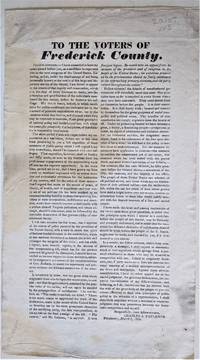
1833réf. 713Winchester Va. 1833. Broadside 4to. 290 x 160 mm. 11 ¼ x 6 ¼ inches. Printed in two columns signed in type by Charles J. Faulkner at Winchester dated March 8 1833 at conclusion. Lightly dust-soiled pale stain affecting perhaps one-third of the left-hand margin and column of text. Neatly silked on verso. Withal about very good. Following the August 1831 Nat Turner rebellion in Southampton County a last effort was made by moderate Virginians to gradually abolish slavery. Faulkner a 26-year-old lawyer and assemblyman along with Thomas Jefferson Randolph sponsored legislation to free all children born of slave parents after July 4 1840. His speech emphasized the evil of slavery for Southern white labor noting that slavery "converts the energy of the community into indolence--its power into imbecility--its efficiency into weakness.Shall society suffer that the slave-holder may continue to gather his crop of human flesh" As the Assembly was malapportioned in favor of the Tidewater slaveocracy the proposal lost rather narrowly and nearly thirty years later the Confederacy was assured of Virginia's succession. It is perhaps not surprising that Faulkner "comparatively a stranger" to the county but a member of the Virginia House of Delegates at this time 1831-34 was not successful in his campaign to represent Virginia in the U.S. Senate. However Faulkner was elected to three terms in Congress from Virginia in the 1850s. He was elected to Congress from West Virginia after the Civil War. In the interim he served as Minister to France during the Buchanan administration and on the staff of Stonewall Jackson. Dictionary of American Biography. Not in Hummel. Not found in American Imprints for 1833 and not in the 1830-1839 title index. OCLC records four copies at The Library of Virginia University of Virginia Virginia Historical Society and American Antiquarian Society. unknown books
1833réf. 713Winchester Va. 1833. Broadside 4to. 290 x 160 mm. 11 ¼ x 6 ¼ inches. Printed in two columns signed in type by Charles J. Faulkner at Winchester dated March 8 1833 at conclusion. Lightly dust-soiled pale stain affecting perhaps one-third of the left-hand margin and column of text. Neatly silked on verso. Withal about very good. Following the August 1831 Nat Turner rebellion in Southampton County a last effort was made by moderate Virginians to gradually abolish slavery. Faulkner a 26-year-old lawyer and assemblyman along with Thomas Jefferson Randolph sponsored legislation to free all children born of slave parents after July 4 1840. His speech emphasized the evil of slavery for Southern white labor noting that slavery "converts the energy of the community into indolence--its power into imbecility--its efficiency into weakness.Shall society suffer that the slave-holder may continue to gather his crop of human flesh" As the Assembly was malapportioned in favor of the Tidewater slaveocracy the proposal lost rather narrowly and nearly thirty years later the Confederacy was assured of Virginia's succession. It is perhaps not surprising that Faulkner "comparatively a stranger" to the county but a member of the Virginia House of Delegates at this time 1831-34 was not successful in his campaign to represent Virginia in the U.S. Senate. However Faulkner was elected to three terms in Congress from Virginia in the 1850s. He was elected to Congress from West Virginia after the Civil War. In the interim he served as Minister to France during the Buchanan administration and on the staff of Stonewall Jackson. Dictionary of American Biography. Not in Hummel. Not found in American Imprints for 1833 and not in the 1830-1839 title index. OCLC records four copies at The Library of Virginia University of Virginia Virginia Historical Society and American Antiquarian Society. unknown