1156 resultados
1996ref. 19835New York: Parthenon Publishing Group. New. Hardcover. FREE UPGRADE to Courier/Priority Shipping Upon Request - IN STOCK AND IMMEDIATELY AVAILABLE FOR SHIPMENT - 518 pages -- Interior text is clean tight and unmarked. Pages are intact and tight to the spine. Slight rubbing to one small spot of front cover; one small dent to back cover; else very fine. -- with a bonus offer--; TEMP005286; 4to - over 9¾" - 12" tall; Acosta Anibal A. editor; Kruger Thinus F. editor Human Spermatozoa in Assisted Reproduction REPRODUCTIVE TECHNOLOGY ARTIFICIAL INSEMINATION HUMAN REPRODUCTIVE TECHNOLOGY SPERMATOZOA MEDICAL MEDICINE . 1996. 1850705909 . Parthenon Publishing Group hardcover
1838ref. 007896London: Paternoster Row.: Published for the Proprietor by Longman Orme Brown Green and Longmans 1838. Hardcover. Near Fine. Folio - over 12 - 15" tall. TURNER J.M.W. A beautiful example with NINETY SIX STEEL PLATES BY JMW TURNER. First edition 1838 two volumes in full calf decorative gilt tooling. Spines raised bands gilt titles to red & black calf label decorative gilt tooling. Internally Vol 1 1838 4 title page and plate list followed by 48 fine steel engravings each with a leaf of descriptive text. Vol 2 1838 4 followed by 48 engraved plates each with a leaf of descriptive text printed by J. Haddon Castle Street Finsbury. Marbled endpapers & text block edges occasional spotting and light offsetting gilt tooling to board edges and turn-ins. With previous owners pencil details to ffep 1933- also date for re-bind with some loose pencil notes about the book in the same hand plates dated 1832-1838. 297236 mm. Lowndes V p. 2723. The Picturesque Views in England and Wales was "the most ambitious" of all projects for the publication of engravings after Turner closely involving the artist himself and marking "a high point in the development of what has come to be known as the Turner school of engravers" DNB. Engraved plates by W.B. Cook G. Cook and others after Turner. A superb copy in a striking binding. Published for the Proprietor, by Longman, Orme, Brown, Green, and Longmans, hardcover
1677ref. 8814Roma: Io. Jacobus de Rubeis 1677. First Edition Primera edición. 585x396mm. 23x15½". Roma Io. Jacobus de Rubeis 1677 o anterior. 13 láminas grabadas al aguafuerte incluyendo portada. Junto con: CARRACCI Anibal inventor & MITELLI M. grabador. L'Enea Vagante Pitture Dei Caracci Intagliate E Dedicate Al Serenissimo Principe Leopoldo Medici Da Gioseppe Maria Mitelli Bolognese Serma. Altezza. Gioseppe Ma. Mitelli. Roma Gio Jacomo de Rossi 1663. 16 ilustraciones sobre 14 láminas grabadas al aguafuerte incluyendo portada. 2 obras en un volumen. En gran folio 585 x 396mm. En total 29 ilustraciones sobre 27 grandes láminas grabadas sobre pinturas inventadas por Carracci para el Palacio Farnese y el Palacio Fava en Roma y Boloña respectivamente. Encuadernación en holandesa del siglo XVIII. -I: Serie completa de 13 láminas numeradas incluyendo portada. Las láminas 2-13 están todas firmadas por Annibal Carraccius y dibujadas y grabadas por Petrus Aquila. Cada una lleva el nombre del impresor estampado "Io. Jacob. de Rubeis" Giovanni Giacomo de Rossi. La segunda lámina contiene la dedicatoria del editor al Cardenal César d'Estrées. La obra salió sin fecha de publicación pero la colección se menciona en el Indice De Rossi de 1677. Las láminas muestran los frescos pintados por Annibale Carracci entre 1596 y 1597 para el Cardenal Odoardo Farnese en el techo del Camerino Farnese en el Palacio Farnese de Roma. Representan los logros de Hércules y otras escenas alegóricas. Referencias: Goldschmidt E.P. Catalogue 163 p. 25 -II: Serie completa de 16 láminas sobre 14 hojas representando los frescos realizados por los hermanos Carracci en 1586 en el Palacio Fava de Boloña ilustrando la historia de Aeneas. Referencias: Bertarelli 1940 59; Bartsch XIX.289.46 Io. Jacobus de Rubeis hardcover
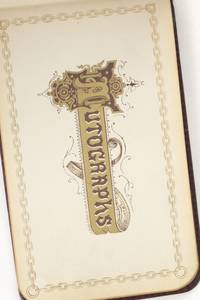
1885ref. 2007Philadelphia: S.n. 1885. Leather over boards. Oblong duodecimo. 54 leaves. Near fine. Leather over thin board with gilt-stamped upper board. Professionally restored with about half of the original gilt-ornamented spine retained. Wesson's name card laid down on front pastedown. A fantastic and eclectic trove of 19th century autographs collected by one Edward Wesson apparently associated with the Continental Hotel in Philadelphia. The autographs range from military figures to actors and actresses singers diplomats explorers and more. Some of the most notable figures whose autographs appear here include Ulysses S. Grant Edwin Booth William Tecumseh Sherman P. T. Barnum King David KalÄkaua of Hawaii Henry Ward Beecher David Ross Locke aka 'Petroleum V. Nasby' and Hannibal Hamlin Vice-President under Abraham Lincoln. There are also autographs from survivors of the tragic Jeanette Expedition to the Arctic including John W. Danenhower Louis P. Noros William F. C. Nindemann and George W. Melville. Among the other entertainment figures of the day to sign Mr. Wesson's album were actresses Maggie Mitchell and Emma Abbott and several others. Of the 54 leaves only 5 are blank on both sides with the remaining 49 having autographs on one or both sides and one autograph on the recto of rear free endpaper for a total of 57 autographs in all. The album originated at Philadelphia's Continental Hotel one of the grandest and most socially prominent establishments of the 19th century. Opened in 1860 and famed for hosting presidents generals and celebrities-including Abraham Lincoln who stayed there en route to his 1861 inauguration-the Continental stood as a national landmark until its 1924 demolition to make way for the Benjamin Franklin Hotel. Apart from a single tipped‑in signature from a Mayor of Mt. Vernon NY every autograph in this volume is penned directly onto its original pages. This is of vital significance because unlike albums assembled from clipped signatures from various sources this is a continuous artifact: the very book that moved through the hands of each signer. To hold it now is to experience that unique connection with each of the historical figures who once inscribed it. A truly remarkable artifact. (S.n.) unknown
1865ref. 551740Ship Island Mississippi 1865. Near Fine. Printed certificate completed in manuscript. 8" x 10". Two slight original horizontal folds near fine. This Union Army "Certificate to be Given to Union Volunteers at the Time of their Discharge" was issued for Robert Brown an African-American Private in Company C of the Second Regiment of the Louisiana Native Guard also known as the Corps d'Afrique. The document is Signed by Captain Hannibal Carter and the additional text was likely handwritten by him. Carter was Brown's African-American Company Commander. He formerly had been a Private in the first Black Confederate Army unit also known as the 1st Louisiana Native Guard. When Louisiana seceded from the Union New Orleans free Black citizens and Creoles of color initially supported the Confederacy and briefly offered their volunteer service as soldiers and nurses. When Union General Benjamin Butler occupied New Orleans with regiments hailing from New England his command was inundated with enslaved Blacks from the city as well as those who had fled their plantations. Butler who feared a possible Confederate campaign to retake the city formed several regiments composed of loyal Irishmen and Germans who had settled in the city and he also interviewed former Black officers of the Confederate 1st Native Guard. After being convinced they would transfer their allegiance to the Union he established the first Black military unit to serve in the Union Army: the Louisiana Native Guard. Its first regiment included many members of the former Confederate militia unit plus two additional regiments-over 2700 men in total-were raised from other "free men of color" and former slaves. This certificate was issued to Brown at Ship Island Mississippi on 8 March 1865. Robert Brown's unit the 2nd Regiment of the Louisiana Native Guard initially remained in New Orleans and Lafourche Parish where it guarded railroads and strategic locations while confiscating Confederate supplies. In January of 1863 Brown's company was deployed to defend Ship Island. In April a detachment from Ship Island boarded vessels to raid East Pascagoula Mississippi becoming the second Black unit to meet Confederates in combat. The Louisiana Native Guard was eventually renamed the Corps d' Afrique and later the 2nd Regiment was redesignated as the 74th Regiment of U.S. Colored Infantry. Hannibal Caesar Carter Brown's Company Commander was an original member of the Confederate Army's 1st Louisiana Native Guard. He was born in New Albany Indiana where he received his common schooling and eventually became a barber and tobacconist. He his father and his brother Edward were traveling to New Orleans on the Mississippi riverboat Vicksburg when Fort Sumner fell to the Confederates in April 1861. Sometime after their arrival both brothers joined the 1st Louisiana Native Guard. After the war Carter became a prominent Republican and served as Mississippi's second Black Secretary of State. A scarce survival. This certificate appears to be the only identified Civil War military document signed by an African-American man who had served in both the first Black Confederate unit and the first Black Union unit. unknown
1865ref. 551740Ship Island Mississippi 1865. Near Fine. Printed certificate completed in manuscript. 8" x 10". Two slight original horizontal folds near fine. This Union Army "Certificate to be Given to Union Volunteers at the Time of their Discharge" was issued for Robert Brown an African-American Private in Company C of the Second Regiment of the Louisiana Native Guard also known as the Corps d'Afrique. The document is Signed by Captain Hannibal Carter and the additional text was likely handwritten by him. Carter was Brown's African-American Company Commander. He formerly had been a Private in the first Black Confederate Army unit also known as the 1st Louisiana Native Guard. When Louisiana seceded from the Union New Orleans free Black citizens and Creoles of color initially supported the Confederacy and briefly offered their volunteer service as soldiers and nurses. When Union General Benjamin Butler occupied New Orleans with regiments hailing from New England his command was inundated with enslaved Blacks from the city as well as those who had fled their plantations. Butler who feared a possible Confederate campaign to retake the city formed several regiments composed of loyal Irishmen and Germans who had settled in the city and he also interviewed former Black officers of the Confederate 1st Native Guard. After being convinced they would transfer their allegiance to the Union he established the first Black military unit to serve in the Union Army: the Louisiana Native Guard. Its first regiment included many members of the former Confederate militia unit plus two additional regiments-over 2700 men in total-were raised from other "free men of color" and former slaves. This certificate was issued to Brown at Ship Island Mississippi on 8 March 1865. Robert Brown's unit the 2nd Regiment of the Louisiana Native Guard initially remained in New Orleans and Lafourche Parish where it guarded railroads and strategic locations while confiscating Confederate supplies. In January of 1863 Brown's company was deployed to defend Ship Island. In April a detachment from Ship Island boarded vessels to raid East Pascagoula Mississippi becoming the second Black unit to meet Confederates in combat. The Louisiana Native Guard was eventually renamed the Corps d' Afrique and later the 2nd Regiment was redesignated as the 74th Regiment of U.S. Colored Infantry. Hannibal Caesar Carter Brown's Company Commander was an original member of the Confederate Army's 1st Louisiana Native Guard. He was born in New Albany Indiana where he received his common schooling and eventually became a barber and tobacconist. He his father and his brother Edward were traveling to New Orleans on the Mississippi riverboat Vicksburg when Fort Sumner fell to the Confederates in April 1861. Sometime after their arrival both brothers joined the 1st Louisiana Native Guard. After the war Carter became a prominent Republican and served as Mississippi's second Black Secretary of State. A scarce survival. This certificate appears to be the only identified Civil War military document signed by an African-American man who had served in both the first Black Confederate unit and the first Black Union unit. unknown books