206 Ergebnisse
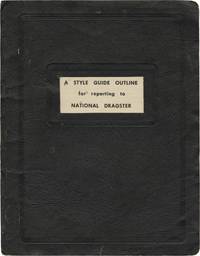
1960Best.-Nr. 152883Los Angeles: National Hot Rod Association 1960. Original style guide for freelance reporters and photographers covering competition drag racing created by the National Hot Rod Association NHRA circa 1960s. The NHRA was founded by Wally Parks editor of Hot Rod magazine in 1951 in order to promote "safety sportsmanship and fellowship" among racer and more broadly to convince the general public and especially police that there was a difference between reckless street racers and hot rod drivers. In 1960 the association began publishing "National Dragster" a biweekly news magazine featuring racing stats and interviews which continues to be published today. Housed in black wrappers with a die-cut title window in the British style. Mimeograph duplication rectos only. Ten leaves not numbered. Wrapper Very Good plus leaves Very Good plus lightly age-toned bound internally with three silver brads. National Hot Rod Association unknown
Best.-Nr. DADAX3777429775New unknown
Best.-Nr. DADAX2864970961New unknown
Best.-Nr. SONG0367439522Used: Good unknown
Best.-Nr. DADAX1613255659New unknown
Best.-Nr. DADAX3030400441New unknown
Best.-Nr. SONG1789382564Used: Good unknown
Best.-Nr. DADAX0367439522New unknown
Best.-Nr. DADAX1138327344New unknown
Best.-Nr. DADAX093864419XNew unknown
Best.-Nr. DADAX1557885400New unknown
Best.-Nr. DADAX1932494375New unknown
Best.-Nr. DADAX1932494251New unknown
Best.-Nr. DADAX0760304351New unknown
Best.-Nr. DADAX0792310209New unknown
Best.-Nr. DADAX0801854644New unknown
Best.-Nr. DADAX0792328205New unknown
Best.-Nr. DADAX0840731981New unknown
Best.-Nr. SONG1583881883Used: Good unknown
Best.-Nr. SONG0760338922Used: Good unknown
Best.-Nr. SONG1844254259Used: Good unknown
Best.-Nr. SONG1557885400Used: Good unknown
Best.-Nr. SONG0816166137Used: Good unknown
Best.-Nr. SONG1904344100Used: Good unknown
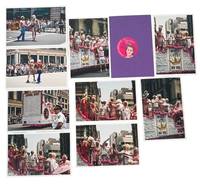
2000Best.-Nr. 235592000. Imperial Court of New York Pride parade photo archive showing drag royalty queer pageantry and public LGBTQ Pride in Manhattan circa 2000 when court organizations used coronation ritual and performance spectacle to make gay community work visible in the street. The Imperial Court System was founded in 1965 by José Sarria the San Francisco performer and activist who became the first openly gay candidate for public office in the United States in 1961 and the Imperial Court of New York was founded in 1986 under Emperor I George and Empress I Sybil Bruncheon. The New York court describes itself as a social and fundraising organization that has raised money for social service and health support organizations placing these photographs within a culture of drag performance tied to HIV/AIDS support social visibility and charitable work in the tri state area. Photo archive of 9 chromogenic color photographs each 6 x 4 inches New York City circa 2000. The photographs show an Imperial Court of New York float in a Pride parade with participants in crowns tiaras formal wear pink sequined costumes curled wigs red lipstick and court regalia performing camp monarchy before spectators behind barricades. Float signage reads "Imperial Court New York" and "Imperial Court" while another photograph shows the rear of the float framed by rainbow bunting a painted crown and a papered platform carrying costumed titleholders and attendants. Other images show parade marchers and street performers in drag leather rainbow wings and bright costume elements including a performer in a horned headpiece and black corset another in blue hair and a short white dress and a figure wearing rainbow colored wing panels before a dense sidewalk crowd. NYPD presence is also documented in the photographs. The group records a local chapter of a national queer court culture using royal titles camp hierarchy and public spectacle to convert drag performance into civic and charitable presence. The International Court System identifies its chapters as courts with elected leaders bearing titles such as emperor empress prince and princess and describes their work through coronation events drag performances and community activities supporting LGBTQ rights social services and charitable causes. In these photographs that structure appears not as an indoor gala or bar revue but as a public Pride procession where formal gowns crowns float signage and playful monarchy announce the court to spectators in the city that had become central to national gay liberation memory after Stonewall. Clean versos; images bright with good color and sharpness. Overall in very good condition. The photo archive documents the Imperial Court of New York drag pageantry carrying fundraising culture camp royalty and LGBTQ community visibility into the public space of Manhattan Pride. unknown