Francis De PressenséAntiquariat.de
Adams, GerryAntiquariat.de
Cage Eleven.
1990réf. 927456Kerry: Brandon, 1990. 156 S. Broschiert.

Fundus-Online GbR · Allemagne6,00 €
1 114 résultats
1913réf. 72313Paris, Èdit.de "La Tribune Russe", 1913. Original-Broschur, kl.8°, 43 Seiten.
1990réf. 927456Kerry: Brandon, 1990. 156 S. Broschiert.
1903réf. FD6-512London, Heinemann, 1903. original vloth, 8?, viii, 309 pages, Bibliothekstempel / bibliotheekstempel / cachet de biblioth?que / librarystamp, binding a bit rubbed, scratched, worn, and binding a bit stained
1823réf. 1757Hamburg, Hoffmann & Campe, 1823. 5 Bll., 70 S. Mit 1 gestoch. Taf. und 1 lith. Frontispiz (Portr. d. Verf. nach e. Gemälde v. F. C. Gröger.) 4to. Pp. d. Zt.
1823réf. 38133Hamburg, Hoffmann und Campe, 1823. 5 Bll., 70 S., 25 Bll. Mit 18 gefalt. tls.gestoch. Tab., 1 gestoch. Taf., 1 Abb. und 1 lith. Frontispiz 4to. HLdr. d. Zt.
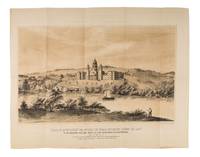
1856réf. 823091856. A New Hampshire Prison "For Juvenile and Female Offenders" Prisons. New Hampshire. "House of Reformation for Juvenile and Female Offenders Against the Laws" To be Erected for the State of New Hampshire at Manchester. Under the Direction of Hon. Frederick Smith Hon. Matthew Harvey and Hon. Hosea Eaton Commissioners. William R. Lincoln and Gridley J.F. Bryant Designers and Architect. Disbound from First Annual Report of the Commissioner for Locating and Building House of Reformation for Juvenile and Female Offenders Against the Laws. Concord: Amos Hadley State Printer 1856. Lithograph signed Kramer & Co. Removed 16-3/4" x 21-3/4" 42.5 x 55.25 cm sepia lithograph image size 11-1/2" x 19" 29.2 x 48.25 cm. Moderate toning faint offsetting horizontal and vertical fold lines a few tiny clean tears along fold lines with minor loss to image. $450. An impressive mid-19th-century architectural rendering showing the proposed reformatory situated along the banks of the Merrimack River in Manchester New Hampshire. Authorized by the state legislature in 1855 construction began on the site the following year. The structure was designed by the prominent Boston architect Gridley J.F. Bryant 1816-1899 a pioneer in Victorian institutional architecture who designed numerous municipal buildings custom houses and prisons throughout New England and who would later renovate the New Hampshire State House in 1866. Bryant worked here alongside co-designer William R. Lincoln. Intended as a progressive state-of-the-art facility for the rehabilitation of juvenile and female offenders the House of Reformation officially opened in 1858. The grand building depicted here was short-lived however; it was severely damaged and largely destroyed by a catastrophic fire in 1865. The site was subsequently rebuilt and went on to become the long-running State Industrial School later the Youth Development Center. OCLC locates 3 individually catalogued copies of this lithograph Library Company of Philadelphia Boston Athenaeum American Antiquarian Society. We located additional copies at Dartmouth and the New Hampshire Historical Society. Reed Building Victorian Boston: The Architecture of Gridley J.F. Bryant 186. unknown books
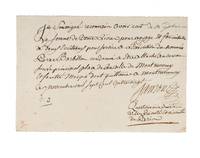
1780réf. 824611780. Paris 1780. 4-3/4" x 7-1/4" sheet manuscript text. Paris 1780. 4-3/4" x 7-1/4" sheet manuscript text. You Have Your Prisoner Now I'd Like My Money Manuscript. Prisons. France. Receipt for the Transport of Pierre Barbillon. Montmorency Paris 7th Nov 1780. 1 pp. 4-3/4" x 7-1/4" 12.1 x 18.4 cm sheet manuscript text and signature to recto. Text in neat secretarial hand with docket to bottom name of payer and signature of payee completed in a different hand. Light toning a few faint fox-spots "34" in red pencil to lower left corner. $250. This document indicates that the signatory has received the sum of thirty livres for transporting and attending the punishment of the prisoner Pierre Barbillon and erecting two notices announcing his punishment. Barbillon whose crime is not indicated was sentenced to be whipped and placed in an iron collar in the central square of Montmorency a commune in northern Paris. unknown books
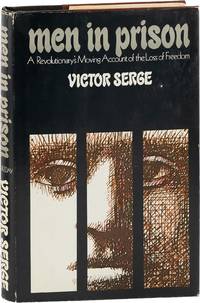
1969réf. 84379New York: Doubleday 1969. First American Edition. Octavo. 21cm. Original black cloth spine over maroon boards titled in silver gilt to spine. Dustjacket. xxvi; 251pp. Strong and handsome with very light wear and some minor bumping to the spine ends; internally clean fore-edge untrimmed; in a strong bright illustrated dustjacket with some light scuffing in places and light wear to spine ends and corners. A very good copy. Originally published in French in 1967 as Les Hommes Dans Le Prison detailing Serge's experiences as a French political prisoner jailed in 1912 for revolutionary crimes. Doubleday unknown books
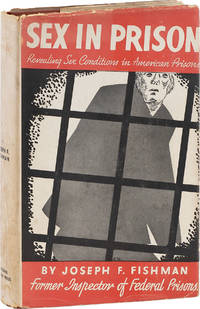
1934réf. 80648New York: National Library Press 1934. First Edition. First Printing. Octavo. 24cm. Publisher's red cloth titled in gilt to spine. Dustjacket. 256pp. Minor bumping to the spine ends a little superficial wear to extremities strong and handsome with a few areas of discolouration to the bright red cloth in a clean solid dustjacket lightly sunned and spotted to the spine and with some soiling of the white areas and shallow marginal wear. A very good copy. Internally clean although there is some acid reaction or offsetting to the pastedowns and flyleaves toning to page edges. Six illustrative photographs. A rather fascinating early work on conditions for prisoners in US carcerial institutions Fishman pioneered what was referred to as "Deprivation Theory" citing lack of access to heterosexual relationships as a major cause of unrest and friction amongst inmates he was an early suggestor of conjugal visits and a reduction in overcrowding: "Why is there such a wall of silence encircling the subject of Sex in Prison We are living in a frank and realistic age yet the subject of sex in prison - so provocative so vital so timely in view of the recent epidemic of prison riots - is shrouded in dread silence." Fishman's researches despite encompassing a number of theories that we know today definitively contribute to unrest and violence amongst prison populations weren't favourably received until the 1960's when a new generation of reformers took sections of his research and advanced them into a more modern understanding of what happens to incarcerated peoples and why the concept of "punishment" is essentially useless without a conceptual pathway towards rehabilitation and a time "after punishment." An important book. National Library Press unknown books
1937réf. 16674New York: Charles Scribner's Sons 1937. First Edition. Octavo. Blue cloth cover decoratively stamped in gilt and green; dustjacket; 332pp. Top edge of text block a little dusty else a tight VG copy in the original pictorial dustwrapper worn at edges and with a closed tear to base of front panel; Good or better. Fictionalized account of the author's real-life experiences on San Quentin's Death Row following a wrongful murder conviction. Lamson also published a non-fiction account We Who Are About To Die 1935. Oddly the setting is changed to Washington State Penitentiary for this fictional version. HANNA 2080. Charles Scribner's Sons unknown books
1847réf. 4980Troy: Published and Sold by L. Willard 1847. First Edition. 1 - 44 pp. 1 vols. 8vo. Original printed wrappers uncut and unopened; some chipping at margins sporadic foxing. First Edition. 1 - 44 pp. 1 vols. 8vo. Contains: The Condemned: A Chapter from Our City Prison: A Tale of Truth and Horror. Wright I 2444 Published and Sold by L. Willard unknown books
1833réf. 39519Paris: Au Dépôt de Lois Chez Gustave Pissin Imprimerie de P. Dupont et Laguionie 1833. Pp. 1-32 49-128 lacking part of "Nouvelle lois actes rendues en Angleterre" and much of Victor Foucher's "Code pénal de la république de Bolivia". 1 vols. 8vo. Disbound accompanied by upper cover some light spotting inked underlining of a few pages else very good. Pp. 1-32 49-128 lacking part of "Nouvelle lois actes rendues en Angleterre" and much of Victor Foucher's "Code pénal de la république de Bolivia". 1 vols. 8vo. Intended to provide the readers with recent changes or papers in the international legal and economic fields. Includes Mittermaier's paper on the British Penal System "Renseignemens nouveaux et récens sur l'efficacité du systeme pénal des Anglais et spécialement de la transportation" pp. 7-24 a section on "Nouvelle Publications" the "Chronique" M. Pinnheiro-Ferreira former minister of Portugal's "Observations sur la loi belge du 1er Octobre 1833 concernant l'extridition des réfugiés" pp. 65-80 an extract of the article by M. Wagener on "De l'Administration de la Justice criminelle en Autriche" pp. 113-122. Au Dépôt de Lois, Chez Gustave Pissin [Imprimerie de P. Dupont et Laguionie unknown books
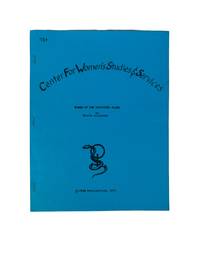
réf. 18163Scholarly article on the overlooked state of women in prison. "Women of the Convicted Class" by Rhetta Alexander. Center for Women's Studies and Services Publications 1971. Stapled with bright blue front and back soft covers front cover with illustration of black snake coiled around the female gender symbol. Measures 8.5 x 11 inches. 13 pages with article subdivided into parts I-VI. 75 cent mark on upper left hand of front cover. Paper details the institutional disinterest on the state of women's prisons and the broader systemic link between patriarchy and female incarceration. "The nature of the crimes committed by women and the conditions surrounding their imprisonment are rooted in the sexism of American society; a society in which sex-based inequlities are written into the law." A sweeping indictment of the carceral state and call to action for a population most often ignored. Slight crease to back cover. Very good condition. unknown books
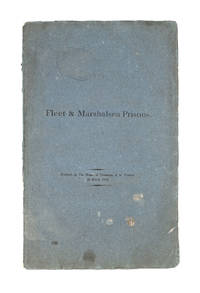
1819réf. 776141819. The State of the Fleet Westminster and Marshalsea Prisons in 1819 Prisons. Great Britain. House of Commons. Report from the Commissioners Appointed to Inquire into the State Conduct And Management of the Prison and Gaol of The Fleet; And also Of the Prison and Gaol of the Court of His Majesty's Palace at Westminster; And of the Court of the Marshalsea of His Majesty's Honourable Household; And of the Prisoners in the Respective Prisons Confined. Dated 29th October 1818. London: Ordered By the House of Commons To be Printed 16 March 1819. 114 pp. Folding ground plan of the Marshalsea Prison. Folio 13-3/4" x 8-1/2". Original printed wrappers untrimmed edges. A few light marks and stains fold to lower outside corner of rear wrapper spine heavily abraded wrappers and text secure. Moderate toning to interior light foxing to a few leaves. A good copy in its original state. $350. The Fleet Westminster and Marshalsea prisons were notorious as debtors' prisons though they housed a variety of offenders. Famously Charles Dickens's father was sent to the Marshalsea Prison as a result of debt. The present report was made in the course of an assessment of the nation's bankruptcy laws. It includes such details as the number and type of prisoners and the allowances of food money and clothing allotted to them along with additional commentary. Pre-1836 Parliamentary papers are scarce today. They were not available to the public so they were produced in small numbers. unknown books
1664réf. 4757London: Printed for M.D. and are to be sold by Nathaniel Webb at the Royal Oak in St. Pauls Church-yard neer the little north-door of St. Pauls Church 1664. FIRST EDITION. Hardcover. Fine. Bound in modern quarter calf and marbled boards. A crisp copy a few sall rust marks final leaf dusty verso of last text leaf lightly foxed. The first leaf is a full-page woodcut of the royal arms. The final leaf bound at the beginning in this copy bears the woodcut printer's device "Royall Oake" and type ornaments. Rare: North American copies: Harvard 4 copies Huntington Indiana Newberry Illinois. A royal pronouncement by King Charles II appointing members to serve on a commission first established by Queen Elizabeth in 1586 "for the Relief of Poor Distressed Prisoners" that is those debtors who "were truly and indeed poor distressed and miserable and wanted means to satisfie their creditors" as opposed to those "obstinate and wilful debtors" who had the means but not the will to pay their outstanding debts. The patent grants commissioners the authority to summon any imprisoned debtor and any party to whom a debt is owed to assess the merits of the case and to devise -in coordination with judges- a remedy that will satisfy the creditor and provide relief for "such poor and miserable persons as have not wherewithal to satisfie their Debts" who would otherwise "be constrained miserably to perish in Prison except in pity they shall be relieved." The Commission could do little to remedy the disfunction of the prison system or to alleviate the plight of those imprisoned for debt. Throughout the 17th c. the imprisoned vociferously protested the grim horrors of debtors' prison and the corrupt system that doomed them to rot in jail powerless and penniless. From the 1640s onward numerous petitions were introduced seeking debt relief and prison reform. It was not until the 1670s that these efforts would bear substantive fruit. In the meantime appealing to the Commission offered salvation to a relative few. "Throughout the petitions and appeals the gaolers are described as vipers leeches and caterpillars who "feed upon the miseries of honest men or grow rich out of others ruines"; they are also characterized as ravenous beasts of prey predators that "rore like Lyons devoure like Tygers ravine like Wolves and like Beares crush the Prisoner under their feet." "Whether they slowly consumed or quickly devoured their victims these "insatiable Monsters of Cruelty" threatened especially prisoners caught in the vicious cycle of financial misfortune that had led to their incarceration. "Because we are Poore" one of them poignantly protests we have no escape: "Poore I say and not able to fee Lawyers Atturneys Sollicitors and Gaolers; for if we had moneys to satiate these Horsleeches then though our causes were never so unjust and debts never so great we should no wayes doubt the gaining of our Liberties." This injustice another tract contends is not merely the timeless complaint of all prisoners: "here the poorest debtor hath the cruellest imprisonment; that is the rule of these men's mercie: The greatest cheater hath the greatest favor; that is their Justice." "Quite simply money drove the debtors to prison and money determined their fates in prison. Much of the complaint against the rapacity of the gaolers in fact stems from a fee system that required inmates to pay for their own incarceration. In addition to the various chamber rents levied by keepers all prisoners were expected to give sums to the turnkeys and porters for their services. Neither the fees nor the laws governing this practice were however clearly established; and prisoners complained at length and in detail "That in pursuance of their uncontrouled inhumane cruelties Gaolers and Prison-keepers have and dayly do inforce from Prisoners their goods and moneys illegal fees and excessive Chamber-rent."Anselment The Confinement: The Plight of the Imprisoned English Debtor in the Seventeenth Century The Commission for the Relief of Poor Distressed Prisoners in the Post-Elizabethan Period: By this patent Charles II's renews previous patents passed by "Our Grand-Father"James I and "Our Father"Charles I. Despite their intent the Commissions For Relief were an imperfect solution. They met resistance from debtors who feared that their implementation would make it harder to recoup monies owed to them. Further there was concern that unscrupulous borrowers would be emboldened to default on their debts. "Creditors needed protection against deliberate bankrupts and poor debtors required relief against persistent creditors yet aid to one party would have been prejudicial to the other. Upon Queen Elizabeth's death her patent authorizing a commission for the relief of poor imprisoned debtors expired and James did not renew it. "In the absence of a royal patent Parliament attempted to resolve the dilemma by statutes but its prison bills proved ineffectual. Also as Parliament's patent of 1618 "Acte for Recoverie of Small Debtes and releevinge of poor debtors in London" makes clear the expiration of the earlier patent somewhat discouraged political debtors but it left many bona fide debtors unrelieved until London's jails were filled with 'the Bodies of those persons whose imprisonment cann no waie avail their Creditors but rather is an hinderance to the Satisfaction of their Debts for that during the tyme of their Restrainte they are in no wise able to goe aboute or attende their lawfull Busynes but must of force consume themselves and that little they have miserably in prison.'"Shaw The Position of Thomas Dekker in Jacobean Prison Literature PMLA Jun. 1947 Vol. 62 No. 2 Jun. 1947 pp. 366-391. Printed for M.D. and are to be sold by Nathaniel Webb, at the Royal Oak, in St. Pauls Church-yard, neer the little north-door of hardcover books
1910réf. 14969n.p.: State of New York Prison Department 1910. First printing. Black pebbled cloth. Lightly rubbed else very good. Stamp of State Assemblyman on endpapers. Small faint stain to fore edge. Tiny tear to last leaf. A tight clean copy. 461 pp. 8vo. Report covers Sing Sing Prison Auburn clinton Great Meadow Sate Prison for women Matteawan State Hospital Danneomora State Hospital and the Bureau of Identification. State of New York, Prison Department hardcover books
1841réf. 27566Boston: n.p. 1841. First edition. Removed. A very good copy browning along extremities. 9 pp. 8vo. The committee reported that prisons were overcrowded the legislature did not reduce the harshness of sentences so prisoners could not be release early to alleviate overcrowding and the mentally ill should be prodided different treatment. Nothing has changed in 160 years. n.p. unknown books
1864réf. 47074Philadelphia: Printed for the U.S. Sanitary Commission by King & Baird Prs 1864. Very Good. Philadelphia: Printed for the U.S. Sanitary Commission by King & Baird Prs. 1864. First Edition. Octavo; purple cloth stamped in gilt; 283pp. Four plates map. Ex-library though with no external institutional markings. Boards worn at extremities with chipping to spine ends and brief exposure to joints and corners; spine faded. Binding sound; ca. 1900 library plate to front pastedown; stamp to title; top portion of the title page torn away not affecting text; else unmarked; still a Very Good copy; includes the four plates of starved soldiers; images available upon request. Sabin 51791. Printed for the U.S. Sanitary Commission, by King & Baird, Prs unknown books
1971réf. 88816Princeton: Vertex / Auerbach Publishers Inc 1971. First Edition. First Printing. Octavo 23.5cm; dark gray cloth with titles stamped in silver on spine; map endpapers; dustjacket; xii2431pp. Old sticker-pull to upper front endpaper some light finger-soil to text edges with some offsetting to terminal blank and inner rear endpaper from a laid-in newspaper article; Very Good. Dustjacket is unclipped priced $7.95 edgeworn lightly dust-soiled gently spine-sunned with several tiny tears and creases with a thin strip of adhesive remnant and some mild foxing on verso; Very Good. Harrowing memoir by a Romanian journalist imprisoned for eight years in Siberian work camps and "pardoned" for his crimes toward the end of 1955. 88816. Vertex / Auerbach Publishers Inc unknown
1969réf. 84379New York: Doubleday 1969. First American Edition. Octavo. 21cm. Original black cloth spine over maroon boards titled in silver gilt to spine. Dustjacket. xxvi; 251pp. Strong and handsome with very light wear and some minor bumping to the spine ends; internally clean fore-edge untrimmed; in a strong bright illustrated dustjacket with some light scuffing in places and light wear to spine ends and corners. A very good copy. Originally published in French in 1967 as Les Hommes Dans Le Prison detailing Serge's experiences as a French political prisoner jailed in 1912 for revolutionary crimes. Doubleday unknown
1856réf. 823091856. A New Hampshire Prison "For Juvenile and Female Offenders" Prisons. New Hampshire. "House of Reformation for Juvenile and Female Offenders Against the Laws" To be Erected for the State of New Hampshire at Manchester. Under the Direction of Hon. Frederick Smith Hon. Matthew Harvey and Hon. Hosea Eaton Commissioners. William R. Lincoln and Gridley J.F. Bryant Designers and Architect. Disbound from First Annual Report of the Commissioner for Locating and Building House of Reformation for Juvenile and Female Offenders Against the Laws. Concord: Amos Hadley State Printer 1856. Lithograph signed Kramer & Co. Removed 16-3/4" x 21-3/4" 42.5 x 55.25 cm sepia lithograph image size 11-1/2" x 19" 29.2 x 48.25 cm. Moderate toning faint offsetting horizontal and vertical fold lines a few tiny clean tears along fold lines with minor loss to image. $450. An impressive mid-19th-century architectural rendering showing the proposed reformatory situated along the banks of the Merrimack River in Manchester New Hampshire. Authorized by the state legislature in 1855 construction began on the site the following year. The structure was designed by the prominent Boston architect Gridley J.F. Bryant 1816-1899 a pioneer in Victorian institutional architecture who designed numerous municipal buildings custom houses and prisons throughout New England and who would later renovate the New Hampshire State House in 1866. Bryant worked here alongside co-designer William R. Lincoln. Intended as a progressive state-of-the-art facility for the rehabilitation of juvenile and female offenders the House of Reformation officially opened in 1858. The grand building depicted here was short-lived however; it was severely damaged and largely destroyed by a catastrophic fire in 1865. The site was subsequently rebuilt and went on to become the long-running State Industrial School later the Youth Development Center. OCLC locates 3 individually catalogued copies of this lithograph Library Company of Philadelphia Boston Athenaeum American Antiquarian Society. We located additional copies at Dartmouth and the New Hampshire Historical Society. Reed Building Victorian Boston: The Architecture of Gridley J.F. Bryant 186. unknown
1780réf. 824611780. Paris 1780. 4-3/4" x 7-1/4" sheet manuscript text. Paris 1780. 4-3/4" x 7-1/4" sheet manuscript text. You Have Your Prisoner Now I'd Like My Money Manuscript. Prisons. France. Receipt for the Transport of Pierre Barbillon. Montmorency Paris 7th Nov 1780. 1 pp. 4-3/4" x 7-1/4" 12.1 x 18.4 cm sheet manuscript text and signature to recto. Text in neat secretarial hand with docket to bottom name of payer and signature of payee completed in a different hand. Light toning a few faint fox-spots "34" in red pencil to lower left corner. $250. This document indicates that the signatory has received the sum of thirty livres for transporting and attending the punishment of the prisoner Pierre Barbillon and erecting two notices announcing his punishment. Barbillon whose crime is not indicated was sentenced to be whipped and placed in an iron collar in the central square of Montmorency a commune in northern Paris. unknown
1934réf. 80648New York: National Library Press 1934. First Edition. First Printing. Octavo. 24cm. Publisher's red cloth titled in gilt to spine. Dustjacket. 256pp. Minor bumping to the spine ends a little superficial wear to extremities strong and handsome with a few areas of discolouration to the bright red cloth in a clean solid dustjacket lightly sunned and spotted to the spine and with some soiling of the white areas and shallow marginal wear. A very good copy. Internally clean although there is some acid reaction or offsetting to the pastedowns and flyleaves toning to page edges. Six illustrative photographs. A rather fascinating early work on conditions for prisoners in US carcerial institutions Fishman pioneered what was referred to as "Deprivation Theory" citing lack of access to heterosexual relationships as a major cause of unrest and friction amongst inmates he was an early suggestor of conjugal visits and a reduction in overcrowding: "Why is there such a wall of silence encircling the subject of Sex in Prison We are living in a frank and realistic age yet the subject of sex in prison - so provocative so vital so timely in view of the recent epidemic of prison riots - is shrouded in dread silence." Fishman's researches despite encompassing a number of theories that we know today definitively contribute to unrest and violence amongst prison populations weren't favourably received until the 1960's when a new generation of reformers took sections of his research and advanced them into a more modern understanding of what happens to incarcerated peoples and why the concept of "punishment" is essentially useless without a conceptual pathway towards rehabilitation and a time "after punishment." An important book. National Library Press unknown
2002réf. x-0312294506Palgrave Macmillan 2002. Paperback. New. revised updated edition. 368 pages. 8.25x5.50x1.00 inches. Palgrave Macmillan paperback
1819réf. 91196Paris: Imprimerie de Denugon 1819. A collection of 18 reports issued between April and December 1819 for the French Royal Society for the Improvement of Prisons comprising: 1. Rapport au Roi 9 avril 1819. 8 pp. Signed in print by the Comte Decazes. 2. Ordonnance du Roi 9 avril 1819. Pp. 9-14 Signed in print by Louis and Decazes. 3. Circulaire de S. Exc. le ministre de l'intérieur à MM. les préfets 4 mai 1819. 5 pages. 4. Statuts de la Société royale pour l'amélioration des Prisons 15 mai 1819. Pp. 15-18. 5. Liste des Fondateurs de la Société royale pour l'amélioration des Prisons. Pp. 19-30. 6. Arrêté de S. Exc. le ministre de l'intérieur 7 août 1819. Pp. 8. 7. Réglement de S. Exc. le ministre de l'intérieur 7 août 1819. Pp. 9-14. 8. Procès-verbal d'installation de la Société royale des prisons 14 juin 1819. Pp. 15-29. 9. Rapport fait au Conseil général des Prisons dans sa séance du 25 mai 1819 M. le duc de la Rochefoucauld rapporteur. Pp. 31-38. 10. Rapport fait au Conseil général des Prisons dans ses séances des 25 mai et 8 juin 1819 M. Pariset rapporteur. Pp. 39-71. 11. Rapport fait au Conseil général des Prisons dans sa séance du 2 juin 1819 M. le comte Bigot de Préameneu rapporteur . Pp. 73-88. 12. Rapport fait au Conseil général des Prisons dans sa séance du 8 juin 1819 M. le comte de La Borde rapporteur. Pp. 89-100. 13. Rapport fait au Conseil général des Prisons dans la même séance M. Try rapporteur. Pp. 109. 14. Rapport fait au Conseil général des Prisons dans la même séance M. Jacquinot ded Pampelune rapporteur. Pp. 111-121. 15. Visite des prisons des départemens de l'Eure et de la Seine-Inférieure en octobre 1819 M. le marquis de Barbé Marbois. Pp. 44. 16. Rapport fait au Conseil général des Prisons M. le comte Bigot de Préameneu. pp. 136. 17. Arrêté de S. Exc. le ministre de l'intérieur 25 décembre 1819. Pp. 137-154. 18. Extraits des lois et réglemens concernant l'administration et la police des prisons. Pp. 2 39. Quarto 243 x 192 mm. Contemporary marbled paper wrappers. Occasional light spotting; a very good copy. unknown