Daumier, HonoréLivre Rare Book

1 125 résultats
1865réf. 255361865 LE CHARIVARI Aubert et Cie, imprimeur-lithographe. 1865- Lithographie - Hauteur: 36.3cm x Largeur: 28cm- 1 feuillet; illustration page 3.-- texte imprime au dos,bon etat.- LD 3472.
1870réf. 34357Plon-Nourrit & Cie 1870 in-8° XXX-483 pp, 11 gravures, demi vélin à coins, petits manques de cuir à la pièce de titre
réf. 222074Paris, Plon, 1870 in-8, XXX-483 pp., demi-chagrin vert, dos à nerfs orné de pointillés dorés (reliure de l'époque). Coupes un peu usées. Il manque les planches.
réf. 224717Paris, Plon, 1870 in-8, XXX-483 pp., 4 pl. ill., index, demi-maroquin brun, dos à nerfs, filets à froid, couv. et dos cons. (rel. de l'époque). Dos passé, mors et coiffes un peu frottés.
1943réf. R240115953SEUIL. 1943. In-12. Broché. Bon état, Couv. convenable, Dos satisfaisant, Non coupé. 154 pages - nombreuses quelques photos illustrations couleur et noir et blanc dans et/ou hors texte. . . . Classification Dewey : 365-Prisons
1951réf. 26179RODEZ Imprimerie G. Subervie pour LES CAHIERS DU NOUVEL HUMANISME 1951 -in-12 broché un volume, broché (agraphé)bleu in-octavo Editeur (booklet in-8 Editor)(21 x 14 cm), dos muet, première de couverture imprimée en noir, toutes tranches lisses, Etiquette EX-LIBRIS blanche : Armand EVE (directeur du Musée de la Poste de Nantes) gravée sur bois en noir et collée derrière la 1ère de couverture, envoi autographe manuscrit de l'auteur, à l'encre bleue sur la page de faux-titre : "..A Madame Simone EVE...ces quelques pages sur les 27 otages de Chateaubriant Pour ne pas oublier...avecmes remerciements...à Nantes le 8/2/91...(signé) André David...", orné d'une photo hors-texte en noir du monument de "La Sablière" + un hors-texte ou est alligné les 4 photos en noir des principaux fusillés : Guy MOQUET, Maurice TENINE, Jean-Pierre TIMBAUD et Charles MICHELS, 30 pages, 1990 [Clermont-Ferrand] (6 impasse Poncillon, 63000) : A. David Editeur,
1980réf. R240110274LA TABLE RONDE. 1980. In-8. Relié. Bon état, Couv. convenable, Dos satisfaisant, Intérieur frais. 235 pages - jaquette en bon état général. Avec Jaquette. . . Classification Dewey : 365-Prisons
réf. 51831, Brepols, 2018 Paperback, 344 p., 182 b/w ill., 4 b/w tables, 178 x 254 mm, Languages: Dutch. ISBN 9789056220723.
réf. ROD0037857La guilde du Livre, Lausanne. Non daté. In-8. Relié toilé. Bon état, Tâchée, Coiffe en pied abîmée, Intérieur frais. 222 pp., nombreuses illustrations noir et blanc hors texte. . . . Classification Dewey : 365-Prisons
1664réf. 4757London: Printed for M.D. and are to be sold by Nathaniel Webb at the Royal Oak in St. Pauls Church-yard neer the little north-door of St. Pauls Church 1664. FIRST EDITION. Hardcover. Fine. Bound in modern quarter calf and marbled boards. A crisp copy a few sall rust marks final leaf dusty verso of last text leaf lightly foxed. The first leaf is a full-page woodcut of the royal arms. The final leaf bound at the beginning in this copy bears the woodcut printer's device "Royall Oake" and type ornaments. Rare: North American copies: Harvard 4 copies Huntington Indiana Newberry Illinois. A royal pronouncement by King Charles II appointing members to serve on a commission first established by Queen Elizabeth in 1586 "for the Relief of Poor Distressed Prisoners" that is those debtors who "were truly and indeed poor distressed and miserable and wanted means to satisfie their creditors" as opposed to those "obstinate and wilful debtors" who had the means but not the will to pay their outstanding debts. The patent grants commissioners the authority to summon any imprisoned debtor and any party to whom a debt is owed to assess the merits of the case and to devise -in coordination with judges- a remedy that will satisfy the creditor and provide relief for "such poor and miserable persons as have not wherewithal to satisfie their Debts" who would otherwise "be constrained miserably to perish in Prison except in pity they shall be relieved." The Commission could do little to remedy the disfunction of the prison system or to alleviate the plight of those imprisoned for debt. Throughout the 17th c. the imprisoned vociferously protested the grim horrors of debtors' prison and the corrupt system that doomed them to rot in jail powerless and penniless. From the 1640s onward numerous petitions were introduced seeking debt relief and prison reform. It was not until the 1670s that these efforts would bear substantive fruit. In the meantime appealing to the Commission offered salvation to a relative few. "Throughout the petitions and appeals the gaolers are described as vipers leeches and caterpillars who "feed upon the miseries of honest men or grow rich out of others ruines"; they are also characterized as ravenous beasts of prey predators that "rore like Lyons devoure like Tygers ravine like Wolves and like Beares crush the Prisoner under their feet." "Whether they slowly consumed or quickly devoured their victims these "insatiable Monsters of Cruelty" threatened especially prisoners caught in the vicious cycle of financial misfortune that had led to their incarceration. "Because we are Poore" one of them poignantly protests we have no escape: "Poore I say and not able to fee Lawyers Atturneys Sollicitors and Gaolers; for if we had moneys to satiate these Horsleeches then though our causes were never so unjust and debts never so great we should no wayes doubt the gaining of our Liberties." This injustice another tract contends is not merely the timeless complaint of all prisoners: "here the poorest debtor hath the cruellest imprisonment; that is the rule of these men's mercie: The greatest cheater hath the greatest favor; that is their Justice." "Quite simply money drove the debtors to prison and money determined their fates in prison. Much of the complaint against the rapacity of the gaolers in fact stems from a fee system that required inmates to pay for their own incarceration. In addition to the various chamber rents levied by keepers all prisoners were expected to give sums to the turnkeys and porters for their services. Neither the fees nor the laws governing this practice were however clearly established; and prisoners complained at length and in detail "That in pursuance of their uncontrouled inhumane cruelties Gaolers and Prison-keepers have and dayly do inforce from Prisoners their goods and moneys illegal fees and excessive Chamber-rent."Anselment The Confinement: The Plight of the Imprisoned English Debtor in the Seventeenth Century The Commission for the Relief of Poor Distressed Prisoners in the Post-Elizabethan Period: By this patent Charles II's renews previous patents passed by "Our Grand-Father"James I and "Our Father"Charles I. Despite their intent the Commissions For Relief were an imperfect solution. They met resistance from debtors who feared that their implementation would make it harder to recoup monies owed to them. Further there was concern that unscrupulous borrowers would be emboldened to default on their debts. "Creditors needed protection against deliberate bankrupts and poor debtors required relief against persistent creditors yet aid to one party would have been prejudicial to the other. Upon Queen Elizabeth's death her patent authorizing a commission for the relief of poor imprisoned debtors expired and James did not renew it. "In the absence of a royal patent Parliament attempted to resolve the dilemma by statutes but its prison bills proved ineffectual. Also as Parliament's patent of 1618 "Acte for Recoverie of Small Debtes and releevinge of poor debtors in London" makes clear the expiration of the earlier patent somewhat discouraged political debtors but it left many bona fide debtors unrelieved until London's jails were filled with 'the Bodies of those persons whose imprisonment cann no waie avail their Creditors but rather is an hinderance to the Satisfaction of their Debts for that during the tyme of their Restrainte they are in no wise able to goe aboute or attende their lawfull Busynes but must of force consume themselves and that little they have miserably in prison.'"Shaw The Position of Thomas Dekker in Jacobean Prison Literature PMLA Jun. 1947 Vol. 62 No. 2 Jun. 1947 pp. 366-391. Printed for M.D. and are to be sold by Nathaniel Webb, at the Royal Oak, in St. Pauls Church-yard, neer the little north-door of hardcover
1664réf. 4757London: Printed for M.D. and are to be sold by Nathaniel Webb at the Royal Oak in St. Pauls Church-yard neer the little north-door of St. Pauls Church 1664. FIRST EDITION. Hardcover. Fine. Bound in modern quarter calf and marbled boards. A crisp copy a few sall rust marks final leaf dusty verso of last text leaf lightly foxed. The first leaf is a full-page woodcut of the royal arms. The final leaf bound at the beginning in this copy bears the woodcut printer's device "Royall Oake" and type ornaments. Rare: North American copies: Harvard 4 copies Huntington Indiana Newberry Illinois. A royal pronouncement by King Charles II appointing members to serve on a commission first established by Queen Elizabeth in 1586 "for the Relief of Poor Distressed Prisoners" that is those debtors who "were truly and indeed poor distressed and miserable and wanted means to satisfie their creditors" as opposed to those "obstinate and wilful debtors" who had the means but not the will to pay their outstanding debts. The patent grants commissioners the authority to summon any imprisoned debtor and any party to whom a debt is owed to assess the merits of the case and to devise -in coordination with judges- a remedy that will satisfy the creditor and provide relief for "such poor and miserable persons as have not wherewithal to satisfie their Debts" who would otherwise "be constrained miserably to perish in Prison except in pity they shall be relieved." The Commission could do little to remedy the disfunction of the prison system or to alleviate the plight of those imprisoned for debt. Throughout the 17th c. the imprisoned vociferously protested the grim horrors of debtors' prison and the corrupt system that doomed them to rot in jail powerless and penniless. From the 1640s onward numerous petitions were introduced seeking debt relief and prison reform. It was not until the 1670s that these efforts would bear substantive fruit. In the meantime appealing to the Commission offered salvation to a relative few. "Throughout the petitions and appeals the gaolers are described as vipers leeches and caterpillars who "feed upon the miseries of honest men or grow rich out of others ruines"; they are also characterized as ravenous beasts of prey predators that "rore like Lyons devoure like Tygers ravine like Wolves and like Beares crush the Prisoner under their feet." "Whether they slowly consumed or quickly devoured their victims these "insatiable Monsters of Cruelty" threatened especially prisoners caught in the vicious cycle of financial misfortune that had led to their incarceration. "Because we are Poore" one of them poignantly protests we have no escape: "Poore I say and not able to fee Lawyers Atturneys Sollicitors and Gaolers; for if we had moneys to satiate these Horsleeches then though our causes were never so unjust and debts never so great we should no wayes doubt the gaining of our Liberties." This injustice another tract contends is not merely the timeless complaint of all prisoners: "here the poorest debtor hath the cruellest imprisonment; that is the rule of these men's mercie: The greatest cheater hath the greatest favor; that is their Justice." "Quite simply money drove the debtors to prison and money determined their fates in prison. Much of the complaint against the rapacity of the gaolers in fact stems from a fee system that required inmates to pay for their own incarceration. In addition to the various chamber rents levied by keepers all prisoners were expected to give sums to the turnkeys and porters for their services. Neither the fees nor the laws governing this practice were however clearly established; and prisoners complained at length and in detail "That in pursuance of their uncontrouled inhumane cruelties Gaolers and Prison-keepers have and dayly do inforce from Prisoners their goods and moneys illegal fees and excessive Chamber-rent."Anselment The Confinement: The Plight of the Imprisoned English Debtor in the Seventeenth Century The Commission for the Relief of Poor Distressed Prisoners in the Post-Elizabethan Period: By this patent Charles II's renews previous patents passed by "Our Grand-Father"James I and "Our Father"Charles I. Despite their intent the Commissions For Relief were an imperfect solution. They met resistance from debtors who feared that their implementation would make it harder to recoup monies owed to them. Further there was concern that unscrupulous borrowers would be emboldened to default on their debts. "Creditors needed protection against deliberate bankrupts and poor debtors required relief against persistent creditors yet aid to one party would have been prejudicial to the other. Upon Queen Elizabeth's death her patent authorizing a commission for the relief of poor imprisoned debtors expired and James did not renew it. "In the absence of a royal patent Parliament attempted to resolve the dilemma by statutes but its prison bills proved ineffectual. Also as Parliament's patent of 1618 "Acte for Recoverie of Small Debtes and releevinge of poor debtors in London" makes clear the expiration of the earlier patent somewhat discouraged political debtors but it left many bona fide debtors unrelieved until London's jails were filled with 'the Bodies of those persons whose imprisonment cann no waie avail their Creditors but rather is an hinderance to the Satisfaction of their Debts for that during the tyme of their Restrainte they are in no wise able to goe aboute or attende their lawfull Busynes but must of force consume themselves and that little they have miserably in prison.'"Shaw The Position of Thomas Dekker in Jacobean Prison Literature PMLA Jun. 1947 Vol. 62 No. 2 Jun. 1947 pp. 366-391. Printed for M.D. and are to be sold by Nathaniel Webb, at the Royal Oak, in St. Pauls Church-yard, neer the little north-door of hardcover books
1792réf. 72508- 1 feuille pliée en 2 (imprimée sur 2 pages 19 x 25 cm).
1943réf. ROD0001134Boivin et Cie. 1943. In-8. Broché. Bon état, Couv. convenable, Dos frotté, Papier jauni. 315 pp., non coupé. . . . Classification Dewey : 365-Prisons
réf. 238259Paris, Le Chevalier, 1872 in-12, 306 pp., broché. Qqs rousseurs. Petit manque au dos.
2000réf. RO80132618LE GRAND LIVRE DU MOIS. Oct. 2000. In-8. Broché. Bon état, Couv. fraîche, Dos satisfaisant, Intérieur frais. 327 pages.. . . . Classification Dewey : 365-Prisons
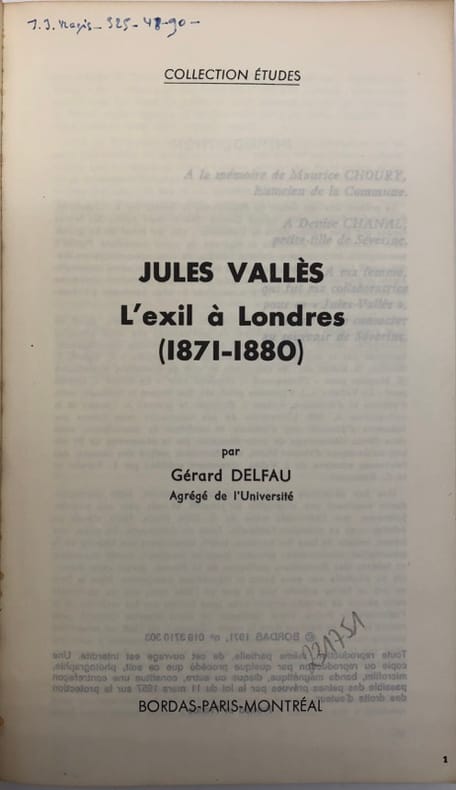
réf. 231751Collection EtudesParis, Montréal, Bordas, 1971 in-8, VIII-431 pp., broché. Couverture en partie brunie.
1923réf. GITk551Paris Editions des Juris Classeurs 1923. In-8 broché VII 386pp 1 feuillet non chiffré (table des illustrations et des matières). Orné de 17 illustrations à pleine page dont 7 fac similes d'autographes. Bel exemplaire frais et complet accompagné d'une lettre autographe originale sur double page (21,5cm x 15cm) à en-tête imprimée du Ministère des Affaires Etrangères, Cabinet du Ministre, datée de Versailles, 18 avril 1871. Jules Favre (1809-1880), alors Ministre des Affaires Etrangères, s'adresse à "Monsieur le Gouverneur", c'est-à-dire au Comte de Gueydon 1809-1886), alors Gouverneur de l'Algérie, pour lui recommander un jeune Lieutenant de Spahis, qu'il avait recueilli à l'âge de 12 ans, lorsque son père, Mohamed Bel-Hadj, Agah des Ouled Riah, avait été condamné pour son implication dans l'affaire de l'attaque de la diligence de Tlemcen-Oran, le 12 septembre 1856 dont il est question dans ce livre. On trouvera, page 296, un fac simile de lettre de Jules Favre faisant déjà allusion à ce jeune homme. Le capitaine Auguste Edouard Doineau (1823-1914) fit à nouveau parler de lui en 1874 lorsqu'il aida le Maréchal Bazaine, qu'il avait connu en Algérie, à s'évader. BEAU DOCUMENT EN PARFAIT ETAT.
réf. 9116Le Carrousel In-8, broché, 383 pages, l'ensemble abondamment souligné à la mine de plomb, bon ensemble, un peu fané et malmené.
réf. 203199Paris, Syros, 1990 in-12, 249 pp., toile Bradel verte, pièce de titre noire, couverture conservée (Laurenchet). Bon exemplaire.
1994réf. R320096204FAYARD. 1994. In-16. Broché. Bon état, Couv. convenable, Dos satisfaisant, Intérieur frais. 171 pages. . . . Classification Dewey : 365-Prisons
ISBN : 2866791614. FAYARD. 1994. In-16 Carré. Broché. Bon état. Couv. convenable. Dos satisfaisant. Intérieur frais. 171 pages GUIDES TOTUS - LE SARMENT .
ISBN : 2265034010. Le Carrousel-FN. 1986. In-8 Carré. Broché. Etat d'usage. Couv. légèrement passée. Dos plié. Intérieur frais. 383 pages. Illustré de quelques photos en noir et blanc hors texte. Document. L'univers carcéral.
195419p. Pagination includes wraps. Tall 8vo. Original printed wraps. Nice copy. PA PAMPH 20_6 BX7
1980réf. ROD0001182Ramsay. 1980. In-8. Broché. Bon état, Couv. convenable, Dos impeccable, Intérieur bon état. 246 pp.. . . . Classification Dewey : 365-Prisons
réf. 203198Paris, E. Dentu, 1868 in-12, [4]-IV-202 pp., percaline Bradel bleue, dos orné de filets et fleuron dorés, pièce de titre cerise, couverture et dos conservés (Laurenchet). Bon exemplaire.