3 319 résultats
1849réf. 717751849. Petersburg VA: J.M.H. Brunet 1849. Petersburg VA: J.M.H. Brunet 1849. An 1849 Murder in Petersburg VA: OCLC Locates 7 Copies in Law Libraries Trial. Epes William Dandridge 1806-1848 Defendant. Brunet James Monroe Hamilton 1817-1856 Reporter. Trial of William Dandridge Epes For the Murder of Francis Adolphus Muir Dinwiddie County Virginia: Including the Testimony Submitted in the Case The Speeches of Counsel &c. To Which are Added the Confessions of the Prisoner An Account of His Execution &c. &c. Petersburg VA: J.M.H. Brunet Reporter 1849. 76 pp. Woodcut portrait of Epes on p. 3. Octavo 9" x 5-1/2"; 22.6 x 14 cm. Stab-stitched pamphlet bound into later three-quarter calf over cloth recently rebacked gilt title to spine endpapers renewed. Light rubbing to board edges some wear to corners. Moderate toning to text light foxing in a few places light soiling and edgewear to title page the following leaf and final leaf. A very good copy. $1500. Only edition of a rare and detailed contemporary account of a mid-19th-century Virginia murder trial. The conflict arose when Francis Adolphus Muir threatened to foreclose on a farm property he had previously sold to William Dandridge Epes. In response Epes shot his creditor and concealed the body on the property. To cover his tracks Epes forged a series of letters to explain Muir's sudden disappearance. However his plot unraveled after he pawned the victim's distinctive pocket watch leaving a paper trail that led law enforcement straight to his door. OCLC locates 7 copies in law libraries Harvard Jenkins Library of Congress University of Missouri University of Virginia US Supreme Court William & Mary. McDade The Annals of Murder 286. Brown "Accounts of Trials" in Virginia Law Books: Essays and Bibliographies Bryson ed. 149. unknown books
1871réf. 821101871. San Francisco 1871. Only edition. San Francisco 1871. Only edition. A Landmark Gilded Age Murder Trial-Offered with Its Definitive Modern History Trial. Fair Laura D. Defendant. Official Report of the Trial of Laura D. Fair For the Murder of Alex. P. Crittenden. San Francisco: Printed by the San Francisco Co-Operative Printing Co. 1871. 4 325 xvii pp. With two full-page woodcut portraits of Fair and Crittenden as a double frontispiece. Octavo 9-3/4" x 6-1/2"; 24.8 x 16.5 cm. Stab-stitched book bound in later twentieth-century three-quarter sheep over marbled boards gilt title to spine. Rubbing light wear to extremities front joint starting chipping to spine ends corners bumped and worn hinges cracked front hinge reinforced with archival tissue library bookplate with deaccession stamp to front pastedown. Moderate toning to interior; light edgewear and a few chips to portrait leaves; light foxing to last few leaves; tear to head of gutter of title page; internally clean. Housed in attractive custom crimson clamshell box quarter morocco over cloth with raised bands and gilt title to spine. $1500. First and only edition of the official report documenting the "Ferryboat Murder" a landmark case of femininity insanity and Victorian scandal. When Laura Fair discovered her lover Alexander Crittenden had no intention of leaving his wife she fatally shot him aboard a San Francisco ferry in front of his family. The ensuing trial became a national lightning rod for Victorian anxieties regarding the "sanctity of the family" and the legal rights of women. In a pioneering and controversial defense Fair's counsel argued she was a victim of "Moral Mania" a temporary insanity triggered by her menstrual cycle and "nervous prostration." While the suffragist movement championed her as a victim of a patriarchal legal system the public was captivated by the scandalous correspondence printed here in full. This historical drama is explored in depth in Gary Krist's Trespassers at the Golden Gate 2025 which contextualizes the trial within Gilded Age San Francisco. This remains a cornerstone text for the study of 19th-century gender politics and the 'insanity' defense. McDade The Annals of Murder 291. Krist Trespassers at the Golden Gate 2025 a copy of this work is included. unknown
1871réf. 821101871. San Francisco 1871. Only edition. San Francisco 1871. Only edition. A Landmark Gilded Age Murder Trial-Offered with Its Definitive Modern History Trial. Fair Laura D. Defendant. Official Report of the Trial of Laura D. Fair For the Murder of Alex. P. Crittenden. San Francisco: Printed by the San Francisco Co-Operative Printing Co. 1871. 4 325 xvii pp. With two full-page woodcut portraits of Fair and Crittenden as a double frontispiece. Octavo 9-3/4" x 6-1/2"; 24.8 x 16.5 cm. Stab-stitched book bound in later twentieth-century three-quarter sheep over marbled boards gilt title to spine. Rubbing light wear to extremities front joint starting chipping to spine ends corners bumped and worn hinges cracked front hinge reinforced with archival tissue library bookplate with deaccession stamp to front pastedown. Moderate toning to interior; light edgewear and a few chips to portrait leaves; light foxing to last few leaves; tear to head of gutter of title page; internally clean. Housed in attractive custom crimson clamshell box quarter morocco over cloth with raised bands and gilt title to spine. $1500. First and only edition of the official report documenting the "Ferryboat Murder" a landmark case of femininity insanity and Victorian scandal. When Laura Fair discovered her lover Alexander Crittenden had no intention of leaving his wife she fatally shot him aboard a San Francisco ferry in front of his family. The ensuing trial became a national lightning rod for Victorian anxieties regarding the "sanctity of the family" and the legal rights of women. In a pioneering and controversial defense Fair's counsel argued she was a victim of "Moral Mania" a temporary insanity triggered by her menstrual cycle and "nervous prostration." While the suffragist movement championed her as a victim of a patriarchal legal system the public was captivated by the scandalous correspondence printed here in full. This historical drama is explored in depth in Gary Krist's Trespassers at the Golden Gate 2025 which contextualizes the trial within Gilded Age San Francisco. This remains a cornerstone text for the study of 19th-century gender politics and the 'insanity' defense. McDade The Annals of Murder 291. Krist Trespassers at the Golden Gate 2025 a copy of this work is included. unknown books
1904réf. 694071904. London: HMSO 1904. London: HMSO 1904. A Notorious Case of Wrongful Conviction that Led to the Creation of the English Court of Criminal Appeal Trial. Adolf Beck Case. Committee of Inquiry into the Case of Mr. Adolf Beck. Report from the Committee; Together with Minutes of Evidence Appendix And Facsimiles of Various Documents. Presented to Both Houses of Parliament by Command of His Majesty. London: Printed for His Majesty's Stationary Office 1904. xix 5 7-334 pp. 4 folding tables of facsimile documents. Complete. Contemporary library buckram red and black calf lettering pieces and gilt library name to spine faint embossed library stamp to front board endleaves added and later removed. Light rubbing to extremities light scuffing to lettering pieces faint binder stamp to front pastedown hinges partially cracked light toning to text a few minor creases and tears to folding tables. $1500. Adolf Beck was twice the victim of wrongful conviction on two related cases due to mistaken identity. The efforts of the judge who presided over his second trial led to the establishment of a committee of inquiry chaired by the noted jurist and Master of the Rolls Sir Richard Henn Collins 1842-1911. The committee determined that Beck was convicted twice through unreliable methods of identification erroneous eyewitness testimony and a rush to convict the accused. Along with its influence on police procedure the committee's report led to the creation of the English Court of Criminal Appeal in 1907. OCLC locates 4 copies in North America 2 in law libraries University of Michigan Yale. Other copies located at Harvard Law School and the Library of Congress. Catalogue of the Library of the Harvard Law School 1909 II:1014. unknown
1904réf. 694071904. London: HMSO 1904. London: HMSO 1904. A Notorious Case of Wrongful Conviction that Led to the Creation of the English Court of Criminal Appeal Trial. Adolf Beck Case. Committee of Inquiry into the Case of Mr. Adolf Beck. Report from the Committee; Together with Minutes of Evidence Appendix And Facsimiles of Various Documents. Presented to Both Houses of Parliament by Command of His Majesty. London: Printed for His Majesty's Stationary Office 1904. xix 5 7-334 pp. 4 folding tables of facsimile documents. Complete. Contemporary library buckram red and black calf lettering pieces and gilt library name to spine faint embossed library stamp to front board endleaves added and later removed. Light rubbing to extremities light scuffing to lettering pieces faint binder stamp to front pastedown hinges partially cracked light toning to text a few minor creases and tears to folding tables. $1500. Adolf Beck was twice the victim of wrongful conviction on two related cases due to mistaken identity. The efforts of the judge who presided over his second trial led to the establishment of a committee of inquiry chaired by the noted jurist and Master of the Rolls Sir Richard Henn Collins 1842-1911. The committee determined that Beck was convicted twice through unreliable methods of identification erroneous eyewitness testimony and a rush to convict the accused. Along with its influence on police procedure the committee's report led to the creation of the English Court of Criminal Appeal in 1907. OCLC locates 4 copies in North America 2 in law libraries University of Michigan Yale. Other copies located at Harvard Law School and the Library of Congress. Catalogue of the Library of the Harvard Law School 1909 II:1014. unknown books
1736réf. 684421736. Newcastle upon Tyne 1736. Newcastle upon Tyne 1736. Early Account of a Famous Scottish Murder Trial This Copy Includes Two Pages of Contemporary Manuscript Notes Trial. Porteous John 1695-1736 Defendant. The Trial of Capt. John Porteous Before the High Criminal Court Or Lords of Justiciary In Scotland; For Wounding and Killing Several Persons at a Late Execution of a Criminal In the Grass-Market at Edinburgh By Firing and Ordering his Men to Fire on the Spectators. Newcastle upon Tyne: Printed by John White 1736. 32 pp. Octavo 8-1/8" x 5-7/8". Stab-stitched pamphlet and two manuscript leaves in contemporary hand bound into later library cloth calf lettering piece and paper shelf label to spine. Light soiling some fading to spine chipping to edges of lettering piece. Light browning to text some soiling library inkstamps and early owner signature David Hilton to title page library marks to verso. $1500. This appears to be a reissue of an account published the same year in Edinburgh. Porteous was convicted of murder and sentenced to be hanged after soldiers under his command accidentally killed six people while trying to control a mob during an execution. Under pressure from Prime Minister Walpole his execution was deferred pending further investigation. Angered at what was perceived as English interference a mob dragged Porteous from prison and lynched him. More than a murder case this was a highly charged referendum on Scottish autonomy. The events surrounding this case are treated in the early chapters of Sir Walter Scott's novel The Heart of Mid-Lothian 1818. The carefully written manuscript notes appear to have been laid into this pamphlet. It discusses a 1737 Act of Parliament calling for the punishment of the people who lynched Porteous. No print copies located on OCLC. English Short-Title Catalogue T174154. unknown
1736réf. 684421736. Newcastle upon Tyne 1736. Newcastle upon Tyne 1736. Early Account of a Famous Scottish Murder Trial This Copy Includes Two Pages of Contemporary Manuscript Notes Trial. Porteous John 1695-1736 Defendant. The Trial of Capt. John Porteous Before the High Criminal Court Or Lords of Justiciary In Scotland; For Wounding and Killing Several Persons at a Late Execution of a Criminal In the Grass-Market at Edinburgh By Firing and Ordering his Men to Fire on the Spectators. Newcastle upon Tyne: Printed by John White 1736. 32 pp. Octavo 8-1/8" x 5-7/8". Stab-stitched pamphlet and two manuscript leaves in contemporary hand bound into later library cloth calf lettering piece and paper shelf label to spine. Light soiling some fading to spine chipping to edges of lettering piece. Light browning to text some soiling library inkstamps and early owner signature David Hilton to title page library marks to verso. $1500. This appears to be a reissue of an account published the same year in Edinburgh. Porteous was convicted of murder and sentenced to be hanged after soldiers under his command accidentally killed six people while trying to control a mob during an execution. Under pressure from Prime Minister Walpole his execution was deferred pending further investigation. Angered at what was perceived as English interference a mob dragged Porteous from prison and lynched him. More than a murder case this was a highly charged referendum on Scottish autonomy. The events surrounding this case are treated in the early chapters of Sir Walter Scott's novel The Heart of Mid-Lothian 1818. The carefully written manuscript notes appear to have been laid into this pamphlet. It discusses a 1737 Act of Parliament calling for the punishment of the people who lynched Porteous. No print copies located on OCLC. English Short-Title Catalogue T174154. unknown books
1809réf. 783081809. A Shilling for His Reputation": An Ironic Libel Suit Brought by a Convicted Libeler - Exceptionally Rare Trial. Tipper Samuel Defendant. Finnerty Peter c.1766-1822 Plaintiff. Finnerty v. Tipper. A Full and Accurate Report of the Trial of the Action Brought by Peter Finnerty Against Samuel Tipper Publisher of "The Satirist" For a Libel. Tried in the Court of Common Pleas Before Sir James Mansfield And a Special Jury On Saturday The 18th of February Last. Taken in Shorthand by an Eminent Reporter; With Some Prefatory Observations and Notes by the Editor. London: Printed for J.M. Richardson 1809. vii 80 pp. Octavo 8-3/4" x 5-1/2"; 22.2 x 14 cm. Disbound stab-stitched pamphlet retaining its original untrimmed edges. Moderate toning light intermittent foxing and minor soiling in a few places. Leaves starting at the head but remaining firmly secure. A well-preserved survival of a fragile production. $1500. THIS DESCRIPTION IS TRUNCATED DUE TO CHARACTER LIMITS. PLEASE CONTACT US FOR A COMPLETE VERSION. First and only edition. This exceptionally rare verbatim report captures a deeply ironic moment in British legal history: a notorious libeler bringing a civil suit for libel to protect a reputation he barely possessed. The plaintiff Peter Finnerty was a fiery Irish radical publisher and journalist whose career was defined by legal battles against the British establishment. In 1797 he was convicted of seditious libel for publishing works sympathetic to the United Irishmen rebellion. Finnerty's relentless anti-establishment crusade made him a celebrated figure among Romantic radicals; the poet Percy Bysshe Shelley famously wrote and published A Poetical Essay on the Existing State of Things 1811 specifically to raise funds for Finnerty's mounting legal fees and support him during his imprisonment. By 1809 Finnerty was once again in the government's crosshairs facing new libel charges after publishing a pamphlet exposing the Duke of York's scandalous sale of military promotions the infamous Mary Anne Clarke affair. While Finnerty awaited trial for this offense Samuel Tipper publisher of the fiercely Tory and pro-establishment magazine The Satirist launched a vicious print attack on him. Refusing to take the insult lying down Finnerty swiftly brought a civil libel suit against Tipper i. unknown
1809réf. 783081809. A Shilling for His Reputation": An Ironic Libel Suit Brought by a Convicted Libeler - Exceptionally Rare Trial. Tipper Samuel Defendant. Finnerty Peter c.1766-1822 Plaintiff. Finnerty v. Tipper. A Full and Accurate Report of the Trial of the Action Brought by Peter Finnerty Against Samuel Tipper Publisher of "The Satirist" For a Libel. Tried in the Court of Common Pleas Before Sir James Mansfield And a Special Jury On Saturday The 18th of February Last. Taken in Shorthand by an Eminent Reporter; With Some Prefatory Observations and Notes by the Editor. London: Printed for J.M. Richardson 1809. vii 80 pp. Octavo 8-3/4" x 5-1/2"; 22.2 x 14 cm. Disbound stab-stitched pamphlet retaining its original untrimmed edges. Moderate toning light intermittent foxing and minor soiling in a few places. Leaves starting at the head but remaining firmly secure. A well-preserved survival of a fragile production. $1500. THIS DESCRIPTION IS TRUNCATED DUE TO CHARACTER LIMITS. PLEASE CONTACT US FOR A COMPLETE VERSION. First and only edition. This exceptionally rare verbatim report captures a deeply ironic moment in British legal history: a notorious libeler bringing a civil suit for libel to protect a reputation he barely possessed. The plaintiff Peter Finnerty was a fiery Irish radical publisher and journalist whose career was defined by legal battles against the British establishment. In 1797 he was convicted of seditious libel for publishing works sympathetic to the United Irishmen rebellion. Finnerty's relentless anti-establishment crusade made him a celebrated figure among Romantic radicals; the poet Percy Bysshe Shelley famously wrote and published A Poetical Essay on the Existing State of Things 1811 specifically to raise funds for Finnerty's mounting legal fees and support him during his imprisonment. By 1809 Finnerty was once again in the government's crosshairs facing new libel charges after publishing a pamphlet exposing the Duke of York's scandalous sale of military promotions the infamous Mary Anne Clarke affair. While Finnerty awaited trial for this offense Samuel Tipper publisher of the fiercely Tory and pro-establishment magazine The Satirist launched a vicious print attack on him. Refusing to take the insult lying down Finnerty swiftly brought a civil libel suit against Tipper i. unknown books
1786réf. AMO-30601. Mémoire pour Dame Jeanne de Saint-Remy de Valois épouse du Comte de La Motte. De l'imprimerie de Cellot, 1786 (1)-46 pages. 2. Mémoire pour le Comte de Cagliostro, accusé ; contre M. le Procureur Général, accusateur ; en présence de M. le Cardinal de Rohan, de la Comtesse de La Motte, et autres Co-assusés. De l'imprimerie de Lottin l’aîné, 1786 (février 1786). (3)-51 pages. 3. Requête au Parlement, [...], par le Comte de Cagliostro, [...] le 24 février 1786. De l'imprimerie de Lottin, Février 1786 7 pages. 4. Recueil de pièces authentiques, secrètes et intéressantes, pour servir d'éclaircissement à l'affaire concernant le Cardinal Prince de Rohan. s.l.n.d. (1786) 32 pages. 5. Mémoire pour la demoiselle Le Guay d'Oliva, fille mineure, émancipée d'âge, accusée, contre le Procureur Général, en présence de M. le Cardinal-Prince de Rohan, de la Dame de La Motte-Valois, du sieur de Cagliostro, et autres tous co-accusés. A Paris, chez P. G. Simon et Nyon, 1786 (1)-46 pages. 6. Défense à une accusation d'escroquerie. Mémoire à consulter et consultation. De l'imprimerie de L. Cellot, s.d. (1786) 30 pages. 7. Second Mémoire à consulter et Consultation pour Jean-Charles de Bette d'Etienville, bourgeois de Saint-Omer, en Artois ; détenu ès prisons du Châtelet, de Paris, accusé. De l'imprimerie de Cailleau, (Paris, 1786) (1)-29 pages. 8. Mémoire pour le sieur de Bette d'Etienville servant de réponse à celui de M. de Fages. A Paris, de l'imprimerie de Cailleau, 1786 (1)-30 pages. 9. Mémoire pour M. le Baron de Fages-Chaulnes, garde du corps de Monsieur, Frère du Roi, accusé, contre les sieurs Vaucher et Loque, marchands bijoutiers, accusateurs, et encore contre Monsieur le Procureur-Général. A Paris, de l'imprimerie de Prault, s.d. (1786) (1)-30 pages. 10. Réponse pour la Comtesse de Valois-La Motte, au mémoire du Comte de Cagliostro. A Paris, de l'imprimerie de Cellot, 1786 48 pages. 11. Second mémoire pour la Demoiselle Le Guay d'Oliva. Analyse et résultat des récolements et confrontations. A Paris, chez P. G. Simon et Nyon, s.d. (1786) 35 pages. 12. Requête au Parlement, par M. le Cardinal de Rohan. S.l.n.d. (1786) 35 pages 13. Mémoire pour les sieurs Vaucher, horloger, et Loque, bijoutier, accusateurs. Contre le sieur Bette-d'Etienville, le Baron de Fages-Chaulnes, et autres accusés. En présence de M. le Procureur Général. A Paris, de l'imprimerie de Prault, 1786 80 pages. 14. Mémoire pour Louis-René-Edouard de Rohan, Cardinal de la Sainte Eglise Romaine, évêque et prince de Strasbourg, landgrave d'Alsace, prince-état d'Empire, grand aumonier de France, commandeur de l'Ordre du Saint-Esprit, Proviseur de Sorbonne, etc., accusé, contre M. le Procureur Général, en présence de la Dame de La Motte, du sieur de Villette, de la Demoiselle D'Oliva, et du Comte de Cagliostro, co-accusés. A Paris, de l'imprimerie de Lottin, 1786 112 pages. 15. Sommaire pour la Comtesse de Valois-La Motte, accusée, contre M. le Procureur Général, accusateur, en présence de M. le Cardinal de Rohan, et autres co-accusés. A Paris, de l'imprimerie de L. Cellot, 1786 49 pages 16. Réflexions rapides pour M. le Cardinal de Rohan, sur le Sommaire de la Dame de La Motte. De l'imprimerie de Cl. Simon, s.d. (1786) 24 pages. 17. Requête pour le sieur Marc-Antoine Rétaux de Villette, ancien gendarme, accusé, contre M. le Procureur Général, accusateur, en présence de M. le Cardinal Prince de Rohan, de la Dame de La Motte-Valois, du sieur Cagliostro, de la Demoiselle d'Oliva et autres co-accusés. A Paris, de l'imprimerie de Simon & Nyon, 1786 14 pages. 18. Requête à joindre au Mémoire du Comte de Cagliostro. De l'imprimerie de Lottin, Mai 1786 8 pages. 19. Arrêt du Parlement du 31 mai 1786. A Paris, de l'imprimerie de Caude Simon, 1786 20 pages. Soit un ensemble de 19 pièces imprimées au format in-4. 2 volumes in-4 (24,5 x 18,5 cm), reliures pleine basane fauve de l'époque, dos à nerfs, pièces de titre et tomaison de maroquin vert. Reliure solides avec quelques petits défauts d'usage (coiffes, coins, épidermures sur les plats, petites galeries de vers). Intérieur du premier volume très frais. Le deuxième volume présente des mouillures marginales claires sans gravité (l'intégrité du papier n'est pas touchée). Collationné complet des pièces énumérées. Les pièces imprimées qui ne comportent pas de page de titre ne doivent pas en avoir.
1989réf. 2080302106803074National Detainee Compensation Council 1989. Soft Cover. Fine. The book is in fine condition. National Detainee Compensation Council paperback
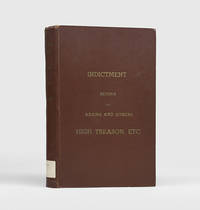
1956réf. 184698Pretoria: The Government Printer 1956. A major moment in South African history First edition of the indictment for the "Treason Trial" in which Nelson Mandela and almost the entire anti-apartheid leadership were prosecuted. One defendant Ahmed Kathrada has signed beside his name; the signature was acquired by a collector in recent years. "The core of the treason charge related to a momentous - and for the government disconcerting - event at Kliptown on the outskirts of Johannesburg on 25-26 June 1955. The delegates were drawn from the ranks of the Congress Alliance a coalition of race-based anti-apartheid groups - the ANC still Africans only the Indian Congresses the Coloured People's Congress and the white mix of communists and non-communists. They had come together to draw up the country's first democratic constitution. Out of the deliberations came the endorsement of a Freedom Charter which to western eyes was an unexceptionable statement of democratic principles and equal rights owing something to the UN Charter but virtually nothing to the Communist Manifesto" Herbstein pp. 28-9. In response 156 individuals who attended or were associated with the meeting were arrested under the 1950 Suppression of Communism Act. The trial helped unite the anti-apartheid movement and attracted worldwide support for the struggle and international condemnation of the South African government. The trial lasted over four years after which all the accused were acquitted. However soon after Mandela and other defendants were imprisoned following the Rivonia Trial. 3 vols bound in 1 as issued folio. Ex library of the South African embassy in Bonn with their stamp to the front free endpaper and their shelf label and number to spine; binding rubbed and slightly worn and shaken contents toned. A good copy. Denis Herbstein White Lies: Canon Collins and the Secret War Against Apartheid 2004. unknown
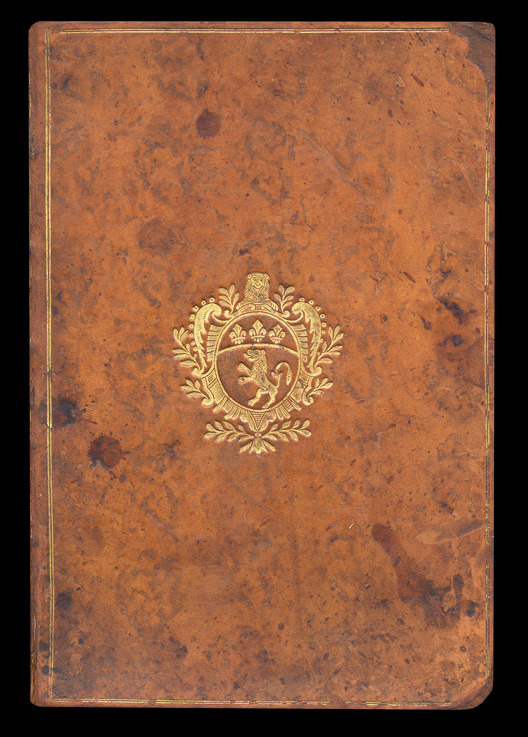
1773réf. 16518Lyon, Aimé de La Roche, 1773 ; in-folio ; veau fauve marbré, titre en long sur tout le dos, armes dorées de la ville de Lyon au centre des plats, dans un double encadrement de filets dorés, tranches dorées (reliure de l’époque) ; 87 pp., (1) p. de Table.
réf. 202Nüremberg, Secrétariat du Tribunal, 1947-1948 41 vol. in-8, bradel toile bleue (reliure de l'éditeur).
1797réf. 55883Paris, Imprimerie nationale [puis] Baudouin, 1797, in-8, 4 volumes: I. 472pp. + II. 514-(2) pp. + III. 631-(1bl.) pp. + IV. 378-(2)-134 pp, demi-basane havane de l'époque, dos lisses filetés ornés de petits fers dorés, pièces de titre et de tomaisons ocre, tranches mouchetées (reliure trés légèrement frottée), Rare ÉDITION ORIGINALE. Le procès de la conjuration des Égaux par la Haute Cour de Justice de Vendôme constitue une des sources les plus importantes pour comprendre Babeuf et ses théories égalitaires, pour comprendre en quoi cette conjuration représente la première tentative pour transformer en une force pratique l'idée d'un nouvel ordre du monde, pour comprendre comment et pourquoi, pour la première fois, l'idéal communiste souhaita phagocyter une république chancelante. Né à Saint-Quentin d'un père fermier du Roi en 1760, François Noël Babeuf s'engagea dans la Révolution dès la convocation des États-Généraux en revendiquant la communauté des biens et des travaux. Pour lui, le but de la Révolution était d'instaurer l'Égalité. C'est cette théorie qu'il développa dans ses journaux le Courrier picard ou le Tribun du peuple, ou bien encore dans ses livres comme le Cadastre perpétuel. Déçu par Thermidor puis par le Directoire, il rassembla des rosbespierristes, des hébertistes et des démocrates révolutionnaires, afin de renverser le régime pour instaurer la constitution de 1793 et l'Égalité. Grâce aux informations d'un indicateur, Babeuf et ses complices sont arrêtés le 21 floréal an IV [1796] et une haute cour est constituée pour les juger le 20 février 1797. Le procès se déroule du 20 février au 26 mai 1797, en présence de deux ministres. Sur les 65 accusés, seuls Babeuf et l'un de ses complices Darthé sont condamnés à mort. Plusieurs autres sont condamnés à la déportation, et une majorité est acquittée. Bel ensemble en 4 volumes bien conservés, quelques charnières légèrement frottées. Couverture rigide
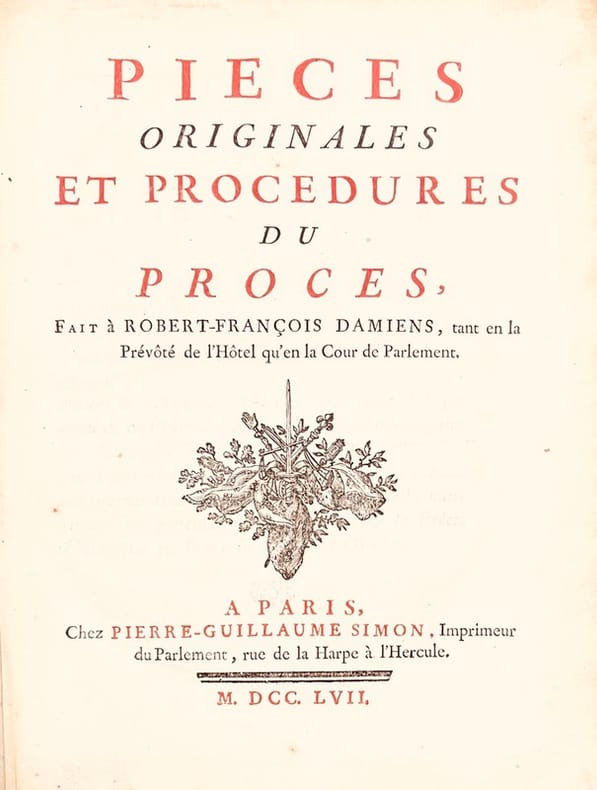
1757réf. 11021A Paris, chez Pierre-Guillaume Simon, 1757. In-4 de XLII-610-(2)-28 pp., veau brun, dos lisse orné, triple filet doré sur les plats, pièce de titre en maroquin rouge (reliure de l'époque).
réf. 396017 volumes in-8 (195 x 120 mm), plein veau marbré de l'époque, dos lisses ornés de compartiments garnis d'un riche décor de fleurons, palettes et guirlandes dorés, roulette d'encadrement sur les plats, pièces de titre et de tomaison de veau rouge, roulette dorée sur les coupes, tranches marbrées. Paris, Buisson et Chaudé, An premier de la République (1792-1793).
1789réf. 002011(Kehl) Société Littéraire-Typographique 1789
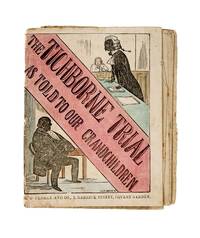
1872réf. 857421872. London 1872. Oblong sheet folded into 16 panels. London 1872. Oblong sheet folded into 16 panels. A Rare and Vibrant Victorian Pictorial Satire of the Century's Most Infamous Legal Charade Trial. Tichborne Case. The Tichborne Trial As Told to Our Grandchildren. London: H. G. Clarke and Co. c.1872. Oblong 34-1/4" x 11-1/2" 87 x 29 cm sheet 5-3/4" x 4-3/4" 14.5 x 12 cm when folded completely in sixteen panels glued into pictorial wrappers title to front wrapper and advertisements to its verso and rear wrapper. Front illustration and panels each with a woodcut vignette and accompanying satirical verse hand-colored. Unobtrusive light foxing and soiling a few small tears along fold lines not affecting images colors vivid. A well-preserved survival of a fragile and seldom-encountered form of Victorian popular ephemera. $1750. This folding satirical panorama was issued during the height of public fascination with the Tichborne case which captivated Victorian England in the 1860s and 1870s. In 1854 Roger Tichborne the 25 year-old heir to the Tichborne baronetcy disappeared while traveling in South America presumed to have died in a shipwreck. His mother refused to abandon hope. When she heard rumors that he was in Australia she placed several advertisements concerning his whereabouts in Australian newspapers. In 1865 an Australian butcher named Thomas Castro sometimes referred to as Arthur Orton claimed to be the missing heir. He failed to convince the courts was convicted of perjury and served a long prison sentence. The dispute over his identity continued until his death in 1898. The case generated a vast body of popular literature and has continued to captivate the public as recently as Zadie Smith's 2023 novel The Fraud. Our example is one of several known silhouette illustration satires of the case by Clarke & Co all of which are rare. The vivid hand-coloring highlights the illustration style which had the advantage for the publisher of emphasizing Orton's size. OCLC locates 7 copies of Clarke & Co. satires under this title 2 in law libraries Yale Harvard. unknown
1872réf. 857421872. London 1872. Oblong sheet folded into 16 panels. London 1872. Oblong sheet folded into 16 panels. A Rare and Vibrant Victorian Pictorial Satire of the Century's Most Infamous Legal Charade Trial. Tichborne Case. The Tichborne Trial As Told to Our Grandchildren. London: H. G. Clarke and Co. c.1872. Oblong 34-1/4" x 11-1/2" 87 x 29 cm sheet 5-3/4" x 4-3/4" 14.5 x 12 cm when folded completely in sixteen panels glued into pictorial wrappers title to front wrapper and advertisements to its verso and rear wrapper. Front illustration and panels each with a woodcut vignette and accompanying satirical verse hand-colored. Unobtrusive light foxing and soiling a few small tears along fold lines not affecting images colors vivid. A well-preserved survival of a fragile and seldom-encountered form of Victorian popular ephemera. $1750. This folding satirical panorama was issued during the height of public fascination with the Tichborne case which captivated Victorian England in the 1860s and 1870s. In 1854 Roger Tichborne the 25 year-old heir to the Tichborne baronetcy disappeared while traveling in South America presumed to have died in a shipwreck. His mother refused to abandon hope. When she heard rumors that he was in Australia she placed several advertisements concerning his whereabouts in Australian newspapers. In 1865 an Australian butcher named Thomas Castro sometimes referred to as Arthur Orton claimed to be the missing heir. He failed to convince the courts was convicted of perjury and served a long prison sentence. The dispute over his identity continued until his death in 1898. The case generated a vast body of popular literature and has continued to captivate the public as recently as Zadie Smith's 2023 novel The Fraud. Our example is one of several known silhouette illustration satires of the case by Clarke & Co all of which are rare. The vivid hand-coloring highlights the illustration style which had the advantage for the publisher of emphasizing Orton's size. OCLC locates 7 copies of Clarke & Co. satires under this title 2 in law libraries Yale Harvard. unknown books
réf. 243827Paris, C.-F. Patris, 1804 8 vol. in-8, veau caramel, dos à nerfs (reliure du XXe siècle). Traits en marges avec quelques annotations au crayon.
réf. 10234ou journal des Assemblées Nationales, depuis 1789 jusqu’en 1815. La narration des évènemens, les débats des assemblées, les discussions des principales sociétés populaires, et particulièrement des la société des Jacobins, les procès verbaux de la Commune de Paris, les séances du tribunal révolutionnaire, le compte rendu des principaux procès politiques, le détail des budgets annuels, le tableau du mouvement moral, extrait des journaux de chaque époque, etc. précédé d’une introduction sur l’histoire de France jusqu’à la convocation des Etats généraux. 40 tomes en 40 volume in 8 reliure demi-cuir noire d’époque, titre, tomaison, roulette, palmette, filets dorés. Fers filets à froid. Tome1 : faux-titre, titre, 486 pages, 2 pages explication du plan de la salle d’assemblée des notables à la séance présentée par le Roi, 1 plan. Une page d’explication du plan de la salle d’assemblée des notables présidée par Monsieur. Un plan. Tome 2 : faux-titre, titre, IV-475 pages. Tome 3 : faux-titre, VIII, titre, 480 pages. Tome 3 : faux-titre, titre, VIII, 480 pages. Tome 4 : faux-titre, VIII, titre, 478 pages. 3 pages de table. Tome 5 : faux-titre, titre VIII 480 pages. Tome 6 : faux-titre, titre, VIII, 479 pages. Tome 7 : faux-titre, titre VIII, 473 pages. 3 pages de catalogue. Tome 8 : faux-titre, titre, XV, 463 pages. Tome 9 : faux-titre, titre XII, 475 pages. Tome 10 faux-titre, titre, XII, 478 pages. Tome 11 : faux-titre, titre, X, 494 pages ; 1 page d’errata. Tome 12 : faux-titre, titre, XIII, 493 pages. Tome 13 : faux-titre, titre, XI, 455 pages. Tome 14 faux-titre, titre, XII ; 457 pages. Avec une liste des membres de la Société des amis de la Constitution séante à Paris A la maison des Jacobins dite des Jacobins Saint-Honoré. Tome15 : Faux-titre, titre, XV, 469 pages. Tome 16 : faux-titre, titre, XV, 470 pages. Tome 17 faux-titre, titre, XVI 479 pages. Tome 18 faux-titre, titre, XVI 480 pages. Tome 19 : faux-titre, titre ; XV, 469 pages. Tome 20 faux-titre, titre, XV, 469 pages. Tome 21 : faux-titre, titre ; XVI, 443 pages. Tome 22 : faux-titre, titre, XI, 479 pages. Tome 23 : faux-titre, titre, XV, 480 pages. Tome 24 : faux-titre, titre, XI, 479 pages. Tome 25 : faux-titre, titre, XV, 474 pages. Tome 26 faux-titre, titre, XV, 479 pages. Tome 27 : faux-titre, titre, XVI, 463 pages. Tome 28 : faux-titre, titre, XV, 508 pages. Tome 29 : faux-titre, titre, XVI, 480 pages. Tome 30 : faux-titre, titre, XV, 472 pages. Tome 31 : Faux-titre, titre, XV, 503 pages ; Tome 32 : faux-titre, titre, XV, 487 pages. Tome 33 : faux-titre, titre, XI, 461 pages. Tome 34 : Faux-titre, titre, 489 pages, 1 page d’errata. Tome 35 : faux-titre, titre, 508 pages. Tome 36 faux-titre, titre, 524 pages. Tome 37 : faux-titre, titre, 508 pages .Tome 38 : faux-titre, titre, 508 pages. Tome 39 : faux-titre, titre, 532 pages. Tome 40 : faux-titre, titre, V, 422 pages Une page d’avis. Paris PAULIN libraire 1834-1838. Edition originale. Fort rare complet, en reliure uniforme. Petites rousseurs, plus principalement concentrées en début et fin de volume. Sinon très bon état
1946réf. 11878Paris, Imprimerie Roger Amiard, 1946. Petit in-4 autographié (23 x 18 cm) de 350-(2) pp., couverture imprimée conservée, demi-maroquin bleu, dos à nerfs (reliure moderne).
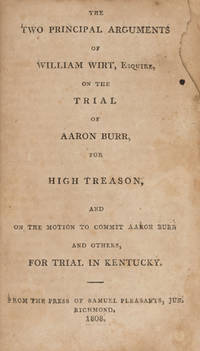
1808réf. 849821808. Richmond: From the Press of Samuel Pleasants 1808. Richmond: From the Press of Samuel Pleasants 1808. Streeter 1693: The Prosecution's Arguments at the Burr Treason Trial Trial. Burr Aaron 1756-1836 Defendant. Wirt William 1772-1834. The Two Principal Arguments of William Wirt Esquire On the Trial of Aaron Burr For High Treason And on the Motion to Commit Aaron Burr and Others For Trial in Kentucky. Richmond: From the Press of Samuel Pleasants Jun. 1808. iv 221 pp. Advertisement leaf follows title page. Not issued with the portrait frontispiece of Aaron Burr which is true of only a few copies. 12mo. 5-3/4" x 3-1/2"; 14.6 x 8.9 cm. Contemporary tree calf gilt title and ornaments to spine endpapers renewed with marbled paper. Light rubbing nicks and scratches to boards moderate rubbing to extremities front hinge cracked chips to spine ends and front board at foot of joint and lower outside corner corners bumped and somewhat worn. Moderate toning to interior light browning light foxing and faint dampstaining in places chips to fore-edges of front endleaf and title page. A very good copy overall. $2500. Only edition. Burr was implicated in a plot to steal land from Mexico and the Louisiana Purchase in order to establish an independent country. Arrested and tried in 1807 on charges of treason he was acquitted due to a lack of specific evidence. Wirt his prosecutor was United States Attorney for the District of Virginia. His famous principal speech in the trial of Aaron Burr lasting nearly four hours. Characterized by considerable eloquence wit and logic it enhanced his national stature. Wirt went on to serve as United States Attorney General under Presidents Monroe and John Quincy Adams where he did much to define the office and enhance its stature. The last copy at auction was sold at Sotheby's in 2021 for $2142. Like ours it does not have a frontispiece. Streeter The Celebrated Collection of Americana Formed by the Late Thomas Winthrop Streeter 1693 with frontispiece. Identical to our copy: Cohen Bibliography of Early American Law 14120. Howes USIana W-587. Sabin A Dictionary of Books Relating to America 104883. unknown