3 580 résultats
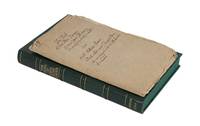
1765réf. 865801765. London: Printed for J. Almon 1765. London: Printed for J. Almon 1765. A Landmark in the History of Freedom of the Press: The First Edition to Unite Two Landmark Anglo-American Press Trials Zenger and Owen 1765 Trial. Zenger John Peter Defendant. Owen William Defendant. The Trial of John Peter Zenger Of New-York Printer: Who Was Charged with Having Printed and Published a Libel Against the Government; And Acquitted. With a Narrative of His Case. To Which is Now Added Being Never Printed Before The Trial of Mr. William Owen Bookseller Near Temple Bar Who Was Also Charged with the Publication of a Libel Against the Government; Of Which He was Honourably Acquitted by a Jury of Free-Born Englishmen Citizens of London. London: Printed for J. Almon Opposite Burlington-House Piccadilly 1765. 59 1 pp. final page publisher's advertisement. Octavo 9" x 5-1/2"; 22.9 x 14 cm. Contemporary stab-stitched plain paper wrappers title in an elegant contemporary manuscript hand to front wrapper edges untrimmed. Light toning minor dust-soiling to wrappers otherwise a crisp very good copy. Early ownership signature "J. Pickard" to upper margin of title page. An appealing unsophisticated copy preserved in a custom dark green morocco and cloth clamshell box. $5000. First Almon edition and the first edition to combine the celebrated 1735 trial of John Peter Zenger a landmark in the development of freedom of the press in America with the 1752 London libel trial of bookseller William Owen. Prosecuted for printing criticism of New York's royal governor William Cosby Zenger was defended by Andrew Hamilton of Philadelphia who argued that truth should constitute a defense against libel. Although the court rejected this argument the jury acquitted Zenger an influential assertion of the jury's independence in political prosecutions. First published in 1736 the account generally attributed to James Alexander became an enduring statement of resistance to arbitrary government and an important antecedent of the First Amendment. Owen was prosecuted for publishing The Case of Alexander Murray; his acquittal similarly demonstrated the power of juries in prosecutions for political libel. Issued by the prominent London opposition bookseller John Almon during the mounting imperial controversy of 1765 this edition brings together two notable Anglo-American trials illustrating the. unknown books
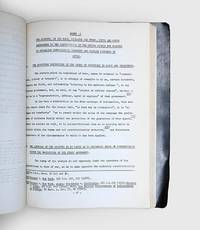
1951réf. 1903891951. The failed appeal against the "trial of the century" One of very few copies of Emanuel Bloch's appeal seeking to overturn the prosecution of the Rosenbergs at their infamous trial signed by Bloch for submission to the Court of Appeals on the final page. Bloch 1901-1954 an attorney who focused on civil rights was known for defending clients associated with left-wing and communist causes. The Rosenbergs communists accused of sending atomic secrets to the Soviets chose Bloch to lead their defence. The court found the Rosenbergs guilty of espionage in March 1951 and sentenced them to death in April following a trial widely criticized as prejudiced and motivated by Cold War hysteria. J. Edgar Hoover dubbed the case which attracted worldwide attention "the trial of the century". The Rosenbergs were granted time to prepare the appeal which Bloch submitted to the Circuit Court on 5 November 1951. Comprising 143 pages of argument extensively referenced against other legal cases and with an index Bloch sets forth his legal case. It rests on three grounds: the government had not established definite guilt the Rosenbergs had not been granted a fair trial and the "cruel and unusual punishment" violated the eighth amendment. Besides the constitutional grounding Bloch emphasizes the "frantic atmosphere" in which the Rosenbergs were arrested placing the trial within the context of the panic caused by the Soviet Union's acquisition of the atomic bomb. The appeal was denied by the three judges on the court on 25 February 1952. They reported they had carefully examined the trial record against Bloch's appeal and had found the death sentence was constitutional and would stand. Following the defeat Bloch filed a further appeal with the Supreme Court which declined to review the case. A stay on execution was granted to appeal to President Eisenhower who denied the petition. Various other legal challenges the last of which reached the Supreme Court also failed. Despite an international campaign for clemency backed by the Pope and Albert Einstein the Rosenbergs were executed on 19 June 1953. Despite the failure of Bloch's appeal his brief greatly impressed the Rosenbergs. Julius wrote to Ethel on 4 November 1951 "I read the brief and I wrote Manny Bloch telling him what a stupendous job he did and how everlastingly grateful we are for his tireless efforts for us. Darling the brief is a legal masterpiece and in addition is a literary gem. Although I don't have the background to really pass on the legal fine points I can attest to its excellent organization its meticulousness in presenting in a fair light our case the devastating logic of his points and the tremendous assiduous effort Manny exerted in preparing this document. Believe me it's a priceless piece of work from a great man. How proud we are to be considered his friends. I intend to reread it a number of times so I'll be able to better understand some of the legal points raised" The Rosenberg Letters 2013 pp. 253-4. Bloch is often seen as a lawyer unsuited to the case more suited to civil rights work than a major criminal trial. His failure to interrogate properly the government's key witness Harry Gold has been much criticized. This appeal shifted more to Bloch's speciality of constitutional and civil rights probably constitutes a stronger legal case than that which he presented in the original trial. Nonetheless the Rosenbergs were very confident in him and he became a close friend. Bloch delivered the eulogy at their funeral and took guardianship of their sons though he died soon afterwards of a heart attack. This copy of the brief is evidently one of a small number produced for official use alongside the copies which each Rosenberg received. This copy was deposited in the Civil Rights Division of the American Jewish Committee - it is marked as their file copy and subsequently "withdrawn". It is unknown how they acquired the brief - the American Jewish Committee pointedly distanced themselves from the case likely to avoid the association of Jews with communism and treachery which the case did much to encourage among the public. An inscription on the first page reads "Return to Ted Leskes" - Theodore Leskes 1908-1964 was director of the legal division of the American Jewish Committee focusing on civil rights and discrimination. We trace only one other example of the brief at the University of Kansas and no other copy in commerce. Quarto 285 x 217 mm. Containing 154 mimeographed leaves printed recto only paginated comprising i-xi index 143 pages of contents firmly staple-bound in "Accopress binder" an early likely original binding printed title page mounted to front of binder. Housed in a black cloth flat-back box by the Chelsea Bindery. Stamps of American Jewish Committee to front cover and p. i verso. Chipping around title on front cover reinforced with tape at extremities slight wear to binder extremities contents a little toned else clean. A good copy. hardcover
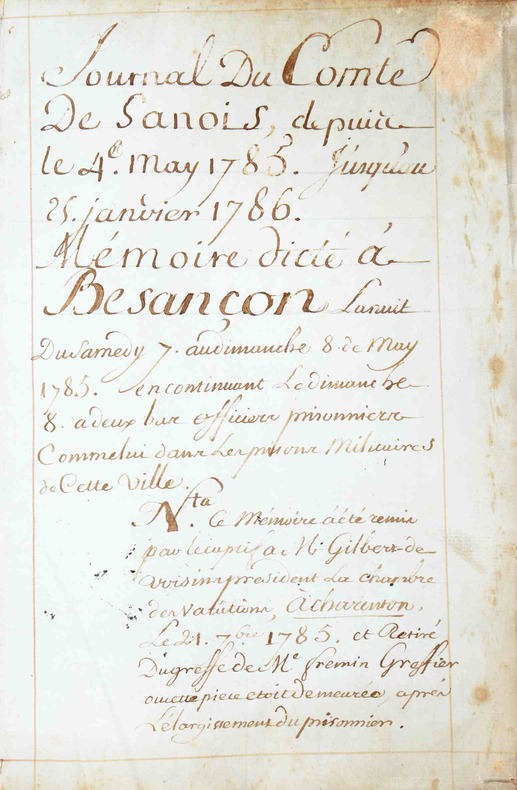
1786réf. 11680, , 1786. Manuscrit in-folio réglé (22 x 32,5 cm) de (2)-162 pp., quelques feuillets vierges, vélin sur ais de bois (reliure de l'époque). Titre manuscrit sur le plat supérieur : Journal du Comte de Sanois sortant de la Maison de force de Charenton où il a été détenu au secret depuis le 4. may 1785 jusqu'au 25 janvier 1786. Premier cahier. Mémoire dicté à Besançon. Titre sur le dos : Journal manuscrit du comte de Sanois May 1786 7bre 1787.
réf. 2081502111902635Shanghai Jiao Tong University Publishing House N.A. Soft Cover. Fine. The book is in fine condition. Shanghai Jiao Tong University Publishing House paperback