LOUIS (Jean-Baptiste)Livre Rare Book

3 510 résultats
réf. 3740, Paris, Éd. La Mémoire du Droit 2016, 13,5 X 24 cm., broché, cousu, Cahier iconographique de 12 planches hors texte en quadri, label « Imprim’vert », emballé sous film transparent, XXXII-292p.
2016broché, cousu par cahier de 16 p., label « Imprim’vert® », emballé sous film transparent Comment devient-on « Procureur au parlement de Paris » dans la société bloquée de la fin du XVIIIe siècle, lorsque l’on est issu de la toute petite bourgeoisie ? Comment peut-on demeurer royaliste lorsque l’on n’a même pas 30 ans au moment de la prise de la Bastille ? Comment peut-on accepter de devenir fermier à Issy les Moulineaux pour échapper à la Terreur et pour survivre à la disparition de la Justice de l’Ancien Régime? Et comment, la Révolution s’éloignant, passe-t-on de ce début de carrière chaotique à la fonction prestigieuse de Bâtonnier des avocats du Barreau de Paris ? C’est à toutes ces questions que Jean Baptiste Louis répond, dans ces Mémoires inédits demeurés entre les mains de la famille depuis près de deux siècles. Ce témoignage important et rare, apporte des informations majeures sur le fonctionnement de la « basoche » sous l’Ancien Régime et la Révolution, sur le fonctionnement du barreau, et la condition des gens de loi dans ces époques d’incertitudes. Mais c’est aussi l’histoire d’un homme depuis le commencement de ses études jusqu’à l’accès à la notabilité qui nous est donnée à lire. D’un jeune homme fasciné par les jeunes nobles qui entrent dans la carrière judiciaire, qui voit naître, terrifié, un de ses enfants pendant les journées de septembre 1792, dont le sang se glace lorsqu’il se remémore, avec son style précis et alerte, l’interrogatoire qu’il a subi au Tribunal révolutionnaire. Mais aussi de l’homme plus âgé que son légitimisme oppose aux ambitieux Orléanistes : Dupin qui lui succède au bâtonnat, la duchesse douairière qui veut le forcer à vendre sa chère « campagne ». Nous traversons ainsi au travers de ce document exceptionnel cinquante années de déconstruction d’un ordre ancien et d’émergence de la grande bourgeoisie plus industrielle qu’intellectuelle au prisme de ce royaliste de toujours qui déplore ces changements mais y participe, et qui nous narre, chemin faisant, ses succès et ses échecs, ses peurs et ses joies et nous fournit en passant des informations de tout premier ordre sur la vie judiciaire de l’époque. Il offre au spécialiste des informations inédites mais permet aussi à un public plus large de découvrir les ressorts de ce monde en révolution, qui par certains aspects n’est pas loin de rappeler notre époque.
2016LIVRE AU FORMAT PDF (eBook) - Il ne s’agit pas d’un livre imprimé Comment devient-on « Procureur au parlement de Paris » dans la société bloquée de la fin du XVIIIe siècle, lorsque l’on est issu de la toute petite bourgeoisie ? Comment peut-on demeurer royaliste lorsque l’on n’a même pas 30 ans au moment de la prise de la Bastille ? Comment peut-on accepter de devenir fermier à Issy les Moulineaux pour échapper à la Terreur et pour survivre à la disparition de la Justice de l’Ancien Régime? Et comment, la Révolution s’éloignant, passe-t-on de ce début de carrière chaotique à la fonction prestigieuse de Bâtonnier des avocats du Barreau de Paris ? C’est à toutes ces questions que Jean Baptiste Louis répond, dans ces Mémoires inédits demeurés entre les mains de la famille depuis près de deux siècles. Ce témoignage important et rare, apporte des informations majeures sur le fonctionnement de la « basoche » sous l’Ancien Régime et la Révolution, sur le fonctionnement du barreau, et la condition des gens de loi dans ces époques d’incertitudes. Mais c’est aussi l’histoire d’un homme depuis le commencement de ses études jusqu’à l’accès à la notabilité qui nous est donnée à lire. D’un jeune homme fasciné par les jeunes nobles qui entrent dans la carrière judiciaire, qui voit naître, terrifié, un de ses enfants pendant les journées de septembre 1792, dont le sang se glace lorsqu’il se remémore, avec son style précis et alerte, l’interrogatoire qu’il a subi au Tribunal révolutionnaire. Mais aussi de l’homme plus âgé que son légitimisme oppose aux ambitieux Orléanistes : Dupin qui lui succède au bâtonnat, la duchesse douairière qui veut le forcer à vendre sa chère « campagne ». Nous traversons ainsi au travers de ce document exceptionnel cinquante années de déconstruction d’un ordre ancien et d’émergence de la grande bourgeoisie plus industrielle qu’intellectuelle au prisme de ce royaliste de toujours qui déplore ces changements mais y participe, et qui nous narre, chemin faisant, ses succès et ses échecs, ses peurs et ses joies et nous fournit en passant des informations de tout premier ordre sur la vie judiciaire de l’époque. Il offre au spécialiste des informations inédites mais permet aussi à un public plus large de découvrir les ressorts de ce monde en révolution, qui par certains aspects n’est pas loin de rappeler notre époque.
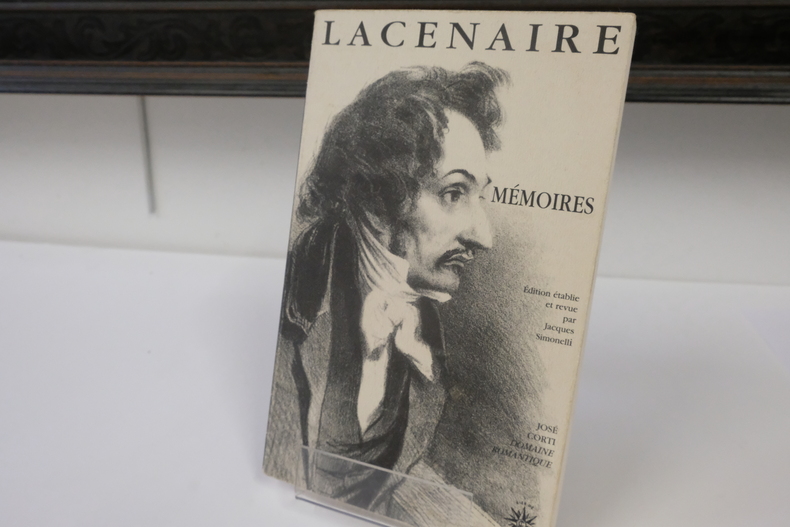
1991réf. lit1419mBroché, 408 pages, 13,5 x 21,5 x 2,5 cm, très bon état : le livre reflète quelques marques d usages presque anodines sinon l état est parfait.
1773réf. 30761Amsterdam Simon Joly 1773 6 Volumes petits In-8 / 7 Il manque le Tome V , bel état général des reliures , 544 + 408 ( un tableau dépliant , la fortune de Roger ) + 466 ( un tableau dépliant procès des souscripteurs de l'encyclopédie ) + 430 + 472 + 488 pp, menus défauts au dos du tome IV , petits trous de vers . on trouve parfois cette série avec un huitième volume publié en 1775 : absent ici
réf. 41511, Paris, Charpentier et Cie 1875/ 1876, 4 vol. in-8, br., non massicoté et partiellement non coupé, tome IV imprimé sur papier vergé, (t.I et II débrochés, accroc avec ptt. mq. à la couv. du t.IV), int. frais, XXXI-486/ 486/ 344/ 504p.
1875br., non massicoté et partiellement non coupé, tome IV imprimé sur papier vergé, (t. I et II débrochés, accroc avec ptt. mq. à la couv. du t. IV), int. frais Rare exemplaire de cette source essentielle sur la vie politique entre la Restauration et 1852. Elles ont été établies de manière posthume par son fils, R. Barrot et certains auteurs pensent qu’elles ont été quelque peu expurgées.
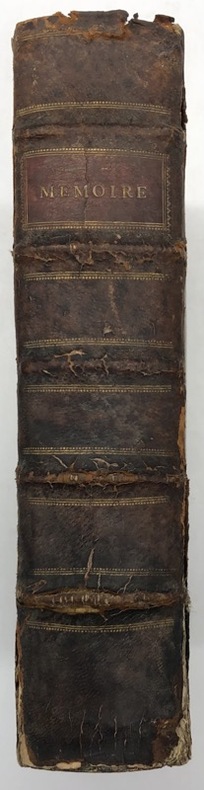
réf. 232595Lyon et Grenoble, 1798 - 1807 14 pièces en un vol. in-4, demi-basane fauve, dos à nerfs orné de filets et pointillés dorés, pièce de titre cerise, coins en vélin, tranches rouges (reliure de l'époque). Coiffes rognées, mors fendus, coins abîmés.
1984réf. 17324Laffont, 1984, gr. in-8°, 539 pp, 8 pl. de photos hors texte, index, broché, bon état
1984réf. 116194Laffont, 1984, gr. in-8°, 539 pp, 8 pl. de photos hors texte, index, broché, couv. lég. passée, bon état, envoi a.s. à un historien américain « qui cherche la vérité, avec toute ma sympathie et mon respect pour la manière dont il travaille »
1984réf. 99185Laffont, 1984-1986, 2 vol. gr. in-8°, 539 et 452 pp, 16 pl. de photos hors texte, annexes, index, brochés, qqs pages gondolées au tome 2, bon état
1974réf. 1098531974 Editions La Table ronde - 1974 - In-8, broché - 440 p. - Cahier de reproductions photographiques en N&B en début d'ouvrage
1958réf. SPN-1083Paris : Joseph Foret, 1958. Exemplaire numéroté 6 sous coffret toilé bleu gris, non coupé. Broché 24x19cm, couverture blanche imprimée, titre imprimé en caractères gothiques dans un léger cadre d'enfoncement, avec lettrine blanche sur fond enluminé bleu, 299 pages illustrées en noir. [Bel état général, petit enfoncement en bas du coffret (Cf. photo)]
1901Mm 290x415 Fascicolo in folio di 8 pp. con prima e ultima carta illustrate a colori, illustrazioni in nero nel testo. Fioriture ai margini. SPEDIZIONE IN 24 ORE DALLA CONFERMA DELL'ORDINE.
Mm 165x230 Brossura editoriale con copertina illustrata a colori, 212 pagine. Opera in ottime condizioni. SPEDIZIONE IN 24 ORE DALLA CONFERMA DELL'ORDINE.
1949réf. 2083002116206901Kobunsha National Trial Study Group 1949. Soft Cover. Fine. Number of books: 4 Kobunsha National Trial Study Group paperback
2020br. Nel libro sono raccolti gli atti del Convegno del Centro studi "Aldo Marongiu" dell'Unione Camere Penali Italiane, tenuto a Roma il 28 e 29 settembre 2018. L'occasione del dibattito era rappresentata da una duplice ricorrenza: settant'anni dal varo della Costituzione repubblicana e trenta dalla riforma del codice di procedura penale. Premevano due quesiti. Uno più tradizionale, consueto: se le norme, le prassi, i costumi operativi sedimentatisi in questi trent'anni stiano davvero nei limiti consentiti dalla Carta Fondamentale. E l'altro, ancora più pressante: come siano cambiati, frattanto, questi stessi limiti; se essi siano cresciuti, si siano fatti più robusti o se - viceversa - il proliferare labirintico delle fonti, gli indirizzi delle Corti, i plurimi livelli di tutela dei diritti fondamentali li abbiano indeboliti, resi più blandi e più incerti. Entro questi due fili si snodano i vari scritti, rielaborati dalle relazioni orali, in cui studiosi, avvocati e magistrati, affrontano i vari temi, partendo dalle "traiettorie" di fondo (modi di concepire la legge processuale e nuove egemonie della magistratura), dipanandosi poi fra i pilastri su cui si regge l'impalcatura costituzionale del processo, presunzione d'innocenza, inviolabilità della difesa, contraddittorio, diritti di libertà; infine soffermandosi sui lidi sempre più spinosi del sistema delle impugnazioni e dei tempi del procedimento.
1967réf. 314588Neuwied, Luchterhand, 1967. XVI, 133 S. OKart.
2005réf. 631150Berlin, Duncker & Humblot, 2005. 179 S. OKart.
2015br. L'opera affronta l'attualissimo tema delle neuroscienze che viene introdotto nei suoi aspetti generali, con particolare riguardo alle ricadute in ambito giuridico, specialmente penale. Infatti le indagini neuroscientifiche e i nuovi test genetici sembrano porre in discussione i tradizionali confini della nozione di infermità e, per certi versi, la stessa nozione di responsabilità, almeno negli approcci più radicali. Le questione dell'applicazione forense presente e futura di metodi neuroscientifici - soprattutto nella valutazione dell'imputabilità - viene approfondita esaminando il problema dell'impiego delle nuove prove scientifiche (anche alla luce dell'esperienza statunitense) e ricostruendo la recente casistica giurisprudenziale, che ha visto i giudici italiani confrontarsi con gli esiti di accertamenti neuroscientifici. L'opera intende fornire a professionisti e ad operatori del diritto una guida sintetica e semplice, ma al contempo seria ed aggiornata, sulle innovazioni che tanto interesse hanno destato nelle cronache, giudiziarie e non.
194696 pages. Features: Nice color ad for Mercury cars inside front cover; Photo of Dr. Bertha Lutz of Brazil; Nice early one-page ad for Northwest Airlines includes large table of their new flights and low fares; Great color-photo ad for Caterpillar called "Grand Canyon of the Mesabi" features massive iron ore excavation; Nice one-page ad for International Trucks; Food - that a hungry world may eat; Photo of fire at Barrett plant of Allied Chemical in Philadelphia; Photo of baby Betty Lou Hall kissing President Truman; Juvenile delinquency; Is 1946 another 1920?; Great one-page Boeing ad for their Stratocruiser shows cute little boy in cabin gazing out window; The Lichfield trial over brutality to prisoners; Nice Kaiser-Frazer car ad; Great one-page color Cadillac ad shows imposing red grill; Conflict in China; Prince Morimasa Nashimoto leaves Sugamo Prison; Photo of General Douglas MacArthur inspecting honor guard in Tokyo; Nice one-page ad for Good Housekeeping Magazine shows fashionable lady reading; Before and after photos of the hanging of Hungarian police major Laszlo Baky; The controversy of the Anglo-American command; Nice one-page color ad for TWA announces they are the first to put the Constellation in the air; Photo of blind war bride Mary Martin who married Sgt. George Alkenbrack and now lives in Napanee, Ontario; One-page ad for the Country Gentleman Magazine shows crop-duster in action; brief obituaries for Harlan Fiske Stone, Arthur Chevrolet, Walter E. Dandy, and John Maynard Keynes; Creepy photo of soldier wearing night vision equipment called snooperscope; Superman article features photo of Clayton Collyer, the radio actor-announcer who plays Superman; Gold - the South African find and the world's wealth; Stocking - leg bootleg; Color ad for National City Bank of New York features paingint of rubber tappers in Malaya plus photo of Raymond G. Hill, Singapore Supervisor; Nice ad for Trav-Ler radio; The OPA reaps the whirlwind; One-page ad for Redbook Magazine; New York Yankee Pitcher Spurgeon Chandler; Legend for Canadians - photo of Coulter and Willan who used folklore for Canada's first opera; Photo of Beverly Anne Cort performing a risque dance in the Detroit suburb of Van Kyke; Nice one-page color Budweiser ad features young boy returning from fishing with his catch, while envious adults look on; Nice color-photo ad for Canadian National features Jasper, Alberta and its lodge (with small inset color photo of Minaki Lodge in Ontario); Vindictive treatment of Stalin by Trotsky; The Faith of Harold Stassen; Nice color-photo Canadian Club ad inside back cover features Juan Belmonte, Spain's great bullfighter; Nice back cover color ad for Chesterfield cigarettes features man in suit who learned his ABCs (Always Buy Chesterfields); and more. Somewhat above-average wear and soiling. A worthy vintage copy. Book
1946104 pages. Features: Nice one-page ad for Hilton Hotels features the Palmer House of Chicagp; Superb one-page color ad for Ford Trucks features green pickup in pleasant farm scene; Dow Chemical ad features illustration of kettle and steam inventor James Watt; (Labor) Strike Wave Threatens Essential U.S. Needs; Sam Rayburn - Texan; Joan Bennett's "Scarlet Street" is censored for 'tending to corrupt morals'; Photo of Jane Russell in low-cut blouse posing for painting; Fantastic color one-page Coke ad features crowded soda shop scene with boy singing into napkin holder microphone; Classic one-page color-photo ad for Camel cigarettes titled "More Doctors Smoke Camels Than Any Other Cigarette"; World Watches First Assembly of UNO; Photo of Mickey Rooney shaking hands with De Gaulle; Classic color ad for White Trucks features soda factory and happy end-user; Trial of Lt. Gen. Masaharu Homma in Manila; Religious Emancipation is the Jap's by MacArthur's Grace; Lt. Gen. Sir Frederick Morgan, chief of UNRRA's activities in Germany, states that the movement of Jews from Poland into Germany looked like a "second Exodus... a well-organized, positive plan to get out of Europe" to Palestine, and that he had seen Jews arriving in Berlin "well-dressed, well-fed, rosy-cheeked and (with) plenty of money..They certainly do not look like persecuted people."; U.S. Need to keep peace pledges slows homeward trek of troops; A Safe American Must be founded on Strength; Nice Firestone Tire color centerfold features race car; Nice Old Thompson whiskey ad features piano keyboard; Photo of ex-POW Pvt. Cleo Brown and his bride in Milwaukee hotel; Photos of changing Navy fashions; Doukhobor article with stripping photo; Oil strike in Chile; Color photo ad for Chrysler features Andre Kostelanetz leading orchestra; Classy one-page color ad for the Farnsworth Television and Radio Corporation; Brief obituaries for William Joyce (Lord Haw Haw); Hector Charlesworth; William T. Dewart Jr., Slim Summerville; Germ Warfare Article with photo of Major Merck inspecting Camp (Fort) Dietrich laboratories - US was set for biological war more terrible than enemy knew; Rare Great Northern Railway ad features the opening of modern China (very prescient); SN 7618 for Malaria; photo of Lt. Col. Margaret Craighill; Great photo ad by the Cuban National Tobacco Commission features Edward G. Robinson lighting up; Article on Branch Rickey; Jockey Woolf, 1909-1946; Sensational one-page color ad for Grace Line features illustrations of their new fleet of twenty "Santa" ships; Rare one-page ad for Cuba Mail Line entitled "Ice Cubes for Cuba" shows happy family table; Curious ad for National Company's Radios features small illustration of 'slant-eyed' Chinaman above text "Gung Ho"; The Press, the Radio, and Mr. La Guardia; Color-photo ad for Canadian Club features mountain climbing on Mexico's Popocatepetl; and more. Average wear and soiling. A worthy vintage copy. Book
194492 pages. Features: Great photo-illustrated Cleaver-Brooks ad features the L.S.T. landing craft their steam generators are used in; "Weird' Kreml Hair Tonic illustrated ad; One-page photo-illustrated Boeing ad entitled Schweinfurt Story shows horrendous bomb damage and boasts of their Flying Fortress aircraft; Rare one-page color ad illustrated by Walt Disney shows a Flying Fish alongside a Mars aircraft - sponsored by ADEL Precision Products; Rep. Albert Gore of Tennessee becomes first Congressman to enter the armed forces as a private; Brief obituaries for Art Young, Sir Edwin Lutyens, Leon Gordon, Frederick Hill Wood and Hobart Bosworth; Nice one-page photo-illustrated ad for Beech Aircarft shows their AT-11 bombing trainers in flight; New Allied Chiefs Confident This is Our Year of Victory; Major war coverage including organizational charts for the Allied High Command for European invasion and Mediterranean Operations; Article on the Air War of 1943 - with dramatic photo of Flying Fortresses over Europe, with one of them crashing to earth in flames; Defending convoys against surface raiders; Plane-supported Chinese troops give Japanese a real fight - Changteh; War photos from Sicily; Problems of restoring France epitomized by Algiers troubles; Plan for the trial of Adolph Hitler and his lieutenants; Manpower and the Draft; Letter mystery involving Harry Hopkins; Dramatic letter and photo from POW Lt. Col. James Patrick Devereux to his son, Patrick; Nice color Lucky Strike ad shows farmer holding large tobacco leaf; Color centerfold ad for Good Year industrial belting - showing mine/ore installation; Photo-illustrated article on Dr. Vannevar Bush; Labor unrest threatens our invasion production; Nice one-page military Plymouth ad; Interesting article on wartime censorship; Photo of runner Gil Dodds; Color photo Canadian Club ad inside back cover features Mexico's state fo Michoacan; *Fantasti* color back cover ad for Chesterfield cigarettes features WWII pin-up queen Betty Grable; and more. Somewhat above-average wear. Binding sound. A worthy vintage copy. Book
1946Contents: Color Borg-Warner power train ad; Color Ford Mercury Ad; Pearl Harbor - Stimson Tells; Dr. Alan Nunn May; Meat - the nation's first big postwar racket; 'Food and Peace' by Ernest K. Lindley; Letters of complaint pour in re: Bikini atom-bomb tests; nice color Four Roses whiskey ad; Color Farnsworth phonograph/radio ad; The Draft - Services clamor 'give us more time'; 'Live Kimono Ban' - General Eichelberger issues an order to the ground forces forbidding public displays of affection with the Japanese; Great black and white ad for International Trucks; Admiral Pratt's notes to the Editors on the Prospects of War and Peace; Black and white Fairchild Aircraft ad; The United Nations (U.N.) Security Council begins its work; nice color ad for White trucks; Color ad for Cutler-Hammer motor controls; Food - hand of politics weighs on the starving; Interesting illustrated Chase-National Bank ad; The Kurds - History's Goad; Dr. Petiot, France's newest Bluebeard, goes on trial; two-page color Goodyear rubber ad; Igor Gouzenko makes his first public appearance since going into voluntary protective custody - accuses Fred Rose, Canada's only Communist Member of Parliament, and Sam Carr, national organizer of the Labor-Progressive (Communist) party, and more; Alberta's Premier Ernest Manning; Job help for Handicapped is difficult but rewarding; Weather at the Crossroads - the Bikini Bomb/Operation Crossroads; Color Boeing ad; black and white Kaiser - Frazer Corporation auto ad; Slugging it out for President of UAW - Walter Reuther; Nice color ad for the New York Central Railroad; Color American-Marietta ad; Brooks Brothers sold; Ralph Robey argues for a housecleaning of government economic forecasters; Photo of Alexei, Patriarch of all Russia; color ad for the Highway Trailer Company (truck trailers); Freuhauf Trailer ad; Color TWA ad; Nice color Reo Truck ad; Bernard Baruch appointed as the U.S. representative on the United Nations Atomic Energy Commission; Nice color Chesterfield cigarette ad on back cover. Above-average wear. Some soiling to front cover. A sound copy. Magazine
1945Contents: Nash car color ad inside front cover; Commercial Solvents Corp. ad with great Iwo Jima beach landing photo; Chrysler *Fluid Drive* color ad; Only Stalin of first trio is left but Attlee carries on where Churchill left off; Very graphic 6-photo sequence of a 'Jap' being burned to death by a flame-thrower; British Labor landslide stirs the world - the winning issue was not Churchill but new homes and jobs for Britons; Photo of a masked 'squeeler' identifying Gestapo agents hiding in the ranks of the Wehrmacht in Norway; Nice color ad for Martin aircraft; Photo of Dutch people tearing up trolly blocks for desperately needed fuel; Trial of Marshal Petain in France; Amazing coverage of B-25 Mitchell bomber striking the Empire State building - the diagram looks just like what the world witnessed September 11th, 2001; The Big Playhouse - Michigan's cushy prison at Jackson; Japan on the ropes - strikes at Kure naval base cover harbor with blazing ships - B-29s blast forewarned cities; Photo of American troops from Europe massing in Manila; *Super* color centerfold featuring a 1942 yellow Buick convertible; photo of leaflet dropped on Jap cities prior to bombing (with article); Photo of Canadian General Crerar who's army has been dissolved; Kaiser lines up Graham-Paige in march toward reconversion - with Frazer's selling genius added to Western Steel facilities, Combine's one need is capital; Photo of experimental helicopter, the PV-3, in flight; Nice color Imperial whiskey ad; Surplus problem - whether to scrap the Office of War Information's (OWI) profitable magazines abroad; Swiss family air force - survival training; Motorola radio ad; Great color Union Pacific Railroad ad with emphasis upon beautiful Washington state; Unmarked with average wear. Address label atop front cover. A sound copy. Book