3.624 Ergebnisse
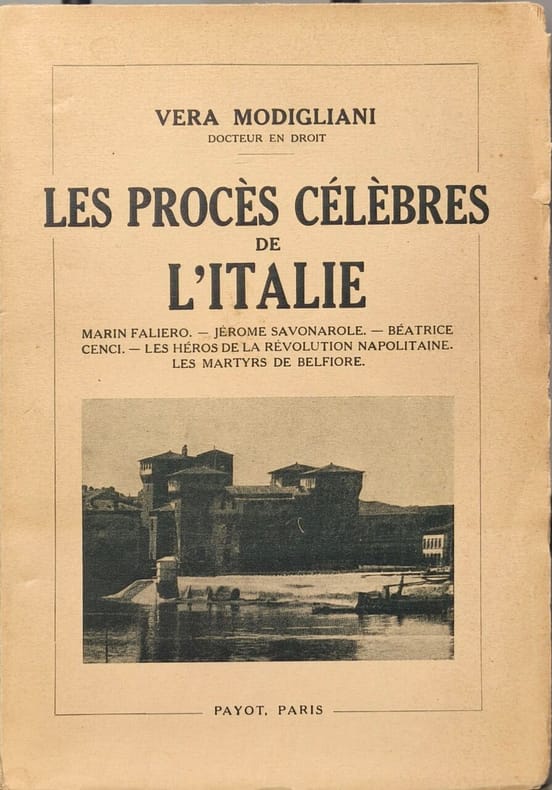
Best.-Nr. 13626Paris, Payot, (1931). In-8 carre br., 1er plat orne d'une figure, 286pp., [1]f., 8 illustrations hors texte. Les proces de sorcellerie - Le proces de la bonne mere - Le proces de Sophie-Dorothee de Hanovre - L'assassinat de Kotzebue - Les proces de Ferdinand Lassalle - Le proces du Comte d'Arnim - Les proces Byzantins - Les proces de la sainte Vehme - Le "putsch" d'Hitler.
Best.-Nr. 13628Paris: Payot. 1937Broché. Fine. Small 4to. 239pp
1932Best.-Nr. ql1276Payot Broché 1932 In-12 (13,5 x 19,4 cm), broché, 270 pages, illustrations hors texte ; mors légèrement frottés, petites traces sur le dos, bel état général. Livraison a domicile (La Poste) ou en Mondial Relay sur simple demande.
1851Best.-Nr. GITc701Toulouse Jougla, Delboy 1851. In-8 broché 87pp. Dos fendu, rousseurs par endroits.
1814Best.-Nr. 2306Lerouge 14,5 x 21,5 Paris 1814 Volume in-8, reliure pleine toile bordeaux début XXe, pièce de titre de cuir rouge, titre et fleuron dorés, viii-255 p. Par un ami du Trône. Pierre Turbat (1773-1845) est l'auteur de ces Tableaux. Il avait fait paraître en 1798 le "Procès des Bourbons". Il explique dans son introduction qu'en 1798 "malgré notre courage, nous ne pouvions encore tout dire, ni tout divulguer : des hommes coupables étaient encore en place; mais aujourd'hui que nos princes légitimes sont remontés sur le trône de leurs aïeux, nous croyons qu'il est de notre devoir de mettre au jour la vérité toute entière". Pierre TURBAT du Mans (1773-1845) a été employé à la municipalité de Paris, impliqué dans la conspiration des bazinistes (au Mans), avoué, avocat, puis procureur du roi après la révolution de 1830, il est nommé juge à Alençon vers 1832.TOURNEUX, I, 3588 a. Notre exemplaire est bien complet in fine de la Liste alphabétique des Commissaires nommés dans la nuit du 9 au 10 août 1792, par les quarante-huit sections de Paris... et du Tableau des membres composant le Tribunal Révolutionnaire à l'époque du jugement de la Reine. Mouillures sur les premières et dernières pages, rousseurs, mais l'ensemble forme un bon exemplaire. Rare. (B33) PHOTOS NUMERIQUES DISPONIBLES PAR EMAIL SUR SIMPLE DEMANDE-DIGITAL PHOTOGRAPS MAY BE AVAILABLE ON REQUEST. Livre
1936Best.-Nr. 2968Payot Paris 1936 239 pages in8. 1936. broché. 239 pages.
Best.-Nr. 1971club des éditeurs 1958 in 8 cartonnage éditeur 369 pages tirage limité
Best.-Nr. 1972mame 1959 in 8 broché 369 pages belle couverture illustrée par un bois populaire
Best.-Nr. 1973club français du livre 1950 in 8 cartonnage éditeur
Best.-Nr. 23923, Paris, Plon 1920, in-8, débr., (accrocs, fragile, papier jauni), 284p.
1927Best.-Nr. 120917P., La Renaissance du Livre, 1927, in-12, 278 pp, broché, bon état, envoi a.s. à l'académicien Henri Lavedan
Best.-Nr. 71186Coll. "La mémoire du siècle" n° 48, Bruxelles, éd. Complexe, 1987, in-12, cartonnage souple, couv. ill. coul. éd., 200 pp., sommaire, chronologie, bibliographie, index, L'histoire des procès de Staline en Russie depuis 1934 jusqu'en 1949. Pas courant Très bon état
Best.-Nr. 4621Grenoble, B. Arthaud, collection Arc-en-Ciel, 1935, broché, couverture illustrée en couleurs par Jean Prunière, 14,5x19,5 cm, 112 pages, héliogravures hors texte. Impression sur papier saumon pâle.
Best.-Nr. 924Arc-en-ciel ARTHAUD (1935) - Broché de 112 pages - Couverture de Jean PRUNIERE - Héliogravures en hors-texte - Très bon état
1973Best.-Nr. 611411Freiburg im Breisgau, 1973. VII, 322 S. Kart.
198840 pages. Text in English. Features: Enjoying Bavaria with your camera - Fritz P. Kraus describes Bad Griesbach; Agfa films with "more" colour - CT 100 and XR G 100 on trial; Couples - Peter H. Furst - the photographic borderline situation; In praise of a lens - Stefan Pfander's appearances with the 100 mm f/2.8 Apo-Macro-Ellmarit-R; Emil Schulthess; Prof. Stefan Kruckenhauser; The anniversary film - the new Kodak Ektar 25 colour print film; Flash + Slave - or how to improve flash illumination; Soft light from hot heads - the Hedler Softbox series; Duplicating - part four; Leica Focometer 2 - Part II - perfect measuring technique; and more. Clean and unmarked with moderate wear. A sound copy. Magazine
1951Best.-Nr. 1903891951. The failed appeal against the "trial of the century" One of very few copies of Emanuel Bloch's appeal seeking to overturn the prosecution of the Rosenbergs at their infamous trial signed by Bloch for submission to the Court of Appeals on the final page. Bloch 1901-1954 an attorney who focused on civil rights was known for defending clients associated with left-wing and communist causes. The Rosenbergs communists accused of sending atomic secrets to the Soviets chose Bloch to lead their defence. The court found the Rosenbergs guilty of espionage in March 1951 and sentenced them to death in April following a trial widely criticized as prejudiced and motivated by Cold War hysteria. J. Edgar Hoover dubbed the case which attracted worldwide attention "the trial of the century". The Rosenbergs were granted time to prepare the appeal which Bloch submitted to the Circuit Court on 5 November 1951. Comprising 143 pages of argument extensively referenced against other legal cases and with an index Bloch sets forth his legal case. It rests on three grounds: the government had not established definite guilt the Rosenbergs had not been granted a fair trial and the "cruel and unusual punishment" violated the eighth amendment. Besides the constitutional grounding Bloch emphasizes the "frantic atmosphere" in which the Rosenbergs were arrested placing the trial within the context of the panic caused by the Soviet Union's acquisition of the atomic bomb. The appeal was denied by the three judges on the court on 25 February 1952. They reported they had carefully examined the trial record against Bloch's appeal and had found the death sentence was constitutional and would stand. Following the defeat Bloch filed a further appeal with the Supreme Court which declined to review the case. A stay on execution was granted to appeal to President Eisenhower who denied the petition. Various other legal challenges the last of which reached the Supreme Court also failed. Despite an international campaign for clemency backed by the Pope and Albert Einstein the Rosenbergs were executed on 19 June 1953. Despite the failure of Bloch's appeal his brief greatly impressed the Rosenbergs. Julius wrote to Ethel on 4 November 1951 "I read the brief and I wrote Manny Bloch telling him what a stupendous job he did and how everlastingly grateful we are for his tireless efforts for us. Darling the brief is a legal masterpiece and in addition is a literary gem. Although I don't have the background to really pass on the legal fine points I can attest to its excellent organization its meticulousness in presenting in a fair light our case the devastating logic of his points and the tremendous assiduous effort Manny exerted in preparing this document. Believe me it's a priceless piece of work from a great man. How proud we are to be considered his friends. I intend to reread it a number of times so I'll be able to better understand some of the legal points raised" The Rosenberg Letters 2013 pp. 253-4. Bloch is often seen as a lawyer unsuited to the case more suited to civil rights work than a major criminal trial. His failure to interrogate properly the government's key witness Harry Gold has been much criticized. This appeal shifted more to Bloch's speciality of constitutional and civil rights probably constitutes a stronger legal case than that which he presented in the original trial. Nonetheless the Rosenbergs were very confident in him and he became a close friend. Bloch delivered the eulogy at their funeral and took guardianship of their sons though he died soon afterwards of a heart attack. This copy of the brief is evidently one of a small number produced for official use alongside the copies which each Rosenberg received. This copy was deposited in the Civil Rights Division of the American Jewish Committee - it is marked as their file copy and subsequently "withdrawn". It is unknown how they acquired the brief - the American Jewish Committee pointedly distanced themselves from the case likely to avoid the association of Jews with communism and treachery which the case did much to encourage among the public. An inscription on the first page reads "Return to Ted Leskes" - Theodore Leskes 1908-1964 was director of the legal division of the American Jewish Committee focusing on civil rights and discrimination. We trace only one other example of the brief at the University of Kansas and no other copy in commerce. Quarto 285 x 217 mm. Containing 154 mimeographed leaves printed recto only paginated comprising i-xi index 143 pages of contents firmly staple-bound in "Accopress binder" an early likely original binding printed title page mounted to front of binder. Housed in a black cloth flat-back box by the Chelsea Bindery. Stamps of American Jewish Committee to front cover and p. i verso. Chipping around title on front cover reinforced with tape at extremities slight wear to binder extremities contents a little toned else clean. A good copy. hardcover
in-8°, 276 pages, illustrations hors-texte, broche, couverture illustree. Bel exemplaire. [CA-00]
1976CITTADELLA 1976. FONDO DI MAGAZZINO: SEGNI DEL TEMPO, VOLUME INTONSO.
in-8°, 660 pp., illustre de documents manuscrits, broche, couv. Bon etat (traces de mouillures aux dernieres pages). [TX-4]
1900R. Ottaviani Le rivelazioni di un processo. , G. Menaglia 1900, Copertina brunita, con fioriture. Interno lievemente segnato dal tempo. Buono (Good) .
2004DISPONIBILITÀ GARANTITA AL 99%; SPEDIZIONE ENTRO 12 ORE DALL'ORDINE. RIMANENZA DI MAGAZZINO PARI AL NUOVO. LIEVISSIMI SEGNI DEL TEMPO. Se la concorrenzialità tra le aree territoriali è una realtà da tenere in debito conto in materia di sviluppo, altrettanto lo è il nuovo assetto istituzionale italiano. In virtù del quale buona parte delle competenze dei poteri e quindi delle relative politiche, concernenti i programmi di sviluppo economico e sociale rientrano nella piena responsabilità delle Regioni. Conoscere e far conoscere l'intreccio di queste due realtà: l' interdipendenza tra la concorrenzialità in Europa e la nostra responsabilità istituzionale; con conseguente valutazione di quale è l'impatto sulla vita regionale sotto ogni punto di vista: istituzionale e amministrativo, economico e sociale, della qualità della vita; diventa un esigenza per individuare le necessarie politiche e per adottare i conseguenti comportamenti. Descrizione bibliografica Titolo: Le regioni meridionali e l'Europa a 25. Con CD-ROM Presentazione di: Antonio Bassolino Saggio introduttivo di: Enzo Giustino Contributi di: Luigi Mascilli Migliorini, Pietro Ciarlo, Francesco Paolo Casavola, Giuliano Amato, Gianfranco Fini, Mariano D'Antonio, Michele Scudiero, Paola Casavola, Vincenzo Maggioni, Innocenzo Cipolletta, Adriano Giannola, Alfonso Iozzo, Piera Magnati, Giuseppe Rosa, Massimo Sabatini, Pier Luigi D'Agata, Fulvio Tessitore, Ugo Leone Curatore: E. Giustino Editore: Napoli: Alfredo Guida, 2004 Lunghezza: 320 pagine; 23 cm + 1 CD-ROM ISBN: 8871888782, 9788871888781 Collana: Focus Soggetti: Politica, Relazioni internazionali, Nazioni Unite, Unione Europea, Istituzioni internazionali, Processo di allargamento, Trattati e convenzioni internazionali, Cooperazione, Paesi membri, Ingressi, Sud, Est, Mezzogiorno, Stati, Diplomazia, Economia, Diritto comunitario, European Union, Italia meridionale, Sviluppo economico, Corte di giustizia, Fondi, Allargamento, Inclusione, Robert Schuman, CECA, UE, Storia contemporanea, Geopolitica, Gran Bretagna, Costituente, Mediterraneo, Problemi, Schengen, Immigrazione, Campania, Identità Parole e frasi comuni Previsione aree Assetto istituzionale bilancio comunitario Campania Commissione Europea competitività complesso comune Consiglio Europeo costanti base costituzione crescita reale espressa Euro Unione Europea divari elettorale Suffragio universale Esportazioni espressa variazione euro finanziari finanziarie fondi strutturali Germania indicatori su base interventi Irlanda Europa obiettivo livello Maggioranza governo Media Annua comunitaria Mediterraneo mercato Mezzogiorno miliardi misurato in valuta monetaria nazionale prezzi obiettivi Paesi Parlamento europeo phasing PIL misurato PIL pro capite politica bilancio coesione politica economica regionale Forma istituzionale Portogallo prezzi costanti Principali indicatori problema processo Prospettive future Quadro politico-istituzionale Forma realizzazione regioni meridionali Regno Unito Repubblica Ceca Repubblica parlamentare risorse Saldo commercio estero settore Sistema elettorale Sistema elettorale strategia Suffragio universale diretto disoccupazione Tasso di inflazione territoriale territorio Totale Trattato di Maastricht valuta nazionale
2004Presentazione di Antonio Bassolino. Saggio introduttivo di Enzo Giustino Contributi di: Luigi Mascilli Migliorini, Pietro Ciarlo, Francesco Paolo Casavola, Giuliano Amato, Gianfranco Fini, Mariano D'Antonio, Michele Scudiero, Paola Casavola, Vincenzo Maggioni, Innocenzo Cipolletta, Adriano Giannola, Alfonso Iozzo, Piera Magnati, Giuseppe Rosa, Massimo Sabatini, Pier Luigi D'Agata, Fulvio Tessitore, Ugo Leone Curatore: E. Giustino GUIDA 2004 320 PP. con CD-ROM ALLO STATO DI NUOVO «Le nazioni sovrane del passato non sono più il luogo dove si possono risolvere i problemi attuali. E la Comunità stessa non è che una tappa verso le forme di organizzazione del mondo di domani». (Jean Monnet, 1976). Se la concorrenzialità tra le aree territoriali è una realtà da tenere in debito conto in materia di sviluppo, altrettanto lo è il nuovo assetto istituzionale italiano. In virtù del quale buona parte delle competenze dei poteri e quindi delle relative politiche, concernenti i programmi di sviluppo economico e sociale rientrano nella piena responsabilità delle Regioni. Conoscere e far conoscere l’intreccio di queste due realtà: l’ interdipendenza tra la concorrenzialità in Europa e la nostra responsabilità istituzionale; con conseguente valutazione di quale è l’impatto sulla vita regionale sotto ogni punto di vista: istituzionale e amministrativo, economico e sociale, della qualità della vita; diventa un esigenza per individuare le necessarie politiche e per adottare i conseguenti comportamenti. Indice Presentazione, Antonio Bassolino Perché questo libro, Enzo Giustino L’Europa politica La fondazione storica dell’integrazione europea, Luigi Mascilli Migliorini Da sei a venticinque, Pietro Ciarlo Il trattato costituente, Francesco Paolo Casavola Interventi Giuliano Amato Gianfranco Fini L’Europa economica L’Unione Europea oggi, Mariano D’Antonio Il diritto comunitario, gli strumenti operativi e le direttive della Comunità europea, Michele Scudiero Fondi strutturali e politica regionale di sviluppo, Paola Casavola Gli indicatori fondamentali dei 25 Paesi, Vincenzo Maggioni Problemi e opportunità di una politica economica comune, Innocenzo Cipolletta Politiche di Bilancio nell’Unione dopo l’Euro, Adriano Giannola La via per un Mezzogiorno europeo, Alfonso Tozzo Le prospettive di sviluppo I divari economico-sociali nell’Europa a 15 Il processo di allargamento e le disparità regionali in termini di coesione, Piera Magnati, Giuseppe Rosa Massimo Sabatini 50° parallelo e area mediterranea, Pier Luigi D’Agata Le regioni meridionali: il caso Campania Una difficile identità, Fulvio Tessitore Problemi e opportunità, Ugo Leone Parole e frasi comuni Previsione aree Assetto istituzionale bilancio comunitario Campania Commissione Europea competitività complesso comune Consiglio Europeo costanti base costituzione crescita reale espressa Euro Unione Europea divari elettorale Suffragio universale Esportazioni espressa variazione euro finanziari finanziarie fondi strutturali Germania indicatori su base interventi Irlanda Europa obiettivo livello Maggioranza governo Media Annua comunitaria Mediterraneo mercato Mezzogiorno miliardi misurato in valuta monetaria nazionale prezzi obiettivi Paesi Parlamento europeo phasing PIL misurato PIL pro capite politica bilancio coesione politica economica regionale Forma istituzionale Portogallo prezzi costanti Principali indicatori problema processo Prospettive future Quadro politico-istituzionale Forma realizzazione regioni meridionali Regno Unito Repubblica Ceca Repubblica parlamentare risorse Saldo commercio estero settore Sistema elettorale Sistema elettorale strategia Suffragio universale diretto disoccupazione Tasso di inflazione territoriale territorio Totale Trattato di Maastricht valuta nazionale
1925br., (défraîchi)