JULIEN MICHEL DUFOURLivre Rare Book

3.319 resultados
ref. 7827ou bibliothèque des livres singuliers en droit,analyse d’un très grand nombre de ces livres et recueils d’arrêts sur les questions de droit singulières.In 12 reliure muette demi-cuir vert,filets dorés.Faux-titre,titre,VIII,342 pages avec pages blanches intercalaires.A paris Chez Tardieu Denesle 1813. Petites rousseurs très éparse,tache brun-clair uniquement aux pages de la table des matières,en fin de volume.Compilation réalisée par Julien-Michel Dufour( 1757-1828),de recueils traitant de questions juridiques curieuses, tel le traité de Pierre Ayrault intitulé des procès faits au cadavre, aux cendres,à la mémoire,aux bêtes, brutes,ou encore nombre d’ouvrages concernant la dissolution du mariage pour impuissance ou sodomie,la polygamie,l’hermaphrodisme,l’adultère,le parricide,la sorcellerie
1843ref. 35501444Angoulême, Chasseignac, 1843-1893 ; in-8 br. 4o vol Les délibérations du conseil général. Diverses Sessions de 1843 à 1893. Nombreux tableaux
1874ref. TH155London: Ward Lock & Tyler 1874. 1st Edition . Soft cover. Vg. large 8vo. 302pp ii pub. ads UNCUT TOP EDGE. Near fine with the bold paper wrappers of the Verbatim Report. A rare original copy of the famous Tichborne Trials summing up by The Lord Chief Justice of England together with the Addresses of the Judges The Verdict and the Sentence; The Whole Accompanied by A History of the Case and Coious Alphabetical Index. Arthur Orton 1834-1898 called himself Sir Roger Charles Doughty-Tichborne to claim an estate after the real Sir Roger disappeared. A notorious Victorian trail that enthralled the nation. Ward, Lock & Tyler paperback
ref. 68798aafLyon, Académie, 1901, gr. in-8vo, 62 p., exemplaire non coupé, dédicace à M. Louis Dulac ‘ Hommage de cordiale confraternité et d'amical attachement’, brochure originale.
1941IN-8°, PP. VII (1) 108 (4), DISEGNO IN NERO N.T., BROSS. EDIT., COP. ILL. COL. (LIEVISSIME TRACCE D'USO, DORSO E MARGINI LEGG. BRUNITI), LEGGERE BRUNITURE AI MARGINI DELLE CARTE, OTTIMO STATO (F). M 802
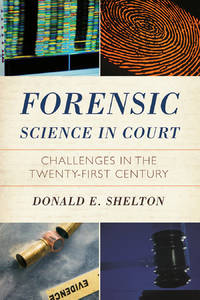
2010ref. DADAX1442201878Rowman & Littlefield Publishers 2010-10-16. hardcover. New. 6.35x0.64x9.43. Buy with confidence. Excellent Customer Service & Return policy. Rowman & Littlefield Publishers hardcover
1734pl. veau brun, tit. & tom. dorés sur pc. de cuir bordeaux, fauves ou brunes, dos à 5 nerfs ornés de fleurons, dentelles et filets dorés encadrant les caissons, roulettes dorées sur les coupes et nerfs, culs-de-lampe, bandeaux, lettrines, ex-libris imprimé posé sous le premier plat sur 7 vol., (pc. de tit. ou de tom. mq. sur 7 vol., 7 vol. avec coiffes accidentées avec mq., plats frottés avec épidermures et qq. mq., coupes et coins émoussés, moisissures ; pour le t. 7 : couv. de cuir désolidarisée, avec coupe entièrement fendue) Parmi les différentes affaires nous avons relevées : Pierre Mêge, soldat de marine, reconnu par le Parlement de Provence, pour être le Sieur de Caille Gentilhomme et pour être Pierre Mêge, par le Parlement de Paris ; Urbain Grandier, condamné comme Magicien et comme Auteur de la possession des Religieuses de Loudun ; Juges prévaricateurs punis ; Fille réputée faussement hermaphrodite ; Contestation entre deux Oculistes ; Histoire du Procès entre le Sieur Saurin de l’Académie des Sciences et le Sieur Rousseau de l’Académie des Belles-Lettres ; Histoire de Mademoiselle de Choiseul ; Mariage déclaré abusif après 24 ans de cohabitation et la mort de l’épouse ; Dissertation où l’on démontre que la défense de se marier dans les degrés d’affinité n’est pas de droit divin mais de droit positif et écclésiastique ; Soufflet donné à une jolie femme dans une rixe ; Histoire de M. de Cinq-Mars Grand Ecuyer et de M. de Thou ; Chanoine qu’on refuse d’admettre à cause de la petitesse de sa taille ; Jugements célèbres que l’Histoire nous présente, où l’on a joint d’autres jugements rendus par des Cours souveraines (Jugement de Salomon, Jug. de la Chatte Suzanne, Jug. de Zelenque sur l’Adultère, Jug. singulier sur des Troupes qui avaient pris la fuite, Jug. du Talion réformé, Jug. de l’Empereur Claude, Jug. de Soliman II en faveur d’une femme volée, Jug. qui ordonna le combat d’un chien contre un meurtrier, Jug. du Duc d’Ossonne, Jug. de Sixte V, etc.) ; Arrêts en faveur des Comédiens François ; Juifs condamnés pour un crime énorme qui révolte l’humanité. On rapporte leurs mœurs, leurs coutumes, leurs usages, leurs crimes, & les traitements qu’ils ont essuyés dans toutes les nations, depuis la mort de Jesus-Christ, & le fameux siège de Jérusalem.
1804br. d’attente, non rogné, (couv. fanée, dos lég. abîmé avec qq. mq., qq. rousseurs) « Je n’ai jamais été, je ne serai jamais le partisan ou le stipendiaire des ennemis de ma patrie ; je suis Français, et je m’honore de l’être : tous mes vœux ont été pour la gloire, pour la prospérité de la France ; toute ma haine a été vouée à ce cabinet qui trafique depuis huit ans des malheurs de l’Europe, à ce cabinet instigateur de tant de troubles et machinateur de tant de crimes ; et si j’ai approché les princes français dans l’intention et l’espérance de servir ma patrie, je me suis éloigné d’eux, plein de ce mépris qu’inspireront toujours des hommes qui comptent sur les droits de leur naissance, et non pas sur leur courage ou sur leurs qualités personnelles, pour rentrer dans un empire dont leurs courtisans et leurs flatteurs dévoreraient bientôt la substance et perpétueraient les désastres. La vérité m’obligera à dire ce que la modération de mon esprit me porterait à taire ; je ne puis ni ne veux rien celer. Qu’on blâme cet écrit, ou qu’on l’approuve, j’aurai rempli mon devoir ; j’aurai laissé à ma patrie un gage de mon amour pour elle ; et ces lignes, j’ose du moins l’espérer, défendront ma mémoire contre les atteintes de la calomnie ou de la haine. »
ref. 41588, Paris, Imprimerie de la République / Marchands de nouveautés Germinal an XII [1804], in-8, br. d’attente, non rogné, (couv. fanée, dos lég. abîmé avec qq. mq., qq. rousseurs), 160/ 100p.
1781ref. 8821Amsterdam, [sans nom], 1781. Plaquette in-8 de [4]-XII-84 pages, demi-percaline à la Bradel brune tachetée de beige, pièce de titre et tranches rouges.
2016ref. x-1107060389Cambridge Univ Pr 2016. Hardcover. New. 286 pages. 9.25x6.25x1.00 inches. Cambridge Univ Pr hardcover
First edition, 64, [4] + [4]pp., of publisher's adverts, 12mo (165 x 105 mm), blank upper margin of title torn away and replaced, several tears to title repaired, lower blank margin of final leaf of text torn away and replaced, last line of text to first leaf of text cropped, soiled and stained, stitched as issued. Although this pamphlet is a little grubby it is rare, Copac locates copies at the BL and Newcastle University.
First Edition, with the circular stamp of the "Birmingham Law Society" on title, [2], 73, [1] pp., disbound. The charge preferred against Major Thomas Moncrieff of the Berwickshire Regiment of Militia, was "for not resisting immediately, and endeavouring, as far as in his power, to prevent, the outrage committed in the mess-room on the 30th January 1807; whereby a gross insult was offered, not only to the Major, but every officer present, contrary to his duty as an officer then commanding the regiment, and contrary to good order and military discipline." COPAC locates copies at the British Library, National Library of Scotland and Glasgow University.
8vo, [2], xx, 632pp.,, engraved fold plan, orig. boards, rubbed and worn, upper cover detached, uncut.
First and only edition, 140pp., engraved portrait frontispiece, disbound. No French or Dutch title traced. Rare; ESTC with 3 locations in the UK and 4 in North America.
1824ref. BB056Murder Trial Account of the Murder of the late Mr William Weare . the coroner's inquest the trials of the prisoners and the execution. By George Henry Jones. London 1824. With 3 landscapes 2 folding plates finely lithographed by C J Hullmandel. 8vo iv344pp; half-leather marbled boards spine label "Thurtell's Trial" lightly scuffed very solid and clean throughout. First edition. William Weare was a solicitor of Lyon's Inn and a gambler. His killer was John Thurtell 1794–1824 a sports promoter amateur boxer a former Royal Marine officer and a son of the Mayor of Norwich. Thurtell owed Weare a gambling debt of £300 an immense sum at the time equivalent to £24500 in 20151. Thurtell believed Weare had cheated him of the money. Whatever the truth when Weare demanded payment Thurtell murdered him rather than pay up. He invited Weare to join him and his friends – Joseph Hunt a tavern landlord and William Probert a former convict and alcohol merchant – for a weekend of gambling at Probert's cottage at the site of Oaks Close off Gills Hill Lane subsequently popularly known as Murder Lane23 Radlett. On 24 October 1823 they journeyed from London in Thurtell's horse-drawn gig but Weare was killed in a dark lane just short of their destination. The gruesome and callous events created such public sensation that it attracted numerous ballads and theatre shows at the time along with comment by the essayist Babington Macaulay and the crime used variously in the work of Sir Walter Scott William Hazllitt and Robert Louis Stevenson. After the trial one of the accused was hanged and another Joseph Hunt was transported to Botany Bay Australia. Charles Joseph Hullmandel 1789–1850 studied art and printmaking and is considered amongst the most important figures in the development of British lithography. He developed a method for reproducing gradations in tones and for creating the effect of soft color washes which enabled the reproduction of Romantic landscape paintings of the type made popular by J. M. W. Turner. Hullmandel's essay The Art of Drawing on Stone 1824 was an important handbook of lithography issued the same year as this account of the trial.
1824ref. BB056Murder Trial Account of the Murder of the late Mr William Weare . the coroner's inquest the trials of the prisoners and the execution. By George Henry Jones. London 1824. With 3 landscapes 2 folding plates finely lithographed by C J Hullmandel. 8vo iv344pp; half-leather marbled boards spine label "Thurtell's Trial" lightly scuffed very solid and clean throughout. First edition. William Weare was a solicitor of Lyon's Inn and a gambler. His killer was John Thurtell 1794–1824 a sports promoter amateur boxer a former Royal Marine officer and a son of the Mayor of Norwich. Thurtell owed Weare a gambling debt of £300 an immense sum at the time equivalent to £24500 in 20151. Thurtell believed Weare had cheated him of the money. Whatever the truth when Weare demanded payment Thurtell murdered him rather than pay up. He invited Weare to join him and his friends – Joseph Hunt a tavern landlord and William Probert a former convict and alcohol merchant – for a weekend of gambling at Probert's cottage at the site of Oaks Close off Gills Hill Lane subsequently popularly known as Murder Lane23 Radlett. On 24 October 1823 they journeyed from London in Thurtell's horse-drawn gig but Weare was killed in a dark lane just short of their destination. The gruesome and callous events created such public sensation that it attracted numerous ballads and theatre shows at the time along with comment by the essayist Babington Macaulay and the crime used variously in the work of Sir Walter Scott William Hazllitt and Robert Louis Stevenson. After the trial one of the accused was hanged and another Joseph Hunt was transported to Botany Bay Australia. Charles Joseph Hullmandel 1789–1850 studied art and printmaking and is considered amongst the most important figures in the development of British lithography. He developed a method for reproducing gradations in tones and for creating the effect of soft color washes which enabled the reproduction of Romantic landscape paintings of the type made popular by J. M. W. Turner. Hullmandel's essay The Art of Drawing on Stone 1824 was an important handbook of lithography issued the same year as this account of the trial. books
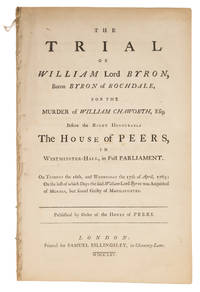
1765ref. 729001765. That Absurd Relic of Gothic Barbarism" Trial. Byron William Lord 1722-1798 Defendant. The Trial of William Lord Byron Baron Byron of Rochdale For the Murder of William Chaworth Esq; Before the Right Honourable the House of Peers In Westminster-Hall In Full Parliament. On Tuesday the 16th And Wednesday the 17th of April 1765: On the Last of Which Days the Said William Lord Byron was Acquitted of Murder But Found Guilty of Manslaughter. Published by Order of the House of Peers. London: Printed for Samuel Billingsley 1765. ii 47 1 pp. Lacking initial imprimatur leaf. Folio 12-1/2" x 8". Stab-stitched pamphlet disbound and later resewn edges speckled red. Light toning occasional light foxing light soiling and spotting in a few places slightly heavier to first and final leaves. $200. First edition. "April 16th came on before the house of peers in Westminster-hall the trial of William Lord Byron for killing Mr. Chaworth a gentleman of Nottinghamshire in a duel at the Star and Garter tavern in Pall Mall. After examining witnesses as to the circumstances of the encounter the Lords next day acquitted the prisoner of murder declaring him only guilty of manslaughter: and as by an old statute 1 Edw. VI. c. 12 in all cases wherein peers are allowed the benefit of clergy they are dismissed without burning in the hand loss of inheritance or corruption of blood; Lord Byron was enlarged on paying his fees. Much might be said on the custom of duelling that absurd relic of gothic barbarism; which still compels every man to risk his life at demand on the most frivolous or even the most insulting and cruel occasions. The laws of honour have so little connexion with those of honesty that a man may support his claim to the title of a gentleman by the former after he has forfeited all pretensions to the character by the latter. Sir John Brute is made to state the behaviour of some men of honour very justly when he says-" He comes to my house eats my meat lies with my wife dishonours my family gets a bastard to inherit my estate; and when I ask a civil account of all this-sir says he I wear a sword!": Noorthouck A New History of London: Including Westminster and Southwark 1773 Volume I:419-450. English Short-Title Catalogue T150380. unknown
1765ref. 729001765. That Absurd Relic of Gothic Barbarism" Trial. Byron William Lord 1722-1798 Defendant. The Trial of William Lord Byron Baron Byron of Rochdale For the Murder of William Chaworth Esq; Before the Right Honourable the House of Peers In Westminster-Hall In Full Parliament. On Tuesday the 16th And Wednesday the 17th of April 1765: On the Last of Which Days the Said William Lord Byron was Acquitted of Murder But Found Guilty of Manslaughter. Published by Order of the House of Peers. London: Printed for Samuel Billingsley 1765. ii 47 1 pp. Lacking initial imprimatur leaf. Folio 12-1/2" x 8". Stab-stitched pamphlet disbound and later resewn edges speckled red. Light toning occasional light foxing light soiling and spotting in a few places slightly heavier to first and final leaves. $200. First edition. "April 16th came on before the house of peers in Westminster-hall the trial of William Lord Byron for killing Mr. Chaworth a gentleman of Nottinghamshire in a duel at the Star and Garter tavern in Pall Mall. After examining witnesses as to the circumstances of the encounter the Lords next day acquitted the prisoner of murder declaring him only guilty of manslaughter: and as by an old statute 1 Edw. VI. c. 12 in all cases wherein peers are allowed the benefit of clergy they are dismissed without burning in the hand loss of inheritance or corruption of blood; Lord Byron was enlarged on paying his fees. Much might be said on the custom of duelling that absurd relic of gothic barbarism; which still compels every man to risk his life at demand on the most frivolous or even the most insulting and cruel occasions. The laws of honour have so little connexion with those of honesty that a man may support his claim to the title of a gentleman by the former after he has forfeited all pretensions to the character by the latter. Sir John Brute is made to state the behaviour of some men of honour very justly when he says-" He comes to my house eats my meat lies with my wife dishonours my family gets a bastard to inherit my estate; and when I ask a civil account of all this-sir says he I wear a sword!": Noorthouck A New History of London: Including Westminster and Southwark 1773 Volume I:419-450. English Short-Title Catalogue T150380. unknown books
1823ref. 733071823. Assault and False Imprisonment Trial. Carr Thomas Defendant. Report of the Trial of Watson Against Carr For an Assault and False Imprisonment Before Sir John Bayley Knt. One of the Justices of His Majesty's Court of King's Bench Westminster At the Guildhall Newcastle On Saturday August 2d 1823. Newcastle: Printed for John Sykes Bookseller 1823. 36 pp. Woodcut title page vignette of Samuel Johnson. Octavo 8-1/2" x 5". Disbound stab-stitched pamphlet. Moderate toning light foxing in a few places. $200. Only edition one of at least 2 issues from the same year. This scarce trial report concerns the beating and false imprisonment of Thomas Watson by Carr. The latter claimed as his defense his position as Town Constable during the time of incident and engaged Henry Brougham as his lawyer. The jury found for Watson and Carr was subject to a fine and court costs. Other copies we have seen have a different title page vignette depicting Newcastle's Guildhall. OCLC locates 7 copies of this title 4 in North America Harvard Law School University of Georgia Law School Temple University University of Pennsylvania Law School. unknown
1823ref. 733071823. Assault and False Imprisonment Trial. Carr Thomas Defendant. Report of the Trial of Watson Against Carr For an Assault and False Imprisonment Before Sir John Bayley Knt. One of the Justices of His Majesty's Court of King's Bench Westminster At the Guildhall Newcastle On Saturday August 2d 1823. Newcastle: Printed for John Sykes Bookseller 1823. 36 pp. Woodcut title page vignette of Samuel Johnson. Octavo 8-1/2" x 5". Disbound stab-stitched pamphlet. Moderate toning light foxing in a few places. $200. Only edition one of at least 2 issues from the same year. This scarce trial report concerns the beating and false imprisonment of Thomas Watson by Carr. The latter claimed as his defense his position as Town Constable during the time of incident and engaged Henry Brougham as his lawyer. The jury found for Watson and Carr was subject to a fine and court costs. Other copies we have seen have a different title page vignette depicting Newcastle's Guildhall. OCLC locates 7 copies of this title 4 in North America Harvard Law School University of Georgia Law School Temple University University of Pennsylvania Law School. unknown books
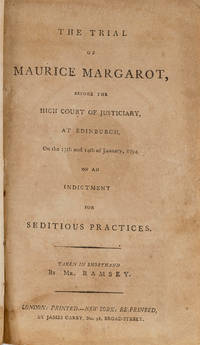
1794ref. 788791794. New York: Re-printed by James Carey 1794. New York: Re-printed by James Carey 1794. A Member of the "Scottish Martyrs to Liberty" Trial. Margarot Maurice Defendant 1745-1815. The Trial of Maurice Margarot Before the High Court of Justiciary At Edinburgh On the 13th and 14th of January 1794 On an Indictment for Seditious Practices. Taken in Shorthand by Mr. Ramsey. New York: London: Printed.New-York: Re-Printed by James Carey no. 91 Broad-Street 1794. 166 pp. Portrait frontispiece of Margarot. Octavo 8" x 5". Disbound stab-stitched pamphlet. Light browning faint dampstaining to bottom edge occasional light foxing frontispiece and title page separating at foot but light soiling to exterior occasional light foxing light edgewear to frontispiece which is just starting to separate at head with title page but secure. $200. Only New York edition reprinted from the London edition of the same year. Margarot was one of the founding members of the London Corresponding Society a radical group inspired by the French Revolution to demand parliamentary reform in the late eighteenth century. Due to the wave of anti-radical and anti-French hysteria initiated by the French Revolution he and four other radicals later known as the "Scottish Martyrs to Liberty" were convicted and transported to Australia in May 1794. Cohen Bibliography of Early American Law 13350. unknown
1794ref. 788791794. New York: Re-printed by James Carey 1794. New York: Re-printed by James Carey 1794. A Member of the "Scottish Martyrs to Liberty" Trial. Margarot Maurice Defendant 1745-1815. The Trial of Maurice Margarot Before the High Court of Justiciary At Edinburgh On the 13th and 14th of January 1794 On an Indictment for Seditious Practices. Taken in Shorthand by Mr. Ramsey. New York: London: Printed.New-York: Re-Printed by James Carey no. 91 Broad-Street 1794. 166 pp. Portrait frontispiece of Margarot. Octavo 8" x 5". Disbound stab-stitched pamphlet. Light browning faint dampstaining to bottom edge occasional light foxing frontispiece and title page separating at foot but light soiling to exterior occasional light foxing light edgewear to frontispiece which is just starting to separate at head with title page but secure. $200. Only New York edition reprinted from the London edition of the same year. Margarot was one of the founding members of the London Corresponding Society a radical group inspired by the French Revolution to demand parliamentary reform in the late eighteenth century. Due to the wave of anti-radical and anti-French hysteria initiated by the French Revolution he and four other radicals later known as the "Scottish Martyrs to Liberty" were convicted and transported to Australia in May 1794. Cohen Bibliography of Early American Law 13350. unknown books
1686ref. 728161686. London 1686. Sole edition. London 1686. Sole edition. A Member of a Plot to Depose James II Trial. Warrington Henry Booth Earl of 1652-1694 Defendant. The Tryal of Henry Baron Delamere for High-Treason In Westminster-Hall The 14th Day of January 1685. Before the Right Honourable George Lord Jeffreys Baron of Wemm Lord High Chancellour of England Constituted Lord High Steward on that Occasion. On Which Day After Full Hearing The Lord Delamere was Acquitted from All Matters Laid to His Charge. London: Printed for Dorman Newman 1686. iv 87 1 pp. With imprimatur leaf. Folio 13" x 7-3/4". Stab-stitched pamphlet bound into recent quarter cloth lettering piece to spine edges untrimmed. A few small faint stains to front board. Light toning to text somewhat heavier in places occasional faint dampspotting and staining light soiling to first and final leaves. $200. Only edition. Warrington was indicted as a participant in Monmouth's rebellion an attempt by the Duke of Monmouth an illegitimate son of Charles II to claim the throne and depose James II. The special charge against Delamere "was that at the time of Monmouth's rebellion he had gone secretly to Cheshire with the view of inciting a rising in the north of England." While it is nearly certain that Delamere sympathized with Monmouth's designs he was able to explain his journey as a wish to visit a favorite child who was dangerously ill. "Moreover Thomas Saxon the only witness who would positively swear to the correspondence of Delamere and Monmouth so hopelessly contradicted himself that he was afterwards convicted of perjury.": Dictionary of National Biography II:842-844. English Short-Title Catalogue R23568. unknown
1686ref. 728161686. London 1686. Sole edition. London 1686. Sole edition. A Member of a Plot to Depose James II Trial. Warrington Henry Booth Earl of 1652-1694 Defendant. The Tryal of Henry Baron Delamere for High-Treason In Westminster-Hall The 14th Day of January 1685. Before the Right Honourable George Lord Jeffreys Baron of Wemm Lord High Chancellour of England Constituted Lord High Steward on that Occasion. On Which Day After Full Hearing The Lord Delamere was Acquitted from All Matters Laid to His Charge. London: Printed for Dorman Newman 1686. iv 87 1 pp. With imprimatur leaf. Folio 13" x 7-3/4". Stab-stitched pamphlet bound into recent quarter cloth lettering piece to spine edges untrimmed. A few small faint stains to front board. Light toning to text somewhat heavier in places occasional faint dampspotting and staining light soiling to first and final leaves. $200. Only edition. Warrington was indicted as a participant in Monmouth's rebellion an attempt by the Duke of Monmouth an illegitimate son of Charles II to claim the throne and depose James II. The special charge against Delamere "was that at the time of Monmouth's rebellion he had gone secretly to Cheshire with the view of inciting a rising in the north of England." While it is nearly certain that Delamere sympathized with Monmouth's designs he was able to explain his journey as a wish to visit a favorite child who was dangerously ill. "Moreover Thomas Saxon the only witness who would positively swear to the correspondence of Delamere and Monmouth so hopelessly contradicted himself that he was afterwards convicted of perjury.": Dictionary of National Biography II:842-844. English Short-Title Catalogue R23568. unknown books