3754 risultati
rif. 92106A Genève, Pour Iean Ant. & Samuel de Tournes, 1666 et 1669, 2 volumes reliés ensemble, in-12 de 165x105 mm environ, (5) ff. (titre, epitre, table), 769-(4) ff.-(titre, epitre, table)-(1) f.-568 pages, cartonnage marbré, dos lisse portant titres dorés sur pièce de titres corail, tranches rouges. Petit defaut de marge dans la première partie p. 549-550, des rousseurs des mouillures des passages annotés en début de volume, frottements sur les angles de la couverture, sinon bon état.
rif. 55209aafParis, Fischbacher, 1885, gr. in-8vo, LV + 148 p., reliure en demi-cuir, fleurons et titre dorés au dos. Bel exemplaire.
rif. DADAX0415958148New unknown
rif. DADAX0415819369New unknown
rif. DADAX0415125103New unknown
rif. DADAX0415255872New unknown
rif. DADAX041546448XNew unknown
rif. DADAX0415208440New unknown
rif. DADAX0415040825New unknown
rif. DADAX0415070686New unknown
rif. DADAX0198206569New unknown
rif. DADAX0367014564New unknown
rif. DADAX0415302676New unknown
rif. DADAX0415240697New unknown
1672rif. 17151672 Ed. Jean Lucas, Rouen, 1672. In-4, plein veau époque, dos orné. 41, 71 pages. Vignette gravée sur bois en page de titre. Texte latin et français, traduction par le ministre Allix ou Marc-Antoine de la Bastide, selon les bibliographes. La première partie traite des différents commentaires. La 2ème partie expose le texte original "De Corpore et Sanguine Domini" , avec la mise en français en regard
1867rif. BK0168Philadelphia: J. B. Chandler Printer 1867. 116 pp. 8vo. Original printed wrappers. Ex-library with small Massachusetts State Library stamp to title page; otherwise near fine. Very good. A late defense of the Pennsylvania system of prison discipline written as the model developed at Eastern State Penitentiary was increasingly becoming an exception among American prisons. The system kept inmates separated from one another both at work and at rest in contrast to the Auburn system which brought prisoners together for silent congregate labor during the day. Eastern State maintained the separate system from its opening in 1829 into the 1870s despite sustained criticism of its effects and lessened ability to keep prisoners separate in the first place due to overcrowding.1 Published as a defense of the Pennsylvania system of separate confinement the pamphlet appeared after the model associated with Eastern State Penitentiary had already been the subject of decades of criticism in the United States and abroad. The work is generally attributed to Richard Vaux son of the prominent Philadelphia prison reformer Roberts Vaux and himself a longtime advocate of the Pennsylvania system. By the time this edition appeared in 1867 separate confinement had lost ground nationally to the Auburn system of congregate labor making the pamphlet a late statement in defense of a model of incarceration closely identified with Philadelphia and Eastern State Penitentiary. 1 Ashley Theresa Rubin Institutionalizing the Pennsylvania System: Organizational Exceptionalism Administrative Support and Eastern State Penitentiary 1829-1875 PhD diss. University of California Berkeley 2013. . J. B. Chandler, Printer unknown
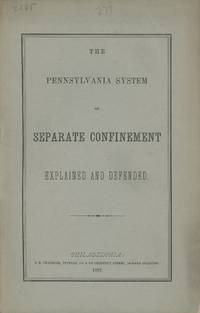
1867rif. BK0168Philadelphia: J. B. Chandler Printer 1867. 116 pp. 8vo. Original printed wrappers. Ex-library with small Massachusetts State Library stamp to title page; otherwise near fine. Very good. A late defense of the Pennsylvania system of prison discipline written as the model developed at Eastern State Penitentiary was increasingly becoming an exception among American prisons. The system kept inmates separated from one another both at work and at rest in contrast to the Auburn system which brought prisoners together for silent congregate labor during the day. Eastern State maintained the separate system from its opening in 1829 into the 1870s despite sustained criticism of its effects and lessened ability to keep prisoners separate in the first place due to overcrowding.1 Published as a defense of the Pennsylvania system of separate confinement the pamphlet appeared after the model associated with Eastern State Penitentiary had already been the subject of decades of criticism in the United States and abroad. The work is generally attributed to Richard Vaux son of the prominent Philadelphia prison reformer Roberts Vaux and himself a longtime advocate of the Pennsylvania system. By the time this edition appeared in 1867 separate confinement had lost ground nationally to the Auburn system of congregate labor making the pamphlet a late statement in defense of a model of incarceration closely identified with Philadelphia and Eastern State Penitentiary. 1 Ashley Theresa Rubin Institutionalizing the Pennsylvania System: Organizational Exceptionalism Administrative Support and Eastern State Penitentiary 1829-1875 PhD diss. University of California Berkeley 2013. . J. B. Chandler, Printer unknown books
rif. SONG0714657050Used: Good unknown
rif. DADAX0199595011New unknown
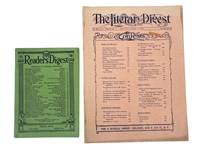
1904rif. 237201904. Two American digest periodicals documenting changes in national public discourse from the Progressive Era through the Great Depression. The earlier issue contains prominent contemporary coverage of the Statesboro Georgia lynching of 1904 reproducing reactions from newspapers across the country and condemning the burning and killing of two Black men by a white mob after the courts had already imposed sentences. The Literary Digest. New York: Funk & Wagnalls Company August 27 1904. Vol. XXIX No. 9 Whole No. 749. Together with The Reader's Digest. Pleasantville New York: The Reader's Digest Association May 1932. Eleventh Year Vol. 21 No. 121. Two illustrated periodicals. The Literary Digest complete in original printed wrappers; the Reader's Digest in original green printed wrappers. The Literary Digest treats the Statesboro lynching as a national disgrace assembling condemnations of the white mob that seized two Black prisoners from lawful custody and burned them alive after their convictions. Its opposition to mob violence is forceful for a mainstream national periodical but the journalism is not racially radical: it condemns lynching chiefly as a collapse of law civilization and public order while reproducing racialized language paternalistic assumptions and comparisons with "Darkest Africa" that reveal the limits of white Progressive reform discourse. The article documents how anti-lynching sentiment could coexist with the racial hierarchies embedded in early twentieth-century American journalism. Other contents also address the Russo-Japanese War Theodore Roosevelt's "Big Stick" politics immigration early automobile culture religion scientific racism and political caricature preserving the mixture of reform journalism racial ideology international reporting and editorial debate that shaped mass-circulation American periodicals at the beginning of the twentieth century. The May 1932 issue captures an American reading public attempting to understand economic collapse mass unemployment and the instability of modern life during the darkest years of the Great Depression. Its condensed articles move from Arthur Pound's courtroom account of bankrupt workers shopkeepers and failed speculators to proposals for canceling international war debts arguments over housing and advertising and criticism of the press's exploitation of the Lindbergh kidnapping. Reports on Japan's campaign in Manchuria cancer research industrial materials telecommunications and labor-saving inventions place domestic economic crisis beside the geopolitical and technological transformations reshaping the interwar world. The two issues document national and international crises into accessible commentary for a broad readership moving from the racial violence imperial politics and reform debates of 1904 to the economic collapse mass media consumer culture and geopolitical instability of 1932. Both remain stapled without annotations or other markings. Completely legible and in overall very good condition with only minor discoloration and scattered creasing or handling use. unknown
1904rif. 237201904. Two American digest periodicals documenting changes in national public discourse from the Progressive Era through the Great Depression. The earlier issue contains prominent contemporary coverage of the Statesboro Georgia lynching of 1904 reproducing reactions from newspapers across the country and condemning the burning and killing of two Black men by a white mob after the courts had already imposed sentences. The Literary Digest. New York: Funk & Wagnalls Company August 27 1904. Vol. XXIX No. 9 Whole No. 749. Together with The Reader's Digest. Pleasantville New York: The Reader's Digest Association May 1932. Eleventh Year Vol. 21 No. 121. Two illustrated periodicals. The Literary Digest complete in original printed wrappers; the Reader's Digest in original green printed wrappers. The Literary Digest treats the Statesboro lynching as a national disgrace assembling condemnations of the white mob that seized two Black prisoners from lawful custody and burned them alive after their convictions. Its opposition to mob violence is forceful for a mainstream national periodical but the journalism is not racially radical: it condemns lynching chiefly as a collapse of law civilization and public order while reproducing racialized language paternalistic assumptions and comparisons with "Darkest Africa" that reveal the limits of white Progressive reform discourse. The article documents how anti-lynching sentiment could coexist with the racial hierarchies embedded in early twentieth-century American journalism. Other contents also address the Russo-Japanese War Theodore Roosevelt's "Big Stick" politics immigration early automobile culture religion scientific racism and political caricature preserving the mixture of reform journalism racial ideology international reporting and editorial debate that shaped mass-circulation American periodicals at the beginning of the twentieth century. The May 1932 issue captures an American reading public attempting to understand economic collapse mass unemployment and the instability of modern life during the darkest years of the Great Depression. Its condensed articles move from Arthur Pound's courtroom account of bankrupt workers shopkeepers and failed speculators to proposals for canceling international war debts arguments over housing and advertising and criticism of the press's exploitation of the Lindbergh kidnapping. Reports on Japan's campaign in Manchuria cancer research industrial materials telecommunications and labor-saving inventions place domestic economic crisis beside the geopolitical and technological transformations reshaping the interwar world. The two issues document national and international crises into accessible commentary for a broad readership moving from the racial violence imperial politics and reform debates of 1904 to the economic collapse mass media consumer culture and geopolitical instability of 1932. Both remain stapled without annotations or other markings. Completely legible and in overall very good condition with only minor discoloration and scattered creasing or handling use. unknown books
rif. DADAX0415956080New unknown
rif. DADAX0415238684New unknown
rif. DADAX0415091489New unknown
rif. DADAX0415227925New unknown