3725 risultati
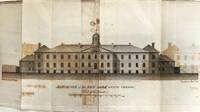
1801rif. 5570New York: I Collins 1801. First Edition. Somewhat later full sheep. Very good; some flaking to the spine of the binding; some offsetting to the plates; otherwise a bright fresh copy. 8vo 4 5 - 94 95 - 109 are erroneously numbered 83 - 97pp. 2 large folding plates a floor plan and elevation and 2 folding tables included in the pagination. Eddy was a Quaker merchant and reformer who had spent time in prison during the Revolution because of his Tory sympathies. He had befriended Philip Schuyler the father-in-law of Alexander Hamilton and hosted a visit of his to Philadelphia to inspect the Walnut Street Jail in 1796. This visit was the impetus for the first penal reform in New York State. Eddy was thus launched upon a career. In 1801 he published the book offered here that is a description of a new prison. The actual design was the work of the Mangin brothers see DAB who are best known for the design of New York City Hall. Eddy's report however contains all of his stipulations for the building and its appointments as well as a detailed summary of how the inmates were to be treated menu lists clothing etc. A most important book: the first native American work on prisons written by the country's first prison director. S & S #431; King Am. Philanthropy # 817; Sabin #21816; see Lewis for citations to Eddy. I Collins unknown books
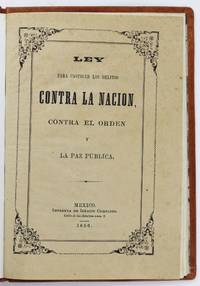
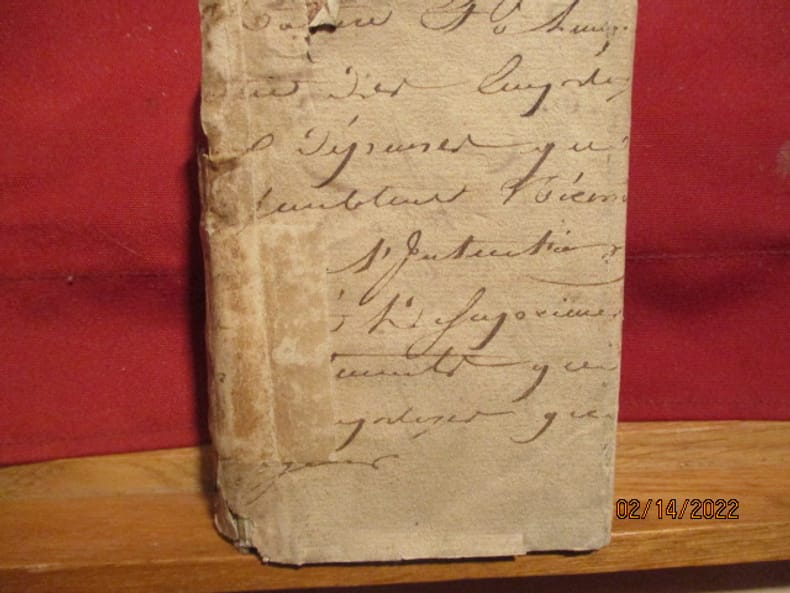
1856rif. 4036Mexico City: Imprenta de Ignacio Cumplido 1856. Still very good. 17pp. Original printed wrappers bound into full calf front board gilt lettered. Some toning and scattered light foxing. This law was promulgated at the end of 1856 by the new liberal government of Mexico following its ascendancy in the mid-1850s and preceded the reform Constitution of 1857 by two months. Its statutes defined "crimes against the independence and security of the nation" including various forms of treason rebellion and foreign military service or assistance and made them punishable by death. The law anticipated conservative resistance and revolt against the new policies of the liberal faction that aimed to strip power and influence from the church and traditional aristocracy of the country. Their efforts indeed led to full-scale civil war in 1858 and the second French intervention in the early 1860s. OCLC locates a small handful of institutional copies and we locate just one in available sales records. Scarce and in attractive original wrappers. Imprenta de Ignacio Cumplido unknown books
1856rif. 4036Mexico City: Imprenta de Ignacio Cumplido 1856. Still very good. 17pp. Original printed wrappers bound into full calf front board gilt lettered. Some toning and scattered light foxing. This law was promulgated at the end of 1856 by the new liberal government of Mexico following its ascendancy in the mid-1850s and preceded the reform Constitution of 1857 by two months. Its statutes defined "crimes against the independence and security of the nation" including various forms of treason rebellion and foreign military service or assistance and made them punishable by death. The law anticipated conservative resistance and revolt against the new policies of the liberal faction that aimed to strip power and influence from the church and traditional aristocracy of the country. Their efforts indeed led to full-scale civil war in 1858 and the second French intervention in the early 1860s. OCLC locates a small handful of institutional copies and we locate just one in available sales records. Scarce and in attractive original wrappers. Imprenta de Ignacio Cumplido unknown
rif. 171659Paris, 1781-1784 7 pièces en un vol. in-8, veau fauve marbré, dos lisse cloisonné et fleuronné, pièce de titre cerise, encadrement de simple filet à froid sur les plats, simple filet doré sur les coupes, tranches rouges (reliure de l'époque). Dos frotté.
In-4, demi-veau tabac moderne à coins, dos à nerfs fleuronnés, couverture papier marbré d’origine conservée, (6), 268 p., texte imprimé dans un encadrement rocaille, vignette de titre aux armoiries de la ville de Gand, bandeaux et culs-de-lampe, 4 doubles planches gravées par Bertaud de plans et vues des façades. Très rare édition originale de cet ouvrage pionnier dans l’histoire de la réforme pénitentiaire, cité par M. Foucault dans ‘Surveiller et punir’ (p. 124-125). Edité en vue d’être présenté aux Etats de Flandre, ce mémoire - "le premier jalon du grand système pénitentiaire" - est à l’origine de l’une des toutes premières institutions "modèles" de détention, sur un fondement alors révolutionnaire : la réhabilitation des condamnés par le travail. Il devait constituer une source d’inspiration directe pour plusieurs générations de réformateurs jusqu’au XXe siècle, en Europe et en Amérique. "La maison de force de Gand créée en 1775 par le vicomte J.-J.-P. Vilain XIIII était considérée comme La prison modèle, pour sa classification des détenus et son organisation industrielle. Son fondateur avait cherché à l'insérer dans l'économie régionale, de telle sorte que les délinquants puissent retrouver à leur libération des travaux semblables à ceux qu'ils avaient pratiqués pendant leur détention" (Cf. J.-G. Petit, ‘Les débuts de la manufacture carcérale’, Annales de Bretagne, 1990, vol. 97, n°97-3, p. 329-342). Bourgmestre de Gand, puis grand Bailly, et conseiller d’Etat, le vicomte Jean Jacques Philippe Vilain IIII (1712-1777) était issu d’une ancienne famille belge. Vignette de titre aux armoiries de la ville de Gand. (Conlon, 'Siècle des Lumières', 75:1743. J.-G. Petit,' Ces peines obscures', p. 163. Vander Haeghen, 'Bibliographie Gantoise', n°4551). Très bon exemplaire, très frais
rif. 38812Ensemble de 7 pièces reliées en un volume in-8 (214 x 134 mm), demi-veau marbré, dos à cinq nerfs filetés or richement orné de compartiments fleuronnés et cloisonnés, palettes en tête et pied, pièce de titre de maroquin bordeaux (reliure moderne signée Laurenchet, dans le goût de l'époque).
First edition, 2 vols., [2], xxv, [1], 297, [1]; [2], 341, [1, errata]pp., faint number to verso of titles, new endpapers, attractively bound in recent period half morocco, marbled paperboards, raised bands to spine, gilt, a handsome set. Goldsmiths'-Kress, no. 15772; McCulloch, p. 284.
1980rif. 2080202103700240Japan Book Center 1980. Soft Cover. Fine. Size: 22cm A5 Japan Book Center paperback
rif. Z1-K-023-01004Howard League for Penal Reform. Used - Good. Ships from UK in 48 hours or less usually same day. Your purchase helps support Sri Lankan Children's Charity 'The Rainbow Centre'. Shows some signs of wear but in good overall condition. 100% money back guarantee. We are a world class secondhand bookstore based in Hertfordshire United Kingdom and specialize in high quality textbooks across an enormous variety of subjects. We aim to provide a vast range of textbooks rare and collectible books at a great price. Our donations to The Rainbow Centre have helped provide an education and a safe haven to hundreds of children who live in appalling conditions. We provide a 100% money back guarantee and are dedicated to providing our customers with the highest standards of service in the bookselling industry. Howard League for Penal Reform unknown
1571rif. 486271571 (Lyon) Lugduni, Apud Ioan. Tornaesivm (Jean de Tournes), Typogr. Regium (Typographe royal). MDLXXI - 1571 - In-16, 12 x 8,5 x 3,8 cm - Edition Originale - Reliure vélin de récupération avec manque -Collationné complet des 110 gravures sur bois- 637 pagers + Index (3) manque pages d'index- fortes mouillures - Envoi rapide et soigné - Réf. 48627
1652rif. YRG-383In-4, plein cuir raciné, dos à cinq nerfs, caissons ornés de fleurons, pièce de titre, Frontispice gravé SN, ainsi qu'une autre gravure 324 pages. Dos restauré, joliment, manque de dorure au pieds du dos, petit manque de papier en bas de page du frontispice, intérieur frais . Chez Pierre Chevalier.
rif. 100450A Genève, De l'Imprimerie de Michel Blanchier, 1563, 1 volume de 350x225 mm environ, (1) f., (8) ff. ( titre, préface, table, argument), 850 pages-(1) fb.-369 pages-(1) fb.- (9) ff. (table), reliure plein vélin crème de l'époque, dos 5 nerfs portant titres manuscrits, reste un lien de fermeture sur 4. Notes manuscrites anciennes et tampon d'appartenance sur la première garde. Dernier plat en partie détaché, des rousseurs pages brunies et mouillures dans les marges, coins et coupes émoussés, fréquentes erreurs de pagination, sans manque de pages (confirmé par les signatures et réclames), petites galeries marginales et taches sur les derniers feuillets (30 derniers feuillets), petits défauts de marge.
3 parties reliées en un fort volume in-8, plein vélin polychrome sur ais de bois, dos de vélin vert céladon à 4 faux-nerfs orné de guirlandes dorées, plats garnis d’un décor de compartiments délimités de guirlandes, fleurs avec feuilles et tige mosaïquées rouge et vert sur fond ivoire aux 4 coins, réserve noisette en cintre, fleuron doré dans un médaillon rouge au centre, tranches dorées et ciselées, contreplat de papier peint polychrome, provenance datée gravée au noir sur le premier plat: "GK / GFE / 1797" (reliure de l’époque). Remarquable spécimen de reliure allemande dite "reliure de paysan" ("Bauerneinband"), réalisée à partir de techniques mixtes associant teinture, dorure, estampage, mosaïque et incrustation, colles et vernis. Ces reliures, inspirées par le folklore et l’esthétique populaire, ont été réalisées de la fin du XVIIe au début du XIXe s. à destination d'une clientèle aisée. Elles recouvrent essentiellement des livres religieux ou de dévotion en milieu réformé, en Allemagne, aux Pays-Bas, en Scandinavie et dans les Balkans. Décor légèrement passé. Bel exemplaire, bien conservé, sans restauration.
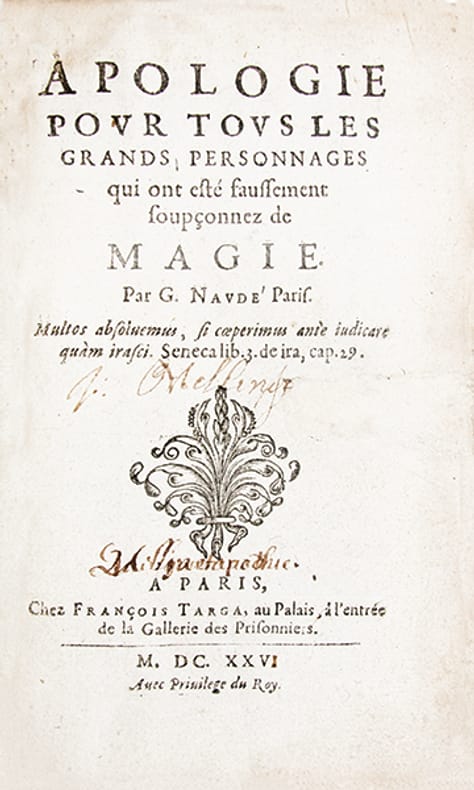
rif. 39293In-8° (170 x 110 mm), vélin souple, dos lisse titré à la plume, (24), 615 (i.e. 650), (23) pages. Paris, François Targa, 1625.
1556rif. 16000[Genève], [Jean Crespin], 1556. In-8 de [416] pages [*8; A8; b-z8; A-B8], plein vélin souple du temps à rabats, traces de cordons d'attache. Deux signatures anciennes sur la page de titre. Petite déchirure sans manque aux feuillets z1 et B4, et petit manque de papier dans la marge du B6.
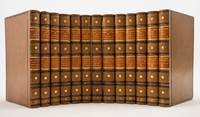
1843rif. ST20896London: William Pickering and John W. Parker and Son 1843-57. Second Edition of volumes I III V VI VIII XI XV XVII. Third Edition of volume II. FIRST EDITIONS of the other 13 volumes. 170 x 103 mm. 6 3/4 x 4 1/8". 22 volumes bound as 13. Pleasing contemporary calf by Leighton stamp-signed on verso of front flyleaf covers framed with a double blind rule raised bands spine compartments with a single gilt sun tool russet morocco labels lettered in gilt all edges sprinkled. First volume with one plate depicting the brain and one illustration in the text depicting the brains of different animals. Final volume with an ad for the complete series by John W. Parker. A few light scratches scuffs and spots to leather each volume with offset from ribbon page marker other trivial defects but a fine and attractive set--extraordinarily fresh and clean internally in bindings essentially without wear. Containing a rarely seen complete run of 22 separate works in 13 volumes this attractive set represents the joint efforts of a female Victorian polymath and major publisher William Pickering to introduce the general public to a very wide range of subjects partly to contribute to general popular education and partly to alert the public to the need for reform. Caroline Cornwallis 1786-1858 was a writer scholar and feminist activist whose life-long self-directed course of study led her to explore subjects as diverse as mineralogy theology Tuscan law and the Ancient Egyptian language. In 1842 the first work in the "Small Books on Great Subjects" series appeared authored anonymously by Cornwallis she is named only as "A Pariah" and the editorship of the series is credited to "A Few Well-Wishers to Knowledge". Along with initiating and editing the series Cornwallis composed all but four of the books herself the second and third numbers were written by John Barlow #15 by Wilhelm von Humboldt and #16 by David Power. The works cover philosophy psychology chemistry Greek philosophy Christian history and theology biology law grammar geology politics and more and proved to be a great success in Britain and America. Some of the volumes are histories of general interest "A Brief View of Greek Philosophy up to the Age of Pericles" and "Christian Sects in the Nineteenth Century"; others are of significant scientific content "The Connection Between Physiology and Intellectual Philosophy" and "On Man’s Power Over Himself to Prevent or Control Insanity; still others are strongly reformist in thrust "On the Principles of Criminal Law" decrying the harshness of punitive Victorian laws and "On the Philosophy of Ragged Schools" dealing with the pressing issue of educating London's poor. Initially "Small Books on Great Subjects" was published by William Pickering but upon his 1853 bankruptcy John W. Parker took over the series. Stray volumes of this series are readily available but complete sets especially in the condition seen here are much more difficult to find. William Pickering (and John W. Parker and Son) unknown books
1843rif. ST20896London: William Pickering and John W. Parker and Son 1843-57. Second Edition of volumes I III V VI VIII XI XV XVII. Third Edition of volume II. FIRST EDITIONS of the other 13 volumes. 170 x 103 mm. 6 3/4 x 4 1/8". 22 volumes bound as 13. Pleasing contemporary calf by Leighton stamp-signed on verso of front flyleaf covers framed with a double blind rule raised bands spine compartments with a single gilt sun tool russet morocco labels lettered in gilt all edges sprinkled. First volume with one plate depicting the brain and one illustration in the text depicting the brains of different animals. Final volume with an ad for the complete series by John W. Parker. A few light scratches scuffs and spots to leather each volume with offset from ribbon page marker other trivial defects but a fine and attractive set--extraordinarily fresh and clean internally in bindings essentially without wear. Containing a rarely seen complete run of 22 separate works in 13 volumes this attractive set represents the joint efforts of a female Victorian polymath and major publisher William Pickering to introduce the general public to a very wide range of subjects partly to contribute to general popular education and partly to alert the public to the need for reform. Caroline Cornwallis 1786-1858 was a writer scholar and feminist activist whose life-long self-directed course of study led her to explore subjects as diverse as mineralogy theology Tuscan law and the Ancient Egyptian language. In 1842 the first work in the "Small Books on Great Subjects" series appeared authored anonymously by Cornwallis she is named only as "A Pariah" and the editorship of the series is credited to "A Few Well-Wishers to Knowledge". Along with initiating and editing the series Cornwallis composed all but four of the books herself the second and third numbers were written by John Barlow #15 by Wilhelm von Humboldt and #16 by David Power. The works cover philosophy psychology chemistry Greek philosophy Christian history and theology biology law grammar geology politics and more and proved to be a great success in Britain and America. Some of the volumes are histories of general interest "A Brief View of Greek Philosophy up to the Age of Pericles" and "Christian Sects in the Nineteenth Century"; others are of significant scientific content "The Connection Between Physiology and Intellectual Philosophy" and "On Man’s Power Over Himself to Prevent or Control Insanity; still others are strongly reformist in thrust "On the Principles of Criminal Law" decrying the harshness of punitive Victorian laws and "On the Philosophy of Ragged Schools" dealing with the pressing issue of educating London's poor. Initially "Small Books on Great Subjects" was published by William Pickering but upon his 1853 bankruptcy John W. Parker took over the series. Stray volumes of this series are readily available but complete sets especially in the condition seen here are much more difficult to find. William Pickering (and John W. Parker and Son) unknown
1736rif. 8673Amsterdam, J. Wetstein et G. Smith, 1736. 2 volumes in-4, frontispice, [14]-LXXV-[1]-696; [4]-848 pages, plein veau fauve, dos à nerfs ornés de filets et fleurons dorés, pièces de titre et tomaison en maroquin rouge, double filet doré sur les coupes, roulette dorée intérieure. Epidermures et petit manque de peau sur un plat, coiffe inférieure du second volume abîmée, hormis une pâle trace d'humidité aux 30 derniers feuillets du premier volume, intérieur en parfaite condition.
rif. Z1-H-006-00886Howard League for Penal Reform. Used - Good. Ships from UK in 48 hours or less usually same day. Your purchase helps support Sri Lankan Children's Charity 'The Rainbow Centre'. Ex-library so some stamps and wear but in good overall condition. 100% money back guarantee. We are a world class secondhand bookstore based in Hertfordshire United Kingdom and specialize in high quality textbooks across an enormous variety of subjects. We aim to provide a vast range of textbooks rare and collectible books at a great price. Our donations to The Rainbow Centre have helped provide an education and a safe haven to hundreds of children who live in appalling conditions. We provide a 100% money back guarantee and are dedicated to providing our customers with the highest standards of service in the bookselling industry. Howard League for Penal Reform unknown
rif. Z1-G-024-01635Howard League for Penal Reform. Used - Good. Ships from UK in 48 hours or less usually same day. Your purchase helps support Sri Lankan Children's Charity 'The Rainbow Centre'. Ex-library so some stamps and wear but in good overall condition. 100% money back guarantee. We are a world class secondhand bookstore based in Hertfordshire United Kingdom and specialize in high quality textbooks across an enormous variety of subjects. We aim to provide a vast range of textbooks rare and collectible books at a great price. Our donations to The Rainbow Centre have helped provide an education and a safe haven to hundreds of children who live in appalling conditions. We provide a 100% money back guarantee and are dedicated to providing our customers with the highest standards of service in the bookselling industry. Howard League for Penal Reform unknown
rif. Z1-I-024-00177Howard League for Penal Reform. Used - Good. Used - Good. Ships from UK in 48 hours or less usually same day.Your purchase helps support Sri Lankan Children's Charity 'The Rainbow Centre.' Ex-library but has been well cared for. 100% money back guarantee. We are a world class secondhand bookstore based in Hertfordshire United Kingdom and specialize in high quality textbooks across an enormous variety of subjects. We aim to provide a vast range of textbooks rare and collectible books at a great price. Our donations to The Rainbow Centre have helped provide an education and a safe haven to hundreds of children who live in appalling conditions. We provide a 100% money back guarantee and are dedicated to providing our customers with the highest standards of service in the bookselling industry. Howard League for Penal Reform unknown
rif. Z1-L-022-01414Australian Government Publishing Service. Used - Acceptable. Used - Acceptable. Ships from UK in 48 hours or less usually same day. Your purchase helps support Sri Lankan Children's Charity 'The Rainbow Centre'. Ex-library with wear and barcode page may have been removed. 100% money back guarantee. We are a world class secondhand bookstore based in Hertfordshire United Kingdom and specialize in high quality textbooks across an enormous variety of subjects. We aim to provide a vast range of textbooks rare and collectible books at a great price. Our donations to The Rainbow Centre have helped provide an education and a safe haven to hundreds of children who live in appalling conditions. We provide a 100% money back guarantee and are dedicated to providing our customers with the highest standards of service in the bookselling industry. Australian Government Publishing Service unknown
rif. 38648Petit in-8 (158 x 96 mm), maroquin rouge de l'époque, dos à 5 faux-nerfs guillochés or, richement orné "à la grotesque", triple filet d'encadrement sur les plats, roulette sur les coupes, dentelle intérieure, titre doré, tranches dorées sur marbrures (reliure de Padeloup), (16), 384 p., vignette de titre, bandeaux et culs-de-lampe gravés sur bois. Utrecht, Guillaume vande Water, 1692.
Ensemble de 62 pièces reliées en 4 volumes in-8°, 3 de demi-chagrin vert, dos à nerfs et un de demi-maroquin vert, dos lisse orné d'un décor romantique doré (reliures de l’époque). Précieux recueil de 62 pièces (dont 15 en double), composé en partie de ses propres œuvres, constitué par Charles Lucas pour sa bibliothèque personnelle. Chaque volume est précédé d'un index de sa main. Charles Lucas (1803-1899) est l'homme "qui, sans conteste, pendant le XIXe siècle, a le mieux incarné les ambitions et les ambiguïtés de la réforme pénitentiaire (...) et a fondé la Science des prisons" (J.G. Petit). Il personnifia le libéralisme pénal de la Restauration, jetant les bases d'un système pénitentiaire qui récusait l'emprisonnement perpétuel. Guizot le nomma inspecteur des prisons dès le changement de régime, en 1830. Il demeura trente-cinq ans à ce poste. À partir de 1830, l'engouement pour l'amélioration du système pénitentiaire suscita des centaines d'ouvrages. Charles Lucas se constitua une très riche bibliothèque spécialisée, augmentée des nombreuses brochures que l'inspecteur général des prisons recevait. On trouve ici une importante réunion de 21 plaquettes traitant de la colonie agricole du Val d'Yèvre qu'il avait fondée, en 1841, pour recevoir des jeunes délinquants. Après avoir acheté 140 ha de marais au Val d’Yèvre près de Bourges, Charles Lucas soumit son projet au ministère de l’Intérieur qui ne le retint pas. En 1846, il décida de se lancer personnellement dans "l’aventure". La construction coûta 450.000 francs et l’Etat alloua 80 centimes par jour et par colon qui furent transférés de la prison de Fontevraud dès 1847 : 100 en 1850 puis 400 en 1860. En 1865, Charles Lucas devenu aveugle fut remplacé par son fils docteur en droit. En 1872, la colonie fut louée, puis acquise par l’Etat et "nationalisée". La loi de 1912 sur les tribunaux pour enfants entraîna une réduction progressive des effectifs jusqu’en 1924 pour le Val d’Yèvre ferma définitivement.