2.678 Ergebnisse
Best.-Nr. 24020923-nnew. unknown
Best.-Nr. 851579like new. unknown
Best.-Nr. 19195318-nnew. unknown
2001Best.-Nr. AME_9781563089459Libraries 2001. Bilingual. Paperback. New/New. Libraries paperback
2012Best.-Nr. DADAX1782662693www.Militarybookshop.Co.UK 2012-12-01. hardcover. New. 8.50x0.56x11.00. Buy with confidence. Excellent Customer Service & Return policy. www.Militarybookshop.Co.UK hardcover
Best.-Nr. 86394RSGB Pub. London. 2004 Hardcover. Hebrew / English text with Readings. 2 Vols in Slipcase. New RSGB Pub. London. 2004 hardcover
1774Best.-Nr. 45029Leipzig Siegfried Lebrecht Crusius 1774. Bound in 2 very fine contemp. full calf raised bands richly gilt spines. Title-and tomelabels in leather on spines with gilt lettering. gilt border on all covers. Blindtooled decorations on covers in Cambridge-style "mirror-binding". Edges gilt. Stamp on foot of titlepages. 22312;16296 pp. and 11 folded engraved plates. Light browning to some quires and to top of titles otherwise fine. Scarce first edition of the famous German educators mathematical textbook - his suggestion to how mathematics should be taught in his educational reform. Basedow’s views were based on the writings of men such as John Amos Comenius John Locke and Jean-Jacques Rousseau. His practical teaching methods were more expansive in their implications for education than those of any of his immediate predecessors in the field and by the early 19th century they had become a fundamental force in Germany’s public school systems.Basedow blev i 1753 ansat af J.H.E. Bernstorff ved Sorø Akademi som professor i moral og de skønne videnskaber. Her kom han bl.a. i forbindelse med den danske oplysningsforfatter og Sorø-professor Jens Schielderup Sneedorff hvis værker han oversatte til tysk. Sneedorff blev selv inspirereret af Basedows pædagogiske idéer. hardcover
2001Best.-Nr. DADAX0807408077Brand: Urj Press 2001-11-01. hardcover. New. 10.40x7.00x0.43. Buy with confidence. Excellent Customer Service & Return policy. Brand: Urj Press hardcover
Best.-Nr. 7695Cambridge 1999 or Later Reprint Revised and Updated edit. Hebrew / English with Readings. Hb. As New Cambridge 1999, or Later Reprint unknown
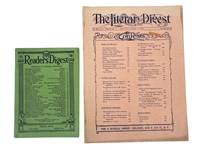
1904Best.-Nr. 237201904. Two American digest periodicals documenting changes in national public discourse from the Progressive Era through the Great Depression. The earlier issue contains prominent contemporary coverage of the Statesboro Georgia lynching of 1904 reproducing reactions from newspapers across the country and condemning the burning and killing of two Black men by a white mob after the courts had already imposed sentences. The Literary Digest. New York: Funk & Wagnalls Company August 27 1904. Vol. XXIX No. 9 Whole No. 749. Together with The Reader's Digest. Pleasantville New York: The Reader's Digest Association May 1932. Eleventh Year Vol. 21 No. 121. Two illustrated periodicals. The Literary Digest complete in original printed wrappers; the Reader's Digest in original green printed wrappers. The Literary Digest treats the Statesboro lynching as a national disgrace assembling condemnations of the white mob that seized two Black prisoners from lawful custody and burned them alive after their convictions. Its opposition to mob violence is forceful for a mainstream national periodical but the journalism is not racially radical: it condemns lynching chiefly as a collapse of law civilization and public order while reproducing racialized language paternalistic assumptions and comparisons with "Darkest Africa" that reveal the limits of white Progressive reform discourse. The article documents how anti-lynching sentiment could coexist with the racial hierarchies embedded in early twentieth-century American journalism. Other contents also address the Russo-Japanese War Theodore Roosevelt's "Big Stick" politics immigration early automobile culture religion scientific racism and political caricature preserving the mixture of reform journalism racial ideology international reporting and editorial debate that shaped mass-circulation American periodicals at the beginning of the twentieth century. The May 1932 issue captures an American reading public attempting to understand economic collapse mass unemployment and the instability of modern life during the darkest years of the Great Depression. Its condensed articles move from Arthur Pound's courtroom account of bankrupt workers shopkeepers and failed speculators to proposals for canceling international war debts arguments over housing and advertising and criticism of the press's exploitation of the Lindbergh kidnapping. Reports on Japan's campaign in Manchuria cancer research industrial materials telecommunications and labor-saving inventions place domestic economic crisis beside the geopolitical and technological transformations reshaping the interwar world. The two issues document national and international crises into accessible commentary for a broad readership moving from the racial violence imperial politics and reform debates of 1904 to the economic collapse mass media consumer culture and geopolitical instability of 1932. Both remain stapled without annotations or other markings. Completely legible and in overall very good condition with only minor discoloration and scattered creasing or handling use. unknown
1972Best.-Nr. 232591972. Prison and IncarcerationSocial activism Prison reform organizing conference broadside. Attica and San Quentin prison organizing stand at the center of this January 1972 Berkeley conference broadside which opens with a Brecht quote "Slave who is it that shall free you.all of us or none" and declares that "no one in America today is more a slave than the inmates in American prisons." The text ties prison struggle to "class and racial oppression" names the murders at Attica and San Quentin and frames the prison system as a site of beatings drugs "behavior modification" and brain surgery schemes. The conference was held just a few months after the 1971 Attica uprising during which prisoners revolted against inhumane treatment and racial discrimination in a violent struggle that left 39 dead. The conference roster grounds the prison rights moment Bay Area Black liberation featuring figures including Afeni Shakur Fay Stender and former Soledad Prison chief psychiatrist Frank Rundle. "Slave Who Is It Shall Free You . . . All of Us or None." The Struggle Inside. Prison Action Conference. Berkeley 1972. Single-sheet broadside 8.5 x 11 inches for a prison action conference scheduled for January 28-30 in Pauley Ballroom UC Berkeley printed on both sides. Recto features two halftone prison photographs and a dense typed manifesto arguing that prisoner demands had moved "from traditional demands for food and shelter to demands for civil and religious rights and finally to a general challenge to the prison system and the society which fosters it." It announces the conference as "a forum for self education and exploration of potential action to assist the prison movement" with key speakers Afeni Shakur a defendant in the Panther 21 trial Fay Stender a Berkeley attorney with years of prison movement experience and Frank Rundle former chief psychiatrist at Soledad Prison. Verso gives the full three-day program: Friday evening remarks by Stender and Shakur; Saturday sessions on "Medical Repression in Prisons" "Adult Authority and Indeterminate Sentencing" "Economics of Prisons" "Juvenile Reformatories and Detention" and "Prisoners Demands"; and Sunday sessions on "Women in Prison" "Defense of Political Prisoners" "Military Prisons" "Prison-Community Communications" "Prisoners Organizations" "County Jails and Pre-trial Detention" plus a closing "Panel Discussion on Racism." The broadside illustrates the actions and intentions of the Berkeley prison movement at a time when prison rebellion legal defense anti-racist analysis and ex-prisoner testimony were being brought before public audiences in the aftermath of the Attica Uprising. Afeni Shakur's appearance links the handbill to the political world of the Black Panther movement while the inclusion of sessions on women in prison political prisoners juvenile detention county jails and medical repression demonstrate the intersectional goals of the movement and the broadening of post-Attica activism from outrage over one massacre to a larger indictment of prison administration and criminal punishment. Some light staining; otherwise very good condition. A Bay Area prison movement piece that preserves both the rhetoric and the working program of organizing against U.S. imprisonment in the immediate aftermath of the 1971 Attica Uprising. unknown
1871Best.-Nr. 229841871. Parliament House of Commons. Report from the Select Committee on Protection of Infant Life 1871 documents the development of state intervention into infant care mortality and childcare practices in industrial Britain establishing a foundational record in the history of child welfare law and public health regulation. Produced in response to widespread concern over infant deaths associated with "baby farming" the report supports research into nineteenth-century social reform gender and labor history and the emergence of legal frameworks governing child protection. Its findings informed subsequent legislation including the Infant Life Protection Act of 1872 and later reforms expanding state oversight of childcare marking a significant shift toward recognizing infant welfare as a matter of public responsibility rather than private domestic concern. Parliament House of Commons. Report from the Select Committee on Protection of Infant Life; together with the Proceedings of the Committee Minutes of Evidence Appendix and Index. London: Ordered by the House of Commons to be Printed 20 July 1871. First edition. The volume records proceedings of a parliamentary inquiry directed "to inquire as to the best means of preventing the destruction of the lives of infants put out to nurse for hire by their parents." Contents include formal committee findings extensive Minutes of Evidence and appended statistical and documentary material. Testimony from surgeons coroners medical editors and local officials details infant mortality rates across London Lancashire Yorkshire and Scottish industrial centers. Witnesses describe systems of paid infant care including lump-sum "adoption" payments and weekly nursing arrangements that enabled maternal wage labor alongside accounts of infants transferred "generally immediately after birth" to low-cost nursing establishments. The report analyzes financial structures secrecy in lying-in houses and disparities in care tied to poverty and illegitimacy. Discussions within the proceedings reveal tensions between criminal law enforcement Poor Law administration and emerging public health authorities while tabulated data and narrative testimony together document patterns of neglect mortality and institutional response. The material documents the system of early child welfare regulation through parliamentary inquiry medical testimony and statistical evidence revealing how infant care practices were scrutinized categorized and brought under state oversight and providing primary-source evidence for the study of legal intervention in family life the expansion of public health governance and the consolidation of parens patriae authority. Issued at a time of accelerating industrialization and urban poverty the report demonstrates how gendered labor economic precarity and unregulated childcare markets contributed to infant mortality and prompted legislative reform. Large octavo; single volume; contemporary red cloth with black spine label lettered in gilt. Light rubbing minor surface wear and small spots to binding with edge wear; internally light toning and scattered marginal wear; text clean and fully readable. Overall condition: Very good. unknown
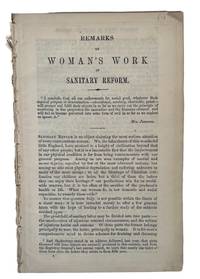
1858Best.-Nr. 197991858. Powers Susan Rugeley. Remarks on Woman's Work in Sanitary Reform is a circa 1859 pamphlet documenting Victorian women's public health work through the system of sanitary reform revealing how women's domestic educational and visiting labor was framed as essential to national health. Addressed to mothers educators tract distributors and visitors of schools cottages and workhouses the text asks "What can woman do in her domestic and social capacities to remedy these evils" and answers by assigning women authority over household health infant care education and habits. The pamphlet supports research into women's employment Victorian public health sanitary reform feminist social thought and the expansion of women's public roles through reform labor. Powers Susan Rugeley. Remarks on Woman's Work in Sanitary Reform. London: Tweedie circa 1859. 20 pages. 8vo. The pamphlet divides sanitary labor into "the amelioration of injurious external circumstances" and "the reform of injurious habits and customs" identifying the former principally with men and the latter principally with women. Powers argues "It is for woman in her functions of mother housewife and teacher" to change infant management domestic economy education and the habits of women and adds that "It is for her to teach and apply the laws of health in her own provinces where man cannot act." Susan Rugeley Powers was the first secretary of the Ladies' Sanitary Association an organization founded to educate working-class communities on public health; the pamphlet was also connected to the English Woman's Journal and the wider Langham Place reform milieu. The pamphlet demonstrates the process by which sanitary reform converted gendered domestic expertise into organized public health labor giving women a socially sanctioned role in health education before broader access to professional employment. Contemporary holdings appear limited: a dealer record notes four WorldCat copies and three COPAC copies while a University of Wisconsin catalog record identifies a later microfilm version associated with the English Woman's Journal. Slight chipping at binding; pages held together; minor wear. Overall very good. A focused Victorian women's reform pamphlet linking public health domestic authority and early arguments for women's socially necessary work. unknown
2012Best.-Nr. SONG1782662693www.Militarybookshop.Co.UK 2012-12-01. hardcover. Used: Good. 8.50x0.56x11.00. Buy with confidence. Excellent Customer Service & Return policy. www.Militarybookshop.Co.UK hardcover
1995Best.-Nr. DADAX0883850982Brand: Mathematical Assn of Amer 1995-01-01. paperback. New. 9.00x0.75x11.00. Buy with confidence. Excellent Customer Service & Return policy. Brand: Mathematical Assn of Amer paperback
1880Best.-Nr. 43529Cincinnati & Chicago: From the American Hebrew Publishing House the Bloch Publishing and Printing Company 1880. 1880s Preface is dated 1856. Original Full Leather binding with black & gilt spine label 12mo 2 leaves iii-xii 1243 pages. 17 cm. Title in Hebrew at head of title. Copyright page lists 1853 the copyright date for the first edition of Leeser's original translation of the Twenty Four Books of the Holy Scriptures published in 1854. The present Preface is dated Philadelphia 1856. The 1880s date is based on Singerman 3204 which notes the presence of the "undated 'Advertisement to the London Edition.' Repeated.in undated Bloch editions 1243 p. with acopyright date of 1853." Preceding the 1856 Preface is the undated 4-page "Advertisement to the London Edition" which notes that "This corrected version supplies an admitted want to our times. The so-called Authorized or Anglican version of the Scriptures.betrays great need for revision.Jews who of their own accord introduce the Anglican version into their households and who provide none other for the schools commit a flagrant breach of sacred trust in the abandonment of those for whose safe guidance they are immediately responsible to a helpless ignorance of truth-an ignorance all the more fatal because false interpreataions are obtruded in season and out of season with an unscrupulous object-to procure apostasy i.e. conversion from Judaism.Hence this version accomplished by a learned and conscientious Hebraist i.e. Leeser has found acceptance from all denominations. In the 10-page 1856 Preface Leeser explains in detail the need for his new translation giving many examples from earlier Christian translations of what we would today call "Christian bias." Leeser here acknowledges recent partial Jewish translations noting "Hitherto-at least before the completion of the first edition of this work two years ago-no other translation in the English had been completed by Jews although several had been commenced; for instance Dr. Raphall's and Mr. A. De Sola's and Mr Lindenthal's book of Genesis with Hebrew text and ample notes and Dr. Benische's version with Hebrew text to the end of the Second Book of Kings." OCLC 233529725 locates 4 copies worldwide U Illinois Andrews U Community of Christ MO UPenn of an "1853" edition published in "Cincinnati ; Chicago : from the American Hebrew Pub. House the Bloch Pub. and Print. Co." with 1243 pages and 17 cm high ours is 16 cm. However the OCLC listing notes neither the "Advertisement to the London Edition" nor Leeser's Preface of 1856 both of whose pagination does not affect that of the main text. Such was the enmity between Leeser and leaders of the Reform movement that it would seem surprising that Leeser would authorize a Bloch publication of his bible during his lifetime given that Bloch was owned by Isaac M. Wise' brother-in-law Edward Bloch. Only a year after the date of the preface in our copy Leeser famously printed an "anonymous attack on Wise signed 'Lawyers' in the pages of his Occident shortly after the appearance of Minhag Amerika in 1857. Leesers' anti-Reform rejoinder singled out Bloch & Co. for allegedly keeping its store open on the Jewish Sabbath and closing it on Sunday the Christian Sabbath." Singerman. In our Bloch copy the copyright is still held by Isaac Leeser; It was not until 1888 20 years after Leeser's death in 1868 that "his Bloch's firm obtained the copyright of this popular and frequently reprinted landmark text." Neither Singerman nor Goldman list any edition published by Bloch before 1884. Singerman Nr 1418 and Goldman Nr 13 both list a similar edition 1856 published in Philadelphia by C. Sherman & Son also with the 1856 Preface and identical pagination and physically smaller than the 1853 ed.with a new preface by Leeser." Goldman specifically writes that the "Advertisement to the London Edition" does not appear until an 1865 edition is "published in London in 5625 1865 by Trubner & Co. printed by John Childs and Son. Explaining the need for a new translation in the prefatory 'advertisement' the publisher criticized the standard King James Version authorized by the English Church for being flawed with 'abundant cases of false rendering' and 'propagandist tendencies.' They thus chose to issue Leeser's translation despite the existence of English translations by Christians because "this version accomplished by a learned and conscientious Hebraist has found acceptance from all denominations." This may be a previously unrecorded stereotype reissue of Trubner's London edition by Bloch issued with the 1853 Copyright date the 1856 Preface and the undated Advertisement though its mid-19th Century binding with black leather spine label would not be much later than 1880. Some pencil underlining to Advertisement and Preface with small owner's stamps and pulling as well. Gutter margin at title page is thin and crowds the title page text see photo. Spine reinforced with leather at edges boards show wear especially at corners but a solid Good Condition copy. A rare Leeser variant. B AMR-38-23. Cincinnati & Chicago: From the American Hebrew Publishing House, the Bloch Publishing and Printing Company unknown
1895Best.-Nr. 30984Cincinnati Bloch 1895. No Date 1895. 1st edition. Later Paper Wrappers 8vo 102 pages. 23 cm. Singerman 3914. With chapters by the leading lights of the Reform Movement of the day. Undated but described as a recent publication in the 14 November 1895 issue of the American Israelite. Contents include: "Introduction to Biblical History" K. Kohler; "Religio-Moral Instruction in the Sabbath-School" D. Philipson; "On Instruction in the Post-Biblical History" B. Felsenthal; "How to Teach Biblical History in the Primary Grades" by E. N. Calisch; & "How to Organize a Sabbath School" H. Berkowitz. OCLC: 45754442. OCLC lists 6 copies worldwide Yale UIllinois Towson HUC Harvard Princeton. Probably lacks original wrappers. Otherwise Very Good Condition. BER-1AMR-38-24-DLX-'eb. Cincinnati, Bloch unknown
1910Best.-Nr. C105451London: Tariff Reform League 1910. Paperback . Good. 64 pages : illustrations ; 12 x 16 cm Aeg Free Trade Consistency or A Game that Two Can Play with short dialogue beneath the satirical cartoon. The artist being E Huskinson. RARE. Only 5 copies found at WorldCat OCLC the worldÕs largest library catalogue. Copies Oxford Cambridge Harvard the LSE and the British library. They date the book 1910. For some reason WorldCat give the author as 'Fowl' Original publishers pale green wraps with some illustration and printing in black. Used else near very good copy slightly shaken some wear at lower spine end slight foxing to thin card covers text and cartoons clean. Tariff Reform League paperback
Best.-Nr. 1535216557.Gpaperback. Good. Access codes and supplements are not guaranteed with used items. May be an ex-library book. paperback
Best.-Nr. BN514907MAKING THE IMPOSSIBLE POSSIBLE One Man's Mission to Reform the Japanese Railways Gebundene Ausgabe MAKING THE IMPOSSIBLE POSSIBLE One Man's Mission to Reform the Japanese Railways Gebundene Ausgabe MAKING THE IMPOSSIBLE POSSIBLE One Man's Mission to Reform the Japanese Railways Gebundene Ausgabe unknown
Best.-Nr. BN702955Konstanz UVK 1996. zur Zeit der Konzilien von Konstanz 1414-1418 und Basel 1431-1449 zur Zeit der Konzilien von Konstanz 1414-1418 und Basel 1431-1449 Reform von Kirche und Reich Konstanz, UVK 1996. unknown
2003Best.-Nr. BN713155tengu books 2003. 2003. Softcover. Religionen in Leipzig Religionen in Leipzig" re.form leipzig Hrsg. tengu books paperback
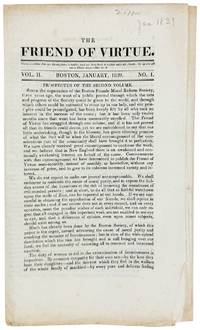
1839Best.-Nr. 33043Boston: New England Female Moral Reform Society 1839. Very Good. Boston: New England Female Moral Reform Society 1839. First Edition. Octavo; self-wrappers unopened. 16pp. Toning and creasing to edges with a few minor nicks; about Very Good. The New England Female Moral Reform Society's stated goal was the "prevention of licentiousness" prostitution the moral double standard regarding both and protecting young women from the "unprincipled destroyer who seduce and ruin the unsuspecting." Indeed this issue devotes a section to "Street Beggars" who are imposters attempting to lead astray the young and unsuspecting. The paper continues in telling the story of two young women who were led to "a house of ill fame" by one such imposter and were saved from a member of the society and thus saved "from this sink of iniquity. from her 'whose house is the way to hell going down to the chambers of death.'" Also of note here is the ongoing "Letters to Sarah E. Grimke" portion of this publication which runs several pages in this issue gently arguing several points regarding the role of women in society. The letter concludes with a post script that the author has just received Grimke's pamphlet "Equality of the Sexes" acknowledges her sincere obligations and urges everyone who reads this publication to also read Grimke's. Scarce in retail. New England Female Moral Reform Society unknown
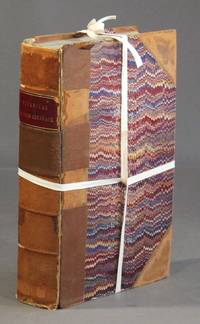
1886Best.-Nr. 47659London: Longmans Green & Co. and Liverpool: The Financial Reform Association 1886. 8vo; contemporary half calf over marbled boards with red morocco spine label; front and rear boards detached inexpert repairs made made with buckram but contents are clean and sound; good. Longmans, Green & Co. and Liverpool: The Financial Reform Association unknown
1915Best.-Nr. 62581Boston: Wright & Potter Printing Co. State Printers 1915. 8vo. v 1 234 pp. Photo frontisp. numerous photo plates 1 large folding floor plan charts. Blue embossed & ribbed publisher’s cloth gilt lettering stamped front cover & spine minor shelfwear slight rubbing edgewear still a NF copy w/ presentation slip bound-in from the Board of PPIE Managers for Massachusetts. First edition of this report which highlighted the tremendous achievements by the State of Massachusetts during the Progressive era as well as their very popular tea room which was one of the best-attended attractions during the run of the World’s Fair. The Massachusetts Booth emphasized their reforms in education for vocational training and reducing poverty new educational methods improvements in Mental Health “Insanity Hospitals” Public Health reforms to improve the blind as well as dental agricultural and medical reforms. In addition there was a fine exhibit on Massachusetts road building for the early “Good Roads” campaign reforms prior to World War I. Wright & Potter Printing Co., State Printers, hardcover