3 725 résultats
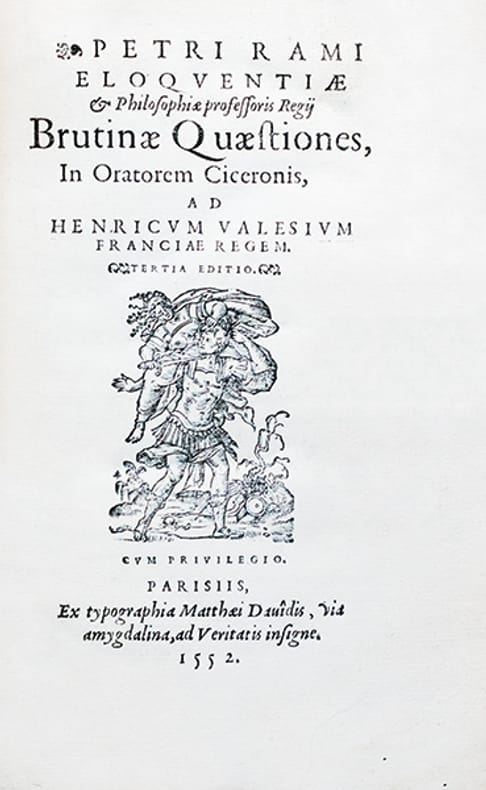
Petit in-8, plein cartonnage vélin à la Bradel, titre doré en long, daté en pied (reliure moderne signée Goy), 126 p., (1) f. blanc [sign. a-h8]. Troisième édition dédiée à Henri II (la première date de 1547) de cet ouvrage controversé, analyse critique de "l'Orateur" de Cicéron considéré comme le chef-d'oeuvre et le modèle indépassable des traités de rhétorique. Dans cette critique paradoxale, Pierre de La Ramée qui était pourtant l'un des plus fervents admirateurs de Cicéron, réclame pour la rhétorique comme pour les autres arts une forme plus humaine et plus méthodique. L'ouvrage suscita une tempête et réveilla la haine tenace et durable des ennemis de Ramus: Jacques Charpentier en particulier, peut-être l'un des responsables de son assassinat lors de la Saint-Barthélemy. Caractères italiques, lettrines et belle marque de l'imprimeur gravée au titre. (W. J. Ong, 'Ramus and Talon Inventory', n° 57). Mouillure claire en coin. Très bon exemplaire, frais, grand de marges, bien relié.
1552réf. 37246Petit in-8, plein cartonnage vélin à la Bradel, titre doré en long, daté en pied (reliure moderne signée Goy), 126 p., (1) f. blanc [sign. a-h8]. Parisiis Matthei Davidis [Paris, Mathieu David], 1552.
1990réf. 009535Baarn 1990 Ambo Soft cover 1st Edition
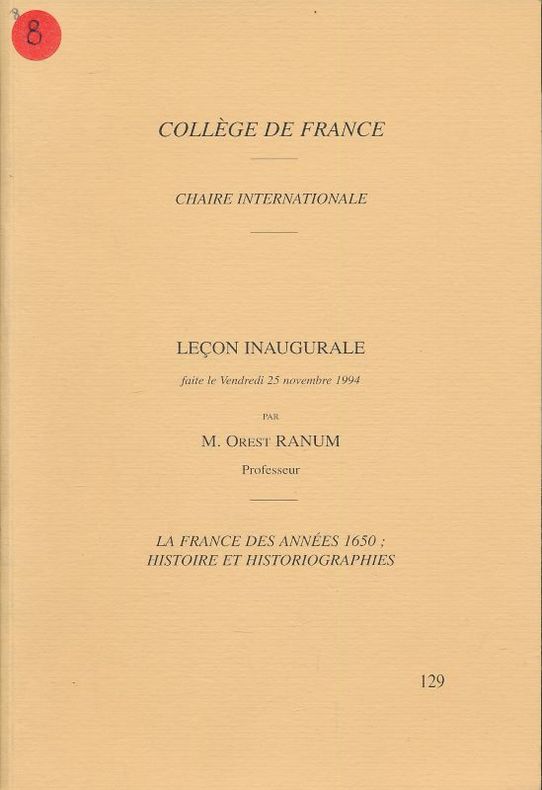
1995Collége de France 1995, In-8 broché, 32 pages. Un des 200 exemplaires hors commerce numéroté. Envoi autographe de l'auteur. Très bon état.
1995réf. 150318Collége de France Collége de France 1995, In-8 broché, 32 pages. Un des 200 exemplaires hors commerce numéroté. Envoi autographe de l'auteur. Très bon état.
réf. DADAX0306442841New unknown
1672réf. 17151672 Ed. Jean Lucas, Rouen, 1672. In-4, plein veau époque, dos orné. 41, 71 pages. Vignette gravée sur bois en page de titre. Texte latin et français, traduction par le ministre Allix ou Marc-Antoine de la Bastide, selon les bibliographes. La première partie traite des différents commentaires. La 2ème partie expose le texte original "De Corpore et Sanguine Domini" , avec la mise en français en regard
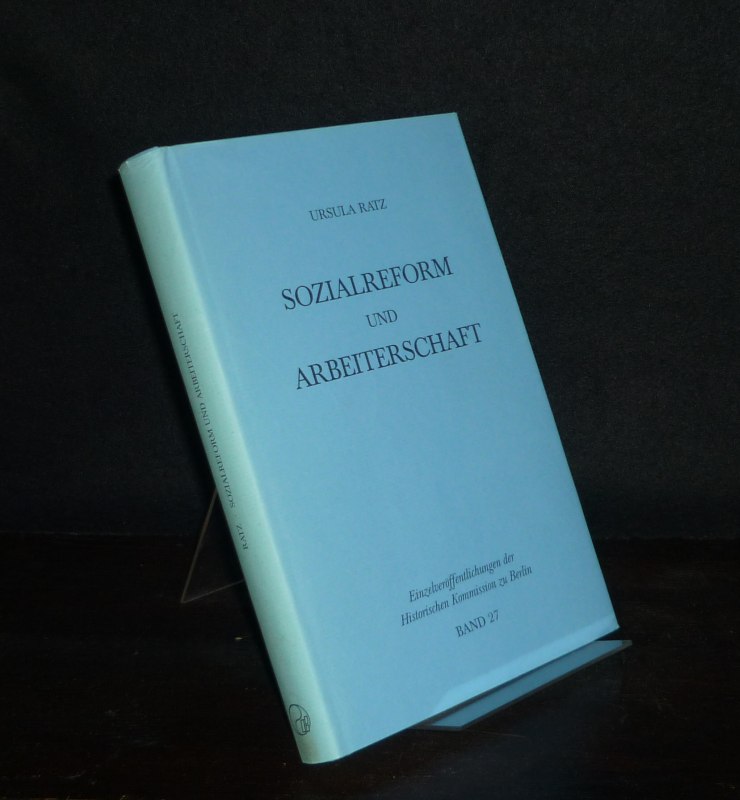
1980réf. 102509Berlin: Colloquium Verlag 1980. X, 330 Seiten. Gr. 8° (22,5-25 cm). Orig.-Leinenband mit Orig.-Schutzumschlag. [Hardcover / fest gebunden].
1980réf. 3386305Berlin, Colloquium, 1980. X, 330 S. OLwd (mit OUmschlag).
2016In very good condition. - Contents -- Sina Rauschenbach and Christian Windler Introduction -- Christian Windler -- Arbitrismo, Reform and the Government of the Minister-Favourites in the Spanish Monarchy -- Fernando Bouza -- Access to Printing in the Political Communication of the Spanish Baroque and its Effects on the Production of Political Arbitrios and Avisos -- Arndt Brendecke -- Conquista and Arbitrismo. -- Reflections on their Relationship -- Anne Dubet -- Donneurs d’avis and Arbitristas in France and Spain (Seventeenth and Eighteenth Centuries). -- Proposals for an Interpretation -- Bartolomé Yun Casalilla -- Arbitristas, Projectors, Eccentrics and Political Thinkers. -- Contextualizing and “Translating” a European Phenomenon -- Justus Nipperdey -- Amplificado and Restauración. -- Political Advice in Spain and the Holy Roman Empire in the Seventeenth Century -- Baki Tezcan -- From Veysi (d. 1628) to Üveysi (fl. ca. 1630). -- Ottoman Advice Literature and Its Discontents -- Niccolo Guasti -- The Debate on the Expulsion of the Gypsies in the Castilian Arbitrismo of the Early Seventeenth Century -- Sina Rauschenbach -- The Castilian Arbitristas, the Conversos and the Jews -- Bibliography -- List of contributors -- Index of names -- Index of places. ISBN 9783447104852
1929réf. 3100799M. Gladbach, Volksvereins-Verlag, 1929. 330 S. Lwd.
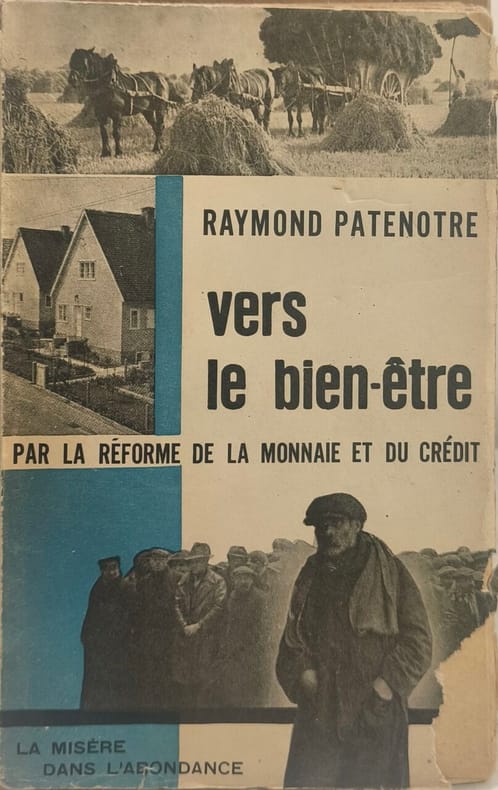
1936réf. 5727Imprimerie du "petit journal" 1936 189 pages in8. 1936. broché. 189 pages. Ouvrage de Raymond Patenôtre publié en 1936 qui propose une réforme du système monétaire et du crédit comme voie vers le bien-être social analysé dans la revue Esprit en mai 1936
1996réf. 2111902156001044Japan Institute of International Affairs 1996. Soft Cover. Fine. The book is in fine condition. Japan Institute of International Affairs paperback
réf. DADAX022607174XNew unknown
réf. DADAX0313366152New unknown
réf. DADAX0415454670New unknown
réf. DADAX0415590361New unknown
réf. DADAX0367026716New unknown
réf. DADAX0230239005New unknown
réf. DADAX0230229816New unknown
réf. DADAX0226777189New unknown
réf. DADAX0521024188New unknown
2010réf. 47858Quern-Neukirchen; Novalis, 2010. 443 S. Gr.-8°(=22,5-25cm), Hardcover/Pappeinband
1933Very Good German Paperback. 4to. (29 x 21 cm). In German. Editorial copy, several notes and markings. 13 p. Kompensation als Mittel der türkischen Aussenhandelspolitik. Compensation as a means of Turkish foreign trade policy.
1908Very Good Turkish, Ottoman (1500-1928) Original color manuscript calendar prepared on a fine special paper with 'ahar'. 36x22,5 cm. In Ottoman script (Turkish with Arabic letters). 2 p. Several ink stains on paper, chipped on extremities. A very good manuscript. It shows astronomic situations, locations of planets and stars, and climates in 1324 [AD 1908]. It starts with high praise to Sultan Abdülhamid II with an old style of color moon & crescent icon. Sealed by Mehmed Pasazâde A. Ihsan. On the verso of paper, can be seen detailed calendar and details of 'ruzname'. Written on 'printed' down of the paper, probably it's prepared for the printing, therefore it's understood that Ihsan and Refet were thinking to print this 'taqwim'. Prepared in the year of the Second Constitutional Regime (II. Mesrutiyet) which was Abdul Hamid II's fall came as a result of the 1908 Young Turk Revolution, and the Young Turks put the 1876 Constitution back into effect. It seems, it's prepared before fall of the Sultan, and for the present to the Sultan. The Second Constitutional Period spanned from 1908 until after World War I when the Ottoman Empire was dissolved. "The starting year of the Hijrî calendar (al-taqwim al-hijri), the fundamental Islamic lunar calendar still in use among Muslims until today, is 622 CE. Its beginning corresponds to the Hijra or emigration of Prophet Muhammed and his followers from Mecca to Medina. It is based on the revolution of the moon around the Earth and consists of twelve months of 29 or 30 days: Muharram (30), Safar (29), Rabî' al-awwal (30), Rabi' al-thani (29), Jumâda al-awwal (30), Jumâda al-thani (29), Rajab (30), Sha'ban (29), Ramadhan (30), Shawwal (29), Dhul-'l-qi'da (30) and Dhul-hijja (29 or 30). The lunar year consists of 354 days, which is 11 days less than the solar year, and every 33 years it falls one year behind the Gregorian calendar. The discrepancy with the solar year, which follows the seasons, meant that Muslim countries also used the solar calendar, and some calendars drawn up by astronomers include the dates according to the European Gregorian calendar named after Pope Gregory XIII in 1582. Ottoman Turkey used both the Islamic lunar calendar and a solar calendar known as the Rumî or Roman calendar, which was based on the Julian calendar introduced since the times of Julius Caesar in 46 BC. The Roman calendar was inherited from the Byzantines and was used by the Ottomans for the taxation of agricultural revenues. The year according to the Rumî or Julian calendar began on 1 March, and the Ottomans took the starting year to be that of the Hijra. To make up for the gain of 11 days made by the solar Rumî calendar over the Islamic calendar, a leap year was deducted from the Rumî calendar every 33 years. A rûzname is a set of tables giving the first days of the months in both the Islamic and Rumî calendars, the date on which the sun enters each sign of the zodiac, and eclipses of the sun and moon. Also known as takvîm-i dâimî (perpetual calendar) or takvîm-i devr-i dâim (calendar of perpetual motion), the ruzname were permanently valid whatever the year. There is no evidence that such calendars were produced in pre-Ottoman times, and they may, therefore, be regarded as a type unique to Ottoman Turkey.". (Source: Glances on Calendars and Almanacs in the Islamic Civilisation by Salim Ayduz).