Farouche à quatre feuilles
rif. 23023Paris, Grasset, 1954. In-8, 139 pp., broché, couverture originale imprimée.

L'Ancienne Librairie · Paris, Francia2500,00 €
1535 risultati
1857rif. 19015Paris: J.-B. Baillière et fils 1857. SECOND AND FIRST EDITIONS. Later sheep-backed boards spine gilt. Somewhat foxed but otherwise very good. Typographic tables in the text. Two foundational texts in the forensic history of sex crimes. The first offered here in its second edition explores the medical and legal natures of flashing rape sexual assault pederasty and sodomy. The study defines the terms of sex crime vocabulary to establish consistency in related cases with lengthy entries for deflowering debauchery and penetration and it sets the range for what should be considered underage. Tardieu attempts to prove a typology of the sex criminal: hyper masculine mentally unstable and violent often with a misshapen penis. In the final part of the text he notes the transmission of STIs as a result of rape as a legal addendum and gives 21 case studies of criminal sex acts. The second title here in its first edition is the first French legal study on abortion. Abortion was an unmitigated crime in France at the time but as Tardieu explains the high rate of stillbirths made it difficult to determine which were purposefully inflicted. Here he describes eight different methods of abortion and supplies several case studies of each including chemical descriptions of abortive medications. He stresses the culpability of “wise women” who provide the necessary supplies and instructions for abortions and implores that they be strictly watched by law enforcement. This text was the medico-legal authority in France for the next 60 years. Both titles are rare: OCLC records 4 institutional copies of Étude médico-légale sur les attentats aux moeurs in the U.S. Penn NY Academy of Medicine Chicago and Michigan and only one copy of Étude médico-légale sur l’avortement Penn. Donaldson Homosexuality and medicine 176; Hirsch V: 516; Le Naour and Valenti Histoire de l’avortement passim. J.-B. Baillière et fils unknown books
rif. 23023Paris, Grasset, 1954. In-8, 139 pp., broché, couverture originale imprimée.
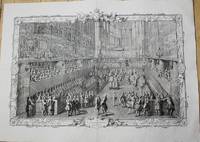
1722rif. P5187Paris 1722-31. Very Good. Notes: A pair of superb early 18th century French copper engraving showing the day of the coronation of Louis XV from Lever du Roi to the Royal Feast. The plates and frames are designed and engraved by Pierre Dulin Perrot Cochin Larmessin Duchange Tardieu Beauvais Desplaces Dupuis Edelinck Chereau Audrand Petit Haussard Jaurat Devret Simonneau Berey Bailleul and Putheau. The Coronation of Louis XV King of France and Navarre in the Church of Reims Sunday October XXV MDCCXXII. Image Size : Platemark Size : 543x794 mm 21.38x31.26 Inches Paper Size : 628x870 mm 24.72x34.25 Inches Coloring: Black & White Medium: Copper Engraving Categories: Portraits Royalty; Views Europe France Others; unknown
rif. 11356Collection complète, du n° 1 (mai 1940) au n° 13 (été 1948). Sont joints treize avis de parutions pour divers volumes des éditions de l'Arbalète (Arthur Rimbaud, Franz Kafka, Henri Michaux, Jean Genet, Antonin Artaud, Henri Pichette). Ensemble en très bon état. /// Les 7 premiers numéros sont rares ; le premier, " rédigé par des soldats ", fut censément tiré à une centaine d'exemplaires et il est d'une très grande rareté. A partir du n° 9, le tirage atteint 2.000 exemplaires. /// Ecrits de Jean Wahl, Antonin Artaud, Jean Genet, Georges Hugnet, Michel Leiris, Raymond Queneau, Louis-René des Forêts, Olivier Larronde, Ernest Hemingway, Guy du Montcel, Gustave Thibon, Pierre Boutang, Paul Eluard, Rainer Maria Rilke, William Blake (poèmes traduits par René Tavernier), Klabund (poème traduit par Camille Bryen), Jean Tardieu, Martin Heidegger, Louis Aragon, Federico García Lorca, Henri Michaux, Marc Beigbeder, Marc Barbezat, Fernand Lot, Robert Ganzo, Arthur Rimbaud (poèmes présentés par Pascal Pia), C.- F. Ramuz, D. H. Lawrence, Franz Kafka, Albert Camus (" L'Espoir et l'absurde dans l'uvre de Franz Kafka "), Jean-Paul Sartre, Mouloudji, André Rouveyre, Boris Vian. Le n° 9 est entièrement consacré à la littérature américaine.
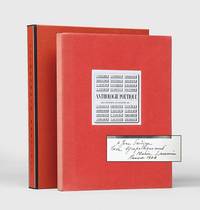
1943rif. 152544Paris: Éditions Pierre Trémois 1943. Inscribed by Marie Laurencin First and limited edition number 515 of 999 copies; this copy inscribed by Marie Laurencin to the poet and dramatist Jean Tardieu at the foot of her illustration on p. 38: "A Jean Tardieu bien sympathiquement Marie Laurencin Janvier 1944". A beautifully produced book particularly so considering wartime conditions. Painter printmaker and stage designer Marie Laurencin 1883-1956 is "known for her delicate portraits of elegant vaguely melancholic women" Britannica. She studied at the Humbert Academy in Paris and after an introduction to Picasso became involved with the avant-garde. Getrude Stein was one of her earliest supporters. She was romantically involved with Apollinaire whose work she here illustrates: a group of poems including "Marie" and "Crépuscule" which is dedicated to her. The recipient Jean Tardieu 1903-1995 published several poetry collections in the 1930s and after the war became a moving force in French radio. A number of his plays were staged and he was linked with the work of the Theatre of the Absurd. "Alone among the playwrights of the avant-garde Tardieu can claim that his work spans the entire gamut of exploration" Esslin p. 227. The publishing house of Pierre Trémois founded in 1922 specialized in illustrated books. The poems for this publication were gathered by Renée Garcia who later co-founded the literary quarterly Cerf-Volant and comprise contributions by among others Mallarmé Jules Laforgue Apollinaire Paul Claudel Jean Cocteau Léon-Paul Fargue Rilke and Paul Valéry. Each poem has an accompanying pochoir frontispiece the illustrators including André Derain Jean Cocteau André Lhote and Hermine David. An online institutional search locates 12 copies worldwide: eight in the US; three in France BnF Bibliothèque Sainte-Genevieve and Bibliothèque Jacques Doucet; Leiden in the Netherlands. Quarto. With 12 pochoir plates. Original red wrappers paper label to front cover. Handsome bespoke solander box by Julie Nadot. Spine of volume sunned light peripheral creasing to wrappers. An excellent largely unopened copy. Martin Esslin The Theatre of the Absurd 2013. unknown
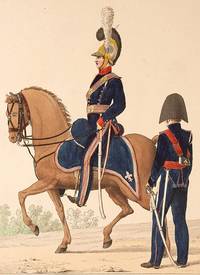
rif. 06736Paris: Ambrose Tardieu Mme. V. Courcier 1817. From the Library of Marshal Ney's Son Tardieu's Beautiful Gallery of the Uniforms of the French National Guard TARDIEU Ambroise. Galerie des Uniformes des Gardes Nationales de France. Dédiée à Son Altesse Royale. Paris: Ambroise Tardieu; Mme. V. Courcier imprimeur et al. 1817. First edition. Quarto 10 1/8 x 6 5/8 inches; 258 x 169 mm. iv 32 pp. Colored equestrian frontispiece portrait of the Comte d'Artois engraved portrait and twenty-seven engraved costume plates four double-page folding and three uncolored illustrating the uniforms of the National Guards of France. A few occasional minor marks otherwise an excellent copy. All leaves mounted on stubs. Late nineteenth-century ca. 1885-1900 full black morocco covers blocked in gilt with the arms of Louis Napoléon Michel Ney second Duke of Elchingen smooth spine ruled and lettered in gilt marbled endpapers all edges gilt. Binder's stamp apparently reading "J. Lemarbeley" on the verso of the front free endpaper. With the engraved armorial bookplate of Louis Napoléon Michel Ney 1803-1854 second Duke of Elchingen and Prince de la Moskowa. Housed in the matching morocco-edged slipcase. An unusually handsome copy of one of the earliest and most attractive costume books devoted to the uniforms of the French National Guard preserved in a contemporary armorial binding from one of the most celebrated military libraries of nineteenth-century France. Published only two years after the fall of Napoleon and during the early years of the Bourbon Restoration Tardieu's work records the reorganization of the National Guard under the restored monarchy. The finely engraved plates depict officers and guardsmen from throughout France in carefully rendered contemporary uniforms while the accompanying text describes the organization and appearance of the various corps. The splendid equestrian portrait of the Comte d'Artois - later King Charles X - reflects the close identification of the National Guard with the restored Bourbon regime. The present copy possesses an exceptional provenance. It comes from the library of Louis Napoléon Michel Ney second Duke of Elchingen and Prince de la Moskowa eldest son of Marshal Michel Ney 1769-1815 the legendary "Bravest of the Brave." Although his father was executed in December 1815 following the Second Restoration Louis Napoléon eventually succeeded to the restored family honours and assembled a distinguished library many of whose books were bound with his arms. The association is particularly appropriate linking one of the most attractive early Restoration costume books with one of the greatest military families of nineteenth-century France. Its survival in the library of Marshal Ney's son is especially evocative for the work celebrates the military establishment of the Bourbon Restoration issued scarcely two years after Ney's execution in December 1815. Early French military costume books of the Restoration rank among the most attractive productions of French Romantic illustration and are increasingly difficult to obtain in fine condition. Copies preserved in deluxe armorial bindings with distinguished military provenance are of the greatest rarity particularly when accompanied by their original slipcases. Rare: OCLC/RLIN locate just four copies in libraries and institutions worldwide: Harvard University MA US & Brown University RI US; Bibliotheque Nationale de France and Mediatheque de Montpelier France. The association could scarcely be more appropriate linking one of the earliest illustrated records of the restored French National Guard with the library of the son of Napoleon's most celebrated marshal. References: Colas 2856; Hiler p. 834. Paris: Ambrose Tardieu, Mme. V. Courcier, 1817 unknown
rif. 06736Paris: Ambrose Tardieu Mme. V. Courcier 1817. From the Library of Marshal Ney's Son Tardieu's Beautiful Gallery of the Uniforms of the French National Guard TARDIEU Ambroise. Galerie des Uniformes des Gardes Nationales de France. Dédiée à Son Altesse Royale. Paris: Ambroise Tardieu; Mme. V. Courcier imprimeur et al. 1817. First edition. Quarto 10 1/8 x 6 5/8 inches; 258 x 169 mm. iv 32 pp. Colored equestrian frontispiece portrait of the Comte d'Artois engraved portrait and twenty-seven engraved costume plates four double-page folding and three uncolored illustrating the uniforms of the National Guards of France. A few occasional minor marks otherwise an excellent copy. All leaves mounted on stubs. Late nineteenth-century ca. 1885-1900 full black morocco covers blocked in gilt with the arms of Louis Napoléon Michel Ney second Duke of Elchingen smooth spine ruled and lettered in gilt marbled endpapers all edges gilt. Binder's stamp apparently reading "J. Lemarbeley" on the verso of the front free endpaper. With the engraved armorial bookplate of Louis Napoléon Michel Ney 1803-1854 second Duke of Elchingen and Prince de la Moskowa. Housed in the matching morocco-edged slipcase. An unusually handsome copy of one of the earliest and most attractive costume books devoted to the uniforms of the French National Guard preserved in a contemporary armorial binding from one of the most celebrated military libraries of nineteenth-century France. Published only two years after the fall of Napoleon and during the early years of the Bourbon Restoration Tardieu's work records the reorganization of the National Guard under the restored monarchy. The finely engraved plates depict officers and guardsmen from throughout France in carefully rendered contemporary uniforms while the accompanying text describes the organization and appearance of the various corps. The splendid equestrian portrait of the Comte d'Artois - later King Charles X - reflects the close identification of the National Guard with the restored Bourbon regime. The present copy possesses an exceptional provenance. It comes from the library of Louis Napoléon Michel Ney second Duke of Elchingen and Prince de la Moskowa eldest son of Marshal Michel Ney 1769-1815 the legendary "Bravest of the Brave." Although his father was executed in December 1815 following the Second Restoration Louis Napoléon eventually succeeded to the restored family honours and assembled a distinguished library many of whose books were bound with his arms. The association is particularly appropriate linking one of the most attractive early Restoration costume books with one of the greatest military families of nineteenth-century France. Its survival in the library of Marshal Ney's son is especially evocative for the work celebrates the military establishment of the Bourbon Restoration issued scarcely two years after Ney's execution in December 1815. Early French military costume books of the Restoration rank among the most attractive productions of French Romantic illustration and are increasingly difficult to obtain in fine condition. Copies preserved in deluxe armorial bindings with distinguished military provenance are of the greatest rarity particularly when accompanied by their original slipcases. Rare: OCLC/RLIN locate just four copies in libraries and institutions worldwide: Harvard University MA US & Brown University RI US; Bibliotheque Nationale de France and Mediatheque de Montpelier France. The association could scarcely be more appropriate linking one of the earliest illustrated records of the restored French National Guard with the library of the son of Napoleon's most celebrated marshal. References: Colas 2856; Hiler p. 834. Paris: Ambrose Tardieu, Mme. V. Courcier, 1817 unknown books
1831rif. 5228Strasbourg: Marin & Schmidt 1831. First Edition. Excellent with occasional light surface wear and one or two spots; the black base stand is a modern reproduction. The globe is comprised of 12 gores printed on kid leather and handcolored. An incredible survival including the original decorated paste paper cylindrical box it was sold in by the manufacturer. Ten years ago Sotheby's claimed they were selling the only known existing copy in private hands of this globe June 1991 lot #404. Apparently they were incorrect. Here is another better example. The globe was originally to be inflated for use and then deflated taken down and stored. It was intended for the amusement of adolescents. Both terrestrial and celestial globes were offered by the manufacturer. The globe is made up of 12 gores of kid skin and two polar calottes of the same material that are so skillfully joined as to appear seamless. The gores were printed from steel engraved plates and then handcolored. The coloring names outlines of countries geographical points of interest etc. all remain fresh and legible Dolz refers to the fact that the globe he so meticulously describes is nearly illegible because of age browning. Tardieu is recognized as one of the premier French map engravers and the globe benefits from the inclusion of the most recent mapping of the unknown portions of the world all major voyages of discovery are included through Dumont d' Urville and Beechey in 1826/27. The diameter is appx. 8 1/2 inches with all the text in French. There is a brass valve with a stopcock at the north pole and a brass pinion at the south pole. The globe rests and turns in a wood meridian ring horizon ring and quadrant. The rings retain their original brightly finished orange and green enamel paint. The rings and quadrant are overlaid with paper engraved with designs of the zodiac place names coordinates climate and degree markings. There is an hour ring with a brass pointer at the north pole. The horizon ring has inset brass fittings to align the quadrant and meridian ring and provide a rigid structure when assembled. Overall the condition is excellent. A brass stand contemporary with the globe but not original to it is provided. The box accompanying the globe has a hole on the underside not affecting the printed surface. A wonderful cartographic artifact. Dolz Erd - und Himmelsgloben pp. 58-59; absent from Yonge. Marin & Schmidt hardcover books
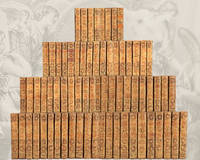
1784rif. 88246Imprimerie de la Société Littéraire-Typographique | s. l. [Kehl] 1784-1789 | 14 x 21.7 cm | 70 vol. reliés
1784rif. 88246s. l. Kehl: Imprimerie de la Société Littéraire-Typographique 1784. Fine. « Divine Voltaire ora pro nobis ! » Exceptional copy on large paper and contemporary binding Imprimerie de la Société Littéraire-Typographique s. l. Kehl 1784-1789 14 x 21.7 cm 70 vol. reliés The Kehl edition the most renowned edition of Voltaire's works illustrated and published on deluxe paper. It was printed on five different types of paper and only the deluxe editions such as ours on laid paper feature engravings. These are naturally the most sought-after and rarest copies. Binding in full painted sheep decorated with a honeycomb motif smooth spine tooled with gilt fleurons fillets and compartments light beige calf lettering and volume pieces gilt chain-roll border on covers marbled endpapers gilt roll on edges all edges marbled contemporary binding. Two volumes nos. 50 and 70 with slight variations in gilt tools on the spines and with orange morocco lettering pieces edges and covers treated somewhat differently. General condition of the 70 volumes: bindings with light rubbing to corners gilt a little dulled occasional foxing a few wormholes and old restorations not affecting the text. 28 volumes vols. 4 5 8 10 11 13 16 17 19 20 24 27 28 33 34 35 36 37 43 48 61 62 63 65 66 67 68 70 with cracked joints at the ends and 20 volumes vols. 8 11 12 14 16 18 33 34 37 42 46 49 53 56 57 60 65 66 68 70 with damaged caps. Two editions were published at the same time. Our copy belongs to the prestigious in-8 edition on large paper published in 70 volumes the other edition being in-12 format in 92 volumes. It is richly illustrated with 125 etched plates: - There are 17 portraits including 3 of Voltaire: a frontispiece portrait by N. de Largillière engraved by P. Alex. Tardieu; one drawn from Houdon's bust by Moreau le Jeune and engraved by P. Alex. Tardieu; and one allegorical portrait by Louis Croutelle after Moreau le Jeune belonging to the second series of illustrations of Voltaire's works executed by Moreau for the publisher Renouard. The 14 other portraits include an allegorical frontispiece of Frédéric-Guillaume Prince of Prussia depicted in profile in a medallion by Dambrun after Moreau le Jeune; a portrait of Henry IV by Pourbus engraved by Tardieu; one of Charles VII engraved after the original in the King's Cabinet by Mavieri; another of Agnès Sorel drawn by Moreau the Younger after the original in the King's Cabinet and engraved by Mavieri; one of Joan of Arc engraved by Beisson; followed by the Count of Dunois engraved after the original in the King's Cabinet by J. B. Fosseyeux; one of Louis XIV drawn by Moreau Le Jeune after C. Le Brun engraved by J. B. Fosseyeux; one of Charles XII engraved by P. Alex. Tardieu after the original in the King's Cabinet; one of Pierre I engraved by P. G. Langlois after a painting by L. Caravaque; one of Madame du Châtelet after Marie Anne Loir and engraved by P. G. Langlois; one of the Count of Argental after J. Defraine and engraved by J. B. Fosseyeux; one of Frédéric II of Prussia painted from life by Van Loo and engraved by P. G. Langlois; one of Catherine II of Russia engraved by J. B. Fosseyeux; and one of d'Alembert after De La Tour engraved by N. F. Maviez. - 93 engravings by Moreau le Jeune including 44 figures for le Théâtre engraved by Lingée Simonet de Launay Trière Halbou Duclos Romanet Dambrun de Longueil Delignon Le Mire Le Veau 10 for la Henriade engraved by Masquelier Delignon Dambrun Patas Gutemberg Helman Simonet Duclos Romanet 21 for la Pucelle engraved by Simonet Dambrun Halbou Baquoy Trière Delignon de Longueil Croutelle and Duclos 4 for the Contes in verse engraved by Langlois Duclos Delignon and Le Veau and 14 for the Romans engraved by Trière Duclos de Longueil Dambrun Baquoy Delignon Simonet Langlois and Halbou. - 14 scientific plates in volume 31 illustrating the experiments of Newton Descartes and Leibniz. - 1 battle Imprimerie de la Société Littéraire-Typographique unknown