GOURLIER - BIET - GRILLON - feu TARDIEULivre Rare Book

1.691 Ergebnisse
1825Best.-Nr. 125872Louis Colas Paris, Louis Colas, 1825 à 1836. In-folio relié demi-basane rouge, dos à nerfs et filets dorés. Exemplaire bien complet des 129 planches du 1er volume, parfaitement conforme au tableau général des édifices (réligieux, administratifs, judiciaires, instruction publique, sanitaires, utilité publique, sureté publique, funéraires, mixtes) relié en début d'ouvrage. Ont été rajoutées 138 planches qui auraient vraissemblablement composé le 2° volume. Soit un total de 267 planches légendées avec les noms des architectes. On y retrouve les noms des plus célèbres de l'époque dont BALTARD, Pierre FONTAINE, ROHAULT, PENCHAUD, SOLENTE, DALGABIO, DESTAILLEUR, FONTAINE etc. Rousseurs éparses, reliure frottée. Bon exemplaire néanmoins.
1948Best.-Nr. 91074Gallimard | Paris 1948 | 12 x 18.8 cm | Broché
1812Best.-Nr. 24633Paris F. Buisson 1812 -in-8 plein-veau 6 volumes, reliure plein veau havane marbré (binding full calfskin) in-octavo(20,7 x 13,2 cm), RELIURE D'ÉPOQUE, dos long (spine without raised bands), décoré "or" (gilt decoration), Titre et Tomaison frappés "or", pièce de Titre sur fond rouge avec un filet "or" en encadrement, pièce de Tomaison sur fond noir avec un filet "or" en encadrement, entre-nerfs à semis de losanges "or" se chevauchant avec un point "or" au centre de chaque losange et au centre de leur chevauchement dans un encadrement d'un filet "or", doubles filets "or" en place des nerfs et en tête et en pied, plats décorés "or" d'un filet perlé "or", d'un filet fin "or" et d'une roulette "or" en encadrement, filet "or" sur les coupes (gilt line on the cuts)avec légers manques de dorure (blurred gilding), toutes tranches lisses peignées bleues et rouges, Sans illustrations (no illustration), rousseurs éparses, (IV + 398) + (423) + (403) + (404) + (355) + (407) pages, 1812 à Paris chez F. Buisson Libraire-Editeur,
Best.-Nr. 3182Sixieme edition A PARIS CHEZ BELIN AN XII 1804Trois tomes reliés plein veau marbré dos à nerfs pieces de titre et tomaisons rouge , une gravure par tome , photos sur demande
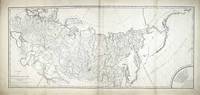
Best.-Nr. 8105Paris: 1801. No binding. Good. 530 x 1025 mm. 2 maps joined as one some minor restoration and support to the edge in a couple of places generally in good condition. A superb detailed two-sheet map of Russia recording an important period in the history of Georgia. During the second half of the eighteenth century the country of Georgia turned towards Russia for protection from the Ottoman Empire to the south. Although keen to support Catherine the Great sent little in the way of forces. Threats also came from Persia who in 1795 entered the country and burnt the capital Tiblisi to the ground. Following the death of Erekle II in 1798 a struggle for the succession broke out and calls began for the Russians to intervene. On 8 January 1801 Tsar Paul I of Russia signed a decree incorporating Georgia into the Russian Empire. This was thrown a little into disarray as the Tsar lost support and was assassinated in March of 1801. The Treaty however was ratified by his successor Alexander I on 12 September 1801. This is important as there are two known states of the map. The first as here bears the name of Paul I only in the second line of 'Observations' lower left. The second state bears that of Alexander I also and the imprint below the title of Jean Claude Dezauche. The address given for his business is 40 Rue des Noyers to which Tooley ascribes the dates 1816-24. One further notable difference between the two is the presence here of a 'Remarque' with 9 lines of text across the lower right corner which are missing in the other state as is the quarter circle border around the scale of miles above. Without being able to examine the other state closely we have to assume that this offered here is the first state dating from early 1801. The map is engraved by Pierre François Tardieu 1752-1798 with the script being the work of L. Aubert who worked from about 1797. The map extends all the way east to the Pacific Ocean and beyond into the claimed territories in North America. The border of the Russian Empire extends out into the Ocean encompassing the Aleutian Islands. The Russian cartography is largely drawn from the earlier French work of De L'Isle with that of the Pacific being drawn from the work of Jean Francois de La Perouse. The Hawaiian Islands are placed in the extreme edge of the map. 1801 unknown
1990Best.-Nr. NN2548Peeters 1990. No ownership marks. Scarce. Robust packaging. Tracking can be added to overseas orders on request. Used books are exempt from USA tariffs. 1st edition. Paperback. Near Fine. 209 i pp. illus. Peeters Paperback
Best.-Nr. 434Au moment où il composait son premier volume de poésie au format de poche, Le fleuve caché, certains scrupules apparurent à Jean Tardieu et le retenaient de livrer dans un même volume ses vers et ses proses. Il choisit de ne donner que les poèmes en vers. Les archives conservées chez Gallimard prouvent qu’il est le seul coupable de cette distinction : son projet initial, tel qu’il l’a soumis à Robert Carlier, était de rassembler ses « Poésies complètes », avec pour dates « 1924-1960 ». Une première note mentionne ce volume, sous un titre (provisoire) à faire frémir tous les spécialistes de Jean Tardieu : Une voix sans personne. Poésies complètes 1924-1960 (ce titre aurait alors désigné à la fois une pièce de théâtre, un recueil de vers et de proses, et une anthologie en vers… !) Le sommaire de ce projet initial comprenait les recueils Accents, Le témoin invisible, Jours pétrifiés, Monsieur Monsieur, Une voix sans personne et Histoires obscures : le document ne présente pas le détail des textes retenus, mais le « calibrage » prévu pour chacun des recueils permet de comprendre que certains recueils étaient amputés (ceux, précisément, qui comprenaient aussi des textes en prose). « Poésies complètes » signifiait donc bien : tous les poèmes en vers de tous les recueils. C'est ce choix de textes de Jean Tardieu que nous vous proposons ici, composés de découpes dans les volumes parus précédemment, tous les poèmes en prose étant biffés. Sur l'enveloppe l'indication "poèmes écartés".
1884Best.-Nr. 68231884 Desrosiers-Auclaire, Moulins, 1884. In-4, 2 feuillets non chiffrés, III-223 pages plus bibliographie. (texte et numérotation sur 2 colonnes). Reliure époque demi basane bleu foncé, dos lisse, faux nerfs et titre dorés. 5 planches hors-texte reproduisant, en chromolithographie, 210 blasons. Ouvrage tiré à petit nombre, il constitue, avec le nobiliaire de Bouillet, loutil indispensable à toute étude nobiliaire et héraldique concernant les familles dAuvergne. Bibliographie en fin douvrage. Reliure un peu frottée et cahiers déboîtés.
1844Best.-Nr. 25955Paris Labé 1844 in-4 cartonnage Bradel de papier marbré, dos lisse, pièce de titre citron en long [Rel. moderne]
1820Best.-Nr. 686181820 Paris, de l'imprimerie de Mme veuve Courcier ,1820 , Deux tomes in-huit , viii-337 pp, 319 pp, reliure d'époque en plein veau glacé, dos lisse orné de fleurons, très bon état, papier non piqué, pièces de titre en cuir rouge et de tomaison en cuir noir
1619Best.-Nr. 2942Paris 1916-1917. Hardcover. Very Good . Each volume approx. 300 p. 5 x 7 1/4 in. Half morocco binding with marbled boards gilt lettering on spines 5 raised bands top edge of text block gilt colored end papers. Condition of each volume is VERY GOOD: very light wear to covers and spines marbled boards very lightly worn a few lightly worn corners and spine edges light discoloration to some leather surfaces. Spine faded edges of text block very lightly darkened small book plate of David B. Ogden on inside of front cover pages very clean bindings very tight. LF LC- light soiling to end papers. Gaspard- small old worm hole at edge of text block. La France.- light soiling to end papers front hinge starting to crack this text alone from 1910 all others are from 1916-1917. NOTE- 10 volumes all in French all war memoirs pertaining to WW I all bound uniformly color variations in leather marbled boards end papers by Brentano's NY stamped on endpaper. hardcover
1954Best.-Nr. 85176Couverture rose rempliée. Non rogné.
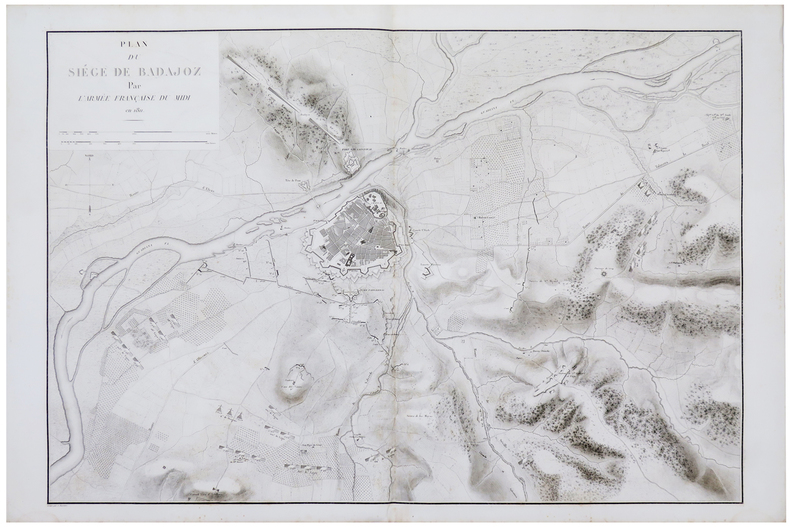
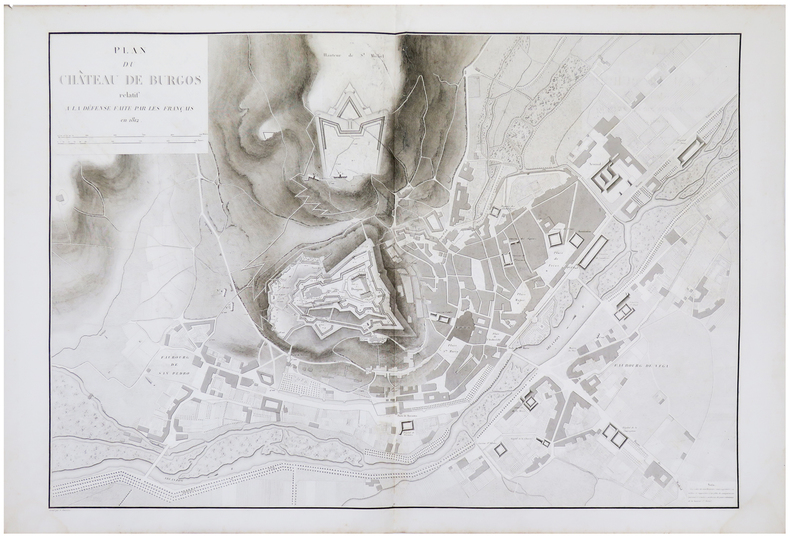
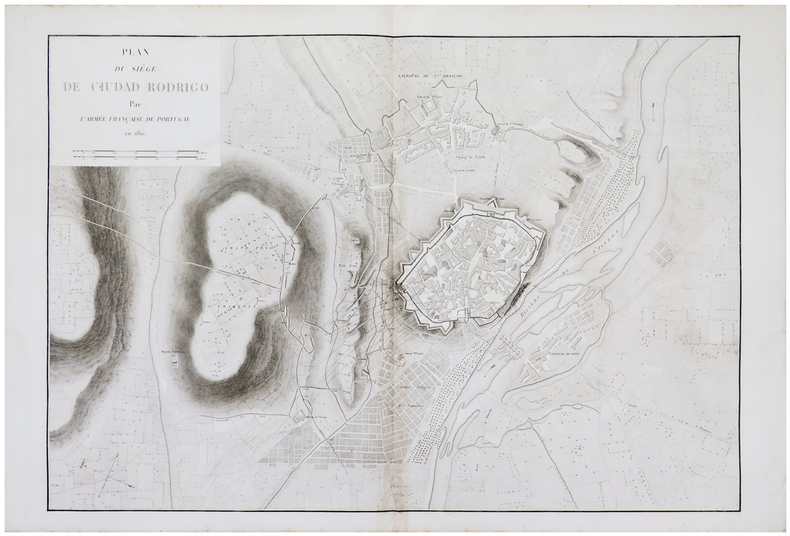
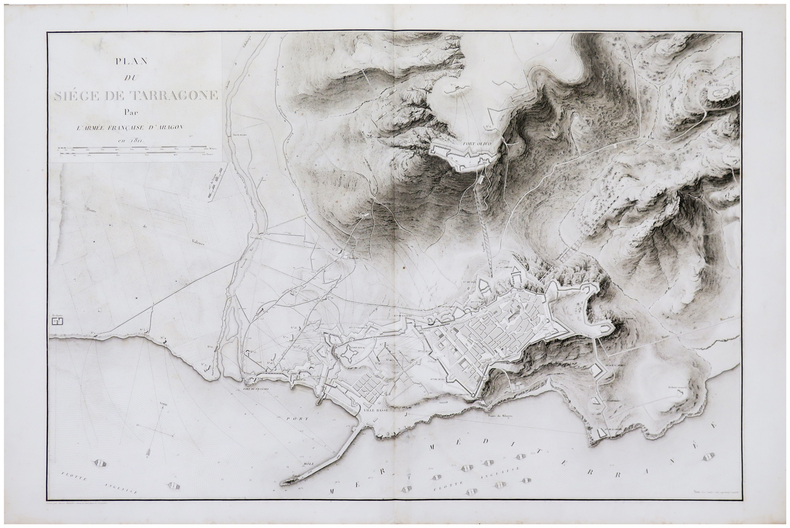
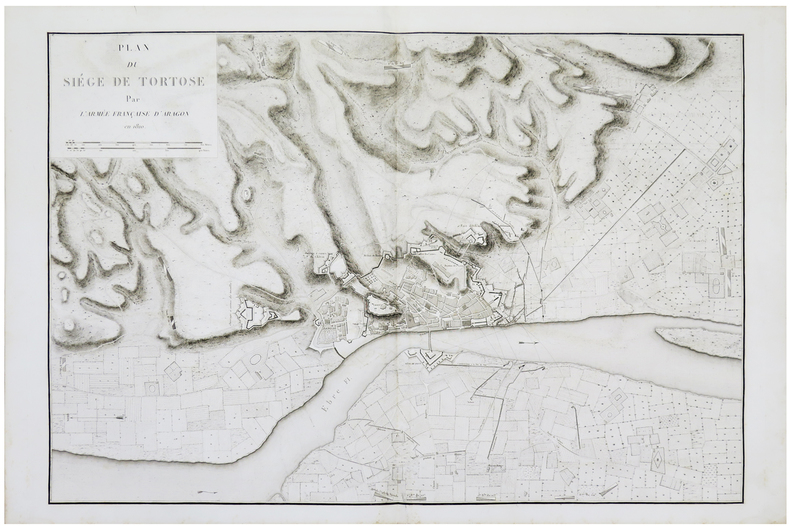
1836Best.-Nr. LBW-5982[1836]. 611 x 898 mm.
1836Best.-Nr. LBW-5985[1836]. 603 x 884 mm.
1836Best.-Nr. LBW-5983[1836]. 602 x 890 mm.
1836Best.-Nr. LBW-5978[1836]. 596 x 397 mm.
1836Best.-Nr. LBW-5898[1836]. 602 x 389 mm.
1836Best.-Nr. LBW-5979[1836]. 604 x 889 mm.
1836Best.-Nr. LBW-5879[1836]. 594 x 392 mm.
1836Best.-Nr. LBW-5977[1836]. 590 x 388 mm.
1836Best.-Nr. LBW-5984[1836]. 603 x 892 mm.
1836Best.-Nr. LBW-5986[1836]. 607 x 897 mm.
1947Best.-Nr. 65561Gallimard | Paris 1947 | 25.50 x 33.50 cm | broché
1818Best.-Nr. 49877Chez Brunet | à Paris 1818 | 13 x 20 cm | 3 volumes reliés
Best.-Nr. 11824Le Puy, Marchessou, 1886,1887, 1 en cahiers, sous couverture de percaline rouge, triple filets d'encadrement et fleurons d'angle noir. in-folio de 124 et 95 pp., texte sur 2 colonnes, illustrations (blasons, chateaux, etc..) ;