1711 risultati
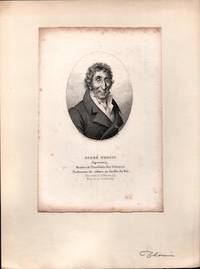
rif. 70-1192Paris: 18th Century European Publisher 1700s. Original B&W gravure. 11.25 x 8 inches. Very Good. Light spots of foxing throughout. Penciled notation in bottom margin. Paris: [18th Century European Publisher], [1700s?]. unknown
rif. 70-1311Paris : 19th Century European Publisher 1800s. Original B&W gravure. 8 x 5.5 inches. Very Good. Very minor signs of foxing beginning to start. Paris : [19th Century European Publisher], [1800s?]. unknown
rif. 70-1312Paris : 19th Century European Publisher 1800s. Original B&W gravure. 8.5 x 5.5 inches. Very Good. Minor signs of foxing not affecting image. Toning on top and bottom edges. Paris : [19th Century European Publisher], [1800s?]. unknown
1932rif. ABE-1651404150804TIRAGE ARGENTIQUE NOIR ET BLANC-13 CM X 18 CM-AU DOS: CACHET HUMIDE QUOTIDIEN LE JOURNAL 23 JANVIER 1932, MENTIONS AU CRAYON DE PAPIER TARDIEU 21 1 32 (CP8)
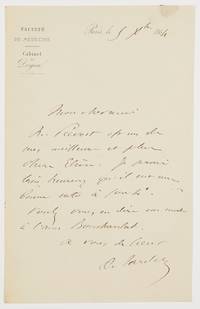
1864rif. 603961864. Paris 5.XII.1864. 1 Seite gr.-8°. Mit Siegelspur und Adresse. Gestochener Briefkopf "Faculté de Médecine / Cabinet du Doyen". Ambroise Auguste Tardieu 1818-1879 französischer Rechtsmediziner; das Battered-Child-Syndrome ist auch als Tardieu-Syndrom bekannt. - An Professor Regnauld mit der Bitte um Empfehlung eines Schülers. ". Mr. Prévost est un de mes meilleurs et plus chers elèves. Je serais très heureux qu'il eut une bonne note à sortie. Voulez-vous en dire un mot à l'ami Boucharelat ." unknown
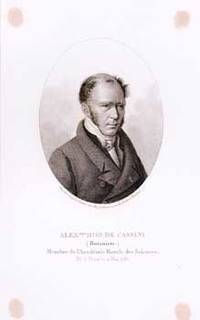
rif. 70-1160Paris : Ambroise Tardieu 1827. Original B&W gravure. 8 x 5 inches. Very Good. Lightly mounted on card with stains from adhesive on four corners else fine.Alexander Henri Gabriel de Cassini 1781-1832 the French botanist and naturalist who specialised in the sunflower family. He named many flowering plants and new genera in the sunflower family many of them from North America. Paris : [Ambroise Tardieu], [1827]. unknown
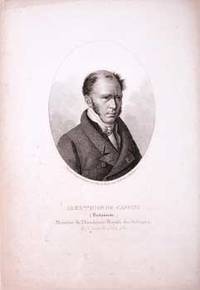
rif. 70-1159Paris : Ambroise Tardieu 1827. Original B&W gravure. 8.5 x 5.75 inches. Very Good. Significant toning and light spots of foxing not affecting image. Alexander Henri Gabriel de Cassini 1781-1832 the French botanist and naturalist who specialised in the sunflower family. He named many flowering plants and new genera in the sunflower family many of them from North America. Paris : [Ambroise Tardieu], [1827]. unknown
1936rif. RO80090503FLAMMARION. 1936. In-12. Broché. Etat d'usage, Couv. défraîchie, Agraffes rouillées, Intérieur acceptable. 47 pages.. . . . Classification Dewey : 840-Littératures des langues romanes. Littérature française
rif. 51824Flammarion ,1936, in-12 de 50 pages ,broché ,Très bon état , .(3 photos du livre sur mon site https://www.vieuxlivre.fr) .Les frais de port pour la France sont offerts à partir de 25 euros d'achat (Mondial relay ). (colissimo suivi +6,90 ).
1936rif. J0570Paris, Ernest Flammarion Éditeur, s.d. (vers 1936) ; in-16 jésus, 48 pp., couverture et cahier agrafés. Pour l'auteur, la Révolution française est entièrement à refaire… Bon état.
1936rif. 111649Flammarion, 1936, in-12, 47 pp, broché, couv. beige titrée en rouge, bon état
1936rif. RO80025526FLAMMARION. 1936. In-12. Broché. Etat d'usage, Couv. défraîchie, Agraffes rouillées, Mouillures. 47 pages. Coiffe en pied fendue.. . . . Classification Dewey : 944-Histoire de France varia
1936rif. R200139304Flammarion. 1936. In-12. Broché. Etat d'usage, Tâchée, Agrafes rouillées, Papier jauni. 47 pages agrafées - coins frottés, coiffes abimées.. . . . Classification Dewey : 840.091-XX ème siècle
rif. 500229194Sans date.
rif. 85621Flammarion 1936, fascicule de 48 pages - bon état
1936rif. 293298Paris: Flammarion 1936. Pamphlet. 47p. stapled wraps 5.5x7 inches evenly toned staples rusted else very good condition. Text in French. On the election of the Popular Front government by the former prime minister of France. Flammarion unknown books
1936rif. R260146544FLAMMARION. 1936. In-12. Broché. Etat d'usage, Couv. légèrement passée, Dos satisfaisant, Intérieur frais. 47 pages.. . . . Classification Dewey : 320-Science politique
rif. R150067295FLAMMARION .. 1936.. In-8. Broché. Etat d'usage, Couv. légèrement passée, Dos satisfaisant, Intérieur acceptable. 47 pages. Etiquette sur le dos. Tampon sur la page de titre.. . . . Classification Dewey : 840-Littératures des langues romanes. Littérature française
1936rif. RO40213159Flammarion. 1936. In-12. Broché. Etat d'usage, 1er plat abîmé, Dos satisfaisant, Pliures. Plaquette de 47 pages.. . . . Classification Dewey : 944.081-IIIe République, 1870-1945
1939rif. 56171Nrf | Paris 1939 | 12 x 19 cm | broché
1824rif. RO80235913boiste fils ainé. 1824. In-18. Relié plein cuir. Etat d'usage, Couv. convenable, Dos abîmé, Intérieur frais. 238 pages. Annotations à l'encre sur la page de titre. Frontispice en noir et blanc . Contreplats jaspés. Titre et ornements en doré au dos. Une partie du dos est manquante.. . . . Classification Dewey : 840-Littératures des langues romanes. Littérature française
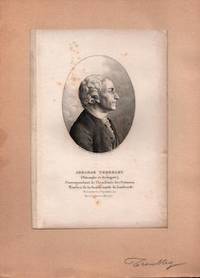
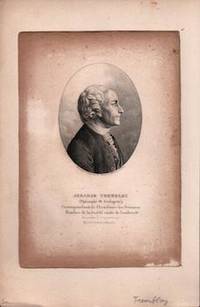
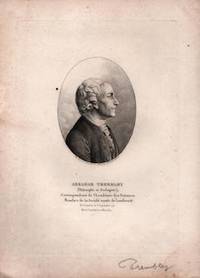
rif. 70-1268Paris : 19th Century European Publisher 1800s. Original B&W gravure. 8.25 x 5.5 inches. Good. Light foxing in upper half including some spots on image. Text in French.Abraham Trembley a Swiss naturalist was born Sep. 3 1710. In 1740 Trembley discovered a small freshwater organism which he called a polyp that he thought was new to science in fact Leeuwenhoek had discovered it nearly 40 years before. Experimenting with his tiny tentacled beastie which we now call a hydra Trembley cut the organism in half and discovered to his amazement that both halves could regenerate producing two fully functional hydra from the incomplete pieces. Most scientists who did not see this with their own eyes would not believe it. So Trembley did a very clever thing. He found ways to keep the delicate organisms alive during long carriage rides and he sent living specimens to the leading naturalists of Paris and London with instructions on how to conduct the experiments. Trembley’s experiments were re-performed before the French Academy of Sciences and the Royal Society of London and the hydra regenerated just as Trembley had promised. By thus using what one scholar has called this “strategy of generosity” Trembley converted what might have been fierce critics into supporters. By the time his book came out Mémoires pour servir ą l’histoire d’un genre de polypes d’eau douce Memoirs on the natural history of a kind of freshwater polyp 1744 he no longer had to battle skeptics and Trembley was proclaimed everywhere as a master investigator of nature. Paris : [19th Century European Publisher], [1800s?]. unknown
rif. 70-1269Paris : 19th Century European Publisher 1800s. Original B&W gravure. 8.5 x 5.75 inches. Good. Toning throughout particularly along edges. Text in French.Abraham Trembley a Swiss naturalist was born Sep. 3 1710. In 1740 Trembley discovered a small freshwater organism which he called a polyp that he thought was new to science in fact Leeuwenhoek had discovered it nearly 40 years before. Experimenting with his tiny tentacled beastie which we now call a hydra Trembley cut the organism in half and discovered to his amazement that both halves could regenerate producing two fully functional hydra from the incomplete pieces. Most scientists who did not see this with their own eyes would not believe it. So Trembley did a very clever thing. He found ways to keep the delicate organisms alive during long carriage rides and he sent living specimens to the leading naturalists of Paris and London with instructions on how to conduct the experiments. Trembley’s experiments were re-performed before the French Academy of Sciences and the Royal Society of London and the hydra regenerated just as Trembley had promised. By thus using what one scholar has called this “strategy of generosity” Trembley converted what might have been fierce critics into supporters. By the time his book came out Mémoires pour servir ą l’histoire d’un genre de polypes d’eau douce Memoirs on the natural history of a kind of freshwater polyp 1744 he no longer had to battle skeptics and Trembley was proclaimed everywhere as a master investigator of nature. Paris : [19th Century European Publisher], [1800s?]. unknown
rif. 70-1288Paris : 19th Century European Publisher 1800s. Original B&W gravure. 7.75 x 10.75 inches. Very Good. Light surface wear. Small perforation on upper left side not affecting image. Text in French.Abraham Trembley a Swiss naturalist was born Sep. 3 1710. In 1740 Trembley discovered a small freshwater organism which he called a polyp that he thought was new to science in fact Leeuwenhoek had discovered it nearly 40 years before. Experimenting with his tiny tentacled beastie which we now call a hydra Trembley cut the organism in half and discovered to his amazement that both halves could regenerate producing two fully functional hydra from the incomplete pieces. Most scientists who did not see this with their own eyes would not believe it. So Trembley did a very clever thing. He found ways to keep the delicate organisms alive during long carriage rides and he sent living specimens to the leading naturalists of Paris and London with instructions on how to conduct the experiments. Trembley’s experiments were re-performed before the French Academy of Sciences and the Royal Society of London and the hydra regenerated just as Trembley had promised. By thus using what one scholar has called this “strategy of generosity” Trembley converted what might have been fierce critics into supporters. By the time his book came out Mémoires pour servir ą l’histoire d’un genre de polypes d’eau douce Memoirs on the natural history of a kind of freshwater polyp 1744 he no longer had to battle skeptics and Trembley was proclaimed everywhere as a master investigator of nature. Paris : [19th Century European Publisher], [1800s?]. unknown
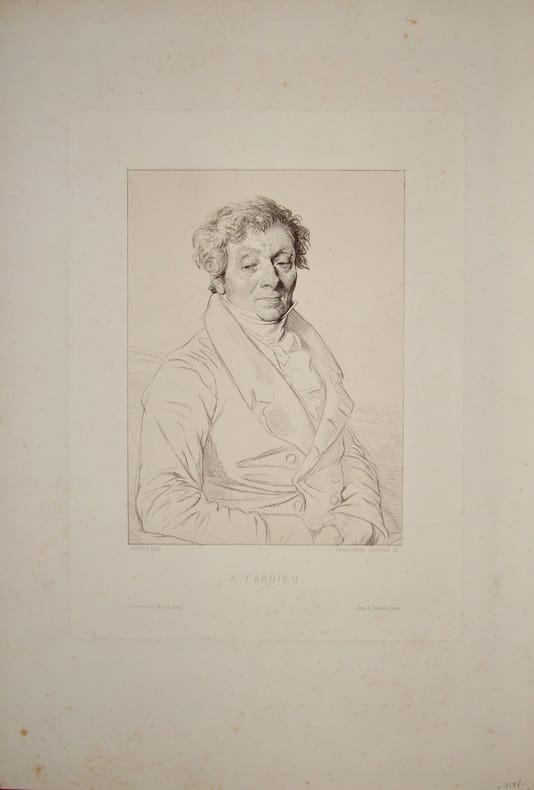
rif. 7598D'après Ingres. 3è état sur 3. Tirage de la Gazette des Beaux-Arts. Béraldi 69. IFF 74. Parfait état. Alexandre Tardieu était un graveur, membre de l'Institut (1756 - 1844). en feuille Très bon Paris Gazette des Beaux-Arts 27,5 x 21 à la cuvette (feuille 43,5 x 30).