187 résultats
219 pages. Born and brought up on Russia, Zoe Polanska was just 13 when she was wrenched at gunpoint from her family and taken to Auschwitz, where she was subjected to the monstrous pseudo-medical experiments of the infamous Dr. Josef Mengele. From Auschwitz, she was transfered fo Dachau. Escaping from Dachau, she found refuge in Vienna and later in Italy. But when victory was announced, she was forcibly repatriated along with Cossacks and others who had fought alongside the Nazis, as part of the terms of the Yalta agreement. "One of the most remarkable stories of the Second World War." - The Scotsman. Unmarked. Average wear. Book
334 pages. Fascinating coverage of this little-known Canadian history. Discusses camps at: Medicine Hat, Lethbridge, Kingston, Bowmanville, Gravenhurst, Banff, Ozada, Kananaskis, plus Oldham, England and Dachau, West Germany. Many black and white photos and diagrams. Heavily worn former library copy with usual markings. A worthy reference copy. Book
ii, 252 pages. Black and white photographic plates. "The story of German Prisoner of War camps in Canada during World Wars One and Two with special emphasis upon the latter. A story little known in Canada. Concerns battle zones in Britain, North Africa, France and Germany. Involves governments as well as forty-six thousand prisoners of war who lived 'Behind Canadian Barbed Wire'. - Introduction. Minimal high-lighting to contents. Prior owner's name clipped from top of title page. Average wear. Binding intact. A sound reading copy. Book
68 pages. Errata slip tipped in. Author was upset by the untruths he felt were expressed in the film "Shoah". This work sets out to set the record straight. "This book exposes the distortions in the film and elsewhere and tells the truth about the war-time relationship of Poles and Jews. It does so by quoting the words of Jews who know the truth and want others to know it. Nearly all the author's relatives perished during WWII and he was deported from Poland to a penal labor camp in Oberndorf in 1944." - back cover. Few pencil markings to contents. Average wear. Binding intact. A sound copy. Book
Signed [Joe] and inscribed by author upon front free endpaper. iv, 337 pages. Footnotes. Index. Black and white photographic plates. Halow [1927-2014] " Worked as a court reporter during the U.S. Army's courts-martial at Dachau where he witnessed some of the most gripping testimony from some of the most sensational trials of the postwar years. He soon saw the flaws and abuses of these trials: reliance upon ex post facto law and broad conspiracy theories; abuse of prisoners during interrogation; and the encouragement of perjured testimony by concentration camp survivors. Four decades later he reviewed the long-classified records of these trials and found astounding confirmation of his misgivings about them." - dust jacket. Book clean and unmarked with light wear. Average wear, tape repair and touch-ups to dust jacket now preserved in archival-grade Brodart. Book
310 pages. Utley was posted to Germany as a Reader's Digest correspondent in 1948. Here she relates her controversial observations of that devastated post-war nation. "An excellent, readable, well-documented account of the cruelties, and of the disasters, to victors and vanquished alike, which resulted from the application of the slightly modified Stalin-White-Morgenthau Plan to conquered Germany after 1945." - STIMELY p.61. Joseph Halow, an American court reporter at the Dachau War Crimes Trials, cites this book in his work, Innocent at Dachau. Average overall wear. Binding intact. Prior owner's name and date pencilled atop front free endpaper. Dust jacket now preserved in archival-grade Brodart. A sound first edition copy of this important historical account. Book
Book shows light wear to covers, age toned pages. The glue in this perfect bound book is over 50 years old and is likely fragile. Binding is solid and square, text/interior is clean and free of marking of any kind. 160 pages. Author performed autopsies and dissections on corpses consigned to the crematoria.
Book shows a little wear to covers, small bump at top spine. Binding is solid and square, covers have sharp corners, text/interior is clean and free of marking of any kind. 206 pages of essays by the above authors, including: Breading grounds of the Nation: The German mother and her first child" or The continuing success of a parental guidance book; "Turning the tap on was no big deal": The gassing doctors during the Nazi period and afterwards; Psychoanalysis under the Swastika; The cultivation of medicinal herbs in the concentration camp; The plantation at Dachau; National socialist persecution of the gypsies, Concentration camps on Soviet territory; I am a war orphan, etc. copyright Pistil Books, 2011
Book is in excellent condition, with very light shelf wear to cover's edges, foxing at top page ends. Binding is solid and square, covers have sharp corners, exterior shows no other blemishes, text/interior is clean and free of marking of any kind, save previous owner's name at front. Dust jacket shows the slightest signs of shelf wear only, no tears. 158 pages, contents include: Bergen-Belsen, Dachau, Buchenwald, Mauthausen, Theresienstadt, with three appendices. 16 pages of large b&w photos of the liberation of the camps, some with local Germans touring.
Goffredo Raimo A Dachau, per Amore. , Dragonetti 2001, Libro usto in buone condizioni. Pagine ingiallite lievemente. Tagli regolari impolverati leggermente. Copertina rigida. Sovraccoperta con alette informative, spoca lievemente. Buono (Good) . 258
Milano, 1966, stralcio con copertina posticcia muta, pp. 1120/1129 con numerose fotografie. - !! ATTENZIONE !!: Con il termine estratto (o stralcio) intendiamo riferirci ad un fascicolo contenente un articolo di rivista, sia che esso sia stato stampato a parte utilizzando la stessa composizione sia che provenga direttamente da una rivista. Le pagine sono indicate come "da/a", ad esempio: 229/231 significa che il testo è composto da tre pagine. Quando la rivista di provenienza non viene indicata é perchè ci è sconosciuta. - !! ATTENTION !!: : NOT A BOOK : “estratto” or “stralcio” means simply a few pages, original nonetheless, printed in a magazine. Pages are indicated as in "from” “to", for example: 229/231 means the text comprises three pages (229, 230 and 231). If the magazine that contained the pages is not mentioned, it is because it is unknown to us.
Gutes Ex.; leichte Gebrauchs- und Lagerspuren; der illustr. Einband berieben u. m. kl. Läsuren / aus der Bibliothek von Dr. Hansdieter Heilmann; m. hs. Besitzvermerk. - INHALT : Vorwort ---- "Die Literatur wird durchforscht werden" (Bertolt Brecht) ---- Über die Schwierigkeit ---- Wenn einer denkt ... ---- Dachau, eine Stadt mit 1200-jähriger Vergangenheit ---- Mittelalterlicher Galgenberg ---- Historischer Anhang ---- Über die Schwierigkeiten der Geschichtsforschung ---- Mit Dachau fiel die Räterepublik ---- Toller - Kommandant der Armeegruppe Dachau ---- Der Kampf der Roten Armee ---- Was kann man aus der Räterepublik lernen? ---- Interviews: Was soll man als Überschrift setzen ---- Bürger S: Als die Weißen kamen ---- Bürger H: Der braune Terror ---- Bürger P: "Jeder hat es gewußt" ---- Bild: Dachau, Friedenstraße ---- Bürger R: Gefecht am Rathaus ---- Bürger J: Schön wär's ---- Aktionsgemeinschaft ---- wann begann ich eigentlich zu begreifen ---- Bürger G ---- Bürger A ---- Bürgerin N ---- Bürger B: Dachauer Arbeiter schlagen zurück ---- B über Bürger G ---- Zwischentext und "Kinderschuhe von Lublin" ---- Bürger F: Arbeiter bei BMW ---- Bürgerin W ---- Bürgerin E ---- Bürger L, Bürger G ---- Remilitarisierung - Atombombe Zitat ---- Moralische Aufrüstung ---- Eine deutsche Sonne schien ---- Bürgerin V ---- Waldfriedhof ---- Vater und Sohn ---- Faksimile: Briefe von: Albert Schweizer, Hiroshima, Lidice ---- Zwischengeschichte: Kinder, daß sie euch mit Krieg verschonen ---- Pater Roth ---- Faksimile: Pfanzelt - Neuhäusler, Bild: Pater Roth ---- Bürgerin X ---- Eucharistie ---- Einweihung der Jüdischen Kapelle ---- Wo sind sie geblieben? ---- Mahnmal Einweihung ---- NPD aus Dachau raus ... als der Saal aufschrie ---- Schülerzeitung ---- 25 Jahre Befreiung KZ Dachau ---- Pater Luu Hong Khahn ---- Ein trauriges Kapitel ---- Todestag von Kurt Schumacher ---- Bürger G, Richter ---- Olympische Spiele ---- AZ München ---- Dachau Heimat ---- Volksfest 1973 ---- Bürger K, Bürgerin C ---- Bürgerin R: Das Hohe Lied der Stadt Dachau ---- Bürgerin S ---- Andere Große Söhne der Stadt ---- Bürger W: Denen waren ehemalige Nazis lieber ---- 1974: Prühäuser Straße ---- 1974: Dachau ohne Ende ---- Bürger H und Bürger C ---- Artikel 3 (3) Gedicht von Alfred Andersch ---- Was hat es genützt ---- Dachau sucht Patenschaft ---- Dachau 1977. ISBN 3922431011
Gutes Exemplar; Einband gering berieben; kl. Gebrauchs- u. Lagerspuren; kl. Besitzerstempel. - "Der aus dem Sudetenland stammende Autor meldete sich als Jugendlicher zur Leibstandarte SS Adolf Hitler, der er während des ganzen Krieges angehörte. Nach dem Zusammenbruch des Reiches verhaftet, wurde er in das Zuchthaus von Schwäbisch Hall eingeliefert. Zusammen mit Sepp Dietrich, Jochen Peiper und vielen anderen Kameraden seiner Truppe lernte er die brutalen Verhörmethoden eines eigens dazu geschulten Personals, erzwungene „Zeugenaussagen" und unmenschliche Behandlung kennen. ..." (Verlagstext) // INHALT : 1. Teil ----- Kindheit in Reichenberg ----- Lehrzeit ----- Heim ins Reich ----- Mit der Leibstandarte nach Rußland ----- Panzergrenadiere ----- Italienische Reise und Heimaturlaub ----- Vergebliche Gegenwehr im Westen ----- Endkampf im Südosten ----- 2. Teil ----- Kriegsgefangen beim Ami ----- Wie ein Kriegsverbrecher gemacht wird ----- Angeklagter im Malmedy Prozeß ----- Bei den Rotjacken ----- Lebenslänglich ----- Warten auf die Freiheit. ISBN 9783926650658
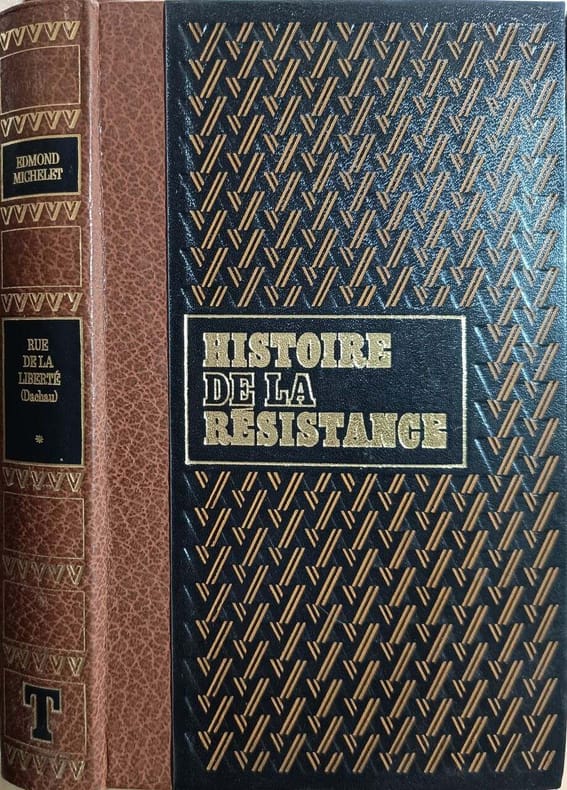
1977réf. 9986Famot 1977 303 pages in8. 1977. reliure editeur. 303 pages. Rue de la Liberté est le témoignage d'Edmond Michelet sur sa déportation au camp de concentration de Dachau de 1943 à 1945. Écrit peu après la guerre à partir de ses notes ce récit décrit son arrestation son emprisonnement et la manière dont sa foi l'a aidé à surmonter l'expérience concentrationnaire. Considéré comme un document historique vivant et honnête sur l'univers des camps
1970réf. 10078Editions France-Empire 1970 365 pages in8. 1970. Broché avec jaquette. 365 pages. Le livre 'Le train de la mort' de Christian Bernadac publié en 1970 relate le tragique convoi 7909 parti de Compiègne le 2 juillet 1944 vers le camp de Dachau. L'auteur reconstitue ce voyage infernal jour par jour en s'appuyant sur de nombreux témoignages de rescapés décrivant les conditions épouvantables du transport où sur 2000 déportés embarqués environ 500 périrent
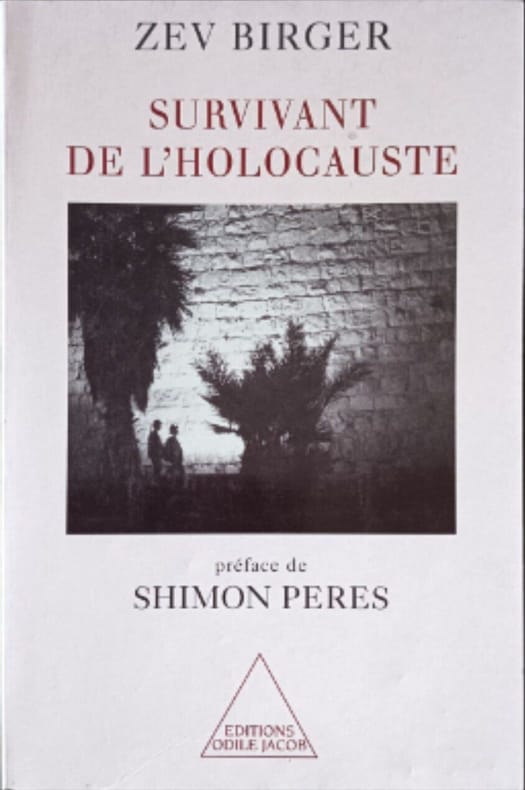
2000réf. 13811Editions Odile Jacob 2000 215 pages 22x15x2cm. 2000. Broché. 215 pages. Zev Birger adolescent juif lituanien raconte la déportation de sa famille au camp de Dachau/Kaufering en 1944 où il fut le seul survivant. Le livre décrit les années de lutte dans l'enfer nazi depuis l'invasion de la Lituanie par l'armée rouge puis les troupes allemandes jusqu'au ghetto de Slobinka et au travail forcé
réf. 011203Camille Blaisot (1881-1945), homme politique, député, mort à Dachau. L.A.S., Paris, 19 juillet 1922, 1p in-8. Il accepte de participer « aux cérémonies officiels des fêtes de Lisieux le dimanche 30 juillet et au Banquet présidé par monsieur le ministre de l'agriculture », Henry Chéron (1867-1936), qui est d'ailleurs l'ancien maire de Lisieux. Cachet de la collection Etienne Déville (1873-1944), historien, conservateur à Lisieux. [160]
réf. 32684Editions Héraclès, 1997 - in-8 broché, 259pp. - illustré de photos, cartes, documents d'époque et extraits de lettres, etc. - bon état -
1945réf. R44179Genval, L.De Lannoy 1945 217pp., br., non coupé
1954réf. R79891Paris, Bonne Presse 1954 156pp.+ frontispice (portrait), br.orig.illustrée, 18cm., bon état, R79891
2004réf. N95951s.l., Vriendenkring van Robert Regout/ Omnia-Fausta s.d. [ca. 2004] 152pp. met zw/w illustraties, linnen uitgeversband, geïllustreerde stofwikkel, 32cm., mooie staat, N95951
1970réf. 59991970 broché in-octavo, dos muet blanc, couverture ornée d'illustrations photographiques en noir sur le recto / verso, illustrations photographiques en noir sur papier glacé + 1 plan in-texte, 72 pages, sans date (les années 1960 environ) Munich G. J. Manz S. A.,
2005réf. 13103Paris Calmann Lévy 2005 Un volume in-8 dos collé, couverture illustrée, 447 pages. Bon état.
1946réf. 249191946 ANNONAY Imprimerie Alfridus Couderc - 1946 - In-8 broché (agrafe) - illustrations , 80p.,croquis de Ferdinand Dupuis.1ère édition,envoi auteur ?,edition originale ; bon état.
réf. 74583Paris, éd. Chez l'auteur et Promotion et édition, 1967, EDITION ORIGINALE, in-8, cartonnage souple, couv. texte en vert et noir sur fond blanc éditeur, 224 pp., dessin en noir en frontispice, table des chapitre, bel ENVOI du fils de l'auteur, "Robert Masset décide d'écrire ses souvenirs à la suite d'une perte temporaire de mémoire durant sa convalescence. Trois ans plus tard, le témoignage de ce pilier de la Résistance de l'Indre est publié. Pour un récit relatif à l'expérience concentrationnaire, la période évoquée est inhabituellement étendue. Construit de façon chronologique, le récit débute le jour de son arrestation, le 31 mai 1944, pour s'achever en juillet 1946 par la confrontation avec l'un de ses bourreaux gestapistes et sa participation à une cérémonie commémorative.. Après la prison de Limoges et le camp de Compiègne, il est déporté le 2 juillet 1944 en direction de Dachau dans le "Train de la Mort". Rapidement, il est transféré au Kommando extérieur de Neckarelz à des travaux dans une mine, aménagée en usine. Il éprouve les pires difficultés et parvient à entrer à l'infirmerie (Revier), ce qui lui offre un peu de répit. Le 30 mars 1945, Robert Masset est évacué dans des wagons avec les autres déportés considérés comme invalides. Il raconte son hospitalisation après sa libération, les difficultés du rapatriement puis le retour en France et dans sa famille. C'est le temps des règlements de compte et le temps de la mémoire". RARE Très bon état