Durant, PierreAntiquariat.de

5.678 Ergebnisse
1989Best.-Nr. 215165Berlin, Militärverlag der Deutschen Demokratischen Republik, 1989.
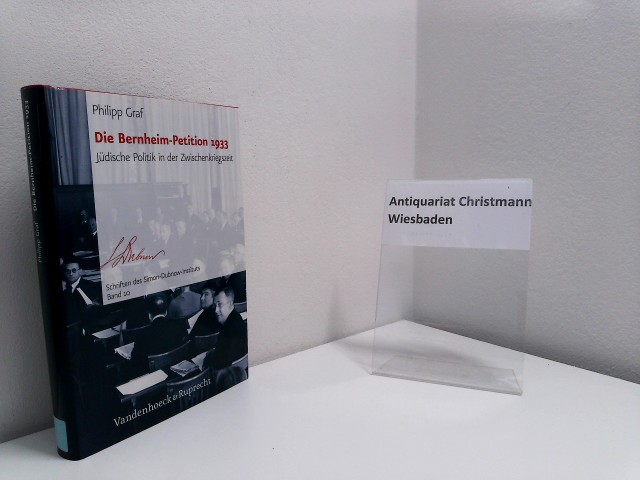
2008Best.-Nr. 54662Göttingen : Vandenhoeck & Ruprecht 2008. 342 S. : mit 10 Abb. ; 24 cm, mit Schutzumschlag Pp., gebundene Ausgabe, Hardcover/Pappeinband, Exemplar in sehr gutem Erhaltungszustand, Neupreis in Euro: 52,00
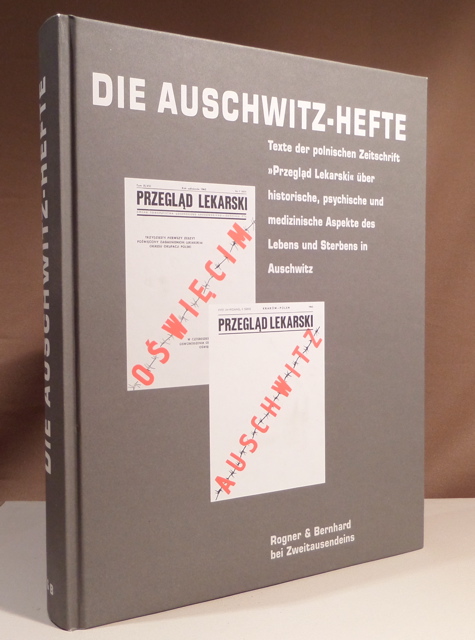
1995Best.-Nr. 74973Hamburg, Rogner & Bernhard 1995. 1995. 4° 328, 329 u. 31 S. Orig.-Pappband.
1994Best.-Nr. 11506München, dtv, 1994. Broschiert, kl-8°, 207 S.; -Papier etwas gebräunt, gutes Exemplar.
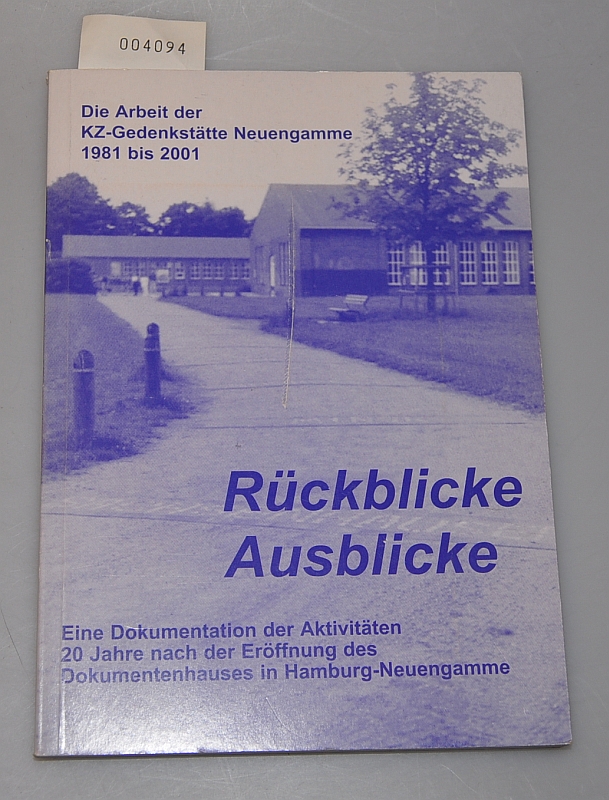
2001Best.-Nr. 04094Neuengamme, KZ-Gedenkstätte, 2001. kt, 151S, gutes Exemplar
2001Best.-Nr. 88507Hamburg, KZ-Gedenkstätte Neuengamme, 2001. 151 S. Mit s/w Abb. 24 cm. OKart.
2000Best.-Nr. ZEIT1487Frankfurt/New York, Campus (2000). 326 S., zahlr. Abb., OPp. m. ill. OU., wie neu. Mit Widmung von Ester Schapira für Doron Rabinovici auf dem Vortitelbl
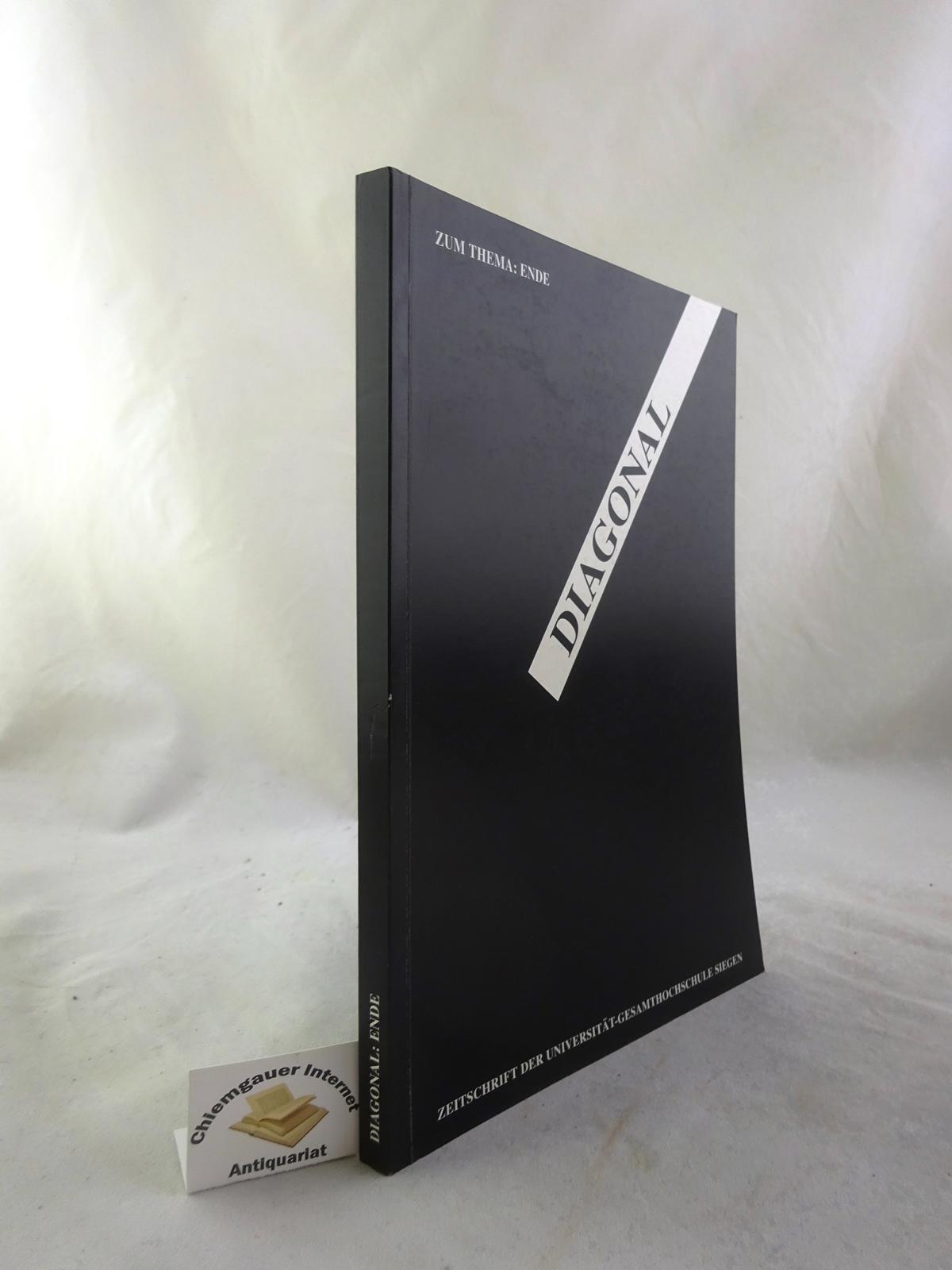
1996Best.-Nr. 302815Siegen, Universität Siegen, 1996. 222 Seiten. Mit zahlreichen Schwarz-Weiß- Abbildungen. Originalbroschur.
19498vo; 262 pages; 1st edition. Original publisher's cloth. 8vo, 262 pages. 24 cm. Includes added title page in English: "The Jews in the Ukraine, from the earliest times through 1648-1649." Only 2000 copies printed. Very Good Condition. (YIZ-6-7)
1949Rear board scuffed, otherwise Very Good Condition; 8vo; 262 pages; 24 cm. Includes added title page in English: "The Jews in the Ukraine, from the earliest times through 1648-1649." 1 of only 2000 copies printed. Good condition. (EE-3-35)
1946Original boards. 4to. Xxviii, 890 pages; 31 cm. In Yiddish with added English title page. Title translates to The Jews in Poland Vol. 1. Written just after the Holocaust. Contents include: 1. Der Poylisher Yid in der Yidisher geshikhte / A. Menes -- Di Yidn in amolikn Poyln / Refa'el Mahler -- Di Yidn in Poyln fun 1772 biz 1914 / Ya'akov Shatski -- In di yorn fun der ershter velt-milhome / Viktor Shulman. SUBJECT (S) : Polish Jews, Holocaust, WWII. OCLC: 19304047. Spine label, otherwise Very Good Condition. (HOLO2-134-74B-ELX-'+)
1946Original boards. 4to. Xxviii, 890 pages; 31 cm. In Yiddish with added English title page. Title translates to The Jews in Poland Vol. 1. Written just after the Holocaust. SUBJECT (S) : Polish Jews, Holocaust, WWII. Very minimal edgewear. Very minimal rubbing and staining. Very good + condition. (HOLO2-134-74)
1942Hardcover, 8vo, xvi, 452 pages, illustrated, map, 22 cm. In Yiddish. Contemporary (1942! ) report on the Holocaust in Poland. Title translates as The Jews in Nazi-Poland. SUBJECT(S) : Holocaust, Jewish (1939-1945) -- Poland. Jews -- Persecutions -- Poland. Poland -- Ethnic relations. Bibliografye on pages 443-444. Includes bibliographical references on pages 443-444 and index. The US Holocaust Museum keeps their copy in their Rare Book Room. Very good condition. (Holo2-68-22) xx
Paper wrappers, 8vo, 228 pages. In Yiddish with cover and title page in English. Reprinted from "Studies on Polish Jewry, 1919-1939". Very good condition. (HOLO2-20-34)
Paper wrappers, 8vo, 228 pages. In Yiddish with cover and title page in English. Reprinted from "Studies on Polish Jewry, 1919-1939". Very good condition. (EE-3-24)
1947Oblong 4to; 575 pages; First edition. Original Publisher's Cloth. Oblong 4to. 575, [7] pages. illus. 20 x 27 cm. In Yiddish and English throughout. A defining work on the lost Jewish communities of Europe. Others have come out in the last 2 decades, but this was the first (many, though by no means all, photos are by Vishniak) . Documenting Jewish life in Eastern Europe with over 600 photos (and text in English and Yiddish) , this work was an early post-war portrayal of these communities within the obvious context that they were gone forever, some with almost no trace of their thousand year histories remaining. Abramovitch himself was a refugee from this world--he was a leader of the Mensheviks in exile who worked at the Jewish Daily Forward and was also active in the Bund. Published as a memorial to these extinct communities, the book is bound in attractive heavy red linen with gilt spine and cover lettering in English and Yiddish, with a paper label (with a woodcut design) on the front. Owner's inscription on blank end paper, Bit of discoloration to covers, faint shadow from spine label, otherwise Very good condition. Excellent copy. (HOLO2-75-11A)
1947Oblong 4to; 575 pages; First edition. Original Publisher's Cloth. Oblong 4to. 575, [7] pages. illus. 20 x 27 cm. In Yiddish and English throughout. A defining work on the lost Jewish communities of Europe. Others have come out in the last 2 decades, but this was the first (many, though by no means all, photos are by Vishniak) . Documenting Jewish life in Eastern Europe with over 600 photos (and text in English and Yiddish) , this work was an early post-war portrayal of these communities within the obvious context that they were gone forever, some with almost no trace of their thousand year histories remaining. Abramovitch himself was a refugee from this world--he was a leader of the Mensheviks in exile who worked at the Jewish Daily Forward and was also active in the Bund. Published as a memorial to these extinct communities, the book is bound in attractive heavy red linen with gilt spine and cover lettering in English and Yiddish, with a paper label (with a woodcut design) on the front. Card pocket and institutional markings on blank endpapers, otherwise very clean inside, Bit of discoloration to spine, otherwise Very good condition. Excellent copy. (HOLO2-75-11B)
194812mo. 142 pages. In Yiddish. "The Unforgotten." Translated into Yiddish by Herman Taube. Holocaust novel. Susanne Taube was born in Vacha, Germany, in 1926. Her family was deported from Berlin to the Riga ghetto in 1942; after the liquidation of the ghetto, she was in the Kaiserwald concentration camp, and thereafter suvived as a forced laborer. She met her husband Herman Taube, a Polish Jew originally from Lodz, and married in 1945. After time in the Ziegenhain displaced persons camp, her and Herman emigrated and eventually settled in Baltimore. SUBJECT (S) : Fiction. OCLC lists 19 copies worldwide. Top corners bumped. Inscribed by the translator in year of publication. Very good condition. (HOLO2-6-10) Xx
1946Original Cloth. 8vo. 127 pages. 25 cm. First edition. In Yiddish. 'The Long Night'. Inscribed by Eliezer Greenberg in Yiddish on endpage. Modernist Yiddish poetry with holocaust themes. Eliezer Greenberg (18961977) , Yiddish poet and literary critic; he edited important anthologies with Irving Howe of translations of Yiddish poetry into English. Subjects: Yiddish poetry. Poems. Light wear to cloth, otherwise fresh and clean. Very good condition. (HOLO2-117-45)
1955Original Wraps. 8vo. 222, [2] pages. 21 cm. First edition. In Yiddish. Book one only. The Hitlerite Policy of Jewish-Destruction, in the years 1939-1945; an expression of German imperialism. At head of title: Yidisher Historisher Institut in Poyln. The author also published in 1955 a Yiddish volume concerning the Remilitarization of West Germany and the Role of Hitlers Generals. Written by Artur Eisenbach (19061992) , a Polish Jewish historian. Artur Eisenbach was one of the last representatives of a distinguished group of scholars who, in the years before World War I and in independent Poland between 1918 and 1939, laid the foundation for an investigation of the Polish Jewish past. He was influenced primarily by the Marxist school of Jewish historians, in particular by Raphael Mahler and Emanuel Ringelblum (whose sister he married) . Eisenbach was an active member of the Yunger Historiker Krayz (Young Historians Circle) founded by Mahler and Ringelblum. Eisenbach spent World War II in the Soviet Union, but his wife and child were trapped in Buczacz, where they were murdered by the Nazis in 1942. After his return to Poland in May 1946, he worked at the Central Historical Commission of the Central Committee of Polish Jews. When the Jewish Historical Institute was established later that year, he was appointed head of its archives, and subsequently became a researcher. In the decade following the war, Eisenbach devoted himself entirely to studying the Holocaust. Later he gradually returned to the theme that he had devoted himself to before the warJewish emancipation in the first half of the nineteenth century. In 1966, he became a member of the Committee for the Historical Sciences at the Polish Academy of Sciences and was awarded the title of professor. In the same year, he was appointed director of the Jewish Historical Institute. In 1968, Eisenbach was forced to resign his latter position, and retained only his title at the Polish Academy of Sciences. He decided not to emigrate and in the following years produced a series of monographs on Polish Jewish problems in the first half of the nineteenth century, research that formed the essential basis for future work on this subject. He also continued to work on Holocaust themes, editing Ringelblums diary and essay on PolishJewish relations. In his last years, he moved to Israel, where he had a nephew and where, active as ever, he worked on an account of PolishJewish relations in the nineteenth century. (Yivo Encyclopedia of Jews in Eastern Europe) . Subjects: Holocaust, Jewish (1939-1945) . Germany - Politics and government - 1933-1945. Light wear to wraps, pages lightly aged, otherwise fresh. Very good condition. (HOLO2-108-11)
19441st edition. Original illustrated paper wrappers, 8vo, 117 pages. Includes illustrations and portraits. 20 cm. In Yiddish. Title translates as, The Ghettos in Revolt. Early comtemporary reporting on Jewish revolts in the ghettos, published the year after the Warsaw Ghetto Uprising. SUBJECT (S) : World War, 1939-1945 -- Jewish resistance -- Poland. Jewish ghettos World War, 1939-1945 Atrocities -- Jews. Holocaust, Jewish (1939-1945) . Poland -- History -- Occupation, 1939-1945. OCLC: 15104626. Light wear, Very Good Condition. Important (holo2-138-17)
1947Publishers cloth. 8vo. 571 pages. 23 cm. First edition. In Yiddish. Di geshikhte fun yidishn shulvezn in umophengikn poyln (The History of the Jewish School Movement in Independent Poland) ; published in Mexico; written by Khayim Shloyme Kazdan (1883-1979) , a Bundist, educator, and leader of the secular Yiddish school movement. Between 1918 and 1920, Kazdan served as secretary of the influential Kiev-based Kultur-lige. Taking an active interest in the Yiddish school movement, he helped to establish Shul un lebn (School and Life) the first pedagogical journal in Yiddish. He moved to Warsaw in 1920, and maintained his active roles in the Yiddish school movement and the Bund. He was one of the principal leaders and founders of the Central Yiddish School Organization (TSYSHO) , a network of secularsocialist Yiddish schools founded in June 1921 in Poland. Kazdan wrote for the TSYSHO press and published curriculum guides for secular Yiddish schools; among his contributions were the Program fun yidish-limed in der 7-klasiker folks-shul (Syllabus for the Study of Yiddish in the Seventh-Grade Folk School; 1925) , Metodik fun yidisher shprakh (A Yiddish Language Curriculum; 1939) , as well as many articles on educational theory and the secular Yiddish schools. In the 1930s, Kazdan served as director of TSYSHO in Warsaw. (Yivo Encyclopedia of Jews in Eastern Europe) . Subjects: Jews - Education - Poland. Z´ydowska Centralna Organizacja Szkolna. Light wear to edges of cloth and endpages, otherwise fresh. Very good condition. (HOLO2-108-8)
1977IN HEBREW AND YIDDISH. 245X170 mm. 527 pages. Hardcover. Cover slightly bumped and slightly stained. Pen inscription on first white page. Pages water-stained. Pages slightly yellowing. Else in good condition.
1997Best.-Nr. 009247Gerlingen, Bleicher, 1997. 232 S. Orig.-Broschur. Ein schönes, gut erhaltenes Exemplar in einwandfreiem Zustand.