5.678 Ergebnisse
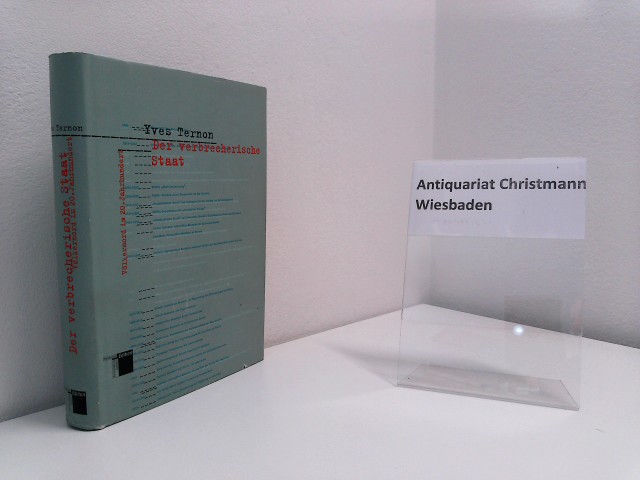
2005235x160mm. 16+376 pages. Hardcover. Gilt lettering on spine. Spine slightly bumped at edges. Dust jacket slightly worn at edges. Inner binding slightly cracked. else in very good condition.
20131st edition. Original photographic paper wrappers, 4to (large) , 44 pages. Loaded with illustrations, many in color. 30 cm. In German. The title translates as, Destination Shanghai: The Jewish Community in Shanghai 1936-1949. Catalog of an exhibition held at the Kunstsammlungen Chemnitz, February 17-April 14, 2013. Contents include: Grussworte; Guido Westerwelle; Johannes Beermann; Carol Kahn Strauss; Barbara Ludwig; Vorwort by Ingrid Mössinger; Destination Schanghai : die Jüdische Gemeinde in Schanghai 1936-1949 by Renata Stein; Ankunft in Schanghai; Das Ghetto von Schanghai; Flüchtlinge als Unternehmer; Medizinische Versorgung; Religiöses Leben; Schuldbildung; Kulturelles Leben; David Ludwig Bloch; Hans Jacoby; Juden aus Chemnitz im Exil in Schanghai by Jürgen Nitsche; Das Ende des Ghettos by Renata Stein; Die Schanghailänder heute; Leo Baeck Institute New York by Biografie Leo Baeck; Impressum. ISBN: 9783930116157; 3930116154. SUBJECT(S) : Jewish refugees -- China -- Shanghai -- Exhibitions. Jews Exhibition catalogs. History. OCLC lists 12 copies worldwide. New Condition (HOLO2-138-17)
1999Best.-Nr. 11181ABerlin, Verlag Neues Leben, 1999. Gr. 8°. 272 Seiten. Mit teils farbigen Abbildungen. Original-Leinen mit Original-Umschlag. (Schutzumschlag etwas angerändert, Einband mit kleinem Fleck). [2 Warenabbildungen]
1941(FT) Stiff paper wrappers, small 8vo, 112 pages. Boldly illustrated cover. Title translates as, "Security: A Play in 3 Acts on Jewish Life in Nazi-Germany." Early (1941) expose of Jewish life in Germany under Hitler. Contains a 1-page folded promotional insert on green paper. In Yiddish. Includes music to the theme song, Hope, Always Hope! . The author lived from 1882-1958 . From a contemporary review in the Observer: The Awakening is the story of a Jewish character in modern Germany who, because of the present regime, changes his whole philosophy of life. An internationalist and an assimiliationist, the chief character becomes a Jewish nationalist. SUBJECT(S) : Holocaust, Jewish (1939-1945) -- Drama. OCLC lists 11 copies worldwide. Cover worn at edges and spine, and partially separated at binding, otherwise in good condition. (Holo2-30-5)
2008Best.-Nr. 35314AStuttgart, Klett-Cotta, 2008. 8°. 248 Seiten. Original-Pappband mit Original-Umschlag. (Sehr gutes Exemplar).
1951(FT) Publishers cloth. 8vo. 220 pages. 21 cm. First Yiddish edition. The Second Front, translated from the Russian. Notes on the second world war by a Soviet war correspondent. Subjects: World War, 1939-1945 -- Personal narratives, Russian. 7 copies on OCLC. Light wear to covers, pages lightly aged, marks on endpages. Clean and fresh. Good + condition. (HOLO2-95-49)
1966Best.-Nr. KF206Bonn (Bundesminister der Verteidigung - Führungsstab Streitkräfte I 6) 1966 (= Erste Ausgabe). 8°, illustrierte Originalbroschur (Paperback), 288 S., Abbildungen 1
198726 Illustrationen in Schwarzweiß.
1945(FT) Original paper wrappers. 8vo. 18, [1] pages. 23 cm. First edition. In Yiddish. Back page summary in English: In the sixth year of World War II, the Yivo will observe its twentieth anniversary. In all these years the strength of the Yivo will lay in the interrelation of its work with the major problems of Jewish existence. This year, the balance is fearful. The end of the war is still remote, but we already know the extent of our disaster. Others count their fallen, we count the surviving. The responsibility for the survival of the Jewish people now rests upon American Jewry. The Yivo is ready to do its share. Subjects: Jews - New York (State) - New York - Societies, etc. Learned institutions and societies - New York (State) - New York. Jews - United States - Social conditions. Jews - History - 1945-. Yivo Institute for Jewish Research. OCLC lists six copies worldwide. Light wear to covers, with minor tears at edges. Otherwise fresh and clean. Good + condition. (HOLO2-99-46)
1995Best.-Nr. 99131Gütersloher Verlagshaus, 1995.
Best.-Nr. 99190Brüssel, Verlag Codac Juifs, o. J. 236 S. 8° Oktav, Hardcover/Pappeinband
1961Mit 10 Zeichnungen von Josette Cagnant.
1958Best.-Nr. 1165490Brüssel, Vlg ""Codac Juifs"", (1958). 236 S. m. 10 ganzseitigen Illustr. OPp. m. OUmschl. (OU einger., Ränder gebräunt).
1997Best.-Nr. 58296Berlin : Berlin-Verl. 1997. 640 S. ; 22 cm, mit Schutzumschlag Pp., gebundene Ausgabe, Hardcover/Pappeinband, Exemplar in sehr gutem Erhaltungszustand
2009Best.-Nr. 60425Leipzig : Dingsda-Verl. 2009. 230 S. : : m. 20 Abb. ; 22 cm, mit Schutzumschlag +++ Stempel über dem Impressum (Ausgesondert) Pp., gebundene Ausgabe, Hardcover/Pappeinband, Exemplar in gutem Erhaltungszustand
1960First Yiddish edition. Original, illustrated paper wrappers. 12mo. 72 pages. 14cm. In Yiddish. Title translates to "The Wish Concert. " Stanislaw Wygodzki (1907-1992) was a Polish writer of Jewish origin. He published his first volume of poetry in 1933 before the Nazi occupation of Poland, during which Wygodzki was first interred in the Bedzin ghetto and later in the concentration camps of Auschwitz, Dachau, Oranienburg and Sachsenhausen. His health impacted by his experiences, Wygodzki did not resume publishing until 1947, becoming a successful writer and publishing poetry, short stories and one novel. Wygodzki, who lost his wife, daughter and parents in Auschwitz, was one of four winners of the 1969 "Remembrance Award", awarded annually by the World Federation of Bergen-Belsen Associations for "excellence in literature on the Nazi atrocities against European Jewry". A communist in his youth who was briefly imprisoned in Poland as an adult for his communist activities, Wygodzki resettled in Israel in 1968 in response to antisemitism in the Communist Party in Poland. SUBJECTS: Yiddish Fiction. OCLC lists 8 copies worldwide. Some browning to pages. Ex-library with no marks. Small, one inch tear where the front wrapper creased. (YID-27-11)
1960First Yiddish edition. Original, illustrated paper wrappers. 12mo. 72 pages. 14cm. In Yiddish. Title translates to "The Wish Concert. " Stanislaw Wygodzki (1907-1992) was a Polish writer of Jewish origin. He published his first volume of poetry in 1933 before the Nazi occupation of Poland, during which Wygodzki was first interred in the Bedzin ghetto and later in the concentration camps of Auschwitz, Dachau, Oranienburg and Sachsenhausen. His health impacted by his experiences, Wygodzki did not resume publishing until 1947, becoming a successful writer and publishing poetry, short stories and one novel. Wygodzki, who lost his wife, daughter and parents in Auschwitz, was one of four winners of the 1969 "Remembrance Award", awarded annually by the World Federation of Bergen-Belsen Associations for "excellence in literature on the Nazi atrocities against European Jewry". A communist in his youth who was briefly imprisoned in Poland as an adult for his communist activities, Wygodzki resettled in Israel in 1968 in response to antisemitism in the Communist Party in Poland. SUBJECTS: Yiddish Fiction. OCLC lists 8 copies worldwide. Some browning to pages. Tape on spine with title, light wear otherwise Good Condition. (YID-27-11A)
1996Best.-Nr. 57083Hamburg : Hamburger Ed. 1996. 343 S. ; 24 cm, mit Schutzumschlag Pp., gebundene Ausgabe, Hardcover/Pappeinband, Exemplar in gutem Erhaltungszustand, Neupreis in Euro: 30,--
1935(FT) Hardcover, 8vo, 309, viii pages, 35 cm. In Yiddish. The way to our youth; elements, methods, and problems of Jewish youth research. Nazi-era imprint, looking at Jewish youth in 1930s Poland. Series: Bibliotek fun Yivo; Nom. 1 (7) ; Variation: Bibliotek fun Yivo. SUBJECT(S) : Jewish youth -- Psychological aspects. Personality and culture -- Methodology. Added title page: The way to our youth; elements, methods, and problems of Jewish youth research. Added title page also in Lithuanian: Keliasimusu javnuomene. Bibliographical footnotes and index. Other Titles: Way to our youth. ; Keliasimusu jaunuomene. Weinreich (1894-1969) was a Yiddish linguist, historian, editor. Born in Kuldiga (Latvia) , Weinreich made his debut as a Yiddish writer at the age of 13, and became a contributor to various Yiddish, Russian, German, and later English publications. After studying at the universities of St. Petersburg and Berlin, he completed a doctoral thesis on the history of Yiddish philology at the University of Marburg. Early in his career Weinreich became a prominent educator in various capacities, ranging from the teaching of Yiddish literature at the Vilna Yiddish Teachers Seminary to serving as leader of a Yiddish scouting movement, Di Bin. He was instrumental in giving Yiddish linguistics a solid, scholarly footing. Co-founder with Nokhem Shtif, Elias Tcherikover, and Zalmen Rejzen of the YIVO Institute, and YIVOs guiding spirit, he was largely responsible for its achieving a worldwide reputation. As director of YIVOs Research Training Division and organizer of its graduate school, Weinreich successfully educated young Yiddish scholars, among them, his son, Uriel Weinreich. At the World Congress of Linguistics in Copenhagen, he lectured on Yiddish as an Object of General Linguistics, and in 1940, he immigrated with his son Uriel to the U. S. , where he became the countrys first university professor of Yiddish, teaching Yiddish language, literature, and folklore at the College of the City of New York and Columbia University, while serving as the scholarly director of YIVO. Weinreichs wide array of books and studies include his magnum opus, Geshikhte fun der Yidisher Shprakh, the culmination of a half century of research on Yiddish sociolinguistics, tracing the thousand-year development of Ashkenazi culture and the Yiddish language as integral to the Jewish way of life. He studied the development of Yiddish from its origins in Germany, through Eastern Europe and into the second diaspora, creating the basic concepts and theoretical tools of the linguistic study of Jewish languages. Prominent among his other works are Hitlers Profesorn- probably the best documented indictment of German scholarship during the Nazi regime; Shturemvint, sketches on 17th-century Jewish history; Bilder fun der Yidisher Literatur-Geshikhte; Der Veg tsu Undzer Yugnt, a socio-psychological study of Jewish youth in Eastern Europe; and Di Shvartse Pintelekh, a history of alphabets. Weinreich translated Homer, Freud, and Ernst Toller into Yiddish and edited the periodicals Yidishe Filologye, Filologishe Shriftn, Yivo-Bleter, and the critical edition of S. Ettingers works, N. Stutchkoffs Oytser fun der Yidisher Shprakh, Y. L. Cahans Shtudyes vegn Yidisher Folkshafung, and Yidishe Folkslider mit Melodyes (Schaechter and Baumgarten in EJ, 2007) . OCLC lists 4 copies worldwide (U of Melbourne, Paris-Cujas-Bu Droit, Staatsbibliothek zu Berlin, Bayersiche Staatsbibliothek) . Browning to pages. Bumped cover corners. Otherwise, very good condition. (Holo2-74-6)
1935(FT) Hardcover, 8vo, 309, viii pages, 35 cm. In Yiddish. The way to our youth; elements, methods, and problems of Jewish youth research. Nazi-era imprint, looking at Jewish youth in 1930s Poland. Series: Bibliotek fun Yivo; Nom. 1 (7) ; Variation: Bibliotek fun Yivo. SUBJECT(S) : Jewish youth -- Psychological aspects. Personality and culture -- Methodology. Added title page: The way to our youth; elements, methods, and problems of Jewish youth research. Added title page also in Lithuanian: Keliasimusu javnuomene. Bibliographical footnotes and index. Other Titles: Way to our youth. ; Keliasimusu jaunuomene. Weinreich (1894-1969) was a Yiddish linguist, historian, editor. Born in Kuldiga (Latvia) , Weinreich made his debut as a Yiddish writer at the age of 13, and became a contributor to various Yiddish, Russian, German, and later English publications. After studying at the universities of St. Petersburg and Berlin, he completed a doctoral thesis on the history of Yiddish philology at the University of Marburg. Early in his career Weinreich became a prominent educator in various capacities, ranging from the teaching of Yiddish literature at the Vilna Yiddish Teachers Seminary to serving as leader of a Yiddish scouting movement, Di Bin. He was instrumental in giving Yiddish linguistics a solid, scholarly footing. Co-founder with Nokhem Shtif, Elias Tcherikover, and Zalmen Rejzen of the YIVO Institute, and YIVOs guiding spirit, he was largely responsible for its achieving a worldwide reputation. As director of YIVOs Research Training Division and organizer of its graduate school, Weinreich successfully educated young Yiddish scholars, among them, his son, Uriel Weinreich. At the World Congress of Linguistics in Copenhagen, he lectured on Yiddish as an Object of General Linguistics, and in 1940, he immigrated with his son Uriel to the U. S. , where he became the countrys first university professor of Yiddish, teaching Yiddish language, literature, and folklore at the College of the City of New York and Columbia University, while serving as the scholarly director of YIVO. Weinreichs wide array of books and studies include his magnum opus, Geshikhte fun der Yidisher Shprakh, the culmination of a half century of research on Yiddish sociolinguistics, tracing the thousand-year development of Ashkenazi culture and the Yiddish language as integral to the Jewish way of life. He studied the development of Yiddish from its origins in Germany, through Eastern Europe and into the second diaspora, creating the basic concepts and theoretical tools of the linguistic study of Jewish languages. Prominent among his other works are Hitlers Profesorn- probably the best documented indictment of German scholarship during the Nazi regime; Shturemvint, sketches on 17th-century Jewish history; Bilder fun der Yidisher Literatur-Geshikhte; Der Veg tsu Undzer Yugnt, a socio-psychological study of Jewish youth in Eastern Europe; and Di Shvartse Pintelekh, a history of alphabets. Weinreich translated Homer, Freud, and Ernst Toller into Yiddish and edited the periodicals Yidishe Filologye, Filologishe Shriftn, Yivo-Bleter, and the critical edition of S. Ettingers works, N. Stutchkoffs Oytser fun der Yidisher Shprakh, Y. L. Cahans Shtudyes vegn Yidisher Folkshafung, and Yidishe Folkslider mit Melodyes (Schaechter and Baumgarten in EJ, 2007) . OCLC lists 4 copies worldwide (U of Melbourne, Paris-Cujas-Bu Droit, Staatsbibliothek zu Berlin, Bayersiche Staatsbibliothek). SPine repair with black cloth tape. Title page torn and repaired with tape. Browning to pages. Good condition. (Holo2-74-6A)
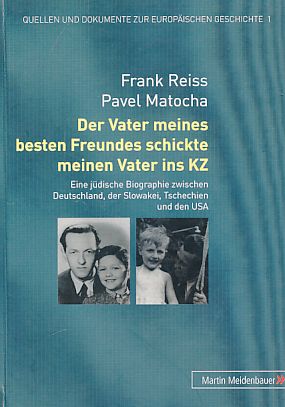
2007Best.-Nr. 1065981München : Martin Meidenbauer, 2007. 145 S. : Illustr. ; 22 cm. Fadengehefteter Originalpappband.
1923Best.-Nr. 1160826Berlin, Harz, 1923. Gr.-8vo. 10, 582 S. OKart. (unbeschnitten, gebräunt).