Joseph Cattaui Pacha (ss La Dir De)Biblio.com

4 588 résultats
1926réf. 100092787Imprimerie de l'institut français 1926. couverture ternie bords frottés intérieur propre pages non coupées sur les 4/5e du livre. in8. 1926. Broché. Imprimerie de l'institut français unknown
1926réf. 100092787Imprimerie de l'institut français 1926 in8. 1926. Broché.
1954réf. 0108931954 Missieactie der paters Redemptoristen Soft cover
1907réf. 142193Maryknoll: Catholic Foreign Mission Society of America 1907. xix3044 pp. Octavo. Fifth edition. Original green cloth with dark green stamped title on the spine and front board. A touch of light rubbing to the binding. Top edge a bit dusty. Frontis portait. 18 black and white illustrations from photos. Single page map at the rear. A clean copy internally. Tourville 2394. There is an introduction to the first edition and the second edition as well. Father Judge went from the Rocky Mountains to Alaska in 1890. He spent the next period on the Yukon River from the mouth to Forty Mile and Circle City. He observed the Klondike Rush from 1896 and 1897 and was Dawson City's first pastor. He passed away in 1899. Not a common title with primary Klondike content. 1907 Catholic Foreign Mission Society of America hardcover
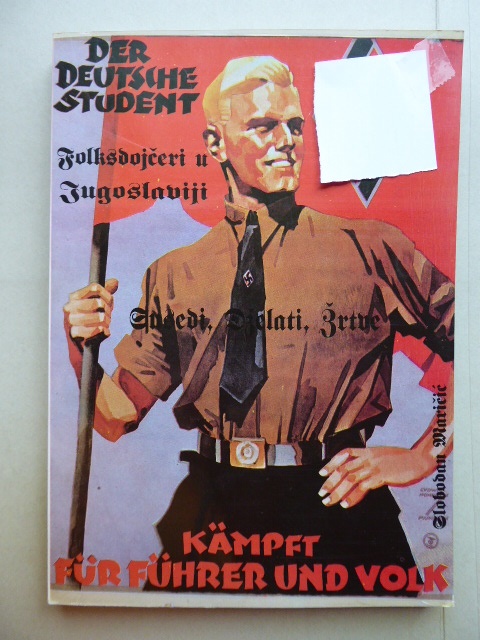
1995réf. 138698Beograd 1995. 243, (1) pages. With 49 illustrations. Illustrated original softcover binding. 24x17 cm
réf. 2901Union Européenne dEditions Monaco Kister & Schmid 1954
1983réf. 257171Osprey Publishing, 1983.
1997réf. 8625713Sweet & Maxwell 1997. This is an ex-library book and may have the usual library/used-book markings inside.This book has soft covers. In good all round condition. Please note the Image in this listing is a stock photo and may not match the covers of the actual item400grams ISBN:9780421618305 Sweet & Maxwell paperback
2004Paper wrappers, small 4to. , 224 pages. First U. S. Edition. SUBJECT (S) : Espionage -- Germany -- History -- 20th century. World War, 1939-1945 -- Secret service -- Germany. World War, 1939-1945 -- Military intelligence -- Germany. World War, 1939-1945 -- Naval operations -- Germany. Secret service -- Germany -- History -- 20th century. Nationalsozialistische Deutsche Arbeiter-Partei. Schutzstaffel. Sicherheitsdienst. Includes bibliographical references and index. Full of black and white documentary photographs. Fine condition. (HOLO2-15-20)
1963Una adolescente nell'inferno di un campo di concentramento.
1959Una adolescente nell'inferno di un campo di concentramento.
1952Good Solid condition.; 8vo; 387 pages; In Yiddish. Not in Robinson & Friedman nor Wolff. Jewish partisan's memoirs of resistance against the Nazis in Poland. Illustrated with many photographs throughout. Inscribed by Kaczerginski in year of publication. Kaczerginski (19081954) was a Yiddish writer and cultural activist. Born in Vilna to a poor family and educated at that citys Talmud Torah, Shmerke (Pol., Szmerke) Kaczerginski lost both his parents during World War I. As a youth, he was involved with outlawed Communist groups and was arrested several times, serving a lengthy prison term. In the 1930s, two of his revolutionary poems became popular in Poland. He wrote short stories with a radical bent and was a correspondent and reporter for literary publications, including the semilegal leftist press in Poland and the New York Communist daily Morgn-frayhayt. Kaczerginski played a key role in shaping the writers and artists group Yung-Vilne; he organized its evening events and was the de facto publisher of its three miscellanies between 1934 and 1936. During the period of Soviet control over Lithuania in 19401941, he was even more active in the field of Yiddish culture, but at the same time experienced his first disappointments with the attitude of the Soviet regime toward Jewish culture. During the first period of Nazi occupation, Kaczerginski wandered through villages and towns posing as a deaf mute; after many difficulties, he ended up in the Vilna ghetto. Kaczerginski was very involved in the ghettos cultural activities. As a leader of its youth club, he wrote its Yugnt-himen (Youth Hymn), a song that immediately became popular. In 1943, he wrote the song Shtiler, shtiler in memory of the mass murders committed at Ponar. Set to music that Aleksander Volkoviski (later known as Aleksander Tamir) had submitted to a contest organized by the ghetto, the song was first heard at an evening performance there and over the years became one of the best-known songs of the Holocaust. With Avrom Sutzkever and others, Kaczerginski became part of a group of forced laborers whom the Germans designated to sort Jewish cultural treasures at YIVO and other locations. Known as the Papir-brigade (Paper Brigade), the groups members risked their lives to hide the most significant items, smuggling them back into the ghetto or entrusting them to non-Jewish acquaintances. Kaczerginski was a member of the Fareynikte Partizaner Organizatsye (United Partisans Organization; FPO), and, since YIVOs building was located outside the ghetto walls, he took part in smuggling weapons into the ghetto. In September 1943, Kaczerginski, along with Avrom and Freydke Sutzkever and other members of the FPO, escaped from the Vilna ghetto as part of an organized group of fighters just before its liquidation. They joined a Soviet partisan unit in the Naroch Forests, where Kaczerginski fought as a partisan until liberation in July 1944. Kaczerginskis books describe the destruction of Vilna, the partisan struggle, and his own experiences during the Holocaust period: Khurbn Vilne (The Destruction of Vilna; 1947), Partizaner geyen (Partisans on the Move; 1947), and Ikh bin geven a partizan (I Was a Partisan; 1952) (YIVO, 2010). Wear to cover and edges, very good condition. (HOLO2-87-3A)
réf. 591175Paris, CNRS, 1981. In-4 broché, couv. ill., 167 pp., 68 pl. dont 1 dépliante de reprod. photogr. en n/b., fig. in-t., 18 contributions en français et 1 en anglais. Epuisé chez l'éditeur.
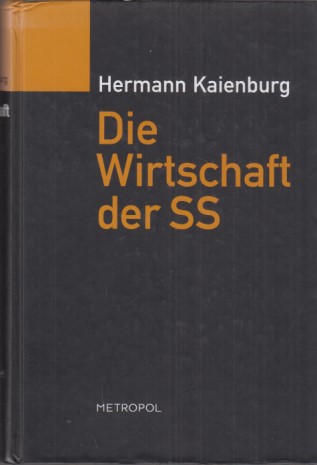
2003réf. 1209085Berlin : Metropol Verlag, 2003. 1200 S. : Illustrationen; Tabellen; 24 cm; fadengeh. Orig.-Pappband.
2003Gutes Exemplar; der Einband geringfügig berieben; Exemplar mit minimalen Lagerspuren. - Die Schutzstaffel (kurz SS) war eine nationalsozialistische Organisation in der Weimarer Republik und der Zeit des Nationalsozialismus, die der NSDAP und Adolf Hitler als Herrschafts- und Unterdrückungsinstrument diente. In ihren Verantwortungsbereich fielen ab 1934 Betrieb und Verwaltung von Konzentrations-, ab 1941 auch von Vernichtungslagern, sie war sowohl an der Planung wie an der Durchführung des Holocausts und anderer Völkermorde vorrangig beteiligt. ... (wiki) // Hermann Kaienburg (* 12. März 1950 in Kapellen (Moers)) ist ein deutscher Historiker und wissenschaftlicher Mitarbeiter der KZ-Gedenkstätte Neuengamme. … Er absolvierte ein Studium der Geschichts- und Politikwissenschaft und promovierte 1989 zum Dr. phil. … Kaienburg war bis 2005 an der Gestaltung der Ausstellung in der KZ-Gedenkstätte Neuengamme beteiligt. Er publizierte zur Geschichte der nationalsozialistischen Konzentrationslager. Seit 2003 habilitiert lehrt er als Privatdozent an der Universität Hamburg Sozial- und Wirtschaftsgeschichte. … (wiki) // Neben eingehenden Recherchen über die wichtigsten Einzelbetriebe der SS bei Konzentrationslagern bietet der Band einen Überblick über alle existierenden SS-Unternehmen sowie vertiefende Detailstudien zu ausgewählten Betätigungsbereichen innerhalb der Wirtschaft des NS-Staates. ... Die Wirtschaftsunternehmen der SS. in denen Zehntausende KZ-Gefangene Zwangsarbeit leisten mussten. sind bis heute nur unzureichend erforscht. Hermann Kaienburg, bekannt durch einschlägige Veröffentlichungen über die Geschichte der Konzentrationslager, legt hier nach sechsjährigen Forschungen und eingehenden Recherchen in vielen Archiven zwischen Washington und Moskau ein umfassendes Werk vor. Die Studie befasst sich ausführlich mit der Geschichte der SS, ihrem Selbstverständnis und ihrer Rolle im nationalsozialistischen Herrschaftssystem. Sie analysiert die ersten dilettantischen wirtschaftlichen Versuche der SS. ihre ab 1938 stark ansteigenden Aktivitäten und die allmähliche Professionalisierung. (Verlagstext) // INHALT (Auszug) : Zur Vorgeschichte ----- I. Die Gründungszeit ----- A. Die Entstehung der SS ----- B. 'Der biografische Werdegang Himmlers und seine ----- Bedeutung für die SS ----- Himmlers Kindheit und Jugend ----- Zur Bedeutung der Person Himmlers für die Entwicklung der SS ----- C. Das Rekrutierungsfeld der SS ----- Die völkisch-nationalistischen Strömungen ----- Ein Beispiel: Die Artamanen ----- II. Die Entwicklung der SS zur Massenorganisation 1929-1934 ----- A. Im Kampf um die Macht 1929-1933 ----- B. Die Rolle der SS bei der Machteroberung und Machtsicherung 193 3/1934 ----- Die Periode 1933-1939 ----- I. Zur Organisationsgeschichte der SS 1934-1939 ----- A. Die organisatorische und politische Verzweigung der SS bis Kriegsbeginn ----- B. Mitgliederentwicklung und Führungsapparat der SS bis 1939 ----- C. Der Aufbau militärischer Verbände ----- Die Verfügungstruppe ----- Die Totenkopfverbände ----- Der Ausbau der bewaffneten Verbände zur Waffen-SS ----- D. Polizei und SD ----- E. Das KZ-System ----- F. Das Rasse- und Siedlungs-Hauptamt ----- G. Die SS-Verwaltung ----- Zur Person Oswald Pohls ----- Der militärische Charakter der SS-Verwaltung ----- Zur Funktion des Verwaltungsapparats in der SS H. Zur Organisation der SS-Wirtschaft 1933-39 ----- II. Wirtschaftsbetriebe und Häftlingsarbeit zum Nutzen der SS bei Konzentrationslagern 1933-1939 ----- A. Der SS-Standort Dachau und seine Wirtschaftsbetriebe ----- Ausbau zum Stützpunkt ----- Die Handwerksbetriebe ----- Die Errichtung eines Gartenbaubetriebs zur Heilkräuter- und Pfeffererzeugung 1937/38 ----- B. Der SS-Standort Oranienburg-Sachsenhausen 1936-1939 ----- C. Handwerksbetriebe bei anderen Konzentrationslagern in den dreißiger Jahren ----- III. Wirtschaftsunternehmen und wirtschaftliche Einrichtungen unter Leitung der SS-Reichsführung und der SS-Verwaltung ----- 1933-1938/1939 ----- A. Einrichtungen für kulturelle und wissenschaftliche Zwecke ----- Die Wewelsburg und die Gründung der Gesellschaft zur Förderung und Pflege deutscher Kulturdenkmäler e.V. ----- Die Suche nach einer Burg ----- Übernahme und Umbau der Burg ----- Die Gründung der Gesellschaft zur Förderung und Pflege deutscher Kulturdenkmäler ----- Der Ausbau der Burg ----- Weitere vom Denkmalsverein geförderte Projekte ----- Die Externsteine-Stiftung ----- Die König Heinrich I. Gedächtnis-Stiftung ----- Die Porzellanmanufaktur Allach ----- Das Ahnenerbe e.V. ----- Die Ahnenerbe-Stiftung ----- Die Verlage der SS ----- Der Nordland-Verlag ----- Der Ahnenerbe-Stiftung-Verlag ----- Die F. F. Bauer GmbH ----- B. Wirtschaftseinrichtungen zur Unterstützung technischer, sozialer und finanzieller Belange der SS ----- Förderung und Auswertung von Erfindungen: Die Anton Loibl GmbH ----- Die Gemeinnützige Wohnungs- und Heimstätten GmbH Dachau ----- Die Deutsche Briefkastenreklame und der "Luftraum über den öffentlichen Straßen" ----- Die Spargemeinschaft SS ----- Die Abteilung "Wirtschaftliche Hilfe" im Persönlichen Stab Reichsführer-SS ----- C. Zwischenbilanz zu den Gründungsjahren der SS-Wirtschaft ----- V. Aufstieg und Fall der Unternehmen des RuSHA-Siedlungsamtes ----- A. Die Siedlungspolitik der SS 193 3-1939 ----- Siedlungspolitische Aktivitäten im Schatten des Reichsnährstandes 193 3-1937 ----- Die Reagrarisierungspolitik des Reichsnährstandes ----- Neubauernsiedlung und Großgrundbesitz ----- Die ersten Siedlungsaktivitäten des RuSHA ----- Die Auswahl von Neubauern und ihre Ansiedlung ----- Die Anfänge einer eigenen SS-Siedlungspolitik ----- Die Neuorientierung unter von Gottberg zu Beginn der territorialen Expansionspolitik ----- Die RuSHA-Siedlungspolitik zu Beginn der Ära von Gottberg 1937/38 ----- "Wehrbauern" - Himmlers Auseinandersetzung mit Darre ----- B. Die Unternehmen des Siedlungsamtes des RuSHA ----- Die beiden Wohnungsbaugesellschaften des Siedlungsamtes ----- Die ALLOD ----- Die Erste Gemeinnützige Baugesellschaft für Kleinwohnungen GmbH, Wien ----- Zwischenbetrachtung zu den Wohnungsbaugesellschaften des Siedlungsamtes 1938-1940 ----- Die Übernahme der Deutschen Ansiedlungsgesellschaft als Trägergesellschaft für die bäuerliche Siedlung ----- Polizei und SD ----- Partisanenbekämpfung ----- Die Konzentrationslager und andere Haftstätten ----- Reichskommissar für die Festigung Deutschen Volkstums B. Organisation von Verwaltung und Wirtschaft ----- im Verantwortungsbereich Pohls ----- Die organisatorische Entwicklung bis zur Gründung des WVHA ----- Relative Selbstständigkeit der IKL ----- Die Leitung der SS-Wirtschaftsunternehmen 1939-1945 ----- Organisatorischer Aufbau ----- Zum Verhältnis von Amtsstrukturen und Unternehmensleitungen ----- Die Gewinnverwendung und die Gründung einer Dachgesellschaft ----- Führungsprobleme und Gründung des Stabes W ----- Finanzangelegenheiten ----- III. Die Zwangsarbeit von KZ-Gefangenen und Juden ----- A. KZ-Häftlingsarbeit im Spannungsfeld von Repression und Wirtschaftsinteresse ----- Die Arbeits- und Dienstordnung vom November 1938 ----- Zentralisierung des Arbeitseinsatzes 1938-1942 ----- Die Wende zum breiteren Einsatz von KZ-Gefangenen in der Kriegswirtschaft ----- Die Planung und Entscheidung über den Einsatz von KZ-Gefangenen ----- Die Modalitäten des Häftlingsverleihs an Wirtschaftsunternehmen und andere Einrichtungen ----- Die starke Ausweitung der Häftlingsarbeit 1944/45 ----- B. Zwangsarbeit von Juden in Arbeits- und Konzentrationslagern ----- Die Einführung des geschlossenen Arbeitseinsatzes in Deutschland ----- Die Zwangsarbeit der Juden im besetzten Polen ----- Die Zwangsarbeit der Juden in den besetzten Gebieten der Sowjetunion ----- Juden als KZ-Gefangene im Reichsgebiet 1944/45 - (u.v.v.a.m.) ISBN 9783936411041
2021réf. DKD-9788181715425Zoological Survey of india 2021. Hardcover . New. Zoological Survey of india hardcover
2021réf. DKD-9788181715425Zoological Survey of india 2021. Hardcover . New. Zoological Survey of india hardcover
1968réf. 1989Drukkerij En Uitgeverij Laverman N.V. 25 x 17,5 Drachten 1968 Jaquette et reliure pleine toile rouge éditeur, titre doré, armes au centre du plat supérieur, 704 p., nbr. illustr. n&b, index. Histoire de la Frise. Coins légèrement écrasés, intérieur parfait. Exemplaire en très bon état.(C65) Livre
1968réf. 1989Drukkerij En Uitgeverij Laverman N.V. 25 x 17,5 Drachten 1968 Jaquette et reliure pleine toile rouge éditeur, titre doré, armes au centre du plat supérieur, 704 p., nbr. illustr. n&b, index. Histoire de la Frise. Coins légèrement écrasés, intérieur parfait. Exemplaire en très bon état.(C65) Livre
réf. CBS 9780470167687US Edition. New. Brand New! Fast Delivery US Edition and ship within 24-48 hours. Deliver by FedEx and Dhl & Aramex UPS & USPS and we do accept APO and PO BOX Addresses. Order can be delivered worldwide within 6-10 days and we do have flat rate for up to 2LB. Extra shipping charges will be requested if the Book weight is more than 5 LB. This Item May be shipped from India United states & United Kingdom. Depending on your location and availability. unknown
réf. 0845134019.Ghardcover. Good. Access codes and supplements are not guaranteed with used items. May be an ex-library book. hardcover
1998réf. 256814Emmelshausen, Condo Verlag, 1998.
1946Small 8vo; First Edition. Paper Wrappers, small 8vo, 104 pages. Includes 11 photos with captions in English & Yiddish. One of 8000 issued. In Yiddish with English Cover, table of contents, & photo captions. Important journal lasting 10 issues which written & published by Jewish DPs themselves to document crimes and survival in the Holocaust. The publisher's decision to include the English table of contents, probably in part to insure the journal's use in future war crimes trials, makes these first hand accounts especially user-friendly today, almost 60 years later. Robinson & Friedman #1247: "The Historical Commission [was] established in 1945 under the auspices of the Central Committee of Liberated Jews in the U. S. Zone. [It] Ceased operations early in 1949. Details of the activities of the Munich center can be found in No. 1247 [Fun Letsten Churbn]..." Hagit Lavsky notes in the Encyclopedia of the Holocaust (Gutman, ed., 1990, p. 383) that, "Commemoration and documentation projects [by Jewish DPs] included the work of the Tsentraler Historisher Komisiye (Central Historical Commission), established in December 1945 by the Central Committee in Munich, to assist in bringing Nazi criminals to trial. A network of regional committees was set up under the commission's auspices whose task it was to take evidence and collect documentary material, including material on DPs. In August 1946, the commission published the first issue of the monthly FUN LETZTEN HURBAN." Articles include: Guns in the Ghetto of Riga, by I[srael]. Kaplan; Life and Death of Dubno Ghetto, by M. Weisberg; Crying Graves, by A. Weisbrod; Labour camp at Mielec (reports of witnesses), by I. Kohs; Nazi word of honour, by Dr. M. Schatner; At the Ghetto of Czestochow (pages), by W. Gliksman; Jewish Folklore during the Nazi Time, by by I[srael]. Kaplan; Let us keep silent (Being sung in camp); Dwellings of Ghetto (Being sung in camp);Two Nazi Documents (with explanations); List of articles concerning Jewish Life during the Nazi Regime in the Press of Shaarith Ha-Plata; Activity Report; Chronicle. Published under DP-Publications License US-E-3 OMGB, Information Control Division. Very Good+ Condition. (holo2-122-51)
1947Small 8vo; First Edition. Paper Wrappers, small 8vo, 112 pages. Includes 10 photos with captions in English & Yiddish, & 2 maps. One of 8000 issued. In Yiddish with English Cover, table of contents, & photo captions. Important journal lasting 10 issues which written & published by Jewish DPs themselves to document crimes and survival in the Holocaust. The publisher's decision to include the English table of contents, probably in part to insure the journal's use in future war crimes trials, makes these first hand accounts especially user-friendly today, almost 60 years later. Robinson & Friedman #1247: "The Historical Commission [was] established in 1945 under the auspices of the Central Committee of Liberated Jews in the U. S. Zone. [It] Ceased operations early in 1949. Details of the activities of the Munich center can be found in No. 1247 [Fun Letsten Churbn]..." Hagit Lavsky notes in the Encyclopedia of the Holocaust (Gutman, ed., 1990, p. 383) that, "Commemoration and documentation projects [by Jewish DPs] included the work of the Tsentraler Historisher Komisiye (Central Historical Commission), established in December 1945 by the Central Committee in Munich, to assist in bringing Nazi criminals to trial. A network of regional committees was set up under the commission's auspices whose task it was to take evidence and collect documentary material, including material on DPs. In August 1946, the commission published the first issue of the monthly FUN LETZTEN HURBAN." Published under DP-Publications License US-E-3 OMGB, Information Control Division. Articles include: The Extermination of Jews in East-Galicia, By Dr. Philip Friedmann; Polish Jewish Soldiers as War Prisoners (Memoirs), by Mendel Lifschitz; Tchernowitz (Cernauti), by Dr. Jakob Ungar; In the forests of White Russia (Eye-Witness Report): a) Around Woloshin, by Mosche Mejerson, b) In the Braslav area, by Mosche Trejster, [&] c) At Radun, by Lieb Lewin; My Experiences During the War (From the Series of Children's Reports), by Daniel Burstin; Lullaby (Ghetto-song); "Buna" (Camp-song); Nazi Documents with Comments; Photographs of the Nazi Period; Bibliographical List of Articles on Jewish Life under the Nazis Published in the Press of the Shaarith Ha-Plata; Report on Activites of the Central Historical Commission; News of the Central Historical Commission. Very Good Condition. (holo2-122-50)
1947Small 8vo; First Edition. Paper Wrappers, small 8vo, 106 pages. Includes 11 photos with captions in English & Yiddish. One of 8000 issued. In Yiddish with English Cover, table of contents, & photo captions. Important journal lasting 10 issues which written & published by Jewish DPs themselves to document crimes and survival in the Holocaust. The publisher's decision to include the English table of contents, probably in part to insure the journal's use in future war crimes trials, makes these first hand accounts especially user-friendly today, almost 60 years later. Robinson & Friedman #1247: "The Historical Commission [was] established in 1945 under the auspices of the Central Committee of Liberated Jews in the U. S. Zone. [It] Ceased operations early in 1949. Details of the activities of the Munich center can be found in No. 1247 [Fun Letsten Churbn]..." Hagit Lavsky notes in the Encyclopedia of the Holocaust (Gutman, ed., 1990, p. 383) that, "Commemoration and documentation projects [by Jewish DPs] included the work of the Tsentraler Historisher Komisiye (Central Historical Commission), established in December 1945 by the Central Committee in Munich, to assist in bringing Nazi criminals to trial. A network of regional committees was set up under the commission's auspices whose task it was to take evidence and collect documentary material, including material on DPs. In August 1946, the commission published the first issue of the monthly FUN LETZTEN HURBAN." Published under DP-Publications License US-E-3 OMGB, Information Control Division. Articles include: The con-camp [i.e. concentration camp] prisoners march to Tirol, by I.K. [Israel Kaplan?]; March from Kaufering-camps, by I[sreal]. Kaplan; From Schwabhausen to Dachau, by Dr. L. Goldstein; On the march from Mühlsdorf, by Rabbi Elchanan Person; On the march from Hessenthal, by Dr. Mordchai Glatsetin; From Görlitz to Tirol, by Jakob Rosenbaum; On the March from Wistegiersdorf, by A. Tenenbaum; On the march from Buchenwald, by Israel Segal; Nazi "liberation," b7 Dr. A. Waksberger; My Experiences during the War (from the Series of Children's Reports), by Jakob Lewin; Mama bless me!.. (Camp-song); Oh, potates [sic].. (Ghetto-song), by Hersz Albus; Nazi Documents with translations; Photographs of the Nazi Era; Bibliographical list of articles on Jewish life under the Nazis. [sic] published in the Press of Shaarith Ha-Plata; List of Camps; Report on Activities of the Central Historical Commission; News of the Central Historical Commission. Very Good Condition. A beautiful copy. (HOLO2-122-51C)