Gilman, Sander LAntiquariat.de
889 risultati
1993rif. 20585CBFrankfurt am Main, Jüdischer Verlag, 1993. 8°, 359 S., original Kartonage (Paperback), deutsche Erstausgabe obere und untere Ecke des Vorderdeckels minimal bestoßen, sonst schönes, sauberes Exemplar
1991rif. 3555Berlin, Neue Gesellschaft für Bildende Kunst [NGBK] 1991. Kartoniert, gr.8°, unpaginiert, ca 50 S., mit zahlreichen s/w-Abbildungen; -sehr gutes Exemplar.
1983rif. 3556Hamburg, Museum für Kunst und Gewerbe 1983. Broschiert, 8°-quadrat, unpaginiert, ca 20 S., mit 12 ganzseitigen s/w-Abbildungen; -sehr gutes Exemplar.
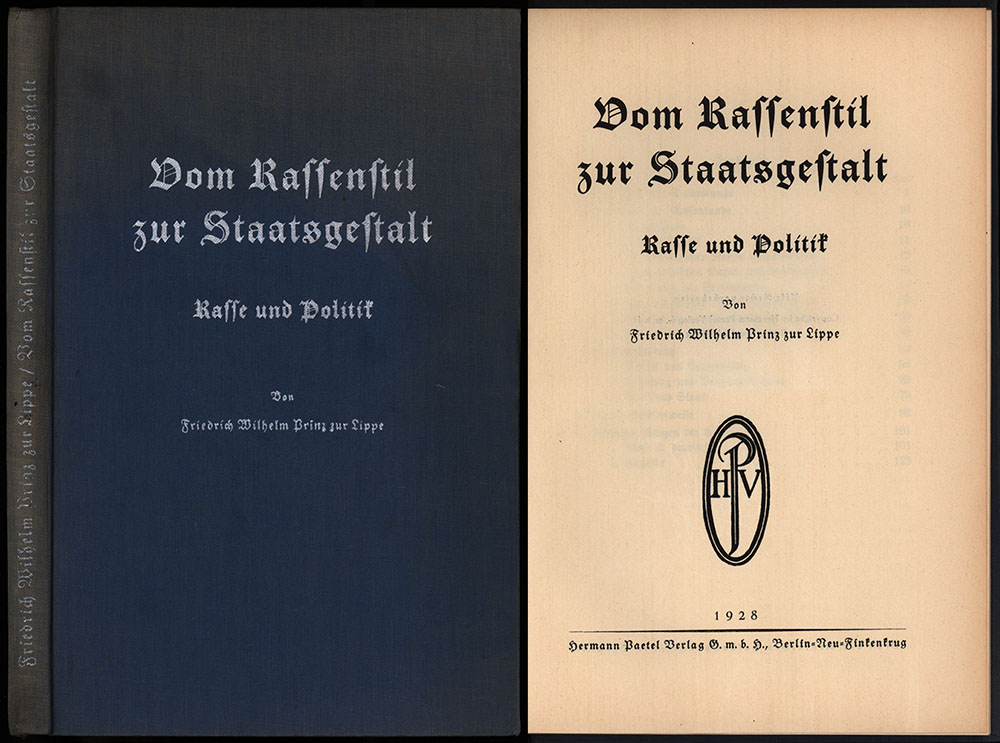
1928rif. 63298CBBerlin-Neu-Finkenkrug, Paetel Verlag, 1928. 134 Seiten. 41 Tafeln. Original-Leinenband mit silberngeprägtem Rücken- und Deckeltitel. [4 Warenabbildungen]
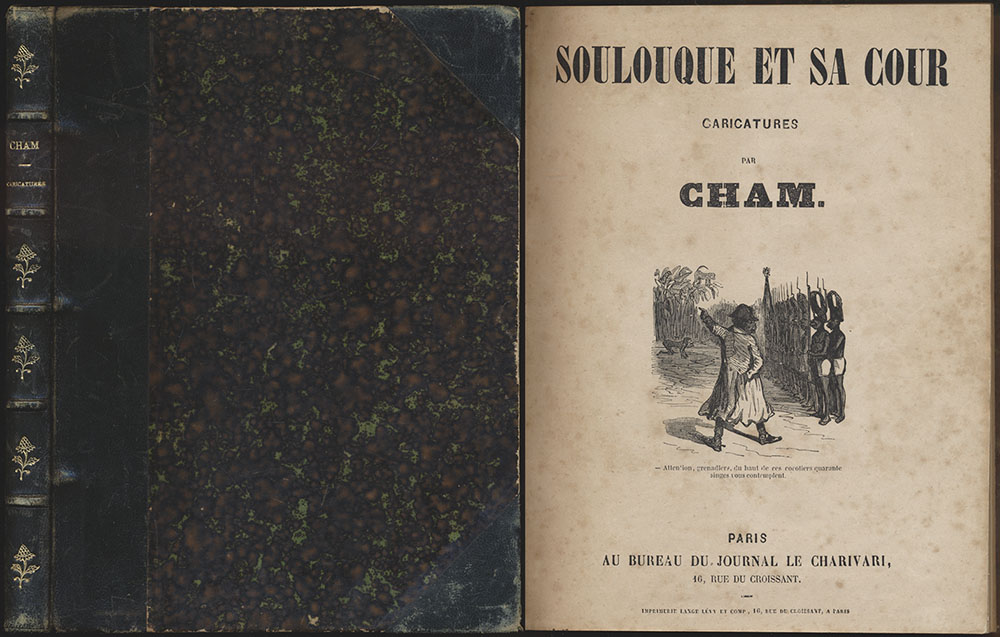
1850rif. 8221EBParis, au Bureau du Journal de Charivari/Michel Lévy Freres, um [1850]-1868. Groß-8°. 23,5 x 18,5 cm. 16, 16, 16, 16, [16] und [16] Blatt. Halblederband mit goldgeprägtem Rückentitel und marmoriertem Bezugspapier. [6 Warenabbildungen]
2013rif. 9234Editeur : Editions du Jasmin, o.J. (2013). 254 S. 8° (22cm), Softcover/Paperback
1934rif. 3606634Zürich, Rascher, 1934. 154 S. Original Leinwand (mit Umschlag)
2024rif. SBBI-L-BG400546-RAG-20250Larkin Publications 2024. pamphlet. Very Good. Most of our very good books have only minor imperfections such as shelf wear consistent with a new book that's sat on a bookshop shelf for a year or two. Occasionally we may miss other minor imperfections as we have to grade books at speed. Our books are dispatched from a Yorkshire former cotton mill. We list via barcode/ISBN so please note that the images are stock images and may not be the exact copy you receive furthermore the details about edition and year might not be accurate as many publishers reuse the same ISBN for multiple editions and as we simply scan a barcode or enter an ISBN we do not check the validity of the edition data when listing. If you're looking for an exact edition please don't order at least not without checking with us first although we don't always have time to check. We aim to dispatch prompty the service used will depend on order value and book size. We can ship to most countries see our shipping policies. Payment is via Abe only. Larkin Publications unknown
rif. ANAIS-1538151413Rowman & Littlefield Publishers. paperback. Good. 9.5X6.5X1.5. Buy with confidence. Excellent Customer Service & Return policy. Rowman & Littlefield Publishers paperback
1966rif. 31813London: Leslie Frewin 1966. First Edition. First Impression. Octavo 21.5cm; black paper-covered boards with titles stamped in gilt on spine; dustjacket; 240pp; illus. Lower corners gently tapped though still sharp else Near Fine in a Near Fine dustjacket unclipped with light wear to extremities tiny tears along lower edge some some mild bubbling beneath the laminate. Account of the October 1964 election in Smethwick UK by Griffiths who won the seat as Smethwick MP in the 1964 general election against Labour Party candidate Patrick Gordon Walker. Smethwick's deep divisions racial and anti-immigrant issues drew comparisons to Little Rock and Selma at the time. Leslie Frewin unknown
1938rif. 63447Boston & New York: Houghton Mifflin Co. 1938. Sml. 4to. 16 pp. Colour-illusts throughout. Tan publisher’s cloth black illustration & lettering front cover minor edgewear ex-lib markings on endpapers w/ d.j. cover art by Inez Hogan minor chipping head & foot of spine minor tears to corners some scuffing still VG/G copy. Early printing of this curious and subtly racist children’s story written in an affected southern Black dialect about a young African-American boy who always did the wrong thing. Although once considered standard reading in many secondary schools this book is now quietly considered fairly offensive and reinforcing of Black stereotypes. See: David Pilgrim Understanding the Book Epaminondas and His Auntie Jim Crow Museum Jan. 2009. Houghton Mifflin Co., hardcover
1915rif. 63112New York: Grosset & Dunlap ca. 1915. 8vo. 8 374 pp. Photo frontisp. 7 photo illust. Red cloth white lettering minor shelfwear faint tidemark wicked into fore-edges of plates at the very fore-edge w/ d.j. cover art with KKK rider on horseback next to heroine minor chipping head & foot of spine minor closed tears edgewear still G/VG- copy. First Photoplay edition of the notorious movie starring Lilian Gish Henry B. Walthall Mae Marsh Miriam Cooper Ralph Lewis George Siemann and others which steeped in the Confederacy’s Lost Cause mythos which had heavily influenced the misguided Dunning School’s interpretation of Reconstruction and significantly influenced Dixon and Woodrow Wilson. Directed by D.W. Griffith the movie was very successful but the racist overtones and blatant support of the Ku Klux Klan triggered widespread protests and it was banned in several cities. Very much like 21st-Century media Birth of a Nation’s portrayal of African-Americans created a justification for prejudice and discrimination which undermined Civil Rights for decades and reactivated the largely quiescent Ku Klux Klan movement and was the first film ever screened at the White House for President Wilson. See: Petaja Photoplay Edition p. 53; The Influence of “The Birth of a Nation” Facing History & Ourselves March 14 2016. Grosset & Dunlap, hardcover
1719rif. 62577Erie PA: Erie Litho & Printing Co. March 17 1923. Large double atlas folio dual-sided broadside printed on newsprint sized 9.25 x 42 in. photo & woodcut engraving illustrations recto & verso toning to paper some chipping & edgewear paper repairs to closed tears still a G- copy. First edition thus of this advertising broadside for Erickson’s “J.W. Johnson’s Old Reliable Virginia Minstrels World’s best colored show. . . “ which touts their supposed 15 year history and appear to have either been reformed from the “Alabama Minstrels” show which played throughout the West and Midwest from 1905-1914 or simply taken over some of their acts. The contortionist fire king Hi Henry Hunt who appears in this broadside regularly performed with the “Alabama Minstrels” from 1905-1913. The silver voiced tenor A.J. McFarland and Grace Arniot Royal Entertainer depicted on the broadside also appear to have been African-American rather than black face performers. The name appears to have been drawn from the 19th-Century original “Virginia Minstrels” or the “Melodious Ethiopian Band” which featured Billy Whitlokc Dick Pelham Frank Brower and Dan Emmett performing in New York’s Bowery Amphitheater in 1843 and launched the minstrelsy form of entertainment. Emmett is perhaps best remembered as the author of “Dixie” which ironically would become the Confederate States unofficial anthem. Assorted versions dating 1920-1924 with different content & sizing appear in 6 libraries Harvard DLC 3 versions Middle Tenn. State Lib. of VA; See: Dr. Karl Koenig The History & Music of the Minstrels Rue Basin Source for Historical Jazz 2024. Erie Litho & Printing Co., unknown
1865rif. BK0020Mississippi Louisiana Virginia Massachusetts and Maine 1865. Nine letters totaling 33 pages. One repaired with archival tape the remainder in excellent condition; overall very good to excellent. See inventory for detailed condition information. A collection of nine Civil War letters mainly written by Almon Libbey Varney to his cousin Cyrus Bede Varney then at Bowdoin College; with one from his sister Elma Ladora Varney and one from "Dan" likely also a relative. After attending Bowdoin College Almon Varney 1839-1922 was appointed Lieutenant with the 13th Maine Regiment and served in the lower seaboard theater of the Civil War. He was promoted to captain in 1862 and was a career military officer retiring as a colonel in 1904. Varney first writes from Ship Island Mississippi where he is on guard duty at the prison; prisoners include those who broke parole "political offenders" a few judges whom he deems "swarthy Lotharios" and even several women who are "regular Amazons". The latter includes Eugenia Levy Phillips wife of former Alabama Representative Philip Phillips. The island was occupied by General Butler's expedition in 1861. It was a strategic point for operations in the theater and became a Confederate prisoner of war camp and a base for the Louisiana Native Guards an African American unit with which Varney takes particular issue-in an 1863 letter from Fort Jackson he complains at length about the idea "that a negro could be made my superior or even equal by virtue of legislation and commission alone" and that African Americans could command "the intelligent sons of New England." From Fort Jackson Varney complains of the tediousness of his war experience having "seen nothing of the privations of long tedious marches and hard fighting" which he would have chosen over "this inglorious idleness". At other points he compares his experiences with those of his brother Edward 1842-1863 who fought at Antietam. Edward was imprisoned at Belle Isle and then Libby Prison and Elma's letter copies a letter from an anonymous fellow prisoner reporting on Edward's illness and death at Libby. Overall the letters document in great detail both life in the Union Army outside of combat and the attitudes of many elite Northern army men towards the Confederacy and towards their African American fellow soldiers. 1. August 1862 Letter from Ship Island Describing Confederate Prisoners and the Civilians Fleeing from Impressment in the Confederate Army. Four page letter measuring 8 ½ x 10 ½ inches with envelope postmarked New Orleans and addressed to "Cyrus B. Varney Windham Maine". Dated August 21 1862. Excellent. Varney writes from guard duty at the prison on Ship Island off the coast of Mississippi describing the prisoners held there: "about twenty prisoners; and among them three women - regular Amazons". The men include "6 men taken at fort Jackson who violated their Parole d'honneur - 4 judges regular 'swarthy Lotharios' and some other political offenders" and the women include "a Mrs La Rue sent here for wearing a secesh flag in the streets of New Orleans" and Eugenia Phillips: "Mrs Phillips wife of senator sic Phillips who made such a stir and was imprisoned in Washington last Summer is one of our female prisoners. Her husband is here visiting her. I've been out to sail with him to day. He is a very sensible man and favorably disposed toward the union; but his wife is a regular tyro. She thinks pretty well of me though I guess - she has given me a book to remember 'my prisoner' by. I use her as well as I can without 'overstepping' my orders of course." Eugenia Phillips had first been detained under house arrest-for Confederate sympathizing and suspected spying-in Washington D.C. and fled with her family to New Orleans after her release. When she was accused of mocking a deceased Union soldier General Butler had her imprisoned on Ship Island from which her Unionist husband Philip Phillips was able to secure her release after several months. Varney describes the reinforcements being sent in from the North for the war effort around New Orleans and the effects of Union control of the region: "The rascals are very busy down here and we have to look out for them on all sides. They are forcing everybody into the service native and foreign. There is a great deal of distress in Miss. and Alabama on account of scarcity of food. It is sublimely absurd for them to say our blockade is ineffective. Great numbers of refugees are daily arriving from the Main land to excape sic starvation and impressment into the service. Six men came today from Mobile. They the people who are left in the city are cursing the 'Yankees' that they don't take the place and relieve them from the oppression of their rulers and give them something to eat." He predicts that if the "rebels . are not eminently successful" in the fall that "they are done forever" especially given the Union's numbers "But the way how the new regiments come on I guess 'Old Abe' is going to 'give it to em curious'. Six hundred thousand more men! What an army!" and cautions Edward Varney against joining. 2. November 1862 Letter from "Brooks Station" Virginia Discussing Insufficient Provisions for Union Men and a Death from Exposure. Three page letter measuring 7 ¾ x 9 ½ inches from Almon Varney headed "Dear Brother" i.e. Edward Varney. Dated November 29 1862. Excellent to Near Fine. Varney writes to his brother following a journey to get winter clothing to his regiment a mission which "two had tried before & failed". He describes the death of a soldier from lack of sufficient clothing: "One of our Regt. is just being buried and his Company are firing volleys three in number over his grave. He was a great stout rugged man when he entered the service and had his health discharged by exposure resulting from the want of necessary clothing. He was anxious to do his duty & marched many a day with bare feet or in his stocking feet. I tried hard to get him a pair of shoes but could not find a pair in the brigade large enough." He comments on the state of railroads in the area and the dwindling size of Union forces: "Everything here connected with the railroad was burned last summer or otherwise destroyed. The country about here is filled with men. But the regiments are most all small. Do not say to yourself there is five thousand men in a brigade where you read five Regts. We could carry into action not over four hundred & fifty men. What has become of the rest I cannot tell. 3. December 1862 Letter from Ship Island Comparing His Experience There with Edward Varney's Experiences at Antietam and Expressing a Rising Pessimism about the War. Four page letter measuring 5 x 8 inches from Almon Varney to "cousin" likely to Cyrus Varney. Dated December 2 1862. Excellent to Near Fine. Back on Ship Island Varney complains of the boredom of garrison life comparing his war experiences with those had by his brother Edward at Antietam: "I shouldn't be surprised if we were kept here till the end of the war if it ends during our natural lives. We've been here already nearly a year and part of us have never heard a rebel shot. None of us have ever felt them. I am very uneasy and impatient. I want to have a finger in the pie. . Ed. is seeing some of the realities of war. He gave me a description of the field at Antietam. It was horrible. . For us - we have a little amusement occasionally watching the maneuvers of the fleet in harbor. Two or three nights since our ears were startled by the report of a 130 pound cannon and the whizzing of a shot directly over our barracks. I rushed out and saw the gun boat Pinola under full steam making for a strange looking steamer also under a pressure of steam - with lights out - sailing along directly under the Miss shore. The Pinola kept on in silence till she found the unknown was gaining on her and then she blazed away. If your imagination is big enough to comprehend it you can tell what kind of noise 15 or 20 130 pound cannons would make. It sounded something like war I can tell you. I have heard nothing like it since the bombardment of fort Jackson." Compared to earlier letters Varney seems to feel pessimistic about the war; though he vows that he will "never consent to making peace with these infernal rebels till they are thrashed or we are ruined" he states that "We don't begin to show the energy and determination that they do. They fight with little or no food not sufficient clothing and yet our well fed troops can't cope with them." The Confederate Army had just raised its maximum age limit to 45 years old and was ruthless in its conscription; Varney compares this with what he sees as the subpar efforts of the Union Army: "There is 'a leak' somewhere. A man escaped from Biloxi the other day who gave me an order from a Capt. and enrolling officer ordering him to report to Camp Mays on Wolf river in Miss within 8 days or be considered a deserter. He was also ordered to take with him his blanket and three days rations. That is a little different from the way our troops are raised - with 2 or 3 hundred dollars bounty. We can't whip them without we put forth more energy." 4. March 1863 Letter from Fort Jackson Louisiana Explaining at Length a Conflict Involving Varney Refusing to Fight Alongside African American Troops. Six page letter measuring 8 x 9 ½ inches from Almon Varney to "cousin". Dated March 24 1862. Some pages repaired with archival tape; very good. An indignant Varney describes his side of "certain 'commotions' 'uprisings' 'insubordinations' 'disgraceful conduct' &c &c" on his part that had been reported home in various news sources. The conflict involved Varney's refusal to fight alongside the Louisiana Native Guard an African American regiment. Varney writes: "As you know I suppose my Co. and Co. F. of this Regt. Capt C.R. March have garrisoned at Ship Island for the past year under command of our col. Henry Rust. When Banks came we tried to get a position in the ban - and finally it was promised. But the promise was never fulfilled The order was once issued for us to concentrate at Baton Rouge but it was immediately countermanded and Col. Rust was ordered to take command of these two forks on the Miss. and 7 Cos. of a Negro Regt under Col. Nathan W. Daniels were sent to reinforce us at Ship island. And in passing allow me to correct one statement of the press. Col. Daniels is neither a 'French officer' nor a 'gentleman' as was alleged. Nor is he wealthy. . He is a low-born vile besotted gambler. . When Col. Rust found he must leave No lions in Daniel's den us he went to Col. D. and told him it be folly to attempt 'to compel New England soldiers to obey Negroes for officers' and still more foolish to 'attempt to compel an accomplished and educated officer of our army' to do so. Col. D promised in bona fides that the duties at the Pot should be as separate as they always had been and that the white soldiers should not be mingled with the Black. But he was false as H-ll. He never intended to fulfill his agreement. Col. Rust had not left the harbor before I received a written order for the consolidation of my Co. with that Negro robber. I protested in writing . I knew it would spoil my Co. I have a fine Co. and I am proud of it; and you may be sure the thought was humiliating and revolting in the extreme that these men should be demoralized and spoiled by such associations. I did not care what they did with the n-rs I am willing they should make soldiers or anything else of them - But I was unwilling to admit that a negro could be made my superior or even equal by virtue of legislation and commission alone. Negro officers are well enough in their places perhaps - but let them command Negroes not the intelligent sons of New England. It has been said that these Colored officers are refined and educated. They are as much so and more than one could possibly expect of a race so down trodden and oppressed as the African - especially here in Louisiana". Varney "positively refused to obey any such orders" and after two days of "wrangling" and "calling him a coward" he "prevailed upon Capt. March to endorse" his written refusal. Varney and his fellow officers "were all arrested . Charges were prepared against us and sent to Gen. Banks for approval." Banks "didn't approve them" but instead the men were sent to Fort Jackson "where we are at present and may be for a considerable time to come." In an aside within his tirade Varney comments on the state of African Americans in Louisiana where "slavery can be seen in its worst and most malignant form": "The bloodhounds we read of in Uncle Tom's Cabin are by no means beasts of fable; and slaves scarred by their teeth are by no means a rarity." 5. June 1863 Letter from Fort Jackson Expressing the Boredom of Garrison Life and Loathing for Louisiana. Four page letter measuring 8 x 12 ¼ inches from Almon Varney to "cousin". Dated June 12 1863. Excellent. Varney describes the monotony of life at Fort Jackson: "My lot though has been comparatively easy - I have seen nothing of long tedious marches and hard fighting yet I would choose it rather than live in this inglorious idleness. I am forgetting all I ever knew - there is hardly excitement enough to keep my mind from dwindling into nothingness. . The routine of garrison life is dull enough. In the morning 'reveille' and roll-call - breakfast - then perhaps attend to drawing rations for my men or issue a little clothing or something of the sort - then dinner - policing quarters - maneuvering our guns - dress parade - supper - - go to bed and in the morning get up and go through with the same again." The most excitement he experiences is when the occasional "ship passes and our ears are stunned by the noise of the signal" at which point men "scramble" to the artillery; but "When everything is found to be all right the retreat is beaten . the men retire to their quarters to wait for a new excitement". After describing the insects-especially mosquitoes-and alligators Varney comments: "This part of the Southern Confed. is a pestiferous place indeed - if it's all like this I would respectfully recommend Uncle Abe to give it up to the indigenous race. If they are not like the Pontic Monarch of old who fed on poison they will die. I do not wonder these Southern chivalrous gentlemen are so full of venom They imbibe it with the air they breathe." 6. September 1863 Letter from "Dan" in Arlington Heights Virginia Reporting on the State of the War There. Three page letter measuring 5 x 8 inches from "Dan" to his "cousin" possibly also Cyrus Varney. Dated September 16 1863. Excellent to Near Fine. A letter from "Dan" possibly a relative of the Varney family in Arlington Heights Virginia. Dan provides his "cousin" with updates on his activities including digging trenches guard duty and "a temperance meeting at the Chaplain's tent tonight" which he is skipping in order to write. He remarks: "I think this war is all a speculation and most of the boys are sick of the 'show' we have a chance to see something of it although not much don't know but I have enjoyed myself here as well as I should at home". When he gets home Dan writes his first order of business will be to go to a Shaker meeting and then get to haying. 7. February 1864 Letter from the US Arsenal in Watertown Massachusetts Discussing Lincoln's "spiteful" Ten Percent Plan. Four page letter measuring 5 x 8 inches from Almon Varney to "cousin". Dated February 23 1864. Excellent to Near Fine. From the US Arsenal in Watertown Varney writes to his cousin about the conflict between Lincoln and Congress likely over Lincoln's Proclamation of Amnesty and Reconstruction also known as the Ten Percent Plan: "You know of course of the wrangle between Congress & the Pres. The President now seems inclined to issue a proclamation that the Country is in a state of peace despite the opinions of Congress. If he does that the nature of those acts in-creasing the Army in 1863 makes them null and void - and I and scores of other appointments are cut adrift. It is a piece of 'bull-headed-ness' on the part of the Pres. - just a spiteful blow levelled at Congress. I dont feel much concerned about it - I guess I can find something to do though it will seem rather awkward after having been in the army so long. But I shall be rid of one inconvenience which is really serious - I shall not be ordered about from one place to another at the pleasure of other people. . One disadvantage of this 'butt-headed-ness' of the president is that I intended to be married in May - If he shows me out it will slightly disarrange my plans". 8. May 1864 Letter from Elma Varney Reporting on the Death of Edward Varney at Libbey Prison. Three page letter measuring 5 x 8 inches from Elma Varney in Brunswick Maine to "cousin". Dated May 3 1864. Excellent to Near Fine. A letter from Almon and Edward's sister Elma in which she copies a letter sent to their mother by an unknown man who was imprisoned with Edward at the infamous Belle Isle military prison in Richmond Virginia. The man writes: "He was taken sick the first of Dec of Chronic Diarhea and failed very fast. When we carried from the Island poor fellow he was nothing but a mere shadow and so weak that we had to carry him in a blanket. . He had no medical attendance at all while on the Island. He slept in the same tent with me it was an old tent all full of holes and when it rained we were wet all the time. Our bed was the bare ground with one blanket over us. The box of provisions you sent to him never came. It was confiscated by the rebels. He wrote considerable more but I will not dwell any longer on the subject. Last Tuesday we read his name in the paper in the list of names of those who had died in a hospital attached to Libby prison. It is a rebel account and we hope to hear it contradicted." 9. December 1865 Postwar Letter Reporting His Marriage Plans. Two page letter measuring 5 x 8 inches from Almon Varney in Watertown Massachusetts to his cousin Cyrus Varney in Waverly New York. With stamped envelope postmarked Watertown MA. Excellent. In the final letter in the collection Varney reports to his cousin on his Thanksgiving activities back home and on his plans for marriage. . unknown
1970rif. 70938Birmingham AL: Carter Campaign Committee 1970. Eight panel campaign advertising brochure folded to narrow 8vo. Title panel with a color portrait of Carter six panels of text rear panel with a Carter family portrait. Apparently not recorded on OCLC. Original color illustrated wrappers. Very good. Under the pseudonym Forrest Carter he wrote The Rebel Outlaw: Josey Wales published 1973; Clint Eastwood movie 1976 and The Education of Little Tree published 1976. Carter's political career began in the 1950s with a segregationist radio show followed by speech writing for Gov. George Wallace and work for White Citizens' Councils and the Klan eventually running as a White Supremacist against Wallace in the 1970 Democratic primary for governor garnering 1.5 per cent of the vote. The first edition of Josey Wales is a modern rarity OCLC locates seven copies; we've sold but one. Carter Campaign Committee unknown
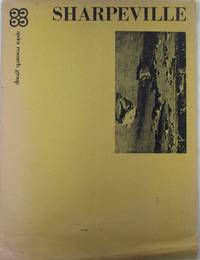
rif. 022699Cambridge MA: Africa Research Group Publisher. Wraps. Very Good. no dates presumed late 1960s early 1970s. 6 pamphlets 8 by 11 inches each printed on different colored stock. Pagination varies. Some if not all articles here are taken from other publications or sources. A collection of essays reflecting on various aspects of the struggle of African countries for self rule against colonialism as well as struggles against racism and other issues. All published by the Africa Research Group as the African Activist Archive website notes was " a radical research /action collective concerned with exposing and fighting American imperialist penetration of Africa. ARG hoped to promote a more informed concern with and protest against the role the U.S. played in the domination of Africa and to contribute to the sharpening and extending an anti-imperialist and anti-racist consciousness within the movement for social change." The group was active from 1968 to 1973. These publications are held in a manila envelope with a black and white photo and "Sharpeville" on it. Topics include Nelson Mandela's speech at his trial; Tovio's speech reflecting on the impact of South Africa on Namibia; a look at armed struggle in Africa etc. All publications in VERY GOOD or better condition. A few with minor rusting to the staples otherwise very little wear. Wrinkling toning soiling and tearing to the envelope making it rather worn in appearance. Africa Research Group, Publisher unknown
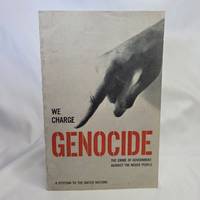
1952rif. 441New York: Civil Rights Congress 1952. 4th Edition Mar. 1952. 8vo. 5.5"x8.25" in black and white wraps with black and red titles. Frontispiece photograph depicting a lynching. Very Good. Light rubbing to wraps small stain to lower left hand of cover as shown. Petition to the United Nations arguing that the treatment of African Americans including lynching and systematic discrimination fit within the UN's definition of genocide. Civil Rights Congress unknown
1923rif. H6749Dayton OH: Paine Publishing Co 1923. Paperback. Very Good. Wraps 67 pp very good light wear. Story centers on the Merkle family and her two daughters one of whom is ambitious one of whom is not and the complications that ensue from this. Included in the cast are Rastus Johnsing 'An Honest Coon' and his wife Dinah Johnsing a servant. OCLC locates three copies in institutions. Paine Publishing Co paperback
1898rif. H13069New York: Fitzgerald Publishing Corporation 1898. Paperback. Good. Original yellow printed wraps good small triangular chip to edge of front cover light wear pages tanning 24 pp. Uncommon in the original edition. Fitzgerald Publishing Corporation paperback
rif. 8488119631.Gpaperback. Good. Access codes and supplements are not guaranteed with used items. May be an ex-library book. paperback
rif. 9286Printed by Villiers Publications Ltd. Ingestre Road London N.W.5. Broadsheet bifolium 4 pp. Text clear and complete. On lightly-aged paper worn along fold lines. Poetry collection containing twenty-eight poems by writers including 'Mazizi Kunene In Exile London 1960' and Hugh MacDiarmid whose two poems have the footnote 'We are especially pleased to print these two new poems by Hugh McDiarmid contributed despite the painful after effects of his recent car smash. We wish him a speedy and complete recovery.' Masthead endorsement by Sean O'Casey: 'I am with you in all efforts to create perfect race equality the world over. My sympathies go in particular to my dark-coloured comrades in South Africa.' Short editorial on the Sharpeville Massacre accompanied by photo of dead man by Ian Berry. Scare: the only copies on COPAC in King's College London and the British Library. Printed by Villiers Publications Ltd., Ingestre Road, London, N.W.5. unknown
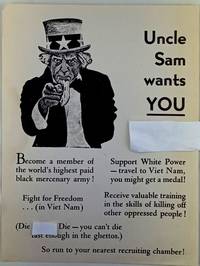
rif. 021310No Place: No publisher. Unbound. Good. No publisher place or date. Perhaps circa 1966-68. 8 ½ by 11 inches. Thin paper stock. Black and white printing. A handbill using racist epithets to highlight institutional racism in the military and the US stating among other things "Support White Power-travel to Viet Nam you might get a medal!"; "Receive valuable training in the skills of killing off other oppressed people!"; and "-you can't die fast enough in the ghettos." This imagery has also appeared in a 9x12 inch color format substituting the word "needs" for "wants." The Civil Rights Archive has a circa 1966 photo of Kwame Ture Stokely Carmichael handing out this style leaflet. GOOD condition. Moderate toning. Some creasing along the edges and corners. Faint dampstain at the center left edge. No publisher unknown
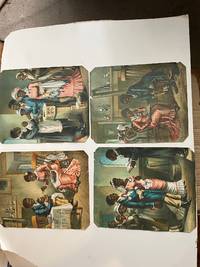
rif. 26566English each print 'Copyright Entered at Stationers Hall'. Circa 1888. The four plates each 29 x 23.5 cm are loose and unframed in fair condition aged and worn with no margins chipping to the edges and with the corners cut off at a diagonal. Each title written in pencil in a contemporary hand on the reverse of the print each with a price of '6d'. The subjects are not depicted in unattractive style and are certainly not grotesques but they are shown as 'simple' untroubled individuals with the usual happy gleaming brown faces and shiny white teeth. The 'humour' would appear to be intended to be found in the substitution in quintessentially English scenes of 'foreign' for English faces. This set is generally classed as 'Black Americana' but there are two reasons for assuming that it is of British origin. First each plate is stated in the bottom right-hand corner to be 'Copyright Entered at Stationers Hall' and second a report in the British Printer 1888 notes that 'Two new series of humorous subjects are "New Renderings of Old Song Titles" each picture containing a puzzle and "Sambo's Courtship" both highly amusing and certain to furnish plenty of fun and amusement for the little ones'. Some are listed in "Black Americana: Price Guide: edited by Kyle Husfloen" Google which appears to give incorrect information about the publishing date and "American" printing etc. English (each print 'Copyright Entered at Stationers Hall'). Circa 1888. unknown
1965rif. 003265Isle of Man: Britons - Times Longman 1965. Good original wraps with the Britons Publishing Company label pasted over original publisher VERY SCARCE Attacks Jews as being in control of Bolshevism etc. First Edition. Original Wraps. Good. Britons - Times Longman paperback
rif. 24853ONE: 15 May 1974; 47a Leigham Court Road Streatham Hill London SW16. TWO: no date; c/o 21 Inglethorpe Street Fulham London SW6. Also an ANS to 'Mrs Poppmacher' Dosse's secretary: 21 February 1973; 169 Breakspears Road Brockley London SE4. Onyeama was the second black boy to go to Eton and the first to complete his education there. See his obituary in the Guardian 11 February 2022. His hugely-controversial 1972 book ‘Nigger at Eton’ which resulted in him being banned from the school was reprinted by Penguin Books in 2020 under the title ‘Black Boy at Eton’. Philip Dosse the recipient of the first two letters was proprietor of Hansom Books publisher of a stable of seven arts magazines including Books and Bookmen and Plays and Players. See ‘Death of a Bookman’ by the novelist Sally Emerson editor of ‘Books and Bookmen’ at the time of Dosse’s suicide in Standpoint magazine October 2018. The three items in good condition lightly aged and folded for postage. ONE: TLS to ‘Dear Philip’ i.e. Philip Dosse publisher of ‘Books and Bookmen’ 15 May 1974. 1p 12mo. Signed ‘Dillibe’. Begins: ‘I thought I would send my critique to Garett via you and take the opportunity to thank you for your offer of free advertisement of my books in B&B. I informed Leslie Frewin his publisher who told me he would contact you to express his gratitude.’ He continues: ‘Believe me it will be a blessing when my book comes out and I receive the other half of my advance because right now to exist on free-lance writing is one hell of a competition. If for the last time I could be sent payment or my critique straight-away I would be truly grateful at the same time aware that of all your contributors I must be the greatest pain in the neck.’ He apologises and states that he will not ask again. TWO: Undated January 1977 TLS to 'Dear Philip'. He hopes 'all's well with' Dosse and sends New Year greetings. 'Enclosed is my review of MUZUNGU by Daniel Topolski.' THREE: TNS to ‘Dear Mrs Poppmacher’ Dosse’s secretary 21 February 1973. He thanks her for the copy of the March issue and asks for ‘three more copies to send off to friends’. ONE: 15 May 1974; 47a Leigham Court Road, Streatham Hill, London SW16. TWO: no date; c/o 21 Inglethorpe Street, Fulham, London S unknown