Eugenia A WheelerBiblio.com
3036 resultados
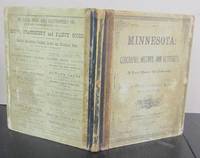
1881ref. 71906St Paul: D.d.Merrill 1881. Hardcover. good. Octavo.9" x 7". Early text book on Minnesota History. Illustrated. Lacking front endpaper and possibly half-title page if issued. Wear to spien. D.d.Merrill hardcover
2018ref. 1-303433639XPeter Lang Pub Inc 2018. Paperback. New. new edition. 344 pages. Spanish language. 8.86x5.91x0.87 inches. Peter Lang Pub Inc paperback
ref. B9781433119729Hardback. New. Lays bare the underlying logic of a Latin Americanist discourse through some of the continent's influential thinkers including Domingo Faustino Sarmiento Jose Marti Jose Enrique Rodo Jose Vasconcelos Fernando Ortiz Roberto Fernandez Retamar Nestor Garcia Canclini and Walter Mignolo. hardcover
1938ref. 60519Los Angeles CA & Providence RI: The Institute of Family Relations 607 South Hill St. 1938. Two pieces. 1st - 8vo. 4 pp unpaginated. self-printed softcovers photo illust. of Popenoe on front cover crease fold from mailing minor dustsoiling; 2nd - 4to. 8.5 x 11 in. 1 leaf. TLS on letterhead “Copy” and Osborn’s initials in ink crease folds wear & minor tears at folds some age toning still VG- set. These two scarce original promotional brochure and TLS reflect the ongoing efforts by prominent eugenicist Paul Popenoe dubbed “the father of marriage counseling” to spread and inculcate followers into his racist eugenics policies. The letter to the YMCA at Brown University to drum up speaking tour dates from the Institute’s Educational Director Loran Osborn writes that “his Popenoe’s fee is $100 per day . . . and he is perfectly willing to speak two of three times in a day. . . .” His speaking subjects included “A Biological View of the Jewish Problem” “The Progress of Eugenics” “Should Women Compete with Men” and others in the same vein. Popenoe advocated sterilization for those who were deemed unfit to reproduce and marriage counseling for healthy “White” couples and whose lectures often stated that “continued limitation of offspring in the White race simily inites the Black Brown and other races to finish the work already begun by Birth Control and reduce the “Whites” to a subject race. Most of Popenoe’s beliefs became institutionalized into conservative Christian movements and evangelical churches in Southern California and his Institute of Family Relations influenced generations of marriage counselors. See; Chariot Washington & Hall Exhumed: Reckoning with the History of Eugenics in Marriage and Family Therapy The Family Journal Vol. 30 Issue 4 June 1 2022. The Institute of Family Relations, 607 South Hill St., paperback
ref. B9783031077098Paperback / softback. New. The recent book of the series continues the collection of articles dealing with the important and efficient combination of traditional and novel mathematical approaches with various computational intelligence techniques with a stress of fuzzy systems and fuzzy logic. Complex systems are theoretically intractable as the need of time and space resources e.g. computer capacity exceed any implementable extent. How is it possible that in the practice such problems are usually manageable with an acceptable quality by human experts They apply expert domain knowledge and various methods of approximate modeling and corresponding algorithms. Computational intelligence is the mathematical tool box that collects techniques which are able to model such human interaction while new mathematical approaches are developed and used everywhere where the complexity of the sub-task allows it. The innovative approaches in this book give answer to many questions on how to solve “unsolvable” problems. paperback
1981ref. c207124HarperCollins 1981. 1st Edition . Hardcover. As New/Very Good. 8vo - over 7¾ - 9¾" tall. HarperCollins hardcover
ref. A9781933789200Paperback / softback. New. paperback
ref. A9780415529716Hardback. New. hardcover
ref. B9781863352499Hardback. New. hardcover
2006ref. 1-0325008809Heinemann 2006. Paperback. New. 1st edition. 240 pages. 10.50x8.25x0.50 inches. Heinemann paperback
2018ref. 1-0134665538Pearson College Div 2018. Hardcover. New. 2nd psc edition. 1232 pages. 9.00x6.00x0.10 inches. Pearson College Div hardcover
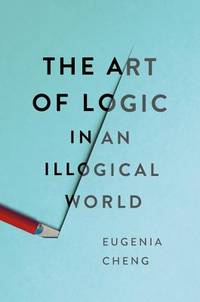
2018ref. 1-1541672488Basic Books 2018. Hardcover. New. 304 pages. 8.50x5.75x1.00 inches. Basic Books hardcover
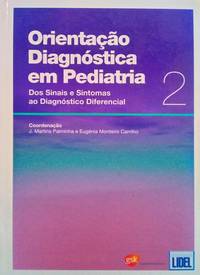
ref. 2107JL023Dos Sinais e Sintomas ao Diagnóstico Diferencial. Volume 1 Volume 2. Coordenadores. Lidel - Edições Técnicas Lda. Lisboa. 2002 e 2003.2 Volumes de 245x175 cm. Com xxiv 246 x; xxiii i 245 a 672 xix págs. Encadernações do editor.Ilustrados a preto e branco no texto com fotografias desenhos fórmulas esquemas tabelas e gráficos e em extratexto com fotografias a cores para orientação diagnóstica em pediatria.O primeiro volume da obra apresenta os seguintes capítulos: Lista de Autores; Prefácio; Preâmbulo; I - Fundamentos da Práctica Clínica; II - Pediatria Geral; Extratexto.O segundo volume da obra apresenta a continuação do capítulo II - Pediatria Geral continuação.Obra em três volumes estando em falta o terceiro volume. I-91-G-31 unknown
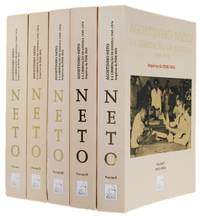
ref. 2102SB022Volume I 1949-1960 Volume II 1961-1967. Volume III 1968-1970. Volume IV 1971-1972. Volume V 1973-1974. Fundação Dr. António Agostinho Neto. Luanda. 2012.5 Volumes de 295x21 cm. Com x 963; 890; 898; 949; 878 págs. Encadernações do editor com estampagens a ouro nas lombadas e nas capas anteriores.Profusamente ilustrados no texto com fac-similes de documentos de elevada qualidade. Apresenta ainda fotografias nas páginas que iniciam um novo capítulo e alguns mapas e tabelas no texto introdutório.Edição coordenada por Maria Eugénia Neto e Irene Neto. Esta última também foi responsável pela pesquisa e a selecção documental ficou a cargo do seu marido o economista São Vicente.A presente obra coloca «à disposição dos interessados uma colectânea de documentos da PIDE/DGS polícia política da ditadura do Estado Novo em Portugal entre 1933 e 1974 e de outra fontes relativos ao Processo Nº 88 de António Agostinho Neto» que permitem «seguir todo o seu percurso assim como o de muitos que o acompanharam até 1974».A obra é introduzida por uma extensa narrativa biográfica págs. 7-482 vol. I com o título: «Agostinho Neto e a Liderança da Luta pela Independência de Angola 1945-1975» da autoria de São Vicente. Segue-se então ao longo dos cinco volumes a reprodução de mais de 1500 documentos dispostos por ordem cronológica e selecionados entre os cerca de 6000 sobre Agostinho Neto que existem no Arquivo da PIDE/DGS e em outros fundos documentais na maioria existentes nos Arquivos da Torre do Tombo e que esta concedeu autorizou à Fundação Dr. Agostinho Neto para os seleccionar e reproduzir.António Agostinho Neto Caxicane Ãcolo e Bengo Angola 1922 - Moscovo 1979 Político e médico foi o Primeiro Presidente de Angola de 11 de Novembro de 1975 a 10 de Setembro de 1979 reconhecimento formal por Portugal em 22 de Fevereiro de 1976. Foi funcionário dos serviços de saúde em Angola inscreveu-se na Faculdade de Medicina da Universidade de Coimbra onde se torna um dos fundadores da secção da CEI - Casa dos Estudantes do Império que lança a revista Movimento em colaboração com Lúcio Lara e Orlando de Albuquerque e o grupo "Vamos Descobrir Angola" que deu origem ao "Movimento dos Jovens Intelectuais de Angola". Em 1948 ganha uma bolsa de estudos dos metodistas americanos transferindo a sua matrícula para a Faculdade de Medicina da Universidade de Lisboa. Em 1948 foi preso pela Polícia Internacional e de Defesa do Estado PIDE em Lisboa quando recolhia assinaturas para a Conferência Mundial da Paz ficando encarcerado durante três meses. Ao ser solto Agostinho Neto em parceria com Amílcar Cabral Mário de Andrade Marcelino dos Santos e Francisco José Tenreiro fundam clandestinamente o Centro de Estudos Africanos instituição que viria a ser fechada pela PIDE em 1951. No mesmo ano é eleito representante da Juventude das Colônias Portuguesas JCP junto ao Movimento de Unidade Democrática - Juvenil MUD-J grupo fortemente ligado ao Partido Comunista Português PCP. As atividades no JCP rendem-lhe uma nova prisão pela PIDE em Lisboa em 1951. Em 1955 Foi novamente preso pelas suas atividades políticas no JCP e no MUD-J em 1955 sendo condenado a 18 meses de prisão o que motivou a condenação de muitos intelectuais entre eles Simone de Beauvoir François Mauriac Jean-Paul Sartre e o poeta cubano Nicolás Guillén.Libertado em Julho de 1957 licenciou-se em Medicina pela Faculdade de Medicina da Universidade de Lisboa em 27 de outubro de 1958. Em 1959 integra-se no Movimento Anticolonial MAC. Em 22 de dezembro de 1959 juntamente com a família ruma para Luanda onde abre um consultório médico. Em 8 de junho de 1960 é preso em Luanda e deportado para o arquipélago de Cabo Verde ficando instalado na prisão de Ponta do Sol ilha de Santo Antão; finalmente é transferido para o Campo do Tarrafal onde fica até outubro de 1962. É liberto da prisão em Março de 1963 e foge de Portugal com sua família instalando-se em Quinxassa onde o MPLA tinha a sua sede no exílio reassumindo as funções de presidente efetivo do MPLA durante a Conferência Nacional do Movimento. No mesmo ano ruma com a sede do MPLA para Brazavile em consequência da sua expulsão do Zaire que passou a dar o apoio total á Frente Nacional de Libertação de Angola FNLA. Passa a coordenar totalmente o núcleo militar do movimento abrindo as frentes de Cabinda 1963 e do Leste de Angola 1966. Em 1968 transfere a sua família para Dar-es-Salam onde continuará até 4 de Fevereiro de 1975. Nesse ano 1975 é recebido em Luanda nos preparativos para o Acordo do Alvor em Portugal onde é acordado estabelecer um "governo de transição" que inclui o MPLA Portugal FNLA e União Nacional para a Independência Total de Angola UNITA. Agostinho Neto lidera o MPLA na proclamação da independência sendo essas ações o prelúdio da Guerra Civil Angolana. Em 11 de novembro de 1975 Angola é declarada independente e Agostinho Neto é proclamado seu primeiro presidente continuando Comandante-em-Chefe das FAPLA e Presidente do MPLA. Alinha-se com o bloco socialista e estabelece um regime ditatorial mono-partidário inspirado no modelo então praticado nos países comunistas do Leste Europeu. Morreu durante uma operação a um cancro no fígado realizada em Moscovo.Obs.: Esta obra pesa mais de 5kg. Está sujeita a portes extra.EN 5 Volumes. 29.5x21 cm. x 963; 890; 898; 949; 878 pp. Paperback gilt on the spines and with dust covers.Fully illustrated in the text with high-quality facsimiles of documents. There are also photographs on the pages that start a new chapter and some maps and tables in the introductory text.Coordinated by Maria Eugénia Neto and Irene Neto. The latter was also responsible for the research and the selection of documents was the responsibility of her husband the economist São Vicente.This work makes “available to interested parties” a collection of documents from the PIDE/DGS political police of the Estado Novo dictatorship in Portugal between 1933 and 1974 and other sources relating to Case No. 88 of António Agostinho Neto which make it possible to "follow his entire journey as well as that of many who accompanied him up until 1974".The work is introduced by an extensive biographical narrative pp. 7-482 vol. I entitled: "Agostinho Neto and the Leadership of Angola’s Struggle for Independence 1945-1975" by São Vicente. This is followed throughout the five volumes by the reproduction of more than 1500 documents arranged in chronological order and selected from the approximately 6000 on Agostinho Neto that exist in the PIDE/DGS Archives and in other documentary funds most of which exist in the Torre do Tombo Archives Portugal National Archives and which the latter has authorised the Dr. Agostinho Neto Foundation to select and reproduce.António Agostinho Neto Caxicane Ãcolo e Bengo Angola 1922 - Moscow 1979 Politician and doctor he was the first President of Angola from 11 November 1975 to 10 September 1979 formally recognised by Portugal on 22 February 1976. He was a health worker in Angola enrolled at the Faculty of Medicine of the University of Coimbra where he became one of the founders of the CEI section - Casa dos Estudantes do Império Imperial Students’ House which launched the magazine Movimento in collaboration with Lúcio Lara and Orlando de Albuquerque and the group " Vamos Descobrir Angola " Lets find out Angola which gave rise to the " Movimento dos Jovens Intelectuais de Angola Movement from the Young Intelectuals from Angola". In 1948 he won a scholarship from the American Methodists transferring his enrolment to the Faculty of Medicine at the University of Lisbon. In 1948 he was arrested by the International and State Defence Police PIDE in Lisbon when he was collecting signatures for the World Peace Conference and was imprisoned for three months. Upon his release Agostinho Neto in partnership with Amílcar Cabral Mário de Andrade Marcelino dos Santos and Francisco José Tenreiro clandestinely founded the Centro de Estudos Africanos Centre for African Studies an institution that was closed down by PIDE in 1951. In the same year he was elected representative of the Juventude das Colónias Portuguesas JCP Youth of the Portuguese Colonies to the Movimento de Unidade Democrática – Juvenil MUD-J Youth Democratic Unity Movement a group strongly linked to the Portuguese Communist Party PCP. His activities in the JCP earned him another arrest by the PIDE in Lisbon in 1951. He was arrested again in 1955 for his political activities in the JCP and MUD-J and sentenced to 18 months in prison which led to the sentencing of many intellectuals including Simone de Beauvoir François Mauriac Jean-Paul Sartre and the Cuban poet Nicolás Guillén.Liberated in July 1957 he graduated in Medicine from the Faculty of Medicine of the University of Lisbon on 27 October 1958. In 1959 he joined the Movimento Anticolonia MAC Anti-Colonial Movement. On 22 December 1959 he and his family moved to Luanda where he opened a medical practice. On 8 June 1960 he was arrested in Luanda and deported to the Cape Verde archipelago where he was imprisoned in Ponta do Sol on the island of Santo Antão; he was finally transferred to the Tarrafal camp where he remained until October 1962. He was released from prison in March 1963 and fled Portugal with his family settling in Quinxassa where the Movimento Popular para a Libertação de Angola MPLA Popular Movement for the Liberation of Angola had its headquarters in exile resuming his role as effective president of the MPLA during the Movement's National Conference. In the same year he and the MPLA headquarters moved to Brazaville as a result of his expulsion from Zaire which had given its full support to the Frente Nacional de Libertação de Angola FNLA National Front for the Liberation of Angola. He went on to coordinate the movement's military centre opening the Cabinda 1963 and East Angola 1966 fronts. In 1968 he moved his family to Dar es Salaam where he stayed until 4 February 1975. In 1975 he was received in Luanda in preparation for the Alvor Agreement in Portugal where it was agreed to establish a "transitional government" comprising the MPLA Portugal the FNLA and the União Nacional para a Independência Total de Angola UNITA National Union for the Total Independence of Angola. Agostinho Neto led the MPLA in proclaiming independence and these actions were the prelude to the Angolan Civil War. On 11 November 1975 Angola was declared independent and Agostinho Neto was proclaimed its first president remaining Commander-in-Chief of the Forças Armadas Populares de Libertação de Angola FAPLA People's Armed Forces of Liberation of Angola and President of the MPLA. He aligned himself with the socialist bloc and established a mono-party dictatorial regime inspired by the model then practised in the communist countries of Eastern Europe. He died during an operation for liver cancer in Moscow.This work weighs more than 5kg. It is subject to extra shipping costs. M-16-B-8 paperback
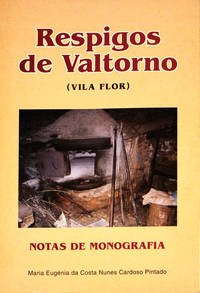
ref. 1908RL049Vila Flor. Notas de Monografia. Edição da Autora com apoio de Humberto Cardoso. Bragança. 1998.De 245x17 cm. Com 193 págs. Brochado.Notas monográficas sobre a freguesia de Valtorno do concelho de Vila Flor distrito de Bragança. I-60-I-9 unknown
ref. B9783639459852Paperback / softback. New. paperback
ref. B9783838375014Paperback / softback. New. paperback
ref. B9783838348384Paperback / softback. New. paperback
2002ref. SKU0469435Cambridge University Press 2002-12-16. Paperback. Good. Textbook May Have Highlights Notes and/or Underlining BOOK ONLYNO ACCESS CODE NO CD Ships with Emailed Tracking Cambridge University Press paperback
2012ref. SKU0481882Saunders 2012-03-26. Paperback. Good. Textbook May Have Highlights Notes and/or Underlining BOOK ONLYNO ACCESS CODE NO CD Ships with Emailed Tracking Saunders paperback
2012ref. SKU0482074Wiley 2012-12-26. Hardcover. Good. Textbook May Have Highlights Notes and/or Underlining BOOK ONLYNO ACCESS CODE NO CD Ships with Emailed Tracking Wiley hardcover
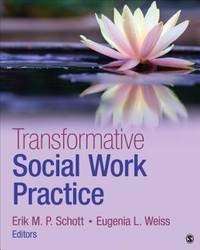
ref. SKU0230319SAGE Publications Inc 2015-09-22. Paperback. Good. Textbook May Have Highlights Notes and/or Underlining BOOK ONLY-NO ACCESS CODE NO CD Ships with Tracking SAGE Publications, Inc paperback
ref. B9781612294759Paperback. New. paperback
ref. B9781501334924Paperback / softback. New. paperback
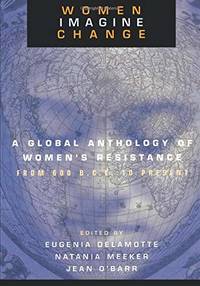
ref. B9780415915311Paperback / softback. New. Women Imagine Change shows how women all over the world across a span of 2600 years have found ways to resist oppression and gain power over their lives. paperback