Society, American EugenicsBiblio.com
2983 resultados
ref. 1020438185.Ghardcover. Good. Access codes and supplements are not guaranteed with used items. May be an ex-library book. hardcover
ref. 1021008753.Ghardcover. Good. Access codes and supplements are not guaranteed with used items. May be an ex-library book. hardcover
ref. 1019724455.Ghardcover. Good. Access codes and supplements are not guaranteed with used items. May be an ex-library book. hardcover
1938ref. 588(English description below.) New York, Pioneer Publishing, 1938. Petit in-8 de 13 x 20 cm, (xiv) 574 pp. Reliure plein tissu percaliné d'un rouge pastel foncé, titre embossé au plat de couverture, titre et nom d'auteur en caractères d'argent au dos, filets doubles argentés en coiffe et queue. Reliures à la Bradel, très mince tranchefile. Préface du chirurgien-urologue Winfield S. Pugh. En 10 chapitres, richement illustrés de dessins en noir et blanc. En dépit de son titre, Eugenics and Sex Harmony insiste en fait sur l'éducation sexuelle, les rencontres hommes-femmes, la compatibilité des partenaires, les MST, la nutrition, les fameuses migraines... Le ton général est nettement plus enjoué que celui du reste de notre catalogue Eugénisme. En filigrane, une division claire entre littérature de spécialiste, technique, et livres destinés à un lectorat plus large. Le terme d'"eugénique" mêlait alors l'acquis, les conditions sociales ou matérielles d'une "bonne naissance" favorable à la santé de l'enfant et de sa mère, à l'hérédité, sans acrimonie particulière ou tabou autour de la question dite "nature versus nurture". Eugenics and Sex Harmony sera réédité plusieurs fois et reste presque courant sur le marché américain. ****** New York, Pioneer Publishing, 1938. New edition. Small octavo (13 x 20 cm), (xiv) 574 pp. Bound in full dark pastel-red percaline cloth; title embossed on the front cover; title and author's name in silver lettering on the spine; double silver fillets at the head and tail of the spine. Bradel-style binding; very thin headbands. Preface by urological surgeon Winfield S. Pugh. The book comprises 10 chapters, richly illustrated with black-and-white drawings. Despite its title, the book actually focuses primarily on sex education, male-female encounters, partner compatibility, STDs, nutrition, and common ailments like migraines—incorporating numerous cultural and historical elements that clearly mark it as a work of popularization and advice. The general tone is more lighthearted than that of the rest of our "Eugenics" catalog, reflecting a clear distinction between specialized technical literature and books aimed at a broader audience. It illustrates how the term "eugenics" at the time conflated acquired factors—such as the social or material conditions conducive to a "good birth" and the health of both child and mother—with heredity, all without the acrimony or taboos often associated with the "nature versus nurture" debate. *Eugenics and Sex Harmony* was reprinted several times and remains relatively common on the American market.
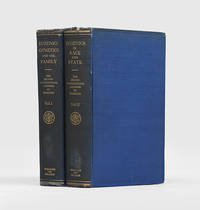
1923ref. 182347Baltimore: Williams & Wilkins Company 1923. Eugenics grows in America First editions of both volumes of the papers from the second international eugenics congress; from the library of the American Eugenics Society with their stamp to the front free endpapers. The three international eugenics congresses were the central forum for the worldwide eugenics movement to share papers and propose policies. Britain hosted the first congress in 1912 at the University of London. The second congress took place at the American Museum of Natural History in New York in September 1921. Henry Fairfield Osborn presided Alexander Graham Bell was the honorary president and the key guest speaker was Leonard Darwin the son of Charles who advocated measures to eliminate the unfit. The third congress met in 1932 at the same venue. The American Eugenics Society was founded in 1922 in the aftermath of the second congress and only dissolved in 2019. It was the main American body promoting eugenics in the 1920s during which eugenic policies were introduced in numerous American states and immigration quotas were set to limit immigration from outside western and northern Europe. The papers of the congress show the breadth of the movement which was at the forefront of scientific research at the time. Some are reputable studies of heredity traits but most include panic-stricken notions of national decline due to the increase of undesired races and peoples:. The papers include "Some Notes on the Jewish problem" "Negro-White Intermixture and Intermarriage" and "The War from the Eugenic point of view". 2 vols octavo. With frontispieces and 45 plates. Original blue cloth spines lettered in gilt. Faint shadow of removed label to spines. Light rubbing and very light wear at extremities contents clean and unmarked save for trivial notations on contents pages. A very good copy. hardcover
1922ref. 586Paris, Félix Alcan, 1922. Seule et unique édition. In-8 de 13,5 x 22 cm, (4 ff.) 248 pp. Brochure originale, reliure moderne demi-tissu mauve à coins avec plats de papier coloré assortis ; dos lisse, titre en caractère d'imprimerie frappés en doré, un fleuron doré et mention "Diversos Autores" (auteurs divers) en portugais. Tranchefile. Compilation d'articles issus de conférences données courant 1921 à l'École des Hautes Études Sociales par des chercheurs membres de la Société Française d'Eugénique. Sommaire : Eugénique et biologie (Edmond Perrier) ; Eugénique et régimes alimentaires (Frédéric Houssay) ; La sélection humaine (Charles Richet) ; Eugénique et santé nationale (Eugène Apert) ; Natalité et eugénique (Lucien March) ; Conséquences psycho-sociales de la dernière guerre au point de vue eugénique (Georges Papillault) ; Eugénique et mariage (George Schreiber) ; L'eugénique pratique (Leonard Darwin) ; Génétique et adaptation (Lucien Cuénot). Cette anthologie reflète le courant eugéniste tel qu'il existait en France à l'époque, et ses débats et divergences internes. Ainsi, à la radicalité d'un Charles Richet souhaitant écarter les épileptiques et les porteurs de "sang vicié" de la "race forte", répond la prudence d'un Edmond Perrier rappelant que des nouveaux-nés à la santé fragile peuvent devenir des Blaise Pascal ou que des tares latentes peuvent n'apparaître que tardivement et subtilement, en plaidant pour un regard plus nuancé que celui d'un néo-spartiate.
2012ref. 1-3659042781Editorial Académica Española 2012. Paperback. New. 124 pages. Spanish language. 8.66x5.91x0.28 inches. Editorial Académica Española paperback
2012ref. __3659042781Editorial Académica Española 2012. Paperback. New. 124 pages. Spanish language. 8.66x5.91x0.28 inches. Editorial Académica Española paperback
ref. 6208873401.Gpaperback. Good. Access codes and supplements are not guaranteed with used items. May be an ex-library book. paperback
ref. 50557693like new. unknown
ref. 50557693-nnew. unknown
2017ref. 1-3639533232Editorial Académica Española 2017. Paperback. New. 108 pages. Spanish language. 8.66x5.91x0.25 inches. Editorial Académica Española paperback
2012ref. DADAX1466600322Information Science Reference 2012-01-31. 1. hardcover. New. 8.70x0.90x10.90. Buy with confidence. Excellent Customer Service & Return policy. Information Science Reference hardcover
ref. 6209334733.Gpaperback. Good. Access codes and supplements are not guaranteed with used items. May be an ex-library book. paperback
2014ref. 2-041575478XRoutledge 2014. Paperback. New. 280 pages. 9.50x6.75x0.75 inches. Routledge paperback
2017ref. 1-3659651869Editorial Académica Española 2017. Paperback. New. 84 pages. Spanish language. 8.66x5.91x0.19 inches. Editorial Académica Española paperback
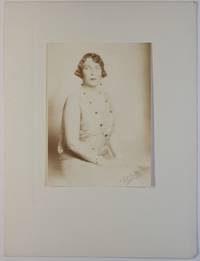
ref. 36370showing her three quarters length in typical twenties costume 9" x 6½" no place London no date The Queen visited England for the wedding of the future George VI and the Queen Mother. By this time her marriage was in tatters and the monarchy was ready to topple. Sadly when she did leave Spain in 1931 she is meant to have said "I thought I had done so well". unknown
2017ref. 2-6202230746Editorial Académica Española 2017. Paperback. New. 52 pages. Spanish language. 8.66x5.91x0.12 inches. Editorial Académica Española paperback
2018ref. 2-6139050774Editorial Académica Española 2018. Paperback. New. 64 pages. Spanish language. 8.66x5.91x0.15 inches. Editorial Académica Española paperback
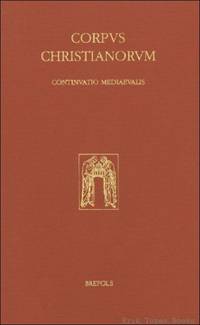
ref. 70516Brepols 2026. Hardback Pages: cxxviii 225 Size:155 x 245 mm Illustrations:3 b/w 139 tables b/w. Languages: Latin Italian. ISBN 9782503618845. Summary This volume provides the editio princeps of a protocarolingian anonymous commentary on the Song of Songs which survived in two manuscripts dated between the eighth and the ninth century; an epitome is also transmitted by a single manuscript dated two centuries later. Although the commentary's geographical origin is not clear the author draws his exegetical themes from many different sources such as Pope Gregory I the Iberian Gregory of Elvira Bede and above all Apponius whose work is rarely used by subsequent authors due to its length and complexity. Both because of the use of these different sources and the author's lack of dexterity in organizing such a multiplicity of subjects into a unitary exposition the commentary's syntax is wanting resulting in a fragmentary discourse. Nevertheless this commentary provides the scholarly community with a significant example of the "ordinary" exegetes' activity and their independence from their sources' original form. The edition of this work also makes a remarkable contribution to the understanding of the early medieval exegetical tradition on the Song of Songs since it allows us to go beyond the mere knowledge of the genre's masterpieces. Il volume presenta l'edizione critica di un commento anonimo al Cantico dei Cantici del periodo protocarolingio trasmesso nella sua versione completa da due manoscritti prodotti tra l'ottavo e il nono secolo e in forma di epitome in un codice dell'undicesimo secolo. Benché l'origine geografica del commento non sia del tutto certa è chiaro però che l'autore recupera i temi esegetici da varie fonti tra cui l'iberico Gregorio d'Elvira Gregorio Magno Beda e soprattutto Apponio il cui commento al Cantico è raramente utilizzato a causa della sua complessità e lunghezza. L'uso di fonti così diverse unito alla limitata capacità dell'autore di organizzarle in un'esposizione unitaria produce una sintassi e un discorso frammentati. Tuttavia questo commento è un esempio prezioso per comprendere l'attività di un esegeta "ordinario" e per coglierne l'indipendenza dalla forma originale delle fonti. L'edizione di tale opera costituisce anche un notevole contributo per la comprensione della diffusione della tradizione esegetica del Cantico dei Cantici in quanto permette di andare oltre la mera conoscenza delle opere fondative del genere. TABLE OF CONTENTS Introduzione I. Presentazione dell'opera II. Le fonti III. Sintomi di irlandesità IV. La tradizione manoscritta V. Criteri editoriali VI. Loci critici Bibliografia Anonymi Expositio in Cantica Canticorum saeculi octaui Prologus Capita I-VIII Epilogus Appendix Indices Brepols 2026 hardcover
ref. 70516, Brepols, 2026 Hardback, Pages: cxxviii + 225, Size:155 x 245 mm, Illustrations:3 b/w, 139 tables b/w., Languages: Latin, Italian. ISBN 9782503618845.
ref. BN328956Cle International. Expresion escrita. Nivel basico A1-A2 Expresion escrita. Nivel basico A1-A2 Eugenia Criado Clemente Cle International unknown
ref. 3639555902.Gpaperback. Good. Access codes and supplements are not guaranteed with used items. May be an ex-library book. paperback
2019ref. 2-6200031509Editorial Académica Española 2019. Paperback. New. 64 pages. Spanish language. 8.66x5.91x0.15 inches. Editorial Académica Española paperback
2016ref. 1-3841767885Editorial Académica Española 2016. Paperback. New. 92 pages. Spanish language. 8.66x5.91x0.21 inches. Editorial Académica Española paperback