EUGENIA NETO (Maria) e Irene NetoBiblio.com
2,319 results
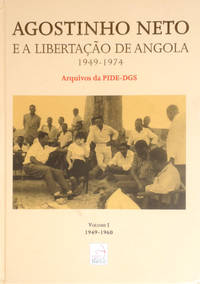
ref. 2402RS016Volume I 1949-1960 Volume II 1961-1967. Volume III 1968-1970. Volume IV 1971-1972. Volume V 1973-1974. Fundação Dr. António Agostinho Neto. Luanda. 2012. 5 Volumes de 295x21 cm. Com x 963; 890; 898; 949; 878 págs. Encadernações do editor com estampagens a ouro nas lombadas e nas capas anteriores. Profusamente ilustrados no texto com fac-similes de documentos de elevada qualidade. Apresenta ainda fotografias nas páginas que iniciam um novo capítulo e alguns mapas e tabelas no texto introdutório. Edição coordenada por Maria Eugénia Neto e Irene Neto. Esta última também foi responsável pela pesquisa e a selecção documental ficou a cargo do seu marido o economista São Vicente. A presente obra coloca «à disposição dos interessados uma colectânea de documentos da PIDE/DGS polícia política da ditadura do Estado Novo em Portugal entre 1933 e 1974 e de outra fontes relativos ao Processo Nº 88 de António Agostinho Neto» que permitem «seguir todo o seu percurso assim como o de muitos que o acompanharam até 1974». A obra é introduzida por uma extensa narrativa biográfica págs. 7-482 vol. I com o título: «Agostinho Neto e a Liderança da Luta pela Independência de Angola 1945-1975» da autoria de São Vicente. Segue-se então ao longo dos cinco volumes a reprodução de mais de 1500 documentos dispostos por ordem cronológica e selecionados entre os cerca de 6000 sobre Agostinho Neto que existem no Arquivo da PIDE/DGS e em outros fundos documentais na maioria existentes nos Arquivos da Torre do Tombo e que esta concedeu autorizou à Fundação Dr. Agostinho Neto para os seleccionar e reproduzir. António Agostinho Neto Caxicane Ãcolo e Bengo Angola 1922 - Moscovo 1979 Político e médico foi o Primeiro Presidente de Angola de 11 de Novembro de 1975 a 10 de Setembro de 1979 reconhecimento formal por Portugal em 22 de Fevereiro de 1976. Foi funcionário dos serviços de saúde em Angola inscreveu-se na Faculdade de Medicina da Universidade de Coimbra onde se torna um dos fundadores da secção da CEI - Casa dos Estudantes do Império que lança a revista Movimento em colaboração com Lúcio Lara e Orlando de Albuquerque e o grupo 'Vamos Descobrir Angola' que deu origem ao 'Movimento dos Jovens Intelectuais de Angola'. Em 1948 ganha uma bolsa de estudos dos metodistas americanos transferindo a sua matrícula para a Faculdade de Medicina da Universidade de Lisboa. Em 1948 foi preso pela Polícia Internacional e de Defesa do Estado PIDE em Lisboa quando recolhia assinaturas para a Conferência Mundial da Paz ficando encarcerado durante três meses. Ao ser solto Agostinho Neto em parceria com Amílcar Cabral Mário de Andrade Marcelino dos Santos e Francisco José Tenreiro fundam clandestinamente o Centro de Estudos Africanos instituição que viria a ser fechada pela PIDE em 1951. No mesmo ano é eleito representante da Juventude das Colônias Portuguesas JCP junto ao Movimento de Unidade Democrática - Juvenil MUD-J grupo fortemente ligado ao Partido Comunista Português PCP. As atividades no JCP rendem-lhe uma nova prisão pela PIDE em Lisboa em 1951. Em 1955 Foi novamente preso pelas suas atividades políticas no JCP e no MUD-J em 1955 sendo condenado a 18 meses de prisão o que motivou a condenação de muitos intelectuais entre eles Simone de Beauvoir François Mauriac Jean-Paul Sartre e o poeta cubano Nicolás Guillén. Libertado em Julho de 1957 licenciou-se em Medicina pela Faculdade de Medicina da Universidade de Lisboa em 27 de outubro de 1958. Em 1959 integra-se no Movimento Anticolonial MAC. Em 22 de dezembro de 1959 juntamente com a família ruma para Luanda onde abre um consultório médico. Em 8 de junho de 1960 é preso em Luanda e deportado para o arquipélago de Cabo Verde ficando instalado na prisão de Ponta do Sol ilha de Santo Antão; finalmente é transferido para o Campo do Tarrafal onde fica até outubro de 1962. É liberto da prisão em Março de 1963 e foge de Portugal com sua família instalando-se em Quinxassa onde o MPLA tinha a sua sede no exílio reassumindo as funções de presidente efetivo do MPLA durante a Conferência Nacional do Movimento. No mesmo ano ruma com a sede do MPLA para Brazavile em consequência da sua expulsão do Zaire que passou a dar o apoio total á Frente Nacional de Libertação de Angola FNLA. Passa a coordenar totalmente o núcleo militar do movimento abrindo as frentes de Cabinda 1963 e do Leste de Angola 1966. Em 1968 transfere a sua família para Dar-es-Salam onde continuará até 4 de Fevereiro de 1975. Nesse ano 1975 é recebido em Luanda nos preparativos para o Acordo do Alvor em Portugal onde é acordado estabelecer um 'governo de transição' que inclui o MPLA Portugal FNLA e União Nacional para a Independência Total de Angola UNITA. Agostinho Neto lidera o MPLA na proclamação da independência sendo essas ações o prelúdio da Guerra Civil Angolana. Em 11 de novembro de 1975 Angola é declarada independente e Agostinho Neto é proclamado seu primeiro presidente continuando Comandante-em-Chefe das FAPLA e Presidente do MPLA. Alinha-se com o bloco socialista e estabelece um regime ditatorial mono-partidário inspirado no modelo então praticado nos países comunistas do Leste Europeu. Morreu durante uma operação a um cancro no fígado realizada em Moscovo. Obs.: Esta obra pesa mais de 5kg. Está sujeita a portes extra. EN 5 Volumes. 29.5x21 cm. x 963; 890; 898; 949; 878 pp. Publishers bindings gilt on the spines and with dust covers. Fully illustrated in the text with high-quality facsimiles of documents. There are also photographs on the pages that start a new chapter and some maps and tables in the introductory text. Coordinated by Maria Eugénia Neto and Irene Neto. The latter was also responsible for the research and the selection of documents was the responsibility of her husband the economist São Vicente. This work makes available to interested parties a collection of documents from the PIDE/DGS political police of the Estado Novo dictatorship in Portugal between 1933 and 1974 and other sources relating to Case No. 88 of António Agostinho Neto which make it possible to 'follow his entire journey as well as that of many who accompanied him up until 1974'. The work is introduced by an extensive biographical narrative pp. 7-482 vol. I entitled: 'Agostinho Neto and the Leadership of Angolas Struggle for Independence 1945-1975' by São Vicente. This is followed throughout the five volumes by the reproduction of more than 1500 documents arranged in chronological order and selected from the approximately 6000 on Agostinho Neto that exist in the PIDE/DGS Archives and in other documentary funds most of which exist in the Torre do Tombo Archives Portugal National Archives and which the latter has authorised the Dr. Agostinho Neto Foundation to select and reproduce. António Agostinho Neto Caxicane Ãcolo e Bengo Angola 1922 - Moscow 1979 Politician and doctor he was the first President of Angola from 11 November 1975 to 10 September 1979 formally recognised by Portugal on 22 February 1976. He was a health worker in Angola enrolled at the Faculty of Medicine of the University of Coimbra where he became one of the founders of the CEI section - Casa dos Estudantes do Império Imperial Students House which launched the magazine Movimento in collaboration with Lúcio Lara and Orlando de Albuquerque and the group 'Vamos Descobrir Angola' Lets find out Angola which gave rise to the 'Movimento dos Jovens Intelectuais de Angola Movement from the Young Intelectuals from Angola'. In 1948 he won a scholarship from the American Methodists transferring his enrolment to the Faculty of Medicine at the University of Lisbon. In 1948 he was arrested by the International and State Defence Police PIDE in Lisbon when he was collecting signatures for the World Peace Conference and was imprisoned for three months. Upon his release Agostinho Neto in partnership with Amílcar Cabral Mário de Andrade Marcelino dos Santos and Francisco José Tenreiro clandestinely founded the Centro de Estudos Africanos Centre for African Studies an institution that was closed down by PIDE in 1951. In the same year he was elected representative of the Juventude das Colónias Portuguesas JCP Youth of the Portuguese Colonies to the Movimento de Unidade Democrática Juvenil MUD-J Youth Democratic Unity Movement a group strongly linked to the Portuguese Communist Party PCP. His activities in the JCP earned him another arrest by the PIDE in Lisbon in 1951. He was arrested again in 1955 for his political activities in the JCP and MUD-J and sentenced to 18 months in prison which led to the sentencing of many intellectuals including Simone de Beauvoir François Mauriac Jean-Paul Sartre and the Cuban poet Nicolás Guillén. Liberated in July 1957 he graduated in Medicine from the Faculty of Medicine of the University of Lisbon on 27 October 1958. In 1959 he joined the Movimento Anticolonia MAC Anti-Colonial Movement. On 22 December 1959 he and his family moved to Luanda where he opened a medical practice. On 8 June 1960 he was arrested in Luanda and deported to the Cape Verde archipelago where he was imprisoned in Ponta do Sol on the island of Santo Antão; he was finally transferred to the Tarrafal camp where he remained until October 1962. He was released from prison in March 1963 and fled Portugal with his family settling in Quinxassa where the Movimento Popular para a Libertação de Angola MPLA Popular Movement for the Liberation of Angola had its headquarters in exile resuming his role as effective president of the MPLA during the Movement"s National Conference. In the same year he and the MPLA headquarters moved to Brazaville as a result of his expulsion from Zaire which had given its full support to the Frente Nacional de Libertação de Angola FNLA National Front for the Liberation of Angola. He went on to coordinate the movement"s military centre opening the Cabinda 1963 and East Angola 1966 fronts. In 1968 he moved his family to Dar es Salaam where he stayed until 4 February 1975. In 1975 he was received in Luanda in preparation for the Alvor Agreement in Portugal where it was agreed to establish a 'transitional government' comprising the MPLA Portugal the FNLA and the União Nacional para a Independência Total de Angola UNITA National Union for the Total Independence of Angola. Agostinho Neto led the MPLA in proclaiming independence and these actions were the prelude to the Angolan Civil War. On 11 November 1975 Angola was declared independent and Agostinho Neto was proclaimed its first president remaining Commander-in-Chief of the Forças Armadas Populares de Libertação de Angola FAPLA People"s Armed Forces of Liberation of Angola and President of the MPLA. He aligned himself with the socialist bloc and established a mono-party dictatorial regime inspired by the model then practised in the communist countries of Eastern Europe. He died during an operation for liver cancer in Moscow. This work weighs more than 5kg. It is subject to extra shipping costs. SACO NM010-01 unknown
1991ref. x-0271003766Pennsylvania State Univ Pr 1991. Paperback. New. 2nd enlarged edition. 782 pages. 9.00x6.00x1.75 inches. Pennsylvania State Univ Pr paperback
1990ref. Q-027100374XPenn State University Press 1990-10-01. Hardcover. New. In shrink wrap. Looks like an interesting title! Penn State University Press hardcover
ref. 46747769like new. unknown
ref. 46747769-nnew. unknown
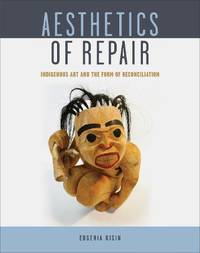
ref. A9781487503420Hardback. New. Drawing on contemporary Indigenous art practices Aesthetics of Repair explores the collision of ceremonial protocols with visual forms of repair in the Pacific Northwest. hardcover
ref. ria9781487503420_inpHardback. New. New Book; Fast Shipping from UK; Not signed; Not First Edition; Drawing on contemporary Indigenous art practices Aesthetics of Repair explores the collision of ceremonial protocols with visual forms of repair in the Pacific Northwest. hardcover
2024ref. __1487503423MY – University of Toronto Press 2024. Hardcover. New. 256 pages. 10.00x7.00x10.00 inches. MY – University of Toronto Press hardcover
ref. 1487503423.Ghardcover. Good. Access codes and supplements are not guaranteed with used items. May be an ex-library book. hardcover
ref. 1487522665.Gpaperback. Good. Access codes and supplements are not guaranteed with used items. May be an ex-library book. paperback
2000ref. mon0003557459University of Toronto Press 7/12/2024 12:00:01 A. hardcover. Very Good. 0.8000 10.1000 8.1000. Cover and edges may have some wear. University of Toronto Press hardcover
2000ref. mon0003557460University of Toronto Press 7/12/2024 12:00:01 A. hardcover. Very Good. 0.8000 10.1000 8.1000. Cover and edges may have some wear. Mild to Moderate creasing / bending to covers and pages. Book is otherwise very clean unmarked and 100% functional. University of Toronto Press hardcover
2023ref. BN192819Editions Notre Savoir 2023. 2023. Softcover. Adénome hépatocellulaire Adénome hépatocellulaire Eugenia Pareja Lara Sales Perez Editions Notre Savoir paperback
1895ref. 22217San Francisco: Press of San Francisco Photo-Engraving Co 1895. First Edition. Hardcover. Very good. 56 pp illustrated. Publisher's maroon cloth with gilt illustration on front board. Very good with some light abrasion to the cloth. Internally sound and clean. Published in the same year Sutro became Mayor of San Fransciso having made a name and fortune for himself in mining and real estate. Press of San Francisco Photo-Engraving Co hardcover
2019ref. 2-613944120XEditorial Académica Española 2019. Paperback. New. 164 pages. Spanish language. 8.66x5.91x0.37 inches. Editorial Académica Española paperback
2000ref. DADAX0965728013Brand: Arena Editions 2000-01-01. First Edition. hardcover. New. 9.50x0.75x12.50. Buy with confidence. Excellent Customer Service & Return policy. Brand: Arena Editions hardcover
1997ref. 14489Santa Fe NM: Arena Editions 1997. Hardcover. SIGNED with an ORIGINAL ILLUSTRATION. First edition first printing 1997. Fine hardcover in a Fine dust jacket protected by a clear mylar cover. BOOKS SHIP THE NEXT BUSINESS DAY WRAPPED IN PADDING IN A BOX. Photographs by Adam Fuss; essay by Eugenia Parry. 144 pages; 57 color and tri-toned b&w plates 26 b&w text illustrations; 9.5 x 12.5 inches. SIGNED BY FUSS on the ffep dated in 1999 and inscribed with an ORIGINAL ILLUSTRATION by the artist. Ethereal photograms. Overseas sales and expedited shipping will require extra postage for this volume. Arena Editions hardcover
1997ref. 210710Santa Fe NM: Arena Editions 1997. First edition and first printing. Hardcover. Features an essay by Eugenia Parry. Includes 57 color plates along with a number of smaller black and white illustrations. A clean very near fine copy in a very near fine dust jacket. Arena Editions unknown books
1999ref. 9008804Santa Fe NM: Arena Editions 1999. 2nd. Hardcover. Book fine Dust jacket fine. Bound in publisher's original white boards. Arena Editions hardcover books
1997ref. 261586Santa Fe: Arena 1997. First. hardcover. fine/fine. Adam Fuss. Profusely illustrated in color and in black and white. tall 4to pictorial white boards d.w. Santa Fe: Arena Editions 1997. First Edition. Fine in fine dust wrapper. Inscribed by the artist in multi-colored pencil. Arena unknown
1997ref. 017971Arena Editions Santa Fe NM 1997. Book. Fine Condition. Cloth. 131 pages 57 large color plates. First Edition. List of Plates. Notes. Includes a large invitation card from the Fraenkel Gallery in San Francisco laid-in. Arena Editions, Santa Fe NM Hardcover
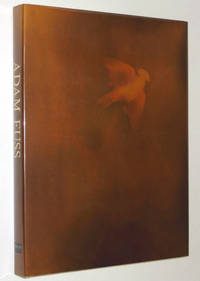
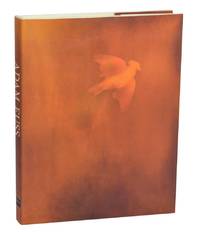
1997ref. EEF0695Santa Fe NM: Arena Editions 1997. This book has a brown dj with white spine lettering and a ghostly photoram of a bird on the cover. Book is bound in white hard boards with titles on the spine as issued. Introductory essay by Eugenia Parry describes the life and art of Fuss followed by numerous color plates of his arresting photograms. The book is signed by Fuss on the front endpaper inscribed to "Aggie" dated August 1998. Scarce and collectible as subsequent editions have since been produced. 131 pages; approx. 10"x12". Book and jacket are both in very good condition with slight soil and a few stains near the spine. Signed by Artist. First Edition. Hard Cover. Very Good/Very Good. Illus. by Illustrated. Arena Editions Hardcover
1997ref. 261586Santa Fe: Arena 1997. First. hardcover. fine/fine. Adam Fuss. Profusely illustrated in color and in black and white. tall 4to pictorial white boards d.w. Santa Fe: Arena Editions 1997. First Edition. Fine in fine dust wrapper. Inscribed by the artist in multi-colored pencil. Arena unknown books
1997ref. 147847Santa Fe New Mexico: Arena Editions 1997. First edition. Hardcover. VG- DJ fits loosely on book and one corner is peeling slightly; dj also has light wear to top edge; few marks and labels and pocket as ex-library; otherwise clean and tight. White & color illus. boards brown & illus. dust jacket 132 pp. BW & color illus.; weighs 3 lbs. Considers the life and work of British-born photographer Adam Fuss b. 1961. "Like an eighteenth-century experimenter Fuss utilizes organic and raw materials in an unusual approach revealing spiritual and emotional process. . This book the first major monograph of the artist's work is certain to be an important contribution to current discussions of photography's past and the question of its future." dj This self-titled book is about life death and various cultural and personal views of spirituality. Much like an autobiography in words and pictures the book catalogues Fuss's progression as he explores the world around him while questioning what it means to "exist." The book starts out with a biography of Fuss's life providing the viewer with an outline of his interests in the natural and spiritual worlds dating back to his childhood. As his ideas develop he confronts photography's "problem" -inextricable attachment to realistic representation- by challenging it with his desire to "capture and keep an object's mysterious self-inscription." The results are the 57 plates located in the last section of the book. Using organic and raw materials such as humans and animals flowers and plants water stained glass from churches and light alone Fuss inscribes their living energies onto the light sensitive paper by use of time and a stroboscopic flash. The universe conscious versus the unconscious chaos versus harmony representations of the soul's journey and the awareness of eternal return can all be seen throughout these photograms. From abstract expressionism and surrealism to pure documentation Fuss's unique methodology refers to past masters while revealing his spiritual and emotional process as a journey to discover the essence of natural forms. Adam Fuss has emerged as one of the bold and truly creative artists utilizing photography today. Fuss's photograms clearly break from those of his predecessors Man Ray Moholy-Nagy and Talbot and while striking a chord of homage the images redefine how and what we see in pictures viscerally and intellectually. Arena Editions hardcover books
ref. EKSIKLER16571Pan Yayincilik n/a. n/a Pan Yayincilik unknown