Krimmel, EugeniaBiblio.com

2.319 Ergebnisse
2025Best.-Nr. x-1041005849Routledge 2025. Hardcover. New. 168 pages. 9.00x6.00x9.24 inches. Routledge hardcover
2009Best.-Nr. x-0415995604Routledge 2009. Hardcover. New. 1st edition. 215 pages. 9.25x6.25x0.75 inches. Routledge hardcover
2004Best.-Nr. x-0415970954Routledge 2004. Hardcover. New. bilingual edition. 232 pages. 9.25x6.25x0.75 inches. Routledge hardcover
2015Best.-Nr. x-1138859478Routledge 2015. Hardcover. New. 136 pages. 9.10x6.20x0.60 inches. Routledge hardcover
2016Best.-Nr. x-1783533714Greenleaf Pubns 2016. Hardcover. New. 161 pages. 9.25x6.25x0.55 inches. Greenleaf Pubns hardcover
Best.-Nr. Bloomsbury-9781350353367Bloomsbury Visual Arts. Hardback. New. 336 pages Bloomsbury Visual Arts hardcover
Best.-Nr. Bloomsbury-9781350353367Bloomsbury Visual Arts. Hardback. New. 336 pages Bloomsbury Visual Arts hardcover
2025Best.-Nr. x-1032513950Routledge 2025. Hardcover. New. 144 pages. 9.18x6.12x9.45 inches. Routledge hardcover
2006Best.-Nr. x-1841693804Psychology Pr 2006. Hardcover. New. 1st edition. 149 pages. 9.25x6.25x0.75 inches. Psychology Pr hardcover
Best.-Nr. 43016073like new. unknown
Best.-Nr. 43016073-nnew. unknown
2022Best.-Nr. x-1032199121Routledge 2022. Hardcover. New. 224 pages. 9.18x6.12x0.67 inches. Routledge hardcover
1909Best.-Nr. 585Paris, Marcel Rivière, 1909. Édition originale. Reliure récente d'un livre originellement broché. In-8, 22 x 14 cm, (XXXII) 393 pp. Demi-cuir noir "crushed" à coins, papier marbré à motifs cellulaires orangés et à taches dorées sur fond blanc cassé. Dos à 5 nerfs, nom d'auteur et titre en caractères d'imprimerie dorés avec deux filets dorés pour chaque, quatre fleurons dorés, un filet en coiffe, date en queue avec double filet. Tranchefile, gardes noires, (3 ff.) neufs en début et fin d'ouvrage. Page de titre, préface. Bibliographie en fin d'ouvrage. La table des matières a été remplacée par une photocopie volante. "Les mémoires qui constituent ce volume ne sont pas des chapitres, mais des unités indépendantes... J'ai cherché à donner au public français une idée de l'état actuel de l'anthroposociologie, en mettant à disposition une série de petites monographies sur les questions les plus importantes que j'ai traitées ces dernières années" (p. xxxi). Sections : Introduction, La nomenclature zoologique en anthropologie, L'origine des Aryens, Méthode critique pour l'étude des populations du passé, Évolution anthroposociologique de la population de la France, Recherches anthropologiques sur le problème de la dépopulation, Corrélations financières de l'indice céphalique, Les lois fondamentales de l'anthroposociologie, Jacoby et Niceforo, Observations sur l'infériorité naturelle des classes pauvres, Durand de Gros et l'analyse ethnique, Le sélectionnisme de Broca, Le concours d'Iéna, L’œuvre de Woltmann, Les idées de monsieur Houzé. Dernier grand livre de Vacher de Lapouge avant qu'il ne se contente de la traduction et préface de Madison Grant, "Race et milieu social" aborde plusieurs thèmes de la recherche et de la réflexion de son auteur, en faisant la part belle aux commentaires d'autres chercheurs ou penseurs du temps. À la toute fin, l'anthropologue se déclare invaincu sur le terrain des faits et de l'analyse.
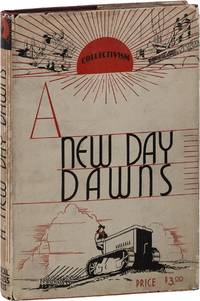
1932Best.-Nr. 88448Youngstown OH: Medical Success Press 1932. First Edition. First printing. Octavo 23cm. Red cloth hardcover; gilt spine titles; red publisher's top-stain; dustjacket; 1912pp. Darkening to endpapers; spine gilt oxidized else a tight Near Fine copy. Text partially unopened. In the scarce original dustwrapper priced $3.00 on front panel as issued somewhat soiled at folds and edges with slight erosion at crown of spine panel; still complete and presentable Very Good. Future utopia by this eccentric Ohio physician and philosopher whose mostly self-published works ranged from Lost Race fiction to straightforward medical treatises including The Epitome of Ambulent Proctology 1925 and Office Practice for the General Practician 1934. In the current work Blanchard writing in the voice of a woman librarian looking back from 22nd century America envisions a future world made perfect through collectivization land reform the emancipation of women and - sigh - as in so many technological utopias of the period Eugenics: ".Can you imagine a greater folly than asylums and prisons.making more and more criminals more unfits and misfits being born each year then burdening society with their care and support When Altruism gained power we blotted out those hopelessly unfit to live.we removed the cause of crime and purged the nation of its defective taint." Such "blotting out" was a common dream among a certain class of pre-war scientists and physicians turned into a horrifying reality by the Third Reich. An uncommon work especially so in the dust jacket which is rarely seen. HANNA 362. NEGLEY 116. SARGENT p.98. Medical Success Press unknown
1932Best.-Nr. 88448Youngstown OH: Medical Success Press 1932. First Edition. First printing. Octavo 23cm. Red cloth hardcover; gilt spine titles; red publisher's top-stain; dustjacket; 1912pp. Darkening to endpapers; spine gilt oxidized else a tight Near Fine copy. Text partially unopened. In the scarce original dustwrapper priced $3.00 on front panel as issued somewhat soiled at folds and edges with slight erosion at crown of spine panel; still complete and presentable Very Good. Future utopia by this eccentric Ohio physician and philosopher whose mostly self-published works ranged from Lost Race fiction to straightforward medical treatises including The Epitome of Ambulent Proctology 1925 and Office Practice for the General Practician 1934. In the current work Blanchard writing in the voice of a woman librarian looking back from 22nd century America envisions a future world made perfect through collectivization land reform the emancipation of women and - sigh - as in so many technological utopias of the period Eugenics: ".Can you imagine a greater folly than asylums and prisons.making more and more criminals more unfits and misfits being born each year then burdening society with their care and support When Altruism gained power we blotted out those hopelessly unfit to live.we removed the cause of crime and purged the nation of its defective taint." Such "blotting out" was a common dream among a certain class of pre-war scientists and physicians turned into a horrifying reality by the Third Reich. An uncommon work especially so in the dust jacket which is rarely seen. HANNA 362. NEGLEY 116. SARGENT p.98. Medical Success Press unknown books
Best.-Nr. 55-1820Mexico 1963. Mexican movie poster. 94 cm. x 69 cm. Folded with signs of use mainly on the edges. Se trata de un cartel de mostrar real de la película. Se doble con signos de uso principalmente en los bordes. Mexico, 1963. unknown
Best.-Nr. L170New York: E. Bierstadt's Albertype Edward Bierstadt. Hardcover. First Edition. Circa 1875. 4to. 17 albertypes bearing both text and image. Bound in cloth with gold gilt titling. Page edges are gold gilt. GOOD. Shows rubbing and marginal fraying of the head and foot of the spine the occasional light handling mark of the boards light scattered foxing throughout otherwise the binding is strong and tight and the boards remain bright and distinct. As pictured. E. Bierstadt's Albertype [Edward Bierstadt] hardcover
2000Best.-Nr. 48933Los Angeles: St. Ann's Press 2000. Limited edition. Hardcover. Fine condition. Signed and numbered "David Levinthal 2000 22/100" on verso of photograph and frontispiece. Small Folio. 138pp. portfolio. Original black velvet covered boards with color photo pasted to cover with blind-stamped lettering on spine. Black velvet chemise with original signed photograph both housed in black velvet slipcase. Black endpapers. Known for his iconic photographs using miniature figures and toys this volume echoes Edward Hopper paintings and urban life in for Levinthal typical "dreamlike" settings. "Ever the strategist David Levinthal risks seeming idiotic throwing off those who seek to understand him. He likes declaring with innocent aplomb how much "fun" it is to make art with toys. Some apologists play along naively taking him at his word. Others seek to give his method the currently acceptable artistic cachet by grouping it with that of practitioners of goofy postmodernist theatrics." Eugenia Parry. Bindings and slipcase with most minor smudges. St. Ann's Press hardcover books
2024Best.-Nr. x-1787429970Globe Law and Business Ltd 2024. Paperback. New. 150 pages. 9.21x6.14x0.75 inches. Globe Law and Business Ltd paperback
Best.-Nr. 650571076Oxford University Press OUP . Hardback. New. pp. 288 Oxford University Press OUP hardcover
Best.-Nr. 697493293Ashgate Publishing Company . Hardback. New. pp. 300 Ashgate Publishing Company hardcover
Best.-Nr. SONG1684414547HighBridge Audio 2018-11-06. Unabridged. audioCD. Used: Good. 6.40x1.10x5.30. Buy with confidence. Excellent Customer Service & Return policy. HighBridge Audio unknown
2025Best.-Nr. x-303195291XSpringer Nature 2025. Hardcover. New. 400 pages. 9.25x6.10x9.21 inches. Springer Nature hardcover
Best.-Nr. 70516Brepols 2026. Hardback Pages: cxxviii 225 Size:155 x 245 mm Illustrations:3 b/w 139 tables b/w. Languages: Latin Italian. ISBN 9782503618845. Summary This volume provides the editio princeps of a protocarolingian anonymous commentary on the Song of Songs which survived in two manuscripts dated between the eighth and the ninth century; an epitome is also transmitted by a single manuscript dated two centuries later. Although the commentary's geographical origin is not clear the author draws his exegetical themes from many different sources such as Pope Gregory I the Iberian Gregory of Elvira Bede and above all Apponius whose work is rarely used by subsequent authors due to its length and complexity. Both because of the use of these different sources and the author's lack of dexterity in organizing such a multiplicity of subjects into a unitary exposition the commentary's syntax is wanting resulting in a fragmentary discourse. Nevertheless this commentary provides the scholarly community with a significant example of the "ordinary" exegetes' activity and their independence from their sources' original form. The edition of this work also makes a remarkable contribution to the understanding of the early medieval exegetical tradition on the Song of Songs since it allows us to go beyond the mere knowledge of the genre's masterpieces. Il volume presenta l'edizione critica di un commento anonimo al Cantico dei Cantici del periodo protocarolingio trasmesso nella sua versione completa da due manoscritti prodotti tra l'ottavo e il nono secolo e in forma di epitome in un codice dell'undicesimo secolo. Benché l'origine geografica del commento non sia del tutto certa è chiaro però che l'autore recupera i temi esegetici da varie fonti tra cui l'iberico Gregorio d'Elvira Gregorio Magno Beda e soprattutto Apponio il cui commento al Cantico è raramente utilizzato a causa della sua complessità e lunghezza. L'uso di fonti così diverse unito alla limitata capacità dell'autore di organizzarle in un'esposizione unitaria produce una sintassi e un discorso frammentati. Tuttavia questo commento è un esempio prezioso per comprendere l'attività di un esegeta "ordinario" e per coglierne l'indipendenza dalla forma originale delle fonti. L'edizione di tale opera costituisce anche un notevole contributo per la comprensione della diffusione della tradizione esegetica del Cantico dei Cantici in quanto permette di andare oltre la mera conoscenza delle opere fondative del genere. TABLE OF CONTENTS Introduzione I. Presentazione dell'opera II. Le fonti III. Sintomi di irlandesità IV. La tradizione manoscritta V. Criteri editoriali VI. Loci critici Bibliografia Anonymi Expositio in Cantica Canticorum saeculi octaui Prologus Capita I-VIII Epilogus Appendix Indices Brepols 2026 hardcover
1899Best.-Nr. 583Paris, A. Fontemoing, 1899. Édition originale. Fort in-8, 15 x 23 cm pour 4 cm d'épaisseur. Reliure pleine toile bleu nuit éditeur : couverture assez sobre avec nom d'auteur, titre et indication d'auteur en doré, les deux premiers surlignés d'un trait doré, au plat avant, même mentions en doré en encadrés au dos. Gardes colorées vert pastel. Tranchefile blanc et bleu. Signature d'ancien propriétaire au crayon en p. de faux-titre. (xx) 569 pp., 29 figures dans le texte, Table des matières en fin d'ouvrage. 8 chapitres : I. Définition de l'Aryen, II. Caractères physiques de l'Aryen, III. Origine des Aryens, IV. Les Aryens avant l'histoire, V. Les Aryens historiques, VI. Psychologie de l'Aryen, VII. Rôle social des Aryens, VIII. L'avenir des Aryens. Trois appendices : A. Textes assyro-babyloniens, B. Textes classiques, C. Synchronismes. Riche en matière, d'une ampleur de contenu difficile à digérer en première lecture, ce titre phare de Vacher de Lapouge s'aventure en plein dans un territoire devenu interdit. Plutôt que de parler de Blancs ou d'Européens, il parle d'Aryens, d'indices céphaliques, distingue entre "dolicocéphales" (têtes allongées) et "brachycéphales" (têtes rondes), parle de la "supériorité" des Aryens mais aussi de la "contingence" de leur existence et de leur statut, qui ne serait pas dû à une philosophie de l'histoire de type hégélienne ou positiviste mais à une sorte de chance aveugle dont le bon Aryen (sans mauvais de jeu de mot) devrait protéger le résultat. Le dernier chapitre évoque "les Juifs" comme "concurrents" des Aryens et le féminisme comme une source de stérilisation des femmes et de destruction de l'unité familiale.