Eugenia M. HorstmanLivre Rare Book

3.034 Ergebnisse
1980Best.-Nr. 5001188641980 36 pages 1980. 36 pages.
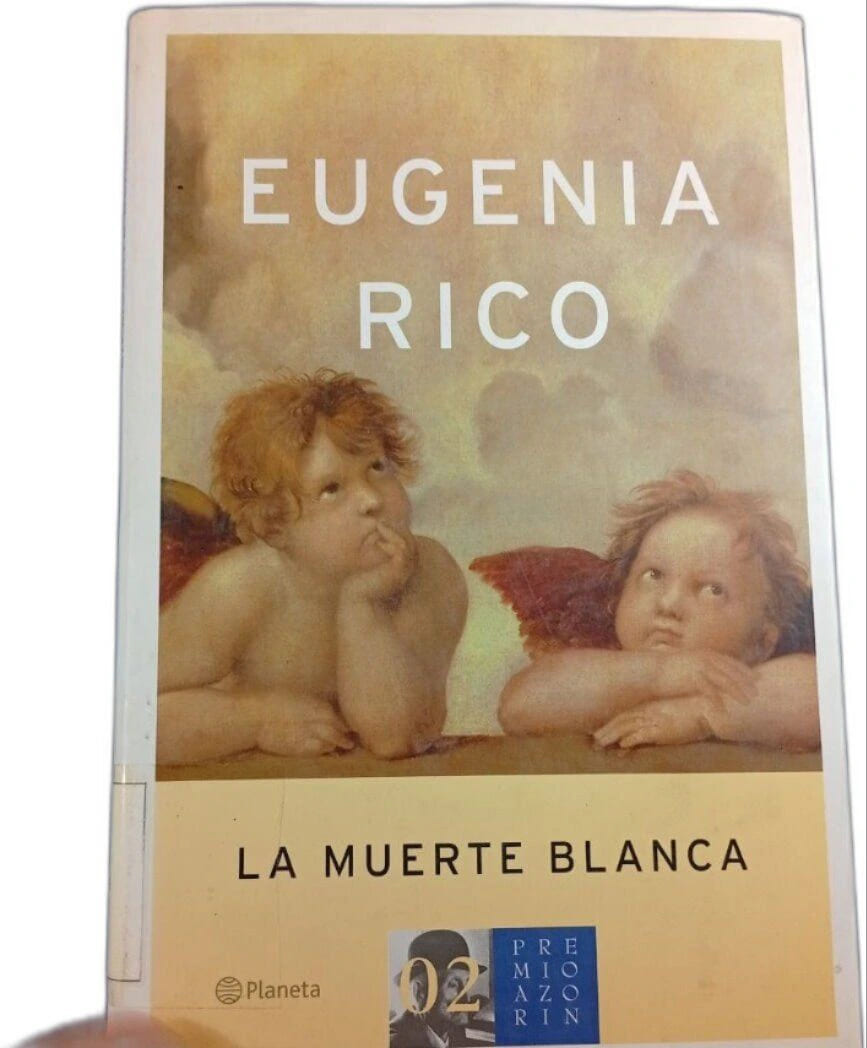
2002Best.-Nr. 500391957Planeta 2002 2002.
Best.-Nr. 15472Broché, 21X13 cm, 1992, 286 pages, éditions Françoise Bourin. Bon exemplaire.
Best.-Nr. 33330Broché, 22X14 cm, 2016, 249 pages, éditions métailié. Très bon état.
Best.-Nr. 275Paris. Chez l'auteur. 1905. Grand in-8°, reliure demi-chagrin. 286 pages. E.O. Rare. Propre.
Best.-Nr. 4343Editions Eugène Figuière. 1937. In-8° broché. 224 pages. E.O. Bon état.
Best.-Nr. 5180Albin Michel. 1926. In-8° broché. 269 pages. 2e édition, revue (E.O. en 1918).
Best.-Nr. 8768" ENTREGAS DE LA LICORNE ", N° 3. Mayo 1954. " Homenaje a Eugenia Vaz Ferreira ". Susana Soca, Alberto Zum Felde, M. B. A. Mendilaharsu, Esther de Cáceres, Sarah Bollo, Ángel Rama. Quelques rousseurs sur le premier plat de la couverture ; intérieurement très propre ; pages non coupées.
1997Best.-Nr. 100064448Doubleday 1997 384 pages 16x24x3cm. 1997. Cartonné. 384 pages.
2010Best.-Nr. 100099357Métailié 2010 208 pages 14x22x2cm. 2010. Broché. 208 pages.
Best.-Nr. 22570NL, Bezige Bij, 2009 Uitvoering Paperback,Formaat 21.6x13.4x3.2 cm ,.nieuwstaat. ISBN 9789023441991.
Best.-Nr. 57594, New Guinea, South Pacific, Art, 1982 Original publishers paper-covered boards, 35 pages ill.
Best.-Nr. 70516, Brepols, 2026 Hardback, Pages: cxxviii + 225, Size:155 x 245 mm, Illustrations:3 b/w, 139 tables b/w., Languages: Latin, Italian. ISBN 9782503618845.
Best.-Nr. 5091grancher 2005 In8 broché 250 pages
Best.-Nr. 887P., NRF, Gallimard (Collection "Les Essais"), 1956, in 12 broché, 149 pages ; qq. passages soulignés au crayon.
Best.-Nr. 39110P., Radot, 1927, in 12 broché, 219 pages.
Best.-Nr. 39825P., Flammarion, 1930, in 12 broché, 285 pages.
Best.-Nr. 44663P., Alcan, 1931, in 12 broché, XII-136 pages.
Best.-Nr. 50983P., Dunod, 1968, fort in 8° relié pleine toile de léditeur, 676 pages ; nombreuses figures dans le texte.
Best.-Nr. 51711P., Albin Michel, 1947, in 8° broché, 254 pages ; couverture illustrée un peu fanée.
1988Best.-Nr. 194031988, éditions Nathan, in-4 cartonné de 170 pages, jaquette illustrée couleurs, illustrations de P. Cozzaglio, adaptation de Ghislaine Gauthereau. Le chat dans la littérature, les arts graphiques, la musique, la bande dessinée et la publicité, mais aussi son évolution biologique, les différentes races, et tout pour découvrir, connaître, soigner, éduquer et encore mieux aimer son chat. | Etat : Excellent état (Ref.: G1080)
1991Best.-Nr. 22654Climats, 1991. In-12 broché, couverture à rabats.
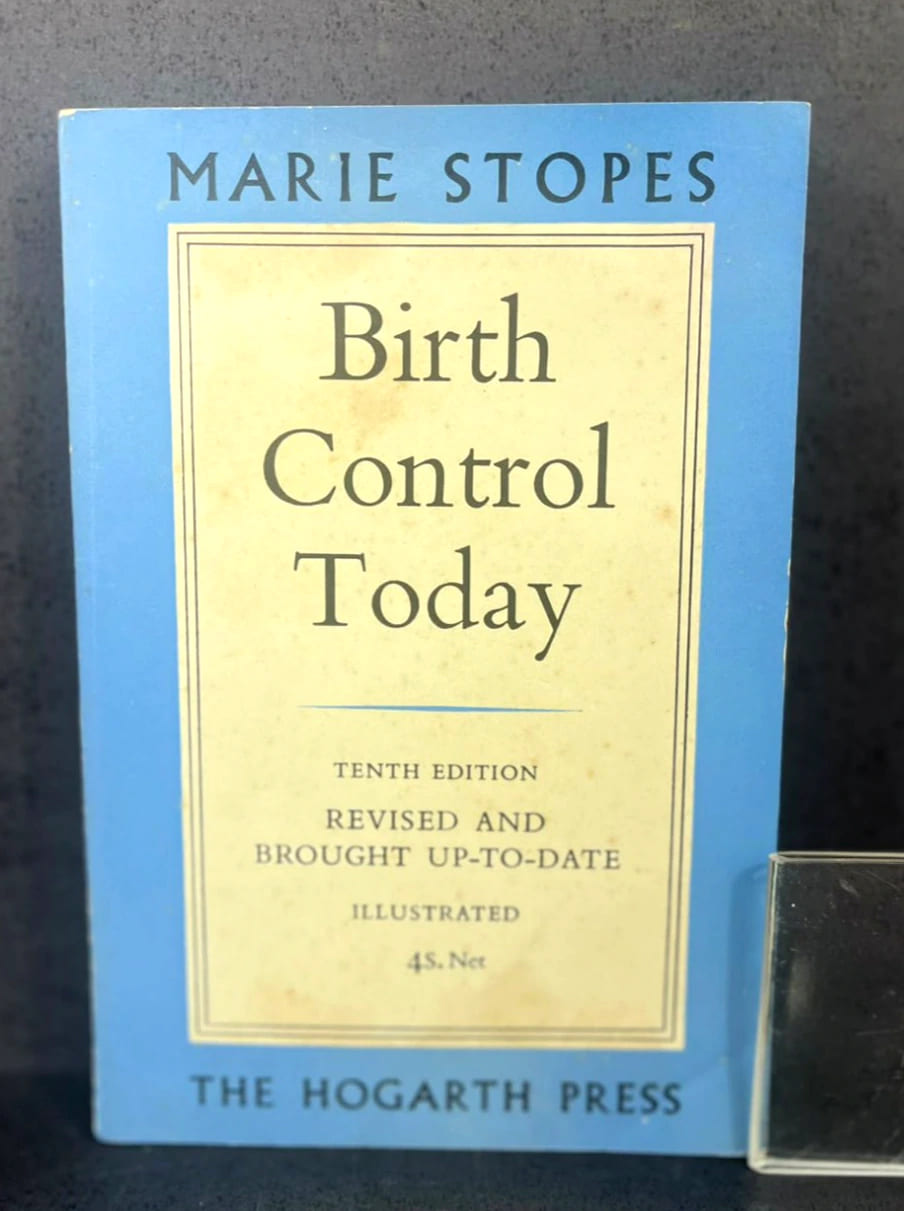
1954Best.-Nr. QZI-40London: The Hogarth Press, 1954. Tenth edition, revised and brought up to date. Illustrated. 12.5 × 19 cm. [iii] leaves, 178 pp., [7] pp. An especially interesting signed presentation copy of Marie Stopes's influential handbook on contraception and family planning, personally inscribed by the author in blue ink: “To Antonio B. Martins Abranches, with the best wishes of the author, Marie C. Stopes. July 1956.” Accompanied by a printed “With Compliments” card from the C.B.C. and The Mother's Clinic, naming Marie C. Stopes as president and giving the organisation's address at 108 Whitfield Street, London, W.1. Also preserved is a fragment of the original envelope associated with the dedicatee. The combination of the personal inscription, the institutional compliments card, and the accompanying postal material provides a particularly appealing association with Stopes's own circle and with the organisation through which she disseminated her ideas. Marie Stopes occupies a complex and controversial position in the history of twentieth-century reproductive politics. A pioneering campaigner for access to contraceptive information and the founder of one of Britain's earliest birth-control clinics, she was instrumental in bringing subjects previously regarded as private, improper, or taboo into public and medical discussion. Her work helped establish contraception as an increasingly mainstream subject of scientific, social, and public-health debate. Yet her advocacy was also deeply intertwined with the eugenics movement. Stopes supported selective reproduction and established the Society for Constructive Birth Control and Racial Progress in 1921, linking reproductive control to contemporary theories of hereditary improvement and social reform. Rather than representing a straightforward abandonment of eugenics in favour of modern family planning, her career illustrates the considerable ideological overlap between these movements during the first half of the twentieth century. Indeed, the title page of this 1954 edition still identifies her as founder and president of the Society C.B.C. and Racial Progress. First published in 1934, Birth Control To-day was conceived as a practical guide for general readers. Its chapters discuss reproductive anatomy, domestic and clinical contraceptive methods, male contraception, ineffective or dangerous practices, comparative costs, and the role of specialist clinics and public authorities. The text is supplemented by anatomical illustrations and diagrams. The book also documents the gradual transition of birth control from a controversial social cause into a more widely accepted component of reproductive healthcare, while retaining traces of the eugenic assumptions that shaped part of its early institutional development. A notable association copy, signed only two years before Stopes's death in 1958, and accompanied by printed ephemera directly connected with her London clinic and birth-control organisation. Condition: Original blue printed wrappers, with some age-related spotting, light soiling, and minor edge wear. Interior generally clean and well preserved, with occasional signs of handling. Manuscript inscription clearly legible. The accompanying compliments card is preserved separately, together with the envelope fragment.
Best.-Nr. 85740Librairie Plon, 1956, 1 volume de 145x205 mm environ, 246 pages, broché. Edition originale numérotée (N° 148/150), un des 150 exemplaires sur Lafuma. Feuillets non coupés, non rognés. Couverture légèrement insolée, bon état.
Best.-Nr. 87239Plon, 1935, 1 volume de 130x200 mm environ, 400 pages., broché, édition originale numérotée A198 (l'un des 250 exemplaires sur Alfa), une pliure sur le premier plat, bon état.