1438 risultati
rif. DADAX0684836122New unknown
2000rif. 2092902137401543Not Available 2000. Soft Cover. Fine. Number of books: 8 Not Available paperback
2000rif. 2090202120101701Not Available 2000. Soft Cover. Fine. Volume: 1 Not Available paperback
2000rif. 2090202120301700Not Available 2000. Soft Cover. Fine. Volume: 1 Not Available paperback
1970rif. 178751970. Women: A Journal of Liberation 1970 to 1975 documenting feminist cultural expression and ideological debate within the Women's Liberation Movement during the early second wave period. The material reflects feminist print culture illustrating themes of gender roles domestic life labor sexuality and global political struggle and offering insight into how activists writers and artists articulated women's experiences and demands for social transformation. It supports research into feminist media intersectional discourse and the evolution of women-centered publishing in the United States. Archive includes: 1 Women: A Journal of Liberation Vol. 1 No. 4. Summer 1970. Baltimore MD: Women: A Journal of Liberation Inc. 1970. This issue's theme is "In Revolution" and its cover bears an image of a shouting woman breaking through chains her chin lifted in determination. On the back wrapper is a photographic collage of feminists and a woman behind bars sweat dripping down her forehead. Articles discuss Vietnam the Russian Revolution Rosa Luxembourg and various current events relating to the women's movement. 2 Women: A Journal of Liberation Vol. 2 No. 1 Fall 1970. Baltimore MD: Women: A Journal of Liberation Inc. 1970. An issue on women in the arts with articles on female authors women in music and film children's literature focused on women female visual artists and women as muse. Cover features a purple print of a woman sitting in a chair and hiding her face from view captioned "model in art class". 3 Women: A Journal of Liberation Vol. 2 No. 2 Winter 1971. Baltimore MD: Women: A Journal of Liberation Inc. 1970. This issue is titled "How We Live and With Whom" and includes articles on family marriage and homelife. Many of these articles explore marital and familial issues affecting women in the 70s including the difficulties of divorce sex education for young girls and alternative lifestyles like communal living. 4 Women: A Journal of Liberation Vol. 3 No. 2 Winter 1972. Baltimore MD: Women: A Journal of Liberation Inc. 1972. Titled "Building a New Culture". An issue exploring the role of women in culture and the impact of popular culture on women including articles on women in music theater and sports as well as women's studies and sociology. Cover features a green print of five women dancing in a circle. 5 Women: A Journal of Liberation Vol. 3 No. 4. Baltimore MD: Women: A Journal of Liberation Inc. 1974. This issue is titled "International Women" and bears cover images of an older woman wearing a bandana and prints of Native women a Black woman and a Vietnamese woman holding artillery in one hand and a baby in another. Articles discuss Vietnam women in the Cuban Revolution Nisei women Chicana culture and various current events relating to the women's movement. 6 Women: A Journal of Liberation Vol. 4 No. 2 Spring 1975. Baltimore MD: Women: A Journal of Liberation Inc. 1975. Titled "The Cost of Living" this is issue centers around the relationship between women and money. Includes articles on women in the workforce welfare living in poverty and women supporting themselves independently. This topic would have been especially relevant in the mid-70s when the Equal Credit Opportunity Act opened up new financial opportunities for women in the US. Six issues spanning 1970 to 1975 each approximately 11 x 8.25 inches. This period coincides with significant developments in U.S. feminist organizing including expanded discourse on workplace equality reproductive rights and financial independence as well as increased attention to global and intersectional perspectives within the movement. The journal's combination of political analysis creative expression and visual design situates it within a broader network of feminist periodicals that shaped activist and intellectual exchange. Light handling wear covers and pages well-preserved with strong color and clarity; overall very good condition. A cohesive and visually distinctive grouping illustrating the breadth of feminist thought and cultural production in the early 1970s. unknown
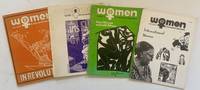
1970rif. 178751970. Women: A Journal of Liberation 1970 to 1975 documenting feminist cultural expression and ideological debate within the Women's Liberation Movement during the early second wave period. The material reflects feminist print culture illustrating themes of gender roles domestic life labor sexuality and global political struggle and offering insight into how activists writers and artists articulated women's experiences and demands for social transformation. It supports research into feminist media intersectional discourse and the evolution of women-centered publishing in the United States. Archive includes: 1 Women: A Journal of Liberation Vol. 1 No. 4. Summer 1970. Baltimore MD: Women: A Journal of Liberation Inc. 1970. This issue's theme is "In Revolution" and its cover bears an image of a shouting woman breaking through chains her chin lifted in determination. On the back wrapper is a photographic collage of feminists and a woman behind bars sweat dripping down her forehead. Articles discuss Vietnam the Russian Revolution Rosa Luxembourg and various current events relating to the women's movement. 2 Women: A Journal of Liberation Vol. 2 No. 1 Fall 1970. Baltimore MD: Women: A Journal of Liberation Inc. 1970. An issue on women in the arts with articles on female authors women in music and film children's literature focused on women female visual artists and women as muse. Cover features a purple print of a woman sitting in a chair and hiding her face from view captioned "model in art class". 3 Women: A Journal of Liberation Vol. 2 No. 2 Winter 1971. Baltimore MD: Women: A Journal of Liberation Inc. 1970. This issue is titled "How We Live and With Whom" and includes articles on family marriage and homelife. Many of these articles explore marital and familial issues affecting women in the 70s including the difficulties of divorce sex education for young girls and alternative lifestyles like communal living. 4 Women: A Journal of Liberation Vol. 3 No. 2 Winter 1972. Baltimore MD: Women: A Journal of Liberation Inc. 1972. Titled "Building a New Culture". An issue exploring the role of women in culture and the impact of popular culture on women including articles on women in music theater and sports as well as women's studies and sociology. Cover features a green print of five women dancing in a circle. 5 Women: A Journal of Liberation Vol. 3 No. 4. Baltimore MD: Women: A Journal of Liberation Inc. 1974. This issue is titled "International Women" and bears cover images of an older woman wearing a bandana and prints of Native women a Black woman and a Vietnamese woman holding artillery in one hand and a baby in another. Articles discuss Vietnam women in the Cuban Revolution Nisei women Chicana culture and various current events relating to the women's movement. 6 Women: A Journal of Liberation Vol. 4 No. 2 Spring 1975. Baltimore MD: Women: A Journal of Liberation Inc. 1975. Titled "The Cost of Living" this is issue centers around the relationship between women and money. Includes articles on women in the workforce welfare living in poverty and women supporting themselves independently. This topic would have been especially relevant in the mid-70s when the Equal Credit Opportunity Act opened up new financial opportunities for women in the US. Six issues spanning 1970 to 1975 each approximately 11 x 8.25 inches. This period coincides with significant developments in U.S. feminist organizing including expanded discourse on workplace equality reproductive rights and financial independence as well as increased attention to global and intersectional perspectives within the movement. The journal's combination of political analysis creative expression and visual design situates it within a broader network of feminist periodicals that shaped activist and intellectual exchange. Light handling wear covers and pages well-preserved with strong color and clarity; overall very good condition. A cohesive and visually distinctive grouping illustrating the breadth of feminist thought and cultural production in the early 1970s. unknown books
1986rif. 2090502113704439Not Available 1986. Soft Cover. Fine. The book is in fine condition. Not Available paperback
1994rif. 2091202133213062Kaiho shubbansha 1994. Soft Cover. Fine. Number of books: 1 box Kaiho shubbansha paperback
1981rif. 2091502135307732Meiji Map Publishing 1981. Soft Cover. Fine. Number of books: 13 Meiji Map Publishing paperback
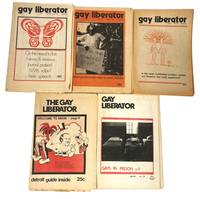
1972rif. 195061972. Various contributors. Gay Liberator 1972-1976 documents grassroots LGBTQ organizing and community communication networks in the American Midwest specifically within Detroit's gay liberation movement. The material reveals how an independent newspaper functioned as a system of political coordination and cultural exchange demonstrating the process by which activists writers and community members articulated shared concerns disseminated information and built regional identity. Through reportage editorials and community-generated content the publication shows the mechanisms of local LGBTQ organizing and provides primary-source evidence for the study of post-Stonewall activism regional press networks and queer public discourse. Various contributors. Gay Liberator. Detroit: Gay Liberator Inc. / Pansy Press 1972-1976. Archive of 5 issues: July 1972 No. 19; January 1973 Vol. 1 No. 23; June 1974 Vol. 1 No. 38; February-March 1975 Vol. 1 No. 43; Spring 1976 Vol. 1 No. 48. Tabloid-format newspapers in pictorial wrappers each approximately 20 pages. Contents include opinion essays political commentary poetry letters to the editor and investigative reporting addressing topics such as internal "conference conflicts" lesbian artistic production debates on genetics and sexuality and conditions of "being gay in prison." Coverage of Stonewall uprising situates the publication within broader national movements while localized reporting reflects the specific concerns of Michigan-based communities. Each issue contains a classified section used for personal advertisements indicating the newspaper's role in facilitating social and romantic connections alongside political engagement. The range of content demonstrates an integrated communication system combining activism cultural expression and everyday community needs. This archive emerges from the early years of the gay liberation movement when regional publications played a critical role in sustaining activism outside major coastal centers. As the first gay newspaper in Michigan Gay Liberator contributed to the formation of a visible and organized LGBTQ presence in the Midwest linking local experiences to national conversations about rights identity and representation. Its combination of political analysis and community-oriented features reflects the dual function of such publications as both activist tools and social infrastructure. Each issue measures approximately 11 x 15.5 inches; light wear consistent with handling; overall very good condition. A cohesive group illustrating the operation of regional LGBTQ press and grassroots organizing in the 1970s. unknown
1972rif. 195061972. Various contributors. Gay Liberator 1972-1976 documents grassroots LGBTQ organizing and community communication networks in the American Midwest specifically within Detroit's gay liberation movement. The material reveals how an independent newspaper functioned as a system of political coordination and cultural exchange demonstrating the process by which activists writers and community members articulated shared concerns disseminated information and built regional identity. Through reportage editorials and community-generated content the publication shows the mechanisms of local LGBTQ organizing and provides primary-source evidence for the study of post-Stonewall activism regional press networks and queer public discourse. Various contributors. Gay Liberator. Detroit: Gay Liberator Inc. / Pansy Press 1972-1976. Archive of 5 issues: July 1972 No. 19; January 1973 Vol. 1 No. 23; June 1974 Vol. 1 No. 38; February-March 1975 Vol. 1 No. 43; Spring 1976 Vol. 1 No. 48. Tabloid-format newspapers in pictorial wrappers each approximately 20 pages. Contents include opinion essays political commentary poetry letters to the editor and investigative reporting addressing topics such as internal "conference conflicts" lesbian artistic production debates on genetics and sexuality and conditions of "being gay in prison." Coverage of Stonewall uprising situates the publication within broader national movements while localized reporting reflects the specific concerns of Michigan-based communities. Each issue contains a classified section used for personal advertisements indicating the newspaper's role in facilitating social and romantic connections alongside political engagement. The range of content demonstrates an integrated communication system combining activism cultural expression and everyday community needs. This archive emerges from the early years of the gay liberation movement when regional publications played a critical role in sustaining activism outside major coastal centers. As the first gay newspaper in Michigan Gay Liberator contributed to the formation of a visible and organized LGBTQ presence in the Midwest linking local experiences to national conversations about rights identity and representation. Its combination of political analysis and community-oriented features reflects the dual function of such publications as both activist tools and social infrastructure. Each issue measures approximately 11 x 15.5 inches; light wear consistent with handling; overall very good condition. A cohesive group illustrating the operation of regional LGBTQ press and grassroots organizing in the 1970s. unknown books
rif. 34412Paris, sans date (1945), in 8°, reliure à spirale illustrée de l'éditeur, 1 feuillet d'Avant-propos (en français et en anglais) suivi de 36 feuillets de photographies (généralement, 2 phtographies par feuillet), chacun accompagné de sa serpente légendée en anglais et français.
1995rif. 2092902140700954Kaiho shubbansha 1995. Soft Cover. Fine. Size: A5 Number of books: 4 books per box Kaiho shubbansha paperback
rif. DADAX1563382253New unknown
1970rif. 158618北京.Beijing.: No publication details. circa1970. Coloured Chinese Air Defence broken run of 5 posters. Each poster in this small collection is numbered. The collection is made up of poster numbers 10 11 12 13 and 16. The posters are in secondhand condition. Two are poorer condition than the others as there is loss along a margin of each although this loss does not affecting the images themselves. There is creasing and wear and tear particularly at edges and one poster is damp stained. There are some tape repairs on the reverse one Text in Chinese. Poster sheets measure appoximately 54 x 77.5 cm. Poster no. 10 shows 3 images which demonstrate the methods which could be used to fire at enemy aeroplanes. The images are accompanied by detailed instructions. The speed and size of the aeroplane and the angle from which the shot is taken and the distance from the target are all taken into consideration. A chart in the centre gives details of how to prepare in advance for shooting an enemy aircraft. The chart gives details of how to calculate the plane's length taking into account its size and distance to make sure of an accurate shot. Poster no. 11 shows 3 images which demonstrate methods to fire at enemy paratroopers again with detailed instructions of how to do this. A chart in the centre gives details of how to prepare in advance for shooting an enemy aircraft. The chart gives details of how to calculate the plane's length taking into account its size and distance to make sure of an accurate shot. Poster no. 12 depicts 5 images showing various anti-aircraft firing positions. They are: position for one person to lift and stabilise the rifle while the other person aims; position aided by fortification; position aided by tree branches; position aided by walls; and kneeling position. Poster no. 13 includes 5 images showing two squads rifle shooting squad and machine gun shooting squad who are in charge of the anti-aircraft placement and the three main targeted aircraft bomber military cargo aircraft and helicopter which these squads wish to shoot. Poster no. 16 includes 6 images showing plans and the actions required to rescue perform urgent repairs and maintain law and order. Each with detailed instructions. It suggests: to report to the relevant government agency and evacuate nearby civilians unexploded bombs are discovered; during air strikes lay down perimeters around shops to prevent from looting; to restore transportation by clearing roads immediately after air raids; to urgently repair damaged electric wires and water pipes; the major patrol sites: factories shops warehouses dams bridges and the power station and to arrest suspects if necessary; to put out fire immediately and to make sure the safety of the civilians are the most important. 中國人民解放軍總參謀部動員部Mobilization Division of People's Liberation Army General Staff Department was first formed in 1954 and later joined with 中国人民解放军总参谋部军务部 Military Division of People's Liberation Army General Staff Department to form a joint division in 1969. The Division returned to its original name in 1975. . No publication details. unknown
1969rif. 228021969. Gay Liberation Front. Come Out! November 14 1969 inaugural issue of a newspaper documenting grassroots political mobilization and communication systems within the early post-Stonewall gay liberation movement. The material documents the system of radical queer organizing through print media revealing how activists coordinated messaging articulated political demands and disseminated ideology in the immediate aftermath of the Stonewall uprising. The publication demonstrates the process by which the Gay Liberation Front constructed a collective voice through articles editorials and visual material providing primary-source evidence for the study of LGBTQ activism protest organization and movement-building in late 1960s New York. Come Out! A Newspaper by and for the Gay Community. New York: Come Out! November 14 1969. Volume 1 Number 1. First edition. Tabloid newsprint folded as issued. The issue opens with the statement "Come out now before the door is nailed shut!" and declares its purpose as a publication dedicated to the "joy the beauty and the dignity of the homosexual life." Contents include essays political commentary and visual artwork by contributors such as John Lauritsen Leo Louis Martello Marty Robinson and Jean Devente with illustrations by Su Negrin and Bob Fontanelli. Articles include Martello's "A Positive Image for the Homosexual" advocating for self-definition and rejecting medicalized interpretations of homosexuality alongside reports on protests against police violence and political figures in New York. The layout incorporates collage elements including a double-page spread combining protest imagery slogans and critiques of media coverage as well as poetry and graphic experimentation. The issue integrates text and image to communicate urgency solidarity and opposition to institutional discrimination. Issued less than five months after the Stonewall uprising this publication illustrates how the Gay Liberation Front used print media to organize educate and mobilize participants within a broader network of leftist anti-racist and feminist movements. The newspaper reflects a shift from earlier homophile advocacy to more confrontational and coalition-based activism with emphasis on visibility and collective action. The archive supports research into LGBTQ history radical print culture and the mechanisms of grassroots political communication. Mild toning to newsprint gentle creasing at centerfold and edges with a small tear along the front fold; overall very good condition. A foundational document of early gay liberation organizing and one of the earliest radical queer newspapers in the United States. unknown
1969rif. 228021969. Gay Liberation Front. Come Out! November 14 1969 inaugural issue of a newspaper documenting grassroots political mobilization and communication systems within the early post-Stonewall gay liberation movement. The material documents the system of radical queer organizing through print media revealing how activists coordinated messaging articulated political demands and disseminated ideology in the immediate aftermath of the Stonewall uprising. The publication demonstrates the process by which the Gay Liberation Front constructed a collective voice through articles editorials and visual material providing primary-source evidence for the study of LGBTQ activism protest organization and movement-building in late 1960s New York. Come Out! A Newspaper by and for the Gay Community. New York: Come Out! November 14 1969. Volume 1 Number 1. First edition. Tabloid newsprint folded as issued. The issue opens with the statement "Come out now before the door is nailed shut!" and declares its purpose as a publication dedicated to the "joy the beauty and the dignity of the homosexual life." Contents include essays political commentary and visual artwork by contributors such as John Lauritsen Leo Louis Martello Marty Robinson and Jean Devente with illustrations by Su Negrin and Bob Fontanelli. Articles include Martello's "A Positive Image for the Homosexual" advocating for self-definition and rejecting medicalized interpretations of homosexuality alongside reports on protests against police violence and political figures in New York. The layout incorporates collage elements including a double-page spread combining protest imagery slogans and critiques of media coverage as well as poetry and graphic experimentation. The issue integrates text and image to communicate urgency solidarity and opposition to institutional discrimination. Issued less than five months after the Stonewall uprising this publication illustrates how the Gay Liberation Front used print media to organize educate and mobilize participants within a broader network of leftist anti-racist and feminist movements. The newspaper reflects a shift from earlier homophile advocacy to more confrontational and coalition-based activism with emphasis on visibility and collective action. The archive supports research into LGBTQ history radical print culture and the mechanisms of grassroots political communication. Mild toning to newsprint gentle creasing at centerfold and edges with a small tear along the front fold; overall very good condition. A foundational document of early gay liberation organizing and one of the earliest radical queer newspapers in the United States. unknown books
1970rif. 41387Sûreté du Québec En feuille 1970
1725rif. 43857Claude-Gilles Lecamus Couverture souple Toulouse 1725
1947rif. 64401947 Paris éditions Berger-Levrault 1947 In12 pleine percaline éditeur titre frappé en rouge et croix de lorraine sur le 1er plat 756 pages imprimées sur papier bible - très bon état
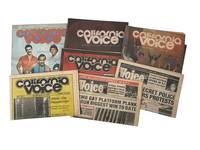
1983rif. 214411983. Various editors California Voice: The Responsible Gay Press 1983-1984 documenting LGBTQ political activism cultural life and public health response in San Francisco during the early years of the AIDS crisis. The material operates in Cultural/Representational Mode illustrating how a community newspaper articulated gay identity organized political response and reported on legal and medical developments affecting LGBTQ populations. The publication combines reporting on civil rights local and national politics and the emerging AIDS epidemic with coverage of cultural production nightlife and public events providing primary-source evidence for the study of queer print media and community formation in a period marked by institutional neglect and heightened activism. Seven tabloid newspaper issues published in San Francisco by the Gay Press Association each approximately 31 pages and measuring 10.5 x 14.5 inches including issues dated June 17 1983 Vol. 5 No. 13; July 15 1983 Vol. 5 No. 15; November 24-30 1983 Vol. 5 No. 20; October 7 1983 Vol. 5 No. 21; November 24-30 1983 Vol. 5 No. 25; January 12-18 1984 Vol. 6 No. 2; June 7-13 1984 Vol. 6 No. 23; and June 28-July 4 1984 Vol. 6 No. 26. Illustrated covers feature figures such as Grace Jones and imagery including "Dykes on Bikes" during San Francisco Pride. Contents include a two-page spread on Gay Pride Week reflecting on three decades of local LGBTQ history; reporting on the One Institute Graduate School of Homophile Studies; and extensive political coverage addressing AIDS-related meetings legal decisions labor issues and electoral support such as the candidacy of Richard Doyle. Additional articles confront the aftermath of the Dan White case White Night protest anniversaries and public demonstrations alongside cultural reviews of theater film literature and visual art centered on gay artists and audiences. These issues span a critical period in San Francisco LGBTQ history following the assassination of Harvey Milk and during the escalation of the AIDS crisis documenting both the cultural vibrancy and political urgency of the community. Coverage of protests public health developments and legal challenges demonstrates the newspaper's role in shaping and recording collective response while its attention to entertainment and identity affirms the persistence of cultural expression alongside crisis. Light toning minor creasing and small closed edge tears consistent with newsprint; no loss of text or imagery; overall very good condition. A concentrated run illustrating the intersection of activism media and community identity in early 1980s queer San Francisco. unknown
1983rif. 214411983. Various editors California Voice: The Responsible Gay Press 1983-1984 documenting LGBTQ political activism cultural life and public health response in San Francisco during the early years of the AIDS crisis. The material operates in Cultural/Representational Mode illustrating how a community newspaper articulated gay identity organized political response and reported on legal and medical developments affecting LGBTQ populations. The publication combines reporting on civil rights local and national politics and the emerging AIDS epidemic with coverage of cultural production nightlife and public events providing primary-source evidence for the study of queer print media and community formation in a period marked by institutional neglect and heightened activism. Seven tabloid newspaper issues published in San Francisco by the Gay Press Association each approximately 31 pages and measuring 10.5 x 14.5 inches including issues dated June 17 1983 Vol. 5 No. 13; July 15 1983 Vol. 5 No. 15; November 24-30 1983 Vol. 5 No. 20; October 7 1983 Vol. 5 No. 21; November 24-30 1983 Vol. 5 No. 25; January 12-18 1984 Vol. 6 No. 2; June 7-13 1984 Vol. 6 No. 23; and June 28-July 4 1984 Vol. 6 No. 26. Illustrated covers feature figures such as Grace Jones and imagery including "Dykes on Bikes" during San Francisco Pride. Contents include a two-page spread on Gay Pride Week reflecting on three decades of local LGBTQ history; reporting on the One Institute Graduate School of Homophile Studies; and extensive political coverage addressing AIDS-related meetings legal decisions labor issues and electoral support such as the candidacy of Richard Doyle. Additional articles confront the aftermath of the Dan White case White Night protest anniversaries and public demonstrations alongside cultural reviews of theater film literature and visual art centered on gay artists and audiences. These issues span a critical period in San Francisco LGBTQ history following the assassination of Harvey Milk and during the escalation of the AIDS crisis documenting both the cultural vibrancy and political urgency of the community. Coverage of protests public health developments and legal challenges demonstrates the newspaper's role in shaping and recording collective response while its attention to entertainment and identity affirms the persistence of cultural expression alongside crisis. Light toning minor creasing and small closed edge tears consistent with newsprint; no loss of text or imagery; overall very good condition. A concentrated run illustrating the intersection of activism media and community identity in early 1980s queer San Francisco. unknown books
1979rif. 2110502151004808Meiji tosho 1979. Soft Cover. Fine. Number of books: 13 Meiji tosho paperback
1983rif. 2081402109700603Meiji Map Publishing 1983. Soft Cover. Fine. Size: B5 size Meiji Map Publishing paperback
rif. DADAX0915306972New unknown