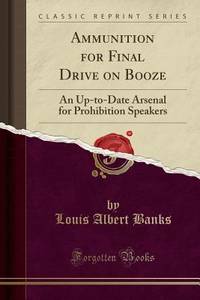
Ammunition for Final Drive on Booze
réf. 152766659X.Gpaperback. Good. Access codes and supplements are not guaranteed with used items. May be an ex-library book. paperback
Bonita · États-Unis52,36 $US≈ 46,87 €
2011réf. 2090202120415058Published by the National Congress Against Atomic and Hydrogen Bombs 2011. Soft Cover. Fine. Number of books: 1 Published by the National Congress Against Atomic and Hydrogen Bombs paperback
réf. 98884 pp. in 4°, bandeau gravé.
réf. 152766659X.Gpaperback. Good. Access codes and supplements are not guaranteed with used items. May be an ex-library book. paperback
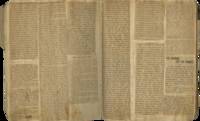
1934réf. 59731934. St. Paul Pioneer Press. May 10 1934 issue documents the federal prosecution of St. Paul bootlegger Leon Gleckman and the government's effort to connect Minnesota's illicit liquor economy with Al Capone's Chicago organization supporting research into Prohibition enforcement organized crime tax prosecutions and regional newspaper coverage of interstate criminal networks. Published during Gleckman's federal trial for attempting to evade income taxes for 1929 through 1931 the issue places a locally prominent defendant within the wider history of federal authorities using financial records and tax law against figures whose illegal enterprises were difficult to prosecute directly. Court records confirm that Gleckman's case concerned substantial unreported income and that his first trial began in April 1934. St. Paul Pioneer Press. St. Paul Minnesota. Thursday May 10 1934. Number of pages and measurements not stated. Front page carries the headline "AL CAPONE NAMED IN GLECKMAN TRIAL" with the subheading "Government Seeks to Show St. Paulite Sold Chicago Rum Baron Alcohol." The article reports the prosecution's attempt to establish that Gleckman supplied alcohol to Capone presenting the trial as evidence of commercial ties between St. Paul and Chicago during the final phase of national Prohibition enforcement. The headline's pairing of Capone's nationally recognized name with a St. Paul defendant also shows how the local press framed Gleckman's financial prosecution through the more publicly legible language of bootlegging and organized crime. The issue appeared five months after repeal of national Prohibition while federal authorities continued prosecuting income generated during the illegal liquor trade. Gleckman was subsequently convicted on two counts of tax evasion after a second trial and the resulting appellate decision preserved extensive evidence concerning unexplained bank deposits and his claimed interest in a distillery. Left-edge binding holes; otherwise clean with no additional defects reported; overall near fine. A sharply focused contemporary account of the federal effort to reconstruct the financial and commercial connections linking St. Paul bootlegging to the better-known Chicago underworld. unknown books
1934réf. 59731934. St. Paul Pioneer Press. May 10 1934 issue documents the federal prosecution of St. Paul bootlegger Leon Gleckman and the government's effort to connect Minnesota's illicit liquor economy with Al Capone's Chicago organization supporting research into Prohibition enforcement organized crime tax prosecutions and regional newspaper coverage of interstate criminal networks. Published during Gleckman's federal trial for attempting to evade income taxes for 1929 through 1931 the issue places a locally prominent defendant within the wider history of federal authorities using financial records and tax law against figures whose illegal enterprises were difficult to prosecute directly. Court records confirm that Gleckman's case concerned substantial unreported income and that his first trial began in April 1934. St. Paul Pioneer Press. St. Paul Minnesota. Thursday May 10 1934. Number of pages and measurements not stated. Front page carries the headline "AL CAPONE NAMED IN GLECKMAN TRIAL" with the subheading "Government Seeks to Show St. Paulite Sold Chicago Rum Baron Alcohol." The article reports the prosecution's attempt to establish that Gleckman supplied alcohol to Capone presenting the trial as evidence of commercial ties between St. Paul and Chicago during the final phase of national Prohibition enforcement. The headline's pairing of Capone's nationally recognized name with a St. Paul defendant also shows how the local press framed Gleckman's financial prosecution through the more publicly legible language of bootlegging and organized crime. The issue appeared five months after repeal of national Prohibition while federal authorities continued prosecuting income generated during the illegal liquor trade. Gleckman was subsequently convicted on two counts of tax evasion after a second trial and the resulting appellate decision preserved extensive evidence concerning unexplained bank deposits and his claimed interest in a distillery. Left-edge binding holes; otherwise clean with no additional defects reported; overall near fine. A sharply focused contemporary account of the federal effort to reconstruct the financial and commercial connections linking St. Paul bootlegging to the better-known Chicago underworld. unknown
1886réf. 56938Olympia W.T.: Thomas H. Cavanaugh Public Printer 1886. 8vo. 555 5 xxvii 1 xv 1 ix 1 pp. Contemporary full calf red black & gilt morocco spine labels minor uniform toning some edgewear minor bumping to corners still VG copy from the library of Bates & Burnett law firm with William Charles Bates 1885-1973 and Milton L. Burnett 1887-1972 who operated for decades in Vancouver WA from before World War I and moved their firm into the Charles Brown historic house in 1945 beginning a local trend of using older homes for professional buildings and George W. Yocum 1827-1890 longtime Portland attorney. First edition of this rare Washington Territory lawbook including the January 29 1886 Alien Land Ownership law which was the only anti-Chinese measure to pass the legislature as well as two laws related to Prohibition advocated by newly empowered women’s suffrage voters. The Alien Land laws emerged out of the anti-Chinese riots in Tacoma WA in November 1885 when labor organizations such as the Knights of Labor with the aid of the Pierce County Sheriff succeeded in forcing all of the Chinese residents out of town as well as torching their homes. Building on the 1882 Federal Chinese Exclusion Acts the Territorial Legislature specifically excluded any “Alien” who were “incapable of becoming citizens of the United States” could neither own land or convey title of properties to heirs. Unfortunately for the Chinese in Seattle this failed to placate socialist firebrands suffragettes & Knights of Labor advocates Laura Hall Peters and Mary Kenworthy or the equally charismatic Knights of Labor organizer Daniel Cronin. In February 1886 hundreds of working-class white men and women on the pretense of enforcing local health regulations condemned buildings in Seattle’s Chinatown and herded over 350 Chinese residents down to the Seattle docks and demanded they ship out. About 200 Chinese embarked for San Francisco and another had to wait six days for another ship setting off a riot and declaration by Washington Territory Governor Squire and President Grover Cleveland. The “Local Option” law passed by the Territorial Legislature in 1886 garnered huge opposition from saloon owners and cases brought resulted in the 1888 ruling against “Local Option” by the Territorial Supreme Court returning the power back to city councils and county commissioners. See: John Putnam Racism and Temperance: The Politics of Class and Gender in Late 19th-Century Seattle The Pacific Northwest Quarterly Vol. 95 No. 2 Spring 2004 pp. 70-81; Mark Lazarus III An Historical Analysis of Alien Land Law: Washington Territory & State 1853-1889 University of Puget Sound Law Review Vol. XII 1989 pp. 197-246. Thomas H. Cavanaugh, Public Printer, unknown
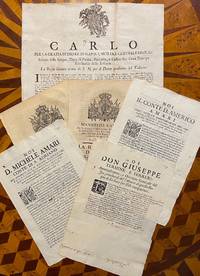
1764réf. 1067Sicily Naples and Turin 1764. Very good. Together 6 items: 1 broadside 46 x 34.5 cm 5 bandi folio sheets each folded once various sizes various wear some signatures clipped others supplied in manuscript assorted manuscript annotations extracted from bindings. Small but very interesting collection of Bandi on the prohibition of tobacco all scarce none are found in OCLC / FirstSearch. As there was no centralized government in Italy the restrictions on Tobacco was a quagmire of regional taxation restriction and monopolization as is attested by the bandi in the present collection. Increasing tobacco consumption in the Italian penensula merited the establishment of fiscal laws by various States. The present items illustrate the expansion of tobacco culture and the disjointed governmental responses from Sicily Naples and Turin: 1. Broadside: Carlo . La Regia Giunta eretta da S.M. per il Dritto proibitivo del Tabacco 3 May 1758. 2. Noi il Conte d' Americo Amari . del gius proibitivo del Tabacco 23 January 1746 2 pp. 3. Noi d' Michele Amari conte de S. Adriano . del Jus prohibendi del Tabacco 23 January 1740 2 pp. 4. Noi Don Giuseppe Termine e Ferreri . del Jus prohibendi del Tabacco 30 November 1733 1 p. 5. Manifesto Camerale per la vendita. de distribuzione del Tabacco nel Luogo di Refrancore 14 May 1762 3 pp. with Tariffs. 6. 5. Manifesto Camerale che ristabilisce la vendita e distribuzione del Tabacco nel Luogo di Rochetta Belbo 13 February 1764 3 pp. with Tariffs. unknown books
1764réf. 1067Sicily Naples and Turin 1764. Very good. Together 6 items: 1 broadside 46 x 34.5 cm 5 bandi folio sheets each folded once various sizes various wear some signatures clipped others supplied in manuscript assorted manuscript annotations extracted from bindings. Small but very interesting collection of Bandi on the prohibition of tobacco all scarce none are found in OCLC / FirstSearch. As there was no centralized government in Italy the restrictions on Tobacco was a quagmire of regional taxation restriction and monopolization as is attested by the bandi in the present collection. Increasing tobacco consumption in the Italian penensula merited the establishment of fiscal laws by various States. The present items illustrate the expansion of tobacco culture and the disjointed governmental responses from Sicily Naples and Turin: 1. Broadside: Carlo . La Regia Giunta eretta da S.M. per il Dritto proibitivo del Tabacco 3 May 1758. 2. Noi il Conte d' Americo Amari . del gius proibitivo del Tabacco 23 January 1746 2 pp. 3. Noi d' Michele Amari conte de S. Adriano . del Jus prohibendi del Tabacco 23 January 1740 2 pp. 4. Noi Don Giuseppe Termine e Ferreri . del Jus prohibendi del Tabacco 30 November 1733 1 p. 5. Manifesto Camerale per la vendita. de distribuzione del Tabacco nel Luogo di Refrancore 14 May 1762 3 pp. with Tariffs. 6. 5. Manifesto Camerale che ristabilisce la vendita e distribuzione del Tabacco nel Luogo di Rochetta Belbo 13 February 1764 3 pp. with Tariffs. unknown
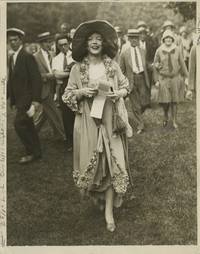
1927réf. List38121New York City: Underwood & Underwood 1927. Press photo measuring 8 x 10 inches. With editorial marks recto and verso Underwood & Underwood stamps and caption verso. Excellent contrast. Some damage to margins and some small areas of ink staining not intersecting with subject. Overall very good to excellent. A glamorous shot of "Texas" Guinan in about 1927 attending opening day at Belmont Park a horse racing track just outside New York City. Guinan 1884-1933 was born Mary Louise Cecilia Guinan in Waco Texas. Trained in singing and horseback riding she typically played a gunslinging girl heroine in "Wild West" shows making it from New York to Hollywood in 1917. She returned east in the 1920s to sing and emcee in clubs-becoming known for her signature "Hello sucker!" greeting-in New York Chicago and Florida working closely with entrepreneur and rumrunner Larry Fay. During this time Guinan became infamous as an alleged though never proven bootlegger; clubs in which she worked were routinely raided throughout Prohibition though charges against her never stuck. She leveraged her fame as "Queen of the Night Clubs" as she is described on the verso of this photograph to return to Hollywood for several unsuccessful autobiographical films and then attempted to tour Europe where her reputation preceded her and her ship was denied entry at every port on which it called.1 1 Debbie Mauldin Cottrell "Mary Guinan: The Trailblazing Texas Star of Broadway and Hollywood" Texas State Historical Association Handbook of Texas Online accessed May 26 2026 https://www.tshaonline.org/handbook/entries/guinan-mary-louise-cecilia-texas. Underwood & Underwood unknown books
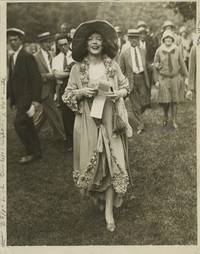
1927réf. List387654379New York City: Underwood & Underwood 1927. Press photo measuring 8 x 10 inches. With editorial marks recto and verso Underwood & Underwood stamps and caption verso. Excellent contrast. Some damage to margins and some small areas of ink staining not intersecting with subject. Overall very good to excellent. A glamorous shot of "Texas" Guinan in about 1927 attending opening day at Belmont Park a horse racing track just outside New York City. Guinan 1884-1933 was born Mary Louise Cecilia Guinan in Waco Texas. Trained in singing and horseback riding she typically played a gunslinging girl heroine in "Wild West" shows making it from New York to Hollywood in 1917. She returned east in the 1920s to sing and emcee in clubs-becoming known for her signature "Hello sucker!" greeting-in New York Chicago and Florida working closely with entrepreneur and rumrunner Larry Fay. During this time Guinan became infamous as an alleged though never proven bootlegger; clubs in which she worked were routinely raided throughout Prohibition though charges against her never stuck. She leveraged her fame as "Queen of the Night Clubs" as she is described on the verso of this photograph to return to Hollywood for several unsuccessful autobiographical films and then attempted to tour Europe where her reputation preceded her and her ship was denied entry at every port on which it called.1 1 Debbie Mauldin Cottrell "Mary Guinan: The Trailblazing Texas Star of Broadway and Hollywood" Texas State Historical Association Handbook of Texas Online accessed May 26 2026 https://www.tshaonline.org/handbook/entries/guinan-mary-louise-cecilia-texas. Underwood & Underwood unknown books
1927réf. List38121New York City: Underwood & Underwood 1927. Press photo measuring 8 x 10 inches. With editorial marks recto and verso Underwood & Underwood stamps and caption verso. Excellent contrast. Some damage to margins and some small areas of ink staining not intersecting with subject. Overall very good to excellent. A glamorous shot of "Texas" Guinan in about 1927 attending opening day at Belmont Park a horse racing track just outside New York City. Guinan 1884-1933 was born Mary Louise Cecilia Guinan in Waco Texas. Trained in singing and horseback riding she typically played a gunslinging girl heroine in "Wild West" shows making it from New York to Hollywood in 1917. She returned east in the 1920s to sing and emcee in clubs-becoming known for her signature "Hello sucker!" greeting-in New York Chicago and Florida working closely with entrepreneur and rumrunner Larry Fay. During this time Guinan became infamous as an alleged though never proven bootlegger; clubs in which she worked were routinely raided throughout Prohibition though charges against her never stuck. She leveraged her fame as "Queen of the Night Clubs" as she is described on the verso of this photograph to return to Hollywood for several unsuccessful autobiographical films and then attempted to tour Europe where her reputation preceded her and her ship was denied entry at every port on which it called.1 1 Debbie Mauldin Cottrell "Mary Guinan: The Trailblazing Texas Star of Broadway and Hollywood" Texas State Historical Association Handbook of Texas Online accessed May 26 2026 https://www.tshaonline.org/handbook/entries/guinan-mary-louise-cecilia-texas. Underwood & Underwood unknown
1927réf. List387654379New York City: Underwood & Underwood 1927. Press photo measuring 8 x 10 inches. With editorial marks recto and verso Underwood & Underwood stamps and caption verso. Excellent contrast. Some damage to margins and some small areas of ink staining not intersecting with subject. Overall very good to excellent. A glamorous shot of "Texas" Guinan in about 1927 attending opening day at Belmont Park a horse racing track just outside New York City. Guinan 1884-1933 was born Mary Louise Cecilia Guinan in Waco Texas. Trained in singing and horseback riding she typically played a gunslinging girl heroine in "Wild West" shows making it from New York to Hollywood in 1917. She returned east in the 1920s to sing and emcee in clubs-becoming known for her signature "Hello sucker!" greeting-in New York Chicago and Florida working closely with entrepreneur and rumrunner Larry Fay. During this time Guinan became infamous as an alleged though never proven bootlegger; clubs in which she worked were routinely raided throughout Prohibition though charges against her never stuck. She leveraged her fame as "Queen of the Night Clubs" as she is described on the verso of this photograph to return to Hollywood for several unsuccessful autobiographical films and then attempted to tour Europe where her reputation preceded her and her ship was denied entry at every port on which it called.1 1 Debbie Mauldin Cottrell "Mary Guinan: The Trailblazing Texas Star of Broadway and Hollywood" Texas State Historical Association Handbook of Texas Online accessed May 26 2026 https://www.tshaonline.org/handbook/entries/guinan-mary-louise-cecilia-texas. Underwood & Underwood unknown
1930réf. BK0040Texas 1930. Journal measuring 9 ¼ x 7 ¾ inches 67 double-sided pages filled thoroughly with many loose newspaper clippings tucked inside. Many pages with newspaper clippings pasted over writing some fairly loosely attached. Cover heavily worn good; contents worn and somewhat delicate though generally very good or better. With appx. 200 sheets of other material mainly 5 x 8 inch note papers generally good to very good. Overall very good. The scrapbook journal and papers of a Texas preacher likely the Methodist reverend Charles B. Garrett documenting his anti-alcohol stance and his efforts to come up with convincing empirical arguments in favor of Prohibition. The journal begins in about 1900 or 1901 starting with numerous newspaper clippings concerning alcohol-induced killings domestic violence and other tragedies. Alongside the clippings are Garrett's own notes and writing. These include some fully thought-out short essays on topics like the Woman's Christian Temperance Union the Association Against the Prohibition Amendment and drinking rates alcohol-related death rates crime and so on. For example Garrett writes: "These boys and girls who are determined to drink because the government has prohibited the sale of intoxicants come as a rule from fathers and mothers who have failed to endow their sons and daughters with elimental sic decency. Yet the wets make the best of this. It is a fact. Drinking flask toting and cocktail jerking is not done in the best American society. . Bottle made conversation is never worth listening to only fools are entertained by such." He also comments on certain Texas happenings in particular including the impeachment of anti-Prohibition Governor James Ferguson appearing to blame Ferguson's behavior on drink. Next to clippings about Texas v James E Ferguson he writes: "A self confessed degenerate / An impeached Governor / A proven grafter using the state money to pay his own debts . a. To hell with these cigarette smoking boys my pockitt book is my principal / b. I am a degenerate son of a noble sire". However his writing is typically tempered with the acknowledgement that "this is a public question with two sides and this is a free country or is supposed to be therefore each individual has the right of choice." His aim seems to have been to construct an argument for Prohibition using rather than moral rhetoric as much convincing empirical evidence as he could; entries often include specific statistics such as crime and car accident rates rates before and after bans on alcohol sales in Texas counties. He also shows great consideration for the opposing side's arguments; for instance a more stream-of-consciousness entry reads: "1 The all important Q is shall a man be deprived of selling what he pleases - this is an inalienable right. 2 Any man has the absolute right to buy liquor. Minors are not allowed. We got ar sic right to do these things - it is God gave it. Dont 14 chapter on thithing sic. There is the whole field of the liquor question covered. . The law provides that it may be sold for every purpose . Prohibition is violation of the Holy Scriptures / Will one of you who laughed at his ridicule tell where he found the scripture / No man new wine in old bottles / The ax is laid at the root of the tree. / Paul said take wine for the stomach sick / We don't prohibit we regulate. . Our forefathers fought for these rights / Sam Houston and others ." In another similarly free-associative entry his reasons against prohibition include that "It is boy's nature to do what you say he shan't" "Can't make men good by law" and "I drank boat loads of it but harmed nobody"; and he remarks that "Men who have strong opinions on one side of a subject will not see the other side." These stream-of-consciousness entries sometimes veer into the bizarre such as the following entry titled "Anecdotes": "Get 'em in the open. Like the cowboy who saw a bald headed man on the train out West scratching the fringe of hair at the base of his skull. The cowboy leaned forward and said: 'Stranger if you will run them up into the clearing you can catch em' / Got his eyes open - Old Sook John and Dad / The Arkansas girl and the Texas Cowboy. / The negro who grew in grace. / The stammering boy and his palseyed Dad / The stammering a peculiarity. / The two men who bought a fan each one wore his out fanning while the other kept his by holding the fan still moving his head from side to side. / The Lousanna sic man who drank corn whiskey till he saw so many snakes that he decided to start a snake show / Mr Nesbitt and his namesake / A rabbit took a drink of No 4 and broke the latch on a bull dog's door / A peckerwood took a drink of No 3 and peeled the bark from a hickory tree / A bull frog took a drink from No 2 and when he jumped he fairly flew / A mouse took a drink from No 1 and said I am a cat lickin son of a gun." The journal continues throughout and after Prohibition. An entry from during Prohibition again focusing on opposition arguments reads: "The U.S. has stood the depression better than most any nation. We have had to lend several of the soaking wet nations money to keep them out of bankruptcy. Irving Fisher. Why do you oppose the 18A It destroys my personal liberty . / When I want a drink I want to walk right in and take it / Women didnt drink till the 18th A was adopted / Pro. made bootleggers / It interferes with my personal liberty . / Americans will not stand for any one saying they shall not they shall not do this or that." After the repeal his focus shifts somewhat to the moral responsibility of nonvoting "drys" for the evils resulting from legalization. He writes: "The wets now refer to repeal of the 18A. without sic emphasizing the overwhelming majority for repeal and many drys swallow that like they swallowed the diabolical propaganda against the 18A. . No honest person wet or dry will vote for or give their consent to anything that will double drunkenness and increase car accidents and crime if they know it will but that is exactly what every wet voted for and drys who didnt vote consented to and became responsible for if they knew what it was." The loose materials mainly seem to be sermon notes though they also contain a significant amount of Prohibition-related material. These include anecdotes about alcohol-related car accidents; a letter from the Texas Liberal Legion favoring Roosevelt's Beer and Wine Revenue Act with many of Garrett's notes on the back; and mailers with statements and sets of statistics from the Anti-Saloon League of America and the Methodist Episcopal Church's Board of Temperance Prohibition and Public Morals. Overall an engaging if sometimes strange document of a religious leader grappling with the task of convincing people of the Prohibitionist viewpoint. Of interest to historians of Texan prohibition and anti-alcohol views before during and after Prohibition. . unknown books
1930réf. BK0040Texas 1930. Journal measuring 9 ¼ x 7 ¾ inches 67 double-sided pages filled thoroughly with many loose newspaper clippings tucked inside. Many pages with newspaper clippings pasted over writing some fairly loosely attached. Cover heavily worn good; contents worn and somewhat delicate though generally very good or better. With appx. 200 sheets of other material mainly 5 x 8 inch note papers generally good to very good. Overall very good. The scrapbook journal and papers of a Texas preacher likely the Methodist reverend Charles B. Garrett documenting his anti-alcohol stance and his efforts to come up with convincing empirical arguments in favor of Prohibition. The journal begins in about 1900 or 1901 starting with numerous newspaper clippings concerning alcohol-induced killings domestic violence and other tragedies. Alongside the clippings are Garrett's own notes and writing. These include some fully thought-out short essays on topics like the Woman's Christian Temperance Union the Association Against the Prohibition Amendment and drinking rates alcohol-related death rates crime and so on. For example Garrett writes: "These boys and girls who are determined to drink because the government has prohibited the sale of intoxicants come as a rule from fathers and mothers who have failed to endow their sons and daughters with elimental sic decency. Yet the wets make the best of this. It is a fact. Drinking flask toting and cocktail jerking is not done in the best American society. . Bottle made conversation is never worth listening to only fools are entertained by such." He also comments on certain Texas happenings in particular including the impeachment of anti-Prohibition Governor James Ferguson appearing to blame Ferguson's behavior on drink. Next to clippings about Texas v James E Ferguson he writes: "A self confessed degenerate / An impeached Governor / A proven grafter using the state money to pay his own debts . a. To hell with these cigarette smoking boys my pockitt book is my principal / b. I am a degenerate son of a noble sire". However his writing is typically tempered with the acknowledgement that "this is a public question with two sides and this is a free country or is supposed to be therefore each individual has the right of choice." His aim seems to have been to construct an argument for Prohibition using rather than moral rhetoric as much convincing empirical evidence as he could; entries often include specific statistics such as crime and car accident rates rates before and after bans on alcohol sales in Texas counties. He also shows great consideration for the opposing side's arguments; for instance a more stream-of-consciousness entry reads: "1 The all important Q is shall a man be deprived of selling what he pleases - this is an inalienable right. 2 Any man has the absolute right to buy liquor. Minors are not allowed. We got ar sic right to do these things - it is God gave it. Dont 14 chapter on thithing sic. There is the whole field of the liquor question covered. . The law provides that it may be sold for every purpose . Prohibition is violation of the Holy Scriptures / Will one of you who laughed at his ridicule tell where he found the scripture / No man new wine in old bottles / The ax is laid at the root of the tree. / Paul said take wine for the stomach sick / We don't prohibit we regulate. . Our forefathers fought for these rights / Sam Houston and others ." In another similarly free-associative entry his reasons against prohibition include that "It is boy's nature to do what you say he shan't" "Can't make men good by law" and "I drank boat loads of it but harmed nobody"; and he remarks that "Men who have strong opinions on one side of a subject will not see the other side." These stream-of-consciousness entries sometimes veer into the bizarre such as the following entry titled "Anecdotes": "Get 'em in the open. Like the cowboy who saw a bald headed man on the train out West scratching the fringe of hair at the base of his skull. The cowboy leaned forward and said: 'Stranger if you will run them up into the clearing you can catch em' / Got his eyes open - Old Sook John and Dad / The Arkansas girl and the Texas Cowboy. / The negro who grew in grace. / The stammering boy and his palseyed Dad / The stammering a peculiarity. / The two men who bought a fan each one wore his out fanning while the other kept his by holding the fan still moving his head from side to side. / The Lousanna sic man who drank corn whiskey till he saw so many snakes that he decided to start a snake show / Mr Nesbitt and his namesake / A rabbit took a drink of No 4 and broke the latch on a bull dog's door / A peckerwood took a drink of No 3 and peeled the bark from a hickory tree / A bull frog took a drink from No 2 and when he jumped he fairly flew / A mouse took a drink from No 1 and said I am a cat lickin son of a gun." The journal continues throughout and after Prohibition. An entry from during Prohibition again focusing on opposition arguments reads: "The U.S. has stood the depression better than most any nation. We have had to lend several of the soaking wet nations money to keep them out of bankruptcy. Irving Fisher. Why do you oppose the 18A It destroys my personal liberty . / When I want a drink I want to walk right in and take it / Women didnt drink till the 18th A was adopted / Pro. made bootleggers / It interferes with my personal liberty . / Americans will not stand for any one saying they shall not they shall not do this or that." After the repeal his focus shifts somewhat to the moral responsibility of nonvoting "drys" for the evils resulting from legalization. He writes: "The wets now refer to repeal of the 18A. without sic emphasizing the overwhelming majority for repeal and many drys swallow that like they swallowed the diabolical propaganda against the 18A. . No honest person wet or dry will vote for or give their consent to anything that will double drunkenness and increase car accidents and crime if they know it will but that is exactly what every wet voted for and drys who didnt vote consented to and became responsible for if they knew what it was." The loose materials mainly seem to be sermon notes though they also contain a significant amount of Prohibition-related material. These include anecdotes about alcohol-related car accidents; a letter from the Texas Liberal Legion favoring Roosevelt's Beer and Wine Revenue Act with many of Garrett's notes on the back; and mailers with statements and sets of statistics from the Anti-Saloon League of America and the Methodist Episcopal Church's Board of Temperance Prohibition and Public Morals. Overall an engaging if sometimes strange document of a religious leader grappling with the task of convincing people of the Prohibitionist viewpoint. Of interest to historians of Texan prohibition and anti-alcohol views before during and after Prohibition. . unknown
1940réf. 128149Self published 1940s. Circa late 1930s-40s. Vintage ink blotters featuring advertisements for the National Woman's Christian Temperance Union IL one of the largest and most influential groups of the late 19th century focusing primarily on Prohibition by 1900s. These blotters represent the Union's attitude towards all alcohol and cigarets but ultimately feel like cursed fortune cookie messages. Blotters were useful during the heyday of fountain pens device that tended to bleed ink to be placed behind the parchment to absorb the excess ink and keep safe any surfaces beneath. Other blotters featuring the Union's temperance ads include loyalty patriotism auto accidents drinking and driving and many are duplicated messages on different colors of stock. About 3 x 6 inches card stock printed on rectos plain verso. Very Good overall light foxing rubbing toning a few light bumps and small creases. Self published unknown
1915réf. 101596Prohibition ephemera cardboard beer mug advertisement color on one side printed message on the reverse. Some aging and darkening; but in excellent shape overall.Sponsored by Steuben Taverns in New York City this cardboard beer mug urges people to write their Congressman and let him know "That You Want Beer." It suggests that beer can be taxed which is a good incentive. The ad mentions Ruppert's Beer on Draught and tells people to hang these mugs in their cars. It also lists the various Steuben Taverns in New York City. books
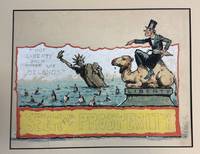
1933réf. 41184n.p. 1933. 8" x 12". Original color painting on Abacco illustration board matted and framed behind glass. Vibrant colors with some pencil sketch lines showing through. Unsigned and uninitialed. Corners chipped a closed crack in lower left corner. On verso of board is the name of the type of board and available dimensions "Paints Brush and Color Corporation" with distributors listed as E.H. & A.C. Friedrichs Co. of New York The Hirshberg Company of Baltimore and Henry M. Taws of Philadelphia. Very Good. Ours is the only copy located after diligent investigation. The camel which Thomas Nast chose as the symbol of the Prohibition Party has replaced the Statue of Liberty on the pedestal. Camels don't drink very often; when they do they only drink water. This item was likely painted between 1931 and 1933. The official Beer for Prosperity Campaign was organized May 1931 in New York City. Edward H. Schulze was director of the organization and announced that he would support all political candidates in favor of legalizing beer. The slogan spread over the next year and a half. Posters for this campaign in 1932 advertised that legalizing beer would bring two trillion dollars in new revenue in four years because "millions of dollars made from bootleg Beer now finances all kinds of crimes kidnappings etc." Another campaign poster advertised purchases of "Beer for Prosperity" Stamps to "Help Elect to Congress Men Who Will Vote 'Yes.'" Beer for Prosperity Campaign. n.d. In John J. Raskob papers. Manuscripts and Archives Hagley Museum and Library #m473_20100624_005; "Beer For Prosperity Campaign Inc. Will Back Pierce's Congressional Candidacy" The Rutland Daily Herald 23 August 1932 p.7. We do not know who painted this imaginative item. E.H. & A.C. Friedrichs Company was founded in 1868 and is still in business today under the modern name of Fredrix. The Hirshberg Company originated in 1845 as Hirshberg Hollander & Company and remained in business under a few different Hirshberg names until approximately the early 1960s. Henry B. Taws opened in Philadelphia around 1897 and remained in business until at least 1931. unknown books
1933réf. 157897Cincinnati: Romach and Groene 1933. Vintage photograph of the first legal whiskey produced in Ohio during prohibition at the Carthage Distilling Company in Cincinnati with contemporary annotations of location dates and personnel and a "Rombach and Groene Commercial Photographers Cincinnati Ohio" stamp on the verso. A fascinating prohibition artifact depicting fifteen men and one woman standing in a warehouse before a stack of three whiskey barrels the topmost barrel prominently marked "1" less than two months before the passage of the 21st Amendment December 5 1933 repealing prohibition. On the verso in a contemporary hand is written: "First Barrel Whiskey produced in the State of Ohio since the 18th amendment became effective / manufactured and produced at the Carthage Distilling Corpn. plant Cincinnati Ohio / mashed under date Oct. 20th 1933 / drawn and entered under date Oct. 23rd 1933." Cincinnati Ohio second only to Louisville Kentucky in the production of bourbon prior to the end of prohibition was best known during prohibition as the headquarters for the "King of Bootleggers" George Remus. Cincinnati was located within a 300 mile radius of 80 percent of all of America's bonded whiskeys making it an ideal location for a massive bootlegging enterprise as well as for the headquarters to the Schenley Distillery one of only six distilleries nationwide with a license to sell medicinal spirits during prohibition. An October 26 1933 article from the Cincinnati Enquirer entitled "Big Blending Plant Planned For Reading; First Legal Whisky In Ohio Is Produced" confirms the annotations on the photograph "Simultaneously with the actual production of medicinal whisky at its plant in Carthage-said to be the first legal whisky turned out in Ohio since prohibition-it became known yesterday that the National Distillers Products Corporation New York largest distiller in the country will locate one of its major blending and bottling plants in the immediate vicinity of Cincinnati." The article continues "The Carthage Distillery on Anthony Wayne Avenue Carthage is the only distillery now operating in the state of Ohio." In 1933 the Carthage Distilling Company was acquired by the National Distillers Products Corporation and in 1987 was bought by Jim Beam. Established in 1883 Cincinnati photographers Rombach and Groene specialized in commercial and landscape photography. In 2001 the Cincinnati Museum Center acquired the Rombach and Groene Collection a collection of over 6500 glass and film negatives and a hundred prints dating from 1870 to 1970. The company closed in 1973. 10 x 8 inches. Very Good with some modest creasing four small bruises and a small repair to the surface of the image to the center right. Romach and Groene unknown books
1920réf. LIST120American 1920. Gelatin silver photograph 5 ½ x 3 ½ inches on Cyko stock photo paper. Very Good. A scarce photograph of a bootlegging operation c. early 1920s. The photograph is printed on Cyko stock which was used through the early 1920s. Few images of bootleggers have survived. The six men in the picture look quite serious in their work and it's difficult to imagine why they allowed a picture to be taken. A very good example with good contrast well preserved. unknown books
1889réf. 30728New York: The National Temperance Society and Publication House 1889. Original printed wrappers some edge and spine chipping rear wrapper detached but present and original staples. 36pp. Clean text. Except as noted Very Good. In 1881 Kansas enacted a constitutional amendment prohibiting the manufacture or sale of alcoholic beverages. Doing so was a misdemeanor punishable by fine or imprisonment. The amendment effectively rendered Peter Mugler who operated a brewery unemployed. He brought suit claiming that Kansas had unconstitutionally deprived him of his property in violation of the Fourteenth Amendment to the U.S. Constitution. Writing for the Court Justice Harlan-- who would issue a powerful dissent several years later in the notorious case of Plessy vs. Ferguson-- held that the amendment was a permissible exercise of the State's police powers which have always been reserved to the States as an attribute of their sovereignty. The rear wrapper advertises works sponsored by the National Temperance Society. OCLC locates eleven copies under two accession numbers as of November 2013. The National Temperance Society and Publication House unknown books
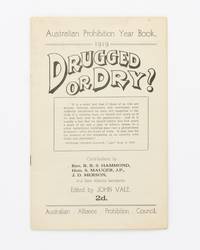
1919réf. 102605Melbourne: Australian Alliance Prohibition Council 1919. Very Good. Melbourne Australian Alliance Prohibition Council 1919. Octavo 32 pages including title-wrappers. Saddle-stapled; minimal signs of use and age; an excellent copy. The third year book issued by the Council. Australian Alliance Prohibition Council unknown
1889réf. 30728New York: The National Temperance Society and Publication House 1889. Original printed wrappers some edge and spine chipping rear wrapper detached but present and original staples. 36pp. Clean text. Except as noted Very Good. In 1881 Kansas enacted a constitutional amendment prohibiting the manufacture or sale of alcoholic beverages. Doing so was a misdemeanor punishable by fine or imprisonment. The amendment effectively rendered Peter Mugler who operated a brewery unemployed. He brought suit claiming that Kansas had unconstitutionally deprived him of his property in violation of the Fourteenth Amendment to the U.S. Constitution. Writing for the Court Justice Harlan-- who would issue a powerful dissent several years later in the notorious case of Plessy vs. Ferguson-- held that the amendment was a permissible exercise of the State's police powers which have always been reserved to the States as an attribute of their sovereignty. The rear wrapper advertises works sponsored by the National Temperance Society. OCLC locates eleven copies under two accession numbers as of November 2013. The National Temperance Society and Publication House unknown
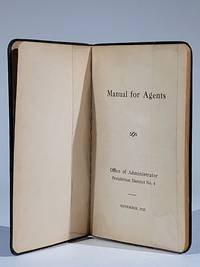
1925réf. 965Pittsburgh: Office of Administrator Prohibition District No. 4 1925. Cloth over flexible boards. Sixteenmo. ii 53 pages. Near fine. Bound in black cloth over flexible boards with no exterior titles. A few faint spots to lower board. Binding sound. A rare manual issued by Prohibition District No. 4 Pittsburgh as a pocket guide to help its Revenue and Prohibition agents build strong cases as they enforced the Volstead Act in the field. The contents are distilled ha from Treasury Department Regulations 12 and 60 and aimed at avoiding procedural mistakes during investigations sting operations and arrests. Think Eliot Ness making sure his "i"s are dotted and "t"s are crossed so the bootleggers don't walk on a technicality. Office of Administrator, Prohibition District No. 4 unknown
1933réf. 41184n.p. 1933. 8" x 12". Original color painting on Abacco illustration board matted and framed behind glass. Vibrant colors with some pencil sketch lines showing through. Unsigned and uninitialed. Corners chipped a closed crack in lower left corner. On verso of board is the name of the type of board and available dimensions "Paints Brush and Color Corporation" with distributors listed as E.H. & A.C. Friedrichs Co. of New York The Hirshberg Company of Baltimore and Henry M. Taws of Philadelphia. Very Good. Ours is the only copy located after diligent investigation. The camel which Thomas Nast chose as the symbol of the Prohibition Party has replaced the Statue of Liberty on the pedestal. Camels don't drink very often; when they do they only drink water. This item was likely painted between 1931 and 1933. The official Beer for Prosperity Campaign was organized May 1931 in New York City. Edward H. Schulze was director of the organization and announced that he would support all political candidates in favor of legalizing beer. The slogan spread over the next year and a half. Posters for this campaign in 1932 advertised that legalizing beer would bring two trillion dollars in new revenue in four years because "millions of dollars made from bootleg Beer now finances all kinds of crimes kidnappings etc." Another campaign poster advertised purchases of "Beer for Prosperity" Stamps to "Help Elect to Congress Men Who Will Vote 'Yes.'" Beer for Prosperity Campaign. n.d. In John J. Raskob papers. Manuscripts and Archives Hagley Museum and Library #m473_20100624_005; "Beer For Prosperity Campaign Inc. Will Back Pierce's Congressional Candidacy" The Rutland Daily Herald 23 August 1932 p.7. We do not know who painted this imaginative item. E.H. & A.C. Friedrichs Company was founded in 1868 and is still in business today under the modern name of Fredrix. The Hirshberg Company originated in 1845 as Hirshberg Hollander & Company and remained in business under a few different Hirshberg names until approximately the early 1960s. Henry B. Taws opened in Philadelphia around 1897 and remained in business until at least 1931. unknown
1933réf. 157897Cincinnati: Romach and Groene 1933. Vintage photograph of the first legal whiskey produced in Ohio during prohibition at the Carthage Distilling Company in Cincinnati with contemporary annotations of location dates and personnel and a "Rombach and Groene Commercial Photographers Cincinnati Ohio" stamp on the verso. A fascinating prohibition artifact depicting fifteen men and one woman standing in a warehouse before a stack of three whiskey barrels the topmost barrel prominently marked "1" less than two months before the passage of the 21st Amendment December 5 1933 repealing prohibition. On the verso in a contemporary hand is written: "First Barrel Whiskey produced in the State of Ohio since the 18th amendment became effective / manufactured and produced at the Carthage Distilling Corpn. plant Cincinnati Ohio / mashed under date Oct. 20th 1933 / drawn and entered under date Oct. 23rd 1933." Cincinnati Ohio second only to Louisville Kentucky in the production of bourbon prior to the end of prohibition was best known during prohibition as the headquarters for the "King of Bootleggers" George Remus. Cincinnati was located within a 300 mile radius of 80 percent of all of America's bonded whiskeys making it an ideal location for a massive bootlegging enterprise as well as for the headquarters to the Schenley Distillery one of only six distilleries nationwide with a license to sell medicinal spirits during prohibition. An October 26 1933 article from the Cincinnati Enquirer entitled "Big Blending Plant Planned For Reading; First Legal Whisky In Ohio Is Produced" confirms the annotations on the photograph "Simultaneously with the actual production of medicinal whisky at its plant in Carthage-said to be the first legal whisky turned out in Ohio since prohibition-it became known yesterday that the National Distillers Products Corporation New York largest distiller in the country will locate one of its major blending and bottling plants in the immediate vicinity of Cincinnati." The article continues "The Carthage Distillery on Anthony Wayne Avenue Carthage is the only distillery now operating in the state of Ohio." In 1933 the Carthage Distilling Company was acquired by the National Distillers Products Corporation and in 1987 was bought by Jim Beam. Established in 1883 Cincinnati photographers Rombach and Groene specialized in commercial and landscape photography. In 2001 the Cincinnati Museum Center acquired the Rombach and Groene Collection a collection of over 6500 glass and film negatives and a hundred prints dating from 1870 to 1970. The company closed in 1973. 10 x 8 inches. Very Good with some modest creasing four small bruises and a small repair to the surface of the image to the center right. Romach and Groene unknown