123,320 results
2001ref. 75748Washington DC: National Academy Press 2001. Presumed First Edition First printing. Hardcover. Very good. William Matthews. xv 1 198 2 pages. Footnotes. Boxes. Illustrations. References. Acronyms Used in this Report. There has been for decades a worldwide consensus in the nuclear technical community for disposal through geological isolation of high-level waste HLW including spent nuclear fuel SNF.1 However none of the national programs established to implement geological disposal has yet succeeded in establishing a geological repository and emplacing HLW in it. The large and growing HLW inventory from civilian and military reactor use over nearly 60 years remains in surface facilities intended only for interim storage. The societal and technical challenges of geological disposal and more broadly of ongoing management of HLW have turned out to be substantially greater than anticipated when the United States and other nations established programs for HLW disposal starting some decades ago. The project that produced this report was initiated by the Board on Radioactive Waste Management the part of the National Research Council responsible for studies on nuclear waste in response to its observation that many nations including the United States were encountering significant difficulties and delays in their plans for geological disposal of HLW. The study committee includes scientists from several nations as well as a variety of disciplinary backgrounds and the study has addressed both the societal and the technical aspects of HLW management. In particular the study addresses the questions of whether and when to implement disposal of HLW through geological isolation rather than focusing exclusively on how to implement geological disposal. This report is intended to provide elected officials and policymakers interested parties among the public and those professionally involved with HLW with an informative overview and with specific insights to aid planning and decision making. National Academy Press hardcover
1995ref. 75031Washington DC: National Academy Press 1995. Presumed First Edition First printing. Trade paperback. Very good. xi 3 418 4 pages. Wraps Footnotes References. Boxes. Tables. Institutional stamp and ink notation on verso page ii. Within the next decade many thousands of U.S. and Russian nuclear weapons are slated to be retired as a result of nuclear arms reduction treaties and unilateral pledges. Hundreds of tons of plutonium and highly enriched uranium will no longer be needed for weapons purposes and will pose urgent challenges to international security. This is the supporting volume to a study by the Committee on International Security and Arms Control which dealt with all phases of the management and disposition of these materials. This technical study concentrates on the option for the disposition of plutonium looking in detail at the different types of reactors in which weapons plutonium could be burned and at the vitrification of plutonium and comparing them using economic security and environmental criteria. This is the supporting volume to a study by the Committee on International Security and Arms Control which dealt with all phases of the management and disposition of these materials. This technical study concentrates on the option for the disposition of plutonium looking in detail at the different types of reactors in which weapons plutonium could be burned and at the vitrification of plutonium and comparing them using economic security and environmental criteria. Within the next decade many thousands of U.S. and Russian nuclear weapons are slated to be retired as a result of nuclear arms reduction treaties and unilateral pledges. Hundreds of tons of plutonium and highly enriched uranium will no longer be needed for weapons purposes and will pose urgent challenges to international security. This is the supporting volume to a study by the Committee on International Security and Arms Control which dealt with all phases of the management and disposition of these materials. National Academy Press paperback
1997ref. 75336Washington DC: National Academy of Sciences 1997. presumed First Edition First printing. Trade paperback. Very good. viii 110 2 pages. Boxes. Notes. Appendixes. Cover has slight wear and soiling. The Committee on International Security and Arms Control CISAC is a standing committee of the National Academy of Sciences. CISAC was created in 1980 to bring the Academy's scientific and technical talent to bear on crucial problems of peace and security. This report was based on an exhaustive reexamination of the issues addressed tin the Committee's 1991 report on The Future of the U.S.-Soviet Nuclear Relationship. It describes the state to which U.S. and Russian nuclear forces and policies have evolved since the Cold War ended the reasons why further evolution is desirable and the shape of a regime of progressive constraints responses to these reasons. It concludes with a discussion of the conditions and means under which in the longer term it could becomes desirable and feasible to prohibit the possession of nuclear weapons altogether. National Academy of Sciences paperback
2013ref. 75357Washington DC: The National Academies Press 2013. Presumed First Edition First printing. Trade paperback. Very good. xiv 103 1 pages. References. Illustrations. Footnotes. Appendices. Acronyms. Pencil erasure residue on title page. Format is approximately 7 inches by 10 inches. In the fall of 2010 the Office of the U.S. Department of Energy's DOE's Secretary for Science asked for a National Research Council NRC committee to investigate the prospects for generating power using inertial confinement fusion ICF concepts acknowledging that a key test of viability for this concept-ignition -could be demonstrated at the National Ignition Facility NIF at Lawrence Livermore National Laboratory in the relatively near term. The committee was asked to provide an unclassified report. However DOE indicated that to fully assess this topic the committee's deliberations would have to be informed by the results of some classified experiments and information particularly in the area of ICF targets and nonproliferation. Thus the Panel on the Assessment of Inertial Confinement Fusion Targets was assembled composed of experts able to access the information. The panel was charged with advising the Committee on the Prospects for Inertial Confinement Fusion Energy Systems on these issues both by internal discussion and by this unclassified report. A Panel on Fusion Target Physics "the panel" will serve as a technical resource to the Committee on Inertial Confinement Energy Systems "the Committee" and will prepare a report that describes the R&D challenges to providing suitable targets on the basis of parameters established and provided to the Panel by the Committee. The Panel on Fusion Target Physics will prepare a report that will assess the current performance of fusion targets associated with various ICF concepts in order to understand: 1. The spectrum output; 2. The illumination geometry; 3. The high-gain geometry; and 4. The robustness of the target design. The panel addressed the potential impacts of the use and development of current concepts for Inertial Fusion Energy on the proliferation of nuclear weapons information and technology as appropriate. The Panel examined technology options but did not provide recommendations. The National Academies Press paperback
1990ref. 74457Washington DC: National Research Council 1990. Presumed First paperback Edition First printing. Trade paperback. Good. xiii 1 421 1 pages. Illustrations. References. Glossary. Index. Ex-library with usual markings. Some markings blacked out. Cover has some wear and soiling and front corner creased. The Committee was asked to conduct a comprehensive review of the biological effects of ionizing radiation focusing on information that had been reported since the conclusion of the BEIR III study and to the extent that available information permitted provide new estimates of the risks of genetic and somatic effects in humans due to low-level exposures of ionizing radiation. These risk estimates were to address both internal and external sources of radiation and the procedures by which these risk estimates were derived was to be documented. The Committee on the Biological Effects of Ionizing Radiation BEIR is a committee of the American National Research Council. It publishes reports on the effects of ionizing radiation. This book reevaluates the health risks of ionizing radiation in light of data that have become available since the 1980 report on this subject was published. The data include new much more reliable dose estimates for the A-bomb survivors the results of an additional 14 years of follow-up of the survivors for cancer mortality recent results of follow-up studies of persons irradiated for medical purposes and results of relevant experiments with laboratory animals and cultured cells. It analyzes the data in terms of risk estimates for specific organs in relation to dose and time after exposure and compares radiation effects between Japanese and Western populations. National Research Council paperback
2005ref. 73692Washington DC: The National Academies Press 2005. Presumed First Edition First printing. Wraps. Very good. xvi 122 pages. Illustrations Figures Tables Boxes and Charts. Acronyms. Footnotes. References. Cover has slight wear and soiling. The global spread of expertise in science and technology and commercial access to advanced technologies with possible military applications could undermine the technological superiority on which U.S. military strength is based. To address this possibility the U.S. intelligence community must provide adequate effective warnings of the evolution of critical technologies. The Technology Warning Division of the Defense Intelligence Agency asked the National Academies to undertake a study of technology warning issues. This report the first part of that study provides an assessment of critical evolving technologies; postulates ways potential adversaries could disrupt their development; and identifies warning signs that disruptive methods are under development. The intention of this report is to establish the foundation for a long-term relationship between the National Academies and the technology warning community to support ongoing studies of technology warning issues. U.S. military strength is built on a foundation of technological superiority that grew from a position of global leadership in relevant technologies and innovative capabilities. That leadership position is no longer assured. The synergistic forces of globalization and commercialization of science and technology are providing current and future adversaries with access to advanced technologies as well as the expertise needed to exploit those technologies. The Defense Intelligence Agency DIA requested that the National Research Council NRC establish the Committee on Defense Intelligence Agency Technology Forecasts and Reviews to conduct meetings with the intelligence community IC in order to develop study topics relating to technology warning. The committee was asked to produce a report based on its discussions with the intelligence community that discusses capabilities upon which U.S. warfighters are dependent and to identify the potential for adversaries to threaten those capabilities through the exploitation of evolving technologies. It is the intent of both the DIA Technology Warning Division as sponsor and the National Research Council that this report which is limited in scope will establish the foundation for a long-term collaborative relationship to support the examination of technology warning issues. It is expected that such examination will be useful not only for the DIA but also for other members of the intelligence community who might need such analyses. It is intended that the current ad hoc committee be disbanded subsequent to the publication of this report and that a standing committee be formed to work with the IC to keep abreast of issues relating to technology warning and to develop specific statements of task for independent ad hoc committees of the NRC to perform. The National Academies Press paperback
2013ref. 73662Washington DC: National Research Council of the National Academies 2013. Presumed First Edition First printing thus. Trade paperback. Very good. xiii 1 95 1 pages. Illustrations some with color. Footnotes. Acronyms. Glossary. References. Cover has slight wear and soiling. Thomas Schelling and Roger Hagengruber were members of the Committee. The Global Nuclear Detection Architecture GNDA is described as a worldwide network of sensors telecommunications and personnel with the supporting information exchanges programs and protocols that serve to detect analyze and report on nuclear and radiological materials that are out of regulatory control. The Domestic Nuclear Detection Office DNDO an office within the Department of Homeland Security DHS coordinates the development of the GNDA with its federal partners. Performance Metrics for the Global Nuclear Detection Architecture considers how to develop performance measures and quantitative metrics that can be used to evaluate the overall effectiveness and report on progress toward meeting the goals of the GNDA. According to this report two critical components are needed to evaluate the effectiveness of the GNDA: a new strategic plan with outcome-based metrics and an analysis framework to enable assessment of outcome-based metrics. The GNDA is a complex system of systems meant to deter and detect attempts to unlawfully transport radiological or nuclear material. The recommendations of Performance Metrics for the Performance Metrics for the Global Nuclear Detection Architecture may be used to improve the GNDA strategic plan and the reporting of progress toward meeting its goals during subsequent review cycles. Derived from an institutional website: Society is facing an array of complex policy questions. The National Academies of Sciences Engineering and Medicine are distinctively qualified to provide nonpartisan objective guidance for decision makers on pressing issues. As we have done since our founding in 1863 we marshal the energy and intellect of the nation's critical thinkers to respond to policy challenges with science engineering and medicine at their core. Through a meticulous process of information collection evidence analysis and deliberation our studies provide blueprints for progress. By shining a spotlight on subjects and facilitating dialogue across disciplines our work advances understanding of critical issues. The needs of the nation-and therefore the topics we study- change over time but our commitment to putting sound advice to work for the public good does not. The work of the National Academies spurs progress by connecting understandings of science engineering and medicine to advising national policies and practice. Our studies have lasting impacts from guiding NASA's agenda for space exploration to charting the course for improving the quality of health care to proposing effective strategies to guard against cyberattacks. When faced with a complex question we bring together experts from across disciplines to look at the evidence with fresh eyes and openness to insights from other fields. These study committees survey the landscape of relevant research hold public meetings to gather information and deliberate to reach consensus which results in a shared understanding of what the evidence reveals and the best path forward. We shield committee deliberations and conclusions from influence by sponsors and special interests and make certain each report undergoes rigorous peer review to ensure that our advice is grounded in the best available evidence. This provides policy makers assurance that the results reflect the facts and the combined expertise of the science engineering and medical communities. The National Academies also convene workshops symposia and other events that bring together experts and practitioners to consider issues related to science engineering and medicine and their implications for policy and practice. In a space free from partisan pressures and preset agendas participants share their own research and perspectives and also look beyond them-making connections within and across disciplines sharpening questions sparking new ideas and exploring possible solutions. Some workshops focus on specialized areas while others tackle big questions. When necessary we can swiftly gather the nation's top minds to address matters of urgent importance such as how to combat an emerging virus or respond to a natural disaster. When there is a need for ongoing dialogue our roundtables and forums-which are organized around a topic-offer stakeholders an opportunity to build relationships and unravel complicated issues over time. Regardless of the format these gatherings go beyond bringing people together. They advance conversation catalyze movement around an issue and generate bold ideas. National Research Council of the National Academies paperback
1980ref. 73715Reading MA: TASC 1980. Presumed First Edition First printing this. Spiral bound. Good. Unpaginated. Cover has some wear and soiling. Some wear to tabs. Spiral binder has large dent in it. RARE. Typically these reports do not survive to reach the history of technology and rare book marketplace. This document is a reference manual of Western-manufactured inertial navigation and guidance components and systems. The material herein was obtained from various open-literature sources specific product data sheets and interviews with personnel from certain hardward manufacturers. This manual represents a compendium of all pertinent inertial system ahnd component data gathered during the contract period. Where possible the distinction is made between components and systems manufactured under license from U. S> firms and those developed and manufatcured solely by foreign firms. The material in this manual is presented in the form of annotated briefing charts. TASC Inc. formerly known as The Analytic Sciences Corporation Inc. is a private defense contractor based outside Washington D.C. in Chantilly Virginia. Northrop Grumman owned TASC from 2001 to 2009 when it sold the unit to comply with new government conflict of interest rules. The firm describes itself as "a leading provider of enterprise systems engineering mission-enabling architectures and value-based solutions for the national security and public safety markets." TASC merged with Engility in late 2014 bringing expertise in enterprise systems engineering mission-enabling architectures and value-based solutions for the national security and public safety markets. Engility was launched in 2012 as an independent company made up of leading businesses within L-3's Government Services segments: including MPRI Command & Control Systems and Software C2S2 Global Security & Engineering Solutions GS&ES Linguist Operations & Technical Support LOTS and Engility Corporation and International Resources Group IRG. Engility's core businesses are renowned for providing critical services and support to the U.S. Department of Defense Federal civilian agencies and allied foreign governments with work spanning several decades. We are very proud of our collective histories and we've combined our capabilities under one brand to expand our market-leading positions to address the current market opportunities and enhance value for our customers. The following are some of the leading businesses and services that form who we are today. TASC unknown
2010ref. 73685Washington DC: The National Academies Press 2010. Presumed First Edition First printing. Marked "Official Use Only" and "Limited Distribution". Wraps. Very good. xii 94 pages. Illustrations. Boxed text. Footnotes. References. Acronyms. Dissenting statement by W. Earl Boebert. Roger Hagengruber was a Committee member. Stiff card cover in cloth spine. Ink notation on front. An abbreviated version of about 30 pages was published in 2011. The mission of the National Academies of Sciences Engineering and Medicine is to improve government decision making and public policy increase public understanding and promote the acquisition and dissemination of knowledge in matters involving science engineering technology and health. Our reports and other scientific activities inform policies and actions that can improve the lives of people in the U.S. and around the world. Our major programs conduct studies facilitate workshops and undertake other activities: Behavioral and Social Sciences and Education; Earth and Life Studies; Engineering and Physical Sciences; Health and Medicine; Policy and Global Affairs; Transportation Research Board; and the Gulf Research Program. The Council's rules and regulations govern this work. It is understood that the distribution limitation has expired with the passage of time and publication of the abbreviated version. A nuclear weapon or a significant quantity of special nuclear material SNM would be of great value to a terrorist or other adversary. It might have particular value if acquired from a U.S. facility-in addition to acquiring a highly destructive tool the adversary would demonstrate an inability of the United States to protect its nuclear assets. The United States expends considerable resources toward maintaining effective security at facilities that house its nuclear assets. However particularly in a budget-constrained environment it is essential that these assets are also secured efficiently meaning at reasonable cost and imposing minimal burdens on the primary missions of the organizations that operate U.S. nuclear facilities. It is in this context that the U.S. Congress directed the National Nuclear Security Administration NNSA-a semi-autonomous agency in the U.S. Department of Energy DOE responsible for securing nuclear weapons and significant quantities of SNM-to ask the National Academies for advice on augmenting its security approach particularly on the applicability of quantitative and other risk-based approaches for securing its facilities. In carrying out its charge the committee has focused on what actions NNSA could take to make its security approach more effective and efficient. The committee concluded that the solution to balancing cost security and operations at facilities in the nuclear weapons complex is not to assess security risks more quantitatively or more precisely. This is primarily because there is no comprehensive analytical basis for defining the attack strategies that a malicious creative and deliberate adversary might employ or the probabilities associated with them. However using structured thinking processes and techniques to characterize security risk could improve NNSA's understanding of security vulnerabilities and guide more effective resource allocation. Over the course of the study the committee identified three key shortcomings in NNSA's current security approach: 1 the interactions and dependencies among security countermeasures; 2 the interactions between DOE/NNSA and other organizations responsible in part for preparing for or responding to an attack on NNSA facilities; and 3 the adequacy of attack scenarios used to design update and test the security systems to consider all possible attack scenarios. As a first step in addressing these shortcomings the committee recommends that NNSA adopt what the committee termed a "total systems approach" to characterize the interactions and dependencies of security countermeasures at its facilities. Such an approach is commonly used as an initial step in assessing the risks associated with a complex technological system. However performing such an analysis is not sufficient for implementing highly effective security. Coordination communication and joint exercises that include all relevant security organizations are also necessary. In addition it is essential to understand the adversary. This involves understanding adversary objectives goals and in particular how adversaries view the security system. The committee's approach could help DOE to better understand a range of potentially unexpected vulnerabilities and attack scenarios. The National Academies Press paperback
2005ref. 73665Washington DC: The National Academies Press 2005. Presumed First Edition First printing. Trade paperback. Very good. xv 1 250 pages. Footnotes. Illustrations figures tables and boxes. Acronyms. Biographical Sketches of Committee Members. Cover has slight wear and soiling. Among the members were: John Steinbruner Susan Eisenhower Richard Garwin Rose Gottemoeller Spurgeon Keeney Albert Narath and Wolfgang Panofsky. In the United States and many other countries policy-makers are working to minimize the proliferation of nuclear weapons prevent terrorists from acquiring them and reduce the risks posed by existing nuclear arsenals. A new report from the National Academy of Sciences addresses the technical and institutional approaches and capabilities in transparency and monitoring that could be applied to any or all of these goals. The report does not analyze or make recommendations about the choices in U.S. nuclear weapon and nonproliferation policies or priorities that will continue to shape the context within which such approaches and capabilities might be applied. Save Cancel Bottom of Form 1 dressed not only nuclear issues but also those connected with chemical and biological weapons space weaponry and national missile defense and conventional forces and the arms trade. The year 2005 marked the 25th anniversary of the creation of the Committee on International Security and Arms CISAC by the National Academy of Sciences NAS. CISAC was formed at a time when the risks to the world from nuclear weapons seemed to be increasing. During a time of extraordinary tensions in U.S.-Soviet relations CISAC provided a nongovernmental channel of communication between Soviet and American scientists as a vehicle for exploring ways to reduce nuclear dangers. For several years the private off-the-record dialogue between CISAC and its Soviet counterpart group was one of the few links through which well-informed policy-connected individuals on the two sides could interact to pursue solutions to key technical problems related to nuclear arms control. Even after formal U.S.-Soviet arms control negotiations resumed the CISAC-initiated dialogues continued to be invaluable offering a vehicle for "back channel" discussions that were both less constrained and more analytical than those being pursued officially. In the 25 years since it was founded CISAC has broadened its efforts to include: bilateral dialogues and related workshops with similarly constituted groups in China and India; bilateral and multilateral meetings with European academies; the conduct of major studies of security and arms control problems and policies; the instigation of additional studies by specially constituted panels within the National Academies; and the organization of symposia and workshops to inform Academy members the wider technical community and the public at large about key issues at the intersection of science and technology with international security. The National Academies Press paperback
1997ref. 73931W: National Academy Press 1997. Presumed First Edition First printing. Wraps. Very good. viii 55 1 pages. Footnotes. Illustrations. Acronyms and Abbreviations. Text pasted inside front cover addressed a temporary difficulty DOE had in being able to use this report. Inertial confinement fusion ICF is a type of fusion energy research that attempts to initiate nuclear fusion reactions by heating and compressing a fuel target typically in the form of a pellet that most often contains a mixture of deuterium and tritium. To compress and heat the fuel energy is delivered to the outer layer of the target using high-energy beams of laser light electrons or ions. The heated outer layer explodes outward producing a reaction force against the remainder of the target accelerating it inwards compressing the target. A sufficiently powerful set of shock waves can compress and heat the fuel at the center so much that fusion reactions occur. The energy released by these reactions will then heat the surrounding fuel and if the heating is strong enough this could also begin to undergo fusion. The aim of ICF is to produce a condition known as ignition where this heating process causes a chain reaction that burns a significant portion of the fuel. When it was first proposed in the early 1970s ICF appeared to be a practical approach to fusion power production and the field flourished. Experiments during the 1970s and '80s demonstrated that reaching ignition would not be easy. Throughout the 1980s and '90s many experiments were conducted in order to understand the complex interaction of high-intensity laser light and plasma. These led to the design of newer machines much larger that would finally reach ignition energies. The Committee for the Review of the Department of Energy's Inertial Confinement Fusion Program was formed in response to a request from the Department of Energy's DOE's Assistant Secretary for Defense Programs Victor H. Reis that the National Research Council NRC review the DOE's Inertial Confinement Fusion ICF program. The recent declaration of Science Based Stockpile Stewardship SBSS as national policy within the broader Stockpile Stewardship and Management Program implies changes in the nuclear weapons program and resulted in a DOE decision that the ICF program a component of SBSS should undergo regular evaluation to ensure its continuing quality and its capacity to contribute both to SBSS and to other national needs. The committee includes members with expertise in theoretical and experimental plasma physics theoretical and applied hydrodynamics and fluid dynamics high-energy physics nuclear physics laser physics optics and optical engineering laser-plasma interactions and computing and computer science. In addition the membership includes individuals experienced in designing building and managing large experimental facilities. One member has experience in nuclear weapons design and another is a long-time leader of a nongovernmental organization concerned with national nuclear energy and weapons policy. All committee members are recognized as leaders in their respective fields of expertise. Several have served on previous committees that have examined ICF and several have consulted for Lawrence Livermore National Laboratory in various areas. The charge to the committee was as follows: Conduct an initial review to: 1 determine the scientific and technological readiness of the NIF project 2 assess the entire ICF program including program scope balance and priorities; facility operation; experimentation; theory; etc. and make recommendations to facilitate the achievement of the scientific goal which is ignition and 3 evaluate the capabilities of the ICF program in conjunction with NIF to support SBSS. This charge to the committee does not request reassessment of the desirability of the Comprehensive Test Ban Treaty the necessity for SBSS or the nonproliferation aspects of ICF. Nor does it ask for recommendations about whether or not to construct the proposed NIF a decision that involves considerations beyond the scientific and technical issues considered here. National Academy Press paperback
1993ref. 73056Washington DC: National Academy Press 1993. Presumed First Edition/First Printing. Trade paperback. Very good. ix 1 65 1 pages. Footnotes. Publisher's press release laid in. Cover has slight wear and soiling. The situation for human rights in Syria is considered exceptionally poor among international observers. A state of emergency was in effect from 1963 until April 2011 giving security forces sweeping powers of arrest and detention. From 1973-2012 Syria was a single-party state. The authorities have been accused of harassing and imprisoning human rights activists and other critics of the government. Freedom of expression association and assembly are strictly controlled. Women and ethnic minorities face discrimination. According to Human Rights Watch President Bashar al-Assad failed to improve Syria's human rights record in the first 10 years of his rule and Syria's human rights situation remained among the worst in the world. According to Amnesty International the government may be guilty of crimes against humanity based on "witness accounts of deaths in custodyrape= and arbitrary detention" during the crackdown against the 2011 uprising and during the Syrian Civil War. The Committee on Human Rights CHR created in 1976 is a standing membership committee of the United States National Academy of Sciences NAS National Academy of Engineering NAE and National Academy of Medicine NAM institutions composed of many of the world's most distinguished scientists engineers physicians and researchers. The CHR serves as a bridge between the human rights and scientific communities in recognition of the importance of rights protection both for scientific inquiry and the realization of human dignity worldwide. The CHR brings the influence of the National Academies' members to bear on situations of serious human rights concern. It advocates in support of scientists engineers and health professionals subjected to serious human rights abuses worldwide with a focus on individuals targeted for their professional activities and/or for having exercised the universally protected right to freedom of expression which provides a crucial foundation for scientific research and progress. It provides assistance to professional colleagues under threat by linking them to the wider international scientific community and to organizations that provide pro bono legal support and other services. Finally the CHR raises awareness concerning the links between science technology health and human rights including through briefings symposia and use of interactive media. The CHR supported by a staff of human rights professionals is composed of 14 members drawn from the membership of the three Academies and appointed by the Academies' Presidents. The three foreign secretaries of the NAS NAE and NAM are among these members and serve on the committee in an ex officio capacity. More than 1600 members of the National Academies are "CHR Correspondents" who receive regular information on the CHR's activities and frequently make appeals in human rights cases identified by the CHR. Since 1993 the CHR has served as Secretariat of the International Human Rights Network of Academies and Scholarly Societies which brings together national academies and scholarly societies from all regions of the world for the purpose of addressing shared science and human rights concerns. National Academy Press paperback
1921ref. 72197Madison WI: The Wisconsin Academy of Sciences Arts and Letters 1921. Presumed first edition/first printing thus. Hardcover. Good. Volume XX only. Includes the General Index to Transaction volumes I through XX and Bulletins 1-5. 776 pages. Illustrations including fold-outs. Footnotes. Bibliography. List of Officers and Members. Some page discoloration. Appears to be custom bound library quality and bears the name of G. W. Saunders at the bottom of the spine. The Wisconsin Academy of Sciences Arts & Letters is lifelong learning organization founded in 1870 by and for the people of Wisconsin. The Wisconsin Academy produces programs and publications that explore explain and sustain Wisconsin thought and culture. The Wisconsin Academy brings people together at the intersection of the sciences arts and letters to inspire discovery illuminate creative work and foster civil dialogue on important issues. This copy was owned by a G. W. Saunders. It is possible that it was owned by this George Washington Saunders 1854-1933 cattleman who was born in Rancho Texas on February 12 1854. In 1874-75 he became a member of Henry Scott's Minute Company of Refugio which patrolled the Mexican border. In 1873 Saunders served as deputy sheriff under James Burk of Goliad. By 1910 he incorporated the George W. Saunders Livestock Commission Company with offices in San Antonio Fort Worth Kansas City and St. Louis. His company grossed $5 million each year. When the George W. Saunders Live Stock Commission Company dissolved in 1958 it reportedly was the oldest livestock-commission firm operating continuously under the same name in Texas. In addition to his business interests Saunders supervised the management of four ranches and a farm of 700 acres. Saunders's personal letters included communication with Queen Marie of Romania Will Rogers J. Evetts Haley and artists Will James and John Gutzon Borglumqv. All recognized his expertise on the cattle industry. He was largely responsible for bringing Borglum to San Antonio in 1925 to sculpt the Trail Drivers' Memorial Borglum's major Texas work. The model of the Trail Drivers' monument unveiled in January 1926 was cast in bronze in 1940 and displayed outside Pioneer Hall near the Witte Museum. Saunders initiated one of the rodeo's most popular competitive events roping at the San Antonio Fair of 1892. He was instrumental in the construction in 1889 of the Union Station Stock Yards of San Antonio which he later served as a director and general manager. During World War I he served on the local exemption board supported war activities and encouraged war-bond drives. The Old Trail Drivers Association of Texas was organized with Saunders as vice president on February 15 1915. He was elected president in 1917 and served several years. He is recognized for having the foresight and initiative to be the driving force in publishing The Trail Drivers of Texas 1925 a book that has been called the principal source book on cattlemen and cattle drives. He was a member of the Southwestern Cattle Raisers' Association and the Texas Cattle Raisers' Association and contributed objects identified with the range to the Witte Museum. Saunders died on July 3 1933. His body lay in state at the municipal auditorium. The Wisconsin Academy of Sciences, Arts and Letters hardcover
1962ref. 71460Moscow: Academy of Sciences of USSR Central State Military-Historic Archive 1962. Presumed first edition/first printing thus. one of 4 000. Hardcover. Good in fair dust jacket. DJ has some wear and soiling tears and chips. 160 plates p. Includes illustrations. List of illustrations. Glossary. Table of Contents. This is a collection of broadsides by various Imperial Army officers in 1812 during the Napoleonic invasion and after Russian victories. A broadside is a large sheet of paper printed on one side only. 1 Historically broadsides were posters announcing events or proclamations or simply advertisements. Today broadside printing is done by many smaller printers and publishers as a fine art variant with poems often being available as broadsides intended to be framed and hung on the wall. The historical type of broadsides were ephemera i.e. temporary documents created for a specific purpose and intended to be thrown away. They were one of the most common forms of printed material between the sixteenth and nineteenth centuries particularly in Britain Ireland and North America. They were often advertisements but could also be used for news information or proclamations. Academy of Sciences of USSR, Central State Military-Historic Archive hardcover
2004ref. 65186Washington DC: U.S. Department of Energy Office of Science Office of Fusion Energy 2004. Presumed first edition/first printing. Trade paperback. Very good. No dust jacket as issued. COver has some wear and soiling. Includes: illustrations diagrams. Various paginations. This report responded to a letter from the Director Office of Science requesting a review of DOE's Inertial Fusion Energy IFE program to provide an assessment of the present status of the program. A principal conclusion of the report was that 'the quality of IFE science and engineering research is excellent." The panel identified specific contributions that appears especially accessib. e and pointed out the IFE seemed posied to make important contributions to astrophysics. U.S. Department of Energy, Office of Science, Office of Fusion Energy paperback
1971ref. 61248Washington DC: National Academy of Sciences 1971. Presumed first edition/first printing. Wraps. Good. No dust jacket as issued. Previous own's name N. Jay Bassin stamped on front cover. Cover has some wear and soiling. ix 61 p. Figure. Table. References. A Bibliography of Recent Literature. This seminal work is increasingly scarce. The Panel included; Norris Rakestraw; Richard Bader John Bunt; James Carpenter; Dayton Carritt; Gordon Erdman Robert Garrels Edward Goldberg John Hunt Ravid Menzel Timothy Parsons and Richard M. Pytkowicz. In this report the Panel descrive the field of marine chemistry the activities of marine chemists and the nature of the principal probems. The Panel also seeks to indicate the directions in which they expected progress to be made and various ways in which that prograss might be hastened. National Academy of Sciences paperback
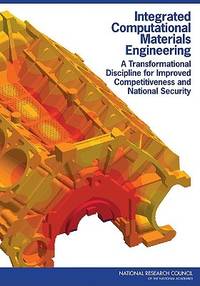
2008ref. 64977Washington DC: The National Academies Press 2008. Presumed first edition/first printing. Trade paperback. Very good. No dust jacket as issued. xiii 137 p. Illustrations color. Integrated computational materials engineering ICME is an emerging discipline that can accelerate materials development and unify design and manufacturing. Developing ICME is a grand challenge that could provide significant economic benefit. To help develop a strategy for development of this new technology area DOE and DoD asked the NRC to explore its benefits and promises including the benefits of a comprehensive ICME capability; to establish a strategy for development and maintenance of an ICME infrastructure and to make recommendations about how best to meet these opportunities. This book provides a vision for ICME a review of case studies and lessons learned an analysis of technological barriers and an evaluation of ways to overcome cultural and organizational challenges to develop the discipline. The National Academies Press paperback
2007ref. 67231Washington DC: The National Academies Press 2007. Presumed first edition/first printing. Trade paperback. Good. Typed letter signed by the two Co-Chairs John Ahearne and Stuart Freedman laid in. Rear cover creased. xii 140 8 p. Occasional footnotes. Illustrations some with cover. Glossary. Author continues: "Rare-Isotope Science Assessment Committee." Over ten years ago U.S. nuclear scientists proposed construction of a new rare isotope accelerator in the United States which would enable experiments to elucidate the important questions in nuclear physics. To help assess this proposal DOE and NSF asked the NRC to define the science agenda for a next-generation U.S. Facility for Rare Isotope Beams FRIB. As the study began DOE announced a substantial reduction in the scope of this facility and put off its initial operation date by several years. The study focused on an evaluation of the science that could be accomplished on a facility reduced in scope. This report provides a discussion of the key science drivers for a FRIB an assessment of existing domestic and international rare isotope beams an assessment of the current U.S. position about the FRIB and a set of findings and conclusions about the scientific and policy context for such a facility. From Wikipedia: "The Facility for Rare Isotopes Beams FRIB is a U.S. Department of Energy Office of Science DOE-SC national user facility supporting the mission of the Office of Nuclear Physics. FRIB will produce large quantities of a wide variety of rare isotopes by breaking stable nuclei into rare isotopes enabling scientists to make discoveries about the properties of rare isotopes in order to better understand the physics of nuclei nuclear astrophysics fundamental interactions and applications for society. The project is funded by DOE-SC Michigan State University and the State of Michigan and is being designed and established by MSU with construction expected to begin on campus in 2013. It will adjoin and upon commencement of operations subsume the National Superconducting Cyclotron Laboratory NSCL at Michigan State University. Currently final design of the FRIB conventional facilities the tunnel and support buildings is complete and ready for construction to begin upon approval from the U.S. Department of Energy. Pre-construction site preparation is complete and pilings for the earth-retention system have been placed. Research and development activities have been successfully completed with much of the R&D work accomplished in collaboration with national laboratories. Final design of the technical systems accelerator and experimental equipment is underway and anticipated to be complete in 2014. Project completion is expected in 2021 managing to early completion in 2019. Across the state of Michigan business and political leaders have called for continued funding of FRIB in support of scientific discovery innovation and economic impact. Articles and editorials are available on the FRIB project web site. FRIB is expected to provide research opportunities for an international community of approximately 1000 university and laboratory scientists postdoctoral associates and graduate students. FRIB will provide researchers with the technical capabilities to study the properties of rare isotopes and to put this knowledge to use in various applications including in materials science nuclear medicine and the fundamental understanding of nuclear material important to nuclear weapons stockpile stewardship. More than 20 working groups specializing in experimental equipment and scientific topics have been organized through the FRIB Users Organization. Based on the analyses and recommendations over the last decade DOE-SC determined that the establishment of a Facility for Rare Isotope Beams FRIB is a high priority for the future of U.S. nuclear science research. This determination and supporting rationale are reflected in the DOE/ National Science Foundation Nuclear Science Advisory Committee s 2007 Long Range Plan and the 2003 DOE report Facilities for the Future of Science: A Twenty-Year Outlook. DOE-SC announced the selection of Michigan State University to design and establish FRIB on December 11 2008 after a rigorous merit review. The National Academies Press paperback
2012ref. 67790Washington DC: The National Academies Press 2012. PResumed first edition/first printing. Trade paperback. Very good. xx 200 p. Illustrations. References. Title continues: Nuclear and Radiation Studies Board DIvision of Earth and Life Studies Board on Higher Education and Workforce Division on Policy and Global Affairs National Research Council of the National Academies. This material is based upon work supported by the U.S. Department of Energy National Nuclear Security Administration and other agencies. The growing use of nuclear medicine the potential expansion of nuclear power generation and the urgent needs to protect the nation against external nuclear threats to maintain our nuclear weapons stockpile and to manage the nuclear wastes generated in past decades require a substantial highly trained and exceptionally talented workforce. Assuring a Future U.S. -Based Nuclear and Radiochemistry Expertise examines supply and demand for expertise in nuclear chemistry nuclear science and radiochemistry in the United States and presents possible approaches for ensuring adequate availability of these skills including necessary science and technology training platforms. Considering a range of reasonable scenarios looking to the future none of these areas are likely to experience a decrease in demand for expertise. However many in the current workforce are approaching retirement age and the number of students opting for careers in nuclear and radiochemistry has decreased dramatically over the past few decades. In order to avoid a gap in these critical areas increases in student interest in these careers in the research and educational capacity of universities and colleges and sector specific on-the-job training will be needed. Concise recommendations are given for actions to avoid a shortage of nuclear chemistry nuclear scientists and radiochemists in the future. From Wikipedia: "The National Research Council NRC is the working arm of the United States National Academies which produces reports that shape policies inform public opinion and advance the pursuit of science engineering and medicine. The National Academies include: National Academy of Sciences NAS National Academy of Engineering NAE Institute of Medicine IOM Unlike the other three organizations of the National Academies the National Research Council is not a membership organization. The National Research Council was organized in 1916 in response to the increased need for scientific and technical services caused by World War I. On June 1 1917 the council convened a meeting of scientific representatives of the UK and France with interested parties from the US on the subject of submarine detection. The results obtained and the problems in the work were discussed. A further meeting with the British and French was held in Paris in October 1918 at which more details of their work was disclosed. As a result of this the council recommended that US scientists be brought together to work on the problems. A New York Group worked on "supersonics" as did a San Pedro Group. A New London Group worked on binaural receivers while Chicago and Wisconsin Groups were assigned various problems in support of the other groups. Due to the success of Council-directed research in producing a sound-based method of detecting submarines as well as other military innovations the NRC was retained at the end of the war though it was gradually decoupled from the military. The Research Council is currently administered jointly by the National Academy of Sciences the National Academy of Engineering and the Institute of Medicine and its work is overseen by a Governing Board and an Executive Committee." The National Academies Press paperback
2013ref. 67298Washington DC: The National Academices Press 2013. Prepublication Copy--Subject to Further Editiorial Correction. Wraps. Very good. Cover has some wear and soiling. 4 86 p. Includes illustrations. Title continues: "Physics and Astronomy Panel on the Assessment of Inertial Confinement Fusion Targets. This prepublication copy was embargoed for release until Wednesday February 20 2013 at 11: 00 a.m. EST. From a National Academies internet posting: "The energy produced by nuclear fusion has the potential to provide a low-carbon base-load source of electricity; however significant scientific and engineering efforts are still required before the feasibility of a commercial fusion plant can be established. Initiating fusion based upon magnetic confinement and inertial confinement of the fusion plasma have been studied for decades. In inertial confinement fusion ICF a driver delivers energy to the surface of a pellet of fuel heating and compressing it. There are many approaches for initiation fusion using inertial confinement. For example different driver concepts have very different operating conditions and characteristics. Understanding the strengths and weaknesses of each approach is central to the effort to develop IFE as a power source. Given the current level of activity in ICF research now is an appropriate time to consider how to proceed regarding inertial fusion as a potential power source. An NRC committee and panel will be formed to provide findings and recommendations to advise DOE on the development of an R&D roadmap for inertial fusion energy. All the approaches to ICF will require much investigation and will need to be considered in any long-term R&D strategy." The National Academices Press paperback
1965ref. 66082Washington DC: National Academy of Sciences-National Research Council 1965. Presumed first edition/first printing. Good. No dust jacket as issued. Cover has some wear and soiling. 2 13 1 p. Stapled pages. Recommendations. The study reported on here was conducted by the National Academy of Sciences under Contract FDA 64-65 with the Food and Drug Administration U.S. Department of Health Education and Welfare and the U.S. Department of Agriculture. This type of National Academy of Sciences product is usually quite ephemeral. National Academy of Sciences-National Research Council unknown
2002ref. 67240Washington DC: The National Academies Press 2002. Presumed first edition/first printing. Trade paperback. Good. Cover has slight wear and soiling. Defect on page 33/34 with no impact on text. xxi 1 243 p. Illustrations Figures and Tables. References and Notes. Author continues: "Committee on Implications of Emerging Micro-And Nanotechnologies." Expansion of micro-technology applications and rapid advances in nano-science have generated considerable interest by the Air Force in how these developments will affect the nature of warfare and how it could exploit these trends. The report notes four principal themes emerging from the current technological trends: increased information capability miniaturization new materials and increased functionality. Recommendations about Air Force roles in micro-and nanotechnology research are presented including those areas in which the Air Force should take the lead. The report also provides a number of technical and policy findings and recommendations that are critical for effective development of the Air Force's micro-and nano-science and technology program. This report notes four principal themes emerging from the current technological trends: increased information capability miniaturization new materials and increased functionality. Recommendations about Air Force roles in micro-and nanotechnology research are presented including those areas in which the Air Force should take the lead. The report also provides a number of technical and policy findings and recommendations that are critical for effective development of the Air Forceís micro-and nano-science and technology program. From Wikipedia: "Microtechnology is technology with features near one micrometre one millionth of a metre or 10− 6 metre or 1¼m. In the 1960s scientists learned that by arraying large numbers of microscopic transistors on a single chip microelectronic circuits could be built that dramatically improved performance functionality and reliability all while reducing cost and increasing volume. This development led to the Information Revolution. More recently scientists have learned that not only electrical devices but also mechanical devices may be miniaturized and batch-fabricated promising the same benefits to the mechanical world as integrated circuit technology has given to the electrical world. While electronics now provide the brains for today s advanced systems and products micromechanical devices can provide the sensors and actuators the eyes and ears hands and feet which interface to the outside world. Today micromechanical devices are the key components in a wide range of products such as automobile airbags ink-jet printers blood pressure monitors and projection display systems. It seems clear that in the not-too-distant future these devices will be as pervasive as electronics." From WIkipedia: "Nanotechnology sometimes shortened to "nanotech" is the manipulation of matter on an atomic and molecular scale. The earliest widespread description of nanotechnology1 2 referred to the particular technological goal of precisely manipulating atoms and molecules for fabrication of macroscale products also now referred to as molecular nanotechnology. A more generalized description of nanotechnology was subsequently established by the National Nanotechnology Initiative which defines nanotechnology as the manipulation of matter with at least one dimension sized from 1 to 100 nanometers. This definition reflects the fact that quantum mechanical effects are important at this quantum-realm scale and so the definition shifted from a particular technological goal to a research category inclusive of all types of research and technologies that deal with the special properties of matter that occur below the given size threshold. It is therefore common to see the plural form "nanotechnologies" as well as "nanoscale technologies" to refer to the broad range of research and applications whose common trait is size. With a variety of potential applications nanotechnologies are key for the future and governments have invested billions of dollars in their research. Through its National Nanotechnology Initiative the USA has invested 3.7 billion. The National Academies Press paperback
1976ref. 60136Washington DC: U.S. Government Printing Office 1976. Wraps. Good. iii 186 pages. 24 cm. Illustrations. Some soiling and page discoloration. The committee was concerned about a projected energy shortfall especially a shortage of liquid fuels. The committee was asking the question: "How will we power our transportation systems in the air on land and in the seas The committee sought to explore what the energy options would be if petroleum was no longer affordable or available to jet aircraft. The committee explored what other fuels aircraft could run on and the advantages and disadvantages of each. Then the committee explored the question of if future aircraft could burn other fuels would those fuels be available when the fuels were needed. The efforts to stimulate the synthetic fuels industry were considered. U.S. Government Printing Office paperback
1994ref. 66389Washington DC: National Academies Press 1994. Trade paperback. Very good. xiv 2 108 pages. Illustrations. References. Glossary. As a result of contamination by radionuclides released during nuclear weapons testing by the United States during the 1940s and 1950s the residents of Rongelap Atoll were evacuated from the Marshall Islands. This book provides an assessment of issues surrounding their resettlement and an evaluation of radiological conditions on certain Marshall Islands particularly Rongelap Atoll. On On March 1 1954 the United States conducted a nuclear test on Bikini Atoll in the northern Marshall Islands code named Bravo that led to widespread fallout contamination over inhabited islands of Rongelap Ailinginae and Utr k Atolls. Prior to Bravo little consideration was given to the potential health and ecological impacts of fallout contamination beyond the immediate vicinity of the test sites. A total of 64 people living on Rongelap Atoll including people residing on Ailinginae Atoll at the time of the blast received significant exposure to "fresh" radioactive fallout and had to be evacuated to Kwajalein Atoll for medical treatment. The Rongelap community spent the next 3 years living on Ejit Island Majuro Atoll before returning home to Rongelap in June 1957. However growing concerns about possible long-term health effects associated with exposure to residual fallout contamination on the island prompted residents to relocate again to a new temporary home on Mejatto Island on Kwajalein Atoll in 1985. The people of Rongelap are still resident on Mejatto today although parts of the community have split off to live on Ebeye Island Kwajalein Atoll and Majuro Atoll. The Rongelap community has always expressed a strong desire to return to their ancestral homeland. Through the Rongelap Resettlement Act the United States Congress approved and continued a 1996 resettlement agreement between the United States and the Rongelap Atoll Local Government and extended distribution authority for 10 years to advance resettlement. As a part of the 1996 resettlement agreement a Phase I resettlement program was initiated in 1998. The United States Department of Energy the Rongelap Atoll Local Government and the Republic of the Marshall Islands have since agreed to a Memorandum of Understanding MOU 1999 outlining shared provisions in support of resettlement. Under this agreement scientists from the Lawrence Livermore National Laboratory were tasked with developing individual radiation protection monitoring programs for resettlement workers and to verify the effects of the remedial actions. National Academies Press paperback
2013ref. 67299Washington DC: The National Academices Press 2013. Prepublication Copy--Subject to Further Editiorial Correction. Wraps. Very good. Cover has some wear and soiling. Various paginations approximately 225 pages. Includes illustrations. Bbliography of previous ICF studies consulted. Glossary. Title continues: "Physics and Astronomy. Committee on the Prospects for Inertial Confinement Fusion Energy Systems." From a National Academies internet posting: "The energy produced by nuclear fusion has the potential to provide a low-carbon base-load source of electricity; however significant scientific and engineering efforts are still required before the feasibility of a commercial fusion plant can be established. Initiating fusion based upon magnetic confinement and inertial confinement of the fusion plasma have been studied for decades. In inertial confinement fusion ICF a driver delivers energy to the surface of a pellet of fuel heating and compressing it. There are many approaches for initiation fusion using inertial confinement. For example different driver concepts have very different operating conditions and characteristics. Understanding the strengths and weaknesses of each approach is central to the effort to develop IFE as a power source. Given the current level of activity in ICF research now is an appropriate time to consider how to proceed regarding inertial fusion as a potential power source. An NRC committee and panel will be formed to provide findings and recommendations to advise DOE on the development of an R&D roadmap for inertial fusion energy. All the approaches to ICF will require much investigation and will need to be considered in any long-term R&D strategy." The National Academices Press paperback