7 136 résultats
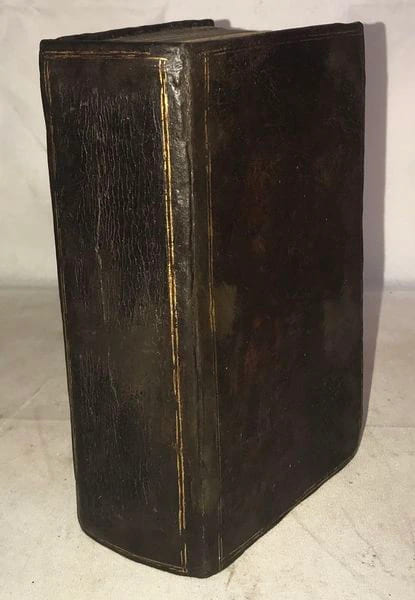
1524réf. 5256Augsburg: Simprecht Ruff 1524. FIRST GERMAN-LANGUAGE EDITION. Hardcover. Fine. Bound in modern boards. A fine copy. First German edition of a book written to quell the growing hysteria around the conjunction of Jupiter and Saturn in the sign of Pisces in February 1524 which was rumored to herald a catastrophic flood. Written by Paul of Middelburg renowned astrologer professor of astronomy at the University of Padua and personal physician to the Duke of Urbino the book "A most useful book to read at the present time concerning the Deluge or the Great Flood: That is that one will not be caused by the heavens as some astrologers have clumsily written and that no one should worry about it… Translated into German to bring consolation to the fearful." first appeared in Latin as "Prognosticon ostendens anno 1524 nullum diluvium futurum"1523. "The Jupiter-Saturn conjunction of February 1524 proved a stimulus to industry—about sixty Renaissance authors penned more than 160 pamphlets… Even a remove of nearly five-hundred years has done little to dampen scholarly interest in this signal episode of the intellectual history of the 1500s." "In a world view shaped by a natural philosophy much imbued with and indebted to astrology the theory of great conjunctions which was originally formulated by the Arab scholars Messehala Masha'allah and al-Kindi and more fully articulated thereafter by Albumasar Abu Ma'shar in his 'De magnis coniunctionibus' played a particularly important role… "The most important of these conjunctions involved the more slowly revolving planets—Jupiter and Saturn… Little wonder then that the attention of astrologers was drawn to the powerful planetary alignment even many years before it would supposedly take place in the watery house of Pisces in February 1524. But this time not only would Mars Jupiter and Saturn unite in celestial embrace they were also to be joined in a far more massive display by the Sun Mercury and Venus viz. six of the then seven known planets… "On 20 March 1523 a libel bearing the imperial seal was published in Vienna by the court astrologer Georg Tannstetter who noted that '…this rumour about the impending flood has already taken root everywhere in every sense creeping into everyone's mind: it has provoked the wise and the learned to heated debate and in some it has caused such consternation that they can no longer manage their affairs properly: they sell their lands fields and other properties or refuse to purchase those for sale because they believe it will be easier to convey money up to the mountains than castles and farms. Others still postpone weddings rescind contracts refuse holy orders listlessly tend to their crops while exclaiming if I understand rightly: what good are riches if in a few years no one will be able to enjoy them' "The Spanish astrologer and theologian Pedro Ciruelo a man of vast erudition who was widely acclaimed in his own time wrote an analysis in Spanish of the 1524 conjunction that was later translated into Latin Italian and German. He even advises his readers at a certain point about precautionary measures they might take: 'those of means should store provisions of flour oil wine firewood salted beef dried fish … so that if any watery event were to occur in the months hither everyone shall have their store and can go with it to a safer place.' For the poor who cannot afford such provisions Ciruelo recommends that their needs be seen to at public expense. He also suggests that peasants refrain from sowing lowland fields and that shepherds and cowherds drive their animals to highland pastures where forage is abundant… "A pre-eminent figure in the reform of the calendar taken up at the Lateran Council of 1512-1517 Paul of Middelburg who had long refrained from publishing any predictions was finally persuaded to a change of heart by the tightening grip of anxiety and fear throughout Italy and published in 1523 his 'Prognosticon' which was addressed to Pope Clement VII and refuted any possibility of either a universal deluge or a more local flash-flood."Barillà Drawing Nigh to February 1524: The Spate of Fear p. 2 ff. Simprecht Ruff hardcover
in-4 antico (mm. 210x140), pp. (30), 1 cb, 222 (manca ultima bianca), leg. m. perg. coeva con tit. oro al d. Marca tipogr. in legno. Dedicat. a Carlo Emanuele Duca di Savoia. Sonetto di Angelo Ingegneri a Cesare Della Riviera. A pag.24 incisione in legno con figura "geroglifica" del segno dell'Ariete. Seconda rara edizione, publicata 2 anni dopo la prima di Mantova del 1603, di opera esoterica e alchemica con riferimenti astrologici (influssi degli astri), tratta della magia naturale e della ricerca della pietra filosofale, si sofferma a spiegare cosa siano Geomanzia, Idromanzia e Piromanzia, con annotazioni etimologiche di alcuni vocaboli pertinenti derivanti dal latino e dal greco. Per la difficile comprensione del testo si rimanda alla riedizione curata da Julius Evola nel 1932. Magnaguti, Gli Osanna tipografi.... Caillet 2951. Piantanida 2177. Casanatense 372. Cantamessa 2118bis. Duveen 166. Due picc. mancanze di carta bianca al front., e alla perg. del d. Belliss. esempl. genuino. [598]
1615réf. ST20812Rome: Bartolomeo Zannetti 1615. Second Edition. 222 x 160 mm. 8 3/4 x 6 1/2". 12 p.l. 304 pp. 12 leaves. Very pleasing 17th century calf covers with a floral roll border surrounding a semis of fleurs-de-lys raised bands spine gilt in compartments with a double rule enclosing five fleurs-de-lys lettered in gilt marbled paper pastedowns all edges gilt old expert repairs at the top of joints. Attractive woodcut head- and tailpieces throughout historiated initials and two woodcut astrological charts in the text. Front pastedown with morocco book label of Stanislas de Guaita; rear flyleaf with his inked inscription: "Collationné. Complet - à Nancy. ce 27 Xbre 1895. - Guaita." "Stanislas de Guaita et sa bibliothèque occulte" 15 this copy; Caillet I 291; Graesse I 127; USTC 4022052. See also Thorndike VI pp. 202-04. A bit of rubbing at corners other light wear to the binding inconsequential foxing here and there isolated quires slightly darkened but an excellent copy--crisp and clean internally in a solid decorative binding still shining with gilt. In a lovely early binding this is a notorious 19th century occultist's copy of a scarce 17th century refutation of astrology. Our author Jesuit scholar Alessandro de Angelis 1559-1620 taught logic natural history metaphysics and theology at the Collegio Romano eventually serving as prefect of studies from 1611-17. De Angelis' only known publication the "Astologos" systematically picks apart common astrological beliefs on both metaphysical and theological grounds. First printed in Lyon the work appears here in a second edition issued the same year; both seem to be rare as we were able to trace only six copies at auction since 1966. Making our copy of an already absorbing book even more intriguing is its former owner the French poet and occultist Stanislas de Guaita 1861-97 whose short but colorful life was full of curious incident. He founded a chapter of the Rosicrucians published several works on magic and Kabbalah and had a defrocked priest declare a "magical war" against him which culminated in a decidedly unmagical though fortunately not fatal pistol duel. He is also responsible for the iconic symbol of a goat's head in an inverted pentagram now used to represent Satanism which he had originally used as an illustration for his 1897 work "La Clef de la Magie Noire" "The Key to Black Magic". In addition to these activities Guaita assembled an extensive library of books on various occult and related topics. His collection was sold by the Paris bookseller Dorbon whose 1899 catalog of the library includes 2227 volumes. Ours is #15 priced at the significant sum of 65 francs perhaps $1200 in today's buying power. Bartolomeo Zannetti unknown
réf. 23875Paris, Regnauld Chaudière, 1611. Un fort volume petit in-8 de (8)ff. dont le titre, (8)ff. (tables des chapitres), 1104 pages (mal numérotées 1024) et (27)ff. de table des matières. Saut de la p.912 à 919 sans manque, quelques erreurs de pagination. Petit trou vers en début d'ouvrage avec perte de quelques lettres de la p.101 à 130, en marge p.971 à 981 sans perte de texte, une petite mouillure marginale à plusieurs feuillets (principalement aux 20 premiers ff. et 20 derniers feuillets) et restauration angulaire à la page de titre, petit manque de papier marginale p.1059. Premier feuillet de garde renouvelé. Veau brun d'époque, dos lisse, double filets doré d'encadrement sur les plats et le dos. Habiles restaurations.
in-folio, pp. (12), 624, (6), leg. coeva p. perg. (minimo restauro al dorso) conservato in elegante astuccio-custodia moderno m. pelle, dorso a nervi, con tit. e ricchi fregi oro. Marca tipogr. al titolo, al verso del foglio ritratto silogr. dell'autore, ripetuto in fine; nel testo vi è la straordinaria serie di circa 2000 figure silografate attinenti alle materie trattate. Dedica a stampa al barone Giov. Giacomo Fugger. Seconda edizione, in tutto identica alla prima apparsa nella stessa città nel 1562, di uno dei più completi trattati cinquecenteschi sulla chiromanzia (a cui sono dedicati i primi 6 libri), la fisiognomia (il settimo), l'astrologia e l'arte divinatoria in generale (l'ultimo). Le pp. 387-449 contengono numerosi oroscopi, basati sulla lettura della mano di personaggi contemporanei viventi e le pp. 450-51 un curioso studio fisiognomico di San Pietro e Paolo e di Giuda Iscariota, con il loro ritratto. L'autore (nato nel 1509) fu illustre matematico, fisico, filosofo e musicista. Prese parte alla spedizione di Carlo V a Tunisi, insegnò matematica a Palermo, Roma e Ferrara e negli ultimi anni di vita fu maestro di musica presso l'arcivescovato di Colonia. Scrisse anche altre importanti opere concernenti la geometria ed il magnetismo. Bell' esempl. (lievissime arrossature della carta e minimi restauri nell'estremo margine interno).. Houzeau e Lancaster 4885. Thorndike, V, pp. 580-88. Zinner 2296. Caillet III, 10524. STC., German Books, 848. Dorbon 4760 cita un'ediz. della sola ''Chyromancie'' del 1677: "très rare ouvrage". Bibl. Magica Casanatense 1160; Cantamessa, III, n. 7841..
in-4, ff. (4), 71, (1 bianco), legatura coeva pergamena floscia, titolo ms. lungo il dorso. Dedica di G.B. Pulciani a Filippo Guidalotti. Frontesp. entro elaborata bordura con figure ed allegorie; ritratto dell'autore entro tondo e sue armi gentilizie. Illustr. da 51 incisioni in rame n.t.: di queste, 32 sono a mezza pag. mentre 18 sono impresse in coppia in orizzontale su 9 doppi fogli, il tutto inciso da Giulio Fontana. Si tratta degli stessi 12 rami della prima edizione ma tagliati a metà dividendo i due avversari, formando così 24 illustrazioni, riquadrate da un filetto e arricchite in alcuni particolari soprattutto negli sfondi e nel pavimento. Le 18 tavole disposte in orizzontale nella prima edizione vengono invece qui riproposte su doppio foglio; restano invariate invece le rimanenti illustrazioni. Terza edizione - assai più rara delle precedenti - dell'opera di Agrippa, uno dei più importanti trattati di scherma del Cinquecento, profondamente innovativo nell'introduzione dell'uso della spada di punta anzichè di taglio, in modo da portare le stoccate in modo rapido per linee interne: ''..,portò un grandissimo incremento alla teorica della scherma. Forse allievo del Marozzo, ne abbreviò, ne modificò il trattato, spogliandolo di molte superfluità e vi aggiunse di suo moltissime norme.. ritenuto come uno dei migliori maestri antichi, che vanti la scherma italiana e straniera... è il primo che faccia fare l'inquarto (cap. XVII)... descrive vari combattimenti di due contro due e di tre contro due; il modo di battersi con due spade" (Gelli). Interessante sottolineare che in 6 tavole, forse per la prima volta nella storia dell'incisione, si tenta di raffigurare le figure in movimento: a differenza di quanto sostiene Gelli ("descrive vari combattimenti di due contro due e di tre contro due") in realtà Agrippa rappresenta in queste tavole due soli schermidori contrapposti in successive posizioni del medesimo attacco o parata. L'Agrippa, milanese, fu anche ingegnere e matematico, presentò un progetto per il trasporto dell'obelisco vaticano, si occupò di idraulica ed inventò un sistema per la pesca dei coralli. Il Dialogo filosofico-astronomico posto in fine presenta delle importanti intuizioni sul movimento dei pianeti nella loro gravitazione; vi si riferisce al f. 67 v. una incisione a piena pag. raffig. la sfera ideata dall'Agrippa. Fu ristampato separatamente con il titolo ''Modo da comporre il moto nella sfera'', nel 1573 (Honeyman Sale 37). Bellissimo esempl. assolutamente genuino nella sua pergamena d'origine: si tratta probabilmente dell'esemplare di dedica che il Pulciani regalò al Guidalotti, come si evince dalla nota di possesso sulla sguardia anteriore ''Al Signor Filippo Guidalotti''. Al contropiatto ex-libris di Robert W. Bingham e timbro non identificato di antica collezione ''G.V.''. Soli 4 esempl. censiti.. Gelli 6-12: ''trattato già preziosissimo per l'arte schermistica.. anche questa ristampa è piuttosto rara''. Cockle 745. Riccardi I, 10: ''Ho registrata questa rara operetta a motivo del dialogo.. é notevole come asserisca che i pianeti pesano o gravitano gli uni sugl'altri, e di più che essi pesano in modo diverso sulla terra..''..
réf. 38964In-4 (224 x 155 mm), vélin rigide à recouvrement (reliure moderne), 156, (14) pages. A Lion, par Ian de Tournes et Guil. Gazeau [Lyon, Jean de Tournes et Guillaume Gazeau], 1557.
In-8°; 1) cc. (104) e 2 tavole ripiegate; nel testo legni e tabelle. 2) pp. 269, (1) 1 cb., pp. (16), 229, (1), il testo è in latino e in greco. Legatura in piena pergamena con titolo in oro al dorso e tagli in azzurro. 1) Edizione originale, rara, della prima opera di Johannes Garcaeus/Gartze (1530-75) che testimonia in modo chiaro dell’influenza delle teorie copernicane nella letteratura del XVI secolo. Siamo nel pieno Cinquecento, quando il termine astrologia indica genericamente lo studio delle stelle. Garcaeus nella definizione dei cieli per gli oroscopi insiste particolarmente sulle basi matematiche e astronomiche per i calcoli delle posizioni dei pianeti. Nel testo vengono diffusamente citati Copernico e Tolomeo, e costantemente messe a confronto le tavole Pruteniche – copernicane, con quelle astronomiche dette Alfonsine redatte alla metà del Duecento sulla scorta dei calcoli di Tolomeo. Tra gli scienziati citati anche Schoener, Regiomontano e Alchabitius (astrologo arabo del X sec., la cui opera a stampa apparve con il commento di John of Saxony): una figura illustra lo schema del cielo secondo quest’ultimo. In fine anche il metodo per calcolare le eclissi di luna e di sole secondo le tavole Pruteniche. Sono evidenti in questa opera i debiti che Garcaeus deve agli insegnamenti di Melantone, che attorno agli anni 40 teneva lezioni proprio sul Tetrabiblos di Tolomeo all’Univeristà di Wittenberg. Gartze fu dottore in teologia all’Università di Wittenberg, astrologo allievo di Erasmus Reinholt (nel testo “mei praeceptoris… Astronomiae peritissimae artificis”) e di Caspar Peucer, menzionato nell’Epilogo, professore di matematica e astronomia all’Università di Wittenberg, epigono di Melantone, seguace della Riforma. Deve la sua fama alla più tarda Astrologiae methodus del 1576. L’opera è dedicata a Giovanni Federico di Pomerania. Robert S. Westman, the Copernican Question, 2011: Prognostication, Skepticism and Celestial Order, p. 166 e ss. “The need for a work that would show how to use the Prutenics for casting nativities must have been more urgent after Reinhold’s death in 1553. Peucer himself was busy writing astronomical textbooks and a work on divination. The task of adding the final link in the rebuilding of a reformed heavenly science fell to Johannes Garcaeus, a valued student of Peucer and Reinhold… The Brief and Useful Treatise illustrates the range of kinds af works that constituted the science of the stars. It is a handbook for calculating nativities… It apparead in 1556 from a major Wittenberg publishing house, the heirs of Georg Rhau, with a dedicatory poem from Caspar Peucer. The epilogue says that “the true foundations of astronomy” and “astrology, as it is now called”, lie the basis of this work… This little work took place in this pedagogical reformation of science of the stars. In the second half of the sixteenth century, these Wittenberg astronomical-astrological textbooks became the most influential models for instrucion in safe predictive knowledge based on natural causes”. 2) Prima edizione della traduzione dal greco di Melantone. Nella Lettera di dedica Melantone ricorda la traduzione del suo amico Joachim Camerarius (1500-74), ma solo dei primi due libri (1533), da lui rivista e ricorretta. Il Tetrabiblos, o Quadripartitum, è il libro delle predizioni astrologiche in cui Tolomeo nel II secolo getta le basi dell’astrologia classica e più in generale occidentale. E’ considerato la Bibbia dell’astrologia poiché rappresenta la tradizione astrologica antica. Affronta per la prima volta l’argomento dell’influenza dei movimenti degli astri sulla vita umana in maniera assolutamente scientifica, servendosi della geometria e dei calcoli numerici per studiare gli influssi dei pianeti in base alla loro posizione nello zodiaco. Herbst, già editore di Andrea Vesalio, propone in questa edizione tutti e quattro I libri: il testo originale in greco, la traduzione latina di Filippo Melantone e il Centiloquium nella traduzione di Gioviano Pontano. Melantone (Philip Schwarzerd 1497-1560), umanista, assai vicino a Martin Lutero fu la colonna portante del pensiero e della teologia della Riforma. Da teologo, non vedeva conflitti tra la religione e l’astrologia. Cantamessa, 6436. Robert S. Westman, The Copernican Question: Prognostication, Skepticism, and Celestial Order, California, 2011. In-8 °; 1) cc. (104) and 2 folded plates; in the text woodcuts and charts. 2) pp. 269, (1) 1 cb., Pp. (16), 229, (1), the text is in Latin and Greek. Full vellum binding with gilt title on the spine and blue edges. 1) Original edition, rare, of the first work by Johannes Garcaeus / Gartze (1530-75) which clearly testifies the influence of Copernican theories in the literature of the sixteenth century. We are in the middle of the sixteenth century, when the term astrology generically indicates the study of the stars. Garcaeus in defining the heavens for horoscopes particularly insists on the mathematical and astronomical basis for the calculations of the positions of the planets. In the text Copernicus and Ptolemy are widely cited, and the Prutenic - Copernican tables are constantly compared with the astronomical ones called Alfonsine drawn up in the mid-thirteenth century on the basis of Ptolemy's calculations. Among the scientists mentioned also Schoener, Regiomontano and Alchabitius (Arab astrologer of the 10th century, whose printed work appeared with the comment of John of Saxony): a figure illustrates the pattern of the sky according to the latter. Finally, also the method for calculating the eclipses of the moon and the sun according to the Prutenic tables. In this work, the debts that Garcaeus owes to the teachings of Melanchthon are evident, who around the 40s gave lectures precisely on Ptolemy's Tetrabiblos at the University of Wittenberg. Gartze was a doctor of Theology at the University of Wittenberg, an astrologer student of Erasmus Reinholt (in the text "mei praeceptoris ... Astronomiae peritissimae artificis") and Caspar Peucer, mentioned in the Epilogue, professor of Mathematics and Astronomy at the University of Wittenberg, epigone of Melanchthon, follower of the Reformation. It owes its fame to the later Astrologiae methodus of 1576. The work is dedicated to John Frederick of Pomerania. Robert S. Westman, the Copernican Question, 2011: Prognostication, Skepticism and Celestial Order, p. 166 e ss. “The need for a work that would show how to use the Prutenics for casting nativities must have been more urgent after Reinhold’s death in 1553. Peucer himself was busy writing astronomical textbooks and a work on divination. The task of adding the final link in the rebuilding of a reformed heavenly science fell to Johannes Garcaeus, a valued student of Peucer and Reinhold… The Brief and Useful Treatise illustrates the range of kinds af works that constituted the science of the stars. It is a handbook for calculating nativities… It apparead in 1556 from a major Wittenberg publishing house, the heirs of Georg Rhau, with a dedicatory poem from Caspar Peucer. The epilogue says that “the true foundations of astronomy” and “astrology, as it is now called”, lie the basis of this work… This little work took place in this pedagogical reformation of science of the stars. In the second half of the sixteenth century, these Wittenberg astrnomical-astrological textbooks became the most influential models for instrucion in safe predictive knowledge based on natural causes”. 2) First edition of the Latin translation from the Greek of Melanchthon. In the letter of dedication, Melanchthon recalls the translation of his friend Joachim Camerarius (1500-74), but only of the first two books (1533), which he revised and repeated. Tetrabiblos, or Quadripartitum, is the book of astrological predictions in which Ptolemy in the second century laid the foundations of classical and more generally Western astrology. It is considered the Bible of astrology since it represents the ancient astrological tradition. It tackles for the first time the topic of the influence of the movements of the stars on human life in an absolutely scientific way, using geometry and numerical calculations to study the influences of the planets based on their position in the zodiac. Herbst, former editor of Andrea Vesalio, proposes all four books in this edition: the original text in Greek, the Latin translation by Filippo Melanchthon and the Centiloquium in the translation by Gioviano Pontano. Melanchthon (Philip Schwarzerd 1497-1560), humanist, very close to Martin Luther was the pillar of the thought and theology of the Reformation. As a theologian, he saw no conflict between religion and astrology. Cantamessa, 6436. Robert S. Westman, The Copernican Question: Prognostication, Skepticism, and Celestial Order, California, 2011.
réf. 49886Texte de F.de Mély,paru en 1922 à Paris,chez Ernest Leroux.In-folio broché de 11 pages accompagnant le très rare In-folio relié réunissant les 5 planches gravées de La Virga Aurea et du Calendarium naturale magicum, attribué à Jacques Bonaventure Hepburn d'Ecosse; l'un en 1616, l'autre en 1582.L'auteur du Calendarium serait Johann Baptist Grosschedel, dont le nom véritable serait Tycho Brahé. Les calculs du Calendarium auraient été faits par l'astronome danois Cazalas. La Virga Aurea de Jacques Bonaventure Hepburn,est à la gloire de la Vierge Marie, avec les alphabets mondiaux à l'époque du Pape Paul V.Ce sont 4 colonnes de 72 alphabets. Gravures allégoriques.Légendes tirées des Livres Saints. ( demi-reliure cartonnée au dos en velin fin XIXème.)
in-folio (305x205 mm), ff. 104 (A-Z4, AA-CC4), bella legatura del XVII secolo in marocchino granata, triplice filettatura in oro ai piatti con terminazioni angolari vegetali, dorso a sei nervi con titolo in lungo nei compartimenti riquadrati da filetti in oro. Precede l'opera dedica a Ercole d'Este, duca di Ferrara (p. III) e proemio esplicativo ai lettori (pp. IV-V). Titolo, ad opera di Francesco Salviati, inciso da Marco Dente, raffigurante un gruppo di uomini e donne intenti a discorrere e a consultare il libro del Marcolini nel "Giardino di pensieri"; Cervolini (Marcolini, p. 20) e Mauroner (Incisione di Tiziano, 42) attribuiscono però l'ideazione del disegno del frontespizio a Tiziano. Al verso del titolo ritratto dell'autore a piena pagina racchiuso entro cornice architettonica sorretta da due cariatidi (la stessa usata dal Marcolini nei volumi del Serlio e dell'Aretino, impressi qualche anno prima). Alle pp. VI-VII elenco dei 50 quesiti che si possono rivolgere al libro (suddivisi tra uomini, donne e per uomini e donne) e rimando alle 50 tavole relative. La prima sezione del libro contiene 50 silografie poste nella parte superiore del recto di ogni foglio raffiguranti immagini simboliche, vizi e virtù, accompagnate da 90 carte da gioco che circondano l'incisione e da altre 45 carte disposte nel verso della carta a fronte disposte a forma di croce. In base al responso delle carte il giocatore deve andare a consultare una delle cinquanta sezioni dei filosofi: nel margine superiore sinistro di ogni doppia pagina compere una silografia con un filosofo dell'antichità accompagnato da 31 risposte collocate sulla sinistra e da altre 24 sulla destra. Le risposte ai quesiti sono poste in forma di terzine scritte da Ludovico Dolce. Ogni terzina ha al fianco una coppia di carte da gioco; al verso dell'ultima carta impresa tipografica del Marcolini inserita in un elaborato cartiglio con volute, intorno al quale si intrecciano un ramo d'ulivo ed uno di quercia. Prima edizione in perfetto esemplare di uno dei più famosi giochi di fortuna del Cinquecento, realizzato su imitazione dei giochi di Lorenzo Spirito e Sigismondo Fanti. Rispetto alla precedente tradizione di genere il Marcolini imposta la doppia pagina di stampa su un registro parallelo, iconografico e verbale; la struttura tradizionale del libro è inoltre ripensata, sovvertendo la tradizionale recto verso di ogni carta e immaginando per la prima volta un intero volume da leggere a doppia pagina, tenuto insieme da un complicato sistema di rimandi interni che il giocatore apprende alle pagine iniziali. Gli strumenti del gioco diventano il libro stesso e un mazzo di carte, che dovrà gestire il giocatore a cui capita la carta più alta del mazzo. L'opera si configura come un inesauribile repertorio di modelli e situazioni figurative; è ipotizzabile che la l'impressione avvenisse in stadi diversi: stampando prima la cornice esterna quindi le immagini interne e per ultimo il testo, seguendo il modello consueto per la stampa di edizioni musicali (il Marcolini d'altronde si era formato presso il Petrucci, come incisore di testi musicali). Magnifico esempio di libro che diventa oggetto, da leggere, da vedere e da maneggiare.. Mortimer 279. Sander 4231. Brunet iii, 1407-1408, Suppl. I, 941. Essling II, 670. Cicognara 1701: "rarissimo a trovarsi di bella conservazione". Rosenthal, 1385. L. Nardin, Carte da gioco e letteratura fra Quattrocento e Ottocento, Lucca 1997. Cinti 54..
2002réf. LFA00163Un ouvrage de 231 pages, format 155 x 240 mm, broché publié en 2002, Editions du Rocher, bon état (avec un envoi de l'auteur)