ILLUMINATED MINIATURE QUR'ANBiblio.com

6 555 résultats
réf. 41823c.1820. . Arabic manuscript in black ink on lightweight wove paper approx. 395 leaves 5.2 x 3.5cm naskh script 17 lines to the page polychromatic floral border to opening bifolium decorated throughout with surah-headings in red thuluth on gold ground concentric panels around text in red black and gold and lobed marginal decorations including juz' markings contemporary black shagreen binding decorated in gilt first leaf with marginal loss. [c.1820]. unknown
Edizione a tiratura limitata di 998 esemplari. L'opera è costituita da un astuccio rivestito in pelle con impressioni in oro. English Text. Firenze, 1993; folder, pp. 118, 80 b/w and col. plates. english 88-09-0586 Grandi opere in facsimile
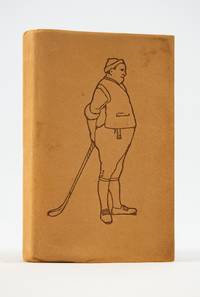
1903réf. ST20237New York: The Gorham Manufacturing Co 1903. FIRST EDITION. ONE OF 500 COPIES. 102 x 64 mm. 4 x 2 1/2". 4 p.l. 9-148 pp. CHARMING PUBLISHER'S LIMP SUEDE illustrated covers with a rotund golfer on front and a long-suffering caddy at rear top edge gilt other edges untrimmed. In a later glassine wrapper. Housed in a very sturdy custom-made buckram folding box with inlaid marbled spine label. Color floral and foliate headpieces tailpieces and title page and 16 DELIGHTFUL MOUNTED COLOR PLATES BY JOHN HASSALL. Front endpaper with the ownership inscription "W. P. Rockwell November 1905." Murdoch 888; Donovan & Murdoch 19030. Trivial smudges to the suede but A NEARLY PRISTINE COPY of this delightful little book an item that is simply never found this well preserved. This is a diminutive golf manual with immense charm and offered in the most immaculate condition possible. In a small-pocket format the book provides the golfer with the game's rules etiquette technical terms names of golf clubs and their various uses a list of American champions since the organization of the United States Golf Association and a roster of the "leading players in the United States." Accompanying the text are a group of quite charming colored plates done by John Hassall 1868-1948 an active and celebrated watercolorist poster designer and illustrator from 1895 onwards. Houfe calls him "an original and versatile designer." As can be seen in the present volume Hassall seems to have been influenced by "the flat colors and two-dimensional decorative quality of Japanese prints which he adapts to his own work with thick outline and careful patterning." Whatever the influence one can't help but smile when looking at his work. Hassall depicts golf costume through the ages here including golfers in kilts trousers cloaks knickers and other attire; he also shows us a pair of disarmingly shabby young caddies two women and a boy incongruously dressed in Napoleonic greatcoat and tricorn hat. The most memorable thing about this item is its condition: as a book intended to be put in one's pocket and as a volume that was never sturdy to begin with there is absolutely no explanation for how our copy has survived to the present day in its remarkable state of preservation. When this copy without its box was sold in 2004 at PBA Galleries the most prominent auction purveyor of golf books and equipment the catalogue called it "the finest copy we have ever offered of this exceedingly scarce and fragile book.". The Gorham Manufacturing Co unknown
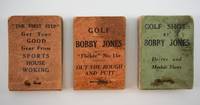
1930réf. ST20235London: Harrods Ltd 1930s. FIRST EDITION. 76 x 51 mm. 3 x 2". 100 pp. Original green or orange paper wrappers side stitched titling on front cover and imprint on spine. In a custom-made folding buckram box with book wells for the three books and gilt-stamped marbled paper label inset on spine of the box. Consisting of three bound sets of 50 sequential photographs that when flipped either from back to front or front to back generate a stop motion animation of Bobby Jones demonstrating the proper form for executing a shot with various golf clubs see below. Advertisements on inside wrappers. Donovan & Murdoch 22610. One volume with portions of spine gone at either end with partial loss of imprint wrappers inevitably somewhat soiled corners a bit rounded as expected but still remarkably well preserved especially considering its inevitable hard use being entirely sound and with the photographs in excellent condition. This is a scarce grouping of some of the most charming sports as well as miniature books we've ever offered for sale. In the 1930s the famous London department store Harrods published a series of so-called sports "flicker" books of which these three are perhaps the most famous other sports books involved cricket tennis lacrosse soccer badminton swimming and greyhound racing. Our three "flicker" books when the pages are riffled with one's thumb or fingers show the famous smooth-swinging American golfer Bobby Jones executing shots with various clubs. The first book #11a in the Harrods series features the driver and the mashie. The modern equivalent for this latter piece of equipment is slightly elusive but the "mashie" is an iron club with considerable loft meant to hit a golf ball a relatively short distance with a high trajectory Jones' "driver" has the same meaning today as it did 90 years ago. The second book features shots with a "brassie" roughly equivalent to today's 3- or 4-wood and an "iron" also called a "driving iron" which is like today's 1- or 2-iron. The third book shows Jones putting and escaping from heavy rough with a high-lofted club like today's sand wedge. It is great fun--not to mention still instructive--to riffle through these photographs watching one of the world's most celebrated golf swings come to life complete with Jones' knickers white shirt and flapping tie. It is also a fact of some interest that this English series would feature an American player at a time when British dominance in golf was beginning to erode. Given the physical use to which these items have been subjected it is difficult to believe that they are still intact let alone that they are solid enough to be handled without worry. Harrods Ltd unknown
Prima edizione del cosiddetto "Dantino", uno dei libri più piccoli mai stampati in caratteri mobili, costato 5 anni di fatiche all'editore Gnocchi e ai fratelli Salmin di Padova e oggi ritenuto una vera e ricercatissima curiosità bibliografica. In seguito la proprietà di questa edizione fu acquistata dall'editore Hoepli. In 128mo, mm. 50x30; legatura coeva in pelle con titolo, filetti, tagli e bordura ai contropiatti dorati, fogli di guardia in velluto. Pag. (6)-499-(1), ritratto di Dante in antiporta. Si tratta dei famosi caratteri "occhio di mosca", secondo Bondy, the most sensational of all microscopic type-faces used in miniature books (pp. 94-95). Questa edizione costò cinque anni di fatiche e, pare, ferì gli occhi sia del compositore sia del correttore. Fu tirata in 1000 esemplari, ricercatissimi. Condizioni perfette. Mambelli, 398. Codice inv.1031031
1988réf. 3444NICE. EDITIONS D'ART SEFER. LE CHANT DES SPHERES. MONACO. EDITIONS ARTS ET COULEURS. 1988-1990. 2 VOLUMES IN-FOLIO DE 140 + (8) ET 134 + (8) PAGES, DANS UNE MAGNIFIQUE RELIURE DE L'EDITEUR PLEIN CHAGRIN NOIR, DOS ORNE D'UN CAISSON EN CREUX AVEC DECOR FLORAL ET TITRE DORES, PLATS BISEAUTES, PLAT SUPERIEUR RICHEMENT ORNE D'UNE PAGODE EN RELIEF EN ROUGE ET EN DORE, AVEC INCRUSTATIONS DE PLAQUES EMAILLEES A DECOR POLYCHROME D'UNE PAGODE ET DE DRAGONS, TETE DOREE, NON ROGNES, SOUS EMBOITAGES 1/2 CHAGRIN NOIR (33,5 X 39,5 X 18,5 CENTIMETRES ENVIRON), DOS IDENTIQUES A CELUI DE L'OUVRAGE, LE RESTE RECOUVERT D'UNE SOIE MOIREE ROUGE (SEFER RELIEUR). ILLUSTRE DE NOMBREUSES COMPOSITIONS IN ET HORS-TEXTE, DANS LE STYLE DE L'ENLUMINURE, MISES EN COULEURS A LA MAIN. PREMIER TIRAGE LIMITE A 1280 EXEMPLAIRES NUMEROTES, DONT 30 HORS-COMMERCE. UN DES 150 SUR VELIN D'ARCHES COMPORTANT 2 ILLUSTRATIONS ORIGINALES SIGNEES, UNE PLANCHE HORS-TEXTE, ENCADREE ET UNE SUITE DU TRAIT EN LAQUE ROUGE DES ILLUSTRATIONS IN ET HORS-TEXTE, CELUI-CI PORTANT LE NUMERO 149 ET ACCOMPAGNE DE SON CERTIFICAT D'AUTHENTICITE AU MEME NUMERO SIGNE PAR L'ARTISTE ET L'EDITEUR. LES ILLUSTRATIONS ORIGINALES ET LA SUITE SONT INSEREES DANS UNE CHEMISE RECOUVERTE DE SUEDINE NOIRE AVEC LE PLAT SUPERIEUR ORNE D'IDEOGRAMMES CHINOIS DORES. INFIMES PETITS DEFAUTS EXTERIEURS SANS AUCUNE GRAVITE, SINON SUPERBE EXEMPLAIRE.
réf. 105399Safavid Persia circa 1590 AD. . Single leaf from a Safavid album illuminated miniature on paper miniature 128 x 90 mm total leaf 280 x 175 mm; image depicting a young Prince in discourse with a female figure two attendants flanking either side of the image in attendance image mounted onto card framed with gilt drawings of birds and spiralling vines reverse mounted with blank paper; some light discolouration and fading a little rubbed. An attractive and decorative album leaf with a miniature painting from the early Safavid period with Turkic influences shown in the faces and robes of the figures depicted. Safavid Persia, circa 1590 AD. unknown
1815réf. 42873Cincinnati: Published by Wesley Coleman and William Phillips. Morgan Williams and Co. Printers 1815. 1st Edition Adomeit A34; American Imprints 34917; Bradbury p. 63; Welch 861.2. Not in Rosenbach nor Welsh. Period brown full calf binding. Modest wear to binding with boards a bit splayed. Some browning & ageing to paper with the occasional short edge tear to a leaf no text affected. A Good - VG item. 2 blank v 6 - 167 3 blank pp. Divisional t.p. "History of the New Testament" p. 77. "Appendix" t.p. p. 135. "Psalms" t.p. p. 151. 2-1/2" x 1-1/2" The first miniature book published in Ohio and quite rare in the trade- RBH records the last appearance as in a 1964 Midland catalogue this copy. Published by [Wesley] Coleman and [William] Phillips. Morgan, Williams and Co., Printers hardcover books
réf. 108251aafs.d., 11.9x6 cm. Durchbrochener Silbereinband über Samt. Goldschnitt.
(mm. 52x34), 1 c.b. + cc. 4 nn. + pp. 500, con un ritratto di Dante inciso in antip. Legatura coeva in pieno marocchino scuro, dorso a cinque scomparti con titoli in oro. Sguardie marmorizzate, tagli colorati in rosso. Uno dei 1000 esemplari del celebre "Dantino" stampato a Padova, dai fratelli Salmin, per U.Hoepli. "Antonio Farina de Plaisance, qui fut parmi les plus habiles graveurs que l'Italie ait jamais eut, gravait en 1834 les poinçons de corps 2 sur 3 points d'un caractére microscopique, qui a été fondu seulement en 1850 pour le compte de Giacomo Gnocchi. Après des efforts inutiles pour l'utiliser, le caractère passa aux frères Salmin de Padoue, qui l'employère à imprimer en 1878 mille exemplaires du fameux Dantino, livre qui est généralement appelé Le Plus Petit Livre du Monde à cause plutot de la petitesse du caractère que des dimensions de la page" (Fumagalli, Lexicon, pag. 276). Cfr. anche Mikrobiblion n. 77. Esemplare molto buono, in cofanetto.
Edizione limitata numerata a mano da 1 a 998, esemplare n°.800. Catalogo di Gigetta Dalli Regoli. Il Cofanetto è di pelle con titoli d'oro. Le tavole presenti sono in facsimile. Firenze, 1985; br. in cofanetto, pp. 100, ill. b/n, tavv. b/n e col. italiano ril. in cofanetto
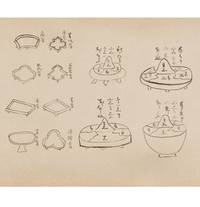
1796réf. 108121796. Approx. 40 brush & ink drawings in black & white. Scroll 180 x 1440 mm. central core roller. At end in rough trans.: “Many generations of SÅami bonsan 100 rules & styles. Extremely secret. All the information passed down by mouth is listed here. Handle this information with great care and keep it close. Given by Ishioka Seisaku 石岡正朔 in September 1796 to ZuihÅken no Yahiroko 瑞芳軒之八尋å.” Bonsan miniature mountain gardens is a sub-category of bonkei 盆景 tray-garden landscapes. Created to fit into small containers good bonsan convey the texture color and form of natural mountainous scenery. These small tray or pot landscapes have their origins in 10th-century China. The text in our scroll is a distillation of the teachings of SÅami ShinsÅ 相阿彌真相 1472-1525 painter art critic and artistic adviser to the Ashikaga shoguns in Kyoto master of the tea and incense ceremonies and landscape gardener. He established rules for and a school SÅami ryu of garden design and flower arrangement as well as the rules and styles for bonsan. “As a landscape gardener he designed two of the most celebrated Zen temple gardens in Japan: the RyÅan Temple garden in Kyoto an outstanding example of kare sansui a dry landscape technique in which combinations of stones and sand are used to suggest mountains and water; and the Daisei-in garden a miniature reproduction of a natural landscape also in the kare sansui style. It is believed that he also planned the garden of the famed Silver Pavilion Ginkaku Temple in Kyoto the villa built by his major patron Ashikaga Yoshimasa.”–Encycl. Brit. online. The author begins by extolling the pleasures of bonsan and offers advice on how to observe and enjoy them. He continues with descriptions of the materials used miniature trees sand rocks etc. seasonal variations the kinds of trays square rectangular circular and colors red white blue yellow brown and black and advice on where how and when to display them. The text also discusses the styles created over the centuries and famous sites that could be replicated on the trays. All of this is finely illustrated in a series of about 40 fine black & white brush drawings illustrating the many varieties of bonsan design. Ishioka was a resident of Kyoto and gave instruction on creating miniature gardens. He left another manuscript on miniature gardening see WorldCat 1451711637. In fine condition. Some worming mostly marginal. Preserved in a modern wooden box. unknown
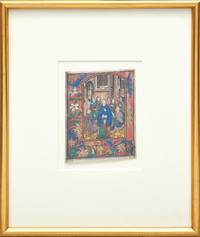
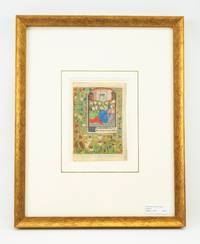
réf. 181092Netherlands: second half of the 15th century. Radiant devotion A vibrant Pentecost scene from a Netherlandish Book of Hours. At the center the Virgin Mary is seated in a deep blue mantle while the Apostles gather around her as the Holy Spirit descends in the form of a dove from above. An owl is nestled in the lower margin of the border. Ornate borders with scrolling foliage naturalistic flora and fauna and architectural interiors are typical of Southern Netherlandish and Flemish illumination from the late 15th and early 16th century. The style and composition is reminiscent of works by artists of the Utrecht school see for example Walters Ms. W.182 or active in Bruges see Walters Ms. W.183 and 184. Provenance: Stephen C. Massey. Illuminated miniature and border on vellum 133 x 105 mm panted in gold and colours. Presented in a gilt frame with UV protective glass. A little rubbing in outer margins of miniature otherwise well preserved and with gilt bright; small bump to edge of frame on the back. A very good example. hardcover
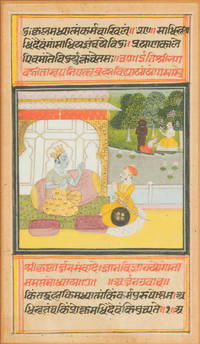
réf. 121365India Rajasthan mid-19th century. . Single folio ink & gouache on paper heightened in gold depicting Lord Hanuman bowing down before Lord Rama and Lakshmana under a willow tree in a green terrain with lotus-adorning rivers full page 307 x 220 mm miniature 222 x 132 mm; miniature framed within double rulings of green and blue borders some light surface abrasion to upper edge of painting causing slight chips to pigment with loss else attractive copy a few ink inscriptions to reverse early gallery stamp of 'The Curious House Rega' good overall condition. A very attractive painting depicting Lord Hanuman taking a deep bow before Lord Rama and Lakshmana visually representing the deep devotion and respect he has for his two protectors. The tranquil landscape forming the backdrop of this scene reflects the serenity of the moment with lotus flowers appearing in rivers on both sides of the figures and a very elegantly depicted willow tree framing them. Likely painted in Rajasthan in the mid-nineteenth century. India, Rajasthan, mid-19th century. unknown
Il Salterio di St. Albans, St. Alban’s Psalter. Hildesheim, Dombibliothek Hildesheim (MS St. God. 1), Cologne, Schnütgen Museum, (Inv. No. M694). Istituto dell’Enciclopedia Italiana Treccani, Roma, 2009. Riproduzione in facsimile del manoscritto scritto e miniato in Inghilterra all’inizio del XII secolo nello scriptorium di St. Albans. Ordinato presumibilmente da Geoffrey di Porham, abate di St. Albans, per Cristina di Markyate. il codice (comprendente 150 salmi latini, la Vita di s. Alessio e una lettera di papa Gregorio Magno). All’interno 42 miniature attribuite ad Alexis Master completano il testo composto da 150 salmi latini, la Vita di s. Alessio e una lettera di papa Gregorio Magno. Legatura in pelle con impressioni a secco sui piatti e fermagli dorati di chiusura. Formato 19x28 cm. Pagine 418 (+1). Commentario in italiano (19x29 cm. pagine 277). Cofanetto in pelle con impressioni in oro. Tiratura numerata e limitata di 750 esemplari. Condizioni ottime.
La Divina Commedia di Alfonso d'Aragona (Divine Comedy of Alfonso of Aragon). Londra, British Library, Ms. Yates Thompson 36. Sontuoso manoscritto miniato della Divina Commedia di Dante Alighieri. Realizzato a cavallo del XV secolo, nel nord Italia, da due maestri miniatori: Priamo della Quercia e Giovanni de Paolo. Illustrato con 110 miniature inquadriate nei margini inferiori, tre grandi iniziali istoriate con cornici floreali all’inizio dei tre canti, numerose iniziali foliate e tutte le iniziali delle strofe minori delimitate con colori intensi e dorature splendenti. Legatura in velluto di seta con borchie e medaglione centrale e bindelle di chiusura. Formato 26x37 cm. Pagine 380 (190 fogli). Commentario, in due volumi (formato 25x32 cm. 340 pagine totali), a cura di Milvia Bollati. Pregiato cofanetto di custodia. Tiratura limitata e numerata a 750 copie. Condizioni ottime.
Il Virgilio Riccardiano (Ms. Ricc. 492). Vergilius Publius Maro: Bucolicon, Georgicon, Aeneis Biblioteca Riccardiana, Firenze. ArtCodex, Modena, 2002. Riproduzione in facsimile delle Bucoliche, Georgiche, Eneide di Virgilio con miniature che rappresentano il viaggio di Enea ambientato città di Firenze al tempo di Lorenzo il Magnifico. Legatura in pelle con cornici di filetto impresse a secco sui piatti. Formato 20x31 cm. Pagine 512. Commentario (21x31 cm. pagine 173) in italiano. Cofanetto in legno pregiato, formato 34x44x13 cm. Tiratura limitata e numerata di 999 copie. Condizioni ottime.
Pergamena miniata cm 26 x 39 originariamente appartenente a rilegatura raffigurante al piatto anteriore l'immagine di una figura chimerica, poggiante sul verde di un prato con fondo rosso, compresa in una bordura a filetto in rosso, e al piatto posteriore una decorazione in rosso e blu, presumibilmente ottenuta a mezzo di stampino compresa in doppio filetto rosso e blu. Un altro filetto in rosso degna lo spazio del dorso compreso tra i due piatti. La pergamena, che originariamente avrebbe potuto ricoprire un registro (con buona probabilita' l'animale fantastico potrebbe essere simbolo di un'impresa araldica), fu riutilizzata nel XVII secolo, sfruttando la parte al verso come copertura di un volume a stampa. Questa pergamena dovrebbe rientrare, in particolare per quanto riguarda la decorazione al piatto posteriore, tra i rari esempi di 'legatura a stampo' veneziana, in uso appunto in questa citta' gia' nel XVI secolo. Questa tipologia ornamentale, abbandonata per quasi due secoli, verra' ripresa nella meta' del XVIII secolo, in particolare dai Remondini di Bassano, per la realizzazione delle loro celebri carte xilografiche. Una simile legatura, seppur datata come produzione del XVIII secolo, risulta documentata in: G. Bologna, Legature, Milano, 1998, p. 137.
1490réf. ST20853France ca. 1490. 144 x 99 mm. 5 5/8 x 3 3/4". Single column recto with 14 lines in a gothic book hand. Attractively matted and framed. Rubrics in red two two-line initials one painted pink on blue ground with flowers the other painted blue and inhabited by a rampant lion on pink and gold ground recto with a panel border featuring long-stemmed flowers and owls on a pink ground verso WITH A HALF-PAGE ARCH-TOPPED MINIATURE DEPICTING PENTECOST WITH A FULL BORDER featuring a plethora of different flowers berries greenery songbirds an owl and a butterfly all ON A RICHLY PAINTED GOLD GROUND. Trimmed close on one side and just grazing a border on the opposite side very minor chipping to faces trivial signs of rubbing or wear otherwise a fine leaf--colorful bright and very pleasing to the eye. This leaf contains the customary Pentecost miniature associated with the Hours of the Holy Spirit but with several attributes that set it apart from other examples we have encountered. The miniature here depicts a densely crowded scene with the Virgin at the center surrounded by the apostles each of whom wears a burnished gold halo. Packed tightly together they gaze up at a white dove who emanates small red tongues of fire above their heads. According to biblical tradition this visitation by the Holy Ghost in the form of a dove enabled Christ's disciples to start preaching marking the beginning of the Christian Church. The artist favors an unusual pastel palette choosing pale pink for the walls and eggshell blue for some of the floor tiles as well as bright yellow muted lilac rose and lime green for the robes of the apostles. Looking more closely at the figures we see that each face is carefully individualized each with its own features and expressions. Although most crane their necks to get a view of the miracle unfolding one of the apostles looks directly out at the viewer as if surprised by our presence. Moving outside the miniature we note that the leaf features a particularly exuberant border with tangles of flowers fruit acanthus leaves and several birds including an owl in one corner. There is additional interest on the verso with another bright border painted an intense pink and filled with more flowers and owls. unknown
réf. 112941India probably Bundi circa 1780 AD. . Single leaf illuminated manuscript on paper in Sanskrit with illuminated miniature in the text lightly rubbed overall bright and attractive unexamined out of frame 205 x 115 mm; mounted and framed Germany gallery label to verso. An attractive manuscript leaf from a dispersed eighteenth-century manuscript of the Gita containing the heading for the seventh chapter of the text reading 'Gyan-Vigyan Yoga Namm Seventh Chapter'. The miniature set on a beautiful outdoor terrace next to a running stream shows a dialogue between Sri Krishna and Arjun. India, probably Bundi, circa 1780 AD. unknown
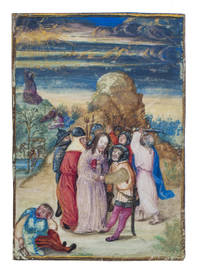
1520réf. 82NHM8O8K9DUFlanders Bruges or Nürnberg 1520. Miniature painted on vellum 7.8 x 5.6 cm in numerous colours highlighted with gold and in a gold border probably from a book of hours but with no text. A finely rendered miniature showing great detail in bright colours highlighted with gold depicting the Arrest of Christ most likely from a diminutive book of hours. Surrounded by a bustling throng of Roman soldiers carrying spears and wearing halberds Christ appears calm just at the moment when a soldier takes him captive. An elder of the Jewish Temple stands directly behind him dressed in red. To the right stands Simon Peter sword raised having cut off the ear of the High Priest's servant Malchus who sits nursing his bleeding ear in the lower left corner of the composition. An earlier episode Christ's Agony in the Garden of Gethsemane when he learns that one of his disciples will betray him appears in the background at left. A genre scene with men working the fields and crossing a river on a narrow plank bridge occupies the middle ground to the left of the main scene and the towers of a castle or city the middle ground to the right.The general style recalls the art of the last generation of Ghent-Bruges painters especially that of the famed Simon Bening. Though the anonymous artist owes much of his style to Bening's model he was most likely German. The acidic palette bright yellow juxtaposed with blue and lime green and the facial types remarkably expressive even at this tiny scale recall Nürnberg painters in the circle of Glockendon. It is worth remembering that Bening himself collaborated with several Nürnberg painters whose presence in Flanders is thus confirmed.With some fine superficial cracks and an occasional tiny abrasion mostly near the edges but generally in good condition. A lovely miniature of Christ's arrest rendered in remarkably fine detail.l For the general style: U. Merkl Buchmalerei in Bayern in der ersten Hälfte des 16. Jahrhunderts 1999. ART ARCHITECTURE & PHOTOGRAPHY AUTOGRAPHS DOCUMENTS & MANUSCRIPTS DRAWINGS PRINTS & WATERCOLOURS EARLY PRINTING & MANUSCRIPTS RELIGION & DEVOTION Book of Hours Missals & Prayerbooks Manuscripts & Documents Religion 16th Century hardcover
Seconda edizione. Testo Italiano e Latino. Roma, 1824; ril. in tela, pp. 48, 62 tavv. b/n, cm 40x53. italiano A ril.
La Bibbia di San Paolo (Bible of St. Pauls Outside the Walls). Istituto Poligrafico e Zecca dello Stato (Editalia), Roma, 1992. Facsimile del codice membranaceo dell’Abbazia di San Paolo fuori le Mura, Roma (secolo IX), per la corte di Carlo il Calvo. Commentario a cura di G. Arnaldi, S. Baiocchi, B. Bischoff, L. Maximilians, H. de Sainte-Marie, M. L. di Franco, J. E. Gahede, J. Gribomont, J. Mallet, F. Mütherich, G. Nardin, S. Pisano, A. Pratesi, K. F. Werner ormato cm 33x27 cm. 580 pagine; carta filigranata con 73 tavole fuori testo, legatura in mezza pelle ed in seta ricamata. Due contenitori-espositori in plexiglass permettono di proteggere il codice e il commentario. Formato facsimile 37x45 cm. Pagine 684. Tiratura limitata e numerata a 1000 esemplari. Condizioni ottime.
réf. 125263Qajar Persia circa 1800. . Single illuminated miniature painting with decorated borders miniature 180 x 110mm total leaf 260 x 140mm; illustration depicting a seated teacher with three pupils in attendance sitting by a running stream under some poplar trees illustration heightened in gilt mounted to cats with gilt decorations to borders framed and glazed. A charming and beautifully drawn illustration in the style of Reza Abbasi 1565-1635 the leading Safavid miniaturist known for his distinctive ability to capture texture and movement in his drawings by combining ink lines with wash colours. This illustration is likely from the early Qajar period and demonstrated the lasting influence and legacy the great classical artists had over the future generations of artists and patrons alike. Qajar Persia, circa 1800. unknown
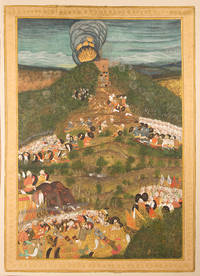
réf. 114054Post Mughal India probably late 19th century. . Single large illuminated miniature on paper ink and gouache on paper depicting the view of the Siege of Khandahar in modern-day Afghanistan total leaf 760 x 545 mm miniature 690 x 470 mm; miniature double-ruled in gilt framed decorated with spiraling florettes a few light surface smudges leaf a little cockled mounted to thick card. A very large and impressive view of the Siege of Khandahar the Mughal-Safavid war of 1649-1653 as presented in the Padshahnameh of Shah Jahan. The Padshahnameh is illustrated chronicle of the reign of Shah Jahan the fifth Mughal emperor commissioned during his reign as a propagandist celebration of his kingdom and dynasty. The text is a detailed chronological narrative of each day of the emperor's reign describing his daily activities court ceremonies as well as the significant events in Emperor Shah-Jahan's life such as the durbars lavish processions and glorious victories on the battlefield. Post Mughal India, probably late 19th century. unknown