388 Ergebnisse
First edition, folio (465 x 330mm), 2 vols., in 4 (all published, 2 vols., of text each with an accompanying volume of plates), xii, [4], 145, [3]; xiv, [2], 263, [1]pp., printed on hand-made paper, coloured frontispieces, 201 plates (2 in colour, some double-page) prepared by Emery Walker, orig. buckram, gilt, uncut. A very nice set of Beatty's luxurious catalogue, prepared by Eric George Millar, curator of manuscripts at the British Museum. Beatty formed his superb collection in a mere six-year period. Beatty projected six volumes (each similarly divided into text and plates) to the series in his foreword, but these four were the only volumes issued; the last would have contained descriptions of manuscripts from the later Middle Ages.
Best.-Nr. 603286Akademische Druck-u. Verlagsanstalt (ADEVA), Graz, 1980. Un volume en fac-similé, petit in-4 carré (21x23,5 cm), sous étui cartonné. Reliure de l'éditeur plein-cuir rouge à décor doré, 76 ff. rognés conformément aux originaux + un volume de commentaires en anglais (par David H. Wright), de même format, cartonné, 107 pp., illustré de plusieurs planches en noir & blanc.
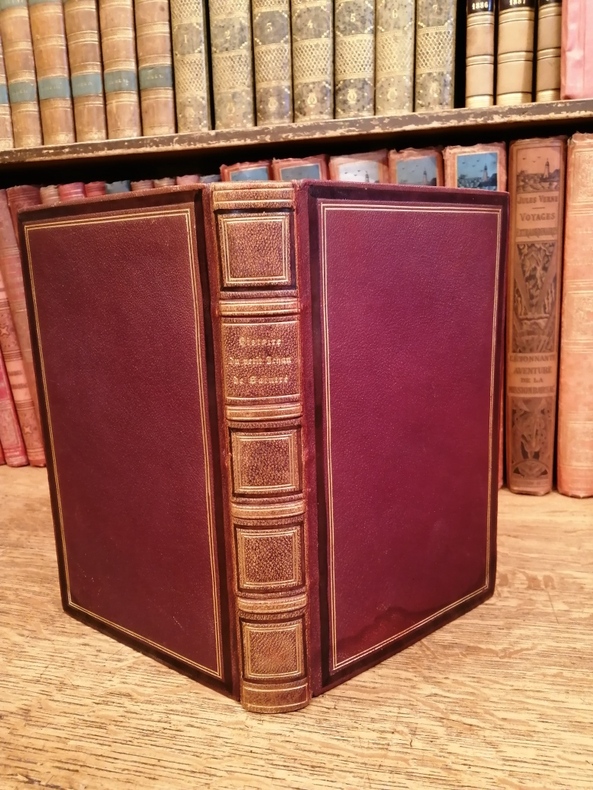
1830Best.-Nr. 003360Pgris, Firmin Didot frères. grand in-8 (23,5 x 15 cm.), [IV],7, CCCLIX,[XV],36 pp., chagrin lie de vin, dos orné, large filet à froid et deux filets or sur les plats, petite grecque intérieure, tranches dorées (reliure d'époque). Curieuse édition, avec texte imprimé en caractères gothiques, encadrements, fleurons, lettres ornées, tirés des manuscrits du XVe, et cinq vignettes d'après Eugène Lami. Premier tirage. Un des rares exemplaires avec les fleurons, encadrements, lettres ornées et vignettes coloriées avec rehauts d'or
1995Best.-Nr. 24401995 Lucerne, Editions Facsimilé, 1995. 30,5x44 cm. Fac-similé reproduisant à l'identique la première partie du manuscrit enluminé conservé sous la cote ms. fr. 2810 à la Bibliothèque Nationale de France à Paris. Format des feuillets légèrement variable comme sur l'original médiéval. Texte en français médiéval. Superbe reliure en plein veau marron. Plats ornés des armoiries royales françaises. Dos à 8 nerfs, orné de caissons dorés portant le monogramme L (Louis, roi de France). Pièce de titre en maroquin rouge. Roulettes dorées à l'intérieur des plats. Coffret recouvert de soie bleu-roi et orné des armoiries royales sur le plat supérieur. Minimes et très discrètes traces de frottement sur la reliure, sinon ouvrage en excellent état et d'une qualité exceptionnelle.
1990Best.-Nr. 30061AB[Laachen am Zürichsee], [Coron-Verlag] / Stuttgart, Verlag Müller & Schindler, 1990. 4°, Faksimile: 78,28 S. farb Faksimile mit Handvergoldung in 23,5ct einzeln beschnitten im Format des Originals: ca. 272 x 196 mm.; Kommentar: 378 S., mit Beiträgen von Ruth Mettler, Nigel Morgan, Michelle Brown und zahlreichen Vergleichsabbildungen, beide Bände in rotem Lamm-Leder; Faksimile mit Silber-Eckbeschlägen, 2 -Schliessen und aufgelegtem -Bibliothekssiegel (Bibliotheca Lambethana); Kommentarband mit goldPräg (Erzbischöfliches Wappen von Canterbury), beide Bände in lederbezogenem Buchkasten mit goldPräg, Zwischenkorkplatten, Hebebändchen, darauf der Prunkdeckel,
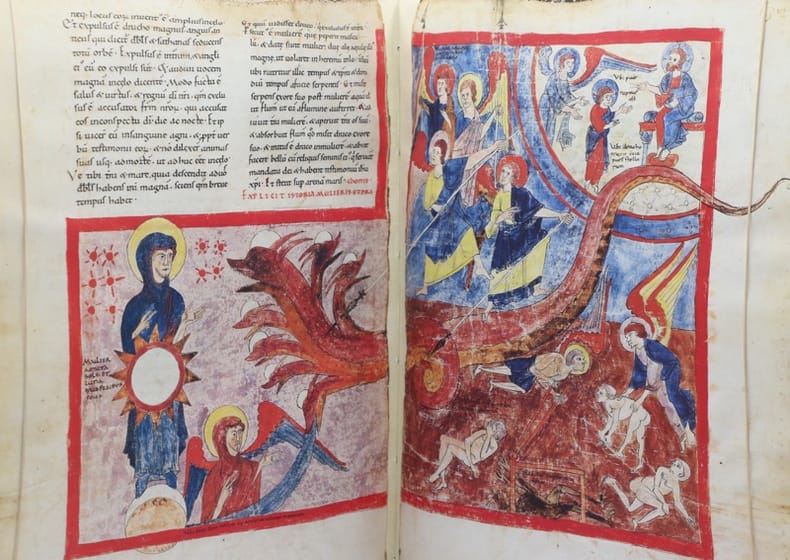
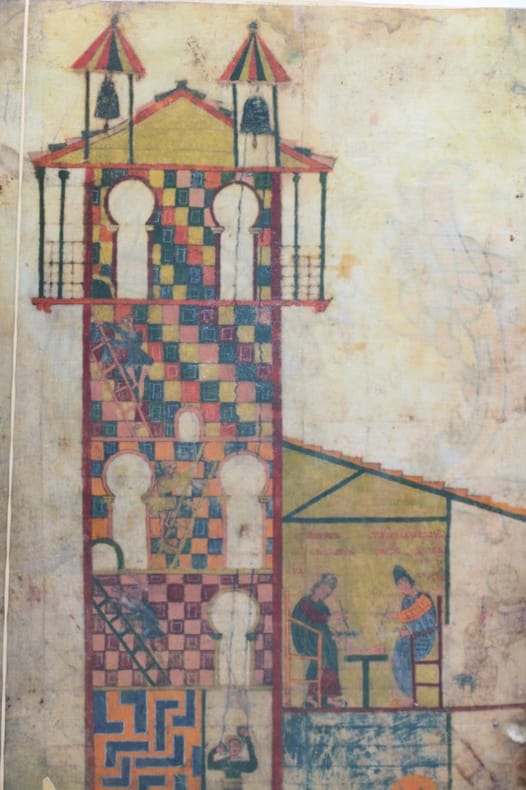
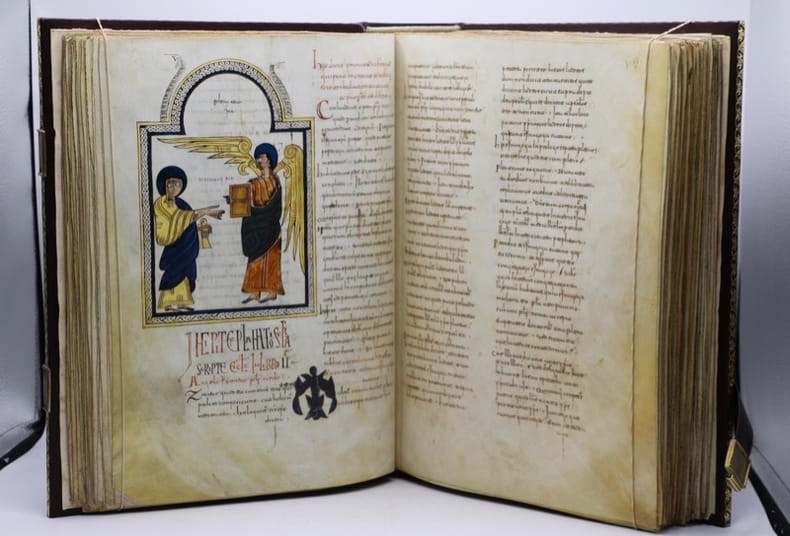
Best.-Nr. 602899Testimonio Compañía Editorial, 2000. Fort volume in-folio (30x39,5 cm), reliure éditeur plein-cuir marron à fermoirs, dos à nerfs, plats ornés à froid. Superbe reproduction grandeur nature de l'intégralité du manuscrit original, Beatus de Liébana - Codex de Turin : le fac-similé reproduit l'apparence et les caractéristiques physiques du document original ; les pages sont coupées selon le format original. Tirage limité à 980 exemplaires numérotés à la main (n°461).
Best.-Nr. 603288Madrid, Testimonio Compana Editorial, 2003. Edition en fac-similé, soit un fort volume in-4, reliure de l'éditeur plein-cuir brun à fermoirs, dos à faux-nerfs orné de filets dorés, titre doré, riche décor à froid sur les plats. Reproduction intégrale du document original, la plus fidèle possible (apparence, format, couleurs...). Tirage limité à 980 exemplaires numérotés (n°126).
Best.-Nr. 604064Madrid, Testimonio, 2002. Reproduction intégrale du manuscrit original (Cod. Emil. 33), respectant le format original (environ 25x37 cm), les couleurs et les détails des enluminures, sous une belle reliure plein-cuir marron estampée à froid, fermoirs en laiton, titre et filet doré au dos, roulette dorée sur les coupes. Tirage limité à 980 exemplaires numérotés à la main (n°461).
Best.-Nr. ST12210Lucerne: Faksimile Verlag 1993. No. 195 OF 980 COPIES. 206 x 168 mm. 8 1/8 x 6 5/8". Four volumes each with separate volume of commentary in English and German. With commentary by Mark L. Evans. Publisher's red velvet flat spine two silver gilt clasps each volume housed in a matching velvet box with the commentary volume in paper wrapper gilt coat of arms on upper cover of each box. With 138 borders and 48 miniatures by Birago and two borders and 16 miniatures by Horenbout. ◆In mint condition. This is a very fine facsimile of a Renaissance Book of Hours with an intriguing history and decoration by two different and distinguished illuminators one Italian and the other Flemish. The Sforza Hours was originally commissioned from Italian miniaturist Giovan Pietro Birago fl. 1471-1513 by Bona Sforza wife of the Duke of Milan around 1490. A surviving letter from Birago to an unknown nobleman complains that part of the manuscript was stolen by an unscrupulous "Fra Jacopo" and demands restitution in the enormous amount of 500 ducats. No one knows if Birago was ever reimbursed for his loss but the duchess bequeathed the partial manuscript to her nephew's wife Margaret of Austria. In 1506 Margaret daughter of the Holy Roman Emperor moved to the Netherlands where she served as Regent for the future Charles V until his coronation in 1520. In 1517 she set about completing the Sforza Hours hiring scribe Etienne de Lale to provide the missing text pages and illuminator Gerard Horenbout ca. 1465-1541 to paint miniatures and two borders. Horenbout had produced the miniatures in the Breviary of Eleanor of Portugal and those in the Hours of James IV of Scotland. He also briefly worked as painter in the court of Henry VIII. Horenbout included a small portrait of Charles V in one of the borders here leading art historians to believe that Margaret gave the book to the emperor to commemorate his coronation. The manuscript resurfaced in Madrid in 1871; it was purchased by an Englishman and was donated to the British Library by a later owner. As noted in the library's online exhibit of the work "The manuscript is outstanding for its rich decorative scheme and an unusually high number of its text pages have minutely detailed borders initials and vignettes in deep blues greens and rich reds to complement the many full-page miniatures.". Faksimile Verlag unknown
Best.-Nr. ST12210Lucerne: Faksimile Verlag 1993. No. 195 OF 980 COPIES. 206 x 168 mm. 8 1/8 x 6 5/8". Four volumes each with separate volume of commentary in English and German. With commentary by Mark L. Evans. Publisher's red velvet flat spine two silver gilt clasps each volume housed in a matching velvet box with the commentary volume in paper wrapper gilt coat of arms on upper cover of each box. With 138 borders and 48 miniatures by Birago and two borders and 16 miniatures by Horenbout. ◆In mint condition. This is a very fine facsimile of a Renaissance Book of Hours with an intriguing history and decoration by two different and distinguished illuminators one Italian and the other Flemish. The Sforza Hours was originally commissioned from Italian miniaturist Giovan Pietro Birago fl. 1471-1513 by Bona Sforza wife of the Duke of Milan around 1490. A surviving letter from Birago to an unknown nobleman complains that part of the manuscript was stolen by an unscrupulous "Fra Jacopo" and demands restitution in the enormous amount of 500 ducats. No one knows if Birago was ever reimbursed for his loss but the duchess bequeathed the partial manuscript to her nephew's wife Margaret of Austria. In 1506 Margaret daughter of the Holy Roman Emperor moved to the Netherlands where she served as Regent for the future Charles V until his coronation in 1520. In 1517 she set about completing the Sforza Hours hiring scribe Etienne de Lale to provide the missing text pages and illuminator Gerard Horenbout ca. 1465-1541 to paint miniatures and two borders. Horenbout had produced the miniatures in the Breviary of Eleanor of Portugal and those in the Hours of James IV of Scotland. He also briefly worked as painter in the court of Henry VIII. Horenbout included a small portrait of Charles V in one of the borders here leading art historians to believe that Margaret gave the book to the emperor to commemorate his coronation. The manuscript resurfaced in Madrid in 1871; it was purchased by an Englishman and was donated to the British Library by a later owner. As noted in the library's online exhibit of the work "The manuscript is outstanding for its rich decorative scheme and an unusually high number of its text pages have minutely detailed borders initials and vignettes in deep blues greens and rich reds to complement the many full-page miniatures.". Faksimile Verlag unknown books
Best.-Nr. 71823aafParis, Léon Curmer, 1864, in-4to. Première partie: 6 p. + 171 planches chromolithographiques d’après les enluminures du Moyen-Age / Deuxième partie: 6 p. + 200 planches d’après les enluminures du M-A. / le 3ème volume: Appendice: XXXI + 172 p. + 154 p. + 258 p. richement ill. avec 80 photographies originales contrecollées au milieu des bordures typographiques, reproduisant les peintures. Quelques piqûres et rousseurs, une vignette gravée est appliquée à la page de titre du 3è volume, gravée par Ch. Colin sculp. d’après A. D. Aligny del. avec devise ‘l’or rien ne me cure’. Cette gravure semble être insérée dans tous les livres hors commerce de Curmer. Somptueuses reliures en plein maroquin rouge avec riche décoration en or sur le dos ainsi que sur les plats, dos à 5 nerfs, décoration florale sur fond noir sur les plats, nombreux filets et encadrements, gardes richement ornées en or, tranches dorées, emboîtages quelque peu abîmés.
Best.-Nr. ST12207Modena: Franco Cosimo Panini 2008. No. 201 OF 980 COPIES. 216 x 152 mm. 8 1/2 x 6". 136 leaves in the facsimile. Three volumes including two volumes of commentary one in German and one in Italian. SUMPTUOUS RED MOROCCO central panel of each cover with thin open-work black leather in an ornate vine pattern laid over blue and gold silk creating a stained glass effect the leatherwork incorporating floral circles painted in red and gold three large medallions arranged down the center of the panel those at head and tail of red morocco painted in a black gold and blue pattern and with a large round semi-precious stone at the middle the central medallion comprising a miniature on silk that on the upper cover of the Archangel Gabriel that on the lower cover of the Virgin Mary; raised bands spine diapered in blind with a single gilt dot at the center of each lozenge; floral silver cornerpieces and two clasps red morocco doublures framed in silver doublure panels with intricate decoration in gilt and black large central medallion of open-work black leather over blue silk with a molded leather profile of Julius Caesar at center ivory watered silk endleaves all edges gilt and gauffered. In a padded silk-lined cream-colored suede box with an enamel medallion on the upper cover. BEAUTIFULLY DECORATED THROUGHOUT: with many ornamental initials elaborate floral extensions and partial borders a tondo miniature at the foot of each calendar page seven historiated initials with full borders and five full-page miniatures each by a different Italian master. ◆In mint condition. This sophisticated Book of Hours was produced in 1503 at the behest of Bonaparte Ghislieri a member of an important Bolognese family. In commissioning it Ghislieri wanted to bring together several of the most famous artists of the period each of whom was called upon to create a full-page miniature. The intention was to offer a sort of miniature anthology of the best that the Bologna school of illumination could produce at the time. Consequently we see a succession of works by: Amico Aspertini Adoration of the Shepherds Lorenzo Costa King David and his Lyre Il Francia Francesco Raibolini Saint Jerome Matteo da Milano Annunciation and Perugino St. Sebastian. This last is the only miniature ever painted by Raphael's teacher. Bologna was also the home of the scribe Pierantonio Sallando who taught grammar at the University of Bologna and was to become a famous professor of writing. The codex passed from the Ghislieris to the Albani family of Urbino where it is documented in the 18th century; the following century it reached England where it was purchased by Henry Yates Thompson in 1897. Since 1941 it has been kept in the British Library. Franco Cosimo Panini unknown
Best.-Nr. ST12207Modena: Franco Cosimo Panini 2008. No. 201 OF 980 COPIES. 216 x 152 mm. 8 1/2 x 6". 136 leaves in the facsimile. Three volumes including two volumes of commentary one in German and one in Italian. SUMPTUOUS RED MOROCCO central panel of each cover with thin open-work black leather in an ornate vine pattern laid over blue and gold silk creating a stained glass effect the leatherwork incorporating floral circles painted in red and gold three large medallions arranged down the center of the panel those at head and tail of red morocco painted in a black gold and blue pattern and with a large round semi-precious stone at the middle the central medallion comprising a miniature on silk that on the upper cover of the Archangel Gabriel that on the lower cover of the Virgin Mary; raised bands spine diapered in blind with a single gilt dot at the center of each lozenge; floral silver cornerpieces and two clasps red morocco doublures framed in silver doublure panels with intricate decoration in gilt and black large central medallion of open-work black leather over blue silk with a molded leather profile of Julius Caesar at center ivory watered silk endleaves all edges gilt and gauffered. In a padded silk-lined cream-colored suede box with an enamel medallion on the upper cover. BEAUTIFULLY DECORATED THROUGHOUT: with many ornamental initials elaborate floral extensions and partial borders a tondo miniature at the foot of each calendar page seven historiated initials with full borders and five full-page miniatures each by a different Italian master. ◆In mint condition. This sophisticated Book of Hours was produced in 1503 at the behest of Bonaparte Ghislieri a member of an important Bolognese family. In commissioning it Ghislieri wanted to bring together several of the most famous artists of the period each of whom was called upon to create a full-page miniature. The intention was to offer a sort of miniature anthology of the best that the Bologna school of illumination could produce at the time. Consequently we see a succession of works by: Amico Aspertini Adoration of the Shepherds Lorenzo Costa King David and his Lyre Il Francia Francesco Raibolini Saint Jerome Matteo da Milano Annunciation and Perugino St. Sebastian. This last is the only miniature ever painted by Raphael's teacher. Bologna was also the home of the scribe Pierantonio Sallando who taught grammar at the University of Bologna and was to become a famous professor of writing. The codex passed from the Ghislieris to the Albani family of Urbino where it is documented in the 18th century; the following century it reached England where it was purchased by Henry Yates Thompson in 1897. Since 1941 it has been kept in the British Library. Franco Cosimo Panini unknown books