Supertramp; Davies, Rick; Hart, Mark;MareMagnum

199876 pages, including two pages of colour photos of the band. Includes these songs: It's A Hard World; You Win, I Lose; Get Your Act Together; Live To Love You; Some Things Never Change; Listen To Me Please; Sooner or Later; Help Me Down That Road; And The Light; Give Me A Chance; C'est What?; Where There's A Will. Unmarked with somewhat above-average external wear. binding intact. A worthy copy of this marvelous Supertramp collectible. Book
1846ref. 49069Paris Bachelier 1846. 4to. No wrappers. In: "Comptes Rendus Hebdomadaires des Séances de L'Academie des Sciences" Tome 22 No 3. Pp. 92- 134. Entire issue offered. Faraday's letter: pp. 113-115. First printing of an interesting paper where faraday explicitly but in an embryonic form set forth the electro-magnetic theory of light as he here describes the magnetic rotation of light disclosing relations between magnetism electricity and light. unknown
1846ref. 49069(Paris, Bachelier), 1846. 4to. No wrappers. In: ""Comptes Rendus Hebdomadaires des Séances de L'Academie des Sciences"", Tome 22, No 3. Pp. (92-) 134. (Entire issue offered). Faraday's letter: pp. 113-115.
1851ref. 47033Paris Bachelier 1851. 4to. No wrappers. In: "Comptes Rendus Hebdomadaires des Séances de L'Academie des Sciences" Tome 33 No 13. With htitle and titlepage to tome 33. Pp. 329-360 entire issue offered. Fizeau's paper: pp. 349-355. A stamp on erso of titlepage. Titlepage with faint brownspots. First appearance of this paper the first announcment of Fizeau's results of his experiments with the velocity of light."It the paper is less famous for some reason than the failure of Michelson and Morley to detect the aether drag but NO LESS SIGNIFICANT. For it showed that the velocity of light increases in a medium according to the formula v 1 - 1/n2 where v is the velocity of the medium and n is the refractive index"Gillespie in "The Edge of Objecticity" p. 427. Fizeau shows that the velocity of light is higher in water flowing in the direction of the beam than that of light propagating in the direction opposite the direction of flow. The paper offered is the shorter announcement of the research the paper in full was published later in 1859 in "Annales de Chimie et de Physique". Albert Einstein later pointed out the IMPORTENCE OF THE EXPERIMENT FOR SPECIAL RELATIVITY.Fizeau's result was replicated by Albert Michelson and Edward Morley in 1886 repeated the experiment on a larger scale and confirmed Fizeau's results. and in 1914 it was confirmed by Pieter Zeeman. It was Arago in 1838 who suggested this "crucial experiment" to decide between the corpuscular and undulatory theories of light by comparing the speed of light in water and in air. It vindicated the undulatory position.It was shown by Hendrik Lorentz 1892 1895 that the experiment can be explained by the reaction of the moving water upon the interfering waves without the need of any aether entrainment. On this occasion Lorentz introduced a different time coordinate for moving bodies within the aether the so called Local time an early form of the Lorentz transformation for small velocities compared to the speed of light. In 1895 Lorentz went a step further and explained the coefficient by local time alone and without mentioning any interaction of light and matter. unknown
1851ref. 49596Paris Bachelier 1851. 4to. No wrappers. In: "Comptes Rendus Hebdomadaires des Séances de L'Academie des Sciences" Tome 33 No 13. With htitle and titlepage to tome 33. Pp. 329- 360 entire issue offered. Fizeau's paper: pp. 349-355. A stamp on upper right corner of title-page and a perforated stamp in lower margin of title-page. Clean and fine. First appearance of this paper the first announcment of Fizeau's results of his experiments with the velocity of light."It the paper is less famous for some reason than the failure of Michelson and Morley to detect the aether drag but NO LESS SIGNIFICANT. For it showed that the velocity of light increases in a medium according to the formula v 1 - 1/n2 where v is the velocity of the medium and n is the refractive index"Gillespie in "The Edge of Objecticity" p. 427. Fizeau shows that the velocity of light is higher in water flowing in the direction of the beam than that of light propagating in the direction opposite the direction of flow. The paper offered is the shorter announcement of the research the paper in full was published later in 1859 in "Annales de Chimie et de Physique". Albert Einstein later pointed out the IMPORTENCE OF THE EXPERIMENT FOR SPECIAL RELATIVITY.Fizeau's result was replicated by Albert Michelson and Edward Morley in 1886 repeated the experiment on a larger scale and confirmed Fizeau's results. and in 1914 it was confirmed by Pieter Zeeman. It was Arago in 1838 who suggested this "crucial experiment" to decide between the corpuscular and undulatory theories of light by comparing the speed of light in water and in air. It vindicated the undulatory position.It was shown by Hendrik Lorentz 1892 1895 that the experiment can be explained by the reaction of the moving water upon the interfering waves without the need of any aether entrainment. On this occasion Lorentz introduced a different time coordinate for moving bodies within the aether the so called Local time an early form of the Lorentz transformation for small velocities compared to the speed of light. In 1895 Lorentz went a step further and explained the coefficient by local time alone and without mentioning any interaction of light and matter. unknown
1859ref. 43122Paris Victor Masson Imprimerie de Bachelier 1859. 8vo. Contemp. hcalf raised bands gilt spine. Light wear along edges. Small stamps on verso of titlepage and on verso of plates. In "Annales de Chimie et de Physique" 3me Series - Tome LVII. 512 pp. and 4 plates. The entire volume offered. Fizeau's paper: pp. 385-404. Some scattered brownspots. First printing of a highly importent paper in the history of physics "It is less famous for some reason than the failure of Michelson and Morley to detect the aether drag but NO LESS SIGNIFICANT. For it showed that the velocity of light increases in a medium according to the formula v 1 - 1/n2 where v is the velocity of the medium and n is the refractive index"Gillespie in "The Edge of Objecticity" p. 427. Fizeau shows that the velocity of light is higher in water flowing in the direction of the beam than that of light propagating in the direction opposite the direction of flow. The paper offered is the full text of the research there appeared an extract of it in Comptes Rendus in 1851. Albert Einstein later pointed out the IMPORTENCE OF THE EXPERIMENT FOR SPECIAL RELATIVITY.Fizeau's result was replicated by Albert Michelson and Edward Morley in 1886 repeated the experiment on a larger scale and confirmed Fizeau's results. and in 1914 it was confirmed by Pieter Zeeman. It was Arago in 1838 who suggested this "crucial experiment" to decide between the corpuscular and undulatory theories of light by comparingthe speed of light in water and in air. It vindicated the undulatory position.It was shown by Hendrik Lorentz 1892 1895 that the experiment can be explained by the reaction of the moving water upon the interfering waves without the need of any aether entrainment. On this occasion Lorentz introduced a different time coordinate for moving bodies within the aether the so called Local time an early form of the Lorentz transformation for small velocities compared to the speed of light. In 1895 Lorentz went a step further and explained the coefficient by local time alone and without mentioning any interaction of light and matter. hardcover
1851ref. 47033Paris, Bachelier, 1851. 4to. No wrappers. In: ""Comptes Rendus Hebdomadaires des Séances de L'Academie des Sciences"", Tome 33, No 13. With htitle and titlepage to tome 33. Pp. 329-360 (entire issue offered). Fizeau's paper: pp. 349-355. A stamp on erso of titlepage. Titlepage with faint brownspots.
1851ref. 49596Paris, Bachelier, 1851. 4to. No wrappers. In: ""Comptes Rendus Hebdomadaires des Séances de L'Academie des Sciences"", Tome 33, No 13. With htitle and titlepage to tome 33. Pp. (329-) 360 (entire issue offered). Fizeau's paper: pp. 349-355. A stamp on upper right corner of title-page and a perforated stamp in lower margin of title-page. Clean and fine.
1859ref. 43122Paris, Victor Masson, Imprimerie de Bachelier, 1859. 8vo. Contemp. hcalf, raised bands, gilt spine. Light wear along edges. Small stamps on verso of titlepage and on verso of plates. In ""Annales de Chimie et de Physique"", 3me Series - Tome LVII. 512 pp. and 4 plates. (The entire volume offered). Fizeau's paper: pp. 385-404. Some scattered brownspots.
1849ref. 43827Paris Victor Masson Imprimerie de Bachelier 1849-50. No wrappers. In "Annales de Chimie et de Physique" 3me Series - Tome XXVI a. XXX. Juin 1849 a. Octobre 1850. The entire issues offered. Titlepages to vol. 26 a. 30. Pp. 129-256 a. pp. 129-256. Fizeau & Foucault's paper: pp. 138-148 a. pp. 146-159 2 folded engraved plates. Some scattred brownspots. First appearance of thispaper in which the authors demonstrated importent similarities between sound - and lightwaves and that interference takes place between rays of light of different wavelenghts thus giving considerably evidence for the wave theory of light."By analyzing the white light source into simpler constituents by means of a spectroscope Fizeau and Foucault were able to observe fringes produced by interfering light rays with a difference of travel equal to more than 7000 wavelenghts thus showing hat light waves like sound waves remain geometrically constant over a large number of periods. But light waves because of their transverse vibrations are more complex than sound waves. Light can assume different forms of planes of vibration as well as different intensities. Using the same spectroscopic apparatus as in the preceeding experiment Fizeau and Foucault observed the interaction of two rays produced by passing a single polarized ray through a birefringent crystal. In this case instead of obtaining alternating bands of light and dark they obtained bands of light periodcally polarized in different planes of vibration."DSB V p. 19. unknown
1849ref. 43827Paris, Victor Masson, Imprimerie de Bachelier, 1849-50. No wrappers. In ""Annales de Chimie et de Physique"", 3me Series - Tome XXVI a. XXX., Juin 1849 a. Octobre 1850. (The entire issues offered). Titlepages to vol. 26 a. 30. Pp. 129-256 a. pp. 129-256. Fizeau & Foucault's paper: pp. 138-148 a. pp. 146-159, 2 folded engraved plates. Some scattred brownspots.
1854ref. 44783Paris Victor Masson 1854. No wrappers. Extracted from "Annales de Chimie et de Physique" 3me Series - Tome 41. With titlepage to Tome 41. Pp. 120-164 and 1 large folded engraved plate showing the experimental apparatus. Some foxing throughout. The periodical issue of Foucault's doctorial thesis in which he for the first time showed that light slows down in water thus giving experimental evidence for the undulatory theory of light."He.made use of his mirror method to measure the velocity of light through water and other transparent media. As long before as the time of Huygens and Newton it had been suggested that one way of settling the dispute as to whether light was a wave form or a stream of particles was by measuring its velocity in water. According to the wave theory light should slow down in water; according to the particle theory it should speed up. In 1853 showed that the velocity of light was less in water than in air a strong piece of evidence in favor of the wave theory. He presented this work as his doctoral thesis."Asimov. unknown
1854ref. 44783Paris, Victor Masson, 1854. No wrappers. Extracted from ""Annales de Chimie et de Physique"", 3me Series - Tome 41. With titlepage to Tome 41. Pp. 120-164 and 1 large folded engraved plate showing the experimental apparatus. Some foxing throughout.
200876 pages. Lavishly illustrated in color. Features: Catharine Ellis - Innovative Cloth Constructions; Sherri Smith - Science as Inspiration; Image, Structure, and Emotion - Lia Cook's recent work; Lissa Hunter - Finding Her Truth; Joan Livingstone - Corporeal Dynamics; Gail Resen - Patterning Light; Yvonne Morton - A Dorset/Congo Connection; Kim Kamens - String to the Nth Degree; Mind + Body - Reflections; and more. Clean and unmarked with moderate wear. A sound copy. Book
1999294 pages including index. Are you facing separation or involved in legal proceedings? Wondering about child custody and support? Do you want to know how to hire a good lawyer? Are you concerned about the financial and tax consequences of splitting up? Looking for alternatives to a lengthy and messy court battle? A highly readable guide that explains the legal issues and options available to married or common-law couples going through divorce or separation. Includes samples of key legal and financial documents, and a glossary of terms. Light wear. Unmarked. Nice copy. Book
ref. 36739-nnew. unknown
ref. 0815752261.Ghardcover. Good. Access codes and supplements are not guaranteed with used items. May be an ex-library book. hardcover
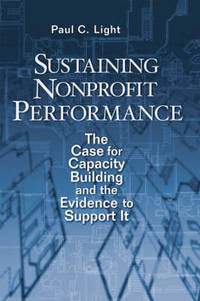
2004ref. Q-0815752253Brookings Institution Press 2004-08-31. Paperback. New. New. In shrink wrap. Looks like an interesting title! Brookings Institution Press paperback
1998ref. Q-0787940984Jossey-Bass 1998-02-13. Paperback. New. In shrink wrap. Looks like an interesting title! Jossey-Bass paperback
1998ref. DADAX0787940984Jossey-Bass 1998-03-16. 1. paperback. New. 6.26x1.07x9.47. Buy with confidence. Excellent Customer Service & Return policy. Jossey-Bass paperback
ref. Bloomsbury-9780815752257Brookings Institution Press. Paperback. New. 224 pages Brookings Institution Press paperback
ref. Bloomsbury-9780815752257Brookings Institution Press. Paperback. New. 224 pages Brookings Institution Press paperback
1998ref. x-0787940984Jossey-Bass Inc Pub 1998. Paperback. New. 1st edition. 299 pages. 9.25x6.25x1.00 inches. Jossey-Bass Inc Pub paperback
ref. A9780787940980Paperback / softback. New. Written for nonprofit and public organizations this work shows how to innovate successfully. The book is divided into four parts: organizational environment internal bureaucracy leadership and management systems. The author shows how each of these work in practice and with one another. paperback
ref. B9780815752257Paperback / softback. New. The nonprofit sector survives because it has a self-exploiting work force: wind it up and it will do more with less until it just runs out. But at some point the spring must break. paperback