187 resultados
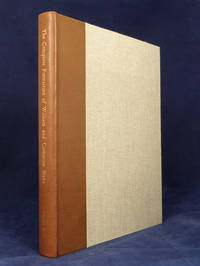
1977ref. 53391977. London: Trianon Press: 1977. 4to 155 pp. 51 plates. Original quarter brown morocco slipcase. Fine as issued. § Limited to 562 copies. This is copy 67. The definitive work on all known portraits of Mr. and Mrs. Blake. Not in Bentley BB or supplement. unknown
1977ref. 53391977. London: Trianon Press: 1977. 4to 155 pp. 51 plates. Original quarter brown morocco slipcase. Fine as issued. § Limited to 562 copies. This is copy 67. The definitive work on all known portraits of Mr. and Mrs. Blake. Not in Bentley BB or supplement. unknown books
ref. 1362A PARIS CHEZ CH. GAVARD RUE DU MARCHE SAINT HONORE Tres nombreuses gravures plans gravure de machines
1892ref. 664821 vol. in-8 en feuillets réunis par un ruban vert en angle, Cerf et Fils, 32 ff., les dessins sont signés de Trianon ou Dinant
1928ref. 64402Paris France: Vincent Freal et Cie Editeurs 1928. Small 4to. 79 1 pp. Photogravure frontisp. of elevation illustration by A. Bernard 47 photogravure plates of elevations drawings by A. Bernard and photographs several double-page. Contemporary half-maroon morocco over marbled boards original softcovers bound-in w/ raised embossed gilt lettering marbled endpapers raised bands & gilt lettering on spine minor scuffing edgewear still a VG bright copy. First edition of this architectural history and description of the famed estate connected to Versailles which first began under Louis XIV with the Grand Trianon Palace through the reign of Louis XVI and Queen Marie-Antoinette. She is perhaps best remembered for her creation of the magnificient gardens ornamentation and hamlet of fairy tale rustic cottages built from 1783-1786 by Richard Mique and centered around the refuge at the Petit Trianon considered to be Louis XV’s royal architect Ange-Jacques Gabriel’s masterpiece to the neo-classical movement. Vincent, Freal et Cie, Editeurs, paperback
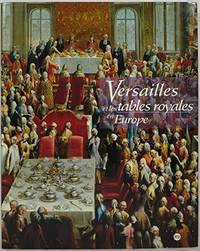
1993ref. Q-2711827747Reunion des musees nationaux 1993-01-01. Paperback. New. In shrink wrap. Looks like an interesting title! Re?union des muse?es nationaux paperback
1834ref. 55893A. Belin Lachapelle | Paris 1834 | 13 x 21.50 cm | relié
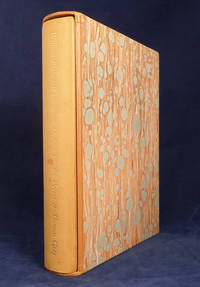
1970ref. 6442London: Trianon Press 1970. First thus. Fine. Limited edition number 9 of 600 numbered copies out of a total edition of 662 copies. A Fine copy. Quarto 11 3/4 x 9 in; 298 x 230 mm. 28 pp. Ten color plates. Original quarter green morocco over marbled boards. In the original marbled board slipcase. "Through aphoristic declarations and accompanying emblem-like designs Blake argues for the essential unity of all religions as expressions of the "Poetic Genius" within all human beings." The William Blake Archive. Blake first etched the work in c. 1788 returned to it in 1795 and again in 1818. In this edition the plates were reproduced by the Trianon Press France using the collotype process with some water-color washes added by hand. The editorial matter was printed by the Imprimerie Darantiere Dijon and binding was by Engel Malakoff and the hand-made slip-case by Adine Paris. With a description and bibliographical history by Blake scholar Geoffrey Keynes. Fine. Trianon Press unknown
1970ref. 6442London: Trianon Press 1970. First thus. Fine. Limited edition number 9 of 600 numbered copies out of a total edition of 662 copies. A Fine copy. Quarto 11 3/4 x 9 in; 298 x 230 mm. 28 pp. Ten color plates. Original quarter green morocco over marbled boards. In the original marbled board slipcase. "Through aphoristic declarations and accompanying emblem-like designs Blake argues for the essential unity of all religions as expressions of the "Poetic Genius" within all human beings." The William Blake Archive. Blake first etched the work in c. 1788 returned to it in 1795 and again in 1818. In this edition the plates were reproduced by the Trianon Press France using the collotype process with some water-color washes added by hand. The editorial matter was printed by the Imprimerie Darantiere Dijon and binding was by Engel Malakoff and the hand-made slip-case by Adine Paris. With a description and bibliographical history by Blake scholar Geoffrey Keynes. Fine. Trianon Press unknown books
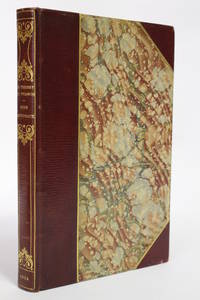
1834ref. 55893Paris: A. BelinLachapelle 1834. Fine. A. Belin Lachapelle Paris 1834 13 x 21.50 cm relié First edition. Half burgundy Russia morocco binding with corners smooth spine decorated with a cartouche arabesques and gilt fillets gilt date at foot very light traces of rubbing without significance to joints gilt fillet frames on marbled paper boards marbled endpapers and pastedowns top edge gilt bookplate pasted on pastedown elegant romantic pastiche binding signed by Pagnant. Work illustrated with an engraving as frontispiece representing Maximilien de Robespierre. Rare and handsome copy attractively bound in a signed binding by Pagnant. A. BelinLachapelle hardcover
ref. 1127210 volumes in 8 demi-chagrin bleu à nerfs et à coins, titre, caissons, filets dorés. Filet à froid sur les plats, tête dorée, non rogné. Les deux plats de couverture et dos conservés. Illustrations à pleine page. Louis CONARD éditeur .Edition originale. 1) La création de Versailles faux titre, titre, 309 pages, 1 page de table 25 mai 1925. 2) Versailles résidence de Louis XIV faux titre, frontispice, titre, 269 pages, 1 page de table des matières 25 octobre 1925. 3) Versailles au XVIIIème siècle faux-titre, titre, 365 pages, 25 octobre 1926. 4) Trianon faux-titre, titre 309 pages, 15 juin 1927. 5) Louis XV et marie Leczinska. Faux-titre, titre, 342 pages, 20 janvier 1928. 6) Louis XV et madame de POMPADOUR. Faux-titre, titre, 333 pages 15 août 1928. 7) Marie Antoinette dauphine. Taux titre, titre, 331 pages, 20 mars 1929. 8) La reine Marie Antoinette 192. 9) Madame POMPADOUR et la politique Faux-titre, titre, 339 pages. 30 septembre 1930. 10) L’art à Versailles Faux-titre, titre, 288 pages, 1 page de table. 15 décembre 1930. Complet, quelques petites traces de manipulation à quelques coiffes, sans gravité, sinon bele ensemble, bien relié, avec les couvertures et dos conservés.
ref. 9823, Paris, Editions du Trianon, 1926., Relie (relieur: Peeters), demi-maroquin, dos orne de fil. dore et de piece de titre dore, plats marbre, dos a nerfs (4) dores, dos jauni, pages de garde marbre, tranches dores, frontispice, (1)couverture d' editeur, 19,5x24,5cm, 356pp(III), (?? )
ref. 1455, Paris, Editions du Trianon, 1926 - 1927., Relie (relieur: Peeters), demi-maroquin, dos orne de fil. dore et de piece de titre dore, plats marbre, dos a nerfs (4) dores, dos jauni, pages de garde marbre, tranches dores, frontispice, (1)couverture d' editeur, 19,5x24,5cm, (?? )
1972ref. 6961London: printed in Paris at the Trianon Press for the William Blake Trust 1972. Letter L of 26 copies reserved for the Trustees of the William Blake Trust and teh Publishers. 21 plates - 20 plates reproduced by colour collotype with water-color washes by hand through stencil and one engraving. 2 vols. 4to and small 4to. quarter brown morocco with marbled paper covered boards in original marbled paper covered slipcase. A very good copy.The text is a clear statement of Blake’s beliefs regarding the nature of man. The full book only came to light in 1953 and this is the first reproduction of the text. Such maxims are included as “Man’s desires are limited by his perceptions none can desire what he has not perciev’d sic” and “If any could desire what he is incapable of possessing despair must be his eternal lot”.Bentley Blake Books 202. printed in Paris at the Trianon Press for the William Blake Trust hardcover
1973ref. 3550London: Trianon Press 1973. No.243 of 808 copies. 4to 6 colour facsimile plates reproduced in Paris at the Trianon Press using the collotype and hand-stencil process one black and white illustration plus 5 pp. of commentary by Geoffrey Keynes. 4to. original quarter dark blue morocco marbled paper covered boards in the original marbled paper covered slipcase. A very good bright copy. Booklabel of Elaine Klemen.A facsimile of the only known copy of The Book of Ahania which was owned by Lessing Rosenwald. The original frontispiece was supplied for this facsimile by its owner Geoffrey Keynes. The Book of Ahania continues the story of the Book of Urizen. As Keynes writes: “Ahania the feminine Emanation of Urizen signifies Pleasure in Blake’s system.the poem begins with.a new character Fuzon who.signifies Passion.Fuzon attacks Urizen.with a fiery globe.Urizen was sorely wounded in the loins and.in his agony at losing his source of pleasure he seized on Ahania calling her Sin.Urizen seeks vengeance on Fuzon creating in the process the Serpent of Materialism”. Bentley Blake Books A15 Trianon Press hardcover
2004ref. LFA-126716845Un ouvrage de 496 pages, format 350 x 495 mm, relié toile, réimpression (2004) de grande qualité de l'édition de 1808, 134 gravures pleine page, tirage limité à 500 exemplaires sur papier Vélin, très bon état
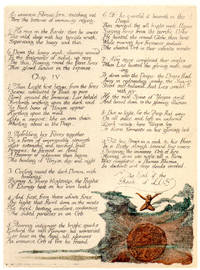
1976ref. 3552London: Printed at the Trianon Press for the Trustees of The William Blake Trust 1976. No. 156 of 480 ordinary copies in addition there were 32 deluxe copies and 26 copies for the Trustees and publishers. 5 colour facsimile plates made using the collotype and hand-stencil process at the Trianon Press in Paris. Printed on Arches pure rag paper to match the paper used by Blake. 4to. quarter brown morocco marbled paper boards in a marbled paper covered slipcase. Very good.The companion volume to the Book of Ahania printed by Blake in Lambeth in 1795. A facsimile of the only known copy of The Book of Los in the British Museum. In his commentary Geoffrey Keynes writes: “the philosophic message of this small book is hidden in apocalyptic verbiage calculated to puzzle Blake’s small audience. Blake seems to have sensed this obscurity as soon as it was completed and as far as is known he never made another copy.or referred to it.” Bookplate of Alexander Stone on front pastedown. Bentley Blake Books supplement p. 62. Printed at the Trianon Press for the Trustees of The William Blake Trust hardcover
1977ref. 1073811977. London: Trianon Press: 1977. 4to 155 pp. 51 plates. Original full brown morocco slipcase. A fine copy. § #5 of 36 de luxe copies signed by Keynes of a total edition of 562 copies. The definitive work about and reproducing all known portraits of Mr. and Mrs. Blake. Not in G.E. Bentley's Blake Books or its supplement. unknown
1977ref. 1073811977. London: Trianon Press: 1977. 4to 155 pp. 51 plates. Original full brown morocco slipcase. A fine copy. § #5 of 36 de luxe copies signed by Keynes of a total edition of 562 copies. The definitive work about and reproducing all known portraits of Mr. and Mrs. Blake. Not in G.E. Bentley's Blake Books or its supplement. unknown books
1972ref. 3555London: printed in Paris at the Trianon Press for the William Blake Trust 1972. No. VI of 50 de luxe copies. 21 plates - 20 plates reproduced by colour collotype with water-color washes by hand through stencil and one engraving; together with a set of plates showing progressive stages of the collotype and hand stencil process with guide sheet and stencil. Edition de luxe limited to 50 copies with additional proof sheets progressive plates and original stencil etc. 2 vols. 4to and small 4to. full brown morocco in original marbled paper covered slipcase. Near fine prospectus inserted loose.The text is a clear statement of Blake’s beliefs regarding the nature of man. The full book only came to light in 1953 and this is the first reproduction of the text. Such maxims are included as “Man’s desires are limited by his perceptions none can desire what he has not perciev’d sic” and “If any could desire what he is incapable of possessing despair must be his eternal lot”.Bentley Blake Books 202. One of only 50 de luxe copies with additional material printed in Paris at the Trianon Press for the William Blake Trust unknown
ref. 1028821971. London: Trianon Press 1971. Small folio 72 pages with 16 color facsimile leaves suites of progressive plates and 116 monochrome illustrations. Marbled boards morocco backstrip slipcase. Signed by Keynes. A fine copy as issued. § Limited to 28 copies so inscribed and signed by Geoffrey Keynes this particular volume is labeled no. 2. This is the de luxe edition of the trade version of the Gray issued by the Trianon Press in 1972 using 8-color printing. Although the three-volume folio edition is a magnificent piece of book making this version is more accessible and easier to use and enjoy and the quality of the color printing is Trianon Press at its best. The 116 water-color illustrations to Thomas Gray's poems are among Blake's major achievements as an illustrator. They were commissioned in 1797 by Blake's friend the sculptor John Flaxman as a gift for his wife Ann to whom Blake addressed the poem that ends the series. The commission may have been inspired by the Flaxmans' seeing Blake's water-color designs to Edward Young's Night Thoughts begun in 1795. The Gray illustrations follow the same basic format. Blake cut windows in large sheets of the same type of Whatman paper used for the Night Thoughts illustrations and mounted in these windows the texts of Gray's poems from a 1790 octavo edition published by John Murray leaving out some prefatory materials fly-titles the notes and the 7 engraved illustrations. Blake then drew and colored his designs surrounding the letterpress texts. On blank versos near the beginning of each poem and in one case on a separate piece of paper pasted over letterpress text Blake inscribed with pen and ink either titles for each design or quotations from the poem to indicate the passage illustrated. On most text pages Blake also drew a pencil cross left of the first line of the illustrated passage. He numbered most leaves consecutively in pen and ink beginning a new sequence for each of the 13 poems. Blake conceived of his work as an illustrated book rather than a series of unbound designs as indicated by his offsetting Gray's texts above and to the right left on versos from the middle of each leaf-then the convention for all letterpress books. Although listed by William Michael Rossetti in his catalogue of Blake's drawings and paintings published in the 1863 and 1880 editions of Alexander Gilchrist's Life of William Blake the Gray illustrations were virtually unknown until their rediscovery by Herbert Grierson in 1919. The Trianon Press reproductions are recognized as the finest examples of the art of facsimile reproduction; working from the originals in Paul Mellon's collection each leaf is faithfully hand-colored through stencils to achieve an astonishing exactitude. The Times Literary Supplement stated that nothing like these books had ever been printed before and that it was highly unlikely that they could be printed again. Bentley Blake Books 385. unknown
ref. 1028821971. London: Trianon Press 1971. Small folio 72 pages with 16 color facsimile leaves suites of progressive plates and 116 monochrome illustrations. Marbled boards morocco backstrip slipcase. Signed by Keynes. A fine copy as issued. § Limited to 28 copies so inscribed and signed by Geoffrey Keynes this particular volume is labeled no. 2. This is the de luxe edition of the trade version of the Gray issued by the Trianon Press in 1972 using 8-color printing. Although the three-volume folio edition is a magnificent piece of book making this version is more accessible and easier to use and enjoy and the quality of the color printing is Trianon Press at its best. The 116 water-color illustrations to Thomas Gray's poems are among Blake's major achievements as an illustrator. They were commissioned in 1797 by Blake's friend the sculptor John Flaxman as a gift for his wife Ann to whom Blake addressed the poem that ends the series. The commission may have been inspired by the Flaxmans' seeing Blake's water-color designs to Edward Young's Night Thoughts begun in 1795. The Gray illustrations follow the same basic format. Blake cut windows in large sheets of the same type of Whatman paper used for the Night Thoughts illustrations and mounted in these windows the texts of Gray's poems from a 1790 octavo edition published by John Murray leaving out some prefatory materials fly-titles the notes and the 7 engraved illustrations. Blake then drew and colored his designs surrounding the letterpress texts. On blank versos near the beginning of each poem and in one case on a separate piece of paper pasted over letterpress text Blake inscribed with pen and ink either titles for each design or quotations from the poem to indicate the passage illustrated. On most text pages Blake also drew a pencil cross left of the first line of the illustrated passage. He numbered most leaves consecutively in pen and ink beginning a new sequence for each of the 13 poems. Blake conceived of his work as an illustrated book rather than a series of unbound designs as indicated by his offsetting Gray's texts above and to the right left on versos from the middle of each leaf-then the convention for all letterpress books. Although listed by William Michael Rossetti in his catalogue of Blake's drawings and paintings published in the 1863 and 1880 editions of Alexander Gilchrist's Life of William Blake the Gray illustrations were virtually unknown until their rediscovery by Herbert Grierson in 1919. The Trianon Press reproductions are recognized as the finest examples of the art of facsimile reproduction; working from the originals in Paul Mellon's collection each leaf is faithfully hand-colored through stencils to achieve an astonishing exactitude. The Times Literary Supplement stated that nothing like these books had ever been printed before and that it was highly unlikely that they could be printed again. Bentley Blake Books 385. unknown books
ref. 1073691970. London: Trianon Press 1970. 4to with 10 facsimile leaves 5 pp. commentary by Sir Geoffrey Keynes plus 32 pp. of the progressive collotype printings. Full green morocco near fine with green marbled slipcase. § Copy III of 36 de luxe copies. The total edition was of 662 copies including 36 de luxe copies numbered I-XXXVI 600 regular copies numbered 1-600 and 26 copies lettered A-Z reserved for the trustees of the William Blake Trust and the publishers. Bentley Blake Books 5. All Religions are One c. 1788 is "a small tractate perhaps Blake's first experiment in his illuminated printing it exists in only one copy. It affirms that the Imagination 'is the true man'. and thus early Blake had completed his revolutionary theory of the nature of man and proclaimed the unity of all true religions." Damon Blake Dictionary. unknown
ref. 1047771970. London: Trianon Press 1970. 4to 10 facsimile leaves and 5 pp. of commentary. Original full green morocco backstrip slightly faded as usual slipcase. § Edition de luxe this being copy h.c. ii limited to 36 copies specially bound with extra suites of the plates of an edition in all of 662 copies. Bentley Blake Books 5. All Religions are One c. 1788 is "a small tractate perhaps Blake's first experiment in his illuminated printing it exists in only one copy. It affirms that the Imagination 'is the true man'. and thus early Blake had completed his revolutionary theory of the nature of man and proclaimed the unity of all true religions." Damon Blake Dictionary. unknown
ref. 1073691970. London: Trianon Press 1970. 4to with 10 facsimile leaves 5 pp. commentary by Sir Geoffrey Keynes plus 32 pp. of the progressive collotype printings. Full green morocco near fine with green marbled slipcase. § Copy III of 36 de luxe copies. The total edition was of 662 copies including 36 de luxe copies numbered I-XXXVI 600 regular copies numbered 1-600 and 26 copies lettered A-Z reserved for the trustees of the William Blake Trust and the publishers. Bentley Blake Books 5. All Religions are One c. 1788 is "a small tractate perhaps Blake's first experiment in his illuminated printing it exists in only one copy. It affirms that the Imagination 'is the true man'. and thus early Blake had completed his revolutionary theory of the nature of man and proclaimed the unity of all true religions." Damon Blake Dictionary. unknown books