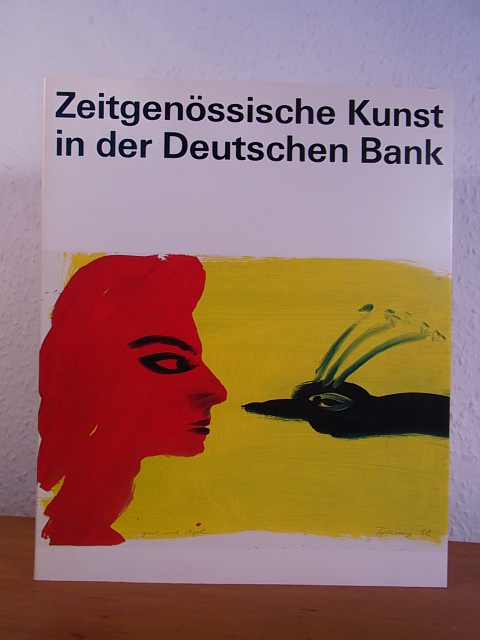
Zeitgenössische Kunst in der Deutschen Bank Frankfurt
1989réf. 95152Stuttgart: Ernst Klett Verlag, 1989. 28 cm ; kart.
Antiquariat Weber · Allemagne10,00 €
187 résultats
1932réf. 2004270356xbvkParis, Éditions du Trianon, MCMXXXII (1932). Frontispice-plate in original-etching with aquatinta, 89 (1) pages on thick uncut Japan-paper. - Publisher's Japan-paper-wraps with blue-grey dustjacket; 8vo.(ca. 17,5 x 11 cm).
1989réf. 95152Stuttgart: Ernst Klett Verlag, 1989. 28 cm ; kart.
réf. 95406Paris. 2° Folio, Halbleinen
1986réf. 68394Erlangen, Karl Müller Verlag, 1986, Auflage: Sonderausgabe. Leinen, gebunden; blauer, goldgeprägter, illustrierter Einband, mit farbig illustriertem Schutzumschlag / Anz. Seiten: 367 / 25,5 x 30,5 cm / mit 180 teils doppelseitigen Farbtafeln und zahlreichen Abbildungen im Text / Zustand: gut, leichte Gebrauchsspuren; Schutzumschlag geringfügig berieben und etwas gebräunt, Widmung auf Vorsatz
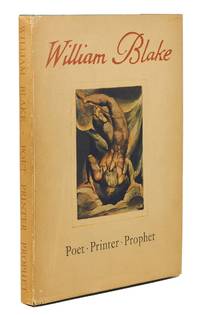
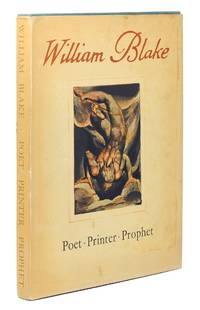
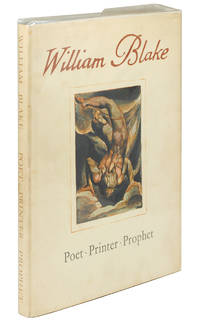
1964réf. 1272011964. New York and Paris: The Orion Press with The Trianon Press 1964. 4to 103 pp. With 32 color plates. Original cloth dust-jacket browned and with some markings gift inscription on front free endpaper cloth marked and slightly sunned at edges. § Trade edition of 1964 Trianon Press facsimile. unknown books
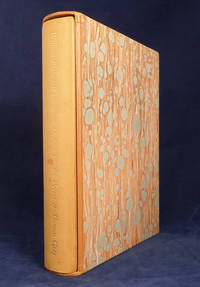
1970réf. 6442London: Trianon Press 1970. First thus. Fine. Limited edition number 9 of 600 numbered copies out of a total edition of 662 copies. A Fine copy. Quarto 11 3/4 x 9 in; 298 x 230 mm. 28 pp. Ten color plates. Original quarter green morocco over marbled boards. In the original marbled board slipcase. "Through aphoristic declarations and accompanying emblem-like designs Blake argues for the essential unity of all religions as expressions of the "Poetic Genius" within all human beings." The William Blake Archive. Blake first etched the work in c. 1788 returned to it in 1795 and again in 1818. In this edition the plates were reproduced by the Trianon Press France using the collotype process with some water-color washes added by hand. The editorial matter was printed by the Imprimerie Darantiere Dijon and binding was by Engel Malakoff and the hand-made slip-case by Adine Paris. With a description and bibliographical history by Blake scholar Geoffrey Keynes. Fine. Trianon Press unknown books
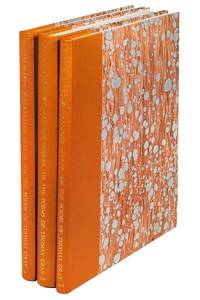
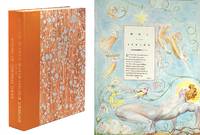
réf. 1268401972. London: Trianon Press 1972. 3 volumes folio with 116 color facsimile leaves reproduced by collotype and hand-stencil color the text of the poems reproduced from copper-plate with 3 additional printings to reproduce Blake's pencillings and the tone of the paper. Marbled boards morocco backstrips slipcases a fine set as issued. § Edition limited to 518 copies in all including 100 copies for Paul Mellon personally of which 12 copies were a super de luxe issue in three volumes with extra material 36 copies were a de luxe issue also with extra material but in sheets unbound18 copies were hors commerce contents unrecorded and 352 copies either bound in 3 volumes in slipcases or as a single set of the loose sheets in a box. This is copy #125. The 116 water-color illustrations to Thomas Gray's poems are among Blake's major achievements as an illustrator. They were commissioned in 1797 by Blake's friend the sculptor John Flaxman as a gift for his wife Ann to whom Blake addressed the poem that ends the series. The commission may have been inspired by the Flaxmans' seeing Blake's water-color designs to Edward Young's Night Thoughts begun in 1795. The Gray illustrations follow the same basic format. Blake cut windows in large sheets of the same type of Whatman paper used for the Night Thoughts illustrations and mounted in these windows the texts of Gray's poems from a 1790 octavo edition published by John Murray leaving out some prefatory materials fly-titles the notes and the 7 engraved illustrations. Blake then drew and colored his designs surrounding the letterpress texts. On blank versos near the beginning of each poem and in one case on a separate piece of paper pasted over letterpress text Blake inscribed with pen and ink either titles for each design or quotations from the poem to indicate the passage illustrated. On most text pages Blake also drew a pencil cross left of the first line of the illustrated passage. He numbered most leaves consecutively in pen and ink beginning a new sequence for each of the 13 poems. Blake conceived of his work as an illustrated book rather than a series of unbound designs as indicated by his offsetting Gray's texts above and to the right left on versos from the middle of each leaf-then the convention for all letterpress books. Although listed by William Michael Rossetti in his catalogue of Blake's drawings and paintings published in the 1863 and 1880 editions of Alexander Gilchrist's Life of William Blake the Gray illustrations were virtually unknown until their rediscovery by Herbert Grierson in 1919. The Trianon Press reproductions are recognized as the finest examples of the art of facsimile reproduction; working from the originals in Paul Mellon's collection each leaf is faithfully hand-colored through stencils to achieve an astonishing exactitude. The Times Literary Supplement stated that nothing like these books had ever been printed before and that it was highly unlikely that they could be printed again. Bentley Blake Books 385. unknown books
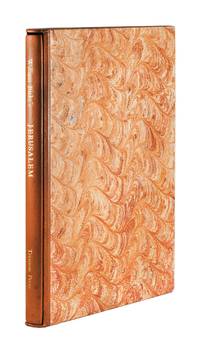
réf. 1269611974. London: Trianon Press 1974. Folio 25 color plates 8 proofs and commentary at the end eight color facsimile trial proofs twelve pages of text plus an extra suite of fourteen states of plate B collotype proofs and a matching guide-sheet and stencil. Original full brown morocco slipcase. As new. § De luxe copy #XXVI of 32 with extra material proofs stencil etc. Limited to 558 copies including 32 de luxe copies numbered I-XXXII 500 regular copies number 1-500 and 26 regular copies lettered A-Z reserved for the Trustees of the William Blake Trust and the publishers. This is a combined facsimile of Lord Cunliffe's copy copy B and Kerrison Preston's proofs; the coloring differs markedly from the Stirling copy copy E which was the first Trianon Press Blake facsimile published in 1951 see above. Jerusalem is the longest of Blake's prophetic books and tells of the fall of Albion Blake's embodiment of man or the Western World. Bentley BB A82. unknown books
1964réf. 1267961964. New York and Paris: The Orion Press with The Trianon Press 1964. 4to 103 pp. With 32 color plates. Original cloth dust-jacket slightly browned and with some markings cloth marked and slightly sunned at edges. Very good. § Trade edition of 1964 Trianon Press facsimile. unknown books
1968réf. 1075951968. London: Trianon Press 1968. 4 vols. 8vo and 12mo Vol. I 8vo i-vii-viii 50 4 pp. Vol. II 12mo 2 pp. 22 plates Vol. III 4 pp. 31 plates Vol. IV 12mo 2 pp. 10 plates negative and copper plate. Original tan morocco volume 4 in brown cloth as issued cloth slipcase gilt lettering to backstrips of all three volumes. Backstrips slightly flaked. § Copy #14 with the first three volumes bound in morocco. From an edition of 726 total copies including 700 numbered 1 to 700 of which the first 50 have additional material and are in a special binding and 26 reserved copies lettered A-Z. Volume I is an introductory volume followed by three volumes of plates. "In about 1818 Blake revised For Children: The Gates of Paradise giving the work the new title of For the Sexes: The Gates of Paradise and adding three new text plates at the end Plates 19-21. All twenty-one plates are intaglio etchings/engravings. Plates 19-20 contain brief interpretive statements keyed by number to the preceding design plates. The final plate is addressed to Satan as the "God of This fallen World." Blake Archive. Bentley BB 48. unknown books
réf. 1077171972. London: Trianon Press 1972. Folio with 116 color facsimile leaves reproduced by collotype and hand-stencil color the text of the poems reproduced from copper-plate with 3 additional printings to reproduce Blake's pencillings and the tone of the paper. Original sheets marbled boards morocco backstrip lettered in giltquarter brown morocco box. § Edition limited to 518 copies in all including 100 copies for Paul Mellon personally of which 12 copies were a super de luxe issue in three volumes with extra material 36 copies were a de luxe issue also with extra material but in sheets unbound18 copies were hors commerce contents unrecorded and 352 copies either bound in 3 volumes in slipcases or as a single set of the loose sheets in a box. This is copy 387. The 116 water-color illustrations to Thomas Gray's poems are among Blake's major achievements as an illustrator. They were commissioned in 1797 by Blake's friend the sculptor John Flaxman as a gift for his wife Ann to whom Blake addressed the poem that ends the series. The commission may have been inspired by the Flaxmans' seeing Blake's water-color designs to Edward Young's Night Thoughts begun in 1795. The Gray illustrations follow the same basic format. Blake cut windows in large sheets of the same type of Whatman paper used for the Night Thoughts illustrations and mounted in these windows the texts of Gray's poems from a 1790 octavo edition published by John Murray leaving out some prefatory materials fly-titles the notes and the 7 engraved illustrations. Blake then drew and colored his designs surrounding the letterpress texts. On blank versos near the beginning of each poem and in one case on a separate piece of paper pasted over letterpress text Blake inscribed with pen and ink either titles for each design or quotations from the poem to indicate the passage illustrated. On most text pages Blake also drew a pencil cross left of the first line of the illustrated passage. He numbered most leaves consecutively in pen and ink beginning a new sequence for each of the 13 poems. Blake conceived of his work as an illustrated book rather than a series of unbound designs as indicated by his offsetting Gray's texts above and to the right left on versos from the middle of each leaf-then the convention for all letterpress books. Although listed by William Michael Rossetti in his catalogue of Blake's drawings and paintings published in the 1863 and 1880 editions of Alexander Gilchrist's Life of William Blake the Gray illustrations were virtually unknown until their rediscovery by Herbert Grierson in 1919. The Trianon Press reproductions are recognized as the finest examples of the art of facsimile reproduction; working from the originals in Paul Mellon's collection each leaf is faithfully hand-colored through stencils to achieve an astonishing exactitude. The Times Literary Supplement stated that nothing like these books had ever been printed before and that it was highly unlikely that they could be printed again. Bentley Blake Books 385. unknown books
1964réf. 1080261964. New York and Paris: The Orion Press with The Trianon Press 1964. 4to 103 pp. With 32 color plates. Original cloth dust-jacket slightly browned with mylar cover. Very good. § Trade edition of 1964 Trianon Press facsimile. unknown books
1964réf. 1015941964. Paris: Trianon Press 1964. 4to 56 pp. with a frontispiece and 15 color plates. Original color-printed wrappers covered in mylar some browning to wrappers sale slip from Bridge Books slipped in. § The original 1964 catalogue. Bentley BB 688. unknown books
réf. 1073691970. London: Trianon Press 1970. 4to with 10 facsimile leaves 5 pp. commentary by Sir Geoffrey Keynes plus 32 pp. of the progressive collotype printings. Full green morocco near fine with green marbled slipcase. § Copy III of 36 de luxe copies. The total edition was of 662 copies including 36 de luxe copies numbered I-XXXVI 600 regular copies numbered 1-600 and 26 copies lettered A-Z reserved for the trustees of the William Blake Trust and the publishers. Bentley Blake Books 5. All Religions are One c. 1788 is "a small tractate perhaps Blake's first experiment in his illuminated printing it exists in only one copy. It affirms that the Imagination 'is the true man'. and thus early Blake had completed his revolutionary theory of the nature of man and proclaimed the unity of all true religions." Damon Blake Dictionary. unknown books
1977réf. 1073811977. London: Trianon Press: 1977. 4to 155 pp. 51 plates. Original full brown morocco slipcase. A fine copy. § #5 of 36 de luxe copies signed by Keynes of a total edition of 562 copies. The definitive work about and reproducing all known portraits of Mr. and Mrs. Blake. Not in G.E. Bentley's Blake Books or its supplement. unknown books
réf. 1047771970. London: Trianon Press 1970. 4to 10 facsimile leaves and 5 pp. of commentary. Original full green morocco backstrip slightly faded as usual slipcase. § Edition de luxe this being copy h.c. ii limited to 36 copies specially bound with extra suites of the plates of an edition in all of 662 copies. Bentley Blake Books 5. All Religions are One c. 1788 is "a small tractate perhaps Blake's first experiment in his illuminated printing it exists in only one copy. It affirms that the Imagination 'is the true man'. and thus early Blake had completed his revolutionary theory of the nature of man and proclaimed the unity of all true religions." Damon Blake Dictionary. unknown books
1964réf. 1012311964. Paris: Trianon Press 1964. 4to 56 pp. with a frontispiece and 15 color plates. Original color-printed wrappers covered in mylar. Wrappers slightly browned and curled; very good. § The original 1964 catalogue. Bentley BB 688. unknown books
réf. 1028821971. London: Trianon Press 1971. Small folio 72 pages with 16 color facsimile leaves suites of progressive plates and 116 monochrome illustrations. Marbled boards morocco backstrip slipcase. Signed by Keynes. A fine copy as issued. § Limited to 28 copies so inscribed and signed by Geoffrey Keynes this particular volume is labeled no. 2. This is the de luxe edition of the trade version of the Gray issued by the Trianon Press in 1972 using 8-color printing. Although the three-volume folio edition is a magnificent piece of book making this version is more accessible and easier to use and enjoy and the quality of the color printing is Trianon Press at its best. The 116 water-color illustrations to Thomas Gray's poems are among Blake's major achievements as an illustrator. They were commissioned in 1797 by Blake's friend the sculptor John Flaxman as a gift for his wife Ann to whom Blake addressed the poem that ends the series. The commission may have been inspired by the Flaxmans' seeing Blake's water-color designs to Edward Young's Night Thoughts begun in 1795. The Gray illustrations follow the same basic format. Blake cut windows in large sheets of the same type of Whatman paper used for the Night Thoughts illustrations and mounted in these windows the texts of Gray's poems from a 1790 octavo edition published by John Murray leaving out some prefatory materials fly-titles the notes and the 7 engraved illustrations. Blake then drew and colored his designs surrounding the letterpress texts. On blank versos near the beginning of each poem and in one case on a separate piece of paper pasted over letterpress text Blake inscribed with pen and ink either titles for each design or quotations from the poem to indicate the passage illustrated. On most text pages Blake also drew a pencil cross left of the first line of the illustrated passage. He numbered most leaves consecutively in pen and ink beginning a new sequence for each of the 13 poems. Blake conceived of his work as an illustrated book rather than a series of unbound designs as indicated by his offsetting Gray's texts above and to the right left on versos from the middle of each leaf-then the convention for all letterpress books. Although listed by William Michael Rossetti in his catalogue of Blake's drawings and paintings published in the 1863 and 1880 editions of Alexander Gilchrist's Life of William Blake the Gray illustrations were virtually unknown until their rediscovery by Herbert Grierson in 1919. The Trianon Press reproductions are recognized as the finest examples of the art of facsimile reproduction; working from the originals in Paul Mellon's collection each leaf is faithfully hand-colored through stencils to achieve an astonishing exactitude. The Times Literary Supplement stated that nothing like these books had ever been printed before and that it was highly unlikely that they could be printed again. Bentley Blake Books 385. unknown books
1977réf. 53391977. London: Trianon Press: 1977. 4to 155 pp. 51 plates. Original quarter brown morocco slipcase. Fine as issued. § Limited to 562 copies. This is copy 67. The definitive work on all known portraits of Mr. and Mrs. Blake. Not in Bentley BB or supplement. unknown books
réf. 1081121987. Paris: Trianon Press for the Blake Trust 1987. 22 separate plates approx. 15.75 x 12.25 inches 30 x 31 cm each printed in color on Arches housed in a tri-fold paper folder. Very good condition. § The New Zealand Set are careful watercolor copies of the central designs of the original engravings produced by the circle of John Linnell presented here in faithful facsimile. Butlin noted in the Blake Quarterly: "The long list of color facsimiles produced by the Trianon Press under Arnold Fawcus for the William Blake Trust were above all objects of beauty recreating as near to perfection as possible Blake's original achievements.". unknown books
1834réf. 55893Paris: A. BelinLachapelle 1834. Fine. A. Belin Lachapelle Paris 1834 13 x 21.50 cm relié First edition. Half burgundy Russia morocco binding with corners smooth spine decorated with a cartouche arabesques and gilt fillets gilt date at foot very light traces of rubbing without significance to joints gilt fillet frames on marbled paper boards marbled endpapers and pastedowns top edge gilt bookplate pasted on pastedown elegant romantic pastiche binding signed by Pagnant. Work illustrated with an engraving as frontispiece representing Maximilien de Robespierre. Rare and handsome copy attractively bound in a signed binding by Pagnant. A. BelinLachapelle hardcover
1858réf. 13398Versailles Brunox 1858. Small 8vo-oblong. Orig. full cloth gilt. 32 pp. 12 engraved plates and 2 lithographed Plans. A little brownspotted. hardcover
1860réf. 13396Versailles Brunox n.d.ab. 1860. Small 8vo-oblong. Orig. full cloth gilt. With 26 engraved illustr. on 24 plates. hardcover
1970réf. 6442London: Trianon Press 1970. First thus. Fine. Limited edition number 9 of 600 numbered copies out of a total edition of 662 copies. A Fine copy. Quarto 11 3/4 x 9 in; 298 x 230 mm. 28 pp. Ten color plates. Original quarter green morocco over marbled boards. In the original marbled board slipcase. "Through aphoristic declarations and accompanying emblem-like designs Blake argues for the essential unity of all religions as expressions of the "Poetic Genius" within all human beings." The William Blake Archive. Blake first etched the work in c. 1788 returned to it in 1795 and again in 1818. In this edition the plates were reproduced by the Trianon Press France using the collotype process with some water-color washes added by hand. The editorial matter was printed by the Imprimerie Darantiere Dijon and binding was by Engel Malakoff and the hand-made slip-case by Adine Paris. With a description and bibliographical history by Blake scholar Geoffrey Keynes. Fine. Trianon Press unknown
réf. 1268401972. London: Trianon Press 1972. 3 volumes folio with 116 color facsimile leaves reproduced by collotype and hand-stencil color the text of the poems reproduced from copper-plate with 3 additional printings to reproduce Blake's pencillings and the tone of the paper. Marbled boards morocco backstrips slipcases a fine set as issued. § Edition limited to 518 copies in all including 100 copies for Paul Mellon personally of which 12 copies were a super de luxe issue in three volumes with extra material 36 copies were a de luxe issue also with extra material but in sheets unbound18 copies were hors commerce contents unrecorded and 352 copies either bound in 3 volumes in slipcases or as a single set of the loose sheets in a box. This is copy #125. The 116 water-color illustrations to Thomas Gray's poems are among Blake's major achievements as an illustrator. They were commissioned in 1797 by Blake's friend the sculptor John Flaxman as a gift for his wife Ann to whom Blake addressed the poem that ends the series. The commission may have been inspired by the Flaxmans' seeing Blake's water-color designs to Edward Young's Night Thoughts begun in 1795. The Gray illustrations follow the same basic format. Blake cut windows in large sheets of the same type of Whatman paper used for the Night Thoughts illustrations and mounted in these windows the texts of Gray's poems from a 1790 octavo edition published by John Murray leaving out some prefatory materials fly-titles the notes and the 7 engraved illustrations. Blake then drew and colored his designs surrounding the letterpress texts. On blank versos near the beginning of each poem and in one case on a separate piece of paper pasted over letterpress text Blake inscribed with pen and ink either titles for each design or quotations from the poem to indicate the passage illustrated. On most text pages Blake also drew a pencil cross left of the first line of the illustrated passage. He numbered most leaves consecutively in pen and ink beginning a new sequence for each of the 13 poems. Blake conceived of his work as an illustrated book rather than a series of unbound designs as indicated by his offsetting Gray's texts above and to the right left on versos from the middle of each leaf-then the convention for all letterpress books. Although listed by William Michael Rossetti in his catalogue of Blake's drawings and paintings published in the 1863 and 1880 editions of Alexander Gilchrist's Life of William Blake the Gray illustrations were virtually unknown until their rediscovery by Herbert Grierson in 1919. The Trianon Press reproductions are recognized as the finest examples of the art of facsimile reproduction; working from the originals in Paul Mellon's collection each leaf is faithfully hand-colored through stencils to achieve an astonishing exactitude. The Times Literary Supplement stated that nothing like these books had ever been printed before and that it was highly unlikely that they could be printed again. Bentley Blake Books 385. unknown